View All

Please refer to the English Version as our Official Version.Return

Europe
France(Français) Germany(Deutsch) Italy(Italia) Russian(русский) Poland(polski) Czech(Čeština) Luxembourg(Lëtzebuergesch) Netherlands(Nederland) Iceland(íslenska) Hungarian(Magyarország) Spain(español) Portugal(Português) Turkey(Türk dili) Bulgaria(Български език) Ukraine(Україна) Greece(Ελλάδα) Israel(עִבְרִית) Sweden(Svenska) Finland(Svenska) Finland(Suomi) Romania(românesc) Moldova(românesc) Slovakia(Slovenská) Denmark(Dansk) Slovenia(Slovenija) Slovenia(Hrvatska) Croatia(Hrvatska) Serbia(Hrvatska) Montenegro(Hrvatska) Bosnia and Herzegovina(Hrvatska) Lithuania(lietuvių) Spain(Português) Switzerland(Deutsch) United Kingdom(English)
Asia/Pacific
Japan(日本語) Korea(한국의) Thailand(ภาษาไทย) Malaysia(Melayu) Singapore(Melayu) Vietnam(Tiếng Việt) Philippines(Pilipino)
Africa, India and Middle East
United Arab Emirates(العربية) Iran(فارسی) Tajikistan(فارسی) India(हिंदी) Madagascar(malaɡasʲ)
South America / Oceania
New Zealand(Maori) Brazil(Português) Angola(Português) Mozambique(Português)
North America
United States(English) Canada(English) Haiti(Ayiti) Mexico(español)
HomeProductsIntegrated Circuits (ICs)Embedded - MicrocontrollersSTM32L051R8H7
STM32L051R8H7 Image
Image may be representation.
See specifications for product details.
EXPRESS OPTION
Payment method

STM32L051R8H7 - STMicroelectronics

Manufacturer Part Number
STM32L051R8H7
Manufacturer
STMicroelectronics
Allelco Part Number
98D-STM32L051R8H7
Warranty
1 Year Allelco Warranty - Find out more
Stock Status:
48,722 pcs available, New & Original
Parts Description
IC MCU 32BIT 64KB FLASH 64TFBGA
Package
64-TFBGA (5x5)
Data sheet
STM32L051R8H7.pdf
RoHs Status
ROHS3 Compliant
Our certification
In stock: 48722
  • Unit Price: $2.918
  • Subtotal: $0.00

Want a better price?
Add to Cart and Submit RFQ now, we'll contact you immediately.

Quantity Unit Price Ext. Price
1+ $2.918 $2.92
The above prices does not include taxes and freight rates, which will be calculated on the order pages.


Specifications

STM32L051R8H7 Tech Specifications
STMicroelectronics - STM32L051R8H7 technical specifications, attributes, parameters and parts with similar specifications to STMicroelectronics - STM32L051R8H7

Product Attribute Attribute Value
Manufacturer STMicroelectronics
Voltage - Supply (Vcc/Vdd) 1.65V ~ 3.6V
Supplier Device Package 64-TFBGA (5x5)
Speed 32MHz
Series STM32L0
RAM Size 8K x 8
Program Memory Type FLASH
Program Memory Size 64KB (64K x 8)
Peripherals Brown-out Detect/Reset, DMA, I²S, POR, PWM, WDT
Package / Case 64-TFBGA
Package Tube
Product Attribute Attribute Value
Oscillator Type Internal
Operating Temperature -40°C ~ 105°C (TA)
Number of I/O 51
Mounting Type Surface Mount
EEPROM Size 2K x 8
Data Converters A/D 16x12b
Core Size 32-Bit Single-Core
Core Processor ARM® Cortex®-M0+
Connectivity I²C, IrDA, SPI, UART/USART
Base Product Number STM32L051

Environmental & Export Classifications

ATTRIBUTE DESCRIPTION
RoHs Status ROHS3 Compliant
Moisture Sensitivity Level (MSL) 3 (168 Hours)
REACH Status REACH Unaffected
ECCN 3A991A2
HTSUS 8542.31.0001

Frequently Asked Questions(FAQ)

How does the STM32L051R8H7 compare to other STM32L0 series microcontrollers in terms of flash memory and power efficiency for battery-powered IoT edge devices?
The STM32L051R8H7 offers 64KB of embedded flash memory, which positions it above lower-density variants like the STM32L051K8U6 (32KB) but below higher-end models such as the STM32L071VBI6 (192KB). This balance makes it suitable for moderate code complexity applications where memory footprint is constrained. When combined with its ultra-low-power design—capable of consuming less than 100 nA in standby mode—it supports extended operation in energy harvesting or coin-cell powered systems. Compared to other L0 series parts, this model provides an optimal trade-off between performance (32MHz Cortex-M0+) and power consumption, particularly when leveraging its dynamic voltage scaling and multiple low-power sleep modes.
What are the key limitations of using the STM32L051R8H7 in high-noise industrial environments, and how do its internal peripherals mitigate these challenges?
While the STM32L051R8H7 operates reliably over a wide temperature range (-40°C to +105°C), its reliance on an internal oscillator (up to 32MHz) introduces potential timing inaccuracies in noisy conditions compared to systems using external crystal references. However, the device includes robust analog front-end protections such as a 16-channel 12-bit ADC with internal reference voltage and a programmable brown-out reset (BOR) that monitors supply integrity. Additionally, the inclusion of DMA reduces CPU overhead during data transfers, improving system responsiveness under load. For UART/I2C/SPI interfaces, proper PCB layout and filtering are still required, but the built-in noise immunity of the ARM Cortex-M0+ core helps maintain signal integrity in moderately noisy environments.
Can the STM32L051R8H7 be safely used in automotive-grade temperature ranges without additional hardware safeguards?
No, the STM32L051R8H7 is specified for commercial and industrial temperatures up to 105°C, but not automotive AEC-Q100 qualified. In automotive applications requiring -40°C to +125°C operation, alternative devices from ST’s automotive portfolio should be considered. Even within its rated range, thermal management remains critical due to the small 5x5 mm TFBGA package, which limits heat dissipation. Designers must ensure adequate PCB copper pour, thermal vias, and airflow if operating near the upper limit. Without formal automotive validation, reliability under prolonged thermal stress or vibration cannot be guaranteed.
How does the EEPROM size of the STM32L051R8H7 impact firmware update strategies in field-deployed sensor nodes?
With only 2KB of user-accessible EEPROM, the STM32L051R8H7 imposes strict constraints on non-volatile data storage requirements. This limits configuration persistence, calibration offsets, or logging buffers to compact datasets. Firmware updates typically rely on flash memory, but frequent writes to flash reduce lifespan; thus, developers often implement wear-leveling algorithms in software or restrict write cycles to critical settings stored in EEPROM. For larger data logging, external FRAM or SD cards may be necessary, increasing BOM cost and complexity. This trade-off favors simple, low-memory applications where configuration rarely changes.
What design considerations are essential when routing signals to the 64-TFBGA package of the STM32L051R8H7 to ensure reliable operation?
The STM32L051R8H7’s 64-ball TFBGA package (5x5 mm) requires careful PCB layout due to fine-pitch ball grid and high pin density. Signal traces should avoid sharp angles near I/O pins, especially for high-speed lines like SPI or USB (if used). Power and ground planes must be solid beneath the package with multiple stitching vias to minimize inductance. Decoupling capacitors (typically 100nF) must be placed as close as possible to VDD/VSS pins. Thermal vias under the exposed pad improve heat dissipation and electrical grounding. Failure to follow these practices can lead to signal integrity issues, increased EMI susceptibility, or thermal throttling.
How does the STM32L051R8H7 support secure boot and what role does its flash protection mechanism play in preventing unauthorized access?
The STM32L051R8H7 includes flash memory protection features such as read-out protection (RDP) and write protection (WRP), which prevent unauthorized code reading or modification. These are configured via option bytes during development and can lock specific flash sectors. However, unlike security-focused MCUs with hardware crypto accelerators, this device lacks dedicated secure elements or TRNGs, limiting advanced cryptographic capabilities. Secure boot would require external implementation using AES-128 software routines and careful key management. While basic intellectual property protection is achievable, full end-to-end security demands additional hardware components.
In what scenarios would the STM32L051R8H7 outperform a 32-bit MCU based on a different architecture, such as RISC-V, in a low-power sensor node?
The STM32L051R8H7 excels in scenarios where ecosystem maturity, toolchain support, and peripheral integration reduce development time. Its comprehensive HAL/LL libraries, mature STM32Cube ecosystem, and proven low-power modes give it an advantage over emerging RISC-V solutions lacking equivalent software infrastructure. For example, implementing BLE connectivity or complex ADC sampling with minimal wake-up time is more straightforward on the STM32L0 platform. Unless ultra-customization or open instruction set flexibility is required, the STM32L051R8H7 delivers faster time-to-market with predictable power behavior, making it preferable for mass-produced, battery-operated sensors.
What is the expected lifetime of the STM32L051R8H7 under continuous write operations to its flash memory, and how does this affect logging applications?
The STM32L051R8H7’s embedded flash typically supports approximately 10,000 write/erase cycles per sector under typical operating conditions. Continuous logging that writes frequently to the same flash locations will degrade memory reliability well before reaching this endurance limit. To extend usable life, designers must implement circular buffering or wear leveling across multiple sectors. Alternatively, logging data can be staged in RAM and written in batches. Given its 8KB RAM, temporary buffering is feasible for short-term events. For long-duration logging, pairing with external non-volatile memory (e.g., FRAM) avoids flash wear altogether.
How does the STM32L051R8H7 handle clock synchronization across multiple I2C and UART peripherals in a multi-device communication setup?
The STM32L051R8H7 relies on a single internal RC oscillator (typically ±1–2% accuracy) for all peripheral clocks, which introduces slight timing drift between interfaces. While sufficient for most asynchronous serial protocols like UART at standard baud rates, tighter timing requirements (e.g., precise I2C clock stretching or synchronous communication) may suffer from cumulative errors over time. Developers should use the device’s PLL sparingly unless external crystals provide superior stability. For critical timing coordination, software-based timestamping or hardware timers can compensate, but absolute synchronization across peripherals remains limited by the shared clock source.
What impact does the STM32L051R8H7’s MSL 3 classification have on shelf life and handling in high-volume manufacturing?
The Moisture Sensitivity Level (MSL) 3 designation means the STM32L051R8H7 can withstand exposure to ambient humidity for up to 168 hours (one week) before baking is required. In high-volume assembly, this necessitates controlled storage conditions and adherence to JEDEC J-STD-020 guidelines. If components sit unprotected beyond seven days post-opening, they must undergo moisture removal bake prior to soldering to prevent popcorn cracking. Automated pick-and-place systems often incorporate dry cabinets or nitrogen reflow ovens to mitigate risk. Proper MSL tracking ensures reliability but adds logistical overhead in fast-turn production lines.
Can the STM32L051R8H7 interface directly with 5V logic levels from sensors or actuators without level-shifting circuitry?
No, the STM32L051R8H7 operates at 1.65V to 3.6V, making direct connection to 5V logic incompatible and potentially damaging inputs. Inputs are not 5V-tolerant unless driven through series resistors or Schottky diodes. To interface safely with 5V systems, external level shifters (e.g., bidirectional MOSFET-based converters) are required. Alternatively, some GPIOs may tolerate brief 5V pulses if current is limited (<1mA), but sustained exposure risks degradation. Always verify input clamping diode ratings and design for worst-case voltage transients.
How does the presence of IrDA functionality in the STM32L051R8H7 influence its suitability for infrared remote control applications?
The integrated IrDA module enables half-duplex infrared communication at standard baud rates (up to 115.2 kbps), eliminating need for external IR LEDs/detectors in simple remote control or proximity sensing designs. However, IrDA follows the SIR (Serial Infrared) protocol, which limits range to ~5 meters and requires line-of-sight alignment. Compared to RF alternatives like BLE, it offers lower power but reduced mobility. This feature is ideal for legacy-compatible devices or space-constrained applications where wireless RF is undesirable, though modulation accuracy depends on accurate baud rate generation from the internal clock.
What are the implications of the STM32L051R8H7’s lack of USB OTG support for HID or communication peripheral implementations?
The STM32L051R8H7 does not include native USB hardware, so USB host or device functionality must be emulated via bit-banging on GPIOs—a method impractical for real-time protocols due to timing jitter and CPU load. Therefore, it cannot support USB keyboards, mice, or serial adapters without significant software overhead. Communication must occur over UART, SPI, or I2C. For USB-capable tasks, designers should select a variant in the STM32L0 series with USB support (e.g., STM32L071), even if it means accepting slightly higher power draw.
How does the STM32L051R8H7’s PWM peripheral resolution and frequency capabilities affect motor control applications?
The STM32L051R8H7 provides general-purpose timers capable of generating PWM signals with up to 16-bit resolution (65,535 steps), enabling fine duty cycle control. Maximum PWM frequency is limited by timer prescaler and APB clock division, typically reaching several hundred kHz when using the 32MHz internal clock. For BLDC motor control, this suffices for basic commutation, but precise sinusoidal drive waveforms may require external gate drivers and dead-time insertion. Compared to MCUs with dedicated motor control units (MCUs), the STM32L051R8H7 requires more software effort but remains viable for brushed DC motors or stepper drives with modest speed demands.
What role does the Watchdog Timer (WDT) play in ensuring robustness in unattended deployments using the STM32L051R8H7?
The independent window watchdog (IWDG) runs from a slow internal RC oscillator (~37–55 kHz), providing reliable timeout monitoring even if the main clock fails. It automatically resets the system upon software hangs, preventing infinite loops in field-deployed devices. Unlike software watchdogs, the IWDG cannot be disabled accidentally and operates without CPU intervention. Proper use involves periodic feed commands within a defined window. Coupled with the power-on reset (POR) and brown-out detection (BOD), it forms a first line of defense against soft faults, enhancing reliability in remote or inaccessible installations.
How does the STM32L051R8H7’s DMA capability improve ADC throughput in multi-channel sensing applications?
With DMA enabled, the STM32L051R8H7 can transfer ADC conversion results directly to memory without CPU involvement, reducing interrupt latency and freeing processing resources. In a 16-channel scanning scenario, DMA allows continuous sampling at up to 1 Msps (theoretical max) while maintaining low average power. Without DMA, frequent ISRs would consume cycles and increase active-mode time, shortening battery life. This is especially valuable in environmental monitoring nodes where periodic, high-resolution measurements must occur efficiently. The 8KB RAM also accommodates recent samples for averaging or filtering before transmission.
What are the trade-offs between using the STM32L051R8H7 with internal vs. external oscillators in terms of power, cost, and accuracy?
Using the internal 32kHz RTC and 1–32MHz HSI oscillator eliminates external components, lowering BOM cost and board space while simplifying layout. However, the HSI has ±1–2% tolerance, affecting timing-critical applications like UART baud rate generation or PWM synchronization. External crystals offer better accuracy (±20 ppm typical) but add cost, footprint, and require load capacitors and routing. For low-power designs, the internal oscillator minimizes quiescent current when disabled. Designers must weigh precision needs against power budget—internal is preferred for sleep-heavy apps, external for metering or timing-sensitive roles.
How does the STM32L051R8H7’s RoHS3 compliance and REACH status influence global market entry and supply chain decisions?
RoHS3 compliance ensures the STM32L051R8H7 meets European Union restrictions on hazardous substances like lead, cadmium, and mercury, facilitating CE marking and market access. REACH Unaffected status indicates no SVHCs (Substances of Very High Concern) above threshold concentrations, simplifying regulatory documentation. These certifications reduce legal risk and support sustainability goals, particularly important for consumer electronics, medical devices, or automotive sub-assemblies. Suppliers and OEMs benefit from streamlined audits and reduced re-certification efforts when sourcing globally, though regional variations in chemical regulations may still require supplemental checks.

Parts with Similar Specifications

The three parts on the right have similar specifications to STMicroelectronics STM32L051R8H7

Product Attribute STM32L051R8H6TR STM32L051R8T6TR STM32L051R6H6 STM32L051K8U7
Part Number STM32L051R8H6TR STM32L051R8T6TR STM32L051R6H6 STM32L051K8U7
Manufacturer STMicroelectronics STMicroelectronics STMicroelectronics STMicroelectronics
Peripherals - - - -
Program Memory Size - - - -
Oscillator Type - - - -
Package / Case - 196-LFBGA 16-DIP (0.300', 7.62mm) 64-VFQFN Exposed Pad
Mounting Type - Surface Mount Through Hole Surface Mount
Number of I/O - - - -
RAM Size - - - -
Program Memory Type - - - -
Data Converters - - - -
Core Size - - - -
Supplier Device Package - 196-NFBGA (12x12) 16-PDIP 64-VQFN (9x9)
Base Product Number - DAC34H84 MAX500 ADS62P42
Core Processor - - - -
Series - - - -
Voltage - Supply (Vcc/Vdd) - - - -
Package - Tape & Reel (TR) Tube Tape & Reel (TR)
EEPROM Size - - - -
Speed - - - -
Operating Temperature - -40°C ~ 85°C 0°C ~ 70°C -40°C ~ 85°C
Connectivity - - - -

STM32L051R8H7 Datasheet PDF

Download STM32L051R8H7 pdf datasheets and STMicroelectronics documentation for STM32L051R8H7 - STMicroelectronics.

PCN Packaging
2.73KHz.pdf
PCN Assembly/Origin
TFBGA5 A/T Site Add 1/Feb/2022.pdf
PCN Design/Specification
Die redesign/Mask set Chg 23/Feb/2016.pdf Datasheet Chg 07/Mar/2016.pdf
HTML Datasheet
STM32L051x6, x8 Datasheet.pdf

Customer Reviews

Evaluation: 10 Articles

  • Dani***alkerTech
    Jun 1, 2026

    Product works, but setup took more effort than expected. Once configured the MCU ran reliably, although documentation support felt older compared with newer platforms. Fine for maintenance projects.

  • Yuki***aka88
    May 26, 2026

    信号通信プロジェクトでこのRS-485トランシーバーを使用しました。設置は簡単で、長距離ケーブルでも通信は安定していました。消費電力も、以前使用していたものより低くなっています。

  • Stev***aker
    May 20, 2026

    Solid diode for power rectification. Works well in switching circuits.

  • Bran***Lewis
    May 11, 2026

    Compact FPGA with good performance. Suitable for basic signal processing tasks.

  • Oliv***arris
    May 7, 2026

    Reliable I/O expander. Works well in embedded control applications.

  • Jess***Jones
    Apr 17, 2026

    It offers good value for the price, and the specifications match the description. I’ve been using it for two days with no issues, and I’ll definitely buy it again if I need it in the future.

  • Mich***Smith
    Apr 17, 2026

    Shipping was on time, the component pins are neatly aligned, and I tested 10 of them with a multimeter—all readings were within the specified range. Highly recommended.

  • Aman***arris
    Apr 3, 2026

    It was great—the entire process, from placing the order to receiving the package, went very smoothly. The components were consistent, the price was fair, and I had a very pleasant shopping experience.

  • Mike***nch
    Apr 3, 2026

    Better than expected! The resistance and capacitance readings were spot-on, and it passed the test on the first try. The service was reliable, and the packaging was thoughtful—I highly recommend it.

  • Daic***K.
    Mar 23, 2026

    Very good. No issue after long time testing.

Write a Review

Your Email address will not be published.

Shipment

Delivery Time

In-stock items can be shipped within 24 hours. Some parts will be arranged for delivery within 1-2 days from the date all items arrive at our warehouse. And Allelco ships order once a day at about 17:00, except Sunday. Once the goods are shipped, the estimated delivery time depends on the shipping methods and Delivery destination. The table below shows are the logistic time for some common countries.

Delivery Cost

  1. Use your express account for shipment if you have one.
  2. Use our account for the shipment. Refer to the table below for the approximate charges.
(Different time frame / countries / package size has different price.)

Delivery Method

  1. Global Common Shipment by DHL / UPS / FedEx / TNT / EMS / SF we support.
  2. Others more shipping ways, please get in touch with your customer manager.

Common Countries Logistic Time Reference
Region Country Logistic Time(Day)
America United States 5
Brazil 7
Europe Germany 5
United Kingdom 4
Italy 5
Oceania Australia 6
New Zealand 5
Asia India 4
Japan 4
Middle East Israel 6
DHL & FedEx Shipment Charges Reference
Shipment charges(KG) Reference DHL(USD$)
0.00kg-1.00kg USD$30.00 - USD$60.00
1.00kg-2.00kg USD$40.00 - USD$80.00
2.00kg-3.00kg USD$50.00 - USD$100.00
Note:
The above table is for reference only. There may have some data bias for the uncontrollable factors.
Contact us if you have any questions.
  • QC (Quality Warranty)
  • Payment Support
  • Packaging
  • Certifications & Memberships

QC (Quality Warranty)

Allelco is committed to exceeding customer expectations through customer service excellence, order accuracy, and on-time delivery.
This is achieved through our commitment to the continual improvement of our processes, services, and products.


Strict quality inspection builds a solid foundation for electronic component quality.
  1. Visual inspection
  2. Performance testing and reliability verification
  3. Standardized full-process testing
  4. Precise control of every parameter
We eliminate defective components and ensure the stable operation of electronic devices through professional quality standards.

Payment Support

The payment method can be chosen from the methods shown below: Wire Transfer (T/T, Bank Transfer), Western Union, Credit card, PayPal.
  • HKBea
  • Paypal
  • MasterCard
  • Western-Union
  • VISA
Stable Delivery, Sincere Partnership — Your Faithful Supply Chain Partner
  • Efficient Supply Management
  • Cost-Saving Procurement
  • Fast Sourcing & Delivery
Contact us if you have any questions.

Packaging

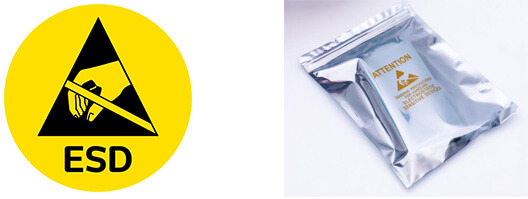
Electrostatic Discharge Protection and Handling

All electrostatic-sensitive components are handled in accordance with electrostatic discharge control procedures. The products are hermetically sealed in anti-static safe packaging to prevent electrostatic damage. Appropriate labeling is also applied for identification and traceability. This ensures product integrity during storage, handling and transportation.


ESD

Certifications & Memberships

Third-party certified, strict quality control. Our certification
  • ISO 9001: 2015
  • ISO 13485: 2016
  • ISO 14001: 2015
  • ISO 28000: 2007
  • ISO 45001: 2018
  • GB/T 27922-2011
  • SMTA
  • IPC
  • ESD
  • PSMA
STM32L051R8H7 Image

STM32L051R8H7

STMicroelectronics
98D-STM32L051R8H7

Want a better price? Add to Cart and Submit RFQ now, we'll contact you immediately.

0 RFQ
Shopping cart (0 Items)
It is empty.
Compare List (0 Items)
It is empty.
Feedback

Your feedback matters! At Allelco, we value the user experience and strive to improve it constantly.
Please share your comments with us via our feedback form, and we'll respond promptly.
Thank you for choosing Allelco.

Subject
E-mail
Comments
Captcha
Drag or click to upload file
Upload File
types: .xls, .xlsx, .doc, .docx, .jpg, .png and .pdf.
Max file size: 10MB