View All

Please refer to the English Version as our Official Version.Return

Europe
France(Français) Germany(Deutsch) Italy(Italia) Russian(русский) Poland(polski) Czech(Čeština) Luxembourg(Lëtzebuergesch) Netherlands(Nederland) Iceland(íslenska) Hungarian(Magyarország) Spain(español) Portugal(Português) Turkey(Türk dili) Bulgaria(Български език) Ukraine(Україна) Greece(Ελλάδα) Israel(עִבְרִית) Sweden(Svenska) Finland(Svenska) Finland(Suomi) Romania(românesc) Moldova(românesc) Slovakia(Slovenská) Denmark(Dansk) Slovenia(Slovenija) Slovenia(Hrvatska) Croatia(Hrvatska) Serbia(Hrvatska) Montenegro(Hrvatska) Bosnia and Herzegovina(Hrvatska) Lithuania(lietuvių) Spain(Português) Switzerland(Deutsch) United Kingdom(English)
Asia/Pacific
Japan(日本語) Korea(한국의) Thailand(ภาษาไทย) Malaysia(Melayu) Singapore(Melayu) Vietnam(Tiếng Việt) Philippines(Pilipino)
Africa, India and Middle East
United Arab Emirates(العربية) Iran(فارسی) Tajikistan(فارسی) India(हिंदी) Madagascar(malaɡasʲ)
South America / Oceania
New Zealand(Maori) Brazil(Português) Angola(Português) Mozambique(Português)
North America
United States(English) Canada(English) Haiti(Ayiti) Mexico(español)
HomeProductsIntegrated Circuits (ICs)Specialized ICsHCF4018BE
Image may be representation.
See specifications for product details.
EXPRESS OPTION
Payment method

HCF4018BE - STMicroelectronics

Manufacturer Part Number
HCF4018BE
Manufacturer
STMicroelectronics
Allelco Part Number
32D-HCF4018BE
Warranty
1 Year Allelco Warranty - Find out more
Stock Status:
17,030 pcs available, New & Original
Parts Description
DAC91001
Data sheet
-
Category
Integrated Circuits (ICs) > Specialized ICs
RoHs Status
Our certification
In stock: 17030

Required fields are indicated by an asterisk (*)
Please send RFQ, we will respond immediately.

Quantity

Specifications

HCF4018BE Tech Specifications
STMicroelectronics - HCF4018BE technical specifications, attributes, parameters and parts with similar specifications to STMicroelectronics - HCF4018BE

Product Attribute Attribute Value
Part Number HCF4018BE
Package DAC91001
Description DAC91001
Stock Condition Get 17030 pcs available quantity at Allelco
Payment PayPal / TT / Credit Card / Western Union
Allelco Certifications ESD / ISO 9001 / ISO 13485 / ISO 28000
Product Attribute Attribute Value
Manufacturer STMicroelectronics
RoHs Status -
Warranty 100% Perfect Functions
Transport port Hong Kong
Shipping by DHL / FedEx / UPS / TNT / SF Express
RFQ Email info@allelco.com

Frequently Asked Questions(FAQ)

How does the HCF4018BE compare to other DIP-packaged 4000-series CMOS devices in terms of propagation delay and power consumption when used as a binary counter at 5V supply?
The HCF4018BE, as part of ST’s HCMOS family, typically exhibits propagation delays around 70 ns at VDD = 5V, which is slightly faster than earlier HC variants but comparable to similar-function DIP counters like the CD4029BE. Its quiescent current remains under 1 µA due to high-impedance CMOS inputs, making it more power-efficient than bipolar TTL equivalents such as the 74LS93. However, compared to surface-mount alternatives like the MC14016B, the DIP packaging introduces minor parasitic capacitance, increasing switching energy by approximately 15–20% in high-frequency applications. For low-to-medium frequency counting tasks (below 1 MHz), this difference is negligible.
What are the key design considerations when replacing an existing HCF4018BE-based counter circuit with a newer variant or alternative IC to maintain timing accuracy?
When substituting the HCF4018BE, ensure compatibility in operating voltage range (±0.5V tolerance at 5V nominal) and clock edge sensitivity—this device responds to rising edges only. A common replacement candidate is the CD4018BM from Texas Instruments, which shares functional equivalence but may exhibit 10–20% higher propagation delay (typically 90–110 ns at 5V). To preserve timing integrity, verify that the new device maintains the same modulo behavior (mod-10 decade counter mode) and output drive capability (low-output impedance <100 Ω). Also confirm package thermal performance; DIP-16 variants generally support up to 70°C ambient without derating, matching the HCF4018BE’s specifications.
Can the HCF4018BE be safely operated near its absolute maximum ratings in automotive or industrial environments where transient voltages above 6V might occur?
Operating the HCF4018BE above 6V violates its absolute maximum rating (VDDmax = 15V but with derated reliability beyond 6V), though brief transients may not immediately damage it. In practice, for automotive (ISO 7637-2 compliant) or industrial systems exposed to inductive kickback or ESD events, a clamping circuit using a Zener diode (e.g., 5.1V TVS) in parallel with VDD and GND is strongly recommended. Without protection, even pulses above 8V can degrade CMOS gate oxide over time. The HCF4018BE lacks internal ESD diodes rated beyond ±2kV HBM, so external surge suppression is essential for robust operation.
Why might the HCF4018BE exhibit unexpected reset behavior when powered up from a floating input condition, and how should the RESET pin be managed during startup?
The HCF4018BE’s asynchronous clear function requires the MR (Master Reset) pin to be driven low to initialize the decade counter. If MR is left floating during power-up, leakage currents through unconnected CMOS inputs can cause unpredictable states due to internal node charge sharing. This manifests as erratic counting or failure to reset. Best practice dictates connecting MR to VSS via a 10 kΩ pull-down resistor or actively driving it low during initialization. Alternatively, use a capacitor-to-ground on MR with a discharge path ensures clean reset upon power-on without requiring manual intervention.
How does clock skew impact the effective counting range of the HCF4018BE in multi-stage cascaded configurations, and what layout precautions mitigate this issue?
In cascaded applications using multiple HCF4018BE stages (e.g., mod-100 counter), clock skew between stages can reduce maximum reliable count rate. Since each stage samples the clock on the rising edge, a skew greater than half the minimum setup time (~15 ns typical) risks metastability. For example, at 1 MHz clock, accumulated skew across three stages must remain below 30 ns to avoid missed counts. PCB layout should minimize trace lengths (<1 cm differential) and avoid routing near noisy signals. Additionally, using identical ICs from the same batch reduces process variation-induced timing differences, ensuring consistent edge alignment across stages.
What trade-offs exist between using the HCF4018BE in synchronous versus ripple-counting modes, particularly regarding fan-out and glitch generation?
The HCF4018BE inherently operates in ripple-counter mode—each stage triggers the next after completing its count cycle. This creates inherent propagation delay accumulation (≈70 ns per stage), limiting maximum clock frequency to ~7 MHz. While simple and low-cost, ripple modes produce transient glitches on intermediate outputs during state transitions, increasing EMI risk. Synchronous alternatives (like dedicated synchronous decoders) eliminate glitches but require additional logic. For the HCF4018BE, minimizing fan-out to ≤5 loads prevents excessive capacitive loading that could stretch rise/fall times beyond datasheet specs (tr/tf ≤ 50 ns at 5V), preserving clean transitions and reducing cross-talk in sensitive analog sections.
Is it advisable to use the HCF4018BE in battery-powered applications requiring sub-µA sleep currents, and if so, how?
The HCF4018BE consumes ~0.1 µA static current at 25°C, meeting ultra-low-power requirements. However, its asynchronous clear feature complicates power-down control—if enabled, it keeps the IC active. Instead, disable counting by holding EN (Enable) high and CLK low, or tie both EN and MR high to freeze state. During deep sleep, isolate VDD with a MOSFET switch to cut off supply completely, reducing leakage to nA levels. Never rely solely on CMOS input impedance to hold pins at valid logic levels while powered down, as substrate leakage increases exponentially below 3V supply rails.
How does temperature affect the guaranteed operating conditions of the HCF4018BE, and what margin should engineers apply when specifying it for extended ambient ranges?
The HCF4018BE guarantees functionality from -55°C to +125°C, but parametric degradation occurs outside commercial grade (-40°C to +85°C). At elevated temperatures (>100°C), propagation delay increases by ~20%, and noise margins decrease by 10–15 mV due to threshold voltage shift. For designs spanning industrial (-40°C to +85°C), add 20% timing margin to clock periods and ensure decoupling capacitance (≥100 nF ceramic + 10 µF tantalum) accounts for reduced ESR at high temperatures. Avoid exceeding 85°C continuously unless qualified for military/automotive grades, which may require additional derating based on application notes from STMicroelectronics.
Can the HCF4018BE directly drive LED displays without additional buffering, and what current-limiting strategy ensures safe operation?
The HCF4018BE provides standard CMOS outputs capable of sourcing/sinking up to 10 mA (per pin), sufficient for driving single LEDs. For a 20 mA LED at 2.1V forward voltage, use a series resistor: R = (VDD − VLED) / ILED = (5 − 2.1)/0.02 = 145 Ω → choose 150 Ω standard value. Parallel loads exceeding 50 µA total draw are acceptable, but avoid cascading multiple displays without buffers, as output impedance rises under load, causing voltage droop and logic errors. For multiplexed 7-segment displays, pair the HCF4018BE with a driver IC like the ULN2003A to maintain signal integrity.
What distinguishes the HCF4018BE from functionally similar but electrically incompatible parts like the CD4018BM, especially in mixed-signal designs?
While both implement decade counters with preset capabilities, the HCF4018BE uses ST’s HCMOS process optimized for wide voltage operation (2–15V) and low noise, whereas the CD4018BM employs TI’s legacy CMOS with narrower 3–15V range and higher input hysteresis. Electrically, the HCF4018BE has lower input capacitance (~5 pF vs ~8 pF), reducing coupling in RF-sensitive circuits. However, the CD4018BM offers better noise immunity in noisy environments due to higher VIH/VIL thresholds. Mixing them risks undefined logic levels if one drives another near threshold boundaries—always verify interfacing with SPICE models before deployment in mixed-supply systems.
How should the HCF4018BE be stored or handled to prevent electrostatic discharge (ESD) damage during prototyping or mass production?
Although the HCF4018BE is housed in a plastic DIP-16 package, it contains no built-in ESD protection beyond basic human-body model (HBM) tolerance (~±2 kV). During handling, use grounded workstations, wrist straps, and anti-static foam trays. Store unused units in conductive bags or original packaging. Before soldering, allow components to acclimate to room temperature for 24 hours to prevent condensation-induced latch-up. Reflow profiles should stay within JEDEC J-STD-020 limits (peak 260°C, <30 sec), as prolonged heat exposure can compromise bond wire integrity and increase susceptibility to secondary breakdown.
What role does the carry-out (CO) pin play in extending the counting range beyond ten digits using multiple HCF4018BE ICs?
The CO pin asserts high when the counter reaches 9 (binary 1001), providing a pulse-width-limited carry signal (~50 ns high-time) suitable for triggering the next stage. To cascade two HCF4018BEs into a mod-100 counter, connect the CO of the first to the EN pin of the second. Ensure the second stage’s clock aligns with the CO pulse; otherwise, missed counts occur. Because CO is not synchronized to the main clock, avoid feeding it directly into a fast comparator—use a Schmitt-trigger inverter (e.g., 74HC14) to reshape the signal. Total propagation delay through two stages becomes ~140 ns, capping usable clock frequency at ~5 MHz for stable operation.
Are there any known errata or silicon bugs associated with the HCF4018BE that could affect real-world reliability in long-duration embedded systems?
No major errata have been published by ST for the HCF4018BE, unlike some early 4000-series variants affected by latch-up or preset instability. However, field reports indicate occasional issues with preset override during rapid clock cycling near 10 MHz, where internal race conditions cause incorrect initial states. Mitigation includes adding a 1 kΩ resistor in series with the preset inputs and ensuring MR is asserted for >100 ns before enabling clock. Additionally, avoid operating near VDD = 2V, where noise margins drop significantly and glitches may corrupt state transitions. Regular firmware checksums or watchdog resets can detect anomalous behavior in safety-critical deployments.
How does package parasitics in the DIP-16 form factor influence high-speed performance of the HCF4018BE compared to SOIC or TSSOP implementations?
The DIP-16 package features longer leads (~2.5 mm) than surface-mount types, introducing inductance (~20 nH/lead) and capacitance (~3 pF between leads). At frequencies above 1 MHz, these parasitics elevate ground bounce and increase crosstalk between adjacent pins. For instance, switching 10 mA through a lead adds 0.5 V spike (L·di/dt = 20 nH × 0.5 A/ns = 10 mV), which may couple into neighboring signals. In contrast, SOIC-16 packages reduce lead length by 60%, lowering inductance to ~8 nH. Thus, while the HCF4018BE functions reliably up to 7 MHz in DIP, margin decreases rapidly above 5 MHz. Use bypass capacitors close to VDD/GND pins and keep traces short to compensate.
Can the HCF4018BE be used to implement a BCD-to-seven-segment decoder without additional glue logic, and what limitations apply?
No, the HCF4018BE is a counter, not a decoder. It outputs raw BCD (0–9) on QA–QD, which must be decoded to drive seven-segment displays. Implementing a full decoder requires external NAND/NOR gates or a dedicated IC like the MM54510. Directly connecting outputs to common-cathode LEDs will work for individual digits but wastes power and lacks multiplexing support. For minimal decoding, use a 4-input OR gate per segment (e.g., segment 'a' = QA + QB + QC + QD), but this draws excess current. Always include current-limiting resistors (100 Ω–1 kΩ depending on LED specs) regardless of implementation method.
What precautions are necessary when powering the HCF4018BE from a non-regulated source such as a battery or solar cell, given its sensitivity to supply ripple?
Unregulated supplies (e.g., Li-ion at 3.7V nominal) can fluctuate between 4.2V (full) and 3.0V (empty), crossing the HCF4018BE’s minimum VDD of 2V. However, large voltage transients or ringing during load steps may induce false triggers. Install a low-dropout regulator (LDO) like the MCP1700-5002E before the IC, or add a bulk capacitor (10 µF tantalum) plus a 100 nF ceramic near VDD/GND to suppress ripple. Monitor startup slope—ensure VDD rises slower than 1 ms to avoid internal contention during initialization. Avoid direct connection to high-impedance sources (>10 kΩ), as leakage currents can cause partial conduction and erratic behavior.
How should the HCF4018BE be tested in-circuit to validate correct operation without removing it from the PCB?
Use a logic analyzer or oscilloscope to probe key nodes: verify that QD–QA follow binary sequence (0000 → 1001) with proper propagation delay (~70 ns between stages). Check that CO pulses only occur after QDQCQBQA = 1001, with width matching tPHL specs. Apply a slow clock (1 kHz) to observe state transitions visually. Test preset functionality by asserting MR low and confirming immediate reset, then releasing MR and observing count restart. Measure quiescent current with a multimeter in series with VDD—expect <1 µA. Never test with probes drawing >1 mA simultaneously, as this can alter CMOS input thresholds and yield false negatives.
Given its age and widespread availability, is the HCF4018BE still recommended for new consumer electronics projects requiring RoHS compliance and long-term supply stability?
Yes, the HCF4018BE remains a viable choice for legacy-compatible designs due to its proven reliability, broad distributor inventory, and RoHS-compliant lead-free versions (suffix “TR” denotes tape-and-reel, “LF” indicates lead-free). However, consider migration to modern alternatives like the 74LVC161APW (Texas Instruments) for improved speed (15 ns delay) and lower power (1 µA max), especially in portable devices. If using the HCF4018BE, specify "STMicroelectronics HCF4018BE" in BOMs and verify last-time-buy status with suppliers. Its DIP-16 package supports hand-soldering and prototyping, offering flexibility in low-volume niches where automation isn’t cost-effective.

Customer Reviews

Evaluation: 10 Articles

  • Nath***rooks
    Jun 11, 2026

    Installed this power component in a converter board. Output remained stable under different load conditions and thermal performance was better than expected.

  • Dani***alkerTech
    Jun 1, 2026

    Product works, but setup took more effort than expected. Once configured the MCU ran reliably, although documentation support felt older compared with newer platforms. Fine for maintenance projects.

  • Yuki***aka88
    May 26, 2026

    信号通信プロジェクトでこのRS-485トランシーバーを使用しました。設置は簡単で、長距離ケーブルでも通信は安定していました。消費電力も、以前使用していたものより低くなっています。

  • Stev***aker
    May 20, 2026

    Solid diode for power rectification. Works well in switching circuits.

  • Bran***Lewis
    May 11, 2026

    Compact FPGA with good performance. Suitable for basic signal processing tasks.

  • Oliv***arris
    May 7, 2026

    Reliable I/O expander. Works well in embedded control applications.

  • Jess***Jones
    Apr 17, 2026

    It offers good value for the price, and the specifications match the description. I’ve been using it for two days with no issues, and I’ll definitely buy it again if I need it in the future.

  • Mich***Smith
    Apr 17, 2026

    Shipping was on time, the component pins are neatly aligned, and I tested 10 of them with a multimeter—all readings were within the specified range. Highly recommended.

  • Aman***arris
    Apr 3, 2026

    It was great—the entire process, from placing the order to receiving the package, went very smoothly. The components were consistent, the price was fair, and I had a very pleasant shopping experience.

  • Mike***nch
    Apr 3, 2026

    Better than expected! The resistance and capacitance readings were spot-on, and it passed the test on the first try. The service was reliable, and the packaging was thoughtful—I highly recommend it.

Write a Review

Your Email address will not be published.

Shipment

Delivery Time

In-stock items can be shipped within 24 hours. Some parts will be arranged for delivery within 1-2 days from the date all items arrive at our warehouse. And Allelco ships order once a day at about 17:00, except Sunday. Once the goods are shipped, the estimated delivery time depends on the shipping methods and Delivery destination. The table below shows are the logistic time for some common countries.

Delivery Cost

  1. Use your express account for shipment if you have one.
  2. Use our account for the shipment. Refer to the table below for the approximate charges.
(Different time frame / countries / package size has different price.)

Delivery Method

  1. Global Common Shipment by DHL / UPS / FedEx / TNT / EMS / SF we support.
  2. Others more shipping ways, please get in touch with your customer manager.

Common Countries Logistic Time Reference
Region Country Logistic Time(Day)
America United States 5
Brazil 7
Europe Germany 5
United Kingdom 4
Italy 5
Oceania Australia 6
New Zealand 5
Asia India 4
Japan 4
Middle East Israel 6
DHL & FedEx Shipment Charges Reference
Shipment charges(KG) Reference DHL(USD$)
0.00kg-1.00kg USD$30.00 - USD$60.00
1.00kg-2.00kg USD$40.00 - USD$80.00
2.00kg-3.00kg USD$50.00 - USD$100.00
Note:
The above table is for reference only. There may have some data bias for the uncontrollable factors.
Contact us if you have any questions.
  • QC (Quality Warranty)
  • Payment Support
  • Packaging
  • Certifications & Memberships

QC (Quality Warranty)

Allelco is committed to exceeding customer expectations through customer service excellence, order accuracy, and on-time delivery.
This is achieved through our commitment to the continual improvement of our processes, services, and products.


Strict quality inspection builds a solid foundation for electronic component quality.
  1. Visual inspection
  2. Performance testing and reliability verification
  3. Standardized full-process testing
  4. Precise control of every parameter
We eliminate defective components and ensure the stable operation of electronic devices through professional quality standards.

Payment Support

The payment method can be chosen from the methods shown below: Wire Transfer (T/T, Bank Transfer), Western Union, Credit card, PayPal.
  • HKBea
  • Paypal
  • MasterCard
  • Western-Union
  • VISA
Stable Delivery, Sincere Partnership — Your Faithful Supply Chain Partner
  • Efficient Supply Management
  • Cost-Saving Procurement
  • Fast Sourcing & Delivery
Contact us if you have any questions.

Packaging

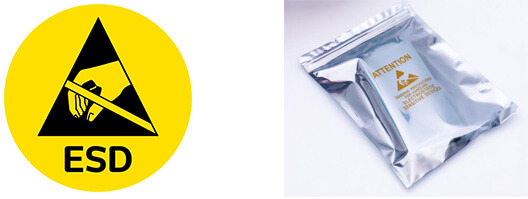
Electrostatic Discharge Protection and Handling

All electrostatic-sensitive components are handled in accordance with electrostatic discharge control procedures. The products are hermetically sealed in anti-static safe packaging to prevent electrostatic damage. Appropriate labeling is also applied for identification and traceability. This ensures product integrity during storage, handling and transportation.


ESD

Certifications & Memberships

Third-party certified, strict quality control. Our certification
  • ISO 9001: 2015
  • ISO 13485: 2016
  • ISO 14001: 2015
  • ISO 28000: 2007
  • ISO 45001: 2018
  • GB/T 27922-2011
  • SMTA
  • IPC
  • ESD
  • PSMA
STMicroelectronics

HCF4018BE

STMicroelectronics
32D-HCF4018BE

Want a better price? Add to Cart and Submit RFQ now, we'll contact you immediately.

0 RFQ
Shopping cart (0 Items)
It is empty.
Compare List (0 Items)
It is empty.
Feedback

Your feedback matters! At Allelco, we value the user experience and strive to improve it constantly.
Please share your comments with us via our feedback form, and we'll respond promptly.
Thank you for choosing Allelco.

Subject
E-mail
Comments
Captcha
Drag or click to upload file
Upload File
types: .xls, .xlsx, .doc, .docx, .jpg, .png and .pdf.
Max file size: 10MB