
View All

Please refer to the English Version as our Official Version.Return

Europe
France(Français) Germany(Deutsch) Italy(Italia) Russian(русский) Poland(polski) Czech(Čeština) Luxembourg(Lëtzebuergesch) Netherlands(Nederland) Iceland(íslenska) Hungarian(Magyarország) Spain(español) Portugal(Português) Turkey(Türk dili) Bulgaria(Български език) Ukraine(Україна) Greece(Ελλάδα) Israel(עִבְרִית) Sweden(Svenska) Finland(Svenska) Finland(Suomi) Romania(românesc) Moldova(românesc) Slovakia(Slovenská) Denmark(Dansk) Slovenia(Slovenija) Slovenia(Hrvatska) Croatia(Hrvatska) Serbia(Hrvatska) Montenegro(Hrvatska) Bosnia and Herzegovina(Hrvatska) Lithuania(lietuvių) Spain(Português) Switzerland(Deutsch) United Kingdom(English)
Asia/Pacific
Japan(日本語) Korea(한국의) Thailand(ภาษาไทย) Malaysia(Melayu) Singapore(Melayu) Vietnam(Tiếng Việt) Philippines(Pilipino)
Africa, India and Middle East
United Arab Emirates(العربية) Iran(فارسی) Tajikistan(فارسی) India(हिंदी) Madagascar(malaɡasʲ)
South America / Oceania
New Zealand(Maori) Brazil(Português) Angola(Português) Mozambique(Português)
North America
United States(English) Canada(English) Haiti(Ayiti) Mexico(español)
HomeProductsIntegrated Circuits (ICs)Linear - Amplifiers - Instrumentation, OP Amps, Buffer AmpsAD8609AR-REEL

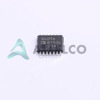
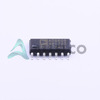
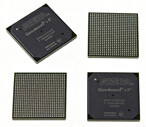
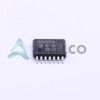
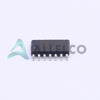
Image may be representation.
See specifications for product details.
EXPRESS OPTION
Payment method

AD8609AR-REEL - Analog Devices Inc.

Manufacturer Part Number
AD8609AR-REEL
Manufacturer
Analog Devices, Inc.
Allelco Part Number
98D-AD8609AR-REEL
Warranty
1 Year Allelco Warranty - Find out more
Stock Status:
17,375 pcs available, New & Original
Parts Description
IC CMOS 4 CIRCUIT 14SOIC
Package
14-SOIC
Data sheet
AD8609AR-REEL.pdf

Datasheets

AD8603,07,09.pdf

PCN Obsolescence/ EOL

Multiple Devices 29/Jan/2014.pdf

Other Related Documents

Tape and Reel Packaging.pdf
RoHs Status
 
Our certification
In stock: 17375

Required fields are indicated by an asterisk (*)
Please send RFQ, we will respond immediately.

Quantity

Specifications

AD8609AR-REEL Tech Specifications
Analog Devices Inc. - AD8609AR-REEL technical specifications, attributes, parameters and parts with similar specifications to Analog Devices Inc. - AD8609AR-REEL

Product Attribute Attribute Value
Manufacturer Analog Devices, Inc.
Voltage - Supply Span (Min) 1.8 V
Voltage - Supply Span (Max) 5 V
Voltage - Input Offset 12 µV
Supplier Device Package 14-SOIC
Slew Rate 0.1V/µs
Series -
Package / Case 14-SOIC (0.154", 3.90mm Width)
Package Tape & Reel (TR)
Output Type Rail-to-Rail
Product Attribute Attribute Value
Operating Temperature -40°C ~ 125°C
Number of Circuits 4
Mounting Type Surface Mount
Gain Bandwidth Product 400 kHz
Current - Supply 40µA (x4 Channels)
Current - Output / Channel 70 mA
Current - Input Bias 0.2 pA
Base Product Number AD8609
Amplifier Type CMOS

Environmental & Export Classifications

ATTRIBUTE DESCRIPTION
Moisture Sensitivity Level (MSL) 1 (Unlimited)
ECCN EAR99

Frequently Asked Questions(FAQ)

What are the key performance trade-offs when selecting the AD8609AR-REEL for precision analog signal conditioning in a 3.3V single-supply application?
The AD8609AR-REEL offers exceptional input offset voltage of 12 µV and ultra-low input bias current of 0.2 pA, making it suitable for high-precision applications. However, its gain bandwidth product of 400 kHz limits effective operation to signals below approximately 60 kHz when configured for gains greater than 6. Additionally, while the rail-to-rail output supports full dynamic range on a 3.3V supply, the slew rate of only 0.1 V/µs may introduce distortion in fast transient responses. Designers must balance these parameters against power consumption—40 µA per channel—and ensure that noise contributions from external components do not dominate the system’s overall precision.
How does the AD8609AR-REEL compare to the OPA4364AIDR in terms of input noise characteristics and stability under capacitive loading?
While both the AD8609AR-REEL and OPA4364AIDR are quad CMOS rail-to-rail amplifiers, the AD8609AR-REEL typically exhibits higher broadband voltage noise (around 100 nV/√Hz at 1 kHz) compared to the OPA4364AIDR’s lower-noise architecture. This difference becomes significant in low-level signal chains above 1 kHz. Furthermore, the AD8609AR-REEL maintains stable operation with moderate capacitive loads (up to ~500 pF) due to its internal compensation, whereas the OPA4364AIDR can oscillate beyond 1 nF without additional series resistance. In high-impedance sensor interfaces where stability is critical, this distinction may influence layout decisions or require added damping networks.
Can the AD8609AR-REEL reliably drive resistive loads below 1 kΩ without external buffering, and what impact does this have on output swing?
Yes, the AD8609AR-REEL provides up to 70 mA of output current per channel, which allows it to drive loads as low as 50 Ω with minimal headroom loss. For a 1 kΩ load at a 3.3V supply, the amplifier delivers near-rail-to-rail output swing with less than 50 mV of dropout under full load. However, driving heavy capacitive loads (>1 nF) without series resistance can lead to instability or ringing. Designers should verify transient response and consider adding small series resistors (22–100 Ω) at the output if stability under large capacitive loads is required, even though this introduces slight attenuation in AC-coupled paths.
What considerations apply when cascading multiple stages using the AD8609AR-REEL in a high-gain instrumentation amplifier configuration?
When configuring multiple AD8609AR-REEL channels in a multi-stage gain structure—such as a differential amplifier followed by a buffer—the cumulative effect of input offset voltage (12 µV) and drift over temperature must be evaluated. For a total gain of 1000, a 12 µV offset translates to 12 mV at the output, potentially saturating downstream stages unless proper nulling or calibration is implemented. Additionally, each stage contributes its own noise; the AD8609AR-REEL’s 100 nV/√Hz voltage noise adds in quadrature across stages. Careful attention to impedance matching, decoupling, and grounding topology is essential to prevent oscillation and maintain bandwidth integrity through the cascade.
Is the AD8609AR-REEL suitable for battery-powered IoT sensor nodes requiring sub-milliwatt power budgets?
The AD8609AR-REEL consumes 40 µA per channel with a 3.3V supply, totaling 160 µA for all four channels—well within typical battery life expectations for long-term deployments. However, in duty-cycled systems where sleep currents are dominant, the wake-up time (~50 µs to settle to 0.1%) should be factored into measurement timing. While power-efficient, its relatively modest gain bandwidth (400 kHz) makes it better suited for DC or slow-varying signals rather than wideband sensing. Alternatives with higher GBW may be preferable if the application requires rapid sampling or processing of modulated sensor data.
What precautions are necessary during PCB layout to minimize parasitic coupling and ensure stable operation of the AD8609AR-REEL?
Due to the AD8609AR-REEL’s high input impedance and low offset, layout parasitics such as trace capacitance and leakage currents can significantly affect performance. Keep feedback traces short and avoid routing them near noisy digital lines. Use guard rings around sensitive input nodes and ensure adequate copper pour isolation. Place bypass capacitors (0.1 µF ceramic) as close as possible to V+ and GND pins. Given the 14-SOIC package’s thermal pad, proper soldering and thermal relief reduce junction temperature variations that could impact offset drift over time or temperature cycles.
How does the operating temperature range (-40°C to 125°C) of the AD8609AR-REEL impact long-term drift in industrial control environments?
The AD8609AR-REEL’s input offset voltage of 12 µV is specified over the industrial temperature range, but actual drift can exceed 1 µV/°C depending on process variation and stress history. Over a 165°C span (from -40°C to +125°C), uncorrected offset could shift by more than 165 µV, equivalent to a 16.5 LSB error at 16-bit resolution with a 1V reference. In applications requiring high accuracy over extended thermal cycling, periodic recalibration or trimming may be necessary unless compensated via software or hardware nulling techniques.
Are there any known compatibility issues between the AD8609AR-REEL and alternative footprints like SOIC-14 vs. TSSOP-14 in high-frequency signal paths?
The AD8609AR-REEL uses a 14-SOIC footprint with a standard 3.9mm body width, which generally provides better thermal dissipation and mechanical robustness compared to narrower packages like TSSOP. While pin-compatible substitutes exist (e.g., BU7444SF-E2), their parasitic inductance and capacitance differ slightly due to different leadframe designs. At frequencies approaching 100 kHz, these differences can alter phase margin and effective bandwidth. When substituting, verify stability margins and possibly adjust compensation networks. The AD8609AR-REEL itself remains optimized for its SOIC form factor, so migration to other packages may require revalidation of loop dynamics.
What role does the Moisture Sensitivity Level (MSL) rating of MSL 1 play in manufacturing and storage logistics for the AD8609AR-REEL?
With an MSL 1 rating, the AD8609AR-REEL is classified as "non-hygroscopic" and poses no risk of moisture-induced damage during normal handling. It can be stored indefinitely under dry conditions without requiring bake-out prior to reflow soldering. This simplifies supply chain management and reduces production delays associated with humidity-controlled warehousing. Manufacturers can proceed directly to assembly after unpackaging, provided standard ESD precautions are observed, making it ideal for high-volume production environments with tight cycle times.
In what scenarios would substituting the AD8609AR-REEL with the AD8609ARZ-REEL offer meaningful advantages despite identical electrical specifications?
Although the AD8609AR-REEL and AD8609ARZ-REEL share the same pinout and performance parameters, the "Z" suffix often indicates tape-and-reel packaging optimized for automated pick-and-place assembly. The REEL variant is designed for continuous feed processes, reducing manual handling and improving placement accuracy in mass production. Additionally, reel-specific devices undergo enhanced packaging inspection, which may improve reliability in harsh manufacturing environments. For prototype development, the AR variant suffices, but for commercial production, the ARZ-REEL supports higher throughput and lower defect rates during SMT line integration.
How does the AD8609AR-REEL’s gain bandwidth product interact with closed-loop gain selection in audio preamplifier applications?
With a gain bandwidth product (GBP) of 400 kHz, the AD8609AR-REEL can support closed-loop gains up to approximately 200 before unity-gain bandwidth falls below usable thresholds. For example, at a gain of 100, the bandwidth is limited to ~4 kHz—adequate for voice-band signals but insufficient for high-fidelity music reproduction requiring flat response up to 20 kHz. To extend bandwidth in high-gain configurations, one might reduce gain and add subsequent stages, though this increases complexity and noise accumulation. Alternatively, lower-gain designs preserve more usable frequency response but require careful filtering to avoid aliasing in sampled systems.
What are the implications of the AD8609AR-REEL’s rail-to-rail input/output architecture in single-supply versus dual-supply topologies?
The rail-to-rail capability of the AD8609AR-REEL enables efficient use of low-voltage supplies (down to 1.8V), allowing full signal excursion without clipping near ground. In single-supply designs (e.g., 3.3V), this ensures maximum dynamic range for sensors referenced to ground. However, in dual-supply systems (±1.65V), the input common-mode range extends slightly further into negative rails, which may benefit bipolar signal conditioning. Despite this, most benefits arise in space-constrained or battery-operated devices where headroom minimization is critical. Always confirm that input signals remain within the specified common-mode window to avoid nonlinear behavior or latch-up risks.
Can the AD8609AR-REEL be safely used in medical ECG front-end circuits without additional filtering or guarding?
While the AD8609AR-REEL has low offset and bias current suitable for weak bioelectric signals, its 400 kHz GBP and 100 nV/√Hz noise floor make it marginal for direct ECG use without preprocessing. Typical ECG signals occupy 0.05 Hz to 100 Hz, well below the amplifier’s passband, but motion artifacts and EMI can alias into critical bands. External RC filters (e.g., 0.5 Hz high-pass, 100 Hz low-pass) are mandatory to suppress out-of-band interference and prevent saturation from baseline wander. Moreover, galvanic isolation and patient-safe layouts are non-negotiable; the amplifier alone does not fulfill medical safety standards.
How does the current consumption of the AD8609AR-REEL compare to newer generations like the AD8659ARZ-R7 in low-power monitoring applications?
The AD8609AR-REEL draws 40 µA per channel at 3.3V, whereas the AD8659ARZ-R7 improves upon this with a 25 µA per-channel consumption, offering better efficiency in energy-scavenging systems. Both share similar offset and noise characteristics, but the AD8659’s reduced quiescent current comes with a slight increase in voltage noise density (~150 nV/√Hz). In battery-backed loggers or wireless sensors, this 37% reduction in static power extends operational lifetime. However, if absolute precision outweighs power savings, the AD8609 remains viable for moderate-duty cycles where thermal budget allows.
What design constraints emerge when using the AD8609AR-REEL in parallel to increase output drive capacity?
Parallel operation of multiple AD8609AR-REEL channels to share output current introduces challenges in balancing currents due to inherent gain mismatches and propagation delays. Even minor offset differences (tens of microvolts) can cause circulating currents that degrade efficiency and generate heat. Without matched feedback networks and precise resistor tolerances (<0.1%), one channel may dominate while others remain idle. This approach is rarely recommended except in very specific high-current buffering scenarios with active current sharing control. Safer alternatives include dedicated multi-channel op amps or discrete driver ICs designed for paralleling.
Why might the AD8609AR-REEL exhibit reduced phase margin when driving capacitive loads in servo-control loops?
The AD8609AR-REEL is internally compensated for unity-gain stability, but capacitive loads introduce a zero at the amplifier’s output node that interacts with the dominant pole, shifting phase away from 0°. Beyond ~1 nF, the phase lag approaches -90°, risking oscillation in feedback-critical loops. To mitigate this, a small series resistor (typically 22–100 Ω) is inserted between the amplifier output and load capacitor to isolate the op amp from direct capacitive coupling. This forms a damping network that restores acceptable phase margin, albeit at the cost of reduced bandwidth and increased droop in transient response.
What are the consequences of exceeding the supply voltage range (1.8V to 5V) on the AD8609AR-REEL’s protection circuitry?
Operating the AD8609AR-REEL outside its specified 1.8V to 5V supply range compromises built-in ESD protection diodes and internal biasing networks. Exceeding 5V risks forward-biasing input protection structures, leading to excessive leakage currents that degrade input impedance and introduce offset errors. Similarly, voltages below 1.8V may prevent proper transistor turn-on, causing degraded rail-to-rail performance and increased offset drift. Although some devices tolerate brief excursions, sustained operation beyond limits violates Absolute Maximum Ratings and can result in parametric shifts or latent damage affecting long-term reliability.
How does the ECCN classification (EAR99) of the AD8609AR-REEL affect global distribution and export compliance?
Classified under ECCN EAR99, the AD8609AR-REEL is subject to U.S. Export Administration Regulations (EAR) but is not controlled for strategic reasons. This means it generally qualifies for simplified licensing procedures and broad international shipment without complex approvals, provided it is not integrated into military or space-grade systems. Importers should still verify local regulations, especially in regions like China or Russia, where end-use restrictions may apply. For most industrial and consumer electronics, EAR99 status facilitates smoother cross-border logistics and reduces compliance overhead.

Parts with Similar Specifications

The three parts on the right have similar specifications to Analog Devices Inc. AD8609AR-REEL

Product Attribute AD8609ARZ-REEL AD8609ARUZ-REEL AD8609ARZ-REEL7 AD8608ARUZ-REEL
Part Number AD8609ARZ-REEL AD8609ARUZ-REEL AD8609ARZ-REEL7 AD8608ARUZ-REEL
Manufacturer Analog Devices Inc. Analog Devices Inc. Analog Devices Inc. Analog Devices Inc.
Slew Rate - - - -
Amplifier Type - - - -
Current - Output / Channel - - - -
Number of Circuits - - - -
Base Product Number - DAC34H84 MAX500 ADS62P42
Package - Tape & Reel (TR) Tube Tape & Reel (TR)
Current - Input Bias - - - -
Series - - - -
Output Type - Current - Unbuffered Voltage - Buffered -
Voltage - Supply Span (Min) - - - -
Current - Supply - - - -
Mounting Type - Surface Mount Through Hole Surface Mount
Gain Bandwidth Product - - - -
Package / Case - 196-LFBGA 16-DIP (0.300', 7.62mm) 64-VFQFN Exposed Pad
Supplier Device Package - 196-NFBGA (12x12) 16-PDIP 64-VQFN (9x9)
Voltage - Input Offset - - - -
Operating Temperature - -40°C ~ 85°C 0°C ~ 70°C -40°C ~ 85°C
Voltage - Supply Span (Max) - - - -

AD8609AR-REEL Datasheet PDF

Download AD8609AR-REEL pdf datasheets and Analog Devices Inc. documentation for AD8609AR-REEL - Analog Devices Inc..

Datasheets
AD8603,07,09.pdf
PCN Obsolescence/ EOL
Multiple Devices 29/Jan/2014.pdf
Other Related Documents
Tape and Reel Packaging.pdf

Customer Reviews

Evaluation: 10 Articles

  • Dani***alkerTech
    Jun 1, 2026

    Product works, but setup took more effort than expected. Once configured the MCU ran reliably, although documentation support felt older compared with newer platforms. Fine for maintenance projects.

  • Yuki***aka88
    May 26, 2026

    信号通信プロジェクトでこのRS-485トランシーバーを使用しました。設置は簡単で、長距離ケーブルでも通信は安定していました。消費電力も、以前使用していたものより低くなっています。

  • Stev***aker
    May 20, 2026

    Solid diode for power rectification. Works well in switching circuits.

  • Bran***Lewis
    May 11, 2026

    Compact FPGA with good performance. Suitable for basic signal processing tasks.

  • Oliv***arris
    May 7, 2026

    Reliable I/O expander. Works well in embedded control applications.

  • Jess***Jones
    Apr 17, 2026

    It offers good value for the price, and the specifications match the description. I’ve been using it for two days with no issues, and I’ll definitely buy it again if I need it in the future.

  • Mich***Smith
    Apr 17, 2026

    Shipping was on time, the component pins are neatly aligned, and I tested 10 of them with a multimeter—all readings were within the specified range. Highly recommended.

  • Aman***arris
    Apr 3, 2026

    It was great—the entire process, from placing the order to receiving the package, went very smoothly. The components were consistent, the price was fair, and I had a very pleasant shopping experience.

  • Mike***nch
    Apr 3, 2026

    Better than expected! The resistance and capacitance readings were spot-on, and it passed the test on the first try. The service was reliable, and the packaging was thoughtful—I highly recommend it.

  • Daic***K.
    Mar 23, 2026

    Very good. No issue after long time testing.

Write a Review

Your Email address will not be published.

Shipment

Delivery Time

In-stock items can be shipped within 24 hours. Some parts will be arranged for delivery within 1-2 days from the date all items arrive at our warehouse. And Allelco ships order once a day at about 17:00, except Sunday. Once the goods are shipped, the estimated delivery time depends on the shipping methods and Delivery destination. The table below shows are the logistic time for some common countries.

Delivery Cost

  1. Use your express account for shipment if you have one.
  2. Use our account for the shipment. Refer to the table below for the approximate charges.
(Different time frame / countries / package size has different price.)

Delivery Method

  1. Global Common Shipment by DHL / UPS / FedEx / TNT / EMS / SF we support.
  2. Others more shipping ways, please get in touch with your customer manager.

Common Countries Logistic Time Reference
Region Country Logistic Time(Day)
America United States 5
Brazil 7
Europe Germany 5
United Kingdom 4
Italy 5
Oceania Australia 6
New Zealand 5
Asia India 4
Japan 4
Middle East Israel 6
DHL & FedEx Shipment Charges Reference
Shipment charges(KG) Reference DHL(USD$)
0.00kg-1.00kg USD$30.00 - USD$60.00
1.00kg-2.00kg USD$40.00 - USD$80.00
2.00kg-3.00kg USD$50.00 - USD$100.00
Note:
The above table is for reference only. There may have some data bias for the uncontrollable factors.
Contact us if you have any questions.
  • QC (Quality Warranty)
  • Payment Support
  • Packaging
  • Certifications & Memberships

QC (Quality Warranty)

Allelco is committed to exceeding customer expectations through customer service excellence, order accuracy, and on-time delivery.
This is achieved through our commitment to the continual improvement of our processes, services, and products.


Strict quality inspection builds a solid foundation for electronic component quality.
  1. Visual inspection
  2. Performance testing and reliability verification
  3. Standardized full-process testing
  4. Precise control of every parameter
We eliminate defective components and ensure the stable operation of electronic devices through professional quality standards.

Payment Support

The payment method can be chosen from the methods shown below: Wire Transfer (T/T, Bank Transfer), Western Union, Credit card, PayPal.
  • HKBea
  • Paypal
  • MasterCard
  • Western-Union
  • VISA
Stable Delivery, Sincere Partnership — Your Faithful Supply Chain Partner
  • Efficient Supply Management
  • Cost-Saving Procurement
  • Fast Sourcing & Delivery
Contact us if you have any questions.

Packaging

Electrostatic Discharge Protection and Handling

All electrostatic-sensitive components are handled in accordance with electrostatic discharge control procedures. The products are hermetically sealed in anti-static safe packaging to prevent electrostatic damage. Appropriate labeling is also applied for identification and traceability. This ensures product integrity during storage, handling and transportation.


ESD

Certifications & Memberships

Third-party certified, strict quality control. Our certification
  • ISO 9001: 2015
  • ISO 13485: 2016
  • ISO 14001: 2015
  • ISO 28000: 2007
  • ISO 45001: 2018
  • GB/T 27922-2011
  • SMTA
  • IPC
  • ESD
  • PSMA
Analog Devices Inc.

AD8609AR-REEL

Analog Devices Inc.
98D-AD8609AR-REEL

Want a better price? Add to Cart and Submit RFQ now, we'll contact you immediately.

0 RFQ
Shopping cart (0 Items)
It is empty.
Compare List (0 Items)
It is empty.
Feedback

Your feedback matters! At Allelco, we value the user experience and strive to improve it constantly.
Please share your comments with us via our feedback form, and we'll respond promptly.
Thank you for choosing Allelco.

Subject
E-mail
Comments
Captcha
Drag or click to upload file
Upload File
types: .xls, .xlsx, .doc, .docx, .jpg, .png and .pdf.
Max file size: 10MB