View All

Please refer to the English Version as our Official Version.Return

Europe
France(Français) Germany(Deutsch) Italy(Italia) Russian(русский) Poland(polski) Czech(Čeština) Luxembourg(Lëtzebuergesch) Netherlands(Nederland) Iceland(íslenska) Hungarian(Magyarország) Spain(español) Portugal(Português) Turkey(Türk dili) Bulgaria(Български език) Ukraine(Україна) Greece(Ελλάδα) Israel(עִבְרִית) Sweden(Svenska) Finland(Svenska) Finland(Suomi) Romania(românesc) Moldova(românesc) Slovakia(Slovenská) Denmark(Dansk) Slovenia(Slovenija) Slovenia(Hrvatska) Croatia(Hrvatska) Serbia(Hrvatska) Montenegro(Hrvatska) Bosnia and Herzegovina(Hrvatska) Lithuania(lietuvių) Spain(Português) Switzerland(Deutsch) United Kingdom(English)
Asia/Pacific
Japan(日本語) Korea(한국의) Thailand(ภาษาไทย) Malaysia(Melayu) Singapore(Melayu) Vietnam(Tiếng Việt) Philippines(Pilipino)
Africa, India and Middle East
United Arab Emirates(العربية) Iran(فارسی) Tajikistan(فارسی) India(हिंदी) Madagascar(malaɡasʲ)
South America / Oceania
New Zealand(Maori) Brazil(Português) Angola(Português) Mozambique(Português)
North America
United States(English) Canada(English) Haiti(Ayiti) Mexico(español)
HomeProductsIntegrated Circuits (ICs)Specialized ICsEP1K50TC144
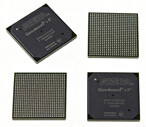
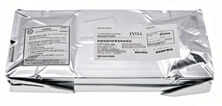
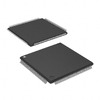
Image may be representation.
See specifications for product details.
EXPRESS OPTION
Payment method

EP1K50TC144 - ALTERA

Manufacturer Part Number
EP1K50TC144
Manufacturer
Altera (Intel)
Allelco Part Number
41D-EP1K50TC144
Warranty
1 Year Allelco Warranty - Find out more
Stock Status:
5,490 pcs available, New & Original
Parts Description
-
Data sheet
-
Category
Integrated Circuits (ICs) > Specialized ICs
RoHs Status
Our certification
In stock: 5490

Required fields are indicated by an asterisk (*)
Please send RFQ, we will respond immediately.

Quantity

Specifications

EP1K50TC144 Tech Specifications
ALTERA - EP1K50TC144 technical specifications, attributes, parameters and parts with similar specifications to ALTERA - EP1K50TC144

Product Attribute Attribute Value
Part Number EP1K50TC144
Package -
Description -
Stock Condition Get 5490 pcs available quantity at Allelco
Payment PayPal / TT / Credit Card / Western Union
Allelco Certifications ESD / ISO 9001 / ISO 13485 / ISO 28000
Product Attribute Attribute Value
Manufacturer Altera (Intel)
RoHs Status -
Warranty 100% Perfect Functions
Transport port Hong Kong
Shipping by DHL / FedEx / UPS / TNT / SF Express
RFQ Email info@allelco.com

Frequently Asked Questions(FAQ)

How does the EP1K50TC144’s pin count and thermal characteristics compare to similar FPGA packages when used in high-frequency switching applications?
The EP1K50TC144 features 144 pins arranged in a QFP package, which provides a moderate pin density suitable for compact system designs. With a typical junction-to-ambient thermal resistance of approximately 35°C/W under natural convection, it can dissipate around 2W of power without active cooling in ambient temperatures up to 60°C. This makes it viable for low-to-moderate power digital control tasks but may require thermal management—such as heatsinking or airflow—for sustained operation above 3W. In comparison to larger FPGAs like the EP1K100TC144, the EP1K50TC144 trades some logic capacity for reduced power density, resulting in better thermal headroom per logic element.
What are the key trade-offs between using the EP1K50TC144 versus discrete logic ICs for implementing a 16-bit synchronous counter with register banking?
Implementing a 16-bit synchronous counter with register banking using the EP1K50TC144 offers significant advantages in timing predictability, design reuse, and integration density compared to discrete logic ICs. The FPGA can implement all registers and combinational logic in a single clock domain, minimizing skew and eliminating propagation delay mismatches across multiple ICs. However, this approach consumes more power and requires careful floorplanning to manage routing congestion. Discrete logic alternatives using, for example, 74HC series counters and flip-flops would use fewer logic gates but increase board space and introduce cumulative jitter from multiple clock buffers. The EP1K50TC144 is better suited when system reliability, debuggability, and future reconfiguration are priorities over bill of materials cost and static power consumption.
Can the EP1K50TC144 reliably drive multiple high-capacitance loads such as long PCB traces or unterminated transmission lines at 3.3V?
Driving high-capacitance loads directly from the EP1K50TC144 outputs is possible but must be evaluated carefully. Each I/O pin typically sources or sinks up to ±12 mA at 3.3V VCCIO, which limits slew rate during transitions into large capacitive loads. For example, driving a 50pF load through 25Ω output impedance results in a rise time of roughly 1.8 ns, potentially causing signal integrity issues if the trace length exceeds λ/10 at target frequencies. In such cases, external bus drivers or level translators should be considered. Additionally, simultaneous switching noise (SSN) may increase due to localized ground bounce, especially when multiple outputs toggle together. Proper termination and layout practices are essential to maintain signal integrity.
Is the EP1K50TC144 suitable for industrial environments requiring extended temperature operation beyond 85°C?
While the EP1K50TC144 datasheet specifies an operating junction temperature range of -40°C to +85°C, real-world performance in industrial settings often depends on local ambient conditions and heat dissipation. At 85°C ambient with minimal airflow, internal power dissipation must remain below 1.2W to avoid exceeding the maximum junction temperature. This constrains dynamic power usage significantly; for instance, an FPGA consuming 500 mW in standby may only tolerate 700 mW of active switching before thermal shutdown. Therefore, while technically rated for industrial use, designers must ensure adequate thermal budgeting, possibly by reducing clock speeds or disabling unused blocks to stay within safe operating margins.
How does clock distribution differ between using internal PLLs versus external crystal oscillators with the EP1K50TC144?
The EP1K50TC144 includes dedicated phase-locked loop (PLL) resources that allow precise generation of multiple clock phases from a single reference source. When using an external 25 MHz crystal, the PLL can multiply the frequency to 100 MHz with sub-picosecond jitter, enabling tight synchronization across logic domains. However, PLLs consume static power even when idle and may introduce phase noise if not properly configured. Direct use of a low-jitter oscillator bypasses the PLL entirely, saving power and avoiding potential lock-up conditions, but limits flexibility for dynamic frequency scaling. For applications requiring deterministic timing, the PLL is preferred; for low-power embedded systems, an external oscillator paired with simple clock buffering may offer better efficiency.
What considerations apply when interfacing the EP1K50TC144 to DDR memory controllers versus standard SRAM interfaces?
Interfacing the EP1K50TC144 to DDR memory presents stricter timing and signal integrity requirements than standard SRAM. DDR protocols demand precise control over data eye margins, setup/hold times, and simultaneous switching output (SSO) budgets. The FPGA’s internal delay-locked loops (DLLs) help align data capture edges, but achieving reliable operation typically requires calibrated I/O delays and careful PCB stackup to minimize crosstalk. Additionally, power supply noise coupling into DDR reference voltages can corrupt data, necessitating separate analog supplies and decoupling near the DRAM. Compared to SRAM, which tolerates slightly relaxed timing, DDR demands more robust clocking architecture and layout discipline—resources well within the EP1K50TC144’s capabilities but requiring disciplined implementation.
Should decoupling capacitors be placed on individual power rails or shared across the entire VCCINT plane for the EP1K50TC144?
Decoupling strategy for the EP1K50TC144 should prioritize proximity and granularity rather than blanket coverage. High-frequency noise generated by internal switching activity couples primarily into the core voltage plane (VCCINT), so placing 0.1 µF ceramic capacitors within 5 mm of each VCCINT pin reduces transient impedance. Larger bulk capacitors (e.g., 10 µF tantalum or polymer) should connect to the same net further out to handle slow drifts. Sharing rails across multiple FPGAs increases risk of cross-talk unless separated by sufficient guard traces or split planes. Given the EP1K50TC144’s moderate logic capacity (~50 KLEs), its dynamic current transients are manageable with distributed decoupling, making localized placement both effective and economical.
Are there any limitations in using the EP1K50TC144 for implementing a USB 2.0 full-speed device controller compared to higher-density FPGAs?
Implementing a USB 2.0 full-speed device controller in the EP1K50TC144 is feasible but resource-intensive. The protocol requires precise bit-level timing (±2% accuracy), dedicated endpoints, and strict turnaround sequences that consume significant logic elements and I/O bandwidth. The EP1K50TC144 has sufficient routing channels and block RAM (~192 kbits) to store descriptors and buffers, but complex state machines may exhaust LAB resources. Moreover, meeting USB electrical specifications demands careful impedance-controlled routing and ESD protection. Higher-density FPGAs offer more parallelism and built-in transceivers, but for simple devices like HID peripherals, the EP1K50TC144 can suffice if optimized firmware and synthesis constraints are applied. Still, verification overhead increases due to limited debugging visibility compared to hard IP cores.
How does power-up sequencing affect configuration stability in the EP1K50TC144-based designs?
The EP1K50TC144 relies on an external flash or serial configuration device for startup, and improper power-up sequencing can lead to configuration failures. If VCCINT rises significantly later than VCCIO or I/O voltages, internal logic states become undefined until full power stabilizes, potentially corrupting the configuration stream. Similarly, if the configuration clock (CCLK) starts before stable power, bits may be misread. Most designs require VCCINT to settle within 1 ms after VCCIO, with all supplies rising monotonically. Brownout reset circuits or POR (power-on-reset) monitors are recommended to delay CCLK assertion until all rails meet minimum thresholds, ensuring reproducible boot behavior across production units.
What role do global clock networks play in timing closure for designs implemented on the EP1K50TC144?
Global clock networks in the EP1K50TC144 minimize skew by distributing clocks through dedicated low-skew routing trees, which is critical for synchronous designs targeting >50 MHz. These networks reduce insertion delay variation across different parts of the die, improving timing margin by several hundred picoseconds. Without them, local routing introduces unpredictable delays that complicate static timing analysis. However, excessive use of global buffers increases dynamic power and routing congestion. For moderate-speed designs (<30 MHz), regional routing may suffice, but crossing clock domains or synchronizing asynchronous inputs still requires careful handoff logic regardless of network choice. Thus, leveraging global nets effectively supports predictable timing closure in medium-complexity systems.
Can the EP1K50TC144 support hot-swap insertion in USB host applications without additional protection circuitry?
Hot-swap capability in USB host applications demands robust ESD protection and current limiting due to plug/unplug transients. The EP1K50TC144 itself lacks built-in ESD diodes strong enough for direct USB connection, so external TVS diodes and series resistors are mandatory. Additionally, the FPGA’s I/O standards must tolerate VBUS fluctuations during insertion (up to 5.25V), requiring either level-shifting or Schottky clamping diodes. While the device can manage the digital protocol once powered correctly, survival during hot-plug events depends entirely on peripheral protection. Thus, the EP1K50TC144 alone cannot guarantee safe hot-swap operation—external components are non-negotiable for compliance with USB specification robustness requirements.
What impact does partial reconfiguration have on power consumption and timing when modifying subsets of logic blocks in the EP1K50TC144?
Partial reconfiguration in the EP1K50TC144 allows selective updating of specific regions without affecting the entire design, which can reduce downtime and simplify firmware updates. However, it introduces additional overhead: context saving/restoring consumes extra cycles, and routing changes between static and dynamic regions may violate timing constraints if not carefully planned. Power savings depend on the fraction of logic updated—reconfiguring only 10% of available LABs might save <5% total power, whereas full reconfiguration resets all state. Timing closure becomes more challenging due to added multiplexers and control logic for region switching. Thus, partial reconfiguration offers architectural benefits but requires detailed analysis to justify its complexity in cost-sensitive or real-time systems.
How does the EP1K50TC144 compare to microcontrollers with integrated FPGA-like peripherals for motor control applications?
For motor control, the EP1K50TC144 provides superior timing precision and parallelism compared to microcontrollers, especially in field-oriented control algorithms requiring synchronized PWM generation and ADC sampling. The FPGA can generate multiple complementary PWM signals with nanosecond-level alignment, whereas MCUs rely on timer modules with microsecond resolution. However, MCUs offer lower static power, integrated ADCs, and simpler software development. The EP1K50TC144 excels when multiple motors, encoders, and safety interlocks must coexist on a single chip, but adds complexity in debugging and verification. Choosing between them hinges on whether deterministic hardware response outweighs software flexibility and power budget concerns.
What precautions are necessary when using the EP1K50TC144 in automotive-grade temperature ranges?
Operating the EP1K50TC144 in automotive environments (-40°C to +125°C) requires derating beyond standard commercial grades. Junction temperatures approaching 125°C reduce mean time between failures and increase leakage current exponentially. Designers must ensure maximum power dissipation stays below 0.8W at 105°C ambient to maintain reliability, achieved by lowering clock frequencies or disabling unused logic. Additionally, solder joint fatigue becomes a concern under thermal cycling, mandating conformal coating and mechanical strain relief. Component sourcing must verify automotive qualification status, as many FPGAs are only rated to 85°C. Thus, while the EP1K50TC144 could function in mild automotive roles, full AEC-Q100 compliance likely requires higher-grade variants or alternative architectures.
How does the number of available I/O banks influence system partitioning when designing with the EP1K50TC144?
The EP1K50TC144 typically supports four independent I/O banks with separate VCCIO supplies, enabling mixed-voltage interfaces without level-shifter overhead. This facilitates clean separation between 1.8V logic, 3.3V peripherals, and 5V legacy devices. Bank isolation also simplifies EMC compliance by containing noise within domains. However, routing across banks increases wirelength, potentially degrading timing for inter-bank paths. Effective partitioning groups related functionality within single banks to minimize cross-domain traffic. For example, keeping SPI flash and configuration logic in one bank avoids contention during boot. Thus, strategic bank utilization enhances signal integrity and reduces complexity, though it demands upfront planning to avoid inefficient layouts.
What factors determine whether to implement CRC checking in hardware versus software when transmitting data through the EP1K50TC144?
Hardware CRC implementation in the EP1K50TC144 saves CPU cycles and ensures consistent latency, crucial for time-critical protocols like CAN or Ethernet. Using dedicated logic cells reduces interrupt latency from hundreds of microseconds (software) to single-digit microseconds, improving determinism. However, it consumes FPGA resources that could otherwise expand functionality, and debugging failures is harder since no source code trace exists. Software CRC is easier to modify and debug but risks missing deadlines under heavy load. The decision depends on required error detection rate, real-time constraints, and available logic elements. For high-reliability serial links, hardware CRC is justified; for infrequent transfers, software suffices and preserves FPGA capacity.

Customer Reviews

Evaluation: 10 Articles

  • Nath***rooks
    Jun 11, 2026

    Installed this power component in a converter board. Output remained stable under different load conditions and thermal performance was better than expected.

  • Dani***alkerTech
    Jun 1, 2026

    Product works, but setup took more effort than expected. Once configured the MCU ran reliably, although documentation support felt older compared with newer platforms. Fine for maintenance projects.

  • Yuki***aka88
    May 26, 2026

    信号通信プロジェクトでこのRS-485トランシーバーを使用しました。設置は簡単で、長距離ケーブルでも通信は安定していました。消費電力も、以前使用していたものより低くなっています。

  • Stev***aker
    May 20, 2026

    Solid diode for power rectification. Works well in switching circuits.

  • Bran***Lewis
    May 11, 2026

    Compact FPGA with good performance. Suitable for basic signal processing tasks.

  • Oliv***arris
    May 7, 2026

    Reliable I/O expander. Works well in embedded control applications.

  • Jess***Jones
    Apr 17, 2026

    It offers good value for the price, and the specifications match the description. I’ve been using it for two days with no issues, and I’ll definitely buy it again if I need it in the future.

  • Mich***Smith
    Apr 17, 2026

    Shipping was on time, the component pins are neatly aligned, and I tested 10 of them with a multimeter—all readings were within the specified range. Highly recommended.

  • Aman***arris
    Apr 3, 2026

    It was great—the entire process, from placing the order to receiving the package, went very smoothly. The components were consistent, the price was fair, and I had a very pleasant shopping experience.

  • Mike***nch
    Apr 3, 2026

    Better than expected! The resistance and capacitance readings were spot-on, and it passed the test on the first try. The service was reliable, and the packaging was thoughtful—I highly recommend it.

Write a Review

Your Email address will not be published.

Shipment

Delivery Time

In-stock items can be shipped within 24 hours. Some parts will be arranged for delivery within 1-2 days from the date all items arrive at our warehouse. And Allelco ships order once a day at about 17:00, except Sunday. Once the goods are shipped, the estimated delivery time depends on the shipping methods and Delivery destination. The table below shows are the logistic time for some common countries.

Delivery Cost

  1. Use your express account for shipment if you have one.
  2. Use our account for the shipment. Refer to the table below for the approximate charges.
(Different time frame / countries / package size has different price.)

Delivery Method

  1. Global Common Shipment by DHL / UPS / FedEx / TNT / EMS / SF we support.
  2. Others more shipping ways, please get in touch with your customer manager.

Common Countries Logistic Time Reference
Region Country Logistic Time(Day)
America United States 5
Brazil 7
Europe Germany 5
United Kingdom 4
Italy 5
Oceania Australia 6
New Zealand 5
Asia India 4
Japan 4
Middle East Israel 6
DHL & FedEx Shipment Charges Reference
Shipment charges(KG) Reference DHL(USD$)
0.00kg-1.00kg USD$30.00 - USD$60.00
1.00kg-2.00kg USD$40.00 - USD$80.00
2.00kg-3.00kg USD$50.00 - USD$100.00
Note:
The above table is for reference only. There may have some data bias for the uncontrollable factors.
Contact us if you have any questions.
  • QC (Quality Warranty)
  • Payment Support
  • Packaging
  • Certifications & Memberships

QC (Quality Warranty)

Allelco is committed to exceeding customer expectations through customer service excellence, order accuracy, and on-time delivery.
This is achieved through our commitment to the continual improvement of our processes, services, and products.


Strict quality inspection builds a solid foundation for electronic component quality.
  1. Visual inspection
  2. Performance testing and reliability verification
  3. Standardized full-process testing
  4. Precise control of every parameter
We eliminate defective components and ensure the stable operation of electronic devices through professional quality standards.

Payment Support

The payment method can be chosen from the methods shown below: Wire Transfer (T/T, Bank Transfer), Western Union, Credit card, PayPal.
  • HKBea
  • Paypal
  • MasterCard
  • Western-Union
  • VISA
Stable Delivery, Sincere Partnership — Your Faithful Supply Chain Partner
  • Efficient Supply Management
  • Cost-Saving Procurement
  • Fast Sourcing & Delivery
Contact us if you have any questions.

Packaging

Electrostatic Discharge Protection and Handling

All electrostatic-sensitive components are handled in accordance with electrostatic discharge control procedures. The products are hermetically sealed in anti-static safe packaging to prevent electrostatic damage. Appropriate labeling is also applied for identification and traceability. This ensures product integrity during storage, handling and transportation.


ESD

Certifications & Memberships

Third-party certified, strict quality control. Our certification
  • ISO 9001: 2015
  • ISO 13485: 2016
  • ISO 14001: 2015
  • ISO 28000: 2007
  • ISO 45001: 2018
  • GB/T 27922-2011
  • SMTA
  • IPC
  • ESD
  • PSMA
ALTERA

EP1K50TC144

ALTERA
41D-EP1K50TC144

Want a better price? Add to Cart and Submit RFQ now, we'll contact you immediately.

0 RFQ
Shopping cart (0 Items)
It is empty.
Compare List (0 Items)
It is empty.
Feedback

Your feedback matters! At Allelco, we value the user experience and strive to improve it constantly.
Please share your comments with us via our feedback form, and we'll respond promptly.
Thank you for choosing Allelco.

Subject
E-mail
Comments
Captcha
Drag or click to upload file
Upload File
types: .xls, .xlsx, .doc, .docx, .jpg, .png and .pdf.
Max file size: 10MB