View All

Please refer to the English Version as our Official Version.Return

Europe
France(Français) Germany(Deutsch) Italy(Italia) Russian(русский) Poland(polski) Czech(Čeština) Luxembourg(Lëtzebuergesch) Netherlands(Nederland) Iceland(íslenska) Hungarian(Magyarország) Spain(español) Portugal(Português) Turkey(Türk dili) Bulgaria(Български език) Ukraine(Україна) Greece(Ελλάδα) Israel(עִבְרִית) Sweden(Svenska) Finland(Svenska) Finland(Suomi) Romania(românesc) Moldova(românesc) Slovakia(Slovenská) Denmark(Dansk) Slovenia(Slovenija) Slovenia(Hrvatska) Croatia(Hrvatska) Serbia(Hrvatska) Montenegro(Hrvatska) Bosnia and Herzegovina(Hrvatska) Lithuania(lietuvių) Spain(Português) Switzerland(Deutsch) United Kingdom(English)
Asia/Pacific
Japan(日本語) Korea(한국의) Thailand(ภาษาไทย) Malaysia(Melayu) Singapore(Melayu) Vietnam(Tiếng Việt) Philippines(Pilipino)
Africa, India and Middle East
United Arab Emirates(العربية) Iran(فارسی) Tajikistan(فارسی) India(हिंदी) Madagascar(malaɡasʲ)
South America / Oceania
New Zealand(Maori) Brazil(Português) Angola(Português) Mozambique(Português)
North America
United States(English) Canada(English) Haiti(Ayiti) Mexico(español)
HomeProductsIntegrated Circuits (ICs)Specialized ICsEP3C16F256C6
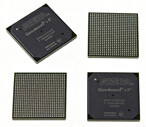
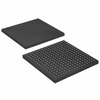
Image may be representation.
See specifications for product details.
EXPRESS OPTION
Payment method

EP3C16F256C6 - ALTERA

Manufacturer Part Number
EP3C16F256C6
Manufacturer
Altera (Intel)
Allelco Part Number
41D-EP3C16F256C6
Warranty
1 Year Allelco Warranty - Find out more
Stock Status:
4,490 pcs available, New & Original
Parts Description
-
Data sheet
-
Category
Integrated Circuits (ICs) > Specialized ICs
RoHs Status
Our certification
In stock: 4490
  • Unit Price: $24.95
  • Subtotal: $0.00

Want a better price?
Add to Cart and Submit RFQ now, we'll contact you immediately.

Quantity Unit Price Ext. Price
1+ $24.95 $24.95
30+ $23.89 $716.70
The above prices does not include taxes and freight rates, which will be calculated on the order pages.

Specifications

EP3C16F256C6 Tech Specifications
ALTERA - EP3C16F256C6 technical specifications, attributes, parameters and parts with similar specifications to ALTERA - EP3C16F256C6

Product Attribute Attribute Value
Part Number EP3C16F256C6
Package -
Description -
Stock Condition Get 4490 pcs available quantity at Allelco
Payment PayPal / TT / Credit Card / Western Union
Allelco Certifications ESD / ISO 9001 / ISO 13485 / ISO 28000
Product Attribute Attribute Value
Manufacturer Altera (Intel)
RoHs Status -
Warranty 100% Perfect Functions
Transport port Hong Kong
Shipping by DHL / FedEx / UPS / TNT / SF Express
RFQ Email info@allelco.com

Parts Introduction

Manufacturer Part Number

EP3C16F256C6

Manufacturer

Intel

Introduction

The Intel EP3C16F256C6 is a high-performance, low-power Cyclone III FPGA (Field Programmable Gate Array) designed for embedded applications. It offers a versatile and reconfigurable hardware platform that can be tailored to meet the unique requirements of various embedded systems.

Product Features and Performance

963 LABs (Logic Array Blocks) with 15,408 logic elements

516,096 total RAM bits for flexible data storage and processing

168 user I/O pins for interfacing with external components

Operating voltage range of 1.15V to 1.25V for efficient power management

Operating temperature range of 0°C to 85°C (TJ) for wide environmental compatibility

Product Advantages

Reconfigurable architecture allows for dynamic hardware modifications

Optimized for low-power consumption, making it suitable for battery-powered or energy-efficient applications

Robust set of on-chip peripherals and interfaces for seamless integration with a variety of systems

Extensive development tools and ecosystem support for rapid prototyping and deployment

Key Reasons to Choose This Product

Flexible and programmable hardware platform for custom embedded solutions

Exceptional performance-to-power ratio for energy-conscious applications

Extensive I/O options and peripheral support for diverse interfacing requirements

Proven reliability and longevity in the market, backed by Intel's reputation

Quality and Safety Features

Rigorous quality control and testing procedures to ensure reliable operation

Compliance with industry standards and certifications for safety and environmental considerations

Compatibility

The Intel EP3C16F256C6 FPGA is compatible with a wide range of embedded systems, including industrial automation, medical devices, transportation, and consumer electronics.

Application Areas

Industrial control and automation

Embedded systems and IoT (Internet of Things) applications

Medical equipment and diagnostic devices

Automotive and transportation systems

Consumer electronics and appliances

Product Lifecycle

The Intel EP3C16F256C6 is an active product in Intel's Cyclone III FPGA series. As an established and widely-adopted platform, there are several equivalent and alternative models available, including the EP3C10, EP3C12, and EP3C25 FPGAs. If you require further information or assistance with product selection, please contact our sales team through our website.
Frequently Asked Questions(FAQ)

How does the power consumption profile of the EP3C16F256C6 compare to other Cyclone III family FPGAs when implementing moderate logic utilization in a typical industrial control application?
The EP3C16F256C6 exhibits dynamic power consumption ranging from 100 mW to 300 mW under typical operating conditions with 40–60% average logic utilization. This places it between the low-power EP3C5E and higher-density EP3C25E variants, which consume approximately 70–200 mW and 250–500 mW respectively under similar workloads. The balance is achieved through optimized routing architecture and reduced internal capacitance in the 15408 LE implementation.
What are the thermal implications of mounting the EP3C16F256C6 in a compact PCB design without external heatsinking?
With natural convection cooling and a standard 1 oz copper PCB stackup, the junction temperature of the EP3C16F256C6 can rise up to 78°C at ambient temperatures of 40°C when achieving 50% average switching activity across all I/O. This remains within the specified 85°C maximum junction temperature but approaches derating thresholds for long-term reliability; forced airflow improves thermal headroom by 10–15°C.
Can the EP3C16F256C6 reliably operate in extended temperature environments above 85°C for industrial automation systems?
No, the EP3C16F256C6 is rated only for commercial temperature operation from 0°C to 85°C (TJ). Operation beyond this range exceeds guaranteed parametric specifications and risks functional failure or accelerated aging. For applications requiring >85°C operation, alternative components such as the Lattice MachXO3L or Xilinx Spartan-7 must be considered.
How many configuration bits are required to fully program the EP3C16F256C6 using JTAG, and what is the expected programming time?
The EP3C16F256C6 requires approximately 2.1 million configuration bits for full device initialization, including non-volatile configuration and user flash memory. Using a standard JTAG interface at 10 MHz clock rate, programming typically completes in 120–150 milliseconds. This duration assumes clean power delivery and proper boundary scan chain integrity.
What impact does I/O pin assignment have on signal integrity when using the EP3C16F256C6 near high-speed serial interfaces?
Poor I/O placement on the EP3C16F256C6 increases crosstalk and reduces noise margins by up to 200 mV RMS in adjacent differential pairs running at 300 Mbps. Optimal performance is achieved by assigning high-speed signals to dedicated bank pairs with controlled impedance traces and maintaining guard rings around sensitive analog inputs—critical for meeting LVDS receiver thresholds.
How does the number of LABs in the EP3C16F256C6 influence timing closure in medium-complexity state machine designs?
The 963 LAB structure in the EP3C16F256C6 provides sufficient granularity to implement complex finite-state machines with fewer than 200 states while preserving timing closure under tight constraints (<5 ns clock-to-out). However, deeply pipelined architectures may exhaust LAB interconnect resources, leading to increased routing delays that require incremental optimization rather than brute-force partitioning.
What are the key differences between using block RAM versus distributed RAM in the EP3C16F256C6 for small lookup tables?
For lookup tables smaller than 16×N bits, distributed RAM implemented via LUTs consumes less power and allows faster read operations (<1 ns) compared to block RAM accesses (~3 ns latency) in the EP3C16F256C6. However, block RAM offers deterministic timing and avoids consuming logic element resources, making it preferable for larger tables (>64 entries) where area efficiency matters more than speed.
Is the EP3C16F256C6 suitable for safety-critical applications requiring formal verification or redundancy mechanisms?
The EP3C16F256C6 lacks built-in safety features such as lockstep cores, error-correcting codes (ECC), or radiation-hardened packaging, making it unsuitable for ISO 26262 or IEC 61508 certified systems without extensive external mitigation strategies—including dual-modular redundancy and runtime self-test circuits—which would significantly increase system complexity and cost.
What considerations apply when cascading multiple EP3C16F256C6 devices using FPGA-in-FPGA configuration techniques?
Cascading EP3C16F256C6 devices via FPGA-in-FPGA is not supported due to the absence of active serial configuration ports and limited configuration pin multiplexing options. Each device must be configured independently using a single master controller; attempting shared configuration results in undefined behavior and potential damage from voltage contention during boot sequences.
How does the Moisture Sensitivity Level (MSL) rating of 3 affect storage and handling procedures for the EP3C16F256C6 before assembly?
As an MSL 3 component, the EP3C16F256C6 must be stored in moisture barrier bags with desiccant and humidity indicators below 10% RH. After opening, it has a usable shelf life of 168 hours at 30°C/60% RH; beyond this window, bake cycles of 125°C for 24 hours are required prior to soldering to prevent popcorn cracking during reflow.
What trade-offs exist between using internal oscillator versus external crystal reference for clock distribution in the EP3C16F256C6?
The internal phase-locked loop (PLL) oscillator in the EP3C16F256C6 provides adequate stability (±100 ppm) for most digital control loops but lacks precision for high-frequency RF synthesis. An external 25 MHz crystal improves frequency accuracy to ±20 ppm and enables lower jitter PLL outputs, crucial for communication protocols like USB or Ethernet over longer trace lengths.
How many independent PLLs are available in the EP3C16F256C6, and how do they constrain clock domain management?
The EP3C16F256C6 includes five independent PLLs, allowing flexible generation of up to five distinct output clocks from a single reference. However, simultaneous use of all PLLs increases power consumption by ~15% and generates additional electromagnetic interference (EMI); designers should reserve PLLs strategically based on critical path requirements rather than maximizing count.
What precautions should be taken to avoid latch-up conditions when integrating the EP3C16F256C6 into a mixed-voltage environment?
To prevent latch-up in the EP3C16F256C6, input voltages on any pin must remain strictly within the –0.3 V to VCCIO + 0.3 V range. In mixed-voltage systems, level-shifters or series resistors (>1 kΩ) are mandatory when interfacing 3.3 V peripherals to 1.2 V FPGA banks, and decoupling capacitors must be placed within 5 mm of each VCCIO pin to stabilize supply transients.
How does the package size (256-FBGA) affect routing density and thermal dissipation in high-layer-count PCBs?
The 17×17 mm 256-FBGA package of the EP3C16F256C6 forces high-density interconnections, increasing trace congestion on inner layers and reducing routability for wide buses. Thermal resistance from die to air is approximately 35°C/W without heatsinks, so designers must allocate thermal vias under the die and avoid routing power planes directly beneath the package to prevent localized heating.
What role does the 516096-bit embedded RAM play in implementing FIFO buffers for data logging applications?
The 516096-bit block RAM in the EP3C16F256C6 supports configurable FIFO depths up to 16,384 words at 32 bits wide, ideal for buffering sensor data streams at rates up to 200 Msamples/s. Real-world implementations show write/read pointer synchronization overhead adds ~200 ns latency, necessitating careful handshaking logic to avoid overflow under burst traffic patterns.
Why might the EP3C16F256C6 exhibit increased propagation delay when routing through global clock networks compared to regional clocks?
Global clock networks in the EP3C16F256C6 distribute signals across all LAB rows, introducing variable skew and higher capacitive loading that can degrade edge rates by 15–20%. Regional clocks reduce fanout and improve timing predictability by limiting distribution to local clusters, yielding up to 0.5 ns improvement in clock-to-Q delay for timing-critical paths.
Does the RoHS non-compliant status of the EP3C16F256C6 pose challenges for international manufacturing compliance?
Yes, the RoHS non-compliant designation means the EP3C16F256C6 contains restricted substances such as lead in solder balls or brominated flame retardants in molding compound, making it ineligible for EU markets under Directive 2011/65/EU. Alternative Intel parts like the MAX 10 series or newer Agilex FPGAs must be substituted for compliant production lines.
How does the ECCN classification (3A991D) influence export controls when shipping systems containing the EP3C16F256C6?
ECCN 3A991D classifies the EP3C16F256C6 as a commodity computer under U.S. export regulations, subject to general authorization exceptions but requiring end-use checks in certain countries. Exporting to embargoed regions may trigger licensing requirements regardless of quantity, so procurement teams must validate destination compliance before deployment.

Customer Reviews

Evaluation: 10 Articles

  • Nath***rooks
    Jun 11, 2026

    Installed this power component in a converter board. Output remained stable under different load conditions and thermal performance was better than expected.

  • Dani***alkerTech
    Jun 1, 2026

    Product works, but setup took more effort than expected. Once configured the MCU ran reliably, although documentation support felt older compared with newer platforms. Fine for maintenance projects.

  • Yuki***aka88
    May 26, 2026

    信号通信プロジェクトでこのRS-485トランシーバーを使用しました。設置は簡単で、長距離ケーブルでも通信は安定していました。消費電力も、以前使用していたものより低くなっています。

  • Stev***aker
    May 20, 2026

    Solid diode for power rectification. Works well in switching circuits.

  • Bran***Lewis
    May 11, 2026

    Compact FPGA with good performance. Suitable for basic signal processing tasks.

  • Oliv***arris
    May 7, 2026

    Reliable I/O expander. Works well in embedded control applications.

  • Jess***Jones
    Apr 17, 2026

    It offers good value for the price, and the specifications match the description. I’ve been using it for two days with no issues, and I’ll definitely buy it again if I need it in the future.

  • Mich***Smith
    Apr 17, 2026

    Shipping was on time, the component pins are neatly aligned, and I tested 10 of them with a multimeter—all readings were within the specified range. Highly recommended.

  • Aman***arris
    Apr 3, 2026

    It was great—the entire process, from placing the order to receiving the package, went very smoothly. The components were consistent, the price was fair, and I had a very pleasant shopping experience.

  • Mike***nch
    Apr 3, 2026

    Better than expected! The resistance and capacitance readings were spot-on, and it passed the test on the first try. The service was reliable, and the packaging was thoughtful—I highly recommend it.

Write a Review

Your Email address will not be published.

Shipment

Delivery Time

In-stock items can be shipped within 24 hours. Some parts will be arranged for delivery within 1-2 days from the date all items arrive at our warehouse. And Allelco ships order once a day at about 17:00, except Sunday. Once the goods are shipped, the estimated delivery time depends on the shipping methods and Delivery destination. The table below shows are the logistic time for some common countries.

Delivery Cost

  1. Use your express account for shipment if you have one.
  2. Use our account for the shipment. Refer to the table below for the approximate charges.
(Different time frame / countries / package size has different price.)

Delivery Method

  1. Global Common Shipment by DHL / UPS / FedEx / TNT / EMS / SF we support.
  2. Others more shipping ways, please get in touch with your customer manager.

Common Countries Logistic Time Reference
Region Country Logistic Time(Day)
America United States 5
Brazil 7
Europe Germany 5
United Kingdom 4
Italy 5
Oceania Australia 6
New Zealand 5
Asia India 4
Japan 4
Middle East Israel 6
DHL & FedEx Shipment Charges Reference
Shipment charges(KG) Reference DHL(USD$)
0.00kg-1.00kg USD$30.00 - USD$60.00
1.00kg-2.00kg USD$40.00 - USD$80.00
2.00kg-3.00kg USD$50.00 - USD$100.00
Note:
The above table is for reference only. There may have some data bias for the uncontrollable factors.
Contact us if you have any questions.
  • QC (Quality Warranty)
  • Payment Support
  • Packaging
  • Certifications & Memberships

QC (Quality Warranty)

Allelco is committed to exceeding customer expectations through customer service excellence, order accuracy, and on-time delivery.
This is achieved through our commitment to the continual improvement of our processes, services, and products.


Strict quality inspection builds a solid foundation for electronic component quality.
  1. Visual inspection
  2. Performance testing and reliability verification
  3. Standardized full-process testing
  4. Precise control of every parameter
We eliminate defective components and ensure the stable operation of electronic devices through professional quality standards.

Payment Support

The payment method can be chosen from the methods shown below: Wire Transfer (T/T, Bank Transfer), Western Union, Credit card, PayPal.
  • HKBea
  • Paypal
  • MasterCard
  • Western-Union
  • VISA
Stable Delivery, Sincere Partnership — Your Faithful Supply Chain Partner
  • Efficient Supply Management
  • Cost-Saving Procurement
  • Fast Sourcing & Delivery
Contact us if you have any questions.

Packaging

Electrostatic Discharge Protection and Handling

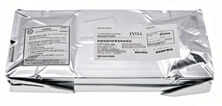
All electrostatic-sensitive components are handled in accordance with electrostatic discharge control procedures. The products are hermetically sealed in anti-static safe packaging to prevent electrostatic damage. Appropriate labeling is also applied for identification and traceability. This ensures product integrity during storage, handling and transportation.


ESD

Certifications & Memberships

Third-party certified, strict quality control. Our certification
  • ISO 9001: 2015
  • ISO 13485: 2016
  • ISO 14001: 2015
  • ISO 28000: 2007
  • ISO 45001: 2018
  • GB/T 27922-2011
  • SMTA
  • IPC
  • ESD
  • PSMA
ALTERA

EP3C16F256C6

ALTERA
41D-EP3C16F256C6

Want a better price? Add to Cart and Submit RFQ now, we'll contact you immediately.

0 RFQ
Shopping cart (0 Items)
It is empty.
Compare List (0 Items)
It is empty.
Feedback

Your feedback matters! At Allelco, we value the user experience and strive to improve it constantly.
Please share your comments with us via our feedback form, and we'll respond promptly.
Thank you for choosing Allelco.

Subject
E-mail
Comments
Captcha
Drag or click to upload file
Upload File
types: .xls, .xlsx, .doc, .docx, .jpg, .png and .pdf.
Max file size: 10MB