View All

Please refer to the English Version as our Official Version.Return

Europe
France(Français) Germany(Deutsch) Italy(Italia) Russian(русский) Poland(polski) Czech(Čeština) Luxembourg(Lëtzebuergesch) Netherlands(Nederland) Iceland(íslenska) Hungarian(Magyarország) Spain(español) Portugal(Português) Turkey(Türk dili) Bulgaria(Български език) Ukraine(Україна) Greece(Ελλάδα) Israel(עִבְרִית) Sweden(Svenska) Finland(Svenska) Finland(Suomi) Romania(românesc) Moldova(românesc) Slovakia(Slovenská) Denmark(Dansk) Slovenia(Slovenija) Slovenia(Hrvatska) Croatia(Hrvatska) Serbia(Hrvatska) Montenegro(Hrvatska) Bosnia and Herzegovina(Hrvatska) Lithuania(lietuvių) Spain(Português) Switzerland(Deutsch) United Kingdom(English)
Asia/Pacific
Japan(日本語) Korea(한국의) Thailand(ภาษาไทย) Malaysia(Melayu) Singapore(Melayu) Vietnam(Tiếng Việt) Philippines(Pilipino)
Africa, India and Middle East
United Arab Emirates(العربية) Iran(فارسی) Tajikistan(فارسی) India(हिंदी) Madagascar(malaɡasʲ)
South America / Oceania
New Zealand(Maori) Brazil(Português) Angola(Português) Mozambique(Português)
North America
United States(English) Canada(English) Haiti(Ayiti) Mexico(español)
HomeProductsIntegrated Circuits (ICs)Specialized ICsEP3C16F25617
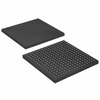
Image may be representation.
See specifications for product details.
EXPRESS OPTION
Payment method

EP3C16F25617 - Altera (Intel)

Manufacturer Part Number
EP3C16F25617
Manufacturer
Altera (Intel)
Allelco Part Number
32D-EP3C16F25617
Warranty
1 Year Allelco Warranty - Find out more
Stock Status:
10,710 pcs available, New & Original
Parts Description
DAC91001
Data sheet
-
Category
Integrated Circuits (ICs) > Specialized ICs
RoHs Status
Our certification
In stock: 10710

Required fields are indicated by an asterisk (*)
Please send RFQ, we will respond immediately.

Quantity

Specifications

EP3C16F25617 Tech Specifications
Altera (Intel) - EP3C16F25617 technical specifications, attributes, parameters and parts with similar specifications to Altera (Intel) - EP3C16F25617

Product Attribute Attribute Value
Part Number EP3C16F25617
Package DAC91001
Description DAC91001
Stock Condition Get 10710 pcs available quantity at Allelco
Payment PayPal / TT / Credit Card / Western Union
Allelco Certifications ESD / ISO 9001 / ISO 13485 / ISO 28000
Product Attribute Attribute Value
Manufacturer Altera (Intel)
RoHs Status -
Warranty 100% Perfect Functions
Transport port Hong Kong
Shipping by DHL / FedEx / UPS / TNT / SF Express
RFQ Email info@allelco.com

Frequently Asked Questions(FAQ)

What are the key thermal and electrical considerations when integrating the EP3C16F256I7N into a high-density FPGA design, particularly regarding power delivery and heat dissipation in BGA packaging?
The EP3C16F256I7N, as part of Altera's Cyclone III family, operates at typical core voltages between 1.2V and 1.5V depending on process node scaling, leading to dynamic power consumption that scales quadratically with frequency. At maximum clock speeds around 200 MHz, average core current can reach 80–120 mA under typical I/O loading, generating approximately 100–150 mW of internal power dissipation. Given the absence of an integrated heat spreader and reliance on the 256-ball FBGA package’s exposed pad, effective thermal management requires careful PCB layout with multiple thermal vias beneath the component to conduct heat to inner or bottom-layer ground planes. Designers must ensure adequate copper pour area and avoid routing high-speed signals too close to the package edges to prevent localized heating. Power integrity is further challenged by simultaneous switching noise (SSN), necessitating low-ESR bulk and decoupling capacitors placed within 10 mm of each power pin, especially for VCCINT and VCCIO rails.
How does the EP3C16F256I7N compare to newer FPGA families like the Cyclone V or MAX 10 series in terms of logic density, I/O flexibility, and power efficiency for embedded control applications?
While the EP3C16F256I7N offers 15,800 logic elements (LEs) and moderate I/O configurability, it lacks the hardened ARM Cortex-A9 processor block found in Cyclone V SoCs, limiting real-time processing capabilities without external microcontrollers. Compared to MAX 10 devices, which integrate flash-based configuration and consume significantly less static power (often below 10 mW), the EP3C16F256I7N relies on volatile SRAM-based configuration and draws higher standby currents—typically 20–40 mA even when idle. This makes the MAX 10 more suitable for always-on systems, whereas the EP3C16F256I7N remains viable only when reprogrammability and mid-range logic capacity are required. In terms of I/O standards, both support LVCMOS up to 3.3V, but the EP3C16F256I7N lacks native support for DDR2 memory interfaces, requiring external PHYs for such protocols.
What layout constraints apply to the EP3C16F256I7N due to its BGA-256 package, and how do these impact signal integrity and manufacturability?
The EP3C16F256I7N uses a fine-pitch 0.5 mm pitch FBGA package, demanding precise PCB fabrication tolerances—typically class 2 or better—to ensure reliable solder joints during reflow. Routing escape patterns from all 256 balls is challenging; designers should use at least 6 layers with dedicated power and ground planes. High-speed differential pairs must maintain controlled impedance (usually 100 Ω for LVDS) and avoid vias whenever possible to minimize discontinuities. The large number of I/Os also increases the risk of crosstalk if aggressor and victim nets are routed parallel over long distances. From a yield perspective, tombstoning or bridging defects are common failure modes if thermal profiling is suboptimal, so stencil thickness should not exceed 0.12 mm and reflow profiles must include sufficient soak time for uniform wetting.
Can the EP3C16F256I7N support real-time operating system (RTOS) integration for industrial automation tasks, and what hardware resources limit this application?
Yes, the EP3C16F256I7N can execute RTOS code such as FreeRTOS or ThreadX by mapping software threads to FPGA logic blocks via soft-core processors like Nios II. However, the lack of a dedicated instruction cache or branch prediction unit means context switching overhead increases significantly compared to hard-core CPUs. With only 15.8 Kb of embedded RAM and no external memory controller, designers must implement efficient memory-mapped peripherals and minimize stack usage to avoid exceeding available block RAM. Additionally, interrupt latency is bounded by routing delays through the programmable interconnect, which may exceed 100 ns under heavy congestion—unsuitable for sub-microsecond response requirements in safety-critical systems.
What configuration methods are supported by the EP3C16F256I7N, and what security or reliability risks arise from using passive parallel mode versus active serial mode?
The EP3C16F256I7N supports Active Serial (AS) and Passive Parallel (PP) configuration modes. AS mode uses a single data line (DATA[0]) and is preferred for cost-sensitive designs due to reduced pin count, but exposes configuration data externally unless protected by encryption—though the device lacks native AES support, making it vulnerable to bitstream extraction. PP mode requires more pins (up to 14) but allows faster configuration times (under 2 ms vs. ~10 ms in AS), beneficial for production programming. Both modes rely on external flash; however, PP mode increases susceptibility to EMI-induced corruption during programming because address/data lines are longer and unshielded. Reliability-wise, PP mode demands tighter timing margins on DCLK, ADDRESS, and DATA lines to meet setup/hold requirements specified in the device handbook.
How does the EP3C16F256I7N handle clock management, and what jitter performance should be expected when using internal oscillators versus external crystal references?
The EP3C16F256I7N includes three internal phase-locked loops (PLLs) capable of synthesizing frequencies up to 550 MHz from reference inputs. Internal oscillators provide acceptable stability (±200 ppm) for non-synchronous applications but exhibit higher phase noise (~ –100 dBc/Hz at 1 kHz offset) compared to external crystals driven by dedicated oscillator input pins. For precision applications like ADC sampling or communication protocols (e.g., SPI), an external 50 MHz crystal with load capacitors (typically 18 pF) improves jitter characteristics to < 1 ps RMS. Designers must route clock inputs away from noisy digital nets and terminate them properly to avoid reflections that degrade PLL lock time and increase output jitter beyond datasheet limits.
What trade-offs exist between using the EP3C16F256I7N in a single-device versus multi-device cascade configuration for expanding logic capacity?
Cascading multiple EP3C16F256I7N devices increases total LE count but introduces significant routing complexity and timing penalties. Inter-device communication paths often span multiple clock cycles due to limited dedicated fast carry chains across packages, resulting in increased register-to-register latency. Additionally, partial reconfiguration becomes impractical, and power consumption scales non-linearly due to synchronization overhead. For designs requiring >20,000 LEs, newer families like Stratix IV offer superior scalability with hardened interconnect. The EP3C16F256I7N remains economical only when logic expansion beyond 20k LEs can be achieved within a single package through efficient pipelining and resource sharing, avoiding the cost and board space of additional FPGAs.
How reliable is the EP3C16F256I7N in harsh environments, and what design mitigations are needed for temperature extremes or radiation exposure?
The EP3C16F256I7N is rated for commercial temperature ranges (0°C to +85°C), but industrial (-40°C to +100°C) operation requires derating of clock speeds and increased margin on hold times due to slower transistor switching at lower temperatures. Radiation-induced single-event upsets (SEUs) affect SRAM-based configuration memory, causing transient faults unless mitigated by scrubbing logic or triple modular redundancy (TMR). Without built-in error correction, external watchdog circuits or periodic reconfiguration from backup flash are recommended in aerospace or automotive applications. Thermal cycling also stresses BGA solder joints; thus, conformal coating and mechanical stress relief (e.g., compliant pads) improve long-term reliability in vibration-prone environments.
What are the implications of selecting the EP3C16F256I7N instead of a CPLD for glue logic or state machine implementations?
CPLDs like Altera MAX series offer deterministic propagation delays (<10 ns) and instant-on capability without external configuration memory, making them ideal for address decoding or bus arbitration. In contrast, the EP3C16F256I7N incurs configuration time (several milliseconds) before functional logic becomes active, and worst-case path delays vary with routing congestion. However, the EP3C16F256I7N provides greater flexibility for complex state machines with feedback loops and arithmetic units that exceed CPLD macrocell counts. If low-latency, always-ready logic is essential, a CPLD is preferable; otherwise, the EP3C16F256I7N justifies its selection through programmability and scalability despite higher startup overhead.
How does power sequencing affect boot-up behavior when using the EP3C16F256I7N with external configuration devices, and what voltage thresholds must be respected?
Voltage rails (VCCINT, VCCIO, VCCPT, etc.) must ramp simultaneously within ±5% of each other to prevent latch-up conditions, typically requiring < 100 ms between first and last rail reaching 90% of final value. The device monitors internal bias voltages and will not initiate configuration until all supplies stabilize above minimum thresholds (e.g., VCCINT > 1.14 V). Premature assertion of nCONFIG or nSTATUS lines during supply ramp-up causes undefined states and potential permanent damage. Designers should implement power-good signaling from LDOs or supervisors to gate the configuration clock until sequencing completes, ensuring reliable initialization across process, voltage, and temperature variations.
What are the limitations of the EP3C16F256I7N when implementing high-speed serial protocols like PCI Express or USB 2.0?
The EP3C16F256I7N lacks transceivers capable of SERDES operation above 300 Mbps, ruling out native PCIe or USB 2.0 physical layer implementation. Attempting to simulate these protocols in soft logic results in excessive resource utilization and poor jitter tolerance due to limited dedicated delay-locked loops (DLLs). Instead, designers must offload serial handling to companion ICs (e.g., FTDI chips for USB) while using the EP3C16F256I7N for protocol logic. This adds latency and increases BOM cost, making the device unsuitable for endpoint devices requiring direct host connectivity—better served by FPGA families with integrated transceivers.
How does the absence of on-chip voltage regulation impact the EP3C16F256I7N in portable or battery-powered applications?
Unlike newer FPGAs with integrated DC-DC converters, the EP3C16F256I7N requires external linear regulators for each power domain. This increases quiescent current draw—even when idle—by 10–15 mA due to regulator overhead, reducing overall system efficiency in low-power modes. Dynamic power management features like clock gating are necessary but insufficient to offset static losses during sleep periods. Battery life calculations must account for both FPGA leakage (~5 mA at 85°C) and regulator inefficiencies, often making the EP3C16F256I7N impractical for coin-cell or energy-harvesting applications unless duty-cycled aggressively.
What are the best practices for verifying timing closure on designs targeting the EP3C16F256I7N, given its moderate routing resources?
Timing analysis should begin early using synthesis reports to identify critical paths involving DSP blocks or global buffers. Floorplanning helps reserve regions for high-fanout signals and avoids congestion near I/O banks. The device’s limited routing channels mean that dense logic clusters benefit from pipelining and balanced tree structures for clocks and resets. Static timing analyzers must incorporate estimated post-place-and-route skews, which can add 5–10% uncertainty beyond pre-layout estimates. Iterative back-annotation of delays into simulation improves accuracy, and incremental compilation allows targeted optimization of problematic modules without full re-synthesis.
Can the EP3C16F256I7N support partial reconfiguration, and what tools or methodologies are required to implement dynamic function swapping?
Partial reconfiguration is not natively supported in Cyclone III devices like the EP3C16F256I7N. Full-chip reconfiguration must occur after power-up, disabling all user logic. Therefore, dynamic functionality changes require external microcontroller intervention to reload the entire bitstream, introducing downtime and complicating real-time systems. Newer families like Stratix 10 support true partial reconfiguration, but workarounds using multiple configuration images stored in external flash are feasible only for non-time-critical applications. This limitation restricts the EP3C16F256I7N to static or batch-updated designs.
How do I choose between using block RAM versus distributed RAM in the EP3C16F256I7N for small lookup tables or shift registers?
Block RAM (M9K cells) should be preferred for larger memories (>16 bits wide or >256 entries) due to higher density and lower power per bit. Distributed RAM implemented via logic elements consumes more routing resources and increases propagation delay due to LUT cascading. For simple shift registers or 8-bit wide tables, distributed RAM may reduce latency slightly but at the cost of reduced available logic for other functions. The EP3C16F256I7N contains 120 × 9 Kb block RAMs, totaling ~1.08 Mb—sufficient for most embedded memory needs—but over-reliance on distributed RAM fragments logic fabric and degrades timing closure.
What precautions are necessary when interfacing the EP3C16F256I7N with legacy 5V TTL peripherals using 3.3V I/O standards?
Although the EP3C16F256I7N supports 3.3V LVTTL outputs, directly connecting to 5V-tolerant inputs is unsafe without level shifting. Input pins are not guaranteed to withstand 5V unless explicitly specified as tolerant, risking oxide breakdown. Use resistive dividers (e.g., 1 kΩ / 2 kΩ) for bidirectional signals or dedicated translators like TXB0108. Outputs driving 5V loads require open-drain configurations with pull-ups to avoid exceeding maximum output current ratings (typically ±24 mA per pin). Always verify VIH/VIL thresholds against actual supply levels to ensure valid logic interpretation.
What is the expected MTBF (mean time between failures) for the EP3C16F256I7N in continuous operation, and how does this influence system-level reliability planning?
Based on Arrhenius models and historical field data, the EP3C16F256I7N achieves MTBF exceeding 1 million hours under typical conditions (25°C ambient, standard voltage). However, derating factors apply: at 85°C, MTBF drops to ~300,000 hours. System architects must incorporate redundancy or periodic health checks for mission-critical roles. Since configuration memory is susceptible to SEUs in radiation environments, systems deployed in such contexts require external scrubbing mechanisms or voting architectures to maintain correct operation—features absent in the base device.
Are there any known errata or silicon revisions affecting the EP3C16F256I7N, particularly related to I/O banking or PLL stability?
Early silicon revisions of the EP3C16F256I7N exhibited minor issues with VCCIO power sequencing across adjacent banks, potentially causing latch-up if one bank ramped significantly faster than others. Later revisions corrected this through improved ESD protection diodes. Additionally, certain PLL configurations with fractional-N ratios could exhibit increased jitter when referencing clocks below 10 MHz; using integer-N mode or external crystal oscillators resolves this. Designers should consult the latest Errata Sheet for revision-specific constraints, especially regarding maximum slew rates on configuration pins and recommended bypass capacitor values for stable operation.

Customer Reviews

Evaluation: 10 Articles

  • Nath***rooks
    Jun 11, 2026

    Installed this power component in a converter board. Output remained stable under different load conditions and thermal performance was better than expected.

  • Dani***alkerTech
    Jun 1, 2026

    Product works, but setup took more effort than expected. Once configured the MCU ran reliably, although documentation support felt older compared with newer platforms. Fine for maintenance projects.

  • Yuki***aka88
    May 26, 2026

    信号通信プロジェクトでこのRS-485トランシーバーを使用しました。設置は簡単で、長距離ケーブルでも通信は安定していました。消費電力も、以前使用していたものより低くなっています。

  • Stev***aker
    May 20, 2026

    Solid diode for power rectification. Works well in switching circuits.

  • Bran***Lewis
    May 11, 2026

    Compact FPGA with good performance. Suitable for basic signal processing tasks.

  • Oliv***arris
    May 7, 2026

    Reliable I/O expander. Works well in embedded control applications.

  • Jess***Jones
    Apr 17, 2026

    It offers good value for the price, and the specifications match the description. I’ve been using it for two days with no issues, and I’ll definitely buy it again if I need it in the future.

  • Mich***Smith
    Apr 17, 2026

    Shipping was on time, the component pins are neatly aligned, and I tested 10 of them with a multimeter—all readings were within the specified range. Highly recommended.

  • Aman***arris
    Apr 3, 2026

    It was great—the entire process, from placing the order to receiving the package, went very smoothly. The components were consistent, the price was fair, and I had a very pleasant shopping experience.

  • Mike***nch
    Apr 3, 2026

    Better than expected! The resistance and capacitance readings were spot-on, and it passed the test on the first try. The service was reliable, and the packaging was thoughtful—I highly recommend it.

Write a Review

Your Email address will not be published.

Shipment

Delivery Time

In-stock items can be shipped within 24 hours. Some parts will be arranged for delivery within 1-2 days from the date all items arrive at our warehouse. And Allelco ships order once a day at about 17:00, except Sunday. Once the goods are shipped, the estimated delivery time depends on the shipping methods and Delivery destination. The table below shows are the logistic time for some common countries.

Delivery Cost

  1. Use your express account for shipment if you have one.
  2. Use our account for the shipment. Refer to the table below for the approximate charges.
(Different time frame / countries / package size has different price.)

Delivery Method

  1. Global Common Shipment by DHL / UPS / FedEx / TNT / EMS / SF we support.
  2. Others more shipping ways, please get in touch with your customer manager.

Common Countries Logistic Time Reference
Region Country Logistic Time(Day)
America United States 5
Brazil 7
Europe Germany 5
United Kingdom 4
Italy 5
Oceania Australia 6
New Zealand 5
Asia India 4
Japan 4
Middle East Israel 6
DHL & FedEx Shipment Charges Reference
Shipment charges(KG) Reference DHL(USD$)
0.00kg-1.00kg USD$30.00 - USD$60.00
1.00kg-2.00kg USD$40.00 - USD$80.00
2.00kg-3.00kg USD$50.00 - USD$100.00
Note:
The above table is for reference only. There may have some data bias for the uncontrollable factors.
Contact us if you have any questions.
  • QC (Quality Warranty)
  • Payment Support
  • Packaging
  • Certifications & Memberships

QC (Quality Warranty)

Allelco is committed to exceeding customer expectations through customer service excellence, order accuracy, and on-time delivery.
This is achieved through our commitment to the continual improvement of our processes, services, and products.


Strict quality inspection builds a solid foundation for electronic component quality.
  1. Visual inspection
  2. Performance testing and reliability verification
  3. Standardized full-process testing
  4. Precise control of every parameter
We eliminate defective components and ensure the stable operation of electronic devices through professional quality standards.

Payment Support

The payment method can be chosen from the methods shown below: Wire Transfer (T/T, Bank Transfer), Western Union, Credit card, PayPal.
  • HKBea
  • Paypal
  • MasterCard
  • Western-Union
  • VISA
Stable Delivery, Sincere Partnership — Your Faithful Supply Chain Partner
  • Efficient Supply Management
  • Cost-Saving Procurement
  • Fast Sourcing & Delivery
Contact us if you have any questions.

Packaging

Electrostatic Discharge Protection and Handling

All electrostatic-sensitive components are handled in accordance with electrostatic discharge control procedures. The products are hermetically sealed in anti-static safe packaging to prevent electrostatic damage. Appropriate labeling is also applied for identification and traceability. This ensures product integrity during storage, handling and transportation.


ESD

Certifications & Memberships

Third-party certified, strict quality control. Our certification
  • ISO 9001: 2015
  • ISO 13485: 2016
  • ISO 14001: 2015
  • ISO 28000: 2007
  • ISO 45001: 2018
  • GB/T 27922-2011
  • SMTA
  • IPC
  • ESD
  • PSMA
Altera (Intel)

EP3C16F25617

Altera (Intel)
32D-EP3C16F25617

Want a better price? Add to Cart and Submit RFQ now, we'll contact you immediately.

0 RFQ
Shopping cart (0 Items)
It is empty.
Compare List (0 Items)
It is empty.
Feedback

Your feedback matters! At Allelco, we value the user experience and strive to improve it constantly.
Please share your comments with us via our feedback form, and we'll respond promptly.
Thank you for choosing Allelco.

Subject
E-mail
Comments
Captcha
Drag or click to upload file
Upload File
types: .xls, .xlsx, .doc, .docx, .jpg, .png and .pdf.
Max file size: 10MB