View All

Please refer to the English Version as our Official Version.Return

Europe
France(Français) Germany(Deutsch) Italy(Italia) Russian(русский) Poland(polski) Czech(Čeština) Luxembourg(Lëtzebuergesch) Netherlands(Nederland) Iceland(íslenska) Hungarian(Magyarország) Spain(español) Portugal(Português) Turkey(Türk dili) Bulgaria(Български език) Ukraine(Україна) Greece(Ελλάδα) Israel(עִבְרִית) Sweden(Svenska) Finland(Svenska) Finland(Suomi) Romania(românesc) Moldova(românesc) Slovakia(Slovenská) Denmark(Dansk) Slovenia(Slovenija) Slovenia(Hrvatska) Croatia(Hrvatska) Serbia(Hrvatska) Montenegro(Hrvatska) Bosnia and Herzegovina(Hrvatska) Lithuania(lietuvių) Spain(Português) Switzerland(Deutsch) United Kingdom(English)
Asia/Pacific
Japan(日本語) Korea(한국의) Thailand(ภาษาไทย) Malaysia(Melayu) Singapore(Melayu) Vietnam(Tiếng Việt) Philippines(Pilipino)
Africa, India and Middle East
United Arab Emirates(العربية) Iran(فارسی) Tajikistan(فارسی) India(हिंदी) Madagascar(malaɡasʲ)
South America / Oceania
New Zealand(Maori) Brazil(Português) Angola(Português) Mozambique(Português)
North America
United States(English) Canada(English) Haiti(Ayiti) Mexico(español)
HomeProductsIntegrated Circuits (ICs)Specialized ICsATMEGA1284PAU
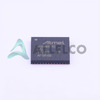
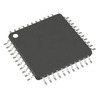
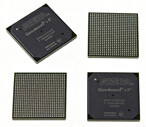
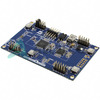
Image may be representation.
See specifications for product details.
EXPRESS OPTION
Payment method

ATMEGA1284PAU - Atmel

Manufacturer Part Number
ATMEGA1284PAU
Manufacturer
Atmel
Allelco Part Number
41D-ATMEGA1284PAU
Warranty
1 Year Allelco Warranty - Find out more
Stock Status:
16,300 pcs available, New & Original
Parts Description
-
Data sheet
-
Category
Integrated Circuits (ICs) > Specialized ICs
RoHs Status
Our certification
In stock: 16300

Required fields are indicated by an asterisk (*)
Please send RFQ, we will respond immediately.

Quantity

Specifications

ATMEGA1284PAU Tech Specifications
Atmel - ATMEGA1284PAU technical specifications, attributes, parameters and parts with similar specifications to Atmel - ATMEGA1284PAU

Product Attribute Attribute Value
Part Number ATMEGA1284PAU
Package -
Description -
Stock Condition Get 16300 pcs available quantity at Allelco
Payment PayPal / TT / Credit Card / Western Union
Allelco Certifications ESD / ISO 9001 / ISO 13485 / ISO 28000
Product Attribute Attribute Value
Manufacturer Atmel
RoHs Status -
Warranty 100% Perfect Functions
Transport port Hong Kong
Shipping by DHL / FedEx / UPS / TNT / SF Express
RFQ Email info@allelco.com

Frequently Asked Questions(FAQ)

What is the maximum clock frequency for the ATMEGA1284PAU when operating at 5V supply voltage, and how does this compare to its performance at lower voltages?
The ATMEGA1284PAU can operate up to 20 MHz at a 5V supply voltage. When operating at 3.0–3.6V, the maximum frequency drops to 10 MHz, and at 1.8V, it supports up to 8 MHz. This frequency scaling reflects the internal timing constraints of the AVR microcontroller architecture, where reduced voltage increases propagation delay in logic gates. For applications requiring high-speed processing without external clocks, this limits the choice of ATMEGA1284PAU in low-voltage battery-powered systems.
How does the power consumption of the ATMEGA1284PAU compare between active and sleep modes, and what factors influence the choice of sleep mode for energy-sensitive designs?
In active mode at 1 MHz and 3V, the ATMEGA1284PAU consumes approximately 1.7 mA, while in Power-down mode, current draw drops to around 0.1 µA due to disabling most internal clocks and peripherals. The choice of sleep mode depends on wake-up latency requirements; Idle mode maintains CPU operation but disables peripherals, whereas Power-save mode turns off the main oscillator but keeps the asynchronous timer running. For long-term battery operation, Power-down or Power-save modes are preferred, provided wake-up sources like interrupts or timers are properly configured.
Can the ATMEGA1284PAU drive multiple LEDs simultaneously from its GPIO pins without additional buffering, and what considerations apply for inductive loads such as relays?
The ATMEGA1284PAU’s GPIO pins can source up to 40 mA per pin and 200 mA total across all ports under normal conditions. Driving multiple LEDs in parallel is feasible if total current stays below these limits. However, for inductive loads like relays, back-EMF must be suppressed using flyback diodes, as the MCU cannot absorb reverse voltage spikes. Additionally, long traces or capacitive loads may cause ringing or overshoot, necessitating series resistors or RC snubbers to protect the pins.
What is the recommended decoupling capacitor configuration for the ATMEGA1284PAU in a noisy industrial environment, and why is it critical?
Each VCC and AVCC pin on the ATMEGA1284PAU should be bypassed with a 0.1 µF ceramic capacitor placed as close as possible to the pin. For systems with analog components, a 10 µF tantalum or electrolytic capacitor is recommended at the AVCC pin. This minimizes supply noise that could affect ADC accuracy or cause erratic digital behavior. Without proper decoupling, high-frequency switching currents from digital circuits can couple into power rails, degrading signal integrity and increasing electromagnetic interference susceptibility.
How many PWM channels does the ATMEGA1284PAU support, and how do they differ from basic GPIO pins in terms of timing precision?
The ATMEGA1284PAU provides eight PWM channels via its Timer/Counter modules: three 8-bit (Timer0, Timer2) and one 16-bit (Timer1), plus two additional 8-bit timers (Timer3). Unlike general-purpose GPIO, PWM outputs are generated by hardware timers that allow precise duty cycle control without CPU intervention. This enables consistent motor control, LED dimming, or audio generation even during interrupt-heavy operation. The 16-bit Timer1 offers finer resolution for applications requiring microsecond-level timing accuracy.
Is the ATMEGA1284PAU suitable for real-time control applications requiring deterministic response times, and what architectural features support this?
Yes, the ATMEGA1284PAU supports deterministic response through its nested vectored interrupt controller (NVIC), which allows immediate servicing of high-priority interrupts with minimal latency. With up to 21 interrupt vectors and fast context switching, worst-case interrupt response time is typically under 12 cycles. Combined with hardware-based peripherals like UART, SPI, and I²C, the ATMEGA1284PAU can handle real-time tasks such as sensor data acquisition or actuator control without software polling overhead.
What programming interface options exist for the ATMEGA1284PAU, and which one is recommended for production flashing?
The ATMEGA1284PAU supports ISP (In-System Programming) via the SPI interface using standard 6-pin headers, and JTAG for advanced debugging and boundary scan. For most production environments, ISP is preferred due to simplicity and lower pin count requirements. JTAG offers richer debugging capabilities but requires additional hardware and board space. Both interfaces use flash memory for reprogramming, allowing field updates, though JTAG also enables verification of internal fuses and calibration bytes.
How does the ATMEGA1284PAU handle brown-out detection, and what fuse settings are needed to ensure reliable operation under voltage sags?
The ATMEGA1284PAU includes configurable brown-out detection (BOD) that resets the device when VCC drops below a programmable threshold (2.7V, 4.3V, or 1.8V). To enable BOD, the appropriate fuse bits must be set during programming. For systems powered by batteries, setting BOD to 2.7V prevents erratic behavior during voltage dips. However, aggressive BOD levels increase quiescent current slightly, so trade-offs exist between stability and power efficiency depending on application requirements.
Can the ATMEGA1284PAU interface directly with 5V logic devices without level shifting, and what risks should be avoided?
The ATMEGA1284PAU operates at 1.8–5.5V and can accept up to 5V on input pins when supplied at 5V, but only up to VCC + 0.5V otherwise. While some inputs tolerate 5V even at 3.3V operation, this is not guaranteed across temperature ranges or manufacturing variations. Direct connection to 5V logic without level shifting risks exceeding absolute maximum ratings and damaging the chip. Use of Schottky clamps or dedicated level translators like TXS0108E is safer for robust designs.
What is the typical flash endurance specification for the ATMEGA1284PAU, and how does it impact firmware update strategies?
The ATMEGA1284PAU has a minimum flash endurance of 10,000 write/erase cycles per page, based on Atmel’s qualification testing. This limits frequent firmware rewriting to specific sectors. Applications performing over-the-air updates should avoid reflashing frequently used code regions and instead store version flags in EEPROM, which supports 100,000 cycles. Wear-leveling algorithms or bootloader design patterns must account for this limitation to extend system lifespan.
How much RAM does the ATMEGA1284PAU have, and what are common bottlenecks when handling large datasets?
The ATMEGA1284PAU includes 16 KB of internal SRAM, which is shared among variables, stack, and heap. For applications processing large buffers—such as audio samples or sensor logs—this can quickly fill up. Common bottlenecks include excessive dynamic memory allocation, deep call stacks, or global arrays consuming more than half the available space. Efficient use of static allocation and careful management of interrupt contexts are essential to avoid stack overflow or heap fragmentation.
Does the ATMEGA1284PAU support internal oscillator calibration, and how does this affect timing-critical applications?
Yes, the ATMEGA1284PAU includes an internal calibrated RC oscillator that can be factory-tuned for ±2% accuracy at 1 MHz. Users can further adjust calibration values in software via the OSCCAL register. This feature reduces dependency on external crystals for low-cost designs. However, for applications requiring tighter timing tolerance (e.g., USB communication), an external crystal remains preferable despite higher cost and PCB footprint.
What ADC characteristics should be considered when using the ATMEGA1284PAU for precision measurements, and how does sampling rate affect accuracy?
The ATMEGA1284PAU’s ADC is 10-bit with a resolution of 10 mV at full scale (typically 5V reference). It supports up to 15 kSPS in free-running mode. Higher sampling rates introduce more noise due to shorter settling times, reducing effective resolution. For accurate readings, the ADC requires 13 clock cycles per conversion, and internal capacitance must settle before sampling. Adding external filtering capacitors and avoiding simultaneous high-current digital activity improves SNR significantly.
How does the ATMEGA1284PAU compare to the ATMEGA1284P in terms of packaging and availability, especially for surface-mount designs?
The ATMEGA1284PAU uses a 44-pin TQFP package, while the ATMEGA1284P uses a 44-pin QFN. Both share identical electrical specifications and pinouts, but TQFP offers easier soldering inspection and better mechanical strength. The “AU” suffix denotes Atmel’s industrial-grade part with extended temperature range (-40°C to +85°C), making it preferable for harsh environments despite similar pricing. Designers choosing between them should consider assembly house preferences and thermal requirements.
Are there any known errata or silicon limitations for the ATMEGA1284PAU related to reset behavior or watchdog timer operation?
According to Atmel’s documentation, early revisions of the ATMEGA1284PAU exhibited occasional false resets due to insufficient VCC rise time during power-up. This was mitigated in later batches by improved power-on reset circuitry. Additionally, certain fuse combinations could inadvertently disable the watchdog timer unless explicitly programmed. Always verify reset sources using debug tools and follow Atmel’s recommended fuse settings to avoid unintended lockups in field deployments.
What are the key differences between using the ATMEGA1284PAU with an external crystal versus internal oscillator, particularly regarding startup time and stability?
Using an external crystal increases startup time to several milliseconds due to oscillator stabilization, whereas the internal RC oscillator starts almost instantly. Crystals provide superior frequency accuracy (±10 ppm vs. ±1% for internal), making them ideal for timing-sensitive protocols like UART baud rate generation. The ATMEGA1284PAU supports both; selection depends on whether speed or precision dominates application needs. For battery life, the internal oscillator reduces power during idle periods when combined with sleep modes.

Customer Reviews

Evaluation: 10 Articles

  • Dani***alkerTech
    Jun 1, 2026

    Product works, but setup took more effort than expected. Once configured the MCU ran reliably, although documentation support felt older compared with newer platforms. Fine for maintenance projects.

  • Yuki***aka88
    May 26, 2026

    信号通信プロジェクトでこのRS-485トランシーバーを使用しました。設置は簡単で、長距離ケーブルでも通信は安定していました。消費電力も、以前使用していたものより低くなっています。

  • Stev***aker
    May 20, 2026

    Solid diode for power rectification. Works well in switching circuits.

  • Bran***Lewis
    May 11, 2026

    Compact FPGA with good performance. Suitable for basic signal processing tasks.

  • Oliv***arris
    May 7, 2026

    Reliable I/O expander. Works well in embedded control applications.

  • Jess***Jones
    Apr 17, 2026

    It offers good value for the price, and the specifications match the description. I’ve been using it for two days with no issues, and I’ll definitely buy it again if I need it in the future.

  • Mich***Smith
    Apr 17, 2026

    Shipping was on time, the component pins are neatly aligned, and I tested 10 of them with a multimeter—all readings were within the specified range. Highly recommended.

  • Aman***arris
    Apr 3, 2026

    It was great—the entire process, from placing the order to receiving the package, went very smoothly. The components were consistent, the price was fair, and I had a very pleasant shopping experience.

  • Mike***nch
    Apr 3, 2026

    Better than expected! The resistance and capacitance readings were spot-on, and it passed the test on the first try. The service was reliable, and the packaging was thoughtful—I highly recommend it.

  • Daic***K.
    Mar 23, 2026

    Very good. No issue after long time testing.

Write a Review

Your Email address will not be published.

Shipment

Delivery Time

In-stock items can be shipped within 24 hours. Some parts will be arranged for delivery within 1-2 days from the date all items arrive at our warehouse. And Allelco ships order once a day at about 17:00, except Sunday. Once the goods are shipped, the estimated delivery time depends on the shipping methods and Delivery destination. The table below shows are the logistic time for some common countries.

Delivery Cost

  1. Use your express account for shipment if you have one.
  2. Use our account for the shipment. Refer to the table below for the approximate charges.
(Different time frame / countries / package size has different price.)

Delivery Method

  1. Global Common Shipment by DHL / UPS / FedEx / TNT / EMS / SF we support.
  2. Others more shipping ways, please get in touch with your customer manager.

Common Countries Logistic Time Reference
Region Country Logistic Time(Day)
America United States 5
Brazil 7
Europe Germany 5
United Kingdom 4
Italy 5
Oceania Australia 6
New Zealand 5
Asia India 4
Japan 4
Middle East Israel 6
DHL & FedEx Shipment Charges Reference
Shipment charges(KG) Reference DHL(USD$)
0.00kg-1.00kg USD$30.00 - USD$60.00
1.00kg-2.00kg USD$40.00 - USD$80.00
2.00kg-3.00kg USD$50.00 - USD$100.00
Note:
The above table is for reference only. There may have some data bias for the uncontrollable factors.
Contact us if you have any questions.
  • QC (Quality Warranty)
  • Payment Support
  • Packaging
  • Certifications & Memberships

QC (Quality Warranty)

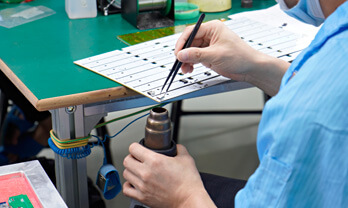
Allelco is committed to exceeding customer expectations through customer service excellence, order accuracy, and on-time delivery.
This is achieved through our commitment to the continual improvement of our processes, services, and products.


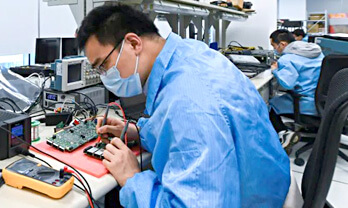
Strict quality inspection builds a solid foundation for electronic component quality.
  1. Visual inspection
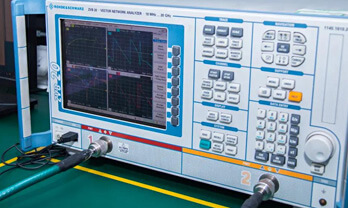
  2. Performance testing and reliability verification
  3. Standardized full-process testing
  4. Precise control of every parameter
We eliminate defective components and ensure the stable operation of electronic devices through professional quality standards.

Payment Support

The payment method can be chosen from the methods shown below: Wire Transfer (T/T, Bank Transfer), Western Union, Credit card, PayPal.
  • HKBea
  • Paypal
  • MasterCard
  • Western-Union
  • VISA
Stable Delivery, Sincere Partnership — Your Faithful Supply Chain Partner
  • Efficient Supply Management
  • Cost-Saving Procurement
  • Fast Sourcing & Delivery
Contact us if you have any questions.

Packaging

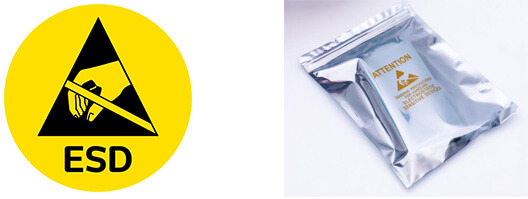
Electrostatic Discharge Protection and Handling

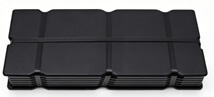
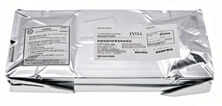
All electrostatic-sensitive components are handled in accordance with electrostatic discharge control procedures. The products are hermetically sealed in anti-static safe packaging to prevent electrostatic damage. Appropriate labeling is also applied for identification and traceability. This ensures product integrity during storage, handling and transportation.


ESD

Certifications & Memberships

Third-party certified, strict quality control. Our certification
  • ISO 9001: 2015
  • ISO 13485: 2016
  • ISO 14001: 2015
  • ISO 28000: 2007
  • ISO 45001: 2018
  • GB/T 27922-2011
  • SMTA
  • IPC
  • ESD
  • PSMA
Atmel

ATMEGA1284PAU

Atmel
41D-ATMEGA1284PAU

Want a better price? Add to Cart and Submit RFQ now, we'll contact you immediately.

0 RFQ
Shopping cart (0 Items)
It is empty.
Compare List (0 Items)
It is empty.
Feedback

Your feedback matters! At Allelco, we value the user experience and strive to improve it constantly.
Please share your comments with us via our feedback form, and we'll respond promptly.
Thank you for choosing Allelco.

Subject
E-mail
Comments
Captcha
Drag or click to upload file
Upload File
types: .xls, .xlsx, .doc, .docx, .jpg, .png and .pdf.
Max file size: 10MB