
View All

Please refer to the English Version as our Official Version.Return

Europe
France(Français) Germany(Deutsch) Italy(Italia) Russian(русский) Poland(polski) Czech(Čeština) Luxembourg(Lëtzebuergesch) Netherlands(Nederland) Iceland(íslenska) Hungarian(Magyarország) Spain(español) Portugal(Português) Turkey(Türk dili) Bulgaria(Български език) Ukraine(Україна) Greece(Ελλάδα) Israel(עִבְרִית) Sweden(Svenska) Finland(Svenska) Finland(Suomi) Romania(românesc) Moldova(românesc) Slovakia(Slovenská) Denmark(Dansk) Slovenia(Slovenija) Slovenia(Hrvatska) Croatia(Hrvatska) Serbia(Hrvatska) Montenegro(Hrvatska) Bosnia and Herzegovina(Hrvatska) Lithuania(lietuvių) Spain(Português) Switzerland(Deutsch) United Kingdom(English)
Asia/Pacific
Japan(日本語) Korea(한국의) Thailand(ภาษาไทย) Malaysia(Melayu) Singapore(Melayu) Vietnam(Tiếng Việt) Philippines(Pilipino)
Africa, India and Middle East
United Arab Emirates(العربية) Iran(فارسی) Tajikistan(فارسی) India(हिंदी) Madagascar(malaɡasʲ)
South America / Oceania
New Zealand(Maori) Brazil(Português) Angola(Português) Mozambique(Português)
North America
United States(English) Canada(English) Haiti(Ayiti) Mexico(español)
HomeProductsIntegrated Circuits (ICs)Embedded - FPGAs (Field Programmable Gate Array)EP4SGX70DF29C4N
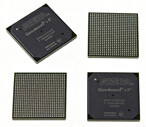
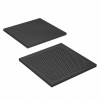
EP4SGX70DF29C4N Image
Image may be representation.
See specifications for product details.
EXPRESS OPTION
Payment method

EP4SGX70DF29C4N - Intel

Manufacturer Part Number
EP4SGX70DF29C4N
Manufacturer
Intel
Allelco Part Number
98D-EP4SGX70DF29C4N
Warranty
1 Year Allelco Warranty - Find out more
Stock Status:
5,953 pcs available, New & Original
Parts Description
IC FPGA 372 I/O 780FBGA
Package
780-FBGA (29x29)
Data sheet
EP4SGX70DF29C4N.pdf
RoHs Status
RoHS Compliant
Our certification
In stock: 5953

Required fields are indicated by an asterisk (*)
Please send RFQ, we will respond immediately.

Quantity

Specifications

EP4SGX70DF29C4N Tech Specifications
Intel - EP4SGX70DF29C4N technical specifications, attributes, parameters and parts with similar specifications to Intel - EP4SGX70DF29C4N

Product Attribute Attribute Value
Manufacturer Intel
Voltage - Supply 0.87V ~ 0.93V
Total RAM Bits 7564880
Supplier Device Package 780-FBGA (29x29)
Series Stratix® IV GX
Package / Case 780-BBGA, FCBGA
Package Tray
Product Attribute Attribute Value
Operating Temperature 0°C ~ 85°C (TJ)
Number of Logic Elements/Cells 72600
Number of LABs/CLBs 2904
Number of I/O 372
Mounting Type Surface Mount
Base Product Number EP4SGX70

Environmental & Export Classifications

ATTRIBUTE DESCRIPTION
RoHs Status RoHS Compliant
Moisture Sensitivity Level (MSL) 3 (168 Hours)
ECCN 3A991D
HTSUS 8542.39.0001

Frequently Asked Questions(FAQ)

What is the recommended operating voltage range for the EP4SGX70DF29C4N Stratix IV GX FPGA, and how does this affect power supply design in high-density applications?
The EP4SGX70DF29C4N operates within a tightly controlled supply voltage range of 0.87V to 0.93V, which is characteristic of 40nm process node devices requiring low-voltage digital logic. This narrow window necessitates precise power delivery with tightly regulated supplies, typically using integrated LDOs or high-precision DC-DC converters capable of maintaining ±2% or better regulation. In high-density designs utilizing this FPGA’s 72600 logic elements and 7564880 total RAM bits, even minor deviations from this range can cause timing violations or functional instability. Power sequencing must also be strictly managed due to the device’s sensitivity to voltage transients during startup or dynamic reconfiguration.
How does the EP4SGX70DF29C4N compare to other Stratix IV GX variants like the EP4SGX70DF29C4G in terms of thermal and electrical performance under full load?
The EP4SGX70DF29C4N and EP4SGX70DF29C4G share identical pinout and core architecture but differ primarily in their commercial grade specifications—the C4 version supports industrial temperature ranges (–40°C to +100°C), while the N variant is limited to 0°C to 85°C. Electrically, both exhibit similar dynamic current consumption under equivalent workloads, though the C4 may show marginally higher leakage at elevated temperatures. For applications requiring consistent performance across wider ambient conditions, the C4 offers reliability advantages without sacrificing logic density or I/O count, making it preferable for harsh environments despite potential increases in cooling complexity.
What considerations apply when selecting between the EP4SGX70DF29C4N and newer families like Arria V or Cyclone V for high-speed serial communication designs?
While the EP4SGX70DF29C4N includes up to 36 transceiver lanes operating at speeds up to 6.375 Gbps each—suitable for PCIe Gen2 or backplane Ethernet—its 40nm architecture results in higher static power than modern 28nm offerings like Cyclone V. For systems prioritizing power efficiency and cost over maximum bandwidth, Cyclone V variants may be more appropriate. However, if designs require advanced DSP blocks, larger block RAM, or integration of legacy interfaces alongside high-speed transceivers, the EP4SGX70DF29C4N remains competitive despite being an older generation.
Can the EP4SGX70DF29C4N support simultaneous use of multiple high-bandwidth protocols such as PCI Express and 10 Gigabit Ethernet?
Yes, the EP4SGX70DF29C4N can simultaneously support PCI Express (up to Gen2 x8) and 10 Gigabit Ethernet through its built-in transceivers and hardened protocol engines. However, achieving full throughput requires careful resource planning: enabling both protocols consumes significant portions of the available transceiver fabric, I/O banks, and dedicated hard IP blocks. Additionally, clocking becomes critical—each protocol demands stable reference clocks with low jitter, often necessitating disciplined clock management using phase-locked loops within the FPGA fabric or external oscillators compliant with IEEE 802.3ae standards.
What are the implications of the EP4SGX70DF29C4N’s Moisture Sensitivity Level (MSL) rating of 3 when designing for manufacturing yield and assembly reliability?
With an MSL of 3 (168-hour floor life), the EP4SGX70DF29C4N must be stored in dry packaging and assembled within 168 hours after desiccant removal to prevent popcorning during reflow. This requirement applies rigorously to all BGA-packaged FPGAs, including the 780-FBGA used here. Manufacturers must track bake-out procedures and humidity exposure times precisely; failure to adhere increases defect risk by orders of magnitude. Supply chain coordination is essential—especially for long production runs—to ensure consistent handling throughout procurement and assembly phases.
How should designers account for the EP4SGX70DF29C4N’s base product number (EP4SGX70) when sourcing alternatives or evaluating lifecycle status?
The base product number EP4SGX70 indicates a family of devices sharing core architecture but differing in package, speed grade, or temperature range. When sourcing EP4SGX70DF29C4N replacements, engineers must verify not only part number equivalence but also package compatibility (780-FBGA), pin compatibility, and performance characteristics. Substitutes like EP4SGX70DF29C4G offer similar functionality but with extended temperature support, while other suffixes may alter timing margins or availability. Lifecycle monitoring is crucial—since Stratix IV GX is end-of-life from Intel, future-proofing strategies may involve migration plans even if immediate replacement isn’t urgent.
What role do LABs/CLBs play in optimizing logic utilization within the EP4SGX70DF29C4N for complex state machine implementations?
The EP4SGX70DF29C4N contains 2904 LABs (Logic Array Blocks), each comprising several adaptive logic modules (ALMs) capable of implementing combinatorial and sequential logic. For complex state machines, LABs enable efficient register packing and reduce routing congestion compared to distributed flip-flop approaches. Designers should aim to fit state machines within single or adjacent LABs where possible to minimize carry chains and improve timing closure. Unoptimized state machines that span LAB boundaries increase propagation delay and complicate static timing analysis—particularly problematic given the tight voltage and thermal constraints of this device.
How does the total RAM bit capacity (7,564,880 bits) of the EP4SGX70DF29C4N influence block memory configuration choices in embedded system design?
The 7,564,880-bit distributed and block RAM capacity allows flexible implementation of large buffers, FIFO structures, or custom lookup tables without external SRAM. Engineers can configure these bits into wide-word memories (e.g., 18Kb blocks as 1024×18), dual-port configurations, or mixed granularities depending on application needs. However, allocating excessive resources to block RAM reduces available space for user logic, potentially forcing inefficient use of ALMs. Careful modeling using Quartus Prime’s Memory Editor helps balance memory depth versus logic utilization—critical for meeting timing budgets in designs leveraging the full scale of the EP4SGX70DF29C4N.
What are the key differences between the EP4SGX70DF29C4N and EP4SGX70DF29C4G regarding environmental robustness and suitability for telecom infrastructure?
The primary distinction lies in operating temperature: the EP4SGX70DF29C4N is rated for 0°C to 85°C junction temperature, whereas the EP4SGX70DF29C4G extends down to –40°C. In telecom systems deployed outdoors or in equipment rooms with fluctuating climates, this difference significantly impacts reliability. The C4G variant maintains guaranteed performance under cold-start conditions and higher sustained ambient temperatures, reducing risk of intermittent failures during seasonal transitions. Both share identical electrical parameters, so selection hinges entirely on environmental profile rather than functional capability.
When would a designer choose the EP4SGX70DF29C4N over discrete solutions for protocol bridging applications?
The EP4SGX70DF29C4N enables protocol bridging (e.g., USB-to-Ethernet, PCIe-to-SATA) with minimal external components thanks to integrated transceivers and soft logic flexibility. Discrete approaches would require multiple ASICs or ASSPs plus supporting circuitry, increasing board area, power, and bill-of-materials complexity. The FPGA’s reconfigurability also allows field updates to bridge logic—unlike fixed-function chips. However, for ultra-low-power or cost-sensitive applications where only simple conversion is needed, discrete ICs may still win. The choice depends on whether system-level integration outweighs silicon cost savings.
How does the 372-I/O count of the EP4SGX70DF29C4N constrain PCB layer requirements in high-speed signal integrity scenarios?
With 372 general-purpose I/O pins arranged across multiple banks, the EP4SGX70DF29C4N demands careful PCB layout to maintain signal integrity. High-speed signals must avoid crossing split planes or reference discontinuities, often requiring four or more layers just for routing. Differential pairs (used in transceivers) need matched lengths and impedance control (±5%) to prevent skew-induced errors. Decoupling capacitors must be placed near each bank to suppress ground bounce, especially given the device’s 0.87–0.93V supply. Proper layer stackup and via stitching are non-negotiable for reliable operation.
What ECCN classification (3A991D) means for export controls involving the EP4SGX70DF29C4N in international projects?
Classified under ECCN 3A991D, the EP4SGX70DF29C4N falls under “electronic computers” with performance exceeding certain thresholds, subject to U.S. export regulations. This designation triggers licensing requirements when shipping to embargoed countries or end-users involved in military or proliferation-sensitive activities. Even commercial deployments may require documentation under the Commerce Control List. Engineers should consult compliance officers early in project scoping to avoid delays or penalties, particularly when collaborating with foreign partners.
How does the Stratix IV GX series’ aging trend affect long-term support for the EP4SGX70DF29C4N in production environments?
As Stratix IV GX enters end-of-life, Intel ceases new development, leaving only legacy toolchains (Quartus II) and limited technical support. Designers relying on EP4SGX70DF29C4N must ensure adequate inventory buffer stocks and consider obsolescence mitigation strategies like dual-sourcing or migration paths. While datasheet parameters remain valid, firmware updates, security patches, and third-party IP availability may diminish. Risk assessments should weigh continued usability against potential supply chain vulnerabilities over the product’s remaining lifespan.
In what ways does the EP4SGX70DF29C4N’s power consumption profile influence heat sink selection and enclosure thermal management?
Although exact dynamic power depends on toggle rate and utilization, typical active power for the EP4SGX70DF29C4N ranges between 5–10W under moderate workloads. Given its 0.9V core voltage and high logic density, even idle states consume notable quiescent current. Thermal resistance from junction to ambient (JA) must be minimized via proper solder joint quality, thermal vias under the FBGA, and possibly a heatsink with finned aluminum or composite interface material. Enclosure airflow should maintain ambient below 55°C to keep TJ within 85°C limit, especially in sealed industrial enclosures.
Why might the EP4SGX70DF29C4N be preferred over lower-density FPGAs in prototyping high-complexity algorithms before final ASIC tape-out?
The EP4SGX70DF29C4N provides sufficient logic (72600 LEs) and memory (7.5M bits) to implement complex DSP pipelines, control logic, and memory controllers in a single device during pre-ASIC validation. Lower-density FPGAs would either fail to fit the algorithm or require partitioning across multiple chips, increasing debug complexity and cost. Using the same platform as the final target reduces discrepancies between simulation and real-world behavior, accelerating time-to-market. Once verified, RTL can be ported directly to ASIC flows without major redesign effort.
How does the absence of verified Digi-Electronics program status impact procurement and quality assurance for the EP4SGX70DF29C4N?
The “Not Verified” note for Digi-Electronics implies the part has passed basic quality checks but lacks full distributor-specific testing or burn-in validation. This doesn’t indicate unreliability—Intel-manufactured FPGAs undergo rigorous factory screening—but buyers should confirm traceability and batch consistency. Reputable distributors still provide standard warranties and counterfeit prevention measures. However, mission-critical applications may prefer verified parts or direct procurement from authorized channels to mitigate perceived risk, even if actual failure rates remain low.
What precautions are necessary when interfacing legacy parallel buses (e.g., LVDS or RGMII) to the EP4SGX70DF29C4N’s I/O banks?
Legacy interfaces must match the EP4SGX70DF29C4N’s I/O standards (LVCMOS, LVDS, etc.) and voltage levels (typically 1.5V or 2.5V for peripheral banks). Mixed-voltage designs require level shifters unless using dedicated 3.3V tolerant pins. Timing constraints become tighter for asynchronous interfaces due to setup/hold margins in high-speed modes. Additionally, unused I/Os must be terminated to prevent floating inputs from causing latch-up or increased power draw. Proper pin planning in Quartus helps assign correct standards per bank, avoiding cross-talk in densely packed boards.
How should designers approach clock tree synthesis when targeting timing closure on the EP4SGX70DF29C4N with mixed-frequency domains?
Mixed-frequency domains demand careful clock domain crossing (CDC) analysis and synchronized synchronization primitives to prevent metastability. The EP4SGX70DF29C4N’s global clock networks support skew minimization, but asynchronous paths require handshake circuits or FIFOs. Tools like TimeQuest Analyzer help identify critical paths, especially in designs using both slow control logic and fast transceivers. Clock gating should be applied judiciously to reduce dynamic power without violating hold times. Ultimately, early constraint definition and iterative sign-off cycles are essential for robust operation across process-voltage-temperature corners.

Parts with Similar Specifications

The three parts on the right have similar specifications to Intel EP4SGX70DF29C4N

Product Attribute EP4SGX70DF29C4G EP4SGX70DF29C4 EP4SGX70DF29I4N EP4SGX70DF29C2XN
Part Number EP4SGX70DF29C4G EP4SGX70DF29C4 EP4SGX70DF29I4N EP4SGX70DF29C2XN
Manufacturer Intel Intel Intel Intel
Series - - - -
Number of LABs/CLBs - - - -
Number of I/O - - - -
Total RAM Bits - - - -
Operating Temperature - -40°C ~ 85°C 0°C ~ 70°C -40°C ~ 85°C
Supplier Device Package - 196-NFBGA (12x12) 16-PDIP 64-VQFN (9x9)
Number of Logic Elements/Cells - - - -
Package / Case - 196-LFBGA 16-DIP (0.300', 7.62mm) 64-VFQFN Exposed Pad
Mounting Type - Surface Mount Through Hole Surface Mount
Package - Tape & Reel (TR) Tube Tape & Reel (TR)
Voltage - Supply - - - -
Base Product Number - DAC34H84 MAX500 ADS62P42

EP4SGX70DF29C4N Datasheet PDF

Download EP4SGX70DF29C4N pdf datasheets and Intel documentation for EP4SGX70DF29C4N - Intel.

Datasheets
Stratix IV Device Handbook Vol1.pdf Stratix IV Devices.pdf Virtual JTAG Megafuntion Guide.pdf
Errata
Stratix IV GX Errata.pdf

Customer Reviews

Evaluation: 10 Articles

  • Emil***rperTech
    Jun 23, 2026

    Works exactly as described. I used it as a USB-to-SPI bridge in a small MCU development project and communication was stable from the first setup.

  • Liam***terTech
    Jun 15, 2026

    Used this CPLD in a logic control project. Programming was straightforward and signal timing matched the design requirements.

  • Nath***rooks
    Jun 11, 2026

    Installed this power component in a converter board. Output remained stable under different load conditions and thermal performance was better than expected.

  • Dani***alkerTech
    Jun 1, 2026

    Product works, but setup took more effort than expected. Once configured the MCU ran reliably, although documentation support felt older compared with newer platforms. Fine for maintenance projects.

  • Yuki***aka88
    May 26, 2026

    信号通信プロジェクトでこのRS-485トランシーバーを使用しました。設置は簡単で、長距離ケーブルでも通信は安定していました。消費電力も、以前使用していたものより低くなっています。

  • Stev***aker
    May 20, 2026

    Solid diode for power rectification. Works well in switching circuits.

  • Bran***Lewis
    May 11, 2026

    Compact FPGA with good performance. Suitable for basic signal processing tasks.

  • Oliv***arris
    May 7, 2026

    Reliable I/O expander. Works well in embedded control applications.

  • Jess***Jones
    Apr 17, 2026

    It offers good value for the price, and the specifications match the description. I’ve been using it for two days with no issues, and I’ll definitely buy it again if I need it in the future.

  • Mich***Smith
    Apr 17, 2026

    Shipping was on time, the component pins are neatly aligned, and I tested 10 of them with a multimeter—all readings were within the specified range. Highly recommended.

Write a Review

Your Email address will not be published.

Shipment

Delivery Time

In-stock items can be shipped within 24 hours. Some parts will be arranged for delivery within 1-2 days from the date all items arrive at our warehouse. And Allelco ships order once a day at about 17:00, except Sunday. Once the goods are shipped, the estimated delivery time depends on the shipping methods and Delivery destination. The table below shows are the logistic time for some common countries.

Delivery Cost

  1. Use your express account for shipment if you have one.
  2. Use our account for the shipment. Refer to the table below for the approximate charges.
(Different time frame / countries / package size has different price.)

Delivery Method

  1. Global Common Shipment by DHL / UPS / FedEx / TNT / EMS / SF we support.
  2. Others more shipping ways, please get in touch with your customer manager.

Common Countries Logistic Time Reference
Region Country Logistic Time(Day)
America United States 5
Brazil 7
Europe Germany 5
United Kingdom 4
Italy 5
Oceania Australia 6
New Zealand 5
Asia India 4
Japan 4
Middle East Israel 6
DHL & FedEx Shipment Charges Reference
Shipment charges(KG) Reference DHL(USD$)
0.00kg-1.00kg USD$30.00 - USD$60.00
1.00kg-2.00kg USD$40.00 - USD$80.00
2.00kg-3.00kg USD$50.00 - USD$100.00
Note:
The above table is for reference only. There may have some data bias for the uncontrollable factors.
Contact us if you have any questions.
  • QC (Quality Warranty)
  • Payment Support
  • Packaging
  • Certifications & Memberships

QC (Quality Warranty)

Allelco is committed to exceeding customer expectations through customer service excellence, order accuracy, and on-time delivery.
This is achieved through our commitment to the continual improvement of our processes, services, and products.


Strict quality inspection builds a solid foundation for electronic component quality.
  1. Visual inspection
  2. Performance testing and reliability verification
  3. Standardized full-process testing
  4. Precise control of every parameter
We eliminate defective components and ensure the stable operation of electronic devices through professional quality standards.

Payment Support

The payment method can be chosen from the methods shown below: Wire Transfer (T/T, Bank Transfer), Western Union, Credit card, PayPal.
  • HKBea
  • Paypal
  • MasterCard
  • Western-Union
  • VISA
Stable Delivery, Sincere Partnership — Your Faithful Supply Chain Partner
  • Efficient Supply Management
  • Cost-Saving Procurement
  • Fast Sourcing & Delivery
Contact us if you have any questions.

Packaging

Electrostatic Discharge Protection and Handling

All electrostatic-sensitive components are handled in accordance with electrostatic discharge control procedures. The products are hermetically sealed in anti-static safe packaging to prevent electrostatic damage. Appropriate labeling is also applied for identification and traceability. This ensures product integrity during storage, handling and transportation.


ESD

Certifications & Memberships

Third-party certified, strict quality control. Our certification
  • ISO 9001: 2015
  • ISO 13485: 2016
  • ISO 14001: 2015
  • ISO 28000: 2007
  • ISO 45001: 2018
  • GB/T 27922-2011
  • SMTA
  • IPC
  • ESD
  • PSMA
EP4SGX70DF29C4N Image

EP4SGX70DF29C4N

Intel
98D-EP4SGX70DF29C4N

Want a better price? Add to Cart and Submit RFQ now, we'll contact you immediately.

0 RFQ
Shopping cart (0 Items)
It is empty.
Compare List (0 Items)
It is empty.
Feedback

Your feedback matters! At Allelco, we value the user experience and strive to improve it constantly.
Please share your comments with us via our feedback form, and we'll respond promptly.
Thank you for choosing Allelco.

Subject
E-mail
Comments
Captcha
Drag or click to upload file
Upload File
types: .xls, .xlsx, .doc, .docx, .jpg, .png and .pdf.
Max file size: 10MB