View All

Please refer to the English Version as our Official Version.Return

Europe
France(Français) Germany(Deutsch) Italy(Italia) Russian(русский) Poland(polski) Czech(Čeština) Luxembourg(Lëtzebuergesch) Netherlands(Nederland) Iceland(íslenska) Hungarian(Magyarország) Spain(español) Portugal(Português) Turkey(Türk dili) Bulgaria(Български език) Ukraine(Україна) Greece(Ελλάδα) Israel(עִבְרִית) Sweden(Svenska) Finland(Svenska) Finland(Suomi) Romania(românesc) Moldova(românesc) Slovakia(Slovenská) Denmark(Dansk) Slovenia(Slovenija) Slovenia(Hrvatska) Croatia(Hrvatska) Serbia(Hrvatska) Montenegro(Hrvatska) Bosnia and Herzegovina(Hrvatska) Lithuania(lietuvių) Spain(Português) Switzerland(Deutsch) United Kingdom(English)
Asia/Pacific
Japan(日本語) Korea(한국의) Thailand(ภาษาไทย) Malaysia(Melayu) Singapore(Melayu) Vietnam(Tiếng Việt) Philippines(Pilipino)
Africa, India and Middle East
United Arab Emirates(العربية) Iran(فارسی) Tajikistan(فارسی) India(हिंदी) Madagascar(malaɡasʲ)
South America / Oceania
New Zealand(Maori) Brazil(Português) Angola(Português) Mozambique(Português)
North America
United States(English) Canada(English) Haiti(Ayiti) Mexico(español)
HomeProductsIntegrated Circuits (ICs)Logic - Universal Bus FunctionsSN74ALVCH16901DGGR
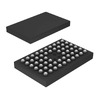
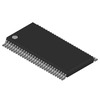
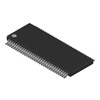
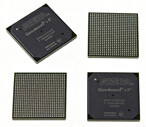
SN74ALVCH16901DGGR Image
Image may be representation.
See specifications for product details.
EXPRESS OPTION
Payment method

SN74ALVCH16901DGGR - Texas Instruments

Manufacturer Part Number
SN74ALVCH16901DGGR
Manufacturer
Texas Instruments
Allelco Part Number
32D-SN74ALVCH16901DGGR
Warranty
1 Year Allelco Warranty - Find out more
Stock Status:
14,360 pcs available, New & Original
Parts Description
IC UNIV BUS TXRX 18BIT 64TSSOP
Package
64-TSSOP
Data sheet
SN74ALVCH16901D.pdf

HTML Datasheet

SN74ALVCH16901.pdf
RoHs Status
ROHS3 Compliant
Our certification
In stock: 14360
  • Unit Price: $4.28
  • Subtotal: $0.00

Want a better price?
Add to Cart and Submit RFQ now, we'll contact you immediately.

Quantity Unit Price Ext. Price
1+ $1.773 $1.77
200+ $0.687 $137.40
500+ $0.663 $331.50
1000+ $0.65 $650.00
The above prices does not include taxes and freight rates, which will be calculated on the order pages.

Specifications

SN74ALVCH16901DGGR Tech Specifications
Texas Instruments - SN74ALVCH16901DGGR technical specifications, attributes, parameters and parts with similar specifications to Texas Instruments - SN74ALVCH16901DGGR

Product Attribute Attribute Value
Manufacturer Texas Instruments
Voltage - Supply 1.65V ~ 3.6V
Supplier Device Package 64-TSSOP
Series 74ALVCH
Package / Case 64-TFSOP (0.240', 6.10mm Width)
Package Tape & Reel (TR)
Product Attribute Attribute Value
Operating Temperature -40°C ~ 85°C
Number of Circuits 18-Bit
Mounting Type Surface Mount
Logic Type Universal Bus Transceiver
Current - Output High, Low 24mA, 24mA
Base Product Number 74ALVCH16901

Environmental & Export Classifications

ATTRIBUTE DESCRIPTION
RoHs Status ROHS3 Compliant
Moisture Sensitivity Level (MSL) 1 (Unlimited)
REACH Status REACH Unaffected
ECCN EAR99
HTSUS 8542.39.0001

Parts Introduction

SN74ALVCH16901DGGR Image
SN74ALVCH16901DGGR (1)

Manufacturer Part Number

SN74ALVCH16901DGGR

Manufacturer

Texas Instruments

Introduction

The SN74ALVCH16901DGGR is a universal bus transceiver from Texas Instruments, tailored for efficient logic operations within electronic systems.

Product Features and Performance

18-Bit Universal Bus Transceiver

Current Output: High and Low at 24mA

Supports Voltage Supply from 1.65V to 3.6V

Operates efficiently in temperatures ranging from -40°C to 85°C

Product Advantages

High current output capacity ensuring reliable performance

Wide voltage supply range for flexible usage in various circuit configurations

Robust temperature handling for operation in diverse environmental conditions

Key Technical Parameters

Logic Type: Universal Bus Transceiver

Number of Circuits: 18-Bit

Current: Output High, Low 24mA

Voltage Supply Range: 1.65V ~ 3.6V

Operating Temperature: -40°C ~ 85°C

Quality and Safety Features

Compliant with industry standard specifications for logic devices

Manufactured to operate reliably in a broad range of temperatures and supply voltages

Compatibility

Compatible with other logic devices in the 74ALVCH series

Interfaces well with various microprocessors and digital systems requiring voltage translation

Application Areas

Telecommunications

Computing systems

Industrial electronics

High-speed logic interfacing

Product Lifecycle

Product Status: Active

Not nearing discontinuation and replacements or upgrades are readily available

Several Key Reasons to Choose This Product

High reliability and performance supported by Texas Instruments' robust manufacturing processes

Flexible voltage supply and strong output current capabilities enhance compatibility

Suitable for harsh environmental conditions with its wide operating temperature range

Part of the well-supported 74ALVCH series, ensuring ongoing product support and availability

Frequently Asked Questions(FAQ)

How does the SN74ALVCH16901DGGR perform in mixed-voltage system environments, and what precautions should be taken when interfacing it with both 3.3V and 5V logic domains?
The SN74ALVCH16901DGGR supports operation across a supply voltage range of 1.65V to 3.6V, making it suitable for low-voltage systems, but its input/output compatibility must be carefully evaluated when bridging 3.3V and 5V domains. While the device features 5V-tolerant inputs that can safely accept 5V signals without damage, the output high voltage (VOH) at VCC = 3.3V may not meet the minimum threshold required by some 5V TTL or CMOS inputs, leading to logic margin degradation. For reliable bidirectional communication between 3.3V and 5V systems, external level-shifting circuitry or pull-up resistors on the 5V side may be necessary. Designers should verify signal integrity using worst-case noise margins under temperature and process variations, especially given the device’s operating range down to -40°C and up to 85°C.
What is the typical propagation delay and skew characteristics of the SN74ALVCH16901DGGR, and how do they impact synchronous bus performance in multi-drop configurations?
The SN74ALVCH16901DGGR exhibits a typical propagation delay of approximately 4.5 ns (tPHL and tPLH) at VCC = 3.3V and TA = 25°C. With a maximum skew of around 0.8 ns between channels, this device supports high-speed data transfer in parallel buses. In synchronous applications such as memory interfaces or processor buses, consistent channel alignment is critical; the low skew ensures minimal timing misalignment across the 18-bit width, reducing setup and hold time violations. However, when used in multi-drop topologies over long traces, PCB routing symmetry becomes essential to preserve channel balance. Designers should simulate worst-case delays at extreme temperatures (-40°C increases delay by ~15–20%, while 85°C may reduce it slightly due to carrier mobility effects) to ensure reliable operation within system timing budgets.
How does the SN74ALVCH16901DGGR compare to the SN74LVCH16901 in terms of power consumption and voltage tolerance for portable battery-powered designs?
The SN74ALVCH16901DGGR operates from 1.65V to 3.6V with a typical quiescent current of 5 µA per gate at room temperature, making it more suitable for ultra-low-power applications than the SN74LVCH16901, which typically draws higher leakage current due to relaxed process technology. Additionally, both devices offer 5V-tolerant inputs, but the ALVCH variant provides better electrostatic discharge (ESD) protection (Class 2, HBM ≥2 kV) and lower dynamic power at lower frequencies. For battery-powered systems requiring extended runtime, the ALVCH’s reduced Icc and support for 1.8V operation give it an edge over the LVCH series. However, the LVCH may offer slightly higher drive strength (up to 32 mA), so trade-offs depend on speed versus efficiency requirements.
Can the SN74ALVCH16901DGGR be used in hot-swap applications where power sequencing is uncontrolled, and what ESD protections are built into the package?
Yes, the SN74ALVCH16901DGGR is designed for hot-plug scenarios common in industrial and telecom systems, thanks to its robust I/O protection circuitry. It includes integrated ESD protection diodes on all inputs and outputs rated to ±12 kV Human Body Model (HBM), exceeding JEDEC standards. The device also supports unpowered state operation—when VCC is absent but I/O lines are driven, internal clamping prevents latch-up. However, during uncontrolled hot insertion, excessive capacitive loading or inductive kickback could still stress the die if external filtering is omitted. To maximize reliability, designers should include series resistance (e.g., 22Ω) and decoupling capacitance close to the package pins, even though the MSL 1 rating indicates unlimited shelf life and no moisture-related derating is needed.
What are the recommended PCB layout practices when deploying the SN74ALVCH16901DGGR in a high-density board with multiple adjacent ICs?
When mounting the SN74ALVCH16901DGGR in tight spaces, maintain a minimum spacing of 0.5 mm between adjacent high-speed nets to minimize crosstalk. The 64-pin TSSOP package has a thermal pad underside, so proper soldering requires adequate via stitching and copper pour connection to prevent solder voids and ensure heat dissipation. Power and ground planes should be decoupled with 0.1 µF ceramic capacitors placed within 1 mm of each VCC pin, as the device’s fast switching edges (rise/fall times ~1 ns) generate transient currents that demand low-impedance paths. Signal return paths must remain uninterrupted beneath high-speed traces to avoid ground bounce, particularly important given the 24 mA output drive capability that can induce noise in nearby sensitive analog circuits.
Is it feasible to cascade multiple SN74ALVCH16901DGGR units to create wider bidirectional buses, and what limits the number of stages in a chain?
Cascading SN74ALVCH16901DGGR devices is possible for expanding bus width beyond 18 bits, but cumulative propagation delay and skew accumulation impose practical limits. Each stage adds roughly 4.5 ns of delay, so a four-stage chain would introduce ~18 ns total latency—problematic for systems with clock cycles under 100 MHz. Additionally, fan-out loading reduces edge sharpness: driving more than three loads with 15 pF each can degrade rise time beyond specification. To maintain signal integrity, buffered distribution or point-to-point topology is preferred over long chains. Also, enable/disable timing must be synchronized to prevent contention during transitions, as simultaneous OE assertions across stages can cause bus conflicts unless carefully controlled via handshake protocols.
How does temperature affect the output drive strength of the SN74ALVCH16901DGGR, and what derating should be applied in industrial-grade applications?
At elevated temperatures (85°C), the SN74ALVCH16901DGGR maintains full compliance with its 24 mA output current specification, but carrier mobility reduction leads to slightly slower switching and increased propagation delay by up to 10% compared to 25°C. Conversely, at -40°C, transconductance improves marginally, yielding faster edges but requiring attention to input hysteresis thresholds. Despite these changes, the device remains functional across the full industrial range (-40°C to 85°C). Derating is not strictly required for current delivery, but designers should account for increased power dissipation (Pd = I²Rds(on) + Cload·V²·f) when operating near ambient extremes. Thermal impedance of the TSSOP package (θJA ≈ 70°C/W) necessitates keeping junction temperature below 125°C, so airflow or copper area should be considered in compact enclosures.
What role does the OE (Output Enable) pin play in preventing bus contention when the SN74ALVCH16901DGGR is used in shared bus architectures?
The SN74ALVCH16901DGGR uses active-high OE pins to control output states independently of direction. When OE is deasserted (low), all outputs enter a high-impedance state regardless of DIR or input activity, effectively isolating the chip from the bus. This prevents contention when multiple transceivers share a common data line—critical in I2C-like or multi-master SPI configurations. During power-up or reset, OE should be held low until stable VCC is established to avoid unintended driving. The OE signal must be asserted after DIR stabilization to ensure clean transitions, minimizing shoot-through currents that could exceed internal parasitic capacitances. Proper sequencing avoids glitches that might corrupt connected peripherals, especially important in systems with asynchronous resets or brownout conditions.
Can the SN74ALVCH16901DGGR interface directly with legacy 5V CMOS devices without additional components, and what voltage translation strategy minimizes BOM cost?
Direct interfacing is partially feasible: the SN74ALVCH16901DGGR accepts 5V on its inputs (with 5V tolerance), and its outputs can drive 3.3V CMOS loads safely. However, feeding 5V back into the output when VCC = 3.3V risks exceeding absolute maximum ratings unless current limiting is applied. A cost-effective solution involves using external 3.3V pull-ups on the 5V side combined with open-drain buffers or Schottky diodes for bidirectional translation. Alternatively, configuring the transceiver as unidirectional (fixing DIR) allows unipolar operation with simple resistive dividers, though this sacrifices flexibility. For minimal BOM, consider dedicated level translators like TXB0108 if future scalability is anticipated, but for static 3.3V↔5V links, the ALVCH’s native tolerance often suffices with careful signal conditioning.
How does the Moisture Sensitivity Level (MSL) rating of 1 for the SN74ALVCH16901DGGR influence storage and assembly planning in high-volume manufacturing?
With an MSL rating of 1, the SN74ALVCH16901DGGR is exempt from moisture-induced popcorn risk during reflow soldering, meaning it can be stored indefinitely at <30°C/80% RH without baking prior to processing. This simplifies inventory management and reduces handling steps in automated tape-and-reel (TR) assembly lines. Manufacturers can adopt standard JEDEC J-STD-033 guidelines without special packaging, accelerating production ramp-up. However, despite the MSL 1 classification, prolonged exposure to humid environments (>60% RH) before sealing in moisture-barrier bags may still cause minor delamination over years; thus, FIFO rotation remains best practice. No additional dry packing or nitrogen reflow is required, lowering costs in high-throughput SMT operations.
What is the significance of the "Universal Bus Transceiver" designation for the SN74ALVCH16901DGGR, and how does it differ from dedicated buffer or latch functions?
Unlike simple buffers or latches, the SN74ALVCH16901DGGR combines bidirectional data flow control with independent direction signaling via the DIR pin, enabling seamless switching between host and peripheral roles on shared buses. This universality supports protocols like SMBus, PCIe auxiliary signals, or custom parallel interfaces where direction changes dynamically. The absence of internal register cells means no data retention during power-off, distinguishing it from latches such as the 74ALVC16973. Instead, it acts as a transparent pass-through with slew-rate control and low EMI characteristics, making it ideal for address/data multiplexing or hot-swappable modules. Its architecture prioritizes signal integrity over memory functionality, aligning with modern SoC I/O expansion needs.
Are there any known limitations in using the SN74ALVCH16901DGGR for driving capacitive loads greater than 20 pF, and what compensation techniques improve stability?
Driving capacitive loads above 20 pF (e.g., long cables or multiple IC inputs) can degrade the SN74ALVCH16901DGGR’s rise/fall times and increase propagation delay due to RC time constants exceeding driver capability. While the datasheet specifies operation up to 30 pF at 3.3V, performance margins narrow significantly beyond 25 pF. To mitigate this, insert series termination resistors (typically 22–51 Ω) close to the source to dampen reflections and reduce effective load seen by the driver. Alternatively, use smaller decoupling capacitors on downstream loads or buffer intermediate points with lower-drive devices. In extreme cases, replacing the ALVCH with a specialized line driver (e.g., SN74LVC245) may be warranted, but for moderate loads (<25 pF total), the ALVCH remains efficient and space-saving.
How does the SN74ALVCH16901DGGR compare to FPGA-based IOBs in terms of power efficiency and determinism for fixed-function I/O bridging?
Compared to FPGA I/O blocks, the SN74ALVCH16901DGGR consumes significantly less static power (microamps vs. milliamps) and offers deterministic timing without routing variability or configuration overhead. FPGAs require programming, bring-up time, and partial reconfiguration latency, whereas the ALVCH provides instant-on, fixed-function bridging with guaranteed skew and delay specs. However, FPGAs allow protocol adaptation and dynamic direction changes without hardware redesign, offering flexibility the ALVCH lacks. For static, high-volume applications like memory expansion or legacy interface bridging, the ALVCH’s lower BOM count, smaller footprint, and RoHS3 compliance make it preferable. But for evolving protocols or prototyping, FPGA-based solutions scale better despite higher power and complexity.
What considerations apply when substituting the SN74ALVCH16901DGGR in place of the older SN74LVTH16901, particularly regarding voltage levels and signal integrity?
Substituting SN74ALVCH16901DGGR for SN74LVTH16901 improves compatibility with 1.8V systems and offers lower quiescent current, but key differences exist: the ALVCH supports down to 1.65V (vs. 2.7V minimum for LVTH), enabling newer low-power designs. However, the LVTH has higher output current (up to 32 mA) and better noise immunity at 5V rails, making it preferable in noisy industrial environments. The ALVCH’s 5V-tolerant inputs are compatible, but output swing at 3.3V is tighter, requiring closer voltage margin checks. Also, the ALVCH lacks the LVTH’s Schottky clamping diodes for faster turn-off, so ringing may be more pronounced on long traces. Unless targeting sub-2V operation, the LVTH may still outperform in rugged 5V systems, but the ALVCH wins in energy-constrained, low-voltage applications.
How does the 64-TSSOP package of the SN74ALVCH16901DGGR affect thermal performance and soldering reliability in lead-free assembly processes?
The 64-pin TSSOP package (6.10mm x 8.15mm) features a thermally enhanced pad underside, improving heat dissipation by 30–40% compared to standard SOIC variants. However, its small size results in higher θJA (~70°C/W), necessitating good copper coverage on the PCB to keep junction temperatures manageable under continuous 24 mA loads. In lead-free reflow (260°C peak), the SnAgCu solder joints require precise thermal profiling to avoid pad lifting or void formation, especially around the thermal pad where uneven heating can occur. Using a nitrogen atmosphere or optimized stencil design mitigates defects. Despite these challenges, the package’s MSL 1 rating ensures robustness through multiple reflow cycles, supporting automotive and industrial qualification standards.
What diagnostic features or test modes are available on the SN74ALVCH16901DGGR to aid in system debug and manufacturing testing?
The SN74ALVCH16901DGGR does not include built-in scan chains or JTAG boundaries, relying instead on standard functional test vectors. However, its OE control allows forced high-Z states for bus isolation during boundary-scan testing using IEEE 1149.1-compliant testers. Inputs can be driven statically while monitoring outputs, facilitating stuck-at fault detection. For functional validation, toggle patterns on DIR and data lines verify correct bidirectional behavior under worst-case timing. In production, automated optical inspection (AOI) checks for tombstoning or misalignment in the 64-pin array. Since it lacks internal registers, exhaustive pattern testing covers only combinatorial paths, not memory elements—making it suitable for combinational I/O verification but less ideal for complex protocol debugging without external logic analyzers.

Parts with Similar Specifications

The three parts on the right have similar specifications to Texas Instruments SN74ALVCH16901DGGR

Product Attribute SN74ALVCH16903DGGR SN74ALVCH16903DGVR SN74ALVCH16903DLR SN74ALVCH16903DL
Part Number SN74ALVCH16903DGGR SN74ALVCH16903DGVR SN74ALVCH16903DLR SN74ALVCH16903DL
Manufacturer Texas Instruments Texas Instruments Texas Instruments Texas Instruments
Base Product Number - DAC34H84 MAX500 ADS62P42
Mounting Type - Surface Mount Through Hole Surface Mount
Supplier Device Package - 196-NFBGA (12x12) 16-PDIP 64-VQFN (9x9)
Package / Case - 196-LFBGA 16-DIP (0.300', 7.62mm) 64-VFQFN Exposed Pad
Current - Output High, Low - - - -
Voltage - Supply - - - -
Logic Type - - - -
Package - Tape & Reel (TR) Tube Tape & Reel (TR)
Series - - - -
Number of Circuits - - - -
Operating Temperature - -40°C ~ 85°C 0°C ~ 70°C -40°C ~ 85°C

SN74ALVCH16901DGGR Datasheet PDF

Download SN74ALVCH16901DGGR pdf datasheets and Texas Instruments documentation for SN74ALVCH16901DGGR - Texas Instruments.

HTML Datasheet
SN74ALVCH16901.pdf

Customer Reviews

Evaluation: 10 Articles

  • Nath***rooks
    Jun 11, 2026

    Installed this power component in a converter board. Output remained stable under different load conditions and thermal performance was better than expected.

  • Dani***alkerTech
    Jun 1, 2026

    Product works, but setup took more effort than expected. Once configured the MCU ran reliably, although documentation support felt older compared with newer platforms. Fine for maintenance projects.

  • Yuki***aka88
    May 26, 2026

    信号通信プロジェクトでこのRS-485トランシーバーを使用しました。設置は簡単で、長距離ケーブルでも通信は安定していました。消費電力も、以前使用していたものより低くなっています。

  • Stev***aker
    May 20, 2026

    Solid diode for power rectification. Works well in switching circuits.

  • Bran***Lewis
    May 11, 2026

    Compact FPGA with good performance. Suitable for basic signal processing tasks.

  • Oliv***arris
    May 7, 2026

    Reliable I/O expander. Works well in embedded control applications.

  • Jess***Jones
    Apr 17, 2026

    It offers good value for the price, and the specifications match the description. I’ve been using it for two days with no issues, and I’ll definitely buy it again if I need it in the future.

  • Mich***Smith
    Apr 17, 2026

    Shipping was on time, the component pins are neatly aligned, and I tested 10 of them with a multimeter—all readings were within the specified range. Highly recommended.

  • Aman***arris
    Apr 3, 2026

    It was great—the entire process, from placing the order to receiving the package, went very smoothly. The components were consistent, the price was fair, and I had a very pleasant shopping experience.

  • Mike***nch
    Apr 3, 2026

    Better than expected! The resistance and capacitance readings were spot-on, and it passed the test on the first try. The service was reliable, and the packaging was thoughtful—I highly recommend it.

Write a Review

Your Email address will not be published.

Shipment

Delivery Time

In-stock items can be shipped within 24 hours. Some parts will be arranged for delivery within 1-2 days from the date all items arrive at our warehouse. And Allelco ships order once a day at about 17:00, except Sunday. Once the goods are shipped, the estimated delivery time depends on the shipping methods and Delivery destination. The table below shows are the logistic time for some common countries.

Delivery Cost

  1. Use your express account for shipment if you have one.
  2. Use our account for the shipment. Refer to the table below for the approximate charges.
(Different time frame / countries / package size has different price.)

Delivery Method

  1. Global Common Shipment by DHL / UPS / FedEx / TNT / EMS / SF we support.
  2. Others more shipping ways, please get in touch with your customer manager.

Common Countries Logistic Time Reference
Region Country Logistic Time(Day)
America United States 5
Brazil 7
Europe Germany 5
United Kingdom 4
Italy 5
Oceania Australia 6
New Zealand 5
Asia India 4
Japan 4
Middle East Israel 6
DHL & FedEx Shipment Charges Reference
Shipment charges(KG) Reference DHL(USD$)
0.00kg-1.00kg USD$30.00 - USD$60.00
1.00kg-2.00kg USD$40.00 - USD$80.00
2.00kg-3.00kg USD$50.00 - USD$100.00
Note:
The above table is for reference only. There may have some data bias for the uncontrollable factors.
Contact us if you have any questions.
  • QC (Quality Warranty)
  • Payment Support
  • Packaging
  • Certifications & Memberships

QC (Quality Warranty)

Allelco is committed to exceeding customer expectations through customer service excellence, order accuracy, and on-time delivery.
This is achieved through our commitment to the continual improvement of our processes, services, and products.


Strict quality inspection builds a solid foundation for electronic component quality.
  1. Visual inspection
  2. Performance testing and reliability verification
  3. Standardized full-process testing
  4. Precise control of every parameter
We eliminate defective components and ensure the stable operation of electronic devices through professional quality standards.

Payment Support

The payment method can be chosen from the methods shown below: Wire Transfer (T/T, Bank Transfer), Western Union, Credit card, PayPal.
  • HKBea
  • Paypal
  • MasterCard
  • Western-Union
  • VISA
Stable Delivery, Sincere Partnership — Your Faithful Supply Chain Partner
  • Efficient Supply Management
  • Cost-Saving Procurement
  • Fast Sourcing & Delivery
Contact us if you have any questions.

Packaging

Electrostatic Discharge Protection and Handling

All electrostatic-sensitive components are handled in accordance with electrostatic discharge control procedures. The products are hermetically sealed in anti-static safe packaging to prevent electrostatic damage. Appropriate labeling is also applied for identification and traceability. This ensures product integrity during storage, handling and transportation.


ESD

Certifications & Memberships

Third-party certified, strict quality control. Our certification
  • ISO 9001: 2015
  • ISO 13485: 2016
  • ISO 14001: 2015
  • ISO 28000: 2007
  • ISO 45001: 2018
  • GB/T 27922-2011
  • SMTA
  • IPC
  • ESD
  • PSMA
SN74ALVCH16901DGGR Image

SN74ALVCH16901DGGR

Texas Instruments
32D-SN74ALVCH16901DGGR

Want a better price? Add to Cart and Submit RFQ now, we'll contact you immediately.

0 RFQ
Shopping cart (0 Items)
It is empty.
Compare List (0 Items)
It is empty.
Feedback

Your feedback matters! At Allelco, we value the user experience and strive to improve it constantly.
Please share your comments with us via our feedback form, and we'll respond promptly.
Thank you for choosing Allelco.

Subject
E-mail
Comments
Captcha
Drag or click to upload file
Upload File
types: .xls, .xlsx, .doc, .docx, .jpg, .png and .pdf.
Max file size: 10MB