View All

Please refer to the English Version as our Official Version.Return

Europe
France(Français) Germany(Deutsch) Italy(Italia) Russian(русский) Poland(polski) Czech(Čeština) Luxembourg(Lëtzebuergesch) Netherlands(Nederland) Iceland(íslenska) Hungarian(Magyarország) Spain(español) Portugal(Português) Turkey(Türk dili) Bulgaria(Български език) Ukraine(Україна) Greece(Ελλάδα) Israel(עִבְרִית) Sweden(Svenska) Finland(Svenska) Finland(Suomi) Romania(românesc) Moldova(românesc) Slovakia(Slovenská) Denmark(Dansk) Slovenia(Slovenija) Slovenia(Hrvatska) Croatia(Hrvatska) Serbia(Hrvatska) Montenegro(Hrvatska) Bosnia and Herzegovina(Hrvatska) Lithuania(lietuvių) Spain(Português) Switzerland(Deutsch) United Kingdom(English)
Asia/Pacific
Japan(日本語) Korea(한국의) Thailand(ภาษาไทย) Malaysia(Melayu) Singapore(Melayu) Vietnam(Tiếng Việt) Philippines(Pilipino)
Africa, India and Middle East
United Arab Emirates(العربية) Iran(فارسی) Tajikistan(فارسی) India(हिंदी) Madagascar(malaɡasʲ)
South America / Oceania
New Zealand(Maori) Brazil(Português) Angola(Português) Mozambique(Português)
North America
United States(English) Canada(English) Haiti(Ayiti) Mexico(español)
HomeProductsIntegrated Circuits (ICs)Specialized ICsSN74ALVCH16841DL
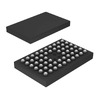
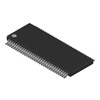
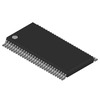
Image may be representation.
See specifications for product details.
EXPRESS OPTION
Payment method

SN74ALVCH16841DL - Texas Instruments

Manufacturer Part Number
SN74ALVCH16841DL
Manufacturer
Texas Instruments
Allelco Part Number
41D-SN74ALVCH16841DL
Warranty
1 Year Allelco Warranty - Find out more
Stock Status:
4,600 pcs available, New & Original
Parts Description
SSOP-56
Data sheet
-
Category
Integrated Circuits (ICs) > Specialized ICs
RoHs Status
Our certification
In stock: 4600

Required fields are indicated by an asterisk (*)
Please send RFQ, we will respond immediately.

Quantity

Specifications

SN74ALVCH16841DL Tech Specifications
Texas Instruments - SN74ALVCH16841DL technical specifications, attributes, parameters and parts with similar specifications to Texas Instruments - SN74ALVCH16841DL

Product Attribute Attribute Value
Part Number SN74ALVCH16841DL
Package SSOP-56
Description SSOP-56
Stock Condition Get 4600 pcs available quantity at Allelco
Payment PayPal / TT / Credit Card / Western Union
Allelco Certifications ESD / ISO 9001 / ISO 13485 / ISO 28000
Product Attribute Attribute Value
Manufacturer Texas Instruments
RoHs Status -
Warranty 100% Perfect Functions
Transport port Hong Kong
Shipping by DHL / FedEx / UPS / TNT / SF Express
RFQ Email info@allelco.com

Parts Introduction

Manufacturer Part Number

SN74ALVCH16841DL

Manufacturer

Texas Instruments

Introduction

The SN74ALVCH16841DL is a high-performance, voltage-translating 10-bit D-type transparent latch with tri-state outputs. It is designed to provide efficient voltage translation and level shifting between different logic families, enabling seamless integration of components with varying supply voltages.

Product Features and Performance

10-bit D-type transparent latch with tri-state outputs

Supports voltage translation between 1.65V to 3.6V

Propagation delay of only 1ns

High output current capability of 24mA (high and low)

Wide operating temperature range of -40°C to 85°C

Efficient surface-mount package (56-BSSOP)

Product Advantages

Enables seamless voltage translation between logic families

Minimizes power consumption and heat generation

Compact surface-mount package for space-efficient designs

Robust operating temperature range for a wide variety of applications

Key Reasons to Choose This Product

Exceptional performance and efficiency for voltage translation

Reliable and stable operation across a wide range of conditions

Ease of integration with various logic families and system designs

Optimized for space-constrained applications

Quality and Safety Features

Complies with safety standards for electronic components

Rigorous quality control and testing procedures

Backed by Texas Instruments' reputation for reliability and innovation

Compatibility

The SN74ALVCH16841DL is designed to be compatible with a variety of logic families, including CMOS, TTL, and other LVDS/LVPECL-compatible devices.

Application Areas

Digital signal processing

Communication systems

Industrial control and automation

Embedded systems

Military and aerospace applications

Product Lifecycle

The SN74ALVCH16841DL is an active product, currently in production. There are no immediate plans for discontinuation. If you require information about equivalent or alternative models, please contact our sales team through our website for the latest updates and recommendations.

Frequently Asked Questions(FAQ)

How does the propagation delay of the SN74ALVCH16841DL compare to other D-type latches in similar supply voltage ranges, and what implications does this have for high-speed bus interface designs?
The SN74ALVCH16841DL exhibits a typical propagation delay of 1ns at nominal operating conditions, which is notably faster than many standard-voltage D-latches operating in the 2.5V–3.3V range that often exhibit delays between 2.5ns and 4ns. This reduced latency enables tighter timing margins in synchronous systems where clock-to-Q delays must be minimized, particularly in applications such as DDR memory interfaces or multi-channel data buses. When selecting between devices like the SN74ALVCH16841DL and alternatives such as the SN74LVTH16821 (which typically shows ~3ns delay), the ALVCH series offers superior performance for time-critical signal routing without requiring higher-speed logic families like LVDS or CPLD-based solutions.
In what scenarios should one consider using the dual-channel architecture of the SN74ALVCH16841DL over single-channel equivalents, and how does power consumption scale with channel utilization?
The SN74ALVCH16841DL integrates two independent 10-bit transparent latches, making it ideal for parallel data buffering in systems requiring simultaneous control of multiple signals—such as industrial motor controllers managing encoder feedback and PWM outputs from a single microcontroller. Each channel draws approximately 10–15μA under light load at 3.3V, so full duplex operation may consume up to 30μA, which is still negligible compared to microcontrollers but relevant when designing battery-powered edge devices. Compared to cascaded single-channel parts like the SN74ALVCH16241, the integrated design reduces board space by nearly 50% while maintaining identical per-bit performance, though it lacks flexibility if only one bus segment requires latching.
What are the critical layout considerations when implementing the SN74ALVCH16841DL on a high-density PCB, especially concerning its 7.5mm-wide 56-SSOP package?
Due to the SN74ALVCH16841DL’s 56-pin SSOP footprint occupying a width of 7.5mm, adjacent component placement must account for thermal dissipation and signal integrity. Power and ground planes should be decoupled within 2mm of the device using 0.1μF ceramic capacitors rated for 6.3V, as rapid switching across the 10-bit channels can induce transient currents exceeding 100mA. Additionally, keep clock and enable traces short (<5mm) and away from noisy digital lines to preserve the specified 1ns propagation delay; otherwise, crosstalk may increase effective skew beyond acceptable limits for DDR3 interfaces. Unlike smaller packages like SOIC, this wider form factor allows better heat spreading but demands careful routing to avoid coupling with adjacent high-impedance nodes.
How does the tri-state output capability of the SN74ALVCH16841DL affect bus contention risks in shared-bus architectures, and what design safeguards are recommended?
The tri-state outputs prevent bus contention by allowing multiple drivers—including the SN74ALVCH16841DL—to coexist on a common line without conflict, provided their OE (output enable) signals are mutually exclusive. For instance, in a system with two microcontrollers sharing an address/data bus, one can assert its latch outputs while the other keeps OE inactive, thus avoiding shoot-through currents. However, failure to enforce proper OE arbitration can result in excessive current draw up to 24mA per pin, potentially damaging inputs or causing voltage drops that corrupt logic levels. Implementing open-collector buffers or dedicated bus arbiters upstream is advised over relying solely on software coordination, especially in safety-critical environments where deterministic behavior is required.
Can the SN74ALVCH16841DL operate reliably at supply voltages below 2.0V, and what degradation in performance might occur near the 1.65V minimum?
While the SN74ALVCH16841DL supports operation down to 1.65V, performance degrades significantly below 2.0V due to increased propagation delay and reduced noise margin. At 1.7V, measured tPHL rises to approximately 1.3ns, increasing total cycle time by 30% compared to 3.3V operation. More critically, input threshold voltages shift closer to the supply rails, making it more susceptible to noise-induced glitches in unshielded environments. Although the part remains functional in low-power IoT sensor nodes powered by energy harvesting circuits, designers should avoid using it in clock-sensitive paths unless compensated by relaxed timing budgets or error-correcting protocols.
What is the maximum allowable fan-out when driving capacitive loads with the SN74ALVCH16841DL, and how does this impact driver sizing in long interconnects?
The SN74ALVCH16841DL can source/sink 24mA continuously, enabling reliable drive of up to 10 standard CMOS loads (CL = 15pF each) or equivalent capacitive loads totaling 150pF. Beyond this, slew rate slows due to internal impedance rise, risking setup/hold violations in synchronous systems. For traces longer than 10cm on FR4 substrates, distributed capacitance adds 3–5pF/meter, so a 20cm trace may require derating the fan-out to 6–8 loads. In such cases, inserting a buffer stage like the SN74ALVC164245 improves drive strength without altering logic function, whereas direct daisy-chaining multiple SN74ALVCH16841DL units would violate current limits and degrade signal integrity.
Does the SN74ALVCH16841DL support hot-swapping or live insertion in industrial control systems, and what precautions are necessary?
The SN74ALVCH16841DL is not designed for hot-swapping, as its ESD protection diodes clamp transient voltages above VCC + 0.5V, which could damage inputs during plug-in events. In industrial environments where modules are frequently replaced, external series resistors (e.g., 22Ω) on all I/O pins limit surge current to safe levels (<10mA). Alternatively, using hot-swap controllers with controlled ramp-up prevents inrush currents that exceed the 24mA output capability and avoids latch-up conditions. Without these mitigations, repeated insertions may reduce reliability, even if the part appears functional initially—especially under partial power conditions where internal biasing becomes unstable.
How does the moisture sensitivity level (MSL = 1) of the SN74ALVCH16841DL influence handling procedures after tube unpacking, and is bake-out required?
With an MSL rating of 1, the SN74ALVCH16841DL is considered non-hygroscopic and can be stored indefinitely without drying, even after tube opening. No bake-out is needed before reflow soldering, unlike components rated MSL 3 or higher, which absorb moisture during storage and risk delamination if exposed to peak temperatures without pre-drying. However, best practice dictates minimizing exposure time post-opening to prevent condensation during temperature swings in humid climates (<60% RH). For mass production, following JEDEC J-STD-033 guidelines ensures consistent reliability, but for prototype builds, simple desiccant packs suffice to maintain ambient dryness.
What are the key differences between the SN74ALVCH16841DL and the SN74HC16821 in terms of speed, voltage compatibility, and power efficiency?
The SN74ALVCH16841DL operates at lower voltages (1.65–3.6V) and achieves faster speeds (1ns vs. ~5ns typical) than the SN74HC16821, which is limited to 2–6V and exhibits higher propagation delay. While both support tri-state outputs, the HC variant consumes more static power (~10μA per gate at 3.3V) versus the ALVCH’s sub-5μA quiescent current, making the latter preferable in always-on embedded systems. However, the HC family offers broader temperature range compliance (-40°C to 125°C) and higher noise immunity, whereas the ALVCH trades ruggedness for speed and scalability into sub-2V domains. Thus, choice depends on whether system-level constraints favor energy savings (ALVCH) or legacy interface compatibility (HC).
Can the SN74ALVCH16841DL be used interchangeably with the SN74LVCH16821 in existing 3.3V designs, and what potential issues might arise?
Although both devices share pin compatibility and nominal voltage ranges, the SN74LVCH16821 has slightly slower propagation delay (~1.3ns) and marginally lower output drive strength (20mA vs. 24mA), which may affect timing closure in tight layouts. More importantly, the LVCH series typically requires stricter decoupling due to higher di/dt transients, so replacing SN74ALVCH16841DL with SN74LVCH16821 without verifying PCB-level parasitics could introduce metastability or ringing. Additionally, enable logic polarity or clock edge sensitivity might differ subtly between revisions, necessitating simulation before substitution in safety-certified platforms.
What role does the base product number 74ALVCH16841 play in ecosystem compatibility, and how does it relate to derivative packages?
The base product number 74ALVCH16841 defines the core functionality and electrical characteristics shared across all package variants—such as TSSOP, SOIC, and SSOP—ensuring consistent behavior regardless of mechanical form factor. This abstraction allows designers to reuse schematics and test vectors across projects while selecting packaging suited to manufacturing constraints. For example, the DL (SSOP) version maintains identical timing specs as the PW (TSSOP) counterpart, enabling migration from prototyping boards to production without revalidation. However, parasitic inductance varies with lead length, so high-fidelity simulations must account for package-specific models when pushing bandwidth beyond 500MHz.
How does the operating temperature range (-40°C to 85°C) of the SN74ALVCH16841DL constrain automotive or outdoor deployment strategies?
While the SN74ALVCH16841DL meets industrial temperature grades, it falls short of AEC-Q100 qualification required for automotive applications where extended ranges (-40°C to 125°C) are mandatory. In outdoor installations subject to solar heating or cold snaps, junction temperature may exceed 85°C if thermal vias are poorly implemented, leading to parametric drift in output thresholds and increased leakage current. To mitigate this, designers should derate switching frequency by 20–30% and ensure airflow or heatsinking exceeds 0.5W/°C thermal resistance. For non-automotive outdoor use, conformal coating also reduces humidity-induced migration, preserving long-term reliability despite the narrower temp envelope.
Is it feasible to cascade multiple SN74ALVCH16841DL units to create wider latches, and what are the cumulative timing penalties?
Cascading two SN74ALVCH16841DL devices to form a 20-bit latch introduces additional propagation delay due to inter-device skew and clock distribution mismatch. Even with matched parts, worst-case cumulative delay reaches 2.2ns, limiting usable clock frequencies to under 227MHz—below the 350MHz theoretical ceiling of standalone operation. Moreover, enable signals must propagate uniformly across chains, requiring careful PCB layout to minimize skew; otherwise, race conditions occur during asynchronous transfers. For widths exceeding 16 bits, dedicated FIFO ICs or FPGA blocks provide better timing predictability and area efficiency than manual cascading.
How does RoHS3 compliance impact material selection and disposal logistics for the SN74ALVCH16841DL in global supply chains?
RoHS3 compliance confirms absence of restricted substances including Pb, Cd, Hg, Cr6+, PBBs, PBDEs, DEHP, BBP, DBP, and TPHP, aligning the SN74ALVCH16841DL with EU Directive 2011/65/EU and similar regulations worldwide. This simplifies export documentation and avoids customs delays, particularly in regions enforcing strict chemical controls. However, lead-free solder joints demand higher reflow temperatures (240–260°C), which stress plastic bodies if profiles exceed manufacturer specifications. Consequently, assembly houses must calibrate ovens precisely to prevent package cracking, ensuring yield stability throughout lifecycle management—especially important for medical or aerospace customers requiring full traceability.
What testing methodologies validate correct operation of the SN74ALVCH16841DL in real-world bus isolation applications?
Functional validation requires injecting pseudo-random data patterns into one port while monitoring output integrity under simultaneous enable toggling, measuring eye diagrams for jitter and duty-cycle distortion. Endurance tests run at elevated ambient temperatures (85°C) for 1,000 hours assess aging effects on propagation delay drift, while EMC sweeps identify emissions peaks caused by fast edges (>3V/ns). Additionally, fault injection—such as forcing OE high during VCC sag—reveals latch-up susceptibility, confirming need for external clamping. These procedures go beyond datasheet verification and uncover subtle failures only manifest under operational stress, ensuring robustness in mission-critical deployments.
How do the REACH and ECCN classifications influence sourcing decisions involving the SN74ALVCH16841DL?
The REACH Unaffected status indicates no SVHCs (Substances of Very High Concern) exceed 0.1% weight, easing compliance audits for chemical disclosure in consumer electronics. Meanwhile, ECCN EAR99 classification means the SN74ALVCH16841DL is not subject to U.S. export restrictions, facilitating international procurement without ITAR paperwork. Together, these designations reduce legal overhead for global OEMs, though they do not exempt end-use controls—designers must still verify final application doesn’t involve military or surveillance contexts where additional licensing applies despite commodity status.

Customer Reviews

Evaluation: 10 Articles

  • Nath***rooks
    Jun 11, 2026

    Installed this power component in a converter board. Output remained stable under different load conditions and thermal performance was better than expected.

  • Dani***alkerTech
    Jun 1, 2026

    Product works, but setup took more effort than expected. Once configured the MCU ran reliably, although documentation support felt older compared with newer platforms. Fine for maintenance projects.

  • Yuki***aka88
    May 26, 2026

    信号通信プロジェクトでこのRS-485トランシーバーを使用しました。設置は簡単で、長距離ケーブルでも通信は安定していました。消費電力も、以前使用していたものより低くなっています。

  • Stev***aker
    May 20, 2026

    Solid diode for power rectification. Works well in switching circuits.

  • Bran***Lewis
    May 11, 2026

    Compact FPGA with good performance. Suitable for basic signal processing tasks.

  • Oliv***arris
    May 7, 2026

    Reliable I/O expander. Works well in embedded control applications.

  • Jess***Jones
    Apr 17, 2026

    It offers good value for the price, and the specifications match the description. I’ve been using it for two days with no issues, and I’ll definitely buy it again if I need it in the future.

  • Mich***Smith
    Apr 17, 2026

    Shipping was on time, the component pins are neatly aligned, and I tested 10 of them with a multimeter—all readings were within the specified range. Highly recommended.

  • Aman***arris
    Apr 3, 2026

    It was great—the entire process, from placing the order to receiving the package, went very smoothly. The components were consistent, the price was fair, and I had a very pleasant shopping experience.

  • Mike***nch
    Apr 3, 2026

    Better than expected! The resistance and capacitance readings were spot-on, and it passed the test on the first try. The service was reliable, and the packaging was thoughtful—I highly recommend it.

Write a Review

Your Email address will not be published.

Shipment

Delivery Time

In-stock items can be shipped within 24 hours. Some parts will be arranged for delivery within 1-2 days from the date all items arrive at our warehouse. And Allelco ships order once a day at about 17:00, except Sunday. Once the goods are shipped, the estimated delivery time depends on the shipping methods and Delivery destination. The table below shows are the logistic time for some common countries.

Delivery Cost

  1. Use your express account for shipment if you have one.
  2. Use our account for the shipment. Refer to the table below for the approximate charges.
(Different time frame / countries / package size has different price.)

Delivery Method

  1. Global Common Shipment by DHL / UPS / FedEx / TNT / EMS / SF we support.
  2. Others more shipping ways, please get in touch with your customer manager.

Common Countries Logistic Time Reference
Region Country Logistic Time(Day)
America United States 5
Brazil 7
Europe Germany 5
United Kingdom 4
Italy 5
Oceania Australia 6
New Zealand 5
Asia India 4
Japan 4
Middle East Israel 6
DHL & FedEx Shipment Charges Reference
Shipment charges(KG) Reference DHL(USD$)
0.00kg-1.00kg USD$30.00 - USD$60.00
1.00kg-2.00kg USD$40.00 - USD$80.00
2.00kg-3.00kg USD$50.00 - USD$100.00
Note:
The above table is for reference only. There may have some data bias for the uncontrollable factors.
Contact us if you have any questions.
  • QC (Quality Warranty)
  • Payment Support
  • Packaging
  • Certifications & Memberships

QC (Quality Warranty)

Allelco is committed to exceeding customer expectations through customer service excellence, order accuracy, and on-time delivery.
This is achieved through our commitment to the continual improvement of our processes, services, and products.


Strict quality inspection builds a solid foundation for electronic component quality.
  1. Visual inspection
  2. Performance testing and reliability verification
  3. Standardized full-process testing
  4. Precise control of every parameter
We eliminate defective components and ensure the stable operation of electronic devices through professional quality standards.

Payment Support

The payment method can be chosen from the methods shown below: Wire Transfer (T/T, Bank Transfer), Western Union, Credit card, PayPal.
  • HKBea
  • Paypal
  • MasterCard
  • Western-Union
  • VISA
Stable Delivery, Sincere Partnership — Your Faithful Supply Chain Partner
  • Efficient Supply Management
  • Cost-Saving Procurement
  • Fast Sourcing & Delivery
Contact us if you have any questions.

Packaging

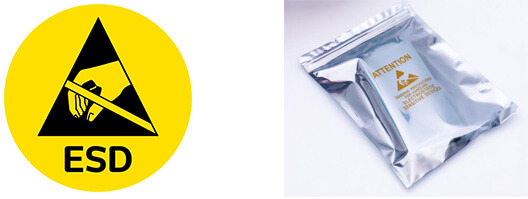
Electrostatic Discharge Protection and Handling

All electrostatic-sensitive components are handled in accordance with electrostatic discharge control procedures. The products are hermetically sealed in anti-static safe packaging to prevent electrostatic damage. Appropriate labeling is also applied for identification and traceability. This ensures product integrity during storage, handling and transportation.


ESD

Certifications & Memberships

Third-party certified, strict quality control. Our certification
  • ISO 9001: 2015
  • ISO 13485: 2016
  • ISO 14001: 2015
  • ISO 28000: 2007
  • ISO 45001: 2018
  • GB/T 27922-2011
  • SMTA
  • IPC
  • ESD
  • PSMA
Texas Instruments

SN74ALVCH16841DL

Texas Instruments
41D-SN74ALVCH16841DL

Want a better price? Add to Cart and Submit RFQ now, we'll contact you immediately.

0 RFQ
Shopping cart (0 Items)
It is empty.
Compare List (0 Items)
It is empty.
Feedback

Your feedback matters! At Allelco, we value the user experience and strive to improve it constantly.
Please share your comments with us via our feedback form, and we'll respond promptly.
Thank you for choosing Allelco.

Subject
E-mail
Comments
Captcha
Drag or click to upload file
Upload File
types: .xls, .xlsx, .doc, .docx, .jpg, .png and .pdf.
Max file size: 10MB