View All

Please refer to the English Version as our Official Version.Return

Europe
France(Français) Germany(Deutsch) Italy(Italia) Russian(русский) Poland(polski) Czech(Čeština) Luxembourg(Lëtzebuergesch) Netherlands(Nederland) Iceland(íslenska) Hungarian(Magyarország) Spain(español) Portugal(Português) Turkey(Türk dili) Bulgaria(Български език) Ukraine(Україна) Greece(Ελλάδα) Israel(עִבְרִית) Sweden(Svenska) Finland(Svenska) Finland(Suomi) Romania(românesc) Moldova(românesc) Slovakia(Slovenská) Denmark(Dansk) Slovenia(Slovenija) Slovenia(Hrvatska) Croatia(Hrvatska) Serbia(Hrvatska) Montenegro(Hrvatska) Bosnia and Herzegovina(Hrvatska) Lithuania(lietuvių) Spain(Português) Switzerland(Deutsch) United Kingdom(English)
Asia/Pacific
Japan(日本語) Korea(한국의) Thailand(ภาษาไทย) Malaysia(Melayu) Singapore(Melayu) Vietnam(Tiếng Việt) Philippines(Pilipino)
Africa, India and Middle East
United Arab Emirates(العربية) Iran(فارسی) Tajikistan(فارسی) India(हिंदी) Madagascar(malaɡasʲ)
South America / Oceania
New Zealand(Maori) Brazil(Português) Angola(Português) Mozambique(Português)
North America
United States(English) Canada(English) Haiti(Ayiti) Mexico(español)
HomeProductsIntegrated Circuits (ICs)Logic - Buffers, Drivers, Receivers, TransceiversSN74LVC245APW-P
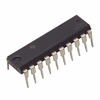
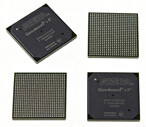
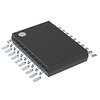
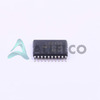
Image may be representation.
See specifications for product details.
EXPRESS OPTION
Payment method

SN74LVC245APW-P - Texas Instruments

Manufacturer Part Number
SN74LVC245APW-P
Manufacturer
Texas Instruments
Allelco Part Number
98D-SN74LVC245APW-P
Warranty
1 Year Allelco Warranty - Find out more
Stock Status:
16,833 pcs available, New & Original
Parts Description
PROTOTYPE
Package
20-TSSOP
Data sheet
-
RoHs Status
ROHS3 Compliant
Our certification
In stock: 16833

Required fields are indicated by an asterisk (*)
Please send RFQ, we will respond immediately.

Quantity

Specifications

SN74LVC245APW-P Tech Specifications
Texas Instruments - SN74LVC245APW-P technical specifications, attributes, parameters and parts with similar specifications to Texas Instruments - SN74LVC245APW-P

Product Attribute Attribute Value
Manufacturer Texas Instruments
Voltage - Supply 1.65V ~ 3.6V
Supplier Device Package 20-TSSOP
Series 74LVC
Package / Case 20-TSSOP (0.173", 4.40mm Width)
Package Bulk
Output Type 3-State
Product Attribute Attribute Value
Operating Temperature -40°C ~ 125°C (TA)
Number of Elements 1
Number of Bits per Element 8
Mounting Type Surface Mount
Logic Type Transceiver, Non-Inverting
Input Type -
Current - Output High, Low 24mA, 24mA

Environmental & Export Classifications

ATTRIBUTE DESCRIPTION
RoHs Status ROHS3 Compliant

Frequently Asked Questions(FAQ)

What are the key electrical characteristics and operating voltage range for the SN74LVC245APW-P transceiver when used in a 3.3V logic system?
The SN74LVC245APW-P is optimized for low-voltage operation with a supply voltage range of 1.65V to 3.6V, making it fully compatible with 3.3V logic systems commonly used in modern digital designs. At 3.3V, this device maintains robust performance with output drive currents up to ±24mA for both high and low states, ensuring reliable signal integrity across typical fan-out loads. Its non-inverting architecture preserves data polarity while supporting bidirectional communication on 8-bit wide buses.
How does the SN74LVC245APW-P compare to the SN74LVCH245APWT in terms of pin compatibility and thermal performance under continuous load?
While both devices share the same functional behavior and 20-TSSOP package outline, the SN74LVC245APW-P operates at standard LVC voltage levels (1.65–3.6V), whereas the SN74LVCH245APWT supports higher I/O voltages up to 5.5V. Pin compatibility is maintained between the two, allowing drop-in replacement in existing footprints. However, under identical thermal conditions and continuous 24mA output current per pin, the LVCH variant typically exhibits lower power dissipation due to its enhanced input hysteresis and reduced leakage currents, improving long-term reliability in hot environments.
Can the SN74LVC245APW-P be used to interface between a 5V microcontroller and a 3.3V sensor without additional level-shifting circuitry?
Yes, but only if careful attention is paid to direction control and voltage thresholds. The SN74LVC245APW-P accepts inputs up to VCC + 0.5V, which allows direct connection to a 5V microcontroller when powered from 3.3V. In the reverse direction—from 3.3V to 5V—the LVC family’s output high voltage may not meet the 5V TTL high threshold reliably unless VCC is increased or an external pull-up is used. Therefore, while basic signal translation is possible, full bidirectional 5V/3.3V interoperability requires either dual-supply operation or supplemental clamping components.
What is the maximum data rate supported by the SN74LVC245APW-P in a real-world PCB layout with moderate trace length?
The SN74LVC245APW-P can support data rates well above 100 Mbps in controlled environments, as specified by TI for LVCMOS signaling. However, in practical implementations with 1–2 inch traces, parasitic capacitance and inductance limit effective throughput to approximately 20–40 MHz under typical board conditions. This assumes proper termination, clean power delivery, and minimal crosstalk. For higher-speed applications, signal integrity analysis using IBIS models and time-domain reflectometry should precede deployment.
Does the SN74LVC245APW-P require external pull-up or pull-down resistors for enabling or direction control pins?
No external resistors are required for OE (output enable) or DIR (direction) control signals because these inputs feature Schmitt-trigger behavior with built-in hysteresis. The device includes internal pull-down resistors on OE, so OE must be actively driven high to enable outputs. The DIR pin is floating-safe and defaults to a valid logic state; however, for glitch-free transitions, it’s recommended to tie DIR directly to VCC or GND rather than leaving it unconnected.
What precautions should be taken when using the SN74LVC245APW-P near its maximum junction temperature of 125°C?
Prolonged operation near 125°C can accelerate electromigration and reduce mean time between failures, especially under high switching activity. To ensure reliability, designers should maintain ambient temperatures below 85°C with adequate airflow or copper pour on the TSSOP-20 package. Additionally, avoid exceeding total power dissipation limits derived from the derating curve in the datasheet. Thermal resistance from junction to ambient is approximately 90°C/W, meaning even modest power loss can push the die temperature into marginal zones if not managed.
How does the Moisture Sensitivity Level (MSL = 1) affect handling and storage requirements for the SN74LVC245APW-P during prototyping?
With an MSL rating of 1 (unlimited shelf life), the SN74LVC245APW-P can be stored indefinitely at room temperature and humidity without requiring baking prior to reflow soldering. This simplifies inventory management and accelerates prototype turnaround. However, once the IC is removed from its original moisture-barrier bag, it should be used within a dry environment or placed in a dry cabinet to prevent condensation during soldering—especially critical in humid climates where rapid thermal changes occur.
Is the SN74LVC245APW-P suitable for automotive-grade applications requiring AEC-Q100 qualification?
No, the SN74LVC245APW-P is not qualified to AEC-Q100 standards and is intended for industrial or commercial use only. While it operates over the extended temperature range of -40°C to 125°C (TA), automotive systems often demand more rigorous validation including thermal cycling, mechanical shock, and accelerated life testing. For automotive designs, TI offers the SN74ALVC245-Q1, which is AEC-Q100 Grade 2 compliant and functionally equivalent but with enhanced robustness.
What happens if the SN74LVC245APW-P receives a supply voltage below 1.65V during power-up sequencing?
Operating below the minimum specified supply voltage of 1.65V risks undefined logic states and may cause excessive leakage currents that degrade output drive capability. Input thresholds become unpredictable, and the device may fail to recognize valid logic levels, leading to latch-up or incorrect bus contention. Power sequencing should always begin with stable VCC above 1.65V before applying any input signals to ensure deterministic startup behavior.
Can multiple SN74LVC245APW-P devices share a common reference plane in a multi-board system without causing ground bounce issues?
Yes, multiple SN74LVC245APW-P devices can share a common reference plane provided that star grounding techniques are employed and return currents are minimized through short, low-impedance paths. Because LVC logic has relatively low static current draw (~1–2 µA per gate), simultaneous switching noise is manageable. However, in systems with many transceivers toggling in sync, decoupling capacitors (0.1 µF ceramic near each VCC/GND pair) and careful PCB layout are essential to suppress ground bounce and maintain signal integrity.
How does the 3-state output feature of the SN74LVC245APW-P help prevent bus contention in shared bus architectures?
The 3-state outputs allow the SN74LVC245APW-P to disconnect from the bus entirely when disabled (OE = low), presenting a high-impedance state to avoid driving conflicting voltages. This prevents contention between multiple drivers on the same net—critical in memory interfaces or communication busses where only one device should be active at a time. Proper OE timing relative to DIR ensures clean transitions without glitches or shoot-through currents.
Are there known limitations when cascading the SN74LVC245APW-P for wider bus widths beyond 8 bits?
Cascading SN74LVC245APW-P units for wider buses (e.g., 16 or 32 bits) is feasible provided that propagation delays are matched and enable signals are coordinated. Each element introduces ~3–5 ns of delay, so skew accumulation must be accounted for in timing-critical paths. Additionally, ensure that OE signals are aligned across all devices to prevent partial activation. TI recommends using matched packages and keeping traces equal in length to minimize skew, especially above 10 MHz operation.
What role does the direction control (DIR) pin play in preventing back-driving damage to upstream devices connected to the SN74LVC245APW-P?
The DIR pin determines whether the A-to-B or B-to-A path is active. By controlling this signal synchronously with data transitions, the SN74LVC245APW-P ensures that no unintended current flows back into sensitive upstream circuits. Without proper DIR gating, bidirectional communication could inadvertently source current into a powered-down peripheral, potentially exceeding absolute maximum ratings. Always assert DIR before changing data direction and hold it stable until the new data settles.
How does the RoHS3 compliance status of the SN74LVC245APW-P impact regulatory adherence in global markets?
RoHS3 compliance means the SN74LVC245APW-P meets all European Union restrictions on hazardous substances, including lead, mercury, cadmium, and certain flame retardants, with updated exemptions and reporting requirements. This simplifies export documentation and reduces risk of customs rejection in regulated regions like Europe, Japan, and California. It also aligns with corporate sustainability goals, though end-product certification remains the responsibility of the system integrator.
What are the implications of the “PROTOTYPE” description in the product details for production readiness?
The “PROTOTYPE” designation indicates this part is available for early design verification but may lack full production-level quality controls, long-term reliability data, or formal qualification documentation. It is suitable for lab evaluation but should be replaced with a standard commercial grade (SN74LVC245APW) before volume manufacturing to ensure consistent lot-to-lot performance and access to full technical support.
Can the SN74LVC245APW-P be used in battery-powered applications where minimizing quiescent current is critical?
Yes, the SN74LVC245APW-P consumes very little standby current—typically less than 1 µA when idle—making it appropriate for low-power modes in portable devices. However, during active switching, dynamic current increases significantly due to capacitive loading. For ultra-low-power designs, consider disabling OE when unused or using sleep-mode-aware firmware to minimize toggle rates. Also note that leakage current rises with temperature, impacting efficiency in warm environments.
How does the 20-TSSOP package footprint of the SN74LVC245APW-P compare to SOIC alternatives in terms of routing density and thermal dissipation?
The 20-TSSOP (4.40mm width) offers better pin spacing (0.65 mm pitch) than SOIC variants (typically 1.27 mm pitch), enabling denser routing on compact PCBs. However, its smaller body size results in slightly higher thermal resistance than wide-body SOICs, reducing heat sinking capability. In most digital applications, this isn’t a concern due to low power dissipation, but for sustained high-output scenarios, adding thermal vias under the exposed pad improves heat transfer to inner layers.

Parts with Similar Specifications

The three parts on the right have similar specifications to Texas Instruments SN74LVC245APW-P

Product Attribute SN74LVC245APWR-P SN74LVC245APWRG3-J SN74LVC245APWRG3 SN74LVC245APWRG4
Part Number SN74LVC245APWR-P SN74LVC245APWRG3-J SN74LVC245APWRG3 SN74LVC245APWRG4
Manufacturer Texas Instruments Texas Instruments Texas Instruments Texas Instruments
Number of Elements - - - -
Output Type - Current - Unbuffered Voltage - Buffered -
Logic Type - - - -
Mounting Type - Surface Mount Through Hole Surface Mount
Supplier Device Package - 196-NFBGA (12x12) 16-PDIP 64-VQFN (9x9)
Package - Tape & Reel (TR) Tube Tape & Reel (TR)
Current - Output High, Low - - - -
Package / Case - 196-LFBGA 16-DIP (0.300', 7.62mm) 64-VFQFN Exposed Pad
Input Type - - - Differential
Voltage - Supply - - - -
Operating Temperature - -40°C ~ 85°C 0°C ~ 70°C -40°C ~ 85°C
Number of Bits per Element - - - -
Series - - - -

Customer Reviews

Evaluation: 10 Articles

  • Nath***rooks
    Jun 11, 2026

    Installed this power component in a converter board. Output remained stable under different load conditions and thermal performance was better than expected.

  • Dani***alkerTech
    Jun 1, 2026

    Product works, but setup took more effort than expected. Once configured the MCU ran reliably, although documentation support felt older compared with newer platforms. Fine for maintenance projects.

  • Yuki***aka88
    May 26, 2026

    信号通信プロジェクトでこのRS-485トランシーバーを使用しました。設置は簡単で、長距離ケーブルでも通信は安定していました。消費電力も、以前使用していたものより低くなっています。

  • Stev***aker
    May 20, 2026

    Solid diode for power rectification. Works well in switching circuits.

  • Bran***Lewis
    May 11, 2026

    Compact FPGA with good performance. Suitable for basic signal processing tasks.

  • Oliv***arris
    May 7, 2026

    Reliable I/O expander. Works well in embedded control applications.

  • Jess***Jones
    Apr 17, 2026

    It offers good value for the price, and the specifications match the description. I’ve been using it for two days with no issues, and I’ll definitely buy it again if I need it in the future.

  • Mich***Smith
    Apr 17, 2026

    Shipping was on time, the component pins are neatly aligned, and I tested 10 of them with a multimeter—all readings were within the specified range. Highly recommended.

  • Aman***arris
    Apr 3, 2026

    It was great—the entire process, from placing the order to receiving the package, went very smoothly. The components were consistent, the price was fair, and I had a very pleasant shopping experience.

  • Mike***nch
    Apr 3, 2026

    Better than expected! The resistance and capacitance readings were spot-on, and it passed the test on the first try. The service was reliable, and the packaging was thoughtful—I highly recommend it.

Write a Review

Your Email address will not be published.

Shipment

Delivery Time

In-stock items can be shipped within 24 hours. Some parts will be arranged for delivery within 1-2 days from the date all items arrive at our warehouse. And Allelco ships order once a day at about 17:00, except Sunday. Once the goods are shipped, the estimated delivery time depends on the shipping methods and Delivery destination. The table below shows are the logistic time for some common countries.

Delivery Cost

  1. Use your express account for shipment if you have one.
  2. Use our account for the shipment. Refer to the table below for the approximate charges.
(Different time frame / countries / package size has different price.)

Delivery Method

  1. Global Common Shipment by DHL / UPS / FedEx / TNT / EMS / SF we support.
  2. Others more shipping ways, please get in touch with your customer manager.

Common Countries Logistic Time Reference
Region Country Logistic Time(Day)
America United States 5
Brazil 7
Europe Germany 5
United Kingdom 4
Italy 5
Oceania Australia 6
New Zealand 5
Asia India 4
Japan 4
Middle East Israel 6
DHL & FedEx Shipment Charges Reference
Shipment charges(KG) Reference DHL(USD$)
0.00kg-1.00kg USD$30.00 - USD$60.00
1.00kg-2.00kg USD$40.00 - USD$80.00
2.00kg-3.00kg USD$50.00 - USD$100.00
Note:
The above table is for reference only. There may have some data bias for the uncontrollable factors.
Contact us if you have any questions.
  • QC (Quality Warranty)
  • Payment Support
  • Packaging
  • Certifications & Memberships

QC (Quality Warranty)

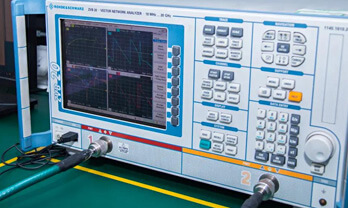
Allelco is committed to exceeding customer expectations through customer service excellence, order accuracy, and on-time delivery.
This is achieved through our commitment to the continual improvement of our processes, services, and products.


Strict quality inspection builds a solid foundation for electronic component quality.
  1. Visual inspection
  2. Performance testing and reliability verification
  3. Standardized full-process testing
  4. Precise control of every parameter
We eliminate defective components and ensure the stable operation of electronic devices through professional quality standards.

Payment Support

The payment method can be chosen from the methods shown below: Wire Transfer (T/T, Bank Transfer), Western Union, Credit card, PayPal.
  • HKBea
  • Paypal
  • MasterCard
  • Western-Union
  • VISA
Stable Delivery, Sincere Partnership — Your Faithful Supply Chain Partner
  • Efficient Supply Management
  • Cost-Saving Procurement
  • Fast Sourcing & Delivery
Contact us if you have any questions.

Packaging

Electrostatic Discharge Protection and Handling

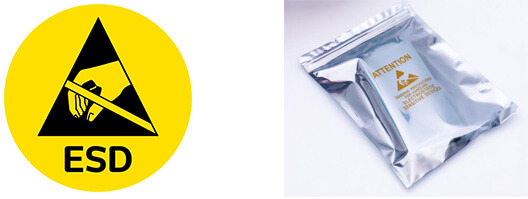
All electrostatic-sensitive components are handled in accordance with electrostatic discharge control procedures. The products are hermetically sealed in anti-static safe packaging to prevent electrostatic damage. Appropriate labeling is also applied for identification and traceability. This ensures product integrity during storage, handling and transportation.


ESD

Certifications & Memberships

Third-party certified, strict quality control. Our certification
  • ISO 9001: 2015
  • ISO 13485: 2016
  • ISO 14001: 2015
  • ISO 28000: 2007
  • ISO 45001: 2018
  • GB/T 27922-2011
  • SMTA
  • IPC
  • ESD
  • PSMA
Texas Instruments

SN74LVC245APW-P

Texas Instruments
98D-SN74LVC245APW-P

Want a better price? Add to Cart and Submit RFQ now, we'll contact you immediately.

0 RFQ
Shopping cart (0 Items)
It is empty.
Compare List (0 Items)
It is empty.
Feedback

Your feedback matters! At Allelco, we value the user experience and strive to improve it constantly.
Please share your comments with us via our feedback form, and we'll respond promptly.
Thank you for choosing Allelco.

Subject
E-mail
Comments
Captcha
Drag or click to upload file
Upload File
types: .xls, .xlsx, .doc, .docx, .jpg, .png and .pdf.
Max file size: 10MB