View All

Please refer to the English Version as our Official Version.Return

Europe
France(Français) Germany(Deutsch) Italy(Italia) Russian(русский) Poland(polski) Czech(Čeština) Luxembourg(Lëtzebuergesch) Netherlands(Nederland) Iceland(íslenska) Hungarian(Magyarország) Spain(español) Portugal(Português) Turkey(Türk dili) Bulgaria(Български език) Ukraine(Україна) Greece(Ελλάδα) Israel(עִבְרִית) Sweden(Svenska) Finland(Svenska) Finland(Suomi) Romania(românesc) Moldova(românesc) Slovakia(Slovenská) Denmark(Dansk) Slovenia(Slovenija) Slovenia(Hrvatska) Croatia(Hrvatska) Serbia(Hrvatska) Montenegro(Hrvatska) Bosnia and Herzegovina(Hrvatska) Lithuania(lietuvių) Spain(Português) Switzerland(Deutsch) United Kingdom(English)
Asia/Pacific
Japan(日本語) Korea(한국의) Thailand(ภาษาไทย) Malaysia(Melayu) Singapore(Melayu) Vietnam(Tiếng Việt) Philippines(Pilipino)
Africa, India and Middle East
United Arab Emirates(العربية) Iran(فارسی) Tajikistan(فارسی) India(हिंदी) Madagascar(malaɡasʲ)
South America / Oceania
New Zealand(Maori) Brazil(Português) Angola(Português) Mozambique(Português)
North America
United States(English) Canada(English) Haiti(Ayiti) Mexico(español)
HomeProductsIntegrated Circuits (ICs)Linear - Amplifiers - AudioTAS5766MDCA
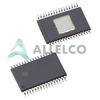
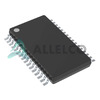
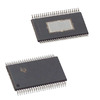
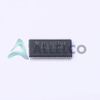
TAS5766MDCA Image
Image may be representation.
See specifications for product details.
EXPRESS OPTION
Payment method

TAS5766MDCA - Texas Instruments

Manufacturer Part Number
TAS5766MDCA
Manufacturer
Texas Instruments
Allelco Part Number
32D-TAS5766MDCA
Warranty
1 Year Allelco Warranty - Find out more
Stock Status:
10,261 pcs available, New & Original
Parts Description
IC AMP CLASS D STEREO 48HTSSOP
Package
48-HTSSOP
Data sheet
TAS5766MDCA.pdf
RoHs Status
ROHS3 Compliant
Our certification
In stock: 10261

Required fields are indicated by an asterisk (*)
Please send RFQ, we will respond immediately.

Quantity

Specifications

TAS5766MDCA Tech Specifications
Texas Instruments - TAS5766MDCA technical specifications, attributes, parameters and parts with similar specifications to Texas Instruments - TAS5766MDCA

Product Attribute Attribute Value
Manufacturer Texas Instruments
Voltage - Supply 3V ~ 3.6V
Type Class D
Supplier Device Package 48-HTSSOP
Series PurePath™
Package / Case 48-TFSOP (0.240", 6.10mm Width) Exposed Pad
Package Tube
Product Attribute Attribute Value
Output Type 2-Channel (Stereo)
Operating Temperature -40°C ~ 125°C (TA)
Mounting Type Surface Mount
Max Output Power x Channels @ Load -
Features Depop, Short-Circuit Protection
Base Product Number TAS5766

Environmental & Export Classifications

ATTRIBUTE DESCRIPTION
RoHs Status ROHS3 Compliant
Moisture Sensitivity Level (MSL) 3 (168 Hours)
REACH Status REACH Unaffected
ECCN EAR99

Parts Introduction

TAS5766MDCA Image
TAS5766MDCA (1)

Manufacturer Part Number

TAS5766MDCA

Manufacturer

Texas Instruments

Introduction

High-performance, two-channel class-D audio power amplifier

Product Features and Performance

Highly efficient class-D amplifier architecture

High-quality audio performance with low distortion and noise

Integrated de-pop and short-circuit protection

Wide operating voltage range of 3V to 3.6V

Operating temperature range of -40°C to 125°C

Product Advantages

High efficiency for reduced power consumption

Excellent audio quality with low distortion

Robust protection features for reliable operation

Wide operating voltage and temperature range for versatile applications

Key Technical Parameters

2-channel class-D amplifier

48-HTSSOP package

RoHS3 compliant

Quality and Safety Features

Integrated de-pop and short-circuit protection

Robust design for reliable operation

Compatibility

Surface mount design for easy integration

Application Areas

Audio amplification in consumer electronics, automotive, and industrial applications

Product Lifecycle

Current product offering, no discontinuation or replacement plans known

Several Key Reasons to Choose This Product

High-efficiency class-D amplifier architecture for low power consumption

Excellent audio performance with low distortion and noise

Integrated protection features for reliable operation

Wide operating voltage and temperature range for versatile applications

Surface mount design for easy integration into various systems
Frequently Asked Questions(FAQ)

What are the key thermal and electrical performance characteristics of the TAS5766MDCA amplifier when operating in a 3.3V supply configuration, and how do these influence board-level power budgeting for portable audio applications?
The TAS5766MDCA is designed to operate efficiently within a voltage range of 3V to 3.6V, making it suitable for low-voltage systems such as battery-powered audio devices. At 3.3V, the device delivers high output power with minimal quiescent current, which helps extend battery life. Its Class D architecture ensures high efficiency—typically exceeding 90% under moderate loads—reducing heat dissipation compared to linear amplifiers. This efficiency translates into lower junction temperatures during continuous operation, allowing for compact thermal design without active cooling. Engineers must still account for thermal resistance from junction to ambient (θJA) when estimating maximum allowable power dissipation, especially at elevated ambient temperatures up to 85°C or higher in enclosed systems.
How does the TAS5766MDCA compare to other Class D amplifiers like the TPA3116 or LM46002 in terms of integration level, power delivery, and system complexity when used in space-constrained mobile audio designs?
The TAS5766MDCA offers a more integrated solution than discrete Class D implementations by incorporating essential protection features such as short-circuit and depop protection directly on-chip. Unlike the TPA3116, which requires external gate drivers and bootstrap circuitry, the TAS5766MDCA includes internal gate drive circuitry, reducing component count and PCB area. Compared to the LM46002, which is a switching regulator rather than an audio amplifier, the TAS5766MDCA provides dedicated stereo output stages with optimized audio fidelity and lower EMI. While the TPA3116 can deliver comparable power in a smaller package, the TAS5766MDCA supports a wider load range and offers superior fault detection, making it preferable in designs where reliability and diagnostic capability are prioritized over ultra-miniaturization.
What layout considerations are critical when implementing the TAS5766MDCA to minimize electromagnetic interference (EMI) and ensure stable operation across its full operating temperature range?
A robust layout for the TAS5766MDCA begins with minimizing loop inductance in the power and ground paths. The 48-pin HTSSOP package requires careful attention to thermal pad connections, ensuring adequate copper coverage to manage junction temperature. High-current switching nodes—such as the MOSFET output stages—should be routed close to the IC with wide traces to reduce parasitic inductance. Ground planes should be solid and uninterrupted beneath the device, and decoupling capacitors (preferably X7R or X5R MLCCs) must be placed within 2 mm of the VDD pins using short, low-inductance traces. Additionally, keep analog input traces isolated from noisy digital signals and switch node traces to prevent coupling. These practices help maintain signal integrity and suppress radiated emissions, particularly important given the device’s operation above 200 kHz switching frequency.
Can the TAS5766MDCA be used in bridged-mono configurations, and what are the implications for output power, efficiency, and thermal management in single-channel audio applications?
Yes, the TAS5766MDCA supports bridged-mono operation using both channels configured to drive a single load differentially. In this mode, the effective output swing doubles relative to single-ended operation, enabling higher power delivery into resistive loads—up to approximately twice the power of a stereo configuration at the same supply voltage and load impedance. However, this increases conduction losses slightly due to higher peak currents. Thermal performance remains favorable due to the Class D topology, but designers must verify that the total power dissipation stays within safe limits across the -40°C to 125°C operating range. Bridging also reduces even-order harmonics, improving audio linearity, which benefits applications like portable PA systems or small speakers requiring louder output without additional amplification stages.
What role does the depop feature play in real-world audio playback scenarios involving speaker pops or DC offset, and how does it interact with the TAS5766MDCA’s internal control loops?
The depop function in the TAS5766MDCA suppresses audible transient noises—such as "thumps" or "pops"—that occur when enabling or disabling the amplifier or during startup/shutdown sequences. It works by ramping the output voltage gradually rather than switching instantaneously, thereby avoiding sudden changes in speaker current. Internally, this is managed through a soft-start sequence coordinated with the modulator and feedback loops. When combined with short-circuit protection, the depop mechanism ensures smooth transitions even under fault conditions, preserving speaker integrity and user experience. This feature is particularly valuable in consumer electronics like Bluetooth speakers or headphone amps where abrupt transients could damage transducers or annoy listeners.
How does the moisture sensitivity level (MSL) rating of MSL 3 for the TAS5766MDCA affect handling procedures during manufacturing, and what precautions should be taken if the device has been exposed to ambient humidity?
With an MSL rating of 3, the TAS5766MDCA must be stored in dry packaging and assembled within 168 hours (seven days) after removal from sealed antistatic bags if the floor life exceeds 60°C/60% RH conditions. Once opened, the device is susceptible to moisture absorption, which can lead to popcorning during reflow soldering and cause internal delamination or bond wire failures. To mitigate risk, manufacturers should bake the components at 125°C for 24 hours before assembly if stored beyond the recommended window. Adhering to JEDEC J-STD-033 guidelines ensures reliability, especially in high-volume production environments where traceability and controlled storage are essential for yield and quality assurance.
What are the limitations of the TAS5766MDCA regarding input signal levels, and how should interface circuitry be designed to avoid clipping or distortion in typical line-level audio sources?
The TAS5766MDCA accepts differential input signals with a typical common-mode range compatible with standard audio line-level voltages (±1 V peak-to-peak). Exceeding this range risks input overdrive, which can saturate internal comparators and introduce harmonic distortion. To interface with sources like smartphones or DACs, a simple resistor network or op-amp buffer may be required to match impedance and set appropriate gain. Since the device lacks built-in volume control, external PGA circuits or microcontroller-based attenuation might be needed for variable gain applications. Proper termination and filtering of input lines also prevent aliasing and noise pickup, ensuring clean modulation for the PWM stage and maintaining THD+N performance below 0.1% in most use cases.
In what ways does the PurePath™ Smart Amplifier technology embedded in the TAS5766MDCA improve system diagnostics and reliability compared to conventional Class D designs?
Built upon Texas Instruments’ PurePath™ platform, the TAS5766MDCA integrates advanced diagnostics such as open-load detection, short-to-ground/rail sensing, and thermal shutdown with automatic recovery. These features allow real-time monitoring of amplifier health via serial interfaces, enabling firmware to respond dynamically—for example, reducing gain or alerting users to faults. Unlike basic Class D amps that fail silently or catastrophically, the TAS5766MDCA provides graceful degradation and self-protection, enhancing product longevity and customer satisfaction. This intelligence is especially beneficial in IoT or smart speaker applications where remote troubleshooting and over-the-air updates are standard, reducing return rates and support costs.
What impact does the choice of output filter components have on audio quality and stability when using the TAS5766MDCA, and how should inductor values and damping factors be selected?
The external LC filter connected to the TAS5766MDCA’s outputs shapes the final audio bandwidth and attenuates switching artifacts. Inductor selection involves balancing insertion loss, size, and cost; typical values range from 22 µH to 47 µH for 4Ω loads. Too low an inductance increases ripple current and degrades THD, while too high increases saturation risk and phase lag. Damping resistors (usually 0.1 Ω to 0.22 Ω) are often added in series with inductors to control resonant peaks and improve transient response. Careful matching between L, C, and load impedance ensures flat frequency response down to 20 Hz and minimizes group delay variation, crucial for maintaining stereo imaging and bass accuracy in compact loudspeaker designs.
How does the TAS5766MDCA handle fault conditions such as output shorts or thermal overload, and what recovery mechanisms are implemented to ensure continued operation?
The TAS5766MDCA embeds multiple layers of protection: short-circuit tolerance allows brief exposure to output shorts without damage, thanks to current-limiting circuitry that reduces conduction time during faults. If a short persists, the device enters a low-power shutdown mode. Over-temperature conditions trigger thermal foldback, reducing output power progressively until junction temperature drops below threshold, followed by auto-recovery once cooling resumes. These behaviors prevent catastrophic failure while preserving system uptime. Designers can leverage status flags via I²C or SPI to log faults in embedded software, supporting predictive maintenance strategies in industrial or automotive audio systems where availability is critical.
Why might the TAS5766MDCA be preferred over alternative Class AB solutions in battery-operated audio equipment despite generally lower theoretical efficiency?
Although Class AB amplifiers typically achieve higher fidelity in linear regions, the TAS5766MDCA’s Class D architecture delivers significantly better power efficiency—often above 85%—at practical output levels. This efficiency directly translates to longer battery runtime in portable devices such as wireless earbuds, smart speakers, or hearing aids. Moreover, reduced heat generation simplifies thermal management, allowing smaller enclosures and eliminating heatsinks. Combined with integrated protection and diagnostic features, the trade-off in absolute linearity (which remains excellent due to high switching frequencies and advanced modulation) favors the TAS5766MDCA in weight-, size-, and energy-sensitive applications where AB would require excessive power conversion stages or compromise form factor.
What are the implications of using the TAS5766MDCA in multi-amplifier channel stacking for surround sound systems, and how does crosstalk performance scale with channel count?
The TAS5766MDCA supports independent stereo channels with isolation between left and right outputs, achieving crosstalk rejection typically better than 60 dB at mid-frequencies. When cascaded in multi-chip surround configurations (e.g., 5.1 or 7.1 setups), careful PCB routing and grounding prevent inter-channel interference. Each instance operates autonomously with shared supply rails, so noise coupling must be minimized through star-point grounding and partitioned power domains. While not inherently designed for synchronized multi-drop control, the I²C interface allows centralized configuration, simplifying firmware development. For professional AV receivers, this scalability enables compact, high-performance amplification with consistent channel balance and low distortion across all speakers.
How does the TAS5766MDCA perform in automotive audio applications subject to voltage transients and temperature cycling, and what design mitigations are necessary?
Operating across -40°C to 125°C, the TAS5766MDCA meets automotive-grade thermal requirements, but its 3.3V supply range assumes regulated input. In vehicles, load dumps or cold-crank events can induce voltage spikes exceeding 12 V, potentially damaging unprotected circuits. Therefore, an input TVS diode or buck-boost regulator is recommended to clamp transients and maintain stable VDD. Additionally, conformal coating may be applied post-assembly to resist moisture ingress in harsh environments. Given its ECCN classification of EAR99 and RoHS compliance, the part is suitable for non-regulated automotive infotainment systems but requires qualification per AEC-Q100 guidelines if targeting safety-critical functions.
What role does the base product number TAS5766 play in the TI ecosystem, and how does it relate to pin compatibility, software tools, and future-proofing designs?
The base product number TAS5766 encompasses a family of derivatives including the TAS5766MDCA, which differ primarily in packaging (HTSSOP vs. QFN) and minor feature sets. Maintaining pin compatibility across variants simplifies migration between prototyping and production phases. Texas Instruments provides unified evaluation modules (EVMs), design guides, and GUI-based configuration tools (e.g., PurePath Console) that support all members of the TAS5766 series. This consistency accelerates time-to-market and enables reuse of reference layouts and firmware templates, reducing development risk. Engineers selecting the TAS5766MDCA benefit from long-term roadmap visibility and access to TI’s technical support, ensuring continuity in complex audio system designs.
How should the TAS5766MDCA be evaluated during prototype validation, and what metrics are most indicative of successful implementation versus marginal performance?
During early prototyping, key metrics include total harmonic distortion plus noise (THD+N) at various output levels, power supply rejection ratio (PSRR), and efficiency curves across load impedances. A bench test with a dummy load (e.g., 4Ω resistor) and calibrated audio analyzer reveals whether the LC filter and biasing are correctly tuned. Additionally, stress testing under simulated fault conditions—shorts, overvoltage, and thermal soak—validates protection circuitry. Successful implementations exhibit THD+N < 0.2% at 1W into 4Ω, efficiency > 85%, and clean startup behavior without pops. Marginal designs often show degraded PSRR or oscillation near crossover frequencies, signaling inadequate decoupling or layout issues that must be resolved before final deployment.
What are the trade-offs involved in selecting the TAS5766MDCA versus a fully integrated SoC audio solution like the TAS5805M for applications requiring DSP functionality?
The TAS5766MDCA focuses purely on amplification with robust analog protection, offering simplicity and cost-effectiveness when paired with an external DSP or MCU. In contrast, the TAS5805M integrates audio processing, FIR filtering, and I²S interfaces, reducing bill-of-materials but increasing system complexity and power consumption. Choosing the TAS5766MDCA allows greater flexibility in algorithm development and third-party DSP integration, while the TAS5805M suits designs already using TI’s audio processors. For projects prioritizing modularity and proven analog performance, the TAS5766MDCA remains advantageous, particularly when leveraging its advanced diagnostics and low quiescent current for battery-sensitive endpoints.

Parts with Similar Specifications

The three parts on the right have similar specifications to Texas Instruments TAS5766MDCA

Product Attribute TAS5766MDCAR TAS5760MDCA TAS5768MDCA TAS5760MDDCAR
Part Number TAS5766MDCAR TAS5760MDCA TAS5768MDCA TAS5760MDDCAR
Manufacturer Texas Instruments Texas Instruments Texas Instruments Texas Instruments
Output Type - Current - Unbuffered Voltage - Buffered -
Features - - - Simultaneous Sampling
Type - - - -
Operating Temperature - -40°C ~ 85°C 0°C ~ 70°C -40°C ~ 85°C
Supplier Device Package - 196-NFBGA (12x12) 16-PDIP 64-VQFN (9x9)
Voltage - Supply - - - -
Mounting Type - Surface Mount Through Hole Surface Mount
Package - Tape & Reel (TR) Tube Tape & Reel (TR)
Max Output Power x Channels @ Load - - - -
Series - - - -
Package / Case - 196-LFBGA 16-DIP (0.300', 7.62mm) 64-VFQFN Exposed Pad
Base Product Number - DAC34H84 MAX500 ADS62P42

TAS5766MDCA Datasheet PDF

Download TAS5766MDCA pdf datasheets and Texas Instruments documentation for TAS5766MDCA - Texas Instruments.

PCN Design/Specification
Design 22/Feb/2022.pdf TAS5766M/68M DS Update 17/Oct/2018.pdf
PCN Assembly/Origin
TASYYYY 27/Jan/2017.pdf

Customer Reviews

Evaluation: 10 Articles

  • Nath***rooks
    Jun 11, 2026

    Installed this power component in a converter board. Output remained stable under different load conditions and thermal performance was better than expected.

  • Dani***alkerTech
    Jun 1, 2026

    Product works, but setup took more effort than expected. Once configured the MCU ran reliably, although documentation support felt older compared with newer platforms. Fine for maintenance projects.

  • Yuki***aka88
    May 26, 2026

    信号通信プロジェクトでこのRS-485トランシーバーを使用しました。設置は簡単で、長距離ケーブルでも通信は安定していました。消費電力も、以前使用していたものより低くなっています。

  • Stev***aker
    May 20, 2026

    Solid diode for power rectification. Works well in switching circuits.

  • Bran***Lewis
    May 11, 2026

    Compact FPGA with good performance. Suitable for basic signal processing tasks.

  • Oliv***arris
    May 7, 2026

    Reliable I/O expander. Works well in embedded control applications.

  • Jess***Jones
    Apr 17, 2026

    It offers good value for the price, and the specifications match the description. I’ve been using it for two days with no issues, and I’ll definitely buy it again if I need it in the future.

  • Mich***Smith
    Apr 17, 2026

    Shipping was on time, the component pins are neatly aligned, and I tested 10 of them with a multimeter—all readings were within the specified range. Highly recommended.

  • Aman***arris
    Apr 3, 2026

    It was great—the entire process, from placing the order to receiving the package, went very smoothly. The components were consistent, the price was fair, and I had a very pleasant shopping experience.

  • Mike***nch
    Apr 3, 2026

    Better than expected! The resistance and capacitance readings were spot-on, and it passed the test on the first try. The service was reliable, and the packaging was thoughtful—I highly recommend it.

Write a Review

Your Email address will not be published.

Shipment

Delivery Time

In-stock items can be shipped within 24 hours. Some parts will be arranged for delivery within 1-2 days from the date all items arrive at our warehouse. And Allelco ships order once a day at about 17:00, except Sunday. Once the goods are shipped, the estimated delivery time depends on the shipping methods and Delivery destination. The table below shows are the logistic time for some common countries.

Delivery Cost

  1. Use your express account for shipment if you have one.
  2. Use our account for the shipment. Refer to the table below for the approximate charges.
(Different time frame / countries / package size has different price.)

Delivery Method

  1. Global Common Shipment by DHL / UPS / FedEx / TNT / EMS / SF we support.
  2. Others more shipping ways, please get in touch with your customer manager.

Common Countries Logistic Time Reference
Region Country Logistic Time(Day)
America United States 5
Brazil 7
Europe Germany 5
United Kingdom 4
Italy 5
Oceania Australia 6
New Zealand 5
Asia India 4
Japan 4
Middle East Israel 6
DHL & FedEx Shipment Charges Reference
Shipment charges(KG) Reference DHL(USD$)
0.00kg-1.00kg USD$30.00 - USD$60.00
1.00kg-2.00kg USD$40.00 - USD$80.00
2.00kg-3.00kg USD$50.00 - USD$100.00
Note:
The above table is for reference only. There may have some data bias for the uncontrollable factors.
Contact us if you have any questions.
  • QC (Quality Warranty)
  • Payment Support
  • Packaging
  • Certifications & Memberships

QC (Quality Warranty)

Allelco is committed to exceeding customer expectations through customer service excellence, order accuracy, and on-time delivery.
This is achieved through our commitment to the continual improvement of our processes, services, and products.


Strict quality inspection builds a solid foundation for electronic component quality.
  1. Visual inspection
  2. Performance testing and reliability verification
  3. Standardized full-process testing
  4. Precise control of every parameter
We eliminate defective components and ensure the stable operation of electronic devices through professional quality standards.

Payment Support

The payment method can be chosen from the methods shown below: Wire Transfer (T/T, Bank Transfer), Western Union, Credit card, PayPal.
  • HKBea
  • Paypal
  • MasterCard
  • Western-Union
  • VISA
Stable Delivery, Sincere Partnership — Your Faithful Supply Chain Partner
  • Efficient Supply Management
  • Cost-Saving Procurement
  • Fast Sourcing & Delivery
Contact us if you have any questions.

Packaging

Electrostatic Discharge Protection and Handling

All electrostatic-sensitive components are handled in accordance with electrostatic discharge control procedures. The products are hermetically sealed in anti-static safe packaging to prevent electrostatic damage. Appropriate labeling is also applied for identification and traceability. This ensures product integrity during storage, handling and transportation.


ESD

Certifications & Memberships

Third-party certified, strict quality control. Our certification
  • ISO 9001: 2015
  • ISO 13485: 2016
  • ISO 14001: 2015
  • ISO 28000: 2007
  • ISO 45001: 2018
  • GB/T 27922-2011
  • SMTA
  • IPC
  • ESD
  • PSMA
TAS5766MDCA Image

TAS5766MDCA

Texas Instruments
32D-TAS5766MDCA

Want a better price? Add to Cart and Submit RFQ now, we'll contact you immediately.

0 RFQ
Shopping cart (0 Items)
It is empty.
Compare List (0 Items)
It is empty.
Feedback

Your feedback matters! At Allelco, we value the user experience and strive to improve it constantly.
Please share your comments with us via our feedback form, and we'll respond promptly.
Thank you for choosing Allelco.

Subject
E-mail
Comments
Captcha
Drag or click to upload file
Upload File
types: .xls, .xlsx, .doc, .docx, .jpg, .png and .pdf.
Max file size: 10MB