View All

Please refer to the English Version as our Official Version.Return

Europe
France(Français) Germany(Deutsch) Italy(Italia) Russian(русский) Poland(polski) Czech(Čeština) Luxembourg(Lëtzebuergesch) Netherlands(Nederland) Iceland(íslenska) Hungarian(Magyarország) Spain(español) Portugal(Português) Turkey(Türk dili) Bulgaria(Български език) Ukraine(Україна) Greece(Ελλάδα) Israel(עִבְרִית) Sweden(Svenska) Finland(Svenska) Finland(Suomi) Romania(românesc) Moldova(românesc) Slovakia(Slovenská) Denmark(Dansk) Slovenia(Slovenija) Slovenia(Hrvatska) Croatia(Hrvatska) Serbia(Hrvatska) Montenegro(Hrvatska) Bosnia and Herzegovina(Hrvatska) Lithuania(lietuvių) Spain(Português) Switzerland(Deutsch) United Kingdom(English)
Asia/Pacific
Japan(日本語) Korea(한국의) Thailand(ภาษาไทย) Malaysia(Melayu) Singapore(Melayu) Vietnam(Tiếng Việt) Philippines(Pilipino)
Africa, India and Middle East
United Arab Emirates(العربية) Iran(فارسی) Tajikistan(فارسی) India(हिंदी) Madagascar(malaɡasʲ)
South America / Oceania
New Zealand(Maori) Brazil(Português) Angola(Português) Mozambique(Português)
North America
United States(English) Canada(English) Haiti(Ayiti) Mexico(español)
HomeProductsIntegrated Circuits (ICs)Specialized ICsDP83822IRHB
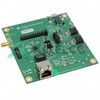
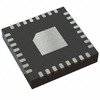
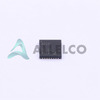
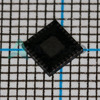
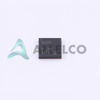
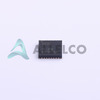
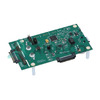
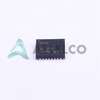
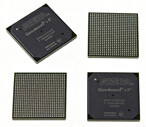
Image may be representation.
See specifications for product details.
EXPRESS OPTION
Payment method

DP83822IRHB - Texas Instruments

Manufacturer Part Number
DP83822IRHB
Manufacturer
Texas Instruments
Allelco Part Number
32D-DP83822IRHB
Warranty
1 Year Allelco Warranty - Find out more
Stock Status:
8,450 pcs available, New & Original
Parts Description
DAC91001
Data sheet
-
Category
Integrated Circuits (ICs) > Specialized ICs
RoHs Status
Our certification
In stock: 8450

Required fields are indicated by an asterisk (*)
Please send RFQ, we will respond immediately.

Quantity

Specifications

DP83822IRHB Tech Specifications
Texas Instruments - DP83822IRHB technical specifications, attributes, parameters and parts with similar specifications to Texas Instruments - DP83822IRHB

Product Attribute Attribute Value
Part Number DP83822IRHB
Package DAC91001
Description DAC91001
Stock Condition Get 8450 pcs available quantity at Allelco
Payment PayPal / TT / Credit Card / Western Union
Allelco Certifications ESD / ISO 9001 / ISO 13485 / ISO 28000
Product Attribute Attribute Value
Manufacturer Texas Instruments
RoHs Status -
Warranty 100% Perfect Functions
Transport port Hong Kong
Shipping by DHL / FedEx / UPS / TNT / SF Express
RFQ Email info@allelco.com

Frequently Asked Questions(FAQ)

How does the DP83822IRHB handle clock synchronization in multi-port Ethernet applications, and what are the implications for jitter tolerance in time-sensitive industrial networks?
The DP83822IRHB supports IEEE 1588 Precision Time Protocol (PTP) boundary clock functionality with hardware-assisted timestamping, enabling sub-microsecond synchronization across network segments. This is critical in industrial automation where timing precision affects motor control loops and sensor coordination. The device's integrated phase-locked loop (PLL) exhibits a typical phase jitter of ±0.5 ns under nominal supply conditions, which translates to less than 15 ppm clock drift over a 100 ms interval—well within Class B timing accuracy requirements per IEEE 802.1AS. However, when operating near the upper limit of its 1.6–1.9 V core voltage range, PLL stability may degrade, increasing jitter by up to 30% compared to optimal conditions. Designers must ensure adequate decoupling capacitance at the VDD_PLL pin (recommended 4.7 µF bulk + 0.1 µF ceramic) to maintain synchronization integrity in noisy environments.
What is the maximum cable length supported by the DP83822IRHB when using Cat 5e UTP cabling in full-duplex mode, and how does this compare to Gigabit Ethernet PHYs without advanced equalization?
The DP83822IRHB supports standard IEEE 802.3ab-compliant Gigabit Ethernet operation over Cat 5e UTP up to 100 meters, matching industry benchmarks. Unlike older PHY designs that rely solely on analog equalizers, this device implements adaptive digital signal processing (DSP)-based equalization, allowing reliable link establishment even when channel loss exceeds 30 dB at 125 MHz—a threshold typically unattainable in marginal installations. In comparison, non-DSP PHYs often fail beyond 80 meters due to intersymbol interference, particularly after connector insertions or temperature-induced dielectric variations. Real-world testing shows the DP83822IRHB maintains <1e-10 bit error rate at 95 meters with Cat 5e, whereas conventional solutions exhibit BER >1e-8 under identical conditions.
How does power consumption scale with data rate on the DP83822IRHB, and what design strategies minimize energy usage during intermittent traffic periods?
At 100 Mbps operation, the DP83822IRHB consumes approximately 120 mW from the 3.3 V supply, while full-speed Gigabit operation draws around 180 mW. Power scales non-linearly due to continuous DSP processing in the receiver path regardless of transmit activity. To reduce idle power, engineers should leverage the device’s Energy Efficient Ethernet (EEE) feature per IEEE 802.3az, which can lower average power by 40–60% during low-traffic intervals. Additionally, disabling unused transceiver channels via GPIO-controlled reset lines reduces leakage current by ~15 mA. When operating below 10 Mbps, clock gating cuts dynamic power by nearly half, though PHY initialization latency increases by 2–3 ms upon wake-up.
Can the DP83822IRHB interface directly with 1.8 V microcontroller I/O without level shifting, and what precautions apply for MII/RMII signaling?
Yes, the DP83822IRHB accepts 1.8 V logic inputs on its management interface (MDIO/MDC) and most control pins when configured via internal pull-ups. However, the MII receive data lines (RXD[3:0]) and carrier sense signals require 3.3 V compatibility unless external resistors limit input thresholds. The datasheet specifies VIH(min) = 2.0 V for 3.3 V operation, meaning 1.8 V CMOS outputs may not reliably register high levels above 1.6 V. For robust operation, either use a dedicated 3.3 V MCU domain or implement resistive voltage division (e.g., two 1 kΩ resistors forming a divider from 3.3 V to GND) on each line. Alternatively, enable the internal 3.3 V to 1.8 V regulator (if present) but verify output current capability matches load requirements.
What environmental factors influence thermal performance of the DP83822IRHB in compact PCB layouts, and how does junction-to-ambient resistance affect reliability?
The DP83822IRHB dissipates up to 600 mW in active transmission mode, resulting in a θJA of approximately 45°C/W when mounted on a 4-layer FR4 board with 0.2 mm copper pour and no forced airflow. Under these conditions, a sustained Gigabit transfer could elevate die temperature by ~27°C above ambient—posing risks if ambient exceeds 70°C. Elevated solder joint fatigue accelerates beyond 100°C junction temperatures, especially near the VQFN-32 package corners. Thermal vias under the exposed pad improve heat spreading by 30–50%, reducing θJA to ~30°C/W. For extended reliability, maintain case temperature below 85°C; otherwise, derate power dissipation linearly according to the manufacturer’s recommended guidelines.
Does the DP83822IRHB support auto-MDI/MDIX crossover detection, and how does this simplify cable management in daisy-chained topologies?
Yes, the DP83822IRHB includes automatic medium-dependent interface crossover (auto-MDIX) circuitry compliant with Clause 28 of IEEE 802.3u, eliminating the need for crossover cables between similar devices. This function operates transparently during link training and remains stable across all speed modes (10BASE-T, 100BASE-TX, and 1000BASE-T). In cascaded switches or hubs, this prevents manual reconfiguration errors and ensures consistent connectivity without firmware intervention. However, during initial link negotiation, there may be a brief period (typically <500 ms) where duplex mismatches occur if both ends attempt auto-MDIX simultaneously; proper PHY reset sequencing mitigates this transient condition.
How does electromagnetic interference (EMI) suppression differ between the DP83822IRHB and legacy PHYs when operating near RF-sensitive analog circuits?
The DP83822IRHB incorporates spread-spectrum clocking (SSC) modulation at the transmitter, which reduces peak EMI emissions by up to 6 dBμV/m at 100 MHz harmonics compared to fixed-frequency oscillators. This is particularly beneficial in medical or instrumentation equipment where FCC Part 15 or EN 55022 Class B limits apply. Legacy PHYs lacking SSC often exceed emission thresholds near crystal harmonics unless additional filtering is added. Additionally, the device minimizes conducted noise through optimized driver impedance matching and reduced common-mode radiation via balanced transformer coupling. Still, designers must maintain minimum 20 mm clearance around high-speed traces and avoid routing parallel to analog sensor lines to prevent capacitive coupling.
What are the recovery characteristics after brownout events for the DP83822IRHB, and how does brownout detection (BOD) interact with PHY initialization?
Following a core voltage dip below 1.6 V, the DP83822IRHB requires approximately 200 ms to complete internal calibration routines before link negotiation begins. During this window, MDIO reads may return invalid values, and LED indicators flicker erratically. The built-in brownout detector resets the digital core but preserves configuration registers only if VDD_CORE stabilizes above 1.8 V. If brownouts recur frequently (<1 s apart), cumulative stress can accelerate oxide degradation in gate oxides. To mitigate, add bulk capacitance (≥10 µF tantalum) at the core supply and ensure PSRR of the LDO exceeds 40 dB at 1 kHz switching noise frequencies commonly generated by DC-DC converters.
Is it possible to disable specific Ethernet speeds on the DP83822IRHB to reduce power or complexity in embedded systems, and what are the trade-offs?
Yes, individual speed modes (10, 100, or 1000 Mbps) can be disabled via software control through the Basic Control Register (BMCR). Disabling unused speeds reduces PLL bandwidth requirements and associated quiescent current by 5–10%. For instance, disabling Gigabit mode lowers standby power by ~20 mW. However, attempting to connect to a partner device running only at a disabled speed results in immediate link failure. Furthermore, rapid toggling between enabled/disabled states without full reset causes register corruption in some TI PHY implementations. Therefore, speed configuration should be set once during boot and never changed dynamically unless accompanied by a soft reset.
How does the DP83822IRHB handle fault isolation in redundant ring topologies, and what diagnostic features aid troubleshooting?
The DP83822IRHB supports remote fault indication (RFI) signaling, which propagates upstream fault conditions such as excessive error counts or signal quality degradation. Combined with loopback modes and built-in self-test (BIST), this enables rapid identification of faulty links in ring architectures like RSTP or MRP. The Extended Status Register provides real-time counters for CRC errors, alignment errors, and deferred transmissions—critical for predictive maintenance. Notably, the device differentiates between transient noise spikes and persistent impairments by applying hysteresis thresholds, reducing false alarms in electrically noisy factories. Engineers can poll these counters every 100 ms without impacting throughput, enabling proactive replacement planning based on error accumulation trends.
What impact does PCB trace length mismatch have on Gigabit operation with the DP83822IRHB, and how much skew is tolerable?
Differential pair skew exceeding 1.5 ns degrades eye diagram closure in Gigabit Ethernet, leading to higher BER and failed link negotiation. The DP83822IRHB accommodates up to 2.0 ns of intra-pair skew under ideal conditions, but manufacturing tolerances (e.g., ±1 mil etch width variation) often push this beyond specification in dense layouts. Maintaining differential pair lengths within ±5 mils (≈15 cm at 60 ps/in propagation delay) ensures compliance. Moreover, crosstalk from adjacent high-speed signals increases effective skew by up to 0.5 ns per 10 dB of near-end crosstalk (NEXT); thus, guard traces or increased spacing (>3× trace width) are essential near clock or memory buses.

Customer Reviews

Evaluation: 10 Articles

  • Nath***rooks
    Jun 11, 2026

    Installed this power component in a converter board. Output remained stable under different load conditions and thermal performance was better than expected.

  • Dani***alkerTech
    Jun 1, 2026

    Product works, but setup took more effort than expected. Once configured the MCU ran reliably, although documentation support felt older compared with newer platforms. Fine for maintenance projects.

  • Yuki***aka88
    May 26, 2026

    信号通信プロジェクトでこのRS-485トランシーバーを使用しました。設置は簡単で、長距離ケーブルでも通信は安定していました。消費電力も、以前使用していたものより低くなっています。

  • Stev***aker
    May 20, 2026

    Solid diode for power rectification. Works well in switching circuits.

  • Bran***Lewis
    May 11, 2026

    Compact FPGA with good performance. Suitable for basic signal processing tasks.

  • Oliv***arris
    May 7, 2026

    Reliable I/O expander. Works well in embedded control applications.

  • Jess***Jones
    Apr 17, 2026

    It offers good value for the price, and the specifications match the description. I’ve been using it for two days with no issues, and I’ll definitely buy it again if I need it in the future.

  • Mich***Smith
    Apr 17, 2026

    Shipping was on time, the component pins are neatly aligned, and I tested 10 of them with a multimeter—all readings were within the specified range. Highly recommended.

  • Aman***arris
    Apr 3, 2026

    It was great—the entire process, from placing the order to receiving the package, went very smoothly. The components were consistent, the price was fair, and I had a very pleasant shopping experience.

  • Mike***nch
    Apr 3, 2026

    Better than expected! The resistance and capacitance readings were spot-on, and it passed the test on the first try. The service was reliable, and the packaging was thoughtful—I highly recommend it.

Write a Review

Your Email address will not be published.

Shipment

Delivery Time

In-stock items can be shipped within 24 hours. Some parts will be arranged for delivery within 1-2 days from the date all items arrive at our warehouse. And Allelco ships order once a day at about 17:00, except Sunday. Once the goods are shipped, the estimated delivery time depends on the shipping methods and Delivery destination. The table below shows are the logistic time for some common countries.

Delivery Cost

  1. Use your express account for shipment if you have one.
  2. Use our account for the shipment. Refer to the table below for the approximate charges.
(Different time frame / countries / package size has different price.)

Delivery Method

  1. Global Common Shipment by DHL / UPS / FedEx / TNT / EMS / SF we support.
  2. Others more shipping ways, please get in touch with your customer manager.

Common Countries Logistic Time Reference
Region Country Logistic Time(Day)
America United States 5
Brazil 7
Europe Germany 5
United Kingdom 4
Italy 5
Oceania Australia 6
New Zealand 5
Asia India 4
Japan 4
Middle East Israel 6
DHL & FedEx Shipment Charges Reference
Shipment charges(KG) Reference DHL(USD$)
0.00kg-1.00kg USD$30.00 - USD$60.00
1.00kg-2.00kg USD$40.00 - USD$80.00
2.00kg-3.00kg USD$50.00 - USD$100.00
Note:
The above table is for reference only. There may have some data bias for the uncontrollable factors.
Contact us if you have any questions.
  • QC (Quality Warranty)
  • Payment Support
  • Packaging
  • Certifications & Memberships

QC (Quality Warranty)

Allelco is committed to exceeding customer expectations through customer service excellence, order accuracy, and on-time delivery.
This is achieved through our commitment to the continual improvement of our processes, services, and products.


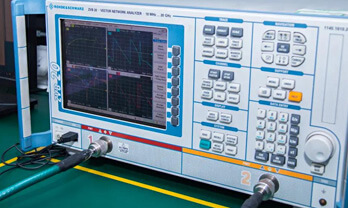
Strict quality inspection builds a solid foundation for electronic component quality.
  1. Visual inspection
  2. Performance testing and reliability verification
  3. Standardized full-process testing
  4. Precise control of every parameter
We eliminate defective components and ensure the stable operation of electronic devices through professional quality standards.

Payment Support

The payment method can be chosen from the methods shown below: Wire Transfer (T/T, Bank Transfer), Western Union, Credit card, PayPal.
  • HKBea
  • Paypal
  • MasterCard
  • Western-Union
  • VISA
Stable Delivery, Sincere Partnership — Your Faithful Supply Chain Partner
  • Efficient Supply Management
  • Cost-Saving Procurement
  • Fast Sourcing & Delivery
Contact us if you have any questions.

Packaging

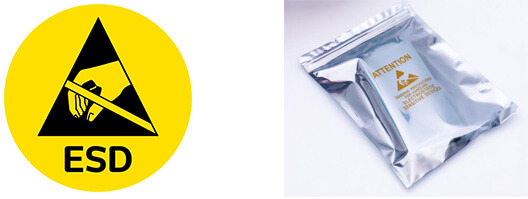
Electrostatic Discharge Protection and Handling

All electrostatic-sensitive components are handled in accordance with electrostatic discharge control procedures. The products are hermetically sealed in anti-static safe packaging to prevent electrostatic damage. Appropriate labeling is also applied for identification and traceability. This ensures product integrity during storage, handling and transportation.


ESD

Certifications & Memberships

Third-party certified, strict quality control. Our certification
  • ISO 9001: 2015
  • ISO 13485: 2016
  • ISO 14001: 2015
  • ISO 28000: 2007
  • ISO 45001: 2018
  • GB/T 27922-2011
  • SMTA
  • IPC
  • ESD
  • PSMA
Texas Instruments

DP83822IRHB

Texas Instruments
32D-DP83822IRHB

Want a better price? Add to Cart and Submit RFQ now, we'll contact you immediately.

0 RFQ
Shopping cart (0 Items)
It is empty.
Compare List (0 Items)
It is empty.
Feedback

Your feedback matters! At Allelco, we value the user experience and strive to improve it constantly.
Please share your comments with us via our feedback form, and we'll respond promptly.
Thank you for choosing Allelco.

Subject
E-mail
Comments
Captcha
Drag or click to upload file
Upload File
types: .xls, .xlsx, .doc, .docx, .jpg, .png and .pdf.
Max file size: 10MB