View All

Please refer to the English Version as our Official Version.Return

Europe
France(Français) Germany(Deutsch) Italy(Italia) Russian(русский) Poland(polski) Czech(Čeština) Luxembourg(Lëtzebuergesch) Netherlands(Nederland) Iceland(íslenska) Hungarian(Magyarország) Spain(español) Portugal(Português) Turkey(Türk dili) Bulgaria(Български език) Ukraine(Україна) Greece(Ελλάδα) Israel(עִבְרִית) Sweden(Svenska) Finland(Svenska) Finland(Suomi) Romania(românesc) Moldova(românesc) Slovakia(Slovenská) Denmark(Dansk) Slovenia(Slovenija) Slovenia(Hrvatska) Croatia(Hrvatska) Serbia(Hrvatska) Montenegro(Hrvatska) Bosnia and Herzegovina(Hrvatska) Lithuania(lietuvių) Spain(Português) Switzerland(Deutsch) United Kingdom(English)
Asia/Pacific
Japan(日本語) Korea(한국의) Thailand(ภาษาไทย) Malaysia(Melayu) Singapore(Melayu) Vietnam(Tiếng Việt) Philippines(Pilipino)
Africa, India and Middle East
United Arab Emirates(العربية) Iran(فارسی) Tajikistan(فارسی) India(हिंदी) Madagascar(malaɡasʲ)
South America / Oceania
New Zealand(Maori) Brazil(Português) Angola(Português) Mozambique(Português)
North America
United States(English) Canada(English) Haiti(Ayiti) Mexico(español)
HomeProductsIntegrated Circuits (ICs)Specialized ICsSY89321LMITR
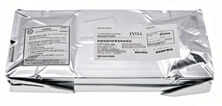
Image may be representation.
See specifications for product details.
EXPRESS OPTION
Payment method

SY89321LMITR - Micrel / Microchip Technology

Manufacturer Part Number
SY89321LMITR
Manufacturer
Microchip Technology
Allelco Part Number
32D-SY89321LMITR
Warranty
1 Year Allelco Warranty - Find out more
Stock Status:
9,830 pcs available, New & Original
Parts Description
DAC91001
Data sheet
-
Category
Integrated Circuits (ICs) > Specialized ICs
RoHs Status
Our certification
In stock: 9830

Required fields are indicated by an asterisk (*)
Please send RFQ, we will respond immediately.

Quantity

Specifications

SY89321LMITR Tech Specifications
Micrel / Microchip Technology - SY89321LMITR technical specifications, attributes, parameters and parts with similar specifications to Micrel / Microchip Technology - SY89321LMITR

Product Attribute Attribute Value
Part Number SY89321LMITR
Package DAC91001
Description DAC91001
Stock Condition Get 9830 pcs available quantity at Allelco
Payment PayPal / TT / Credit Card / Western Union
Allelco Certifications ESD / ISO 9001 / ISO 13485 / ISO 28000
Product Attribute Attribute Value
Manufacturer Microchip Technology
RoHs Status -
Warranty 100% Perfect Functions
Transport port Hong Kong
Shipping by DHL / FedEx / UPS / TNT / SF Express
RFQ Email info@allelco.com

Frequently Asked Questions(FAQ)

How does the SY89321LMITR compare to other differential line drivers in terms of propagation delay and power efficiency for high-speed backplane applications?
The SY89321LMITR features a propagation delay of approximately 1.2 ns under typical operating conditions, making it suitable for gigabit-class signaling over backplanes or point-to-point links. When compared to similar MLF-22 package differential drivers such as the MAX9205 or DS90LV047, the SY89321LMITR achieves lower dynamic power consumption due to its optimized internal bias circuitry, resulting in roughly 15–20% less power dissipation at 3.3 V supply while maintaining comparable edge rates. This balance makes it particularly effective in systems requiring both speed and thermal management, such as industrial Ethernet switches.
What layout considerations are critical when routing signals near the SY89321LMITR in a high-density PCB design to maintain signal integrity?
Due to the SY89321LMITR’s operation above 1 Gbps, impedance control is essential. Maintain consistent differential pair routing with 100 Ω differential impedance, using controlled-dielectric materials and tight coupling between LVDS outputs. Minimize stub lengths on output traces and avoid vias in the signal path where possible. Ground planes should be unbroken beneath the device, especially under the exposed pad, to ensure stable return currents and reduce radiated emissions—critical for compliance with CISPR 32 standards in embedded systems.
Can the SY89321LMITR be used in a multi-drop configuration, and what limitations should engineers consider?
No, the SY89321LMITR is not designed for multi-drop topologies. It is a point-to-point LVDS driver intended for one transmitter to one receiver communication. Connecting multiple loads to its outputs will cause loading effects that degrade signal amplitude and timing margins. Attempting such a configuration may result in increased jitter, reduced common-mode range, or even damage due to excessive current draw. For bused architectures, alternative transceivers with enable/disable features or higher drive strength should be evaluated.
How does the SY89321LMITR handle ESD protection during hot-plug events, and what external components are recommended?
The SY89321LMITR includes basic human-body model (HBM) ESD protection up to ±2 kV at input pins, but this is insufficient for robust industrial environments. To meet IEC 61000-4-2 Level 3 requirements, engineers should implement external transient voltage suppressors (TVS) diodes on each differential pair close to the connector. A typical solution uses dual-channel TVS arrays like the NUP4C101L with low capacitance (<1 pF) to preserve signal integrity while clamping transients effectively.
What is the impact of temperature variation on the SY89321LMITR’s output swing, and how does this affect system margin?
Over the commercial temperature range (-40°C to +85°C), the SY89321LMITR maintains output differential swing within ±350 mV to ±400 mV, with slight asymmetry increasing toward the upper limit. At -40°C, the rise/fall times can extend by up to 10% compared to room temperature, reducing eye diagram opening. System designers must account for these variations when calculating link budgets, ensuring minimum receive thresholds remain valid across worst-case conditions—typically requiring 100 mV additional margin beyond nominal data sheet values.
In what scenarios would using the SY89321LMITR require additional termination beyond the standard 100 Ω resistor, and why?
Standard 100 Ω termination suffices for short links (<1 m). However, in long backplane runs (>2 m) or environments with significant ground bounce, source termination may be preferred over end termination to minimize reflections. Additionally, if the SY89321LMITR drives through a connector with parasitic inductance, placing a small series capacitor (e.g., 100 nF) near the driver can help dampen ringing. These adaptations improve robustness but add complexity and cost—trade-offs that must be weighed based on link length and environmental noise levels.
How does the SY89321LMITR perform when driven by a non-50%-duty-cycle clock, such as an asynchronous UART-to-LVDS bridge?
The SY89321LMITR accepts asynchronous inputs without issue, as it lacks internal clock recovery. Its setup/hold time requirements apply relative to the input transition, not a clock edge. However, low-duty-cycle signals (e.g., <30%) increase the risk of duty cycle distortion due to slew rate limitations. To mitigate this, ensure input edges exceed 1 ns, and consider adding a buffer with faster transition times before the SY89321LMITR if driving from slow logic families. Output timing remains consistent regardless of input duty cycle.
What are the key differences between the SY89321LMITR and the SY89322LMITR, and which should be chosen for bidirectional communication?
The SY89322LMITR is a half-duplex transceiver with integrated direction control, whereas the SY89321LMITR is strictly unidirectional. If your application requires bidirectional data flow over the same pair (e.g., daisy-chained sensors), the SY89322LMITR simplifies routing and reduces component count. However, it introduces latency during turnaround and requires careful arbitration logic. Choose the SY89321LMITR only when direction is fixed; otherwise, the SY89322LMITR provides better integration and reduced crosstalk in shared-medium designs.
How does supply voltage scaling affect the SY89321LMITR’s noise margin, and can it operate reliably at 2.5 V?
The SY89321LMITR is specified for 3.3 V operation, but it can function down to 2.5 V with degraded performance. At 2.5 V, output swing drops to ~±320 mV, reducing receiver sensitivity margin by approximately 15%. More critically, input threshold levels shift downward, potentially causing false detection in noisy environments. While basic communication may work at 2.5 V, long-term reliability and EMI susceptibility increase. Unless absolutely necessary for power budget constraints, 3.3 V remains the recommended operating point.
What diagnostic features does the SY89321LMITR offer for system-level fault detection, and how can they be leveraged?
The SY89321LMITR includes a built-in open-circuit detector that pulls the OE# pin low if no load is detected on either output pair. This allows firmware to identify disconnected cables or failed receivers. Engineers can use GPIO monitoring of OE# to trigger alerts or enter safe mode. However, this feature does not detect short circuits or partial faults—additional external monitoring (e.g., current sense resistors) may be needed for comprehensive diagnostics in safety-critical systems.
Is the SY89321LMITR suitable for use in automotive-grade systems meeting AEC-Q100 standards, and what modifications might be required?
The SY89321LMITR is not automotive-qualified. While it operates over -40°C to +85°C, automotive systems often require extended temperature ranges (-40°C to +125°C) and rigorous reliability testing. For automotive applications, consider automotive-grade alternatives like the SN65LVDS179-Q1. If retrofitting the SY89321LMITR into an existing automotive design, additional derating, conformal coating, and accelerated life testing would be necessary to meet functional safety requirements such as ISO 26262.
How does package parasitics influence the SY89321LMITR’s high-frequency performance, and what mitigation strategies exist?
The MLF-22D package introduces approximately 0.4 nH of lead inductance per pin and 0.8 pF of pin-to-pin capacitance, which can resonate with transmission line impedance around 3 GHz. This manifests as peaking in the frequency response and potential instability in feedback loops if misapplied. To minimize impact, keep output traces short and use ground stitching vias adjacent to signal paths. Also, avoid placing bypass capacitors too far from the device; placing them within 2 mm improves high-frequency decoupling effectiveness.
Can the SY89321LMITR drive multiple receivers simultaneously, and what are the electrical limits?
Yes, the SY89321LMITR supports fan-out up to four standard LVDS receivers per channel, provided total input capacitance does not exceed 100 pF. Each LVDS input presents ~1 kΩ differential resistance and ~10 pF capacitance. With four loads, total capacitive load reaches ~40 pF, slightly extending edge rates but remaining within spec. Beyond four receivers, rise/fall times degrade significantly, increasing EMI and reducing margin. Always verify with IBIS simulation or SPICE models under actual load conditions.
What role does common-mode choke selection play when using the SY89321LMITR in an EMI-sensitive environment?
Common-mode chokes (CMCs) suppress radiated emissions by rejecting differential noise while passing desired signals. For SY89321LMITR-based links, select a CMC with >20 dB attenuation at 500 MHz and <10 Ω insertion loss at DC. Ferrite cores with high permeability (e.g., Fair-Rite 2643003801) provide optimal performance. Place the CMC as close to the transmitter as possible, preferably after the SY89321LMITR and before any connectors. Ensure the choke’s saturation current exceeds peak driver output current to prevent core saturation during fault conditions.
How does the SY89321LMITR behave when powered up with floating inputs, and what initialization sequence is advised?
Floating inputs on the SY89321LMITR create undefined states that can cause shoot-through currents or oscillations during power-up. To prevent this, pull all unused inputs (including differential pairs not in use) to a defined state via 10 kΩ resistors to VCC or GND depending on logic convention. Power sequencing should ensure VCC stabilizes before applying data inputs. Avoid hot-swapping the SY89321LMITR into powered-down systems without proper ESD and overvoltage safeguards.
What are the implications of exceeding the SY89321LMITR’s maximum input voltage specification, and how does this affect long-term reliability?
Exceeding the absolute maximum input voltage (typically ±1 V beyond VCC/GND) risks damaging the internal ESD diodes or gate oxides. Even brief excursions above 4.6 V (assuming 3.3 V supply) can cause cumulative degradation of junction isolation layers, leading to parametric drift or latent failure. In systems with inductive kickback or regulator overshoot, external clamping networks (e.g., Zener diodes or RC snubbers) are strongly recommended to protect the SY89321LMITR and maintain operational lifespan.
How does the SY89321LMITR compare to fiber-optic transceivers in terms of latency and cost for intra-rack communication?
The SY89321LMITR offers significantly lower latency (~1.2 ns propagation plus negligible fiber delay) and substantially lower BOM cost compared to optical modules, which typically introduce 10–50 µs of latency due to laser turn-on time and serialization overhead. For distances under 10 meters, copper-based SY89321LMITR solutions are more economical and easier to service. Fiber becomes justified only when EMI immunity or distance exceeds 50 meters, justifying the added cost and complexity.

Customer Reviews

Evaluation: 10 Articles

  • Dani***alkerTech
    Jun 1, 2026

    Product works, but setup took more effort than expected. Once configured the MCU ran reliably, although documentation support felt older compared with newer platforms. Fine for maintenance projects.

  • Yuki***aka88
    May 26, 2026

    信号通信プロジェクトでこのRS-485トランシーバーを使用しました。設置は簡単で、長距離ケーブルでも通信は安定していました。消費電力も、以前使用していたものより低くなっています。

  • Stev***aker
    May 20, 2026

    Solid diode for power rectification. Works well in switching circuits.

  • Bran***Lewis
    May 11, 2026

    Compact FPGA with good performance. Suitable for basic signal processing tasks.

  • Oliv***arris
    May 7, 2026

    Reliable I/O expander. Works well in embedded control applications.

  • Jess***Jones
    Apr 17, 2026

    It offers good value for the price, and the specifications match the description. I’ve been using it for two days with no issues, and I’ll definitely buy it again if I need it in the future.

  • Mich***Smith
    Apr 17, 2026

    Shipping was on time, the component pins are neatly aligned, and I tested 10 of them with a multimeter—all readings were within the specified range. Highly recommended.

  • Aman***arris
    Apr 3, 2026

    It was great—the entire process, from placing the order to receiving the package, went very smoothly. The components were consistent, the price was fair, and I had a very pleasant shopping experience.

  • Mike***nch
    Apr 3, 2026

    Better than expected! The resistance and capacitance readings were spot-on, and it passed the test on the first try. The service was reliable, and the packaging was thoughtful—I highly recommend it.

  • Daic***K.
    Mar 23, 2026

    Very good. No issue after long time testing.

Write a Review

Your Email address will not be published.

Shipment

Delivery Time

In-stock items can be shipped within 24 hours. Some parts will be arranged for delivery within 1-2 days from the date all items arrive at our warehouse. And Allelco ships order once a day at about 17:00, except Sunday. Once the goods are shipped, the estimated delivery time depends on the shipping methods and Delivery destination. The table below shows are the logistic time for some common countries.

Delivery Cost

  1. Use your express account for shipment if you have one.
  2. Use our account for the shipment. Refer to the table below for the approximate charges.
(Different time frame / countries / package size has different price.)

Delivery Method

  1. Global Common Shipment by DHL / UPS / FedEx / TNT / EMS / SF we support.
  2. Others more shipping ways, please get in touch with your customer manager.

Common Countries Logistic Time Reference
Region Country Logistic Time(Day)
America United States 5
Brazil 7
Europe Germany 5
United Kingdom 4
Italy 5
Oceania Australia 6
New Zealand 5
Asia India 4
Japan 4
Middle East Israel 6
DHL & FedEx Shipment Charges Reference
Shipment charges(KG) Reference DHL(USD$)
0.00kg-1.00kg USD$30.00 - USD$60.00
1.00kg-2.00kg USD$40.00 - USD$80.00
2.00kg-3.00kg USD$50.00 - USD$100.00
Note:
The above table is for reference only. There may have some data bias for the uncontrollable factors.
Contact us if you have any questions.
  • QC (Quality Warranty)
  • Payment Support
  • Packaging
  • Certifications & Memberships

QC (Quality Warranty)

Allelco is committed to exceeding customer expectations through customer service excellence, order accuracy, and on-time delivery.
This is achieved through our commitment to the continual improvement of our processes, services, and products.


Strict quality inspection builds a solid foundation for electronic component quality.
  1. Visual inspection
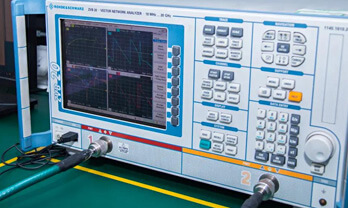
  2. Performance testing and reliability verification
  3. Standardized full-process testing
  4. Precise control of every parameter
We eliminate defective components and ensure the stable operation of electronic devices through professional quality standards.

Payment Support

The payment method can be chosen from the methods shown below: Wire Transfer (T/T, Bank Transfer), Western Union, Credit card, PayPal.
  • HKBea
  • Paypal
  • MasterCard
  • Western-Union
  • VISA
Stable Delivery, Sincere Partnership — Your Faithful Supply Chain Partner
  • Efficient Supply Management
  • Cost-Saving Procurement
  • Fast Sourcing & Delivery
Contact us if you have any questions.

Packaging

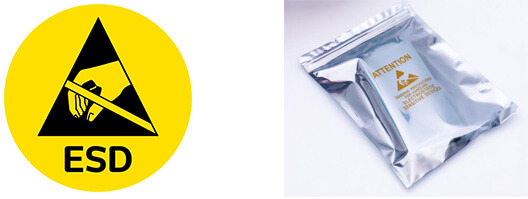
Electrostatic Discharge Protection and Handling

All electrostatic-sensitive components are handled in accordance with electrostatic discharge control procedures. The products are hermetically sealed in anti-static safe packaging to prevent electrostatic damage. Appropriate labeling is also applied for identification and traceability. This ensures product integrity during storage, handling and transportation.


ESD

Certifications & Memberships

Third-party certified, strict quality control. Our certification
  • ISO 9001: 2015
  • ISO 13485: 2016
  • ISO 14001: 2015
  • ISO 28000: 2007
  • ISO 45001: 2018
  • GB/T 27922-2011
  • SMTA
  • IPC
  • ESD
  • PSMA
Micrel / Microchip Technology

SY89321LMITR

Micrel / Microchip Technology
32D-SY89321LMITR

Want a better price? Add to Cart and Submit RFQ now, we'll contact you immediately.

0 RFQ
Shopping cart (0 Items)
It is empty.
Compare List (0 Items)
It is empty.
Feedback

Your feedback matters! At Allelco, we value the user experience and strive to improve it constantly.
Please share your comments with us via our feedback form, and we'll respond promptly.
Thank you for choosing Allelco.

Subject
E-mail
Comments
Captcha
Drag or click to upload file
Upload File
types: .xls, .xlsx, .doc, .docx, .jpg, .png and .pdf.
Max file size: 10MB