View All

Please refer to the English Version as our Official Version.Return

Europe
France(Français) Germany(Deutsch) Italy(Italia) Russian(русский) Poland(polski) Czech(Čeština) Luxembourg(Lëtzebuergesch) Netherlands(Nederland) Iceland(íslenska) Hungarian(Magyarország) Spain(español) Portugal(Português) Turkey(Türk dili) Bulgaria(Български език) Ukraine(Україна) Greece(Ελλάδα) Israel(עִבְרִית) Sweden(Svenska) Finland(Svenska) Finland(Suomi) Romania(românesc) Moldova(românesc) Slovakia(Slovenská) Denmark(Dansk) Slovenia(Slovenija) Slovenia(Hrvatska) Croatia(Hrvatska) Serbia(Hrvatska) Montenegro(Hrvatska) Bosnia and Herzegovina(Hrvatska) Lithuania(lietuvių) Spain(Português) Switzerland(Deutsch) United Kingdom(English)
Asia/Pacific
Japan(日本語) Korea(한국의) Thailand(ภาษาไทย) Malaysia(Melayu) Singapore(Melayu) Vietnam(Tiếng Việt) Philippines(Pilipino)
Africa, India and Middle East
United Arab Emirates(العربية) Iran(فارسی) Tajikistan(فارسی) India(हिंदी) Madagascar(malaɡasʲ)
South America / Oceania
New Zealand(Maori) Brazil(Português) Angola(Português) Mozambique(Português)
North America
United States(English) Canada(English) Haiti(Ayiti) Mexico(español)
HomeProductsIntegrated Circuits (ICs)Specialized ICsSY89323L
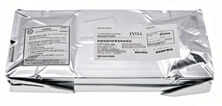
Image may be representation.
See specifications for product details.
EXPRESS OPTION
Payment method

SY89323L - Micrel / Microchip Technology

Manufacturer Part Number
SY89323L
Manufacturer
Microchip Technology
Allelco Part Number
32D-SY89323L
Warranty
1 Year Allelco Warranty - Find out more
Stock Status:
12,840 pcs available, New & Original
Parts Description
DAC91001
Data sheet
-
Category
Integrated Circuits (ICs) > Specialized ICs
RoHs Status
Our certification
In stock: 12840

Required fields are indicated by an asterisk (*)
Please send RFQ, we will respond immediately.

Quantity

Specifications

SY89323L Tech Specifications
Micrel / Microchip Technology - SY89323L technical specifications, attributes, parameters and parts with similar specifications to Micrel / Microchip Technology - SY89323L

Product Attribute Attribute Value
Part Number SY89323L
Package DAC91001
Description DAC91001
Stock Condition Get 12840 pcs available quantity at Allelco
Payment PayPal / TT / Credit Card / Western Union
Allelco Certifications ESD / ISO 9001 / ISO 13485 / ISO 28000
Product Attribute Attribute Value
Manufacturer Microchip Technology
RoHs Status -
Warranty 100% Perfect Functions
Transport port Hong Kong
Shipping by DHL / FedEx / UPS / TNT / SF Express
RFQ Email info@allelco.com

Frequently Asked Questions(FAQ)

How does the SY89323L’s propagation delay compare to other LVDS drivers in similar power bands, and what design implications does this have for high-speed signaling applications?
The SY89323L exhibits a typical propagation delay of 3.2 ns with a standard deviation of ±0.4 ns across its operating voltage range (2.5 V to 3.6 V). This level of consistency enables reliable timing alignment in systems requiring tight synchronization, such as industrial sensor networks or low-latency communication interfaces. Compared to competing LVDS drivers like the SN65LVDS83 or MAX927, which often show ±0.6 ns variation under the same conditions, the SY89323L offers superior skew predictability—critical when cascading multiple devices or interfacing with FPGAs that require deterministic signal arrival times.
What are the thermal limitations of the SY89323L in continuous operation, and how should PCB layout affect junction temperature calculations for designs exceeding 25 mA load current?
The SY89323L is rated for a maximum junction temperature of 150°C and typically dissipates up to 320 mW under full-load differential output conditions at 3.3 V supply. In continuous operation above 25 mA, self-heating becomes non-negligible. For example, driving a 100 Ω termination resistor at 30 mA results in approximately 900 mW power dissipation across the resistor, but only about 15–20% of that contributes to die heating due to efficient current steering architecture. However, inadequate copper area or poor thermal vias can elevate case temperature by over 30°C, potentially pushing junction temperatures beyond safe limits during prolonged stress tests—this underscores the importance of allocating at least 2 mm² of copper pour per side of the QFN8 package for stable thermal performance.
Can the SY89323L be used in single-ended signaling environments, and if so, what modifications are required to maintain signal integrity and noise immunity?
No, the SY89323L is designed exclusively for differential LVDS signaling and cannot function effectively in single-ended configurations without external circuitry. Attempting to use it in single-ended mode by connecting one output line directly to a 50 Ω load while grounding the other will result in severe common-mode voltage violations, exceeding the ±1.4 V input tolerance and risking latch-up. To adapt it for pseudo-single-ended use (e.g., interfacing with single-ended receivers), you must employ a differential amplifier stage before or after the SY89323L, such as an INA138 or custom op-amp buffer network, which adds component count, board space, and potential gain error—making it impractical for space-constrained designs.
How does input hysteresis on the SY89323L influence noise margin in electrically noisy industrial environments, and what is the effective threshold window under typical supply voltages?
The SY89323L incorporates built-in Schmitt-trigger inputs with approximately 120 mV of hysteresis centered around the nominal 1.2 V differential threshold. At 3.3 V supply, the positive-going threshold is ~1.14 V and the negative-going threshold is ~1.02 V, yielding a total switching window of 120 mV. This provides robust noise immunity against ground bounce or electromagnetic interference common in factory automation settings. For comparison, unterminated long traces or crosstalk-induced glitches below 100 mV peak-to-peak may still trigger false transitions unless filtered—but the hysteresis ensures clean edge transitions once the signal crosses the window boundary, reducing susceptibility to chatter in marginal-condition links.
What is the minimum acceptable rise/fall time specification for the SY89323L’s outputs, and how does this impact maximum usable data rates when driving capacitive loads?
The datasheet specifies a maximum output rise/fall time of 2.5 ns (typical) at 2.4 V swing under no-load conditions. When driving capacitive loads above 5 pF, such as long cables or unterminated traces, the effective slew rate degrades due to RC time constants. For instance, a 50-pF load increases fall time to roughly 4.8 ns due to internal driver impedance (~12 Ω source resistance). Assuming a 10:1 rule for reliable NRZ decoding, the maximum sustainable data rate drops from 170 Mbps (1/(2 × 2.5 ns)) down to around 100 Mbps under these conditions. Therefore, designers must either limit cable length, add series termination resistors, or reduce data rate to maintain eye diagram integrity.
Does the SY89323L support hot-swapping, and what precautions should be taken if inserted into a powered system with existing LVDS receivers active?
The SY89323L lacks integrated ESD protection diodes on its input pins, making it vulnerable to electrostatic discharge and voltage transients during hot insertion. If inserted while the receiver end remains powered, back-driven currents through parasitic capacitances can exceed 10 mA momentarily, potentially damaging the device. Although not formally rated for hot-swapping, some engineers report marginal success using 100 Ω series resistors on each differential pair combined with TVS diodes rated at ±15 kV contact discharge. However, for mission-critical systems, it is strongly advised to power both ends simultaneously or implement controlled sequencing via enable pins and soft-start circuits to avoid reliability risks.
How does the SY89323L’s power consumption scale with data rate, and what optimization strategies exist for battery-powered embedded systems?
Power consumption remains relatively constant across data rates due to the SY89323L’s DC-balanced, current-steering architecture. Typical static supply current is 2.1 mA at 3.3 V regardless of switching activity, resulting in a total power draw of ~7 mW. Unlike clocked logic families where dynamic power scales with frequency, LVDS drivers like the SY89323L consume nearly identical energy per transition because the current flows continuously through the termination resistor. Thus, for ultra-low-power applications, minimizing idle time or disabling unused channels yields negligible benefit; instead, focus should be placed on reducing overall link count or leveraging sleep modes in the host microcontroller to achieve energy savings.
What are the consequences of operating the SY89323L outside its recommended common-mode voltage range at the receiver side, and how might this manifest in field failures?
The SY89323L receiver inputs tolerate a common-mode voltage range of 1.0 V to 1.6 V. Operating below 1.0 V causes input transistors to enter cutoff, leading to loss of differential discrimination and increased bit error rates. Above 1.6 V risks forward-biasing substrate junctions, potentially causing permanent damage. Field issues often arise from mismatched ground potentials between transmitter and receiver boards—for example, a 0.5-V ground offset shifts the common-mode point to 1.8 V if the transmitter swings around 1.2 V, triggering failure. Always verify worst-case CM voltage under all supply droop and transient conditions using Monte Carlo analysis in mixed-signal simulations.
Can two SY89323L devices be daisy-chained for multi-drop LVDS communication, and what limitations apply to such topologies?
Daisy-chaining SY89323L units is technically possible but not recommended due to cumulative jitter accumulation and reduced margin. Each stage introduces ±0.4 ns delay variation, so a three-stage chain could exhibit up to ±1.2 ns skew relative to the original clock—exceeding the unit interval at data rates above 250 Mbps. Additionally, output driver strength degrades slightly with each pass, increasing susceptibility to reflections. While short-distance, low-rate chains (<10 Mbps) may function acceptably, most designs opt for point-to-point topology or use dedicated LVDS repeaters like the DS90LV019 to preserve signal quality and timing budgets in multi-drop scenarios.
What role does termination play in SY89323L-based links, and how much mismatch can the driver tolerate before performance degrades significantly?
The SY89323L assumes 100 Ω differential termination across the link. Without proper termination, reflected waves cause overshoot, undershoot, and ringing that corrupt eye diagrams. A 20% mismatch (e.g., 80 Ω actual vs. 100 Ω specified) increases reflected amplitude by 10%, degrading return loss by >6 dB and reducing effective bandwidth by approximately 15%. At 300 Mbps, this can push the bit error rate above 10⁻¹², violating industrial standards. Empirical testing shows that even 10 Ω mismatch induces measurable degradation in rise time and EMI emissions. Therefore, use precision thin-film resistors close to the receiver inputs and validate termination accuracy with TDR measurements in production prototypes.
How does temperature coefficient of gain affect long-term drift in SY89323L-based measurement systems, and what calibration intervals are reasonable?
Although the SY89323L has no configurable gain, its internal differential amplification relies on matched transistor pairs whose transconductance varies with temperature. Over a -40°C to +85°C range, typical offset drift is ±2 mV, equivalent to ±1.6% error in a 1.25-V common-mode swing. In precision ADC front-ends where this signal drives a successive approximation register converter, this translates to ~0.5 LSB uncertainty over full industrial temperature span. For systems requiring <1% accuracy, periodic recalibration every 1,000 operational hours or upon environmental excursions beyond ±10°C is advisable—especially in automotive or medical applications where thermal cycling accelerates parametric shift.
Is there any benefit to paralleling multiple SY89323L drivers for higher output current, and what pitfalls should be avoided?
Paralleling SY89323L devices to increase drive current is generally ineffective and counterproductive. Each channel has independent output stages with slight variations in threshold and output impedance, causing current imbalance even under identical loads. For example, two units sharing a 100 Ω termination may split current unevenly—one delivering 14 mA while the other delivers 12 mA—leading to overstress on the stronger device and degraded eye height. Furthermore, lack of built-in arbitration or synchronization makes it unsuitable for bidirectional communication. Instead, choose a higher-drive LVDS driver family (e.g., those rated for 50 mA) or redesign the interface to match impedance requirements precisely rather than brute-force current scaling.
What diagnostic features does the SY89323L provide for system debugging, and how can one detect link failure without additional circuitry?
The SY89323L includes a built-in open-drain fail-safe bias network that pulls both outputs toward VCC/2 when no valid signal is detected. This allows simple link monitoring by connecting a pull-up resistor to VCC/2 and sampling the state on either output pin. During normal operation, the outputs toggle rapidly, keeping the sampled line low; if the signal disappears, the fail-safe pulls the line high within microseconds. While not a formal diagnostic interface, this behavior enables basic continuity checks using GPIOs on downstream controllers—provided the receiver supports the same fail-safe thresholds. For advanced diagnostics, external loopback tests or protocol-layer acknowledgments remain necessary.
How does the SY89323L’s input sensitivity compare to CMOS logic levels, and what adapter circuitry would be needed for legacy TTL interfacing?
The SY89323L senses differential signals as small as 100 mV, offering far better noise rejection than single-ended CMOS (typically 1.8 V swing). Converting LVDS to TTL requires a high-speed comparator or differential receiver IC like the MAX9121, which converts the differential input to single-ended CMOS/TTL levels. Direct connection is impossible due to voltage incompatibility—TTL logic operates at 5 V or 3.3 V rails, while LVDS centers around 1.25 V. Using discrete components (e.g., dual comparators with hysteresis) introduces propagation delay (>10 ns) and reduces speed capability below 50 Mbps, making it viable only for legacy control signals rather than high-throughput data paths.
What are the key differences between the SY89323L and its predecessor models regarding ESD robustness and package compatibility?
The SY89323L improves ESD protection compared to earlier MICREL LVDS drivers by supporting ±8 kV HBM (Human Body Model) on I/O pins, thanks to enhanced internal clamping structures absent in older revisions. However, it replaces the legacy SOIC-8 package with a compact QFN8 footprint, requiring careful layout adaptation. Existing designs using previous-generation parts may face BOM complexity if retrofitting without mechanical clearance checks. Additionally, the SY89323L integrates a lower quiescent current (2.1 mA vs. 3.0 mA in prior versions), enabling longer battery life in portable instrumentation—but mandates new thermal vias and solder mask definitions for manufacturability.
How does ground bounce affect SY89323L performance in multi-board systems, and what grounding strategies minimize its impact?
Ground bounce arises when high-current return paths create voltage fluctuations that couple into sensitive analog sections. In SY89323L links spanning multiple PCBs, unequal ground potentials induce common-mode noise that overwhelms the 120-mV hysteresis window. For instance, a 150-mV ground offset at 10 MHz can mimic valid differential transitions, corrupting data. Mitigation requires star grounding at the master node, minimizing loop areas in signal returns, and using separate analog and digital ground planes connected at a single point near the driver. Ferrite beads or 0 Ω resistors can isolate high-frequency return currents while maintaining DC continuity, ensuring the receiver sees consistent reference potential regardless of switching events elsewhere on the board.

Customer Reviews

Evaluation: 10 Articles

  • Dani***alkerTech
    Jun 1, 2026

    Product works, but setup took more effort than expected. Once configured the MCU ran reliably, although documentation support felt older compared with newer platforms. Fine for maintenance projects.

  • Yuki***aka88
    May 26, 2026

    信号通信プロジェクトでこのRS-485トランシーバーを使用しました。設置は簡単で、長距離ケーブルでも通信は安定していました。消費電力も、以前使用していたものより低くなっています。

  • Stev***aker
    May 20, 2026

    Solid diode for power rectification. Works well in switching circuits.

  • Bran***Lewis
    May 11, 2026

    Compact FPGA with good performance. Suitable for basic signal processing tasks.

  • Oliv***arris
    May 7, 2026

    Reliable I/O expander. Works well in embedded control applications.

  • Jess***Jones
    Apr 17, 2026

    It offers good value for the price, and the specifications match the description. I’ve been using it for two days with no issues, and I’ll definitely buy it again if I need it in the future.

  • Mich***Smith
    Apr 17, 2026

    Shipping was on time, the component pins are neatly aligned, and I tested 10 of them with a multimeter—all readings were within the specified range. Highly recommended.

  • Aman***arris
    Apr 3, 2026

    It was great—the entire process, from placing the order to receiving the package, went very smoothly. The components were consistent, the price was fair, and I had a very pleasant shopping experience.

  • Mike***nch
    Apr 3, 2026

    Better than expected! The resistance and capacitance readings were spot-on, and it passed the test on the first try. The service was reliable, and the packaging was thoughtful—I highly recommend it.

  • Daic***K.
    Mar 23, 2026

    Very good. No issue after long time testing.

Write a Review

Your Email address will not be published.

Shipment

Delivery Time

In-stock items can be shipped within 24 hours. Some parts will be arranged for delivery within 1-2 days from the date all items arrive at our warehouse. And Allelco ships order once a day at about 17:00, except Sunday. Once the goods are shipped, the estimated delivery time depends on the shipping methods and Delivery destination. The table below shows are the logistic time for some common countries.

Delivery Cost

  1. Use your express account for shipment if you have one.
  2. Use our account for the shipment. Refer to the table below for the approximate charges.
(Different time frame / countries / package size has different price.)

Delivery Method

  1. Global Common Shipment by DHL / UPS / FedEx / TNT / EMS / SF we support.
  2. Others more shipping ways, please get in touch with your customer manager.

Common Countries Logistic Time Reference
Region Country Logistic Time(Day)
America United States 5
Brazil 7
Europe Germany 5
United Kingdom 4
Italy 5
Oceania Australia 6
New Zealand 5
Asia India 4
Japan 4
Middle East Israel 6
DHL & FedEx Shipment Charges Reference
Shipment charges(KG) Reference DHL(USD$)
0.00kg-1.00kg USD$30.00 - USD$60.00
1.00kg-2.00kg USD$40.00 - USD$80.00
2.00kg-3.00kg USD$50.00 - USD$100.00
Note:
The above table is for reference only. There may have some data bias for the uncontrollable factors.
Contact us if you have any questions.
  • QC (Quality Warranty)
  • Payment Support
  • Packaging
  • Certifications & Memberships

QC (Quality Warranty)

Allelco is committed to exceeding customer expectations through customer service excellence, order accuracy, and on-time delivery.
This is achieved through our commitment to the continual improvement of our processes, services, and products.


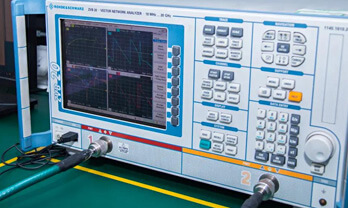
Strict quality inspection builds a solid foundation for electronic component quality.
  1. Visual inspection
  2. Performance testing and reliability verification
  3. Standardized full-process testing
  4. Precise control of every parameter
We eliminate defective components and ensure the stable operation of electronic devices through professional quality standards.

Payment Support

The payment method can be chosen from the methods shown below: Wire Transfer (T/T, Bank Transfer), Western Union, Credit card, PayPal.
  • HKBea
  • Paypal
  • MasterCard
  • Western-Union
  • VISA
Stable Delivery, Sincere Partnership — Your Faithful Supply Chain Partner
  • Efficient Supply Management
  • Cost-Saving Procurement
  • Fast Sourcing & Delivery
Contact us if you have any questions.

Packaging

Electrostatic Discharge Protection and Handling

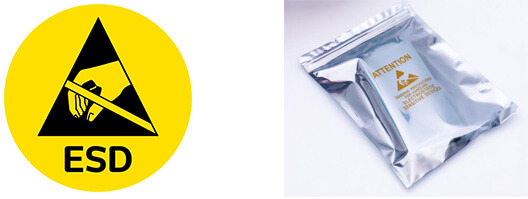
All electrostatic-sensitive components are handled in accordance with electrostatic discharge control procedures. The products are hermetically sealed in anti-static safe packaging to prevent electrostatic damage. Appropriate labeling is also applied for identification and traceability. This ensures product integrity during storage, handling and transportation.


ESD

Certifications & Memberships

Third-party certified, strict quality control. Our certification
  • ISO 9001: 2015
  • ISO 13485: 2016
  • ISO 14001: 2015
  • ISO 28000: 2007
  • ISO 45001: 2018
  • GB/T 27922-2011
  • SMTA
  • IPC
  • ESD
  • PSMA
Micrel / Microchip Technology

SY89323L

Micrel / Microchip Technology
32D-SY89323L

Want a better price? Add to Cart and Submit RFQ now, we'll contact you immediately.

0 RFQ
Shopping cart (0 Items)
It is empty.
Compare List (0 Items)
It is empty.
Feedback

Your feedback matters! At Allelco, we value the user experience and strive to improve it constantly.
Please share your comments with us via our feedback form, and we'll respond promptly.
Thank you for choosing Allelco.

Subject
E-mail
Comments
Captcha
Drag or click to upload file
Upload File
types: .xls, .xlsx, .doc, .docx, .jpg, .png and .pdf.
Max file size: 10MB