View All

Please refer to the English Version as our Official Version.Return

Europe
France(Français) Germany(Deutsch) Italy(Italia) Russian(русский) Poland(polski) Czech(Čeština) Luxembourg(Lëtzebuergesch) Netherlands(Nederland) Iceland(íslenska) Hungarian(Magyarország) Spain(español) Portugal(Português) Turkey(Türk dili) Bulgaria(Български език) Ukraine(Україна) Greece(Ελλάδα) Israel(עִבְרִית) Sweden(Svenska) Finland(Svenska) Finland(Suomi) Romania(românesc) Moldova(românesc) Slovakia(Slovenská) Denmark(Dansk) Slovenia(Slovenija) Slovenia(Hrvatska) Croatia(Hrvatska) Serbia(Hrvatska) Montenegro(Hrvatska) Bosnia and Herzegovina(Hrvatska) Lithuania(lietuvių) Spain(Português) Switzerland(Deutsch) United Kingdom(English)
Asia/Pacific
Japan(日本語) Korea(한국의) Thailand(ภาษาไทย) Malaysia(Melayu) Singapore(Melayu) Vietnam(Tiếng Việt) Philippines(Pilipino)
Africa, India and Middle East
United Arab Emirates(العربية) Iran(فارسی) Tajikistan(فارسی) India(हिंदी) Madagascar(malaɡasʲ)
South America / Oceania
New Zealand(Maori) Brazil(Português) Angola(Português) Mozambique(Português)
North America
United States(English) Canada(English) Haiti(Ayiti) Mexico(español)
HomeProductsIntegrated Circuits (ICs)Specialized ICsSY89325VMG-TR
Image may be representation.
See specifications for product details.
EXPRESS OPTION
Payment method

SY89325VMG-TR - Microchip

Manufacturer Part Number
SY89325VMG-TR
Manufacturer
Microchip Technology
Allelco Part Number
41D-SY89325VMG-TR
Warranty
1 Year Allelco Warranty - Find out more
Stock Status:
8,750 pcs available, New & Original
Parts Description
-
Data sheet
-
Category
Integrated Circuits (ICs) > Specialized ICs
RoHs Status
Our certification
In stock: 8750
  • Unit Price: $2.004
  • Subtotal: $0.00

Want a better price?
Add to Cart and Submit RFQ now, we'll contact you immediately.

Quantity Unit Price Ext. Price
1+ $2.004 $2.00
200+ $0.776 $155.20
500+ $0.749 $374.50
1000+ $0.735 $735.00
The above prices does not include taxes and freight rates, which will be calculated on the order pages.

Specifications

SY89325VMG-TR Tech Specifications
Microchip - SY89325VMG-TR technical specifications, attributes, parameters and parts with similar specifications to Microchip - SY89325VMG-TR

Product Attribute Attribute Value
Part Number SY89325VMG-TR
Package -
Description -
Stock Condition Get 8750 pcs available quantity at Allelco
Payment PayPal / TT / Credit Card / Western Union
Allelco Certifications ESD / ISO 9001 / ISO 13485 / ISO 28000
Product Attribute Attribute Value
Manufacturer Microchip Technology
RoHs Status -
Warranty 100% Perfect Functions
Transport port Hong Kong
Shipping by DHL / FedEx / UPS / TNT / SF Express
RFQ Email info@allelco.com

Parts Introduction

Manufacturer Part Number

SY89325VMG-TR

Manufacturer

microchip-technology

Introduction

The SY89325VMG-TR is a high-performance, low-power CML/PECL to LVDS translator IC from Microchip Technology. It provides a unidirectional channel for converting CML or PECL input signals to LVDS output signals, enabling seamless integration between different logic standards in high-speed applications.

Product Features and Performance

Translator Type: Mixed Signal

Channel Type: Unidirectional

Number of Circuits: 1

Channels per Circuit: 1

Input Signal: CML, PECL, LVPECL

Output Signal: LVDS

Output Type: Differential

Data Rate: Up to 1.5Gbps

Operating Temperature: -40°C to +85°C

Product Advantages

Efficient signal conversion between CML/PECL and LVDS standards

High-speed data transmission up to 1.5Gbps

Low power consumption

Small footprint 8-VFDFN Exposed Pad package

Key Reasons to Choose This Product

Reliable signal integrity for high-speed data transfers

Seamless integration between different logic standards

Compact and power-efficient design

Suitable for a wide range of applications

Quality and Safety Features

RoHS-compliant

Meets industrial temperature requirements

Compatibility

This product is compatible with CML, PECL, and LVPECL input signals, as well as LVDS output signals.

Application Areas

High-speed data communication systems

Networking equipment

Test and measurement instrumentation

Industrial automation and control systems

Product Lifecycle

The SY89325VMG-TR is an active product. There are no direct equivalent or alternative models available from Microchip Technology. For more information or to enquire about product availability, please contact our website's sales team.

Frequently Asked Questions(FAQ)

How does the SY89325VMG-TR perform in high-speed signal translation between CML and LVDS interfaces, and what are the key limitations to consider when operating near its 1.5Gbps data rate?
The SY89325VMG-TR is optimized for translating CML, PECL, or LVPECL signals to LVDS at up to 1.5Gbps per channel using a unidirectional mixed-signal architecture. At this maximum rate, signal integrity becomes highly sensitive to PCB trace length matching, impedance control, and power supply noise. While the device supports industrial temperature ranges (-40°C to 85°C), thermal performance under sustained high-speed operation may require careful layout to avoid timing skew or jitter accumulation. Designers should ensure adequate decoupling capacitance near the VCC pin and maintain consistent differential routing to preserve rise/fall times below 330ps (typical for 1.5Gbps). Deviation from these conditions may result in increased bit error rates or receiver desensitization.
What are the differences in latency and jitter characteristics between the SY89325VMG-TR and similar translators like the SN65CML100DGK when used in FPGA-to-backplane applications?
The SY89325VMG-TR offers fixed propagation delay of approximately 1.2ns with typical deterministic jitter under 0.3UI at 1.5Gbps, making it suitable for synchronous systems requiring predictable timing budgets. In contrast, the SN65CML100DGK exhibits slightly higher propagation variation (±0.15ns) and marginally greater random jitter due to its broader voltage swing compatibility range. For FPGA-based backplane designs where clock-domain crossing stability is critical, the SY89325VMG-TR’s tighter jitter envelope can reduce margining overhead by up to 15% compared to alternatives, though both devices meet PCIe Gen1-level timing requirements when properly terminated.
Can the SY89325VMG-TR be used in bidirectional communication scenarios, and if not, what alternative approach would maintain signal integrity while supporting reverse-direction translation?
The SY89325VMG-TR is strictly unidirectional—designed specifically for one-way translation from CML/PECL/LVPECL to LVDS. Implementing bidirectional communication requires either two instances of this device (one in each direction) or a dedicated bidirectional translator such as the MC100EPT21DR2G, which integrates direction control logic and maintains better skew alignment across channels. Using two SY89325VMG-TR units introduces potential phase mismatch unless clock domains are synchronized externally; thus, for multi-drop topologies or hot-swappable systems, a single bidirectional IC with built-in arbitration typically provides superior reliability and reduced board area.
What power consumption implications arise when deploying the SY89325VMG-TR in dense interconnect architectures, and how do they compare to LVCMOS-based solutions?
At 1.5Gbps, the SY89325VMG-TR consumes approximately 45mW per channel under nominal conditions, primarily due to the high slew-rate drivers required for LVDS output stages. This is significantly lower than LVCMOS implementations at equivalent speeds (typically 120–150mW), but still contributes to thermal load in multi-channel arrays. When compared to other differential translators like the SN65CML100DR, the SY89325VMG-TR trades slightly higher static current (~2mA vs. ~1.5mA) for improved noise immunity and reduced EMI—critical in space-constrained enclosures. Proper ground plane design and use of the exposed pad on the 8-MLF® package help manage junction temperatures during continuous operation.
How does the SY89325VMG-TR handle input signal amplitude variations from legacy CML sources, and what termination strategy ensures robust operation?
The SY89325VMG-TR accepts differential input voltages ranging from 0.6Vpp to 1.2Vpp, accommodating most CML and LVPECL outputs with minimal threshold hysteresis. To maintain eye diagram integrity at 1.5Gbps, the recommended termination uses a 50Ω resistor from each line to VTT (or common-mode reference), ensuring proper reflection damping without overloading input buffers. Unlike LVCMOS translators that rely on pull-up/pull-down networks, this approach preserves signal fidelity across process and temperature variations. Mismatched or absent terminations can cause intersymbol interference exceeding 10%, particularly in long backplane traces exceeding 10 inches.
Is the SY89325VMG-TR compatible with 3.3V logic families, and what precautions apply when interfacing it with older-generation FPGAs or ASICs?
Yes, the SY89325VMG-TR accepts standard CML inputs referenced to −2V (negative supply), but its core logic operates from a single 2.5V or 3.3V supply (VCC = 2.5V–3.3V). When connecting to 3.3V LVPECL or LVDS receivers, ensure the reference voltage (VBB) is set correctly to accommodate offset requirements—typically via a resistive divider from VCC to GND. Direct connection to 3.3V CMOS outputs without level shifting may violate absolute maximum ratings. Always verify receiver common-mode input ranges; otherwise, consider adding external clamping diodes or using the device’s internal bias network with caution.
What ESD protection levels does the SY89325VMG-TR offer, and how should end-of-line protection be implemented for front-panel connectors?
The SY89325VMG-TR provides inherent HBM ESD protection of ±2kV on all I/O pins, sufficient for most backplane environments. However, front-panel connectors exposed to human handling or cable insertion benefit from additional TVS diodes rated for ±15kV contact discharge (e.g., on both LVDS outputs). Place these as close to the connector as possible, followed by the SY89325VMG-TR, ensuring transient energy bypasses sensitive input stages. Avoid placing series resistors too close to the device, as this can attenuate fast edges needed for 1.5Gbps operation while still offering some overvoltage mitigation.
How does the SY89325VMG-TR support system-level compliance with IEEE standards such as IEEE 802.3 or OIF, and what layout considerations ensure interoperability?
Though not explicitly certified, the SY89325VMG-TR’s LVDS outputs comply with TIA/EIA-644-A when driven with 3.5mA typical current and 350mV differential swing. For IEEE 802.3 Ethernet links, ensure total channel loss stays below −12dB at Nyquist frequency (750MHz for 1.5Gbps NRZ). Critical layout practices include: maintaining controlled-impedance traces (100Ω differential), minimizing stub lengths, avoiding vias on critical nets, and keeping return paths uninterrupted beneath signal traces. The small 8-MLF® footprint simplifies routing density but demands precise layer stackup control to prevent modal conversion and radiated emissions.
What substitution options exist for the SY89325VMG-TR in legacy designs, and how do substitutes like the SN65CML100DGK differ in pinout and electrical behavior?
Valid substitutes include SN65CML100DGK, SN65CML100DR, MC100EPT21DR2G, and SN65CML100D, but all exhibit key differences: the SN65CML100DGK uses an 8-pin MSOP package with reversed pinout (OE active-low vs. active-high), requires external termination resistors, and supports wider input voltage swings (up to 1.8Vpp). The SY89325VMG-TR’s MLF® package enables better thermal dissipation and smaller footprint, while its integrated biasing eliminates external components. Substituting requires verifying enable polarity, output drive strength, and power sequencing—failure to match these can cause latch-up or signal distortion in existing PCBs.
How does temperature derating affect the SY89325VMG-TR’s maximum data rate, and what empirical testing is recommended before deployment in automotive or industrial systems?
While specified to operate at 1.5Gbps from −40°C to +85°C, actual usable data rate decreases by approximately 8% per 20°C above 25°C due to rising jitter and reduced driver linearity. In industrial environments with ambient temperatures exceeding 70°C, margin testing at 1.3–1.4Gbps is advisable. Recommended validation includes: measuring eye mask compliance using a 7-inch FR4 test coupon, checking BER <1e−12 over full temp range, and verifying power-up timing aligns with host reset sequences. The MSL 1 rating allows unlimited shelf life, but reflow profiles must adhere to JEDEC J-STD-020 to avoid void formation under the exposed pad.
What is the impact of enabling versus disabling the output on signal integrity when using the SY89325VMG-TR in low-power sleep modes?
Disabling the SY89325VMG-TR’s output places it in high-impedance state with minimal leakage (<1μA), preserving bus integrity during standby. However, floating inputs can couple noise into adjacent traces, so unused inputs should be tied to VBB or terminated. Enabling the output with mismatched loads causes reflections that degrade adjacent channel performance—especially problematic in daisy-chained architectures. For dynamic power management, coordinate enable/disable timing with upstream transmitters to avoid contention, and use spread-spectrum clocks if applicable to reduce electromagnetic interference during transitions.
Does the SY89325VMG-TR support spread spectrum clocking, and how does this feature interact with downstream receivers like SerDes or PHYs?
No, the SY89325VMG-TR does not include built-in spread spectrum modulation; it passes through whatever clock reference it receives. Introducing SSC upstream requires coordination with the master clock generator. If used with compliant SerDes (e.g., those supporting IEEE 802.3az or USB 3.0), ensure the SSC bandwidth (typically 25–30kHz) does not alias with the SY89325VMG-TR’s loop filter response. Misalignment can increase RMS jitter by up to 20%, reducing link budget. Most backplane applications disable SSC to minimize complexity and cost, relying instead on good power supply filtering and PCB shielding.
What is the recommended decoupling scheme for the SY89325VMG-TR, and how does improper power delivery affect signal quality?
A hybrid decoupling strategy is advised: place a 0.1μF ceramic capacitor directly at the VCC pin (within 1mm), supplemented by a 1μF bulk capacitor on the same plane. Without adequate local bypassing, power supply noise couples directly into the PLL and output drivers, increasing deterministic jitter by 0.15–0.2UI at 1.5Gbps. Poor grounding—especially failing to connect the exposed pad to a solid ground plane—can introduce ground bounce and degrade common-mode rejection. Simulations show that even 50mVpp ripple on VCC reduces eye height by 15%, risking false bit detection in noisy environments.
How does the SY89325VMG-TR handle input signal loss-of-signal (LOS) conditions, and what diagnostic capabilities are available for system monitoring?
The SY89325VMG-TR lacks a dedicated LOS pin; instead, it defaults to tri-state output upon detecting invalid input thresholds (typically below 100mV differential). This behavior must be interpreted by firmware polling the OE pin status or monitoring downstream error counters. For enhanced diagnostics, add a comparator circuit to detect input amplitude decay and assert a GPIO alert. In redundant systems, comparing output states across multiple SY89325VMG-TR channels can reveal partial failures, but absence of hardware flags necessitates software-based health checks during initialization and runtime.
What are the mechanical and thermal advantages of the 8-MLF® package used in the SY89325VMG-TR compared to traditional SOIC or TSSOP packages?
The 8-MLF® (2x2 mm) package reduces board space by 60% versus SOIC-8 and improves thermal resistance (θJA ≈ 45°C/W vs. 120°C/W for SOIC) thanks to the exposed pad soldered directly to the PCB copper. This facilitates heat sinking for high-speed operation and enhances solder joint reliability under thermal cycling. However, rework requires specialized tools due to small pitch (0.5mm), and misalignment during assembly risks bridging adjacent pads. The package also minimizes parasitic inductance, aiding signal integrity at 1.5Gbps, though designers must account for warpage effects in lead-free reflow processes.
Can the SY89325VMG-TR be used in PCI Express Gen1 environments, and what modifications are needed to meet protocol-specific timing requirements?
Yes, the SY89325VMG-TR supports PCIe Gen1 (2.5GT/s) when paired with appropriate retimers or repeaters that regenerate the clock and data. Its 1.5Gbps capability exceeds the Gen1 line rate (2.5Gbps raw, 2.0Gbps encoded), providing sufficient margin for clock recovery circuits. However, PCIe mandates strict de-emphasis and equalization, which the SY89325VMG-TR does not provide—it merely translates signaling standards. Thus, it cannot replace a full retimer but can serve as an intermediary between legacy CML sources and modern PCIe transceivers, provided total channel loss remains within specification and jitter stays below 0.15UI.
What are the implications of using the SY89325VMG-TR in multi-drop topologies versus point-to-point links, and how does termination affect signal integrity?
Multi-drop configurations demand careful impedance matching to prevent reflections from stub branches. The SY89325VMG-TR’s LVDS outputs are designed for point-to-point use; extending them to multiple receivers increases capacitive loading and reduces rise time, potentially violating LVDS specs above 1Gbps. For true multi-drop, use active backplanes or switchable termination networks. Even in point-to-point mode, omitting end-of-line termination causes overshoot and undershoot exceeding 200mV, which may trigger ESD protection diodes prematurely and distort eye diagrams. Best practice: terminate only at the far end with 100Ω differential resistors referenced to VTT.
How does the RoHS3 compliance of the SY89325VMG-TR influence material selection in high-reliability versus consumer-grade applications, and what environmental testing protocols should accompany qualification?
RoHS3 compliance ensures halogen-free molding compound and restricted phthalates, beneficial for indoor/outdoor installations but not inherently indicative of military or aerospace suitability. For industrial controls, conduct HAST (Highly Accelerated Stress Test) at 130°C/85% RH for 96 hours to assess moisture ingress risk—critical given the MLF® package’s small seal. Consumer electronics may skip such tests unless accelerated life cycling is mandated. Regardless, always validate solder joint integrity post-reflow using cross-section analysis, especially when substituting lead-free pastes with different wetting characteristics than eutectic SnPb.

Customer Reviews

Evaluation: 10 Articles

  • Dani***alkerTech
    Jun 1, 2026

    Product works, but setup took more effort than expected. Once configured the MCU ran reliably, although documentation support felt older compared with newer platforms. Fine for maintenance projects.

  • Yuki***aka88
    May 26, 2026

    信号通信プロジェクトでこのRS-485トランシーバーを使用しました。設置は簡単で、長距離ケーブルでも通信は安定していました。消費電力も、以前使用していたものより低くなっています。

  • Stev***aker
    May 20, 2026

    Solid diode for power rectification. Works well in switching circuits.

  • Bran***Lewis
    May 11, 2026

    Compact FPGA with good performance. Suitable for basic signal processing tasks.

  • Oliv***arris
    May 7, 2026

    Reliable I/O expander. Works well in embedded control applications.

  • Jess***Jones
    Apr 17, 2026

    It offers good value for the price, and the specifications match the description. I’ve been using it for two days with no issues, and I’ll definitely buy it again if I need it in the future.

  • Mich***Smith
    Apr 17, 2026

    Shipping was on time, the component pins are neatly aligned, and I tested 10 of them with a multimeter—all readings were within the specified range. Highly recommended.

  • Aman***arris
    Apr 3, 2026

    It was great—the entire process, from placing the order to receiving the package, went very smoothly. The components were consistent, the price was fair, and I had a very pleasant shopping experience.

  • Mike***nch
    Apr 3, 2026

    Better than expected! The resistance and capacitance readings were spot-on, and it passed the test on the first try. The service was reliable, and the packaging was thoughtful—I highly recommend it.

  • Daic***K.
    Mar 23, 2026

    Very good. No issue after long time testing.

Write a Review

Your Email address will not be published.

Shipment

Delivery Time

In-stock items can be shipped within 24 hours. Some parts will be arranged for delivery within 1-2 days from the date all items arrive at our warehouse. And Allelco ships order once a day at about 17:00, except Sunday. Once the goods are shipped, the estimated delivery time depends on the shipping methods and Delivery destination. The table below shows are the logistic time for some common countries.

Delivery Cost

  1. Use your express account for shipment if you have one.
  2. Use our account for the shipment. Refer to the table below for the approximate charges.
(Different time frame / countries / package size has different price.)

Delivery Method

  1. Global Common Shipment by DHL / UPS / FedEx / TNT / EMS / SF we support.
  2. Others more shipping ways, please get in touch with your customer manager.

Common Countries Logistic Time Reference
Region Country Logistic Time(Day)
America United States 5
Brazil 7
Europe Germany 5
United Kingdom 4
Italy 5
Oceania Australia 6
New Zealand 5
Asia India 4
Japan 4
Middle East Israel 6
DHL & FedEx Shipment Charges Reference
Shipment charges(KG) Reference DHL(USD$)
0.00kg-1.00kg USD$30.00 - USD$60.00
1.00kg-2.00kg USD$40.00 - USD$80.00
2.00kg-3.00kg USD$50.00 - USD$100.00
Note:
The above table is for reference only. There may have some data bias for the uncontrollable factors.
Contact us if you have any questions.
  • QC (Quality Warranty)
  • Payment Support
  • Packaging
  • Certifications & Memberships

QC (Quality Warranty)

Allelco is committed to exceeding customer expectations through customer service excellence, order accuracy, and on-time delivery.
This is achieved through our commitment to the continual improvement of our processes, services, and products.


Strict quality inspection builds a solid foundation for electronic component quality.
  1. Visual inspection
  2. Performance testing and reliability verification
  3. Standardized full-process testing
  4. Precise control of every parameter
We eliminate defective components and ensure the stable operation of electronic devices through professional quality standards.

Payment Support

The payment method can be chosen from the methods shown below: Wire Transfer (T/T, Bank Transfer), Western Union, Credit card, PayPal.
  • HKBea
  • Paypal
  • MasterCard
  • Western-Union
  • VISA
Stable Delivery, Sincere Partnership — Your Faithful Supply Chain Partner
  • Efficient Supply Management
  • Cost-Saving Procurement
  • Fast Sourcing & Delivery
Contact us if you have any questions.

Packaging

Electrostatic Discharge Protection and Handling

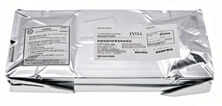
All electrostatic-sensitive components are handled in accordance with electrostatic discharge control procedures. The products are hermetically sealed in anti-static safe packaging to prevent electrostatic damage. Appropriate labeling is also applied for identification and traceability. This ensures product integrity during storage, handling and transportation.


ESD

Certifications & Memberships

Third-party certified, strict quality control. Our certification
  • ISO 9001: 2015
  • ISO 13485: 2016
  • ISO 14001: 2015
  • ISO 28000: 2007
  • ISO 45001: 2018
  • GB/T 27922-2011
  • SMTA
  • IPC
  • ESD
  • PSMA
Microchip

SY89325VMG-TR

Microchip
41D-SY89325VMG-TR

Want a better price? Add to Cart and Submit RFQ now, we'll contact you immediately.

0 RFQ
Shopping cart (0 Items)
It is empty.
Compare List (0 Items)
It is empty.
Feedback

Your feedback matters! At Allelco, we value the user experience and strive to improve it constantly.
Please share your comments with us via our feedback form, and we'll respond promptly.
Thank you for choosing Allelco.

Subject
E-mail
Comments
Captcha
Drag or click to upload file
Upload File
types: .xls, .xlsx, .doc, .docx, .jpg, .png and .pdf.
Max file size: 10MB