View All

Please refer to the English Version as our Official Version.Return

Europe
France(Français) Germany(Deutsch) Italy(Italia) Russian(русский) Poland(polski) Czech(Čeština) Luxembourg(Lëtzebuergesch) Netherlands(Nederland) Iceland(íslenska) Hungarian(Magyarország) Spain(español) Portugal(Português) Turkey(Türk dili) Bulgaria(Български език) Ukraine(Україна) Greece(Ελλάδα) Israel(עִבְרִית) Sweden(Svenska) Finland(Svenska) Finland(Suomi) Romania(românesc) Moldova(românesc) Slovakia(Slovenská) Denmark(Dansk) Slovenia(Slovenija) Slovenia(Hrvatska) Croatia(Hrvatska) Serbia(Hrvatska) Montenegro(Hrvatska) Bosnia and Herzegovina(Hrvatska) Lithuania(lietuvių) Spain(Português) Switzerland(Deutsch) United Kingdom(English)
Asia/Pacific
Japan(日本語) Korea(한국의) Thailand(ภาษาไทย) Malaysia(Melayu) Singapore(Melayu) Vietnam(Tiếng Việt) Philippines(Pilipino)
Africa, India and Middle East
United Arab Emirates(العربية) Iran(فارسی) Tajikistan(فارسی) India(हिंदी) Madagascar(malaɡasʲ)
South America / Oceania
New Zealand(Maori) Brazil(Português) Angola(Português) Mozambique(Português)
North America
United States(English) Canada(English) Haiti(Ayiti) Mexico(español)
HomeProductsIntegrated Circuits (ICs)Embedded - MicrocontrollersSTM32G0B0RET6TR
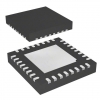
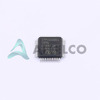
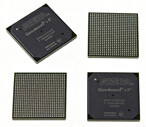
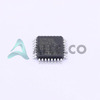
Image may be representation.
See specifications for product details.
EXPRESS OPTION
Payment method

STM32G0B0RET6TR - STMicroelectronics

Manufacturer Part Number
STM32G0B0RET6TR
Manufacturer
STMicroelectronics
Allelco Part Number
98D-STM32G0B0RET6TR
Warranty
1 Year Allelco Warranty - Find out more
Stock Status:
38,184 pcs available, New & Original
Parts Description
CONTROLLER / PROCESSOR
Package
64-LQFP (10x10)
Data sheet
-
RoHs Status
ROHS3 Compliant
Our certification
In stock: 38184
  • Unit Price: $2.523
  • Subtotal: $0.00

Want a better price?
Add to Cart and Submit RFQ now, we'll contact you immediately.

Quantity Unit Price Ext. Price
1+ $2.523 $2.52
The above prices does not include taxes and freight rates, which will be calculated on the order pages.


Specifications

STM32G0B0RET6TR Tech Specifications
STMicroelectronics - STM32G0B0RET6TR technical specifications, attributes, parameters and parts with similar specifications to STMicroelectronics - STM32G0B0RET6TR

Product Attribute Attribute Value
Manufacturer STMicroelectronics
Voltage - Supply (Vcc/Vdd) 2V ~ 3.6V
Supplier Device Package 64-LQFP (10x10)
Speed 64MHz
Series STM32G0
RAM Size 144K x 8
Program Memory Type FLASH
Program Memory Size 512KB (512K x 8)
Peripherals Brown-out Detect/Reset, DMA, I²S, POR, PWM, WDT
Package / Case 64-LQFP
Product Attribute Attribute Value
Package Tape & Reel (TR)
Oscillator Type External, Internal
Operating Temperature -40°C ~ 85°C (TA)
Number of I/O 59
Mounting Type Surface Mount
EEPROM Size -
Data Converters A/D 19x12b SAR
Core Size 32-Bit
Core Processor ARM® Cortex®-M0+
Connectivity HDMI-CEC, I²C, IrDA, LINbus, SPI, UART/USART, USB

Environmental & Export Classifications

ATTRIBUTE DESCRIPTION
RoHs Status ROHS3 Compliant
Moisture Sensitivity Level (MSL) 3 (168 Hours)
REACH Status REACH Unaffected

Frequently Asked Questions(FAQ)

How does the STM32G0B0RET6TR compare to other STM32G0 series microcontrollers in terms of flash memory capacity and power efficiency for battery-operated embedded systems?
The STM32G0B0RET6TR offers 512KB of embedded FLASH memory, which is among the higher-capacity options within the STM32G0 series. This makes it suitable for applications requiring substantial code storage without resorting to external memory components. While lower-end variants like the STM32G071 offer only up to 128KB, the G0B0RET6TR provides a balance between performance and resource constraints. Its ARM Cortex-M0+ core operates efficiently at 64MHz while maintaining low active current consumption—critical for battery-powered devices such as IoT sensors or portable medical instruments. However, designers must consider that increased flash size can slightly elevate quiescent current during erase/write cycles, so careful firmware management is necessary to optimize long-term energy use.
What are the key differences between using internal versus external oscillators with the STM32G0B0RET6TR, and how do they impact system reliability and timing accuracy in industrial environments?
The STM32G0B0RET6TR supports both internal and external oscillator configurations. The internal 64MHz HSI16 clock provides a cost-effective timing source but may drift by several percent over temperature and aging, potentially affecting communication protocols like USB or UART baud rates. In contrast, an external crystal oscillator delivers superior frequency stability (±20 ppm typical), essential for precision timing applications such as motor control or time-sensitive networking. For industrial systems operating across -40°C to 85°C, reliance on the internal oscillator without calibration could lead to timing errors beyond acceptable tolerances in synchronous data transfers. Designers should evaluate whether the application demands traceable timing (favoring external) versus simplicity and reduced BOM count (internal).
Can the STM32G0B0RET6TR reliably drive high-current loads directly, and what design considerations apply when interfacing with relays, LEDs, or motors?
No, the STM32G0B0RET6TR cannot directly drive high-current loads due to its maximum GPIO current sourcing/sinking capability of approximately 25 mA per pin (up to 200 mA total across all pins). Attempting to switch inductive loads like relays or motors directly would risk damaging the microcontroller. Instead, designers must employ external driver circuits such as N-channel MOSFETs, optoisolators, or dedicated gate drivers. For example, driving a 12V relay coil rated at 100mA requires a transistor-based interface with flyback diode protection. Additionally, when driving multiple LEDs in parallel, current balancing resistors should be used to prevent thermal runaway. Proper PCB layout with short traces and adequate decoupling near driver stages further ensures reliable operation under transient conditions.
How does the STM32G0B0RET6TR’s USB2.0 peripheral support full-speed communication, and what firmware considerations are needed to avoid enumeration failures?
The STM32G0B0RET6TR includes a native USB2.0 FS (Full-Speed) controller supporting up to 12 Mbps data transfer. It integrates a 1.5 KΩ pull-up resistor on DP internally, simplifying hardware design. However, successful USB enumeration depends heavily on firmware implementation. Developers must implement proper endpoint handling, descriptor tables compliant with USB 2.0 specification, and handle standard requests (e.g., Get Descriptor, Set Address) within defined time windows. Failure to respond promptly during reset signaling or incorrect descriptor formatting often results in host disconnection. Furthermore, power supply noise above 100 mVpp on VDD_USB can disrupt signal integrity; thus, separate analog ground routing and bulk capacitance near the MCU are recommended. Using STCubeMX-generated HAL libraries helps reduce common pitfalls but still requires validation via protocol analyzers.
What voltage margin exists between VDD and VDDA on the STM32G0B0RET6TR, and why might this matter when designing mixed-signal circuits?
The STM32G0B0RET6TR operates with a single 2V–3.6V supply domain shared between digital logic (VDD) and analog peripherals (VDDA), meaning VDDA = VDD in most implementations. Unlike some MCUs that allow independent analog supplies, this design simplifies power routing but introduces coupling risks. Noise from digital switching on VDD can propagate into the ADC reference path unless mitigated through careful PCB partitioning, guard rings, or filtering capacitors (e.g., 100 nF ceramic + 10 µF tantalum near ANAREF). When measuring low-level analog signals (<100 mV), even minor digital transients can corrupt readings. Therefore, engineers should minimize simultaneous high-speed digital activity during ADC conversions and consider oversampling to improve effective resolution despite noise.
Is it feasible to run the STM32G0B0RET6TR at 3.6V while using its internal regulators, and what impact does this have on brown-out detection thresholds?
Yes, the STM32G0B0RET6TR can operate safely at 3.6V, which is its absolute maximum supply voltage. However, the device lacks an integrated voltage regulator—it assumes an external LDO or linear regulator provides clean power. At 3.6V, the internal brown-out reset (BOR) circuitry remains functional, triggering resets if VDD drops below programmable levels (typically 2.0V or 2.4V depending on configuration). Running near the upper limit increases static power dissipation slightly but improves noise immunity for digital logic. Still, exceeding 3.3V mandates caution: prolonged exposure near 3.6V may accelerate oxide degradation in deep-submicron processes, though ST specifies robust ESD protection. Always ensure stable rail sequencing and avoid back-powering inputs during shutdown transitions.
How does the STM32G0B0RET6TR handle clock switching during operation, and what precautions apply when dynamically changing frequencies in real-time applications?
The STM32G0B0RET6TR supports dynamic clock switching via the RCC (Reset and Clock Control) unit, allowing transitions between HSI, HSE, PLL, and MSI sources without halting execution. However, abrupt changes—especially when crossing asynchronous boundaries—require careful synchronization. For instance, switching from HSI (64 MHz) to PLL (64 MHz) is safe, but moving from HSE (32 MHz) to HSI (64 MHz) while I2C is transmitting may cause misaligned bit periods if not paused first. Firmware should disable critical peripherals before clock updates and re-enable them after confirming new settings via clock status registers. Additionally, wait states in flash memory may need adjustment post-switch if frequency increases beyond 32 MHz, otherwise access violations occur. Real-time tasks relying on precise timing should use interrupts to coordinate clock changes during idle phases.
What role does the watchdog timer play in ensuring robustness in field-deployed STM32G0B0RET6TR systems, and how should it be configured for mission-critical applications?
The STM32G0B0RET6TR features two watchdogs: an Independent Watchdog (IWDG) running off a 32 kHz LSI clock and a Window Watchdog (WWDG) synchronized to the APB bus clock. The IWDG provides hardware-enforced recovery from software hangs regardless of CPU state, making it ideal for unattended deployments. Configuring it with a ~1-second timeout ensures quick reset on lockups without excessive power loss during brief glitches. However, enabling both watchdogs simultaneously can cause conflicts if not coordinated properly. Best practice involves disabling unused peripherals early in startup, periodically clearing the IWDG counter in main loop, and using the WWDG only when strict timing deadlines exist. Field testing should simulate fault injection scenarios (e.g., skipping clear calls) to validate reset behavior before deployment.
Can the STM32G0B0RET6TR support multiple SPI buses simultaneously without contention, and what arbitration mechanisms apply in shared bus designs?
Yes, the STM32G0B0RET6TR includes three SPI interfaces (SPI1, SPI2, SPI3), each capable of independent operation. They can coexist without inherent arbitration since each has dedicated pins and controllers. However, sharing physical lines between devices (e.g., CS, SCK, MOSI) requires external multiplexers or open-drain configurations to prevent bus contention. Internal hardware lacks bus mastering capabilities, so no automatic collision detection occurs. If two slaves assert MISO simultaneously, bidirectional buffers or tri-state drivers must isolate outputs. Additionally, software must manage chip select timing precisely to avoid overlapping transactions. For daisy-chained sensors, shift register topologies simplify wiring but increase latency—each bit propagates sequentially across devices rather than broadcasting simultaneously.
How does the STM32G0B0RET6TR’s IrDA module compare to UART in terms of data rate and power consumption for wireless sensor node applications?
The STM32G0B0RET6TR’s IrDA peripheral supports half-duplex infrared communication at up to 115.2 kbps, whereas its USART modules can reach 12.288 Mbps. While UART offers significantly higher throughput, IrDA consumes less power due to simpler modulation schemes and absence of RF components. In battery-powered sensor nodes communicating over short-range optical links, IrDA avoids antenna design complexity and regulatory compliance hurdles. However, line-of-sight alignment and ambient light interference limit reliability compared to radio alternatives like BLE. Power-wise, enabling IrDA adds negligible overhead (~1–2 µA in sleep), but active transmission draws similar current to UART at equivalent baud rates. Designers must weigh environmental constraints against data urgency—IrDA suits periodic telemetry bursts, while UART handles continuous logging better.
What limitations exist when using DMA with the STM32G0B0RET6TR’s ADC, and how can they be overcome in high-throughput sampling scenarios?
The STM32G0B0RET6TR’s 19-channel SAR ADC supports DMA transfers, but only one ADC instance exists, limiting concurrent sampling across channels. Without DMA, polling introduces jitter and misses conversion completion flags. Enabling DMA allows automatic buffer filling, yet the ADC lacks burst mode—conversions occur one-by-one unless software triggers rapid sequences. To sample all 19 channels at 1 Msps (max rate), theoretical time required exceeds single-channel capability; instead, designers must either reduce resolution (e.g., 8-bit mode), use lower sample rates, or offload processing. Workarounds include chaining DMA transfers across multiple buffers with interrupt-driven swapping, or combining ADC with timer-triggered conversions for predictable intervals. Note that simultaneous use of DMA and interrupts on the same channel may cause priority inversion if NVIC settings are unbalanced.
How does the STM32G0B0RET6TR perform in terms of electromagnetic compatibility (EMC), and what layout practices are essential to pass industrial certification?
As a general-purpose MCU, the STM32G0B0RET6TR does not inherently meet EMC standards but can comply with Class B limits when paired with proper design practices. Key measures include placing bypass capacitors (100 nF X7R) close to each VDD/VSS pair, minimizing loop areas in clock and reset traces, and using ground planes beneath high-speed signals. USB differential pairs require controlled impedance (90 Ω diff) and stub-free routing. During testing, radiated emissions often spike near crystal harmonics; adding series damping resistors (22–100 Ω) to XTAL pins suppresses ringing. Additionally, decoupling the analog section separately and avoiding digital crosstalk into ADCs enhances measurement fidelity. Full certification requires iterative prototyping with TEM cells and conducted emission probes, not just simulation.
What are the implications of the STM32G0B0RET6TR’s Moisture Sensitivity Level 3 classification, and how should storage and handling procedures be managed in manufacturing?
With an MSL rating of 3 (168-hour floor life), the STM32G0B0RET6TR absorbs moisture over time, posing popcorning risk during reflow soldering. Once unpacked, it must be assembled within 168 hours under controlled humidity (<60% RH). Beyond this window, baking at 125°C for 24 hours is mandatory before reprocessing. Storage facilities should maintain dry cabinets with desiccant, and operators must log bake cycles rigorously. Failure to adhere leads to internal delamination and catastrophic failure during thermal cycling. Distributors typically ship parts in anti-static trays sealed with moisture-barrier bags containing silica gel. Manufacturers should integrate MSL tracking into ERP systems to automate expiration alerts and prevent accidental use of expired inventory.
How does the STM32G0B0RET6TR’s PWM peripheral support motor control applications, and what resolution can be expected for BLDC or stepper drives?
The STM32G0B0RET6TR features advanced-control timers (TIM1 and TIM16) with up to 16-bit resolution, enabling precise duty cycle control down to 0.0015% increments at 64 MHz. For brushless DC (BLDC) motors, TIM1’s complementary outputs with dead-time insertion prevent shoot-through in half-bridge drivers. Similarly, stepper motors benefit from synchronized pulse trains generated by TIMx CCR registers. However, actual resolution depends on clock source and prescaler settings—using HSI16 limits maximum PWM frequency to ~32 MHz, while HSE provides cleaner edges. Engineers must also account for propagation delays in external drivers; software compensation via phase-shift adjustments in alternate modes improves commutation accuracy. Without hardware dead time, simultaneous high-side/low-side conduction causes shoot-through and potential MCU damage.
What debugging capabilities does the STM32G0B0RET6TR support, and how reliable is SWD programming in production environments?
The STM32G0B0RET6TR supports Serial Wire Debug (SWD) via two pins (SWDIO and SWCLK), offering faster programming than JTAG while using fewer GPIOs. It also includes an optional bootloader accessible over UART or USB DFU, streamlining mass production programming. SWD reliability hinges on signal integrity: traces longer than 10 cm benefit from termination resistors (33–100 Ω), and ground return paths must be unbroken. During batch flashing, occasional CRC mismatches occur due to timing skew—increasing SWCLK frequency slightly (within spec) reduces windowing errors. Production test scripts should verify flash checksums post-programming and retry failed attempts with extended timeout margins. Avoid connecting debuggers during brown-out events, as this can corrupt flash sectors irrecoverably.
How does the STM32G0B0RET6TR’s LINbus implementation compare to standalone LIN transceivers, and when is integration beneficial?
Integrated LIN functionality in the STM32G0B0RET6TR eliminates need for external transceivers like TJA1020, reducing BOM count and board space. It supports LIN 2.2 protocol with automatic wake-up detection and sleep modes compatible with automotive requirements. Compared to discrete solutions, it saves ~$0.30 per unit in volume but lacks galvanic isolation and higher output slew rates. For non-automotive uses (e.g., industrial automation), the built-in PHY suffices. However, in harsh environments with >2 kV transients, external transceivers with TVS diodes provide better protection. Integration shines in cost-sensitive designs where EMI compliance is moderate and cable lengths remain under 40 meters. Always validate signal rise/fall times against LIN timing diagrams using oscilloscopes to ensure adherence to bit timing constraints.
What factors determine whether to choose the STM32G0B0RET6TR over a lower-cost STM32G071 variant in new designs?
The STM32G0B0RET6TR justifies its premium over STM32G071 primarily through doubled flash capacity (512KB vs 256KB max) and additional peripherals like USB2.0 FS, which the G071 lacks. If your firmware exceeds 256KB or requires native USB connectivity without external chips, the RET6 is necessary. Otherwise, the G071 suffices for UART/SPI-heavy applications with smaller codebases. Other trade-offs include RAM (144KB vs 32KB) and GPIO count (59 vs 48), favoring RET6 for complex sensor fusion tasks. However, if ultra-low power (<5 µA in stop mode) is critical, confirm that both variants offer comparable leakage specs—some sub-100KB flash models exhibit higher standby currents due to retention circuitry differences. Ultimately, future-proofing arguments often outweigh marginal savings when scaling product lines.
How should developers approach thermal derating when deploying the STM32G0B0RET6TR in compact enclosures with limited airflow?
The STM32G0B0RET6TR’s junction-to-ambient thermal resistance (θJA) is unspecified in datasheets but typically ranges from 30–50°C/W depending on PCB copper area. In sealed enclosures, self-heating from continuous operation (e.g., 64MHz active mode at ~8 mA/MHz) raises die temperature significantly. Assume worst-case ambient of 85°C and limit total power draw to <150 mW to keep junction below 125°C. Strategies include reducing CPU frequency during idle periods, disabling unused peripherals, and increasing copper pour under the package. Avoid mounting near heat-generating components; if unavoidable, use thermal vias to spread heat laterally. Monitoring internal temperature via ADC reading of on-chip sensor (if available) enables dynamic throttling. Never assume room-temperature ratings apply under sustained load—always prototype with IR thermography to identify hotspots.

Parts with Similar Specifications

The three parts on the right have similar specifications to STMicroelectronics STM32G0B0RET6TR

Product Attribute STM32G0B0CET6TR STM32G0B0RET6 STM32G0B0CET6 STM32G081RBT6TR
Part Number STM32G0B0CET6TR STM32G0B0RET6 STM32G0B0CET6 STM32G081RBT6TR
Manufacturer STMicroelectronics STMicroelectronics STMicroelectronics STMicroelectronics
RAM Size - - - -
Speed - - - -
Number of I/O - - - -
Voltage - Supply (Vcc/Vdd) - - - -
Peripherals - - - -
Data Converters - - - -
EEPROM Size - - - -
Core Processor - - - -
Supplier Device Package - 196-NFBGA (12x12) 16-PDIP 64-VQFN (9x9)
Operating Temperature - -40°C ~ 85°C 0°C ~ 70°C -40°C ~ 85°C
Connectivity - - - -
Series - - - -
Program Memory Size - - - -
Mounting Type - Surface Mount Through Hole Surface Mount
Package - Tape & Reel (TR) Tube Tape & Reel (TR)
Core Size - - - -
Oscillator Type - - - -
Program Memory Type - - - -
Package / Case - 196-LFBGA 16-DIP (0.300', 7.62mm) 64-VFQFN Exposed Pad

Customer Reviews

Evaluation: 10 Articles

  • Dani***alkerTech
    Jun 1, 2026

    Product works, but setup took more effort than expected. Once configured the MCU ran reliably, although documentation support felt older compared with newer platforms. Fine for maintenance projects.

  • Yuki***aka88
    May 26, 2026

    信号通信プロジェクトでこのRS-485トランシーバーを使用しました。設置は簡単で、長距離ケーブルでも通信は安定していました。消費電力も、以前使用していたものより低くなっています。

  • Stev***aker
    May 20, 2026

    Solid diode for power rectification. Works well in switching circuits.

  • Bran***Lewis
    May 11, 2026

    Compact FPGA with good performance. Suitable for basic signal processing tasks.

  • Oliv***arris
    May 7, 2026

    Reliable I/O expander. Works well in embedded control applications.

  • Jess***Jones
    Apr 17, 2026

    It offers good value for the price, and the specifications match the description. I’ve been using it for two days with no issues, and I’ll definitely buy it again if I need it in the future.

  • Mich***Smith
    Apr 17, 2026

    Shipping was on time, the component pins are neatly aligned, and I tested 10 of them with a multimeter—all readings were within the specified range. Highly recommended.

  • Aman***arris
    Apr 3, 2026

    It was great—the entire process, from placing the order to receiving the package, went very smoothly. The components were consistent, the price was fair, and I had a very pleasant shopping experience.

  • Mike***nch
    Apr 3, 2026

    Better than expected! The resistance and capacitance readings were spot-on, and it passed the test on the first try. The service was reliable, and the packaging was thoughtful—I highly recommend it.

  • Daic***K.
    Mar 23, 2026

    Very good. No issue after long time testing.

Write a Review

Your Email address will not be published.

Shipment

Delivery Time

In-stock items can be shipped within 24 hours. Some parts will be arranged for delivery within 1-2 days from the date all items arrive at our warehouse. And Allelco ships order once a day at about 17:00, except Sunday. Once the goods are shipped, the estimated delivery time depends on the shipping methods and Delivery destination. The table below shows are the logistic time for some common countries.

Delivery Cost

  1. Use your express account for shipment if you have one.
  2. Use our account for the shipment. Refer to the table below for the approximate charges.
(Different time frame / countries / package size has different price.)

Delivery Method

  1. Global Common Shipment by DHL / UPS / FedEx / TNT / EMS / SF we support.
  2. Others more shipping ways, please get in touch with your customer manager.

Common Countries Logistic Time Reference
Region Country Logistic Time(Day)
America United States 5
Brazil 7
Europe Germany 5
United Kingdom 4
Italy 5
Oceania Australia 6
New Zealand 5
Asia India 4
Japan 4
Middle East Israel 6
DHL & FedEx Shipment Charges Reference
Shipment charges(KG) Reference DHL(USD$)
0.00kg-1.00kg USD$30.00 - USD$60.00
1.00kg-2.00kg USD$40.00 - USD$80.00
2.00kg-3.00kg USD$50.00 - USD$100.00
Note:
The above table is for reference only. There may have some data bias for the uncontrollable factors.
Contact us if you have any questions.
  • QC (Quality Warranty)
  • Payment Support
  • Packaging
  • Certifications & Memberships

QC (Quality Warranty)

Allelco is committed to exceeding customer expectations through customer service excellence, order accuracy, and on-time delivery.
This is achieved through our commitment to the continual improvement of our processes, services, and products.


Strict quality inspection builds a solid foundation for electronic component quality.
  1. Visual inspection
  2. Performance testing and reliability verification
  3. Standardized full-process testing
  4. Precise control of every parameter
We eliminate defective components and ensure the stable operation of electronic devices through professional quality standards.

Payment Support

The payment method can be chosen from the methods shown below: Wire Transfer (T/T, Bank Transfer), Western Union, Credit card, PayPal.
  • HKBea
  • Paypal
  • MasterCard
  • Western-Union
  • VISA
Stable Delivery, Sincere Partnership — Your Faithful Supply Chain Partner
  • Efficient Supply Management
  • Cost-Saving Procurement
  • Fast Sourcing & Delivery
Contact us if you have any questions.

Packaging

Electrostatic Discharge Protection and Handling

All electrostatic-sensitive components are handled in accordance with electrostatic discharge control procedures. The products are hermetically sealed in anti-static safe packaging to prevent electrostatic damage. Appropriate labeling is also applied for identification and traceability. This ensures product integrity during storage, handling and transportation.


ESD

Certifications & Memberships

Third-party certified, strict quality control. Our certification
  • ISO 9001: 2015
  • ISO 13485: 2016
  • ISO 14001: 2015
  • ISO 28000: 2007
  • ISO 45001: 2018
  • GB/T 27922-2011
  • SMTA
  • IPC
  • ESD
  • PSMA
STMicroelectronics

STM32G0B0RET6TR

STMicroelectronics
98D-STM32G0B0RET6TR

Want a better price? Add to Cart and Submit RFQ now, we'll contact you immediately.

0 RFQ
Shopping cart (0 Items)
It is empty.
Compare List (0 Items)
It is empty.
Feedback

Your feedback matters! At Allelco, we value the user experience and strive to improve it constantly.
Please share your comments with us via our feedback form, and we'll respond promptly.
Thank you for choosing Allelco.

Subject
E-mail
Comments
Captcha
Drag or click to upload file
Upload File
types: .xls, .xlsx, .doc, .docx, .jpg, .png and .pdf.
Max file size: 10MB