View All

Please refer to the English Version as our Official Version.Return

Europe
France(Français) Germany(Deutsch) Italy(Italia) Russian(русский) Poland(polski) Czech(Čeština) Luxembourg(Lëtzebuergesch) Netherlands(Nederland) Iceland(íslenska) Hungarian(Magyarország) Spain(español) Portugal(Português) Turkey(Türk dili) Bulgaria(Български език) Ukraine(Україна) Greece(Ελλάδα) Israel(עִבְרִית) Sweden(Svenska) Finland(Svenska) Finland(Suomi) Romania(românesc) Moldova(românesc) Slovakia(Slovenská) Denmark(Dansk) Slovenia(Slovenija) Slovenia(Hrvatska) Croatia(Hrvatska) Serbia(Hrvatska) Montenegro(Hrvatska) Bosnia and Herzegovina(Hrvatska) Lithuania(lietuvių) Spain(Português) Switzerland(Deutsch) United Kingdom(English)
Asia/Pacific
Japan(日本語) Korea(한국의) Thailand(ภาษาไทย) Malaysia(Melayu) Singapore(Melayu) Vietnam(Tiếng Việt) Philippines(Pilipino)
Africa, India and Middle East
United Arab Emirates(العربية) Iran(فارسی) Tajikistan(فارسی) India(हिंदी) Madagascar(malaɡasʲ)
South America / Oceania
New Zealand(Maori) Brazil(Português) Angola(Português) Mozambique(Português)
North America
United States(English) Canada(English) Haiti(Ayiti) Mexico(español)
HomeProductsIntegrated Circuits (ICs)Embedded - MicrocontrollersSTM32L475RCT7
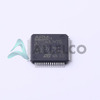
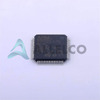
STM32L475RCT7 Image
Image may be representation.
See specifications for product details.
EXPRESS OPTION
Payment method

STM32L475RCT7 - STMicroelectronics

Manufacturer Part Number
STM32L475RCT7
Manufacturer
STMicroelectronics
Allelco Part Number
98D-STM32L475RCT7
Warranty
1 Year Allelco Warranty - Find out more
Stock Status:
42,350 pcs available, New & Original
Parts Description
IC MCU 32BIT 256KB FLASH 64LQFP
Package
64-LQFP (10x10)
Data sheet
STM32L475RCT7.pdf
RoHs Status
ROHS3 Compliant
Our certification
In stock: 42350
  • Unit Price: $5.813
  • Subtotal: $0.00

Want a better price?
Add to Cart and Submit RFQ now, we'll contact you immediately.

Quantity Unit Price Ext. Price
1+ $5.813 $5.81
The above prices does not include taxes and freight rates, which will be calculated on the order pages.


Specifications

STM32L475RCT7 Tech Specifications
STMicroelectronics - STM32L475RCT7 technical specifications, attributes, parameters and parts with similar specifications to STMicroelectronics - STM32L475RCT7

Product Attribute Attribute Value
Manufacturer STMicroelectronics
Voltage - Supply (Vcc/Vdd) 1.71V ~ 3.6V
Supplier Device Package 64-LQFP (10x10)
Speed 80MHz
Series STM32L4
RAM Size 128K x 8
Program Memory Type FLASH
Program Memory Size 256KB (256K x 8)
Peripherals Brown-out Detect/Reset, DMA, PWM, WDT
Package / Case 64-LQFP
Package Tray
Product Attribute Attribute Value
Oscillator Type Internal
Operating Temperature -40°C ~ 105°C (TA)
Number of I/O 51
Mounting Type Surface Mount
EEPROM Size -
Data Converters A/D 16x12b; D/A 2x12b
Core Size 32-Bit Single-Core
Core Processor ARM® Cortex®-M4
Connectivity CANbus, I²C, IrDA, LINbus, MMC/SD, QSPI, SAI, SPI, SWPMI, UART/USART, USB OTG
Base Product Number STM32L475

Environmental & Export Classifications

ATTRIBUTE DESCRIPTION
RoHs Status ROHS3 Compliant
Moisture Sensitivity Level (MSL) 3 (168 Hours)
REACH Status REACH Unaffected
ECCN 3A991A2
HTSUS 8542.31.0001

Frequently Asked Questions(FAQ)

How does the STM32L475RCT7 compare to other STM32L4 series microcontrollers in terms of power efficiency and peripheral integration for battery-powered IoT sensor nodes?
The STM32L475RCT7 stands out within the STM32L4 family due to its ultra-low-power ARM Cortex-M4 core operating at 80MHz with advanced sleep modes, achieving typical active current consumption around 190µA/MHz. While many STM32L4 variants offer similar low-power features, this model integrates a rich set of peripherals including USB OTG FS, QSPI, SAI, and CAN FD—features not always present in lower-pin-count L4 variants like the L476. For IoT applications requiring both energy efficiency and connectivity, the combination of 256KB flash, 128KB RAM, and extensive communication interfaces allows designers to consolidate multiple functions onto a single chip, reducing system cost and power draw compared to using discrete components or alternative MCU families.
What are the key thermal and electrical constraints when implementing the STM32L475RCT7 in high-temperature industrial environments exceeding 85°C?
Operating the STM32L475RCT7 above 85°C up to its maximum rated junction temperature of 105°C requires careful attention to both power dissipation and layout. With a supply voltage range of 1.71V to 3.6V and typical quiescent current in run mode around 2.8mA (at 3.3V and 80MHz), power density becomes significant in compact enclosures. Thermal resistance from junction to ambient (θJA) depends heavily on PCB copper area and airflow, but without external cooling, sustained operation near 105°C may require derating clock speed or disabling unused peripherals. Additionally, long-term reliability under thermal cycling should be evaluated, as repeated exposure beyond 85°C can accelerate electromigration in internal traces despite the device’s extended temperature grade.
Can the STM32L475RCT7 reliably drive capacitive loads on its GPIO pins when used for touch sensing or LCD interface without additional buffering?
Yes, the STM32L475RCT7’s GPIOs are designed to drive moderate capacitive loads directly, with output drivers capable of sourcing/sinking up to 25mA per pin and handling load capacitances typically under 50pF without oscillation or excessive rise/fall times. However, for higher-capacitance scenarios such as driving long traces or multiplexed touch sensors, enabling slew rate control via the OSPEEDR register helps prevent ringing. When interfacing with larger LCD panels requiring more than 50–100pF combined load, external level shifters or dedicated display drivers are recommended to avoid degraded signal integrity and increased power consumption during switching.
How does the internal voltage regulator configuration affect startup time and power delivery stability in STM32L475RCT7-based designs?
The STM32L475RCT7 supports two regulator modes: main regulator (MR) for full performance and low-power regulator (LPR) for reduced consumption. Using MR enables faster wake-up from stop modes (~2µs) and stable operation across the entire 1.71V–3.6V range, ideal for applications needing consistent I/O performance. Enabling LPR cuts standby current to ~0.4µA but increases wake-up latency to ~150µs and limits maximum CPU frequency during early boot phases. Designers must ensure adequate decoupling capacitance (typically 1µF ceramic + 10µF tantalum) near VDD to suppress transients caused by rapid peripheral switching, especially when using high-speed peripherals like USB or QSPI simultaneously.
In what scenarios would one choose the STM32L475RCT7 over the STM32L476RET6 despite having fewer package pins and no built-in Ethernet MAC?
The STM32L475RCT7 is preferred when minimizing BOM count and board real estate is critical, particularly in space-constrained devices that do not require wired Ethernet connectivity. Compared to the L476RET6, which adds an Ethernet MAC and PHY support, the L475RCT7 trades off wired networking capability for a smaller 64-LQFP package and slightly lower component count. Both share identical core specifications—including 256KB flash, 128KB RAM, and 80MHz Cortex-M4—but the L475 lacks the RMII interface and associated external PHY requirements. Thus, for battery-operated edge sensors, wireless gateway modules, or portable medical devices where USB or RF links suffice, the L475RCT7 offers sufficient performance with reduced complexity and cost.
What precautions should be taken when programming the STM32L475RCT7 via SWD if multiple boards share the same debug header?
When debugging multiple STM32L475RCT7 units connected to a single SWD interface (e.g., using a ST-Link), each target must have unique identification to prevent bus contention and unintended erasure of firmware. The device’s unique ID (96-bit UID) can be read programmatically, but hardware isolation is essential: either use individual SWD connectors with series resistors (e.g., 1kΩ on SWCLK and SWDIO lines) or implement a multiplexer circuit controlled by GPIOs to select one target at a time. Failure to isolate targets risks corrupting flash contents or resetting adjacent devices, especially during mass erase operations triggered by debug commands.
How does the STM32L475RCT7 handle brown-out detection thresholds during voltage ramp-up from deep power-down states?
The STM32L475RCT7 provides configurable brown-out reset (BOR) levels through the SYSCFG_CFGR1 register, supporting four threshold options between 1.7V and 2.8V depending on VDD range. During power-up from deep power-down, the BOR circuitry monitors VDD continuously and asserts reset until the supply exceeds the selected threshold, preventing erroneous code execution from unstable logic states. If the application uses variable supply rails (e.g., Li-ion batteries discharging below 2.0V), setting BOR Level 2 (around 2.0V) ensures robust operation while avoiding unnecessary resets during brief dips. Note that analog peripherals like ADC and DAC remain powered down in deep sleep unless explicitly retained via backup domain controls.
What impact does enabling dynamic voltage scaling (via PWR_CR1.VOS bits) have on performance and current consumption in STM32L475RCT7 designs?
Adjusting the voltage scale (VOS[2:0]) in the STM32L475RCT7 directly affects core voltage and thus performance versus power trade-offs. Scaling to VOS = 1 (1.2V nominal) allows full-speed operation at 80MHz but increases active current by roughly 20–30% compared to VOS = 3 (1.0V). Conversely, reducing VOS to 2 (1.1V) lowers dynamic power significantly at the expense of reduced maximum clock headroom (often capped at 64MHz). Designers must balance these settings based on real-time requirements: mission-critical tasks benefit from higher VOS for deterministic timing, while background logging or idle periods can exploit lower VOS to extend battery life by up to 40% in typical workloads.
Is it feasible to use the STM32L475RCT7’s USB OTG FS peripheral for both host and device roles in a self-powered embedded system?
Yes, the STM32L475RCT7 supports dual-role operation (DRP) on its USB OTG FS interface, allowing flexible switching between host and device modes. However, proper implementation requires hardware design considerations: VBUS sensing must comply with USB-IF standards, and pull-up/pull-down resistors must be managed correctly to avoid bus conflicts. Software-wise, the HAL library abstracts much of this complexity, but developers must handle enumeration delays and power management carefully—especially when drawing >100mA from VBUS as a host. Additionally, simultaneous use of high-speed peripherals like QSPI may compete for memory bandwidth, so DMA channels must be allocated judiciously to maintain real-time responsiveness.
How should engineers validate the STM32L475RCT7’s compliance with functional safety standards when used in automotive or medical applications?
Although the STM32L475RCT7 is not certified to ISO 26262 ASIL or IEC 61508 SIL levels out-of-the-box, developers can implement software mitigations to meet safety goals. Key strategies include using the built-in CRC engine for memory verification, enabling error-correcting code (ECC) on flash (if available in specific variants), and leveraging the window watchdog (WWDG) alongside independent watchdog (IWDG) for fault recovery. For critical systems, redundant execution paths and periodic memory scrubbing should be added. Always consult STMicroelectronics’ Application Notes AN4619 and AN4705 for detailed guidance on building safety-compliant designs around this MCU, and perform thorough fault injection testing under worst-case environmental conditions.
What are the implications of using the STM32L475RCT7’s internal HSI16 oscillator instead of an external crystal for timing-critical applications?
The STM32L475RCT7’s 16MHz HSI oscillator has a typical accuracy of ±1% over temperature and voltage variations, which may be insufficient for precise UART baud rates, USB frame timing, or synchronous communication protocols like SPI running at high speeds (>20MHz). While calibration via the RCC_CRRCR register improves short-term stability, long-term drift can accumulate, leading to data errors or protocol violations. For applications requiring <±0.5% frequency stability (e.g., USB Full-Speed operation or industrial RS-485 networks), an external 8–16MHz crystal with matched load capacitors is strongly recommended. Alternatively, the internal PLL can lock to HSE input, combining flexibility with improved accuracy.
How does the STM32L475RCT7’s QSPI peripheral interface with external serial NOR flash memories in quad I/O mode?
The STM32L475RCT7’s QUADSPI controller supports Octal/Quad SPI modes, enabling 4-bit bidirectional data transfers up to 80MHz (or 160MHz with DDR). When interfacing with modern serial NOR flashes (e.g., Winbond W25Q series), the MCU configures the AHB clock divider, sets correct instruction codes (e.g., 0xEB for Fast Read Quad I/O), and manages address shifting. Critical parameters include timing setup (tSHSL, tCHCX), dummy cycles (usually 8 for DDR reads at 80MHz), and proper CS deassertion sequencing. Misconfigured timing causes data corruption, especially at higher frequencies; thus, oscilloscope validation of SCK and IO lines during development is advised before firmware deployment.
What considerations apply when designing firmware update mechanisms for STM32L475RCT7-based devices using DFU (Device Firmware Upgrade) over USB?
Implementing reliable DFU via USB requires reserving part of the 256KB flash for bootloader storage (typically 16–32KB) and ensuring atomic write operations during updates. The STM32L475RCT7 supports System Memory boot mode, which loads ST’s pre-programmed DFU bootloader, but custom bootloaders offer greater control over versioning and rollback capabilities. Security measures such as flash write protection (WRP) zones and option byte configuration must be handled carefully—incorrectly locked sectors render devices unrecoverable without external programmers. Additionally, USB enumeration timing must account for reset delays post-update to prevent host-side timeout failures.
How does the STM32L475RCT7’s ADC module behave when sampling multiple channels simultaneously using scan mode with injected conversions enabled?
The STM32L475RCT7’s 16-channel, 12-bit ADC operates at up to 5.33Msps in single-shot mode but typically runs at 2.8Msps in continuous conversion mode. When using regular channel scanning with injected groups, the ADC alternates between sequences defined in ADCsQR and injected channels per ADC_SQR1 and ADC_JSQR registers. Simultaneous sampling accuracy depends on shared internal sample-and-hold capacitor settling time (~1µs), so interleaved conversions introduce minimal aperture jitter. However, switching between analog inputs rapidly can cause glitches due to charge redistribution effects; inserting small delays (≥1µs) between channel selections improves linearity. External anti-aliasing filters are essential when measuring slowly varying signals above 400kHz bandwidth.
What are the risks associated with using the STM32L475RCT7 in environments with high electromagnetic interference (EMI), and how can they be mitigated?
High-frequency switching on fast I/O lines (e.g., QSPI, USB) generates broadband EMI that can couple into sensitive analog circuits or interfere with nearby radios. The STM32L475RCT7 lacks integrated ferrite beads or shielding, so mitigation relies on PCB design practices: minimize loop areas for high-speed nets, use ground planes beneath signal layers, place decoupling caps within 5mm of VDD pins, and route differential pairs with matched lengths. Adding series termination resistors (22–100Ω) on outputs reduces reflections, while shielding cans or mu-metal enclosures may be needed in extreme cases. Compliance testing against EMC standards like EN 55032 often reveals issues only after prototype stage, so early simulation using tools like HyperLynx is advisable.
How does the STM32L475RCT7’s DMA controller interact with high-bandwidth peripherals like SAI or QSPI to avoid CPU bottlenecks?
The STM32L475RCT7 integrates a multi-channel DMA controller capable of transferring data between memory and peripherals without CPU intervention. For SAI audio streaming, DMA handles burst transfers from SRAM to SAI_TX FIFO at rates exceeding 1MB/s, freeing the Cortex-M4 for processing. Similarly, QSPI DMA enables continuous read/write operations from/to external memory buffers, preventing stalls during large file transfers. Proper configuration requires aligning buffer addresses to word boundaries, setting appropriate burst sizes (4-beat increments), and enabling circular mode for repetitive tasks. Misaligned buffers or incorrect FIFO thresholds lead to underruns/overruns, manifesting as audio dropouts or corrupted data—validated best by monitoring DMA interrupts and status flags during stress testing.
What steps are necessary to ensure reliable operation of the STM32L475RCT7 when subjected to rapid temperature transitions between -40°C and +105°C?
Rapid thermal cycling induces mechanical stress on solder joints and silicon die, potentially causing latent defects or electromigration. The STM32L475RCT7 is qualified for industrial temperature range (-40°C to +105°C), but long-term reliability requires adherence to JEDEC JESD22-A104 guidelines for thermal shock. Designers should avoid placing the MCU near heat sources, ensure uniform PCB thermal distribution, and use conformal coating sparingly to prevent moisture trapping. During qualification, accelerated life tests (ALT) simulating 1000+ cycles between -40°C and +105°C help uncover weak points. Firmware should also monitor internal temperature sensors (if available) and throttle performance preemptively during prolonged high-load events to reduce thermal stress.
Why might a designer choose the STM32L475RCT7 over a competing ARM Cortex-M4 MCU with similar specs but lacking integrated USB OTG functionality?
Even with comparable flash (256KB), RAM (128KB), and clock speed (80MHz), missing USB OTG eliminates the need for external transceiver chips and simplifies compliance with USB standards for battery-powered devices. The STM32L475RCT7’s integrated USB FS PHY reduces bill-of-materials cost by ~$0.50 per unit in volume production, while saving board space and lowering parasitic capacitance that degrades signal integrity. Furthermore, USB support enables direct firmware updates, HID input devices, or CDC virtual COM ports without additional protocol bridges. For applications prioritizing connectivity density and ease of certification, this integration outweighs marginal differences in raw computational throughput among Cortex-M4 alternatives.

Parts with Similar Specifications

The three parts on the right have similar specifications to STMicroelectronics STM32L475RCT7

Product Attribute STM32L475RGT7TR STM32L475RGT6 STM32L475RGT6TR STM32L475RET6
Part Number STM32L475RGT7TR STM32L475RGT6 STM32L475RGT6TR STM32L475RET6
Manufacturer STMicroelectronics STMicroelectronics STMicroelectronics STMicroelectronics
Core Processor - - - -
Operating Temperature - -40°C ~ 85°C 0°C ~ 70°C -40°C ~ 85°C
Base Product Number - DAC34H84 MAX500 ADS62P42
Speed - - - -
Program Memory Size - - - -
Voltage - Supply (Vcc/Vdd) - - - -
Connectivity - - - -
Series - - - -
Oscillator Type - - - -
Supplier Device Package - 196-NFBGA (12x12) 16-PDIP 64-VQFN (9x9)
Data Converters - - - -
RAM Size - - - -
Program Memory Type - - - -
Mounting Type - Surface Mount Through Hole Surface Mount
Number of I/O - - - -
Core Size - - - -
Package / Case - 196-LFBGA 16-DIP (0.300', 7.62mm) 64-VFQFN Exposed Pad
Peripherals - - - -
Package - Tape & Reel (TR) Tube Tape & Reel (TR)
EEPROM Size - - - -

STM32L475RCT7 Datasheet PDF

Download STM32L475RCT7 pdf datasheets and STMicroelectronics documentation for STM32L475RCT7 - STMicroelectronics.

PCN Packaging
2.73KHz.pdf
PCN Design/Specification
STM32L4y Datasheet Chg 7/Feb/2020.pdf Mult Dev Material Chgs 28/Feb/2023.pdf
PCN Assembly/Origin
STM8/STM32 10/Mar/2020.pdf
HTML Datasheet
STM32L475xx Datasheet.pdf

Customer Reviews

Evaluation: 10 Articles

  • Dani***alkerTech
    Jun 1, 2026

    Product works, but setup took more effort than expected. Once configured the MCU ran reliably, although documentation support felt older compared with newer platforms. Fine for maintenance projects.

  • Yuki***aka88
    May 26, 2026

    信号通信プロジェクトでこのRS-485トランシーバーを使用しました。設置は簡単で、長距離ケーブルでも通信は安定していました。消費電力も、以前使用していたものより低くなっています。

  • Stev***aker
    May 20, 2026

    Solid diode for power rectification. Works well in switching circuits.

  • Bran***Lewis
    May 11, 2026

    Compact FPGA with good performance. Suitable for basic signal processing tasks.

  • Oliv***arris
    May 7, 2026

    Reliable I/O expander. Works well in embedded control applications.

  • Jess***Jones
    Apr 17, 2026

    It offers good value for the price, and the specifications match the description. I’ve been using it for two days with no issues, and I’ll definitely buy it again if I need it in the future.

  • Mich***Smith
    Apr 17, 2026

    Shipping was on time, the component pins are neatly aligned, and I tested 10 of them with a multimeter—all readings were within the specified range. Highly recommended.

  • Aman***arris
    Apr 3, 2026

    It was great—the entire process, from placing the order to receiving the package, went very smoothly. The components were consistent, the price was fair, and I had a very pleasant shopping experience.

  • Mike***nch
    Apr 3, 2026

    Better than expected! The resistance and capacitance readings were spot-on, and it passed the test on the first try. The service was reliable, and the packaging was thoughtful—I highly recommend it.

  • Daic***K.
    Mar 23, 2026

    Very good. No issue after long time testing.

Write a Review

Your Email address will not be published.

Shipment

Delivery Time

In-stock items can be shipped within 24 hours. Some parts will be arranged for delivery within 1-2 days from the date all items arrive at our warehouse. And Allelco ships order once a day at about 17:00, except Sunday. Once the goods are shipped, the estimated delivery time depends on the shipping methods and Delivery destination. The table below shows are the logistic time for some common countries.

Delivery Cost

  1. Use your express account for shipment if you have one.
  2. Use our account for the shipment. Refer to the table below for the approximate charges.
(Different time frame / countries / package size has different price.)

Delivery Method

  1. Global Common Shipment by DHL / UPS / FedEx / TNT / EMS / SF we support.
  2. Others more shipping ways, please get in touch with your customer manager.

Common Countries Logistic Time Reference
Region Country Logistic Time(Day)
America United States 5
Brazil 7
Europe Germany 5
United Kingdom 4
Italy 5
Oceania Australia 6
New Zealand 5
Asia India 4
Japan 4
Middle East Israel 6
DHL & FedEx Shipment Charges Reference
Shipment charges(KG) Reference DHL(USD$)
0.00kg-1.00kg USD$30.00 - USD$60.00
1.00kg-2.00kg USD$40.00 - USD$80.00
2.00kg-3.00kg USD$50.00 - USD$100.00
Note:
The above table is for reference only. There may have some data bias for the uncontrollable factors.
Contact us if you have any questions.
  • QC (Quality Warranty)
  • Payment Support
  • Packaging
  • Certifications & Memberships

QC (Quality Warranty)

Allelco is committed to exceeding customer expectations through customer service excellence, order accuracy, and on-time delivery.
This is achieved through our commitment to the continual improvement of our processes, services, and products.


Strict quality inspection builds a solid foundation for electronic component quality.
  1. Visual inspection
  2. Performance testing and reliability verification
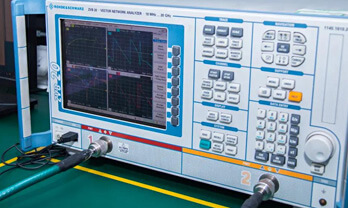
  3. Standardized full-process testing
  4. Precise control of every parameter
We eliminate defective components and ensure the stable operation of electronic devices through professional quality standards.

Payment Support

The payment method can be chosen from the methods shown below: Wire Transfer (T/T, Bank Transfer), Western Union, Credit card, PayPal.
  • HKBea
  • Paypal
  • MasterCard
  • Western-Union
  • VISA
Stable Delivery, Sincere Partnership — Your Faithful Supply Chain Partner
  • Efficient Supply Management
  • Cost-Saving Procurement
  • Fast Sourcing & Delivery
Contact us if you have any questions.

Packaging

Electrostatic Discharge Protection and Handling

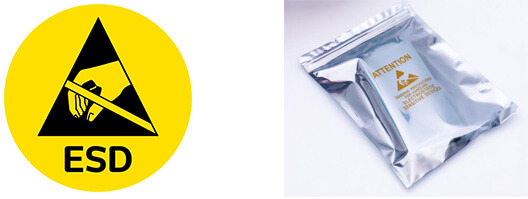
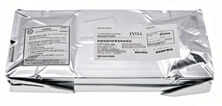
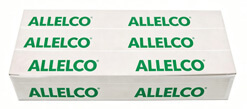
All electrostatic-sensitive components are handled in accordance with electrostatic discharge control procedures. The products are hermetically sealed in anti-static safe packaging to prevent electrostatic damage. Appropriate labeling is also applied for identification and traceability. This ensures product integrity during storage, handling and transportation.


ESD

Certifications & Memberships

Third-party certified, strict quality control. Our certification
  • ISO 9001: 2015
  • ISO 13485: 2016
  • ISO 14001: 2015
  • ISO 28000: 2007
  • ISO 45001: 2018
  • GB/T 27922-2011
  • SMTA
  • IPC
  • ESD
  • PSMA
STM32L475RCT7 Image

STM32L475RCT7

STMicroelectronics
98D-STM32L475RCT7

Want a better price? Add to Cart and Submit RFQ now, we'll contact you immediately.

0 RFQ
Shopping cart (0 Items)
It is empty.
Compare List (0 Items)
It is empty.
Feedback

Your feedback matters! At Allelco, we value the user experience and strive to improve it constantly.
Please share your comments with us via our feedback form, and we'll respond promptly.
Thank you for choosing Allelco.

Subject
E-mail
Comments
Captcha
Drag or click to upload file
Upload File
types: .xls, .xlsx, .doc, .docx, .jpg, .png and .pdf.
Max file size: 10MB