View All

Please refer to the English Version as our Official Version.Return

Europe
France(Français) Germany(Deutsch) Italy(Italia) Russian(русский) Poland(polski) Czech(Čeština) Luxembourg(Lëtzebuergesch) Netherlands(Nederland) Iceland(íslenska) Hungarian(Magyarország) Spain(español) Portugal(Português) Turkey(Türk dili) Bulgaria(Български език) Ukraine(Україна) Greece(Ελλάδα) Israel(עִבְרִית) Sweden(Svenska) Finland(Svenska) Finland(Suomi) Romania(românesc) Moldova(românesc) Slovakia(Slovenská) Denmark(Dansk) Slovenia(Slovenija) Slovenia(Hrvatska) Croatia(Hrvatska) Serbia(Hrvatska) Montenegro(Hrvatska) Bosnia and Herzegovina(Hrvatska) Lithuania(lietuvių) Spain(Português) Switzerland(Deutsch) United Kingdom(English)
Asia/Pacific
Japan(日本語) Korea(한국의) Thailand(ภาษาไทย) Malaysia(Melayu) Singapore(Melayu) Vietnam(Tiếng Việt) Philippines(Pilipino)
Africa, India and Middle East
United Arab Emirates(العربية) Iran(فارسی) Tajikistan(فارسی) India(हिंदी) Madagascar(malaɡasʲ)
South America / Oceania
New Zealand(Maori) Brazil(Português) Angola(Português) Mozambique(Português)
North America
United States(English) Canada(English) Haiti(Ayiti) Mexico(español)
HomeProductsIntegrated Circuits (ICs)Specialized ICsEP3C120F780I8N
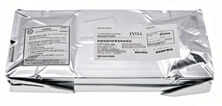
Image may be representation.
See specifications for product details.
EXPRESS OPTION
Payment method

EP3C120F780I8N -

Manufacturer Part Number
EP3C120F780I8N
Manufacturer
Allelco Part Number
32D-EP3C120F780I8N
Warranty
1 Year Allelco Warranty - Find out more
Stock Status:
17,660 pcs available, New & Original
Parts Description
DAC91001
Data sheet
-
Category
Integrated Circuits (ICs) > Specialized ICs
RoHs Status
Our certification
In stock: 17660

Required fields are indicated by an asterisk (*)
Please send RFQ, we will respond immediately.

Quantity

Specifications

EP3C120F780I8N Tech Specifications
- EP3C120F780I8N technical specifications, attributes, parameters and parts with similar specifications to - EP3C120F780I8N

Product Attribute Attribute Value
Part Number EP3C120F780I8N
Package DAC91001
Description DAC91001
Stock Condition Get 17660 pcs available quantity at Allelco
Payment PayPal / TT / Credit Card / Western Union
Allelco Certifications ESD / ISO 9001 / ISO 13485 / ISO 28000
Product Attribute Attribute Value
Manufacturer -
RoHs Status -
Warranty 100% Perfect Functions
Transport port Hong Kong
Shipping by DHL / FedEx / UPS / TNT / SF Express
RFQ Email info@allelco.com

Frequently Asked Questions(FAQ)

How does the EP3C120F780I8N compare to other Cyclone III FPGAs in terms of logic capacity and power consumption under typical 3.3V I/O conditions?
The EP3C120F780I8N offers approximately 119,976 LEs (Logic Elements) with a maximum junction temperature of 100°C, placing it among mid-to-high density devices within the Cyclone III family. When compared to lower-density variants like the EP3C50 or EP3C70, this model provides significantly higher logic capacity for complex digital designs. However, at full utilization, its static power consumption increases due to increased routing congestion and switching activity across more logic blocks. For 3.3V I/O operation, dynamic power scales with clock frequency and toggle rates; thus, designers must balance performance requirements against thermal and energy constraints when selecting between similar FPGAs.
What are the implications of using the EP3C120F780I8N with BGA packaging versus LQFP alternatives in high-reliability industrial applications?
The BGA-780 package on the EP3C120F780I8N presents challenges in hand-soldering and rework scenarios common in prototyping environments but offers superior signal integrity and higher pin count density compared to surface-mount alternatives such as LQFP. In industrial systems requiring extended temperature ranges (-40°C to +85°C operating), BGA’s reduced inductance and better thermal dissipation support stable operation. However, board-level inspection and repair become more difficult without specialized equipment, increasing risk during manufacturing if not properly managed through controlled fabrication processes.
Can the EP3C120F780I8N reliably operate at 250 MHz on global clock networks, and what design considerations apply?
While the EP3C120F780I8N supports up to 250 MHz on regional clocks, achieving this frequency globally depends heavily on routing delays, clock tree synthesis, and physical placement. Global clocks share resources across the device and are subject to greater skew; thus, meeting timing closure at 250 MHz requires careful constraint definition, dedicated clock regions, and sufficient slack margins. Designers should use Quartus II’s Timing Analyzer with worst-case corner simulations and ensure that input/output delays account for external component behavior before claiming reliable operation at this edge frequency.
How should I estimate power dissipation for the EP3C120F780I8N during FPGA boot-up and configuration phases?
Power estimation during configuration is critical since transient currents can exceed steady-state values. The EP3C120F780I8N draws peak current spikes during flash memory reads via the JTAG or AS interface. Typical inrush currents range from 150–300 mA depending on configuration speed and supply ramp rate. To avoid voltage droop, bypass capacitors should be sized to handle these transients. Use Intel’s Quartus PowerPlay Early Power Estimator tool with realistic configuration file sizes and clock frequencies to refine estimates beyond datasheet defaults.
Is it advisable to cascade multiple EP3C120F780I8N devices in a system requiring over 200k logic elements?
Cascading two EP3C120F780I8N devices could theoretically support larger designs, but practical limitations arise from inter-device communication latency, shared memory access contention, and synchronization overhead. Moreover, most design flows do not natively optimize for multi-FPGA partitioning unless explicitly supported by tools. Instead, consider whether architectural changes—such as pipelining, parallel processing units, or offloading control logic—can reduce reliance on additional silicon. If used, ensure robust clock distribution and reset sequencing to prevent metastability.
What impact does the -I8 speed grade have on timing closure for the EP3C120F780I8N compared to commercial-grade parts?
The -I8 speed grade denotes an industrial temperature range (-40°C to +100°C) and tighter propagation delay specifications than standard commercial grades (e.g., -C5). This results in slightly improved setup/hold margins and reduced skew under thermal stress, which benefits timing closure in harsh environments. However, -I8 devices may exhibit marginally slower maximum frequencies due to process variations optimized for reliability rather than speed. Designers targeting high-speed interfaces should still perform post-place-and-route analysis under both hot and cold corners.
How does the internal oscillator frequency of the EP3C120F780I8N compare to external crystal-based clock sources in terms of jitter and stability?
The internal phase-locked loop (PLL) in the EP3C120F780I8N provides reference clocks typically ranging from 10–100 MHz with moderate jitter (~50 ps RMS). While sufficient for many synchronous designs, external crystals offer far superior frequency stability (±10 ppm vs. ±200 ppm typical for internal oscillators) and lower phase noise. For precision timing applications like Ethernet PHYs or USB controllers, external oscillators remain preferable despite added board complexity and cost.
What precautions should be taken when routing differential pairs adjacent to VCCIO banks powered by 2.5V or 1.8V supplies in the EP3C120F780I8N?
Differential pairs near mixed-voltage I/O banks require careful attention to return path continuity and crosstalk mitigation. Since each VCCIO bank operates independently, crossing from a 3.3V to a 2.5V region without proper isolation can cause signal integrity issues. Maintain consistent ground stitching, minimize trace lengths under voltage regulators, and follow Intel-recommended routing rules for high-speed signals. Additionally, avoid routing sensitive analog traces near digital aggressors to preserve SNR in mixed-signal subsystems.
Can the EP3C120F780I8N support LVDS signaling at 1 Gbps per pair, and what layout constraints apply?
The EP3C120F780I8N includes dedicated high-speed transceivers capable of LVDS at up to 1 Gbps per pair, provided the correct I/O standards are selected in Quartus. Achieving this rate demands controlled impedance routing (typically 100 Ω differential), matched trace lengths (±50 mils), and minimal vias or stubs. Keep traces short (<5 cm), route them away from noisy digital nets, and ensure adequate decoupling near the FPGA. Simulate with IBIS models to verify eye diagram compliance before committing to PCB layout.
What is the expected lifetime of the EP3C120F780I8N under continuous operation at 85°C ambient temperature with average power draw of 3W?
Assuming no single-point failures and following Arrhenius acceleration models based on JEDEC guidelines, the EP3C120F780I8N has an estimated mean time between failures (MTBF) exceeding 10 years under these conditions. However, actual longevity depends on solder joint quality, thermal cycling history, and cumulative power dissipation. Continuous operation near Tj(max) reduces reliability margins; therefore, maintaining junction temperatures below 70°C improves long-term robustness, especially in sealed or poorly ventilated enclosures.
How does the number of embedded multipliers in the EP3C120F780I8N affect DSP block utilization when implementing FIR filters with large tap counts?
The EP3C120F780I8N contains 240 embedded multipliers organized into 60 dedicated DSP blocks. For wide FIR filters (e.g., >128 taps), resource sharing or time-multiplexed architectures may be required to fit within these limits. Alternatively, leverage the FPGA’s ability to implement multiply-accumulate operations using general-purpose logic, trading off area efficiency for flexibility. Proper HDL coding with pipelining ensures throughput meets application needs while respecting multiplier constraints.
Should I use internal or external memory for configuration storage with the EP3C120F780I8N, and why?
External flash memory (e.g., Micron N25Q series) is strongly recommended for production systems using the EP3C120F780I8N. Internal configuration RAM loses state upon power loss, necessitating reprogramming on boot. External serial flash enables instant restarts, supports multiple images for field updates, and simplifies system architecture. Ensure the chosen memory complies with JESD21-C standards and verify compatibility with the FPGA’s ASx master mode timing parameters.

Customer Reviews

Evaluation: 10 Articles

  • Nath***rooks
    Jun 11, 2026

    Installed this power component in a converter board. Output remained stable under different load conditions and thermal performance was better than expected.

  • Dani***alkerTech
    Jun 1, 2026

    Product works, but setup took more effort than expected. Once configured the MCU ran reliably, although documentation support felt older compared with newer platforms. Fine for maintenance projects.

  • Yuki***aka88
    May 26, 2026

    信号通信プロジェクトでこのRS-485トランシーバーを使用しました。設置は簡単で、長距離ケーブルでも通信は安定していました。消費電力も、以前使用していたものより低くなっています。

  • Stev***aker
    May 20, 2026

    Solid diode for power rectification. Works well in switching circuits.

  • Bran***Lewis
    May 11, 2026

    Compact FPGA with good performance. Suitable for basic signal processing tasks.

  • Oliv***arris
    May 7, 2026

    Reliable I/O expander. Works well in embedded control applications.

  • Jess***Jones
    Apr 17, 2026

    It offers good value for the price, and the specifications match the description. I’ve been using it for two days with no issues, and I’ll definitely buy it again if I need it in the future.

  • Mich***Smith
    Apr 17, 2026

    Shipping was on time, the component pins are neatly aligned, and I tested 10 of them with a multimeter—all readings were within the specified range. Highly recommended.

  • Aman***arris
    Apr 3, 2026

    It was great—the entire process, from placing the order to receiving the package, went very smoothly. The components were consistent, the price was fair, and I had a very pleasant shopping experience.

  • Mike***nch
    Apr 3, 2026

    Better than expected! The resistance and capacitance readings were spot-on, and it passed the test on the first try. The service was reliable, and the packaging was thoughtful—I highly recommend it.

Write a Review

Your Email address will not be published.

Shipment

Delivery Time

In-stock items can be shipped within 24 hours. Some parts will be arranged for delivery within 1-2 days from the date all items arrive at our warehouse. And Allelco ships order once a day at about 17:00, except Sunday. Once the goods are shipped, the estimated delivery time depends on the shipping methods and Delivery destination. The table below shows are the logistic time for some common countries.

Delivery Cost

  1. Use your express account for shipment if you have one.
  2. Use our account for the shipment. Refer to the table below for the approximate charges.
(Different time frame / countries / package size has different price.)

Delivery Method

  1. Global Common Shipment by DHL / UPS / FedEx / TNT / EMS / SF we support.
  2. Others more shipping ways, please get in touch with your customer manager.

Common Countries Logistic Time Reference
Region Country Logistic Time(Day)
America United States 5
Brazil 7
Europe Germany 5
United Kingdom 4
Italy 5
Oceania Australia 6
New Zealand 5
Asia India 4
Japan 4
Middle East Israel 6
DHL & FedEx Shipment Charges Reference
Shipment charges(KG) Reference DHL(USD$)
0.00kg-1.00kg USD$30.00 - USD$60.00
1.00kg-2.00kg USD$40.00 - USD$80.00
2.00kg-3.00kg USD$50.00 - USD$100.00
Note:
The above table is for reference only. There may have some data bias for the uncontrollable factors.
Contact us if you have any questions.
  • QC (Quality Warranty)
  • Payment Support
  • Packaging
  • Certifications & Memberships

QC (Quality Warranty)

Allelco is committed to exceeding customer expectations through customer service excellence, order accuracy, and on-time delivery.
This is achieved through our commitment to the continual improvement of our processes, services, and products.


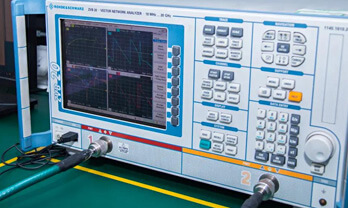
Strict quality inspection builds a solid foundation for electronic component quality.
  1. Visual inspection
  2. Performance testing and reliability verification
  3. Standardized full-process testing
  4. Precise control of every parameter
We eliminate defective components and ensure the stable operation of electronic devices through professional quality standards.

Payment Support

The payment method can be chosen from the methods shown below: Wire Transfer (T/T, Bank Transfer), Western Union, Credit card, PayPal.
  • HKBea
  • Paypal
  • MasterCard
  • Western-Union
  • VISA
Stable Delivery, Sincere Partnership — Your Faithful Supply Chain Partner
  • Efficient Supply Management
  • Cost-Saving Procurement
  • Fast Sourcing & Delivery
Contact us if you have any questions.

Packaging

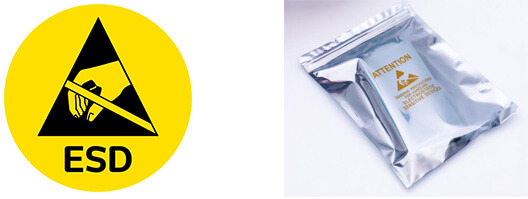
Electrostatic Discharge Protection and Handling

All electrostatic-sensitive components are handled in accordance with electrostatic discharge control procedures. The products are hermetically sealed in anti-static safe packaging to prevent electrostatic damage. Appropriate labeling is also applied for identification and traceability. This ensures product integrity during storage, handling and transportation.


ESD

Certifications & Memberships

Third-party certified, strict quality control. Our certification
  • ISO 9001: 2015
  • ISO 13485: 2016
  • ISO 14001: 2015
  • ISO 28000: 2007
  • ISO 45001: 2018
  • GB/T 27922-2011
  • SMTA
  • IPC
  • ESD
  • PSMA

EP3C120F780I8N


32D-EP3C120F780I8N

Want a better price? Add to Cart and Submit RFQ now, we'll contact you immediately.

0 RFQ
Shopping cart (0 Items)
It is empty.
Compare List (0 Items)
It is empty.
Feedback

Your feedback matters! At Allelco, we value the user experience and strive to improve it constantly.
Please share your comments with us via our feedback form, and we'll respond promptly.
Thank you for choosing Allelco.

Subject
E-mail
Comments
Captcha
Drag or click to upload file
Upload File
types: .xls, .xlsx, .doc, .docx, .jpg, .png and .pdf.
Max file size: 10MB