View All

Please refer to the English Version as our Official Version.Return

Europe
France(Français) Germany(Deutsch) Italy(Italia) Russian(русский) Poland(polski) Czech(Čeština) Luxembourg(Lëtzebuergesch) Netherlands(Nederland) Iceland(íslenska) Hungarian(Magyarország) Spain(español) Portugal(Português) Turkey(Türk dili) Bulgaria(Български език) Ukraine(Україна) Greece(Ελλάδα) Israel(עִבְרִית) Sweden(Svenska) Finland(Svenska) Finland(Suomi) Romania(românesc) Moldova(românesc) Slovakia(Slovenská) Denmark(Dansk) Slovenia(Slovenija) Slovenia(Hrvatska) Croatia(Hrvatska) Serbia(Hrvatska) Montenegro(Hrvatska) Bosnia and Herzegovina(Hrvatska) Lithuania(lietuvių) Spain(Português) Switzerland(Deutsch) United Kingdom(English)
Asia/Pacific
Japan(日本語) Korea(한국의) Thailand(ภาษาไทย) Malaysia(Melayu) Singapore(Melayu) Vietnam(Tiếng Việt) Philippines(Pilipino)
Africa, India and Middle East
United Arab Emirates(العربية) Iran(فارسی) Tajikistan(فارسی) India(हिंदी) Madagascar(malaɡasʲ)
South America / Oceania
New Zealand(Maori) Brazil(Português) Angola(Português) Mozambique(Português)
North America
United States(English) Canada(English) Haiti(Ayiti) Mexico(español)
HomeProductsIntegrated Circuits (ICs)Embedded - FPGAs (Field Programmable Gate Array)XC2VP7-5FG456I
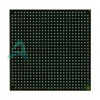
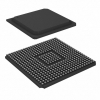
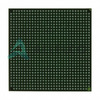
XC2VP7-5FG456I Image
Image may be representation.
See specifications for product details.
EXPRESS OPTION
Payment method

XC2VP7-5FG456I - AMD

Manufacturer Part Number
XC2VP7-5FG456I
Manufacturer
AMD Xilinx
Allelco Part Number
32D-XC2VP7-5FG456I
Warranty
1 Year Allelco Warranty - Find out more
Stock Status:
7,160 pcs available, New & Original
Parts Description
IC FPGA 248 I/O 456FBGA
Package
456-FBGA (23x23)
Data sheet
XC2VP7-5FG456I.pdf

PCN Obsolescence/ EOL

Mult Dev EOL 6/Jan/2020.pdf

Environmental Information

Xilinx REACH211 Cert.pdf
RoHs Status
 
Our certification
In stock: 7160

Required fields are indicated by an asterisk (*)
Please send RFQ, we will respond immediately.

Quantity

Specifications

XC2VP7-5FG456I Tech Specifications
AMD - XC2VP7-5FG456I technical specifications, attributes, parameters and parts with similar specifications to AMD - XC2VP7-5FG456I

Product Attribute Attribute Value
Manufacturer AMD Xilinx
Voltage - Supply 1.425V ~ 1.575V
Total RAM Bits 811008
Supplier Device Package 456-FBGA (23x23)
Series Virtex®-II Pro
Package / Case 456-BBGA
Package Tray
Product Attribute Attribute Value
Operating Temperature -40°C ~ 100°C (TJ)
Number of Logic Elements/Cells 11088
Number of LABs/CLBs 1232
Number of I/O 248
Mounting Type Surface Mount
Base Product Number XC2VP7

Environmental & Export Classifications

ATTRIBUTE DESCRIPTION
RoHs Status RoHS non-compliant
Moisture Sensitivity Level (MSL) 3 (168 Hours)
REACH Status REACH Unaffected
ECCN 3A991D
HTSUS 8542.39.0001

Parts Introduction

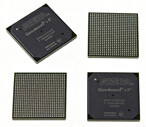
XC2VP7-5FG456I Image
XC2VP7-5FG456I (1)

Manufacturer Part Number

XC2VP7-5FG456I

Manufacturer

Xilinx

Introduction

Xilinx Virtex-II Pro FPGA integrated circuit for advanced embedded applications

Product Features and Performance

1232 LABs/CLBs for logic processing

11088 Logic Elements/Cells for complex design implementation

811008 Total RAM Bits for high-capacity memory storage

248 I/O pins for versatile connectivity

Surface Mount technology compatible

456-BBGA package for robust physical integration

Supports a wide range of supply voltage (1.425V ~ 1.575V)

Product Advantages

High logic capacity for demanding applications

Extensive memory resources

High pin count for interfacing flexibility

Operational across wide temperature range -40°C ~ 100°C

Key Technical Parameters

Total Number of LABs/CLBs: 1232

Logic Elements/Cells: 11088

Total RAM Bits: 811008

Number of I/O: 248

Voltage - Supply Range: 1.425V ~ 1.575V

Operating Temperature Range: -40°C ~ 100°C

Quality and Safety Features

Built-in features for enhanced reliability and performance

Compliance with industry quality and safety standards

Compatibility

Compatible with various design environments due to high I/O count

Application Areas

Suitable for complex, embedded processing in telecommunications, industrial, and more

Product Lifecycle

Obsolete status with potential limited availability

Consider alternatives for replacements or upgrades

Several Key Reasons to Choose This Product

Highly integrated FPGA solution

Robust performance over an extended temperature range

Ideal for complex digital processing tasks

Xilinx support and reliability
Frequently Asked Questions(FAQ)

How does the XC2VP7-5FG456I compare to other Virtex-II Pro FPGAs in terms of logic element count and RAM capacity for high-speed signal processing applications?
The XC2VP7-5FG456I contains 11,088 logic elements and 811,008 total RAM bits, which positions it as a mid-range device within the Virtex-II Pro family. While larger devices like the XC2VP20 offer significantly more logic resources and block RAM, the XC2VP7 provides sufficient fabric density for complex digital signal processing tasks such as FIR filtering or FFT implementations without requiring excessive routing congestion. Its balanced architecture makes it suitable for systems where moderate parallelism is needed alongside embedded memory, though designers must account for routing overhead when implementing wide data paths.
What are the implications of the XC2VP7-5FG456I’s operating voltage range (1.425V to 1.575V) on power supply design and noise sensitivity in industrial environments?
Operating at approximately 1.5V (±10%) means the XC2VP7-5FG456I consumes relatively low static power compared to modern FPGAs but demands tightly regulated supplies due to its narrow margin. In industrial settings with temperature swings from -40°C to 100°C, voltage regulation becomes critical—even small deviations can cause timing violations or functional failure. Designers should use low-noise LDOs or well-filtered switching regulators with adequate bypass capacitance at package pins to maintain stability. Additionally, this voltage level is incompatible with 3.3V I/O standards, necessitating level shifting if interfacing legacy components.
Can the XC2VP7-5FG456I support LVDS signaling reliably, and what layout considerations apply given its 456-pin BGA packaging?
Yes, the XC2VP7-5FG456I supports LVDS via its high-speed differential I/O pairs, which are essential for backplane or point-to-point serial links up to several hundred Mbps. However, achieving reliable performance requires careful PCB stackup planning: controlled impedance traces, matched lengths for differential pairs, and minimized via stubs. Given the 23x23 mm FBGA footprint, layer assignment must prioritize return path integrity—typically placing ground planes adjacent to signal layers—and avoid crossing splits under the FPGA die. Thermal vias under the package also help manage junction temperature during sustained operation.
How should clock management be implemented on the XC2VP7-5FG456I to minimize skew and jitter in time-critical applications?
The Virtex-II Pro architecture includes dedicated global clock buffers (BUFG) that reduce skew across the XC2VP7-5FG456I’s 248 I/Os and internal logic blocks. For multi-clock domains, using regional clocking resources and synchronizers mitigates metastability risks. Designers should limit fanout of high-frequency clocks through general routing and instead leverage the FPGA’s built-in DLLs or MMCM equivalents (if available in later revisions) to deskew external references. Careful placement of crystal oscillators close to the IC with short, shielded traces further reduces jitter propagation.
What trade-offs exist between using block RAM versus distributed RAM on the XC2VP7-5FG456I when implementing large lookup tables?
Block RAM on the XC2VP7-5FG456I offers 811 Kb of dedicated memory organized into 1,008 kilobits, ideal for wide, deep tables such as sine/cosine generators or communication protocol buffers. Distributed RAM uses flip-flops scattered across CLBs, consuming logic resources instead of block RAM. For tables exceeding 1K entries or requiring dual-port access, block RAM is more area-efficient. However, for small, frequently accessed structures (<64 bits), distributed RAM avoids block RAM utilization and frees up routing resources—though it increases LUT usage by roughly 1:1 ratio.
Is the XC2VP7-5FG456I suitable for aerospace or defense-grade applications, and what limitations apply regarding radiation tolerance?
The XC2VP7-5FG456I is not inherently radiation-hardened; it uses standard CMOS processes vulnerable to single-event upsets (SEUs). In space or high-radiation environments, mitigation techniques such as triple modular redundancy (TMR), scrubbing, or EDAC-protected configuration memory are required. Commercial-grade parts like this may meet MIL-PRF-38535 only after qualification testing—but AMD (formerly Xilinx) typically does not offer commercial devices under that spec. Therefore, while usable in non-radiated zones of avionics or military systems, full compliance would demand additional hardening beyond the part itself.
How does the Moisture Sensitivity Level (MSL) rating of 3 for the XC2VP7-5FG456I affect handling procedures during assembly?
With an MSL of 3, the XC2VP7-5FG456I has a floor life of 168 hours at <30°C / 60% RH before baking is recommended prior to reflow soldering. This aligns with JEDEC J-STD-020 guidelines for lead-free processes. Manufacturers must track time since opening the moisture barrier pouch and either bake the components or assemble them within the window. Failure to adhere risks popcorning during thermal cycling, potentially damaging the 456-BBGA solder joints—especially problematic given the fine pitch (0.8mm ball diameter).
What impact does RoHS non-compliance have on procurement and end-of-life planning for systems using the XC2VP7-5FG456I?
As a RoHS non-compliant device, the XC2VP7-5FG456I contains restricted substances above threshold limits, likely due to lead in the package interconnects or tin-lead plating remnants. This restricts its use in EU-regulated equipment unless exempt under specific clauses (e.g., medical devices). Procurement teams must verify exemption status and consider obsolescence timelines—commercial FPGAs often transition to RoHS-compliant variants years before discontinuation. End-of-life strategies should include migration planning to newer families like Versal or UltraScale+ if long-term compliance is mandated.
How many I/O banks does the XC2VP7-5FG456I support, and how does this influence mixed-voltage interface design?
Although the datasheet specifies 248 I/O pins, the actual number of independent voltage-selectable banks depends on package configuration and pinout constraints. Typically, the XC2VP7-5FG456I allows multiple I/O standards per bank, but each bank operates at a common core-supplied voltage (1.5V). Only select I/Os may support higher voltages via separate VCCO pins. Thus, interfacing both 1.5V and 2.5V peripherals requires careful bank assignment to avoid overvoltage stress on inputs—designers must consult the pinout map to allocate compatible signals to shared VCCO rails.
What configuration memory architecture does the XC2VP7-5FG456I employ, and what are the implications for startup behavior and fault recovery?
The Virtex-II Pro series uses a one-time programmable (OTP) configuration flash or external SPI/parallel flash depending on mode. The XC2VP7-5FG456I supports master/slave modes via SelectMAP or JTAG. Upon power-up, it loads configuration from external memory, introducing several hundred milliseconds of startup delay. Configuration SRAM is volatile, so reconfiguration occurs after every reset unless backed by persistent storage. Error detection is limited; SEU-induced corruption can corrupt logic states silently unless augmented with runtime monitoring logic.
How does the XC2VP7-5FG456I perform in terms of power consumption under typical load conditions compared to newer 65nm or 40nm FPGAs?
Built on a 150nm process node, the XC2VP7-5FG456I exhibits higher dynamic power than contemporary FPGAs—estimated at 3–5W under full utilization. While absolute numbers seem modest, efficiency metrics (logic ops per watt) are lower due to larger transistors and less optimized routing. In battery-powered or thermally constrained designs, this may force trade-offs such as reduced clock speeds or disabling unused blocks. However, for benchtop test equipment or industrial controllers with ample cooling, its power profile remains manageable.
Are there known timing closure challenges when implementing high-speed transceivers on the XC2VP7-5FG456I, and how can they be addressed?
The Virtex-II Pro lacks integrated transceivers; high-speed serial links rely on parallel LVDS or SERDES macros built from discrete logic. On the XC2VP7-5FG456I, achieving consistent timing across these custom SERDES implementations demands meticulous constraint definition in XST or PlanAhead. Clock domain crossings, input/output delays, and false paths must all be explicitly annotated. Without hard IP cores, resource sharing and routing congestion become dominant closure bottlenecks—especially given its moderate LAB count (1,232) and dense I/O layout.
What alternatives should be considered if the XC2VP7-5FG456I reaches end-of-life, and how do replacement candidates differ functionally?
Replacement candidates include the Spartan-3 or newer Artix/Series 7 families, though architectural differences matter. Unlike the Virtex-II Pro’s ASIC-like structure, newer FPGAs use look-up table (LUT) fabrics with better scalability. Migration from the XC2VP7-5FG456I requires RTL modernization, possibly replacing proprietary megafunctions with Vivado IP, and reassessing timing budgets due to improved cell densities. Pin compatibility is rare; most replacements require board redesign. Long-term, migrating to cloud-programmable or hardened solutions may offer better lifecycle assurance than legacy SRAM-based FPGAs.
How does the package size and thermal resistance of the 456-FBGA affect heat dissipation for the XC2VP7-5FG456I in sealed enclosures?
At 23x23 mm with 0.8mm pitch, the FBGA package presents thermal challenges in confined spaces. Junction-to-ambient thermal resistance (θJA) is high (~25°C/W estimated), meaning even 2W of power can raise TJ to 90°C at 40°C ambient—approaching the 100°C maximum. Without heatsinks or forced airflow, thermal throttling or reliability degradation occurs. Designers should minimize active switching activity, use sleep modes, and ensure adequate copper pour on inner layers connected to ground/power planes to enhance conduction through the substrate.
Can the XC2VP7-5FG456I implement PCI Express endpoints, and what workarounds exist if native support is unavailable?
No, the Virtex-II Pro architecture predates PCIe integration. Implementing PCIe requires external PHY chips (e.g., PLX bridges) or soft-core solutions consuming substantial FPGA resources. On the XC2VP7-5FG456I, a soft PCIe endpoint would occupy hundreds of CLBs and block RAM, leaving little room for application logic. For low-bandwidth needs, USB or Ethernet MACs implemented via soft IP may suffice, albeit with higher latency and complexity than hard IP in modern FPGAs.
What role do I/O delay chains play in achieving precise timing alignment on the XC2VP7-5FG456I, and how are they calibrated?
The Virtex-II Pro includes programmable input/output delay cells allowing nanosecond-level adjustment of signal arrival times. These delay chains compensate for trace length mismatches or PCB skew on the XC2VP7-5FG456I’s 248 I/Os. Calibration typically involves iterative synthesis and implementation passes, adjusting DELAY values until hold-time requirements are met without violating setup margins. However, resolution is coarse (~50ps steps), and excessive use increases routing complexity—best applied selectively to critical paths rather than blanket deployment.
How does the absence of on-chip termination affect high-speed I/O design when using the XC2VP7-5FG456I?
Unlike newer FPGAs with configurable ODT, the XC2VP7-5FG456I requires external resistors for source or sink termination on differential pairs. This increases BOM cost and board real estate but offers flexibility. Proper termination matching characteristic impedance (usually 100Ω for LVDS) is essential to prevent reflections at speeds beyond 300 Mbps. Designers must carefully route stubs and avoid discontinuities near the FPGA pads, particularly given the dense pinout of the 456-ball array.
What tools and constraints are necessary to achieve predictable performance when targeting the XC2VP7-5FG456I for safety-critical systems?
Achieving deterministic behavior requires IEC 61508 or ISO 26262 compliance efforts: static timing analysis with worst-case corner models, formal verification of control logic, and rigorous code reviews. Synthesis scripts must disable auto-optimization features that introduce variability. Constraints files should define explicit clocks, input/output delays, and multicycle paths. Given the lack of built-in safety features, external watchdog circuits and redundant state machines are often added outside the FPGA fabric to meet functional safety standards.

Parts with Similar Specifications

The three parts on the right have similar specifications to AMD XC2VP7-5FG456I

Product Attribute XC2VP7-5FGG456I XC2VP7-5FGG456C XC2VP7-5FG456C XC2VP7-5FFG896I
Part Number XC2VP7-5FGG456I XC2VP7-5FGG456C XC2VP7-5FG456C XC2VP7-5FFG896I
Manufacturer AMD AMD AMD Xilinx
Total RAM Bits - - - -
Number of LABs/CLBs - - - -
Base Product Number - DAC34H84 MAX500 ADS62P42
Mounting Type - Surface Mount Through Hole Surface Mount
Supplier Device Package - 196-NFBGA (12x12) 16-PDIP 64-VQFN (9x9)
Number of I/O - - - -
Number of Logic Elements/Cells - - - -
Package - Tape & Reel (TR) Tube Tape & Reel (TR)
Series - - - -
Operating Temperature - -40°C ~ 85°C 0°C ~ 70°C -40°C ~ 85°C
Voltage - Supply - - - -
Package / Case - 196-LFBGA 16-DIP (0.300', 7.62mm) 64-VFQFN Exposed Pad

XC2VP7-5FG456I Datasheet PDF

Download XC2VP7-5FG456I pdf datasheets and AMD documentation for XC2VP7-5FG456I - AMD.

Datasheets
Virtex-II Pro, Pro X.pdf
PCN Obsolescence/ EOL
Mult Dev EOL 6/Jan/2020.pdf
Environmental Information
Xilinx REACH211 Cert.pdf

Customer Reviews

Evaluation: 10 Articles

  • Nath***rooks
    Jun 11, 2026

    Installed this power component in a converter board. Output remained stable under different load conditions and thermal performance was better than expected.

  • Dani***alkerTech
    Jun 1, 2026

    Product works, but setup took more effort than expected. Once configured the MCU ran reliably, although documentation support felt older compared with newer platforms. Fine for maintenance projects.

  • Yuki***aka88
    May 26, 2026

    信号通信プロジェクトでこのRS-485トランシーバーを使用しました。設置は簡単で、長距離ケーブルでも通信は安定していました。消費電力も、以前使用していたものより低くなっています。

  • Stev***aker
    May 20, 2026

    Solid diode for power rectification. Works well in switching circuits.

  • Bran***Lewis
    May 11, 2026

    Compact FPGA with good performance. Suitable for basic signal processing tasks.

  • Oliv***arris
    May 7, 2026

    Reliable I/O expander. Works well in embedded control applications.

  • Jess***Jones
    Apr 17, 2026

    It offers good value for the price, and the specifications match the description. I’ve been using it for two days with no issues, and I’ll definitely buy it again if I need it in the future.

  • Mich***Smith
    Apr 17, 2026

    Shipping was on time, the component pins are neatly aligned, and I tested 10 of them with a multimeter—all readings were within the specified range. Highly recommended.

  • Aman***arris
    Apr 3, 2026

    It was great—the entire process, from placing the order to receiving the package, went very smoothly. The components were consistent, the price was fair, and I had a very pleasant shopping experience.

  • Mike***nch
    Apr 3, 2026

    Better than expected! The resistance and capacitance readings were spot-on, and it passed the test on the first try. The service was reliable, and the packaging was thoughtful—I highly recommend it.

Write a Review

Your Email address will not be published.

Shipment

Delivery Time

In-stock items can be shipped within 24 hours. Some parts will be arranged for delivery within 1-2 days from the date all items arrive at our warehouse. And Allelco ships order once a day at about 17:00, except Sunday. Once the goods are shipped, the estimated delivery time depends on the shipping methods and Delivery destination. The table below shows are the logistic time for some common countries.

Delivery Cost

  1. Use your express account for shipment if you have one.
  2. Use our account for the shipment. Refer to the table below for the approximate charges.
(Different time frame / countries / package size has different price.)

Delivery Method

  1. Global Common Shipment by DHL / UPS / FedEx / TNT / EMS / SF we support.
  2. Others more shipping ways, please get in touch with your customer manager.

Common Countries Logistic Time Reference
Region Country Logistic Time(Day)
America United States 5
Brazil 7
Europe Germany 5
United Kingdom 4
Italy 5
Oceania Australia 6
New Zealand 5
Asia India 4
Japan 4
Middle East Israel 6
DHL & FedEx Shipment Charges Reference
Shipment charges(KG) Reference DHL(USD$)
0.00kg-1.00kg USD$30.00 - USD$60.00
1.00kg-2.00kg USD$40.00 - USD$80.00
2.00kg-3.00kg USD$50.00 - USD$100.00
Note:
The above table is for reference only. There may have some data bias for the uncontrollable factors.
Contact us if you have any questions.
  • QC (Quality Warranty)
  • Payment Support
  • Packaging
  • Certifications & Memberships

QC (Quality Warranty)

Allelco is committed to exceeding customer expectations through customer service excellence, order accuracy, and on-time delivery.
This is achieved through our commitment to the continual improvement of our processes, services, and products.


Strict quality inspection builds a solid foundation for electronic component quality.
  1. Visual inspection
  2. Performance testing and reliability verification
  3. Standardized full-process testing
  4. Precise control of every parameter
We eliminate defective components and ensure the stable operation of electronic devices through professional quality standards.

Payment Support

The payment method can be chosen from the methods shown below: Wire Transfer (T/T, Bank Transfer), Western Union, Credit card, PayPal.
  • HKBea
  • Paypal
  • MasterCard
  • Western-Union
  • VISA
Stable Delivery, Sincere Partnership — Your Faithful Supply Chain Partner
  • Efficient Supply Management
  • Cost-Saving Procurement
  • Fast Sourcing & Delivery
Contact us if you have any questions.

Packaging

Electrostatic Discharge Protection and Handling

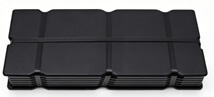
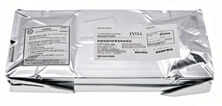
All electrostatic-sensitive components are handled in accordance with electrostatic discharge control procedures. The products are hermetically sealed in anti-static safe packaging to prevent electrostatic damage. Appropriate labeling is also applied for identification and traceability. This ensures product integrity during storage, handling and transportation.


ESD

Certifications & Memberships

Third-party certified, strict quality control. Our certification
  • ISO 9001: 2015
  • ISO 13485: 2016
  • ISO 14001: 2015
  • ISO 28000: 2007
  • ISO 45001: 2018
  • GB/T 27922-2011
  • SMTA
  • IPC
  • ESD
  • PSMA
XC2VP7-5FG456I Image

XC2VP7-5FG456I

AMD
32D-XC2VP7-5FG456I

Want a better price? Add to Cart and Submit RFQ now, we'll contact you immediately.

0 RFQ
Shopping cart (0 Items)
It is empty.
Compare List (0 Items)
It is empty.
Feedback

Your feedback matters! At Allelco, we value the user experience and strive to improve it constantly.
Please share your comments with us via our feedback form, and we'll respond promptly.
Thank you for choosing Allelco.

Subject
E-mail
Comments
Captcha
Drag or click to upload file
Upload File
types: .xls, .xlsx, .doc, .docx, .jpg, .png and .pdf.
Max file size: 10MB