View All

Please refer to the English Version as our Official Version.Return

Europe
France(Français) Germany(Deutsch) Italy(Italia) Russian(русский) Poland(polski) Czech(Čeština) Luxembourg(Lëtzebuergesch) Netherlands(Nederland) Iceland(íslenska) Hungarian(Magyarország) Spain(español) Portugal(Português) Turkey(Türk dili) Bulgaria(Български език) Ukraine(Україна) Greece(Ελλάδα) Israel(עִבְרִית) Sweden(Svenska) Finland(Svenska) Finland(Suomi) Romania(românesc) Moldova(românesc) Slovakia(Slovenská) Denmark(Dansk) Slovenia(Slovenija) Slovenia(Hrvatska) Croatia(Hrvatska) Serbia(Hrvatska) Montenegro(Hrvatska) Bosnia and Herzegovina(Hrvatska) Lithuania(lietuvių) Spain(Português) Switzerland(Deutsch) United Kingdom(English)
Asia/Pacific
Japan(日本語) Korea(한국의) Thailand(ภาษาไทย) Malaysia(Melayu) Singapore(Melayu) Vietnam(Tiếng Việt) Philippines(Pilipino)
Africa, India and Middle East
United Arab Emirates(العربية) Iran(فارسی) Tajikistan(فارسی) India(हिंदी) Madagascar(malaɡasʲ)
South America / Oceania
New Zealand(Maori) Brazil(Português) Angola(Português) Mozambique(Português)
North America
United States(English) Canada(English) Haiti(Ayiti) Mexico(español)
HomeProductsIntegrated Circuits (ICs)Specialized ICsEPF10K70RC240
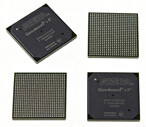
Image may be representation.
See specifications for product details.
EXPRESS OPTION
Payment method

EPF10K70RC240 - Altera (Intel)

Manufacturer Part Number
EPF10K70RC240
Manufacturer
Altera (Intel)
Allelco Part Number
32D-EPF10K70RC240
Warranty
1 Year Allelco Warranty - Find out more
Stock Status:
13,620 pcs available, New & Original
Parts Description
DAC91001
Data sheet
-
Category
Integrated Circuits (ICs) > Specialized ICs
RoHs Status
Our certification
In stock: 13620

Required fields are indicated by an asterisk (*)
Please send RFQ, we will respond immediately.

Quantity

Specifications

EPF10K70RC240 Tech Specifications
Altera (Intel) - EPF10K70RC240 technical specifications, attributes, parameters and parts with similar specifications to Altera (Intel) - EPF10K70RC240

Product Attribute Attribute Value
Part Number EPF10K70RC240
Package DAC91001
Description DAC91001
Stock Condition Get 13620 pcs available quantity at Allelco
Payment PayPal / TT / Credit Card / Western Union
Allelco Certifications ESD / ISO 9001 / ISO 13485 / ISO 28000
Product Attribute Attribute Value
Manufacturer Altera (Intel)
RoHs Status -
Warranty 100% Perfect Functions
Transport port Hong Kong
Shipping by DHL / FedEx / UPS / TNT / SF Express
RFQ Email info@allelco.com

Frequently Asked Questions(FAQ)

How does the pin configuration of the EPF10K70RC240 influence PCB layout considerations in high-speed digital designs?
The EPF10K70RC240 uses a 240-pin Quad Flat Package (QFP), which provides a balanced trade-off between pin density and thermal dissipation. With pins distributed across all four sides, designers must carefully manage signal return paths to minimize loop inductance, especially for clock and high-speed I/O signals. Routing adjacent power and ground pins can help stabilize supply voltages and reduce noise coupling. The QFP’s moderate footprint also allows for compact board layouts, but requires precise placement to avoid crosstalk in dense interconnect environments.
What are the key differences between the EPF10K70RC240 and similar mid-range FPGA offerings from other manufacturers when considering power efficiency in battery-powered applications?
While the EPF10K70RC240 offers moderate logic capacity and moderate power consumption typical of mid-tier FPGAs, it lacks the advanced low-power modes found in modern CPLDs or newer-generation FPGAs such as Xilinx Spartan-6 or Intel Cyclone IV. For battery-powered systems, the EPF10K70RC240 may require careful dynamic power management due to higher static leakage compared to devices with deep sleep states. Designers should evaluate total power draw under typical workloads, as the EPF10K70RC240's architecture is optimized more for cost than ultra-low-power operation.
Can the EPF10K70RC240 be used in automotive-grade temperature environments without additional qualification?
No. The EPF10K70RC240 is not specified for automotive temperature ranges beyond standard industrial grades. Operating above -40°C up to +85°C may be possible depending on application, but full AEC-Q100 compliance is not guaranteed. In automotive systems requiring extended temperature operation (-40°C to +125°C), alternative parts with qualified reliability profiles should be selected to meet functional safety and longevity requirements.
What design constraints arise from the EPF10K70RC240’s internal clock architecture when implementing synchronous communication protocols like SPI or I2C?
The EPF10K70RC240 relies on internal phase-locked loops (PLLs) derived from a single reference clock input. This limits flexibility in generating multiple independent clock domains. When driving multiple SPI slaves or managing concurrent I2C buses, designers must account for PLL lock times and jitter propagation. Clock skew across logic blocks can exceed 2–3 ns, requiring careful timing closure in synchronous designs to maintain setup and hold margins at frequencies above 50 MHz.
How does the logic cell count of the EPF10K70RC240 compare to other ALTERA MAX series devices in terms of scalability for medium-complexity control logic?
The EPF10K70RC240 contains approximately 70,000 usable logic elements, positioning it between the MAX 3000A (lower density) and MAX 7000B (higher density) families. Compared to the MAX 7000B family, the EPF10K70RC240 offers fewer routing resources and less flexible macrocell structure, making it less suitable for designs requiring large state machines or wide data paths. However, for glue logic, state machines under 100 states, or interface bridging tasks, it provides sufficient capacity without the overhead of larger FPGAs.
What precautions should be taken during configuration loading of the EPF10K70RC240 to ensure reliable startup in field-deployed systems?
The EPF10K70RC240 supports passive serial configuration via JTAG or active serial mode using an external flash. In field applications, voltage glitches on the configuration pin (nCONFIG) can cause partial or corrupted reconfiguration. Implementing a pull-up resistor on nCONFIG and ensuring clean VCCIO ramp-up before configuration reduces reset anomalies. Additionally, verifying checksums or CRC validation in user code after configuration improves robustness against bit errors in non-volatile memory.
Is the EPF10K70RC240 suitable for real-time signal processing applications requiring deterministic latency?
Not ideally suited. While the EPF10K70RC240 can implement basic FIR filters or simple DSP functions, its routing delays and lack of dedicated hardware multipliers limit predictability at higher data rates. Deterministic response times below 100 ns are difficult to guarantee due to variable routing congestion. For applications demanding tight timing control—such as motor feedback loops or sensor fusion—dedicated DSP blocks or microcontrollers are preferable over general-purpose FPGA logic.
How does the thermal performance of the EPF10K70RC240 affect long-term reliability in sealed enclosures?
As a QFP package, the EPF10K70RC240 has limited heat dissipation capability. Under sustained 80% utilization, junction temperatures may rise above 70°C even with minimal airflow. In sealed enclosures, this can accelerate electromigration and reduce mean time between failures (MTBF). Thermal vias under the package and careful PCB copper allocation are essential. Monitoring die temperature through internal sensors or external thermistors helps prevent thermal runaway in enclosed systems.
What are the implications of using the EPF10K70RC240 in multi-device cascaded designs where configuration must occur in sequence?
The EPF10K70RC240 supports only one active device per configuration bus unless additional addressing logic is implemented. Cascading multiple EPF10K70RC240s requires either individual JTAG chains or a custom configuration scheme with addressable configuration ROMs. Without proper sequencing control, one device may interfere with another during power-up, leading to failed programming or incorrect initialization. This limits scalability in modular systems unless augmented with external configuration managers.
How does the I/O bank structure of the EPF10K70RC240 impact mixed-signal design integration?
The EPF10K70RC240 divides its I/O into multiple banks, each supporting different voltage levels (e.g., 3.3V, 2.5V, 1.8V). This allows flexible interfacing with legacy components but introduces challenges in cross-talk between analog and digital signals if not isolated. Adjacent banks sharing common power planes can couple noise, particularly in ADC/DAC interface circuits. Careful assignment of high-impedance or analog signals to dedicated banks minimizes interference and maintains signal integrity.
What migration path exists from the EPF10K70RC240 to newer ALTERA FPGA families while maintaining pin compatibility?
There is no direct pin-compatible successor within the older MAX or FLEX families. Migration typically involves moving to newer architectures like the Cyclone series, which use different pinouts and require board redesign. However, functional equivalence can be achieved by mapping existing logic into Cyclone devices with similar logic density. Tools like Quartus Prime facilitate RTL translation, though manual optimization is often needed to leverage improved routing and power features.
What risks are associated with using outdated design tools when working with the EPF10K70RC240?
Older versions of Quartus II may lack support for updated libraries or fail to optimize for newer process nodes, resulting in suboptimal timing closure or inefficient resource usage. Additionally, deprecated synthesis algorithms might generate inefficient logic structures that consume more power or delay than necessary. Staying current with tool versions ensures access to critical bug fixes and improved place-and-route algorithms essential for meeting timing budgets on the EPF10K70RC240.
Can the EPF10K70RC240 drive LVDS signaling natively, or does it require external transceivers?
No native LVDS output drivers exist on the EPF10K70RC240. While some I/O standards support differential pairs, they are limited to lower speeds and shorter traces. For true LVDS interfaces, external serializer/deserializer (SerDes) chips or dedicated transceiver ICs must be added. This increases board area and power but enables reliable point-to-point links over longer distances with reduced EMI.
How does the internal oscillator accuracy of the EPF10K70RC240 affect time-sensitive applications like RTC synchronization?
The internal oscillator on the EPF10K70RC240 has typical accuracy of ±10% over temperature and aging, which is insufficient for precision timing. In RTC-dependent systems, this drift can accumulate over hours or days, causing significant clock desynchronization. External crystal-based clocks with TCXO or oven-controlled oscillators are recommended for applications requiring sub-ppm stability, especially those relying on the EPF10K70RC240 for timestamp generation.
What are the limitations of using the EPF10K70RC240 for PCI Express endpoint functionality?
The EPF10K70RC240 does not include any hard PCIe transceivers or protocol engines. Implementing PCIe endpoints requires soft IP cores that consume significant logic resources and introduce high latency. At PCIe Gen1 speeds (2.5 Gbps), the available bandwidth is easily saturated by routing overhead and core complexity. Thus, the EPF10K70RC240 is unsuitable for PCIe applications; instead, dedicated bridge chips or higher-density FPGAs with integrated SerDes are required.
How does the availability and obsolescence status of the EPF10K70RC240 impact long-term product planning?
As part of older ALTERA inventory, the EPF10K70RC240 faces increasing risk of obsolescence. Lead times may extend, and end-of-life announcements could disrupt supply chains. For products with 10+ year lifecycles, this poses a major risk. Designers should consider migrating to actively supported families like Cyclone V or MAX 10 before committing to EPF10K70RC240 in production systems, despite its current availability.
What design verification steps are critical when integrating the EPF10K70RC240 into safety-critical systems?
Functional safety certification (e.g., ISO 26262, IEC 61508) demands rigorous verification of configuration integrity, fault detection, and graceful degradation. Key steps include bitstream encryption to prevent unauthorized modification, watchdog timers monitoring configuration status, and redundant checks on critical memory regions. Static timing analysis must confirm all paths meet worst-case delay bounds, and formal verification tools should validate absence of latchup conditions during power cycling—especially important given the EPF10K70RC240’s age and potential process variation.

Customer Reviews

Evaluation: 10 Articles

  • Nath***rooks
    Jun 11, 2026

    Installed this power component in a converter board. Output remained stable under different load conditions and thermal performance was better than expected.

  • Dani***alkerTech
    Jun 1, 2026

    Product works, but setup took more effort than expected. Once configured the MCU ran reliably, although documentation support felt older compared with newer platforms. Fine for maintenance projects.

  • Yuki***aka88
    May 26, 2026

    信号通信プロジェクトでこのRS-485トランシーバーを使用しました。設置は簡単で、長距離ケーブルでも通信は安定していました。消費電力も、以前使用していたものより低くなっています。

  • Stev***aker
    May 20, 2026

    Solid diode for power rectification. Works well in switching circuits.

  • Bran***Lewis
    May 11, 2026

    Compact FPGA with good performance. Suitable for basic signal processing tasks.

  • Oliv***arris
    May 7, 2026

    Reliable I/O expander. Works well in embedded control applications.

  • Jess***Jones
    Apr 17, 2026

    It offers good value for the price, and the specifications match the description. I’ve been using it for two days with no issues, and I’ll definitely buy it again if I need it in the future.

  • Mich***Smith
    Apr 17, 2026

    Shipping was on time, the component pins are neatly aligned, and I tested 10 of them with a multimeter—all readings were within the specified range. Highly recommended.

  • Aman***arris
    Apr 3, 2026

    It was great—the entire process, from placing the order to receiving the package, went very smoothly. The components were consistent, the price was fair, and I had a very pleasant shopping experience.

  • Mike***nch
    Apr 3, 2026

    Better than expected! The resistance and capacitance readings were spot-on, and it passed the test on the first try. The service was reliable, and the packaging was thoughtful—I highly recommend it.

Write a Review

Your Email address will not be published.

Shipment

Delivery Time

In-stock items can be shipped within 24 hours. Some parts will be arranged for delivery within 1-2 days from the date all items arrive at our warehouse. And Allelco ships order once a day at about 17:00, except Sunday. Once the goods are shipped, the estimated delivery time depends on the shipping methods and Delivery destination. The table below shows are the logistic time for some common countries.

Delivery Cost

  1. Use your express account for shipment if you have one.
  2. Use our account for the shipment. Refer to the table below for the approximate charges.
(Different time frame / countries / package size has different price.)

Delivery Method

  1. Global Common Shipment by DHL / UPS / FedEx / TNT / EMS / SF we support.
  2. Others more shipping ways, please get in touch with your customer manager.

Common Countries Logistic Time Reference
Region Country Logistic Time(Day)
America United States 5
Brazil 7
Europe Germany 5
United Kingdom 4
Italy 5
Oceania Australia 6
New Zealand 5
Asia India 4
Japan 4
Middle East Israel 6
DHL & FedEx Shipment Charges Reference
Shipment charges(KG) Reference DHL(USD$)
0.00kg-1.00kg USD$30.00 - USD$60.00
1.00kg-2.00kg USD$40.00 - USD$80.00
2.00kg-3.00kg USD$50.00 - USD$100.00
Note:
The above table is for reference only. There may have some data bias for the uncontrollable factors.
Contact us if you have any questions.
  • QC (Quality Warranty)
  • Payment Support
  • Packaging
  • Certifications & Memberships

QC (Quality Warranty)

Allelco is committed to exceeding customer expectations through customer service excellence, order accuracy, and on-time delivery.
This is achieved through our commitment to the continual improvement of our processes, services, and products.


Strict quality inspection builds a solid foundation for electronic component quality.
  1. Visual inspection
  2. Performance testing and reliability verification
  3. Standardized full-process testing
  4. Precise control of every parameter
We eliminate defective components and ensure the stable operation of electronic devices through professional quality standards.

Payment Support

The payment method can be chosen from the methods shown below: Wire Transfer (T/T, Bank Transfer), Western Union, Credit card, PayPal.
  • HKBea
  • Paypal
  • MasterCard
  • Western-Union
  • VISA
Stable Delivery, Sincere Partnership — Your Faithful Supply Chain Partner
  • Efficient Supply Management
  • Cost-Saving Procurement
  • Fast Sourcing & Delivery
Contact us if you have any questions.

Packaging

Electrostatic Discharge Protection and Handling

All electrostatic-sensitive components are handled in accordance with electrostatic discharge control procedures. The products are hermetically sealed in anti-static safe packaging to prevent electrostatic damage. Appropriate labeling is also applied for identification and traceability. This ensures product integrity during storage, handling and transportation.


ESD

Certifications & Memberships

Third-party certified, strict quality control. Our certification
  • ISO 9001: 2015
  • ISO 13485: 2016
  • ISO 14001: 2015
  • ISO 28000: 2007
  • ISO 45001: 2018
  • GB/T 27922-2011
  • SMTA
  • IPC
  • ESD
  • PSMA
Altera (Intel)

EPF10K70RC240

Altera (Intel)
32D-EPF10K70RC240

Want a better price? Add to Cart and Submit RFQ now, we'll contact you immediately.

0 RFQ
Shopping cart (0 Items)
It is empty.
Compare List (0 Items)
It is empty.
Feedback

Your feedback matters! At Allelco, we value the user experience and strive to improve it constantly.
Please share your comments with us via our feedback form, and we'll respond promptly.
Thank you for choosing Allelco.

Subject
E-mail
Comments
Captcha
Drag or click to upload file
Upload File
types: .xls, .xlsx, .doc, .docx, .jpg, .png and .pdf.
Max file size: 10MB