View All

Please refer to the English Version as our Official Version.Return

Europe
France(Français) Germany(Deutsch) Italy(Italia) Russian(русский) Poland(polski) Czech(Čeština) Luxembourg(Lëtzebuergesch) Netherlands(Nederland) Iceland(íslenska) Hungarian(Magyarország) Spain(español) Portugal(Português) Turkey(Türk dili) Bulgaria(Български език) Ukraine(Україна) Greece(Ελλάδα) Israel(עִבְרִית) Sweden(Svenska) Finland(Svenska) Finland(Suomi) Romania(românesc) Moldova(românesc) Slovakia(Slovenská) Denmark(Dansk) Slovenia(Slovenija) Slovenia(Hrvatska) Croatia(Hrvatska) Serbia(Hrvatska) Montenegro(Hrvatska) Bosnia and Herzegovina(Hrvatska) Lithuania(lietuvių) Spain(Português) Switzerland(Deutsch) United Kingdom(English)
Asia/Pacific
Japan(日本語) Korea(한국의) Thailand(ภาษาไทย) Malaysia(Melayu) Singapore(Melayu) Vietnam(Tiếng Việt) Philippines(Pilipino)
Africa, India and Middle East
United Arab Emirates(العربية) Iran(فارسی) Tajikistan(فارسی) India(हिंदी) Madagascar(malaɡasʲ)
South America / Oceania
New Zealand(Maori) Brazil(Português) Angola(Português) Mozambique(Português)
North America
United States(English) Canada(English) Haiti(Ayiti) Mexico(español)
HomeProductsIntegrated Circuits (ICs)Specialized ICsPCA9555D.
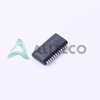
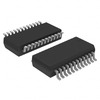
Image may be representation.
See specifications for product details.
EXPRESS OPTION
Payment method

PCA9555D. - Freescale / NXP Semiconductors

Manufacturer Part Number
PCA9555D.
Manufacturer
NXP Semiconductors
Allelco Part Number
32D-PCA9555D.
Warranty
1 Year Allelco Warranty - Find out more
Stock Status:
9,220 pcs available, New & Original
Parts Description
DAC91001
Data sheet
-
Category
Integrated Circuits (ICs) > Specialized ICs
RoHs Status
Our certification
In stock: 9220

Required fields are indicated by an asterisk (*)
Please send RFQ, we will respond immediately.

Quantity

Specifications

PCA9555D. Tech Specifications
Freescale / NXP Semiconductors - PCA9555D. technical specifications, attributes, parameters and parts with similar specifications to Freescale / NXP Semiconductors - PCA9555D.

Product Attribute Attribute Value
Part Number PCA9555D.
Package DAC91001
Description DAC91001
Stock Condition Get 9220 pcs available quantity at Allelco
Payment PayPal / TT / Credit Card / Western Union
Allelco Certifications ESD / ISO 9001 / ISO 13485 / ISO 28000
Product Attribute Attribute Value
Manufacturer NXP Semiconductors
RoHs Status -
Warranty 100% Perfect Functions
Transport port Hong Kong
Shipping by DHL / FedEx / UPS / TNT / SF Express
RFQ Email info@allelco.com

Frequently Asked Questions(FAQ)

How does the PCA9555D’s I²C interface voltage range impact system-level power management in mixed-voltage environments?
The PCA9555D supports an I²C bus voltage range from 2.3 V to 5.5 V, which enables it to interface directly with systems using both 3.3 V and 5 V logic levels without requiring additional level-shifting circuitry. This flexibility simplifies board layout and reduces component count when integrating legacy 5 V peripherals or low-power microcontrollers running at 2.7 V. However, designers must ensure that pull-up resistors on the SDA and SCL lines are compatible with the selected supply voltage to maintain proper rise times and noise margins across the full operating range.
What is the maximum output current per pin of the PCA9555D, and how should this inform load selection for driving LEDs or small relays?
Each GPIO pin on the PCA9555D can source up to 25 mA continuously, though total package power dissipation limits the sum of all active outputs. When driving LEDs, a typical forward current of 10–20 mA per LED is feasible without exceeding individual pin ratings, but parallel loads require careful thermal and current-sharing analysis. For inductive loads like relays, snubber circuits or flyback diodes are strongly recommended to protect against inductive kickback, especially if switching frequencies exceed a few hundred hertz.
In what way does the PCA9555D’s internal pull-up configuration differ from external resistor-based approaches, and when would one be preferred?
The PCA9555D features programmable internal pull-up resistors (typically 40 kΩ to 60 kΩ) on its open-drain I/O pins, allowing dynamic control over input bias conditions during runtime. This contrasts with fixed-value external pull-ups, which lack adaptability to varying bus capacitance or noise environments. Internal pull-ups reduce BOM count and simplify PCB routing but may not match optimal values for high-speed I²C operation above 400 kHz. Designers often combine both strategies—using internal pull-ups for general-purpose inputs and adding external ones only where precise timing or EMI performance demands tighter impedance control.
Can the PCA9555D operate reliably in automotive temperature ranges, and what design precautions are necessary for such applications?
While the PCA9555D itself is not qualified to AEC-Q100 standards, its commercial-grade specification covers −40°C to +85°C. For extended ambient temperatures beyond this range—common in automotive edge cases—additional derating of output currents and careful layout to minimize junction heating are advised. Thermal vias under the SOP24 package help dissipate heat, but continuous operation near the 85°C upper limit should avoid sustained high-current switching on multiple channels simultaneously to prevent localized hot spots.
How does the PCA9555D handle simultaneous input transitions during I²C communication, and what safeguards exist against data corruption?
The PCA9555D includes input debouncing logic and synchronized sampling of GPIO states relative to the I²C clock edges, reducing the risk of metastability during asynchronous signal transitions. However, rapid external changes on multiple inputs within the same I²C transaction frame can still result in inconsistent readbacks. To mitigate this, software routines should sample inputs twice with small delays between reads, and hardware filters (e.g., RC networks) can be added where mechanical switch bounce or noisy sensor signals are present.
Compared to the PCA9557, how does the PCA9555D differ in terms of input/output functionality and use case suitability?
Unlike the PCA9557—which offers 16 general-purpose I/Os split evenly between inputs and configurable outputs—the PCA9555D provides eight dedicated inputs and sixteen outputs, making it better suited for applications requiring large numbers of drive signals with minimal sensing capability, such as LED matrix control or relay driver stages. Conversely, the PCA957 uses bidirectional pins that default to input mode, offering greater flexibility for bidirectional communication scenarios. The choice hinges on whether the system prioritizes driving capacity (PCA9555D) or balanced input/output programmability (PCA957).
What happens if the PCA9555D receives an I²C address that matches another device on the same bus?
If two devices share the same 7-bit I²C address—such as two PCA9555Ds configured identically—the bus will experience arbitration failures and corrupted data transfers. Each PCA9555D supports user-selectable addresses via its A0, A1, and A2 pins, allowing up to eight unique instances on a single bus. Proper addressing is critical in multi-drop configurations; failure to assign distinct addresses results in unpredictable behavior, including partial register updates or complete communication lockups until power cycling.
How should the PCA9555D be initialized during system boot to ensure predictable GPIO states?
During power-up, all outputs of the PCA9555D default to high-impedance (input mode), and the internal latch retains its previous state upon power loss. To guarantee a known startup condition, the host microcontroller must write to the Output Port Register immediately after asserting VDD. Writing a logic ‘1’ sets all outputs high (active), while a ‘0’ forces them low. For fail-safe applications, consider combining this with a weak external pull-down on critical outputs to override any floating transients before software initialization completes.
Is it safe to leave unused GPIO pins on the PCA9555D unconnected, or must they always be tied to a defined logic level?
Unused GPIOs should not be left floating because high-impedance inputs can act as antennas, picking up electromagnetic interference and causing unintended register reads or spurious interrupts. Instead, configure these pins as outputs via the Configuration Register and set them to either logic high or low based on system requirements. Alternatively, enable internal pull-up or pull-down resistors through software to stabilize the pin state without consuming significant current.
What impact does bus capacitance have on PCA9555D performance at higher I²C speeds, and how can it be mitigated?
At standard I²C speeds (up to 400 kHz), the PCA9555D performs well even with moderate bus capacitance (up to 400 pF). Beyond this, increased rise/fall times due to capacitive loading degrade signal integrity and risk timing violations. Solutions include reducing trace lengths, using lower-value pull-up resistors, or inserting a buffer IC specifically rated for high-capacitance I²C environments. In layouts exceeding 20 cm of routed bus lines, signal termination or repeaters may become necessary to maintain reliable communication with the PCA9555D.
How many PCA9555D devices can share a common I²C bus without degrading communication reliability?
Up to eight PCA9555D devices can coexist on a single I²C bus provided each has a uniquely assigned address via its A0–A2 pins. Communication reliability remains intact as long as total bus capacitance stays below 400 pF and pull-up resistors are sized appropriately for the desired speed. However, adding more devices increases the likelihood of electrical contention during simultaneous access attempts; therefore, robust error-handling code and retry mechanisms in the host firmware are advisable for mission-critical systems.
Can the PCA9555D drive loads directly from its output pins without additional buffering?
Yes, but only under constrained conditions. The PCA9555D’s outputs are open-drain with integrated clamping diodes, capable of sinking 25 mA per pin. Directly driving resistive loads like LEDs or small relays is acceptable if current and power dissipation stay within datasheet limits. However, for capacitive or inductive loads—or situations requiring sourcing current—an external N-channel MOSFET or transistor stage is required, since the PCA9555D cannot source current, only sink it through ground.
What role does the PCA9555D’s interrupt function play in event-driven embedded systems?
The PCA9555D supports an active-low INT pin that asserts whenever any input transitions from high to low (falling-edge detection). This enables the host MCU to enter low-power sleep modes and wake only upon specific external events, significantly improving energy efficiency in battery-powered applications. Software must poll the Input Port Register after interrupt acknowledgment to determine which input triggered the event, enabling targeted response logic without full system resumption.
How does the PCA9555D’s ESD protection compare to industry benchmarks for industrial automation environments?
The PCA9555D incorporates ±2 kV HBM (Human Body Model) ESD protection on all pins, which meets baseline industrial requirements but falls short of military-grade thresholds (>±4 kV). In harsh environments with frequent static discharge risks (e.g., factory floors with ungrounded tools), supplementing the circuit with transient voltage suppressors (TVS) on exposed I/O lines adds an extra layer of robustness without affecting normal operation. This combined approach aligns with best practices for long-term reliability in non-controlled settings.
When interfacing the PCA9555D with a 1.8 V microcontroller, what compatibility considerations arise?
Although the PCA9555D operates down to 2.3 V on its VCC rail, its I/O pins remain compatible with 1.8 V logic when used as inputs, thanks to built-in voltage tolerance. However, driving 1.8 V logic requires caution: if the PCA9555D’s output is pulled low (sinking mode), the 1.8 V device sees a valid logic low. But if the 1.8 V side tries to drive high while the PCA9555D is also pulling low, conflict occurs. Therefore, ensure mutual agreement on directionality per pin, or use open-drain coordination with appropriate pull-ups matching the lowest VIL threshold among connected devices.
Does the PCA9555D support hot-swapping of connected peripherals without risk of damage?
No, the PCA9555D does not include hot-swap controllers or slew-rate-limited drivers. Connecting or disconnecting peripheral loads while powered may induce voltage spikes on adjacent pins or cause latch-up due to uncontrolled current paths through parasitic diodes. For hot-plug applications, add series resistors (10–100 Ω) and/or TVS diodes to clamp transients, and avoid changing connections during active I²C transactions to prevent bus corruption.
How does the PCA9555D’s power consumption scale with output activity, and what are typical quiescent current values?
The PCA9555D draws approximately 0.8 µA in standby (I²C idle) and up to 10 µA during active I²C traffic, independent of GPIO state. However, each active output switching at moderate frequency contributes incremental dynamic power proportional to Cload × VDD² × fswitch. For example, driving ten 10 nF capacitive loads at 100 kHz with VDD = 5 V consumes ~25 mW—well within the SOP24 package’s thermal budget. Designers should minimize unnecessary toggling and use burst-mode updates to preserve battery life in portable implementations.

Customer Reviews

Evaluation: 10 Articles

  • Nath***rooks
    Jun 11, 2026

    Installed this power component in a converter board. Output remained stable under different load conditions and thermal performance was better than expected.

  • Dani***alkerTech
    Jun 1, 2026

    Product works, but setup took more effort than expected. Once configured the MCU ran reliably, although documentation support felt older compared with newer platforms. Fine for maintenance projects.

  • Yuki***aka88
    May 26, 2026

    信号通信プロジェクトでこのRS-485トランシーバーを使用しました。設置は簡単で、長距離ケーブルでも通信は安定していました。消費電力も、以前使用していたものより低くなっています。

  • Stev***aker
    May 20, 2026

    Solid diode for power rectification. Works well in switching circuits.

  • Bran***Lewis
    May 11, 2026

    Compact FPGA with good performance. Suitable for basic signal processing tasks.

  • Oliv***arris
    May 7, 2026

    Reliable I/O expander. Works well in embedded control applications.

  • Jess***Jones
    Apr 17, 2026

    It offers good value for the price, and the specifications match the description. I’ve been using it for two days with no issues, and I’ll definitely buy it again if I need it in the future.

  • Mich***Smith
    Apr 17, 2026

    Shipping was on time, the component pins are neatly aligned, and I tested 10 of them with a multimeter—all readings were within the specified range. Highly recommended.

  • Aman***arris
    Apr 3, 2026

    It was great—the entire process, from placing the order to receiving the package, went very smoothly. The components were consistent, the price was fair, and I had a very pleasant shopping experience.

  • Mike***nch
    Apr 3, 2026

    Better than expected! The resistance and capacitance readings were spot-on, and it passed the test on the first try. The service was reliable, and the packaging was thoughtful—I highly recommend it.

Write a Review

Your Email address will not be published.

Shipment

Delivery Time

In-stock items can be shipped within 24 hours. Some parts will be arranged for delivery within 1-2 days from the date all items arrive at our warehouse. And Allelco ships order once a day at about 17:00, except Sunday. Once the goods are shipped, the estimated delivery time depends on the shipping methods and Delivery destination. The table below shows are the logistic time for some common countries.

Delivery Cost

  1. Use your express account for shipment if you have one.
  2. Use our account for the shipment. Refer to the table below for the approximate charges.
(Different time frame / countries / package size has different price.)

Delivery Method

  1. Global Common Shipment by DHL / UPS / FedEx / TNT / EMS / SF we support.
  2. Others more shipping ways, please get in touch with your customer manager.

Common Countries Logistic Time Reference
Region Country Logistic Time(Day)
America United States 5
Brazil 7
Europe Germany 5
United Kingdom 4
Italy 5
Oceania Australia 6
New Zealand 5
Asia India 4
Japan 4
Middle East Israel 6
DHL & FedEx Shipment Charges Reference
Shipment charges(KG) Reference DHL(USD$)
0.00kg-1.00kg USD$30.00 - USD$60.00
1.00kg-2.00kg USD$40.00 - USD$80.00
2.00kg-3.00kg USD$50.00 - USD$100.00
Note:
The above table is for reference only. There may have some data bias for the uncontrollable factors.
Contact us if you have any questions.
  • QC (Quality Warranty)
  • Payment Support
  • Packaging
  • Certifications & Memberships

QC (Quality Warranty)

Allelco is committed to exceeding customer expectations through customer service excellence, order accuracy, and on-time delivery.
This is achieved through our commitment to the continual improvement of our processes, services, and products.


Strict quality inspection builds a solid foundation for electronic component quality.
  1. Visual inspection
  2. Performance testing and reliability verification
  3. Standardized full-process testing
  4. Precise control of every parameter
We eliminate defective components and ensure the stable operation of electronic devices through professional quality standards.

Payment Support

The payment method can be chosen from the methods shown below: Wire Transfer (T/T, Bank Transfer), Western Union, Credit card, PayPal.
  • HKBea
  • Paypal
  • MasterCard
  • Western-Union
  • VISA
Stable Delivery, Sincere Partnership — Your Faithful Supply Chain Partner
  • Efficient Supply Management
  • Cost-Saving Procurement
  • Fast Sourcing & Delivery
Contact us if you have any questions.

Packaging

Electrostatic Discharge Protection and Handling

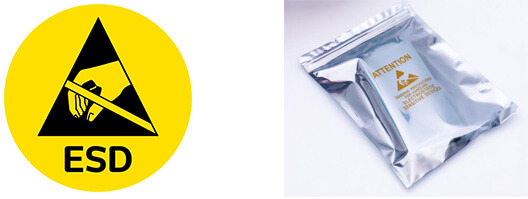
All electrostatic-sensitive components are handled in accordance with electrostatic discharge control procedures. The products are hermetically sealed in anti-static safe packaging to prevent electrostatic damage. Appropriate labeling is also applied for identification and traceability. This ensures product integrity during storage, handling and transportation.


ESD

Certifications & Memberships

Third-party certified, strict quality control. Our certification
  • ISO 9001: 2015
  • ISO 13485: 2016
  • ISO 14001: 2015
  • ISO 28000: 2007
  • ISO 45001: 2018
  • GB/T 27922-2011
  • SMTA
  • IPC
  • ESD
  • PSMA
Freescale / NXP Semiconductors

PCA9555D.

Freescale / NXP Semiconductors
32D-PCA9555D.

Want a better price? Add to Cart and Submit RFQ now, we'll contact you immediately.

0 RFQ
Shopping cart (0 Items)
It is empty.
Compare List (0 Items)
It is empty.
Feedback

Your feedback matters! At Allelco, we value the user experience and strive to improve it constantly.
Please share your comments with us via our feedback form, and we'll respond promptly.
Thank you for choosing Allelco.

Subject
E-mail
Comments
Captcha
Drag or click to upload file
Upload File
types: .xls, .xlsx, .doc, .docx, .jpg, .png and .pdf.
Max file size: 10MB