View All

Please refer to the English Version as our Official Version.Return

Europe
France(Français) Germany(Deutsch) Italy(Italia) Russian(русский) Poland(polski) Czech(Čeština) Luxembourg(Lëtzebuergesch) Netherlands(Nederland) Iceland(íslenska) Hungarian(Magyarország) Spain(español) Portugal(Português) Turkey(Türk dili) Bulgaria(Български език) Ukraine(Україна) Greece(Ελλάδα) Israel(עִבְרִית) Sweden(Svenska) Finland(Svenska) Finland(Suomi) Romania(românesc) Moldova(românesc) Slovakia(Slovenská) Denmark(Dansk) Slovenia(Slovenija) Slovenia(Hrvatska) Croatia(Hrvatska) Serbia(Hrvatska) Montenegro(Hrvatska) Bosnia and Herzegovina(Hrvatska) Lithuania(lietuvių) Spain(Português) Switzerland(Deutsch) United Kingdom(English)
Asia/Pacific
Japan(日本語) Korea(한국의) Thailand(ภาษาไทย) Malaysia(Melayu) Singapore(Melayu) Vietnam(Tiếng Việt) Philippines(Pilipino)
Africa, India and Middle East
United Arab Emirates(العربية) Iran(فارسی) Tajikistan(فارسی) India(हिंदी) Madagascar(malaɡasʲ)
South America / Oceania
New Zealand(Maori) Brazil(Português) Angola(Português) Mozambique(Português)
North America
United States(English) Canada(English) Haiti(Ayiti) Mexico(español)
HomeProductsIntegrated Circuits (ICs)Embedded - FPGAs (Field Programmable Gate Array)LCMXO2-4000HC-5FG484I
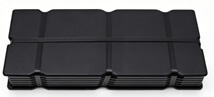
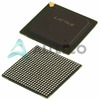
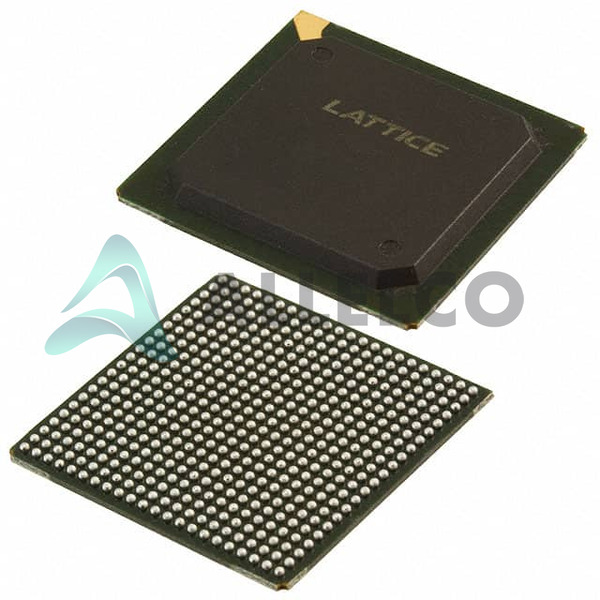
LCMXO2-4000HC-5FG484I Image
Image may be representation.
See specifications for product details.
EXPRESS OPTION
Payment method

LCMXO2-4000HC-5FG484I - Lattice Semiconductor Corporation

Manufacturer Part Number
LCMXO2-4000HC-5FG484I
Manufacturer
Lattice Semiconductor
Allelco Part Number
32D-LCMXO2-4000HC-5FG484I
Warranty
1 Year Allelco Warranty - Find out more
Stock Status:
16,400 pcs available, New & Original
Parts Description
IC FPGA 278 I/O 484FBGA
Package
484-FBGA (23x23)
Data sheet
LCMXO2-4000HC-5.pdf
RoHs Status
ROHS3 Compliant
Our certification
In stock: 16400

Required fields are indicated by an asterisk (*)
Please send RFQ, we will respond immediately.

Quantity

Specifications

LCMXO2-4000HC-5FG484I Tech Specifications
Lattice Semiconductor Corporation - LCMXO2-4000HC-5FG484I technical specifications, attributes, parameters and parts with similar specifications to Lattice Semiconductor Corporation - LCMXO2-4000HC-5FG484I

Product Attribute Attribute Value
Manufacturer Lattice Semiconductor
Voltage - Supply 2.375V ~ 3.465V
Total RAM Bits 94208
Supplier Device Package 484-FBGA (23x23)
Series MachXO2
Package / Case 484-BBGA
Package Tray
Product Attribute Attribute Value
Operating Temperature -40°C ~ 100°C (TJ)
Number of Logic Elements/Cells 4320
Number of LABs/CLBs 540
Number of I/O 278
Mounting Type Surface Mount
Base Product Number LCMXO2-4000

Environmental & Export Classifications

ATTRIBUTE DESCRIPTION
RoHs Status ROHS3 Compliant
Moisture Sensitivity Level (MSL) 3 (168 Hours)
REACH Status REACH Unaffected
ECCN 3A991D
HTSUS 8542.39.0001

Parts Introduction

LCMXO2-4000HC-5FG484I Image
LCMXO2-4000HC-5FG484I (1)

Manufacturer Part Number

LCMXO2-4000HC-5FG484I

Manufacturer

Lattice Semiconductor

Introduction

The LCMXO2-4000HC-5FG484I is part of Lattice Semiconductor's MachXO2 series, which are Embedded FPGAs designed for versatile applications in various fields requiring programmable logic solutions.

Product Features and Performance

Embedded FPGA with 540 LABs/CLBs

Features 4320 Logic Elements/Cells

Offers a total RAM of 94208 bits

Provides 278 I/O pins for comprehensive connectivity options

Surface Mount package simplifies board design and manufacturing

Product Advantages

Efficient power consumption with a supply voltage range of 2.375V to 3.465V

Wide operating temperature range from -40°C to 100°C ensures reliability under varying environmental conditions

High-density package (484-BBGA) allows for compact board designs

Key Technical Parameters

Number of LABs/CLBs: 540

Number of Logic Elements/Cells: 4320

Total RAM Bits: 94208

Number of I/O: 278

Voltage Supply: 2.375V ~ 3.465V

Operating Temperature: -40°C ~ 100°C

Quality and Safety Features

Robust design suited for extended temperature operation

Manufactured in a high-integrated package for improved reliability

Compatibility

Compatible with surface mount technology for straightforward PCB integration

Application Areas

Ideal for communication infrastructure

Suitable for industrial applications, automotive systems, and consumer electronics

Product Lifecycle

Currently active with ongoing support and supply

Not nearing discontinuation, with viable options for upgrades available

Several Key Reasons to Choose This Product

High logic density supports complex digital systems

Flexible I/O count suitable for various integration requirements

Low power consumption aligns with energy-efficient design goals

Robust operational temperature range supports use in harsh environments

Reliable manufacturer with a history of delivering quality FPGA products
Frequently Asked Questions(FAQ)

How does the LCMXO2-4000HC-5FG484I compare to other MachXO2 variants in terms of logic density and power efficiency for low-power system designs?
The LCMXO2-4000HC-5FG484I offers 4,320 logic elements and 94,208 RAM bits, which positions it as a mid-range device within the MachXO2 family. Compared to lower-density models like the LCMXO2-1200 or LCMXO2-2560, this part provides significantly more programmable resources without reaching the higher-end XC-9500XL series. Its “HC” designation indicates high-capability performance with optimized power characteristics, making it suitable for applications requiring moderate complexity with strict power budgets. The operating voltage range of 2.375V to 3.465V allows flexibility in interfacing with mixed-voltage systems while maintaining compatibility with standard 3.3V I/O standards.
What are the key thermal and reliability considerations when deploying the LCMXO2-4000HC-5FG484I in industrial temperature environments?
The LCMXO2-4000HC-5FG484I is specified for operation from -40°C to +100°C (TJ), making it appropriate for extended industrial use cases where ambient temperatures fluctuate significantly. However, the 484-FBGA package’s thermal resistance must be carefully evaluated in compact PCB layouts due to its dense pinout and limited surface area for heat dissipation. Engineers should ensure adequate copper pour and thermal vias under the device to maintain junction temperatures within safe limits during peak current draw. Additionally, the Moisture Sensitivity Level (MSL) of 3 implies that proper storage and handling procedures—such as baking before reflow if exposed beyond 168 hours—are necessary to prevent popcorning defects during assembly.
Can the LCMXO2-4000HC-5FG484I support LVCMOS and LVDS signaling standards simultaneously across its 278 I/O pins?
Yes, the LCMXO2-4000HC-5FG484I supports multiple I/O standards, including LVCMOS and LVDS, through its configurable I/O banks. Each bank can be independently set to different voltage levels and signal types, enabling heterogeneous interfaces on the same FPGA. For example, some banks may operate at 2.5V LVCMOS for legacy peripherals while others use 1.8V LVDS for high-speed serial links. This flexibility requires careful bank partitioning during pin assignment to avoid cross-talk and ensure timing closure, especially when mixing high-speed differential pairs with general-purpose digital signals.
How should the LCMXO2-4000HC-5FG484I be powered in a system requiring both core and I/O voltage domains?
The LCMXO2-4000HC-5FG484I uses a single VCC core supply (2.375V–3.465V) but allows I/O voltages per bank to vary independently within a similar range. In practice, designers typically tie all I/O banks to a common VCCIO (e.g., 3.3V) unless specific interfaces dictate otherwise. Power sequencing is not strictly required by the datasheet, but decoupling capacitors—ideally 100nF ceramic per power pin group plus bulk capacitance—should be placed close to the FBGA pads. A stable core voltage rail with low ripple is critical due to the FPGA’s internal PLLs and clock management blocks, which are sensitive to supply noise above 50mV p-p.
What design constraints arise from using the LCMXO2-4000HC-5FG484I in a multi-clock domain environment?
With integrated Phase-Locked Loops (PLLs), the LCMXO2-4000HC-5FG484I supports flexible clocking strategies, but each PLL has limited fan-out and routing resources. Designers must allocate PLLs judiciously—typically one per major clock domain—and account for clock skew between domains using synchronizers or FIFOs. The 540 LABs provide sufficient routing channels, but complex clock trees can quickly consume interconnect resources near pin boundaries. Careful placement of clock buffers and adherence to Lattice’s recommended clocking architecture help maintain timing integrity across asynchronous domains.
Is it feasible to implement a soft-core processor such as RISC-V on the LCMXO2-4000HC-5FG484I alongside custom logic?
Yes, the LCMXO2-4000HC-5FG484I’s 4,320 logic elements and 94,208 RAM bits are sufficient to run lightweight soft processors like PicoRV32 or a modified OpenRISC core, especially when memory-intensive tasks are offloaded to external components. However, resource allocation becomes critical: a full processor implementation may reduce available logic for application-specific functions. Efficient coding practices, minimal instruction sets, and shared memory mapping help optimize utilization. The presence of dedicated configuration flash also enables boot-from-internal-memory options, reducing dependency on external code storage.
How does the LCMXO2-4000HC-5FG484I compare to CPLDs in terms of reconfigurability and non-volatile configuration?
Unlike traditional CPLDs, the LCMXO2-4000HC-5FG484I is an FPGA based on a fine-grained architecture with SRAM-based configuration, offering superior reconfigurability and higher logic density. While CPLDs offer instant-on behavior with non-volatile configuration, the MachXO2 supports partial reconfiguration and dynamic function switching unavailable in most CPLD families. The LCMXO2-4000HC-5FG484I uses built-in flash memory for configuration storage, providing non-volatility without external devices. This makes it more suitable for field-upgradable systems compared to volatile CPLD alternatives, though with slightly slower startup times than pure flash-based CPLDs.
What are the implications of the LCMXO2-4000HC-5FG484I’s ECCN classification (3A991D) for international export compliance?
The ECCN 3A991D indicates that the LCMXO2-4000HC-5FG484I is classified under mass market encryption commodities or technology, meaning it does not contain intentional encryption but may include incidental cryptographic functions such as secure configuration or anti-cloning features. This classification generally permits export under license exceptions (e.g., LVS for low volume shipments), but exporters must verify end-use restrictions and obtain proper documentation. Importers in embargoed regions may face additional screening. Always consult current BIS regulations and consider dual-use declarations when shipping globally.
Can the LCMXO2-4000HC-5FG484I interface directly with DDR3 memory without external PHY assistance?
No, the LCMXO2-4000HC-5FG484I lacks native DDR3 I/O standards or embedded PHY blocks. Implementing DDR3 requires an external memory controller IC or PHY chip that interfaces with the FPGA’s general-purpose I/Os using LVCMOS or SSTL signaling. Alternatively, slower memory technologies like SRAM or SPI Flash can be used with onboard logic to emulate higher-bandwidth interfaces. For cost-sensitive or low-latency applications, designers might instead opt for external synchronous DRAM managed via FPGA-generated control signals, though this consumes significant FPGA resources and complicates timing closure.
What impact does the LCMXO2-4000HC-5FG484I’s package size have on PCB layout and signal integrity?
The 484-pin FBGA package (23x23 mm) presents a dense routing challenge due to fine-pitch BGA (0.8 mm pitch). Successful implementation demands controlled impedance routing for high-speed signals, careful layer stackup (minimum 6 layers recommended), and via-in-pad avoidance or filled/viad-in-pad processes if needed. Differential pairs and clocks require matched lengths (±50 mils tolerance typical). Thermal management is also impacted by the large array of ground balls around the periphery, which aids heat spreading but demands consistent solder joint quality. Proper test point access and boundary scan support (via JTAG) aid debug during development.
How does the LCMXO2-4000HC-5FG484I’s RoHS3 and REACH status affect material selection in consumer electronics manufacturing?
The RoHS3 compliance confirms the absence of restricted substances like lead, mercury, and cadmium above regulatory thresholds, ensuring compatibility with global environmental directives. REACH Unaffected status means no SVHCs (Substances of Very High Concern) exceeding 0.1% weight are intentionally added. This simplifies supply chain audits and reduces risk of customs holds or product recalls. Manufacturers can confidently use standard lead-free soldering profiles (e.g., SAC305, max 260°C peak) without concern for hazardous material interactions during assembly or end-of-life recycling.
What trade-offs exist between using internal vs. external configuration memory with the LCMXO2-4000HC-5FG484I?
The LCMXO2-4000HC-5FG484I includes embedded flash memory for storing configuration data, eliminating the need for external SPI or parallel flash chips. This improves system integration, reduces board space, and enhances reliability by minimizing connector failures. However, external memory allows faster reconfiguration speeds and supports larger bitstreams beyond the internal flash capacity. For production systems where security and compactness matter, internal flash suffices; for prototyping or frequent firmware updates, external memory offers greater flexibility at the cost of increased PCB real estate and potential failure points.
Is the LCMXO2-4000HC-5FG484I suitable for automotive applications despite lacking AEC-Q100 certification?
While the LCMXO2-4000HC-5FG484I operates over an industrial temperature range (-40°C to +100°C), it is not certified to AEC-Q100 Grade 1 (up to +125°C) or Grade 2 standards required for most automotive systems. It may still find niche use in non-safety-critical infotainment modules or gateway devices where cost and size outweigh qualification requirements. However, for functional safety (ISO 26262) or high-reliability environments, engineers should select alternative parts with formal automotive validation. Even in non-certified deployments, rigorous derating, conformal coating, and ESD protection remain essential.
How many I/O banks does the LCMXO2-4000HC-5FG484I support, and how does bank partitioning affect power and signal integrity?
The LCMXO2-4000HC-5FG484I supports up to four independent I/O banks, each capable of operating at different voltages. This enables mixed-signal designs but introduces challenges in managing return currents and ground bounce. Each bank shares a common substrate noise path, so simultaneous high-current transitions in adjacent banks can couple noise into sensitive analog circuits or high-speed serial lines. Bank partitioning should isolate noisy digital loads (e.g., switching regulators, motor drivers) from precision analog or reference circuits. Decoupling per-bank and careful plane segmentation in the PCB stackup mitigate these effects.
What role do the 540 LABs play in achieving timing closure on the LCMXO2-4000HC-5FG484I?
LABs (Logic Array Blocks) are the basic building units of the Lattice MachXO2 architecture, containing 16 macrocells each. The 540 LABs collectively house the 4,320 logic elements, enabling efficient implementation of combinational and sequential logic. Adequate LAB availability ensures that critical paths can be routed without excessive spillover into global routing resources, which would increase delay and worsen skew. During synthesis, tools aim to pack related logic into adjacent LABs to minimize interconnect hops. Insufficient LABs relative to netlist complexity can force inefficient logic distribution, leading to longer clock cycles or unmet timing constraints.
Can the LCMXO2-4000HC-5FG484I support hot-swapping of peripheral devices connected to its I/Os?
Hot-swapping is possible only if the peripheral devices comply with the I/O voltage levels and sink/source current capabilities of the MachXO2. The FPGA itself lacks built-in hot-swap detection circuitry, so external pull-ups, current-limiting resistors, and ESD diodes are typically required on each line. Enabling weak pull-downs internally and configuring slew rate control help reduce inrush current during insertion. However, abrupt disconnection without proper discharge can damage I/O structures; thus, most robust designs implement power sequencing or mechanical interlocks rather than relying solely on electrical safeguards.
What considerations apply when cascading multiple FPGAs using the LCMXO2-4000HC-5FG484I in a scalable system?
Cascading FPGAs with the LCMXO2-4000HC-5FG484I is generally not practical due to its lack of dedicated inter-chip communication primitives (e.g., no XAUI or GTH transceivers). Instead, designers often use GPIOs or dedicated user I/Os for handshaking between devices, which consumes valuable resources and complicates timing. Alternative architectures—such as distributing logic across microcontrollers or ASICs—are usually more efficient. If parallel processing is needed, the MachXO2’s limited speed grade (“-5”) may not support high-bandwidth data transfer rates required for effective load balancing, making scalability a poor fit for this device.
How does the LCMXO2-4000HC-5FG484I’s configuration security feature protect against unauthorized firmware access?
The LCMXO2-4000HC-5FG484I supports AES-128 encryption for configuration bitstreams stored in its internal flash, preventing reverse engineering and tampering. Only authorized keys programmed during manufacturing allow successful configuration, effectively locking out attackers without physical access to the flash interface. This protects intellectual property in edge devices and IoT endpoints. However, the security relies on keeping the key secret during programming—failure to erase keys after use or exposure during development compromises the entire chain. Physical protection of the device post-deployment remains necessary to deter side-channel attacks or probing.

Parts with Similar Specifications

The three parts on the right have similar specifications to Lattice Semiconductor Corporation LCMXO2-4000HC-5FG484I

Product Attribute LCMXO2-4000HC-5FG484C LCMXO2-4000HC-5TG144I LCMXO2-4000HC-4TG144I LCMXO2-4000HC-4QN84I
Part Number LCMXO2-4000HC-5FG484C LCMXO2-4000HC-5TG144I LCMXO2-4000HC-4TG144I LCMXO2-4000HC-4QN84I
Manufacturer Lattice Semiconductor Corporation Lattice Semiconductor Corporation Lattice Semiconductor Corporation Lattice Semiconductor Corporation
Series - - - -
Supplier Device Package - 196-NFBGA (12x12) 16-PDIP 64-VQFN (9x9)
Package - Tape & Reel (TR) Tube Tape & Reel (TR)
Voltage - Supply - - - -
Number of I/O - - - -
Mounting Type - Surface Mount Through Hole Surface Mount
Base Product Number - DAC34H84 MAX500 ADS62P42
Total RAM Bits - - - -
Package / Case - 196-LFBGA 16-DIP (0.300', 7.62mm) 64-VFQFN Exposed Pad
Number of LABs/CLBs - - - -
Operating Temperature - -40°C ~ 85°C 0°C ~ 70°C -40°C ~ 85°C
Number of Logic Elements/Cells - - - -

LCMXO2-4000HC-5FG484I Datasheet PDF

Download LCMXO2-4000HC-5FG484I pdf datasheets and Lattice Semiconductor Corporation documentation for LCMXO2-4000HC-5FG484I - Lattice Semiconductor Corporation.

Datasheets
MachXO2 Family Datasheet.pdf MachXO2 Family Handbook.pdf
PCN Packaging
All Dev Pkg Mark Chg 12/Nov/2018.pdf
PCN Assembly/Origin
Alternate Assembly Revision B 17/Nov/2014.pdf
PCN Design/Specification
Datasheet Chg 21/Mar/2016.pdf Multiple Devices Cu Wire 01/Jul/2013.pdf
PCN Other
I2C Read-Back Failure Feb/2015.pdf

Customer Reviews

Evaluation: 10 Articles

  • Nath***rooks
    Jun 11, 2026

    Installed this power component in a converter board. Output remained stable under different load conditions and thermal performance was better than expected.

  • Dani***alkerTech
    Jun 1, 2026

    Product works, but setup took more effort than expected. Once configured the MCU ran reliably, although documentation support felt older compared with newer platforms. Fine for maintenance projects.

  • Yuki***aka88
    May 26, 2026

    信号通信プロジェクトでこのRS-485トランシーバーを使用しました。設置は簡単で、長距離ケーブルでも通信は安定していました。消費電力も、以前使用していたものより低くなっています。

  • Stev***aker
    May 20, 2026

    Solid diode for power rectification. Works well in switching circuits.

  • Bran***Lewis
    May 11, 2026

    Compact FPGA with good performance. Suitable for basic signal processing tasks.

  • Oliv***arris
    May 7, 2026

    Reliable I/O expander. Works well in embedded control applications.

  • Jess***Jones
    Apr 17, 2026

    It offers good value for the price, and the specifications match the description. I’ve been using it for two days with no issues, and I’ll definitely buy it again if I need it in the future.

  • Mich***Smith
    Apr 17, 2026

    Shipping was on time, the component pins are neatly aligned, and I tested 10 of them with a multimeter—all readings were within the specified range. Highly recommended.

  • Aman***arris
    Apr 3, 2026

    It was great—the entire process, from placing the order to receiving the package, went very smoothly. The components were consistent, the price was fair, and I had a very pleasant shopping experience.

  • Mike***nch
    Apr 3, 2026

    Better than expected! The resistance and capacitance readings were spot-on, and it passed the test on the first try. The service was reliable, and the packaging was thoughtful—I highly recommend it.

Write a Review

Your Email address will not be published.

Shipment

Delivery Time

In-stock items can be shipped within 24 hours. Some parts will be arranged for delivery within 1-2 days from the date all items arrive at our warehouse. And Allelco ships order once a day at about 17:00, except Sunday. Once the goods are shipped, the estimated delivery time depends on the shipping methods and Delivery destination. The table below shows are the logistic time for some common countries.

Delivery Cost

  1. Use your express account for shipment if you have one.
  2. Use our account for the shipment. Refer to the table below for the approximate charges.
(Different time frame / countries / package size has different price.)

Delivery Method

  1. Global Common Shipment by DHL / UPS / FedEx / TNT / EMS / SF we support.
  2. Others more shipping ways, please get in touch with your customer manager.

Common Countries Logistic Time Reference
Region Country Logistic Time(Day)
America United States 5
Brazil 7
Europe Germany 5
United Kingdom 4
Italy 5
Oceania Australia 6
New Zealand 5
Asia India 4
Japan 4
Middle East Israel 6
DHL & FedEx Shipment Charges Reference
Shipment charges(KG) Reference DHL(USD$)
0.00kg-1.00kg USD$30.00 - USD$60.00
1.00kg-2.00kg USD$40.00 - USD$80.00
2.00kg-3.00kg USD$50.00 - USD$100.00
Note:
The above table is for reference only. There may have some data bias for the uncontrollable factors.
Contact us if you have any questions.
  • QC (Quality Warranty)
  • Payment Support
  • Packaging
  • Certifications & Memberships

QC (Quality Warranty)

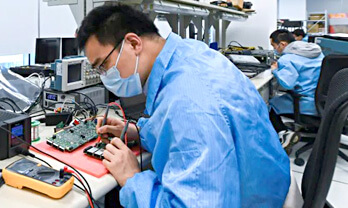
Allelco is committed to exceeding customer expectations through customer service excellence, order accuracy, and on-time delivery.
This is achieved through our commitment to the continual improvement of our processes, services, and products.


Strict quality inspection builds a solid foundation for electronic component quality.
  1. Visual inspection
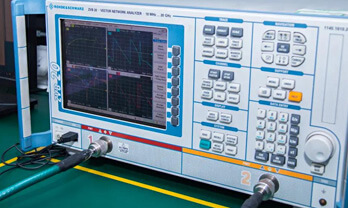
  2. Performance testing and reliability verification
  3. Standardized full-process testing
  4. Precise control of every parameter
We eliminate defective components and ensure the stable operation of electronic devices through professional quality standards.

Payment Support

The payment method can be chosen from the methods shown below: Wire Transfer (T/T, Bank Transfer), Western Union, Credit card, PayPal.
  • HKBea
  • Paypal
  • MasterCard
  • Western-Union
  • VISA
Stable Delivery, Sincere Partnership — Your Faithful Supply Chain Partner
  • Efficient Supply Management
  • Cost-Saving Procurement
  • Fast Sourcing & Delivery
Contact us if you have any questions.

Packaging

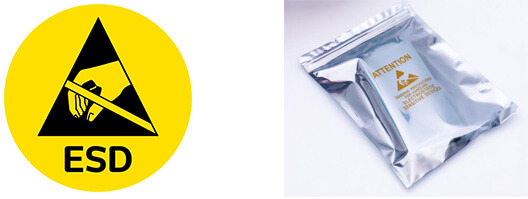
Electrostatic Discharge Protection and Handling

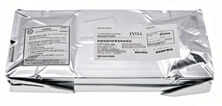
All electrostatic-sensitive components are handled in accordance with electrostatic discharge control procedures. The products are hermetically sealed in anti-static safe packaging to prevent electrostatic damage. Appropriate labeling is also applied for identification and traceability. This ensures product integrity during storage, handling and transportation.


ESD

Certifications & Memberships

Third-party certified, strict quality control. Our certification
  • ISO 9001: 2015
  • ISO 13485: 2016
  • ISO 14001: 2015
  • ISO 28000: 2007
  • ISO 45001: 2018
  • GB/T 27922-2011
  • SMTA
  • IPC
  • ESD
  • PSMA
LCMXO2-4000HC-5FG484I Image

LCMXO2-4000HC-5FG484I

Lattice Semiconductor Corporation
32D-LCMXO2-4000HC-5FG484I

Want a better price? Add to Cart and Submit RFQ now, we'll contact you immediately.

0 RFQ
Shopping cart (0 Items)
It is empty.
Compare List (0 Items)
It is empty.
Feedback

Your feedback matters! At Allelco, we value the user experience and strive to improve it constantly.
Please share your comments with us via our feedback form, and we'll respond promptly.
Thank you for choosing Allelco.

Subject
E-mail
Comments
Captcha
Drag or click to upload file
Upload File
types: .xls, .xlsx, .doc, .docx, .jpg, .png and .pdf.
Max file size: 10MB