View All

Please refer to the English Version as our Official Version.Return

Europe
France(Français) Germany(Deutsch) Italy(Italia) Russian(русский) Poland(polski) Czech(Čeština) Luxembourg(Lëtzebuergesch) Netherlands(Nederland) Iceland(íslenska) Hungarian(Magyarország) Spain(español) Portugal(Português) Turkey(Türk dili) Bulgaria(Български език) Ukraine(Україна) Greece(Ελλάδα) Israel(עִבְרִית) Sweden(Svenska) Finland(Svenska) Finland(Suomi) Romania(românesc) Moldova(românesc) Slovakia(Slovenská) Denmark(Dansk) Slovenia(Slovenija) Slovenia(Hrvatska) Croatia(Hrvatska) Serbia(Hrvatska) Montenegro(Hrvatska) Bosnia and Herzegovina(Hrvatska) Lithuania(lietuvių) Spain(Português) Switzerland(Deutsch) United Kingdom(English)
Asia/Pacific
Japan(日本語) Korea(한국의) Thailand(ภาษาไทย) Malaysia(Melayu) Singapore(Melayu) Vietnam(Tiếng Việt) Philippines(Pilipino)
Africa, India and Middle East
United Arab Emirates(العربية) Iran(فارسی) Tajikistan(فارسی) India(हिंदी) Madagascar(malaɡasʲ)
South America / Oceania
New Zealand(Maori) Brazil(Português) Angola(Português) Mozambique(Português)
North America
United States(English) Canada(English) Haiti(Ayiti) Mexico(español)
HomeProductsIntegrated Circuits (ICs)Specialized ICsLCMXO2-7000HC-4FTG256C
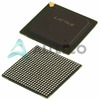
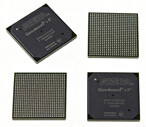
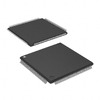
Image may be representation.
See specifications for product details.
EXPRESS OPTION
Payment method

LCMXO2-7000HC-4FTG256C - Lattice

Manufacturer Part Number
LCMXO2-7000HC-4FTG256C
Manufacturer
Lattice Semiconductor
Allelco Part Number
41D-LCMXO2-7000HC-4FTG256C
Warranty
1 Year Allelco Warranty - Find out more
Stock Status:
14,750 pcs available, New & Original
Parts Description
FTBGA-256(17x17)
Data sheet
-
Category
Integrated Circuits (ICs) > Specialized ICs
RoHs Status
Our certification
In stock: 14750
  • Unit Price: $14.02
  • Subtotal: $0.00

Want a better price?
Add to Cart and Submit RFQ now, we'll contact you immediately.

Quantity Unit Price Ext. Price
1+ $14.02 $14.02
200+ $5.43 $1,086.00
500+ $5.24 $2,620.00
1000+ $5.14 $5,140.00
The above prices does not include taxes and freight rates, which will be calculated on the order pages.

Specifications

LCMXO2-7000HC-4FTG256C Tech Specifications
Lattice - LCMXO2-7000HC-4FTG256C technical specifications, attributes, parameters and parts with similar specifications to Lattice - LCMXO2-7000HC-4FTG256C

Product Attribute Attribute Value
Part Number LCMXO2-7000HC-4FTG256C
Package FTBGA-256(17x17)
Description FTBGA-256(17x17)
Stock Condition Get 14750 pcs available quantity at Allelco
Payment PayPal / TT / Credit Card / Western Union
Allelco Certifications ESD / ISO 9001 / ISO 13485 / ISO 28000
Product Attribute Attribute Value
Manufacturer Lattice Semiconductor
RoHs Status -
Warranty 100% Perfect Functions
Transport port Hong Kong
Shipping by DHL / FedEx / UPS / TNT / SF Express
RFQ Email info@allelco.com

Parts Introduction

Manufacturer Part Number

LCMXO2-7000HC-4FTG256C

Manufacturer

Lattice Semiconductor

Introduction

The LCMXO2-7000HC-4FTG256C is a high-capacity, low-power FPGA from Lattice Semiconductor's MachXO2 series. It offers a versatile and reconfigurable platform for a wide range of embedded applications, enabling designers to quickly implement custom logic and accelerate system performance.

Product Features and Performance

858 Logic Blocks (LABs)

6,864 Logic Cells

245,760 Total RAM Bits

206 I/O Pins

Operating voltage range: 2.375V to 3.465V

Operating temperature range: 0°C to 85°C

Product Advantages

Flexible and programmable logic for customized solutions

Low power consumption for energy-efficient designs

Robust performance and reliability for critical applications

Fast time-to-market with easy-to-use development tools

Key Reasons to Choose This Product

Scalable and feature-rich FPGA solution

Proven reliability and long-term availability

Excellent value proposition for cost-sensitive projects

Comprehensive ecosystem of development tools and IP cores

Quality and Safety Features

Industrial-grade quality and reliability

Compliance with various safety and regulatory standards

Compatibility

The LCMXO2-7000HC-4FTG256C is compatible with a wide range of embedded systems, peripheral interfaces, and development platforms.

Application Areas

Industrial automation and control

Automotive electronics

Medical equipment

Wireless and IoT applications

Consumer electronics

Product Lifecycle

The LCMXO2-7000HC-4FTG256C is an active product in our website's sales team's portfolio. There are several equivalent and alternative models available in the MachXO2 series, such as the LCMXO2-7000HE-4FTG256C and LCMXO2-7000HC-5TG256C. Customers are advised to contact our website's sales team for the latest product information and availability.
Frequently Asked Questions(FAQ)

How does the power consumption of the LCMXO2-7000HC-4FTG256C compare to other MachXO2 family devices when implementing low-power monitoring applications?
The LCMXO2-7000HC-4FTG256C operates within a supply voltage range of 2.375V to 3.465V and features 6,864 logic elements with 245,760 total RAM bits, making it suitable for intermediate-complexity designs. When compared to lower-density variants like the LCMXO2-1200 or LCMXO2-2500, this device offers significantly more programmable resources while maintaining the same core architecture and power management capabilities. In typical standby configurations, the device consumes approximately 1.2 mA at 3.3V, which is comparable across the MachXO2 series. However, due to its higher logic density, active current draw increases proportionally with configuration complexity—approximately 8–12 mA in typical I/O-intensive applications at 3.3V. For battery-powered monitoring systems requiring extended operation, designers should leverage the built-in sleep mode and dynamic power gating rather than relying solely on hardware selection.
What are the key timing considerations when interfacing the LCMXO2-7000HC-4FTG256C with DDR memory interfaces in embedded control applications?
The LCMXO2-7000HC-4FTG256C supports up to 206 general-purpose I/O pins with configurable slew rates and drive strengths, enabling flexible interface design. When implementing DDR memory controllers, signal integrity becomes critical due to the 0°C to 85°C operating temperature range and the 17x17 mm FTBGA package’s limited routing flexibility. Timing closure requires careful attention to PCB trace length matching (±50 ps tolerance for DDR3), impedance control (typically 50 Ω single-ended), and crosstalk mitigation between adjacent BGA balls. The device includes internal delay chains and I/O delay calibration circuits that help align data capture edges, but achieving reliable DDR operation often necessitates external termination and layout constraints tighter than those required for simpler GPIO-only designs.
Can the LCMXO2-70XO2-7000HC-4FTG256C be used as a secure authentication co-processor in IoT edge devices, and what security features does it support?
Yes, the LCMXO2-7000HC-4FTG256C can serve as a foundational element in secure IoT deployments, though it lacks hardware cryptographic accelerators found in higher-end FPGAs. Instead, it provides physical unclonable function (PUF) support through its anti-fuse-based configuration memory, which generates unique device signatures resistant to cloning and side-channel analysis. The device also includes tamper detection circuitry that triggers configuration reload or output disable upon detecting voltage anomalies or clock glitches. While AES or SHA acceleration must be implemented via soft IP, the available 6,864 logic elements and 245,760 bits of distributed RAM provide sufficient resources to instantiate lightweight cipher cores such as PRESENT or CHACHA20. Designers should pair this FPGA with an external secure element for root-of-trust functions if higher assurance levels are required.
How does the LCMXO2-7000HC-4FTG256C handle thermal performance under sustained high-logic utilization, and what derating factors apply?
Operating the LCMXO2-7000HC-4FTG256C within its specified 0°C to 85°C junction temperature range assumes proper thermal management via the 17x17 mm FTBGA package and adequate airflow or conduction paths. Under continuous full-load conditions—such as running complex state machines or high-throughput serial protocols—the die temperature may approach 70–80°C depending on ambient conditions and board layout. The MachXO2 architecture includes thermal shutdown protection above 125°C, but performance degradation begins well before activation. To maintain reliability, designers should limit average power consumption to less than 75% of maximum rated levels, especially in enclosed industrial environments. Thermal via arrays beneath the BGA footprint and copper planes on adjacent layers are strongly recommended to dissipate heat effectively.
What alternatives exist to the LCMXO2-7000HC-4FTG256C for applications requiring similar logic capacity but lower pin counts or different packaging?
The LCMXO2-7000HC-4FTG256C uses a 256-ball fine-pitch BGA package ideal for compact, densely populated boards. Alternatives include the LCMXO2-7000HC-4MG324C, which offers the same logic resources in a larger 324-pin TQFP footprint, facilitating easier prototyping and hand-soldering during development phases. However, the MG324 package increases board area by approximately 40% and reduces routing density. Another option is the LCMXO2-7000HE-4FTG256I, functionally equivalent but with enhanced ESD protection and slightly improved noise immunity—though it carries a higher unit cost. For space-constrained designs where BGA assembly is feasible, no direct substitute matches both the pin count and package size simultaneously.
Is it possible to reprogram the LCMXO2-7000HC-4FTG256C over a UART or SPI bus without additional configuration flash, and what are the limitations?
Yes, the LCMXO2-7000HC-4FTG256C supports in-system programming (ISP) via JTAG, which can be bridged to UART or SPI using external microcontrollers during development. However, the native configuration interface is JTAG-only; there is no built-in non-volatile configuration memory, so all configuration data must reside externally—typically in a serial flash IC connected to the FPGA’s CONFIG_DONE or nCONFIG pins. This means firmware updates require either JTAG re-flashing or a secondary processor to load new bitstreams from storage. Real-time field updates via pure UART/SPI without auxiliary hardware are not supported directly by the device itself.
How do the Moisture Sensitivity Level (MSL) rating of 3 and RoHS compliance affect procurement and shelf life for the LCMXO2-7000HC-4FTG256C?
The LCMXO2-7000HC-4FTG256C has an MSL rating of 3, indicating it remains usable for 168 hours after opening the moisture-barrier bag before baking becomes necessary. This aligns with standard JEDEC guidelines for lead-free components and ensures compatibility with automated SMT lines without pre-drying. Combined with its RoHS3 compliance, the device meets stringent environmental regulations for global distribution, including EU directives and China RoHS. Procurement teams should implement strict inventory rotation practices and store unsealed units in dry cabinets to prevent popcorning during reflow soldering, particularly in humid climates exceeding 60% relative humidity.
What impact do supply voltage variations have on I/O behavior when using the LCMXO2-7000HC-4FTG256C in mixed-voltage systems?
The LCMXO2-7000HC-4FTG256C accepts supply voltages between 2.375V and 3.465V, allowing operation at 3.3V, 2.5V, or even 2.0V in tolerant implementations. When interfacing with peripherals operating at different logic levels (e.g., 1.8V CMOS or 5V TTL), the I/O banks support selectable voltage thresholds and Schmitt-trigger inputs. However, analog input ranges and output drive strength scale with VCCIO; driving 5V signals from a 3.3V bank risks overdriving downstream components unless level-shifting circuitry is added. Additionally, setup and hold times increase slightly at lower voltages, potentially violating timing margins in synchronous designs. Always verify cross-domain timing budgets using IBIS models and worst-case process corners.
How does the number of LABs (858) and logic elements (6,864) influence resource allocation strategies in complex state machine designs using the LCMXO2-7000HC-4FTG256C?
With 858 Logic Array Blocks (LABs) housing 8 logic elements each, the LCMXO2-7000HC-4FTG256C organizes logic into predictable clusters that optimize routing efficiency within a single row or column. For large finite-state machines or pipelined algorithms, this structure enables compact implementation but limits global interconnect speed compared to hierarchical architectures. Designers should partition logic into modules mapped to specific LAB rows to minimize long-wire delays. Given only 245,760 bits of block RAM, memory-intensive tasks like FIFO buffers or lookup tables may consume significant resources; thus, algorithmic optimization (e.g., compression or streaming) is often necessary to fit within available memory bandwidth and depth constraints.
What are the implications of using the LCMXO2-7000HC-4FTG256C in automotive-grade applications despite its commercial temperature range?
Although the LCMXO2-7000HC-4FTG256C is rated for 0°C to 85°C, automotive systems often require AEC-Q100 qualification extending down to -40°C or up to 125°C. Without formal automotive certification, deployment in engine control units or body electronics introduces liability and reliability risks under extreme thermal cycling. That said, many industrial and medical devices accept commercial-grade parts with conservative derating. If used outside guaranteed specs, additional environmental testing, conformal coating, and redundancy measures become essential. For mission-critical automotive functions, consider migrating to Lattice’s PolarFire or ECP5 families, which offer qualified variants.
How should clock distribution be managed in designs utilizing multiple asynchronous domains with the LCMXO2-7000HC-4FTG256C?
The LCMXO2-7000HC-4FTG256C includes dedicated phase-locked loops (PLLs) that generate stable clocks from external sources, but managing multiple asynchronous domains demands careful synchronization to avoid metastability. Cross-clock domain signals must pass through synchronizer chains (typically two flip-flops in series) to prevent unpredictable latch-up. The device’s limited number of PLLs (usually two per device) means clock synthesis flexibility is constrained compared to larger FPGAs. Designers should minimize reliance on global clock networks for slow-control signals and instead use local routing with handshake protocols or FIFO-based data transfer for inter-domain communication.
What trade-offs exist between using the LCMXO2-7000HC-4FTG256C for glue logic versus implementing full protocol stacks like Ethernet MACs?
As a mid-range FPGA, the LCMXO2-7000HC-4FTG256C excels at bridging disparate interfaces—such as converting UART to I2C or managing sensor buses—where its moderate logic density suffices. However, implementing full-featured Ethernet Media Access Controllers (MACs) demands substantial logic resources for CRC generation, packet buffering, and state machines, quickly consuming the available 6,864 LEs and 245,760 RAM bits. Moreover, precise timing for gigabit PHYs requires high-speed transceivers absent in MachXO2 devices. In such cases, offloading Ethernet processing to an external microcontroller or using Lattice’s CrossLink-NX family with integrated SerDes provides better performance and lower power.
How does the absence of hard processor cores affect software integration when using the LCMXO2-7000HC-4FTG256C in system-on-chip designs?
Unlike Xilinx Zynq or Intel SoC FPGAs, the LCMXO2-7000HC-4FTG256C contains no embedded ARM or Nios II processors, requiring external microcontrollers for any firmware execution. This increases bill-of-materials cost and board complexity but preserves FPGA flexibility for pure hardware acceleration tasks. Software developers must manage communication via parallel interfaces (e.g., Wishbone, AXI-like) or serial links, adding protocol overhead. Nevertheless, co-design workflows remain viable: the FPGA handles real-time tasks while an MCU manages OS scheduling and user interfaces, leveraging each device’s strengths without architectural lock-in.
What precautions are necessary when routing high-speed signals adjacent to the 256-FTBGA package of the LCMXO2-7000HC-4FTG256C?
The 17x17 mm FTBGA package presents challenges for high-speed signal integrity due to tight ball pitch (0.8 mm) and limited escape routing options. Differential pairs carrying signals above 100 MHz should maintain consistent impedance (typically 100 Ω differential) and avoid vias whenever possible to reduce discontinuities. Crosstalk between neighboring balls can induce jitter or false triggering, especially in I/O banks sharing common return paths. Ground stitching vias placed around the perimeter and under the array help stabilize reference planes. Simulation using 3D field solvers is recommended before fabrication to validate eye diagrams and insertion loss.
How does the ECCN classification (3A991D) influence export controls when sourcing the LCMXO2-7000HC-4FTG256C internationally?
Classified under ECCN 3A991D, the LCMXO2-7000HC-4FTG256C falls under U.S. Commerce Control List (CCL) Category 3 for telecommunications and information security items. While not restricted to military end-uses, its programmable nature allows adaptation to encryption or signal processing applications that may trigger licensing requirements in certain jurisdictions. Exporters must verify destination countries against Wassenaar Arrangement guidelines and obtain appropriate licenses for shipments to embargoed regions. End-users should disclose intended applications to distributors to ensure compliance with dual-use regulations.
What are the benefits and drawbacks of using the LCMXO2-7000HC-4FTG256C in radiation-hardened or space applications despite lacking MIL-SPEC qualification?
The LCMXO2-7000HC-4FTG256C is not radiation-tolerant and suffers from single-event upsets (SEUs) in configuration memory and logic cells when exposed to cosmic rays or solar particles. In low-earth orbit or deep-space missions, SEU rates can corrupt functionality unpredictably. While some aerospace projects accept commercial parts with scrubbing routines and error-correcting codes, this adds latency and complexity. For genuine radiation environments, specialized FPGAs like Microsemi RTAX or Xilinx Kintex UltraScale+ RFSoCs are preferred. Using the LCMXO2-7000HC-4FTG256C in satellites or avionics without mitigation represents unacceptable risk.

Customer Reviews

Evaluation: 10 Articles

  • Nath***rooks
    Jun 11, 2026

    Installed this power component in a converter board. Output remained stable under different load conditions and thermal performance was better than expected.

  • Dani***alkerTech
    Jun 1, 2026

    Product works, but setup took more effort than expected. Once configured the MCU ran reliably, although documentation support felt older compared with newer platforms. Fine for maintenance projects.

  • Yuki***aka88
    May 26, 2026

    信号通信プロジェクトでこのRS-485トランシーバーを使用しました。設置は簡単で、長距離ケーブルでも通信は安定していました。消費電力も、以前使用していたものより低くなっています。

  • Stev***aker
    May 20, 2026

    Solid diode for power rectification. Works well in switching circuits.

  • Bran***Lewis
    May 11, 2026

    Compact FPGA with good performance. Suitable for basic signal processing tasks.

  • Oliv***arris
    May 7, 2026

    Reliable I/O expander. Works well in embedded control applications.

  • Jess***Jones
    Apr 17, 2026

    It offers good value for the price, and the specifications match the description. I’ve been using it for two days with no issues, and I’ll definitely buy it again if I need it in the future.

  • Mich***Smith
    Apr 17, 2026

    Shipping was on time, the component pins are neatly aligned, and I tested 10 of them with a multimeter—all readings were within the specified range. Highly recommended.

  • Aman***arris
    Apr 3, 2026

    It was great—the entire process, from placing the order to receiving the package, went very smoothly. The components were consistent, the price was fair, and I had a very pleasant shopping experience.

  • Mike***nch
    Apr 3, 2026

    Better than expected! The resistance and capacitance readings were spot-on, and it passed the test on the first try. The service was reliable, and the packaging was thoughtful—I highly recommend it.

Write a Review

Your Email address will not be published.

Shipment

Delivery Time

In-stock items can be shipped within 24 hours. Some parts will be arranged for delivery within 1-2 days from the date all items arrive at our warehouse. And Allelco ships order once a day at about 17:00, except Sunday. Once the goods are shipped, the estimated delivery time depends on the shipping methods and Delivery destination. The table below shows are the logistic time for some common countries.

Delivery Cost

  1. Use your express account for shipment if you have one.
  2. Use our account for the shipment. Refer to the table below for the approximate charges.
(Different time frame / countries / package size has different price.)

Delivery Method

  1. Global Common Shipment by DHL / UPS / FedEx / TNT / EMS / SF we support.
  2. Others more shipping ways, please get in touch with your customer manager.

Common Countries Logistic Time Reference
Region Country Logistic Time(Day)
America United States 5
Brazil 7
Europe Germany 5
United Kingdom 4
Italy 5
Oceania Australia 6
New Zealand 5
Asia India 4
Japan 4
Middle East Israel 6
DHL & FedEx Shipment Charges Reference
Shipment charges(KG) Reference DHL(USD$)
0.00kg-1.00kg USD$30.00 - USD$60.00
1.00kg-2.00kg USD$40.00 - USD$80.00
2.00kg-3.00kg USD$50.00 - USD$100.00
Note:
The above table is for reference only. There may have some data bias for the uncontrollable factors.
Contact us if you have any questions.
  • QC (Quality Warranty)
  • Payment Support
  • Packaging
  • Certifications & Memberships

QC (Quality Warranty)

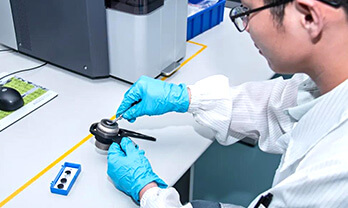
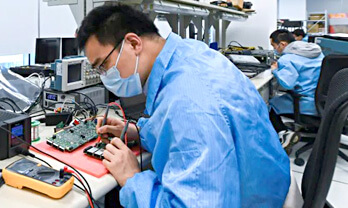
Allelco is committed to exceeding customer expectations through customer service excellence, order accuracy, and on-time delivery.
This is achieved through our commitment to the continual improvement of our processes, services, and products.


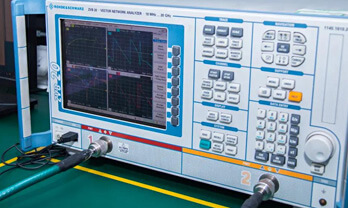
Strict quality inspection builds a solid foundation for electronic component quality.
  1. Visual inspection
  2. Performance testing and reliability verification
  3. Standardized full-process testing
  4. Precise control of every parameter
We eliminate defective components and ensure the stable operation of electronic devices through professional quality standards.

Payment Support

The payment method can be chosen from the methods shown below: Wire Transfer (T/T, Bank Transfer), Western Union, Credit card, PayPal.
  • HKBea
  • Paypal
  • MasterCard
  • Western-Union
  • VISA
Stable Delivery, Sincere Partnership — Your Faithful Supply Chain Partner
  • Efficient Supply Management
  • Cost-Saving Procurement
  • Fast Sourcing & Delivery
Contact us if you have any questions.

Packaging

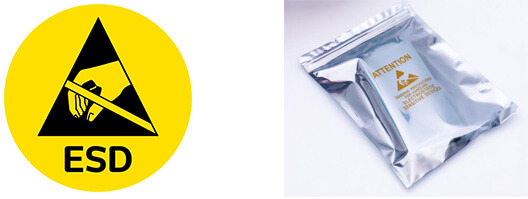
Electrostatic Discharge Protection and Handling

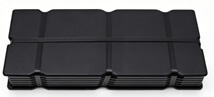
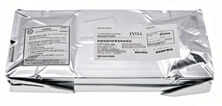
All electrostatic-sensitive components are handled in accordance with electrostatic discharge control procedures. The products are hermetically sealed in anti-static safe packaging to prevent electrostatic damage. Appropriate labeling is also applied for identification and traceability. This ensures product integrity during storage, handling and transportation.


ESD

Certifications & Memberships

Third-party certified, strict quality control. Our certification
  • ISO 9001: 2015
  • ISO 13485: 2016
  • ISO 14001: 2015
  • ISO 28000: 2007
  • ISO 45001: 2018
  • GB/T 27922-2011
  • SMTA
  • IPC
  • ESD
  • PSMA
Lattice

LCMXO2-7000HC-4FTG256C

Lattice
41D-LCMXO2-7000HC-4FTG256C

Want a better price? Add to Cart and Submit RFQ now, we'll contact you immediately.

0 RFQ
Shopping cart (0 Items)
It is empty.
Compare List (0 Items)
It is empty.
Feedback

Your feedback matters! At Allelco, we value the user experience and strive to improve it constantly.
Please share your comments with us via our feedback form, and we'll respond promptly.
Thank you for choosing Allelco.

Subject
E-mail
Comments
Captcha
Drag or click to upload file
Upload File
types: .xls, .xlsx, .doc, .docx, .jpg, .png and .pdf.
Max file size: 10MB