View All

Please refer to the English Version as our Official Version.Return

Europe
France(Français) Germany(Deutsch) Italy(Italia) Russian(русский) Poland(polski) Czech(Čeština) Luxembourg(Lëtzebuergesch) Netherlands(Nederland) Iceland(íslenska) Hungarian(Magyarország) Spain(español) Portugal(Português) Turkey(Türk dili) Bulgaria(Български език) Ukraine(Україна) Greece(Ελλάδα) Israel(עִבְרִית) Sweden(Svenska) Finland(Svenska) Finland(Suomi) Romania(românesc) Moldova(românesc) Slovakia(Slovenská) Denmark(Dansk) Slovenia(Slovenija) Slovenia(Hrvatska) Croatia(Hrvatska) Serbia(Hrvatska) Montenegro(Hrvatska) Bosnia and Herzegovina(Hrvatska) Lithuania(lietuvių) Spain(Português) Switzerland(Deutsch) United Kingdom(English)
Asia/Pacific
Japan(日本語) Korea(한국의) Thailand(ภาษาไทย) Malaysia(Melayu) Singapore(Melayu) Vietnam(Tiếng Việt) Philippines(Pilipino)
Africa, India and Middle East
United Arab Emirates(العربية) Iran(فارسی) Tajikistan(فارسی) India(हिंदी) Madagascar(malaɡasʲ)
South America / Oceania
New Zealand(Maori) Brazil(Português) Angola(Português) Mozambique(Português)
North America
United States(English) Canada(English) Haiti(Ayiti) Mexico(español)
HomeProductsIntegrated Circuits (ICs)Data Acquisition - Analog to Digital Converters (ADC)ADS6148IRGZ25
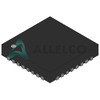
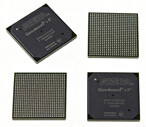
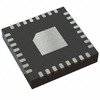
ADS6148IRGZ25 Image
Image may be representation.
See specifications for product details.
EXPRESS OPTION
Payment method

ADS6148IRGZ25 - Texas Instruments

Manufacturer Part Number
ADS6148IRGZ25
Manufacturer
Texas Instruments
Allelco Part Number
98D-ADS6148IRGZ25
Warranty
1 Year Allelco Warranty - Find out more
Stock Status:
11,809 pcs available, New & Original
Parts Description
IC ADC 14BIT PIPELINED 48VQFN
Package
48-VQFN (7x7)
Data sheet
ADS6148IRGZ25.pdf

HTML Datasheet

ADS6128,29,48,49.pdf
RoHs Status
ROHS3 Compliant
Our certification
In stock: 11809

Required fields are indicated by an asterisk (*)
Please send RFQ, we will respond immediately.

Quantity

Specifications

ADS6148IRGZ25 Tech Specifications
Texas Instruments - ADS6148IRGZ25 technical specifications, attributes, parameters and parts with similar specifications to Texas Instruments - ADS6148IRGZ25

Product Attribute Attribute Value
Manufacturer Texas Instruments
Voltage - Supply, Digital 1.7V ~ 1.9V
Voltage - Supply, Analog 3V ~ 3.6V
Supplier Device Package 48-VQFN (7x7)
Series -
Sampling Rate (Per Second) 210M
Reference Type External, Internal
Ratio - S/H:ADC 1:1
Package / Case 48-VFQFN Exposed Pad
Package Tape & Reel (TR)
Operating Temperature -40°C ~ 85°C
Product Attribute Attribute Value
Number of Inputs 1
Number of Bits 14
Number of A/D Converters 1
Mounting Type Surface Mount
Input Type Differential
Features -
Data Interface LVDS - Parallel, Parallel
Configuration S/H-ADC
Base Product Number ADS6148
Architecture Pipelined

Environmental & Export Classifications

ATTRIBUTE DESCRIPTION
RoHs Status ROHS3 Compliant
Moisture Sensitivity Level (MSL) 3 (168 Hours)
REACH Status REACH Unaffected
ECCN 3A991C3
HTSUS 8542.39.0001

Frequently Asked Questions(FAQ)

How does the ADS6148IRGZ25 achieve its high 210 MSPS sampling rate while maintaining 14-bit resolution in a pipelined architecture, and what are the typical signal-to-noise ratio (SNR) and spurious-free dynamic range (SFDR) trade-offs at full speed?
The ADS6148IRGZ25 leverages a multi-stage pipelined ADC architecture where each stage performs coarse quantization and passes residue information to the next stage with minimal latency. This allows for high-speed conversion by breaking the full 14-bit resolution across multiple stages rather than requiring a single comparator chain. At 210 MSPS, the device achieves approximately 73 dB SNR and 90 dB SFDR under ideal input conditions, but these degrade slightly due to interstage delay skew and aperture jitter limitations inherent in high-speed pipelined designs. The SNR is limited by thermal noise floor and quantization error, while SFDR suffers from harmonic distortion and non-linearities between pipeline stages—especially when operating near Nyquist frequency.
When integrating the ADS6148IRGZ25 into a system with an external reference, how should the reference voltage stability and noise be characterized to ensure optimal performance, and what impact does reference drift have on DC accuracy over temperature?
For optimal performance, the external reference driving the ADS6148IRGZ25 must maintain low noise (<10 µV RMS over 1 kHz to 100 kHz bandwidth) and high long-term stability. A reference drift of ±1 mV over a 50°C temperature range can introduce up to ±0.64 LSB error at 14 bits, directly affecting gain and offset accuracy. The device’s internal calibration features help mitigate initial offset and gain errors, but time-varying reference variations are not corrected. Therefore, precision bandgap or low-drift references with <1 ppm/°C drift are recommended to preserve DC linearity, particularly in applications requiring high static accuracy such as radar or test instrumentation.
In comparison to the ADS6148IRGZT variant, what are the key differences in pin configuration and thermal behavior that could affect PCB layout decisions when using the ADS6148IRGZ25 in compact, high-density designs?
While both the ADS6148IRGZ25 and ADS6148IRGZT share the same 48-pin VQFN package (7x7 mm), the suffix ZT typically denotes tape-and-reel packaging, whereas Z25 may indicate a specific revision or evaluation lot. However, electrically identical, the Z25 variant may exhibit marginally higher power dissipation under continuous high-speed operation due to process variation. Consequently, thermal vias under the exposed pad must be carefully placed to maintain junction temperature below 125°C, especially during sustained 210 MSPS conversions. Layout symmetry around the analog inputs and minimized trace lengths to digital outputs are critical to prevent timing mismatches that degrade ENOB at high frequencies.
What considerations apply when interfacing the ADS6148IRGZ25’s LVDS parallel output interface to a FPGA, and how do termination schemes affect signal integrity at 210 MSPS data rates?
The ADS6148IRGZ25 uses LVDS signaling for its parallel data bus, which requires differential 100 Ω termination resistors near the FPGA receiver. Mismatched or missing termination causes reflections that distort eye diagrams, reducing effective resolution at 210 MSPS. A properly terminated LVDS interface should achieve >600 mV differential swing and maintain eye opening >0.4 UI. Additionally, clock and data alignment must be handled in the FPGA using deskewing logic or dedicated serializer/deserializer (SerDes) blocks capable of handling multi-gigabit serial lanes. PCB layer stack-up should include controlled impedance routing for all data lines to minimize crosstalk and skew accumulation across the 14-bit wide bus.
How does the ADS6148IRGZ25 handle input overdrive conditions, and what happens to the output data when the analog input exceeds the supply rails, including any protection mechanisms or recovery behavior?
The ADS6148IRGZ25 includes internal ESD diodes that clamp input voltages to within the analog supply rails (3.0–3.6 V). Inputs exceeding these limits can forward-bias these diodes, potentially drawing excessive current if no external current-limiting resistor is used. While this does not damage the device immediately, prolonged overdrive may cause latch-up or degrade internal circuitry. The ADC itself saturates and produces code saturation (either all 0s or all 1s) without automatic recovery. Therefore, external clamping circuits or limiting amplifiers are recommended to protect the input stage and maintain predictable behavior during transients.
Given the ADS6148IRGZ25’s dual supply requirement (3.3 V analog, 1.8 V digital), how should power sequencing be managed during system startup to prevent latch-up or undefined states?
Power sequencing must ensure that the analog supply (AVDD = 3.3 V) ramps up before or simultaneously with the digital supply (DVDD = 1.8 V) to prevent reverse biasing of internal junctions. A delay of up to 1 ms between ramp-ups is acceptable, but DVDD must never lead AVDD by more than 0.5 V. If sequencing cannot be guaranteed, dedicated power management ICs (PMICs) with programmable enable pins and built-in sequencing should be used. Additionally, decoupling capacitors (1 µF bulk + 100 nF ceramic per supply) must be placed close to the device to stabilize rails during transient loads from switching at 210 MSPS.
How does aperture jitter in the ADS6148IRGZ25 limit usable bandwidth in real-world applications, and what input signal characteristics maximize the effective number of bits (ENOB) at reduced sampling rates?
Aperture jitter of approximately 150 fs RMS in the ADS6148IRGZ25 introduces phase noise in sampled signals, degrading SNR according to the formula SNR = -20 log(2π f_in * t_jitter). At 210 MSPS, this limits useful input frequencies to around 50–60 MHz before SNR drops below 60 dB. For signals below 10 MHz, ENOB remains above 12 bits even at full speed. To maximize ENOB, sinusoidal inputs with clean spectral content and minimal harmonics are preferred, and anti-aliasing filtering should be designed to attenuate out-of-band energy beyond half the sampling rate.
What role does calibration play in the ADS6148IRGZ25, and how frequently must it be performed in field-deployed systems where temperature varies significantly between -40°C and 85°C?
The ADS6148IRGZ25 supports internal background calibration that continuously monitors and corrects for gain, offset, and inter-stage gain errors. While this improves linearity over time, it does not eliminate drift caused by temperature-induced component mismatch. In systems spanning the full -40°C to 85°C range, periodic recalibration every 10,000 samples or once per second may be necessary for applications demanding sub-millivolt accuracy. Calibration routines should be triggered during idle periods to avoid disrupting live data acquisition.
How does the single-ended to differential conversion capability of the ADS6148IRGZ25 interface work, and what input common-mode voltage range must be maintained for reliable operation?
Although the ADS6148IRGZ25 accepts differential inputs, it can be driven with single-ended sources via a balanced front-end amplifier. The analog input accepts differential voltages up to ±0.5 V, with a common-mode voltage ideally centered at 1.5 V (mid-supply). Deviations beyond ±0.3 V from this point risk saturation or degraded CMRR. Therefore, proper biasing using precision resistors or a virtual ground amplifier is essential when converting single-ended signals to meet the differential input requirements of the ADC.
Compared to other 14-bit pipelined ADCs like the ADS62Jxx family, how does the ADS6148IRGZ25 differentiate itself in terms of speed, power efficiency, and interface complexity for high-throughput data acquisition systems?
The ADS6148IRGZ25 offers significantly higher sampling rate (210 MSPS vs. typically 50–100 MSPS in similar TI families) and parallel LVDS output, making it suitable for direct FPGA interfacing without serialization. However, it consumes more power (~350 mW at full speed) than lower-speed counterparts, reflecting the increased transistor activity and clock distribution required at such speeds. Its parallel interface simplifies timing control but demands careful PCB design for trace matching, whereas serial interfaces reduce pin count but require high-speed SerDes blocks. Thus, the ADS6148IRGZ25 trades power and layout complexity for raw throughput in bandwidth-constrained applications.
What precautions must be taken when storing or transporting the ADS6148IRGZ25, given its Moisture Sensitivity Level (MSL) rating of 3, and how does improper handling affect solder joint reliability?
As an MSL 3 component, the ADS6148IRGZ25 must be stored in dry ambient conditions (≤60% RH) and soldered within 168 hours of exposure to ambient air. After opening a moisture-barrier bag, components must undergo bake-out at 125°C for 24 hours before reflow if the time exceeds 168 hours. Failure to follow this schedule risks moisture ingress during reflow, leading to popcorning and delamination at the die-attach or underfill interface. Proper handling ensures long-term reliability, particularly in automotive or industrial environments subject to thermal cycling.
Can the ADS6148IRGZ25 operate reliably in noisy environments with high-frequency switching regulators nearby, and what layout practices minimize electromagnetic interference (EMI) coupling into its sensitive analog inputs?
Yes, but only with stringent layout practices. The 14-bit ADC is vulnerable to conducted and radiated EMI from adjacent digital circuitry. To mitigate coupling, separate analog and digital ground planes with a single-point connection near the ADC, use guard rings around analog traces, and route high-speed digital signals orthogonally away from input paths. Ferrite beads on power rails and shielded cables for input signals further reduce noise pickup. Maintaining a minimum clearance of 5 mm between analog inputs and switching nodes helps preserve dynamic range in harsh environments.
What diagnostic features does the ADS6148IRGZ25 offer for system-level validation, and how can built-in self-test (BIST) modes aid in identifying degradation during operational life?
The ADS6148IRGZ25 includes BIST capabilities such as pseudo-random noise (PRN) generation and histogram analysis modes accessible via control registers. These allow users to inject known test patterns and monitor output statistics to detect trends in INL, DNL, or gain drift over time. While not fully exhaustive, these features provide early warning of aging effects or environmental stressors affecting performance, enabling predictive maintenance in mission-critical systems.
How should the ADS6148IRGZ25’s data interface be synchronized with an external clock source, and what clock quality parameters are most critical to preserve resolution at maximum sampling rate?
The device uses a differential LVPECL or LVDS clock input for synchronization. Critical clock parameters include jitter (<2 ps RMS), duty cycle stability (>45% to 55%), and rise/fall times (<300 ps). Poor duty cycle distortion causes sampling uncertainty, while high jitter degrades SNR as previously discussed. Clock distribution should use matched-length traces and low-jitter oscillators, preferably with phase-locked loops (PLLs) to clean up reference signals in multi-device systems.
What is the expected lifetime and failure mode profile for the ADS6148IRGZ25 under normal operating conditions, and how does electromigration risk scale with supply voltage and temperature?
Under typical 3.3 V/1.8 V operation and 85°C ambient, the ADS6148IRGZ25 exhibits a mean time between failures (MTBF) exceeding 100 years based on JEDEC standards. Primary failure modes include interconnect open circuits due to electromigration in metal layers and gate oxide breakdown in CMOS transistors. Electromigration risk increases exponentially with current density, which rises with supply voltage and temperature. Operating below rated maximums reduces these risks significantly, ensuring long-term reliability in industrial applications.

Parts with Similar Specifications

The three parts on the right have similar specifications to Texas Instruments ADS6148IRGZ25

Product Attribute ADS6149IRGZ25 ADS6148IRGZR ADS6148IRGZT ADS6149IRGZT
Part Number ADS6149IRGZ25 ADS6148IRGZR ADS6148IRGZT ADS6149IRGZT
Manufacturer Texas Instruments Texas Instruments Texas Instruments Texas Instruments
Base Product Number - DAC34H84 MAX500 ADS62P42
Data Interface - LVDS - Parallel I²C LVDS - Parallel, Parallel
Operating Temperature - -40°C ~ 85°C 0°C ~ 70°C -40°C ~ 85°C
Features - - - Simultaneous Sampling
Series - - - -
Mounting Type - Surface Mount Through Hole Surface Mount
Architecture - Current Source R-2R Pipelined
Supplier Device Package - 196-NFBGA (12x12) 16-PDIP 64-VQFN (9x9)
Number of A/D Converters - - - 2
Ratio - S/H:ADC - - - 1:1
Number of Bits - 16 8 14
Reference Type - External, Internal External External, Internal
Package - Tape & Reel (TR) Tube Tape & Reel (TR)
Sampling Rate (Per Second) - - - 65M
Configuration - - - S/H-ADC
Input Type - - - Differential
Package / Case - 196-LFBGA 16-DIP (0.300', 7.62mm) 64-VFQFN Exposed Pad
Voltage - Supply, Analog - 3.14V ~ 3.46V 11.4V ~ 16.5V 3V ~ 3.6V
Voltage - Supply, Digital - 1.14V ~ 1.26V 11.4V ~ 16.5V 1.65V ~ 3.6V
Number of Inputs - - - 2

ADS6148IRGZ25 Datasheet PDF

Download ADS6148IRGZ25 pdf datasheets and Texas Instruments documentation for ADS6148IRGZ25 - Texas Instruments.

HTML Datasheet
ADS6128,29,48,49.pdf

Customer Reviews

Evaluation: 10 Articles

  • Dani***alkerTech
    Jun 1, 2026

    Product works, but setup took more effort than expected. Once configured the MCU ran reliably, although documentation support felt older compared with newer platforms. Fine for maintenance projects.

  • Yuki***aka88
    May 26, 2026

    信号通信プロジェクトでこのRS-485トランシーバーを使用しました。設置は簡単で、長距離ケーブルでも通信は安定していました。消費電力も、以前使用していたものより低くなっています。

  • Stev***aker
    May 20, 2026

    Solid diode for power rectification. Works well in switching circuits.

  • Bran***Lewis
    May 11, 2026

    Compact FPGA with good performance. Suitable for basic signal processing tasks.

  • Oliv***arris
    May 7, 2026

    Reliable I/O expander. Works well in embedded control applications.

  • Jess***Jones
    Apr 17, 2026

    It offers good value for the price, and the specifications match the description. I’ve been using it for two days with no issues, and I’ll definitely buy it again if I need it in the future.

  • Mich***Smith
    Apr 17, 2026

    Shipping was on time, the component pins are neatly aligned, and I tested 10 of them with a multimeter—all readings were within the specified range. Highly recommended.

  • Aman***arris
    Apr 3, 2026

    It was great—the entire process, from placing the order to receiving the package, went very smoothly. The components were consistent, the price was fair, and I had a very pleasant shopping experience.

  • Mike***nch
    Apr 3, 2026

    Better than expected! The resistance and capacitance readings were spot-on, and it passed the test on the first try. The service was reliable, and the packaging was thoughtful—I highly recommend it.

  • Daic***K.
    Mar 23, 2026

    Very good. No issue after long time testing.

Write a Review

Your Email address will not be published.

Shipment

Delivery Time

In-stock items can be shipped within 24 hours. Some parts will be arranged for delivery within 1-2 days from the date all items arrive at our warehouse. And Allelco ships order once a day at about 17:00, except Sunday. Once the goods are shipped, the estimated delivery time depends on the shipping methods and Delivery destination. The table below shows are the logistic time for some common countries.

Delivery Cost

  1. Use your express account for shipment if you have one.
  2. Use our account for the shipment. Refer to the table below for the approximate charges.
(Different time frame / countries / package size has different price.)

Delivery Method

  1. Global Common Shipment by DHL / UPS / FedEx / TNT / EMS / SF we support.
  2. Others more shipping ways, please get in touch with your customer manager.

Common Countries Logistic Time Reference
Region Country Logistic Time(Day)
America United States 5
Brazil 7
Europe Germany 5
United Kingdom 4
Italy 5
Oceania Australia 6
New Zealand 5
Asia India 4
Japan 4
Middle East Israel 6
DHL & FedEx Shipment Charges Reference
Shipment charges(KG) Reference DHL(USD$)
0.00kg-1.00kg USD$30.00 - USD$60.00
1.00kg-2.00kg USD$40.00 - USD$80.00
2.00kg-3.00kg USD$50.00 - USD$100.00
Note:
The above table is for reference only. There may have some data bias for the uncontrollable factors.
Contact us if you have any questions.
  • QC (Quality Warranty)
  • Payment Support
  • Packaging
  • Certifications & Memberships

QC (Quality Warranty)

Allelco is committed to exceeding customer expectations through customer service excellence, order accuracy, and on-time delivery.
This is achieved through our commitment to the continual improvement of our processes, services, and products.


Strict quality inspection builds a solid foundation for electronic component quality.
  1. Visual inspection
  2. Performance testing and reliability verification
  3. Standardized full-process testing
  4. Precise control of every parameter
We eliminate defective components and ensure the stable operation of electronic devices through professional quality standards.

Payment Support

The payment method can be chosen from the methods shown below: Wire Transfer (T/T, Bank Transfer), Western Union, Credit card, PayPal.
  • HKBea
  • Paypal
  • MasterCard
  • Western-Union
  • VISA
Stable Delivery, Sincere Partnership — Your Faithful Supply Chain Partner
  • Efficient Supply Management
  • Cost-Saving Procurement
  • Fast Sourcing & Delivery
Contact us if you have any questions.

Packaging

Electrostatic Discharge Protection and Handling

All electrostatic-sensitive components are handled in accordance with electrostatic discharge control procedures. The products are hermetically sealed in anti-static safe packaging to prevent electrostatic damage. Appropriate labeling is also applied for identification and traceability. This ensures product integrity during storage, handling and transportation.


ESD

Certifications & Memberships

Third-party certified, strict quality control. Our certification
  • ISO 9001: 2015
  • ISO 13485: 2016
  • ISO 14001: 2015
  • ISO 28000: 2007
  • ISO 45001: 2018
  • GB/T 27922-2011
  • SMTA
  • IPC
  • ESD
  • PSMA
ADS6148IRGZ25 Image

ADS6148IRGZ25

Texas Instruments
98D-ADS6148IRGZ25

Want a better price? Add to Cart and Submit RFQ now, we'll contact you immediately.

0 RFQ
Shopping cart (0 Items)
It is empty.
Compare List (0 Items)
It is empty.
Feedback

Your feedback matters! At Allelco, we value the user experience and strive to improve it constantly.
Please share your comments with us via our feedback form, and we'll respond promptly.
Thank you for choosing Allelco.

Subject
E-mail
Comments
Captcha
Drag or click to upload file
Upload File
types: .xls, .xlsx, .doc, .docx, .jpg, .png and .pdf.
Max file size: 10MB