View All

Please refer to the English Version as our Official Version.Return

Europe
France(Français) Germany(Deutsch) Italy(Italia) Russian(русский) Poland(polski) Czech(Čeština) Luxembourg(Lëtzebuergesch) Netherlands(Nederland) Iceland(íslenska) Hungarian(Magyarország) Spain(español) Portugal(Português) Turkey(Türk dili) Bulgaria(Български език) Ukraine(Україна) Greece(Ελλάδα) Israel(עִבְרִית) Sweden(Svenska) Finland(Svenska) Finland(Suomi) Romania(românesc) Moldova(românesc) Slovakia(Slovenská) Denmark(Dansk) Slovenia(Slovenija) Slovenia(Hrvatska) Croatia(Hrvatska) Serbia(Hrvatska) Montenegro(Hrvatska) Bosnia and Herzegovina(Hrvatska) Lithuania(lietuvių) Spain(Português) Switzerland(Deutsch) United Kingdom(English)
Asia/Pacific
Japan(日本語) Korea(한국의) Thailand(ภาษาไทย) Malaysia(Melayu) Singapore(Melayu) Vietnam(Tiếng Việt) Philippines(Pilipino)
Africa, India and Middle East
United Arab Emirates(العربية) Iran(فارسی) Tajikistan(فارسی) India(हिंदी) Madagascar(malaɡasʲ)
South America / Oceania
New Zealand(Maori) Brazil(Português) Angola(Português) Mozambique(Português)
North America
United States(English) Canada(English) Haiti(Ayiti) Mexico(español)
HomeProductsIntegrated Circuits (ICs)Interface - SpecializedTMDS171RGZR
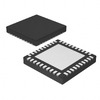
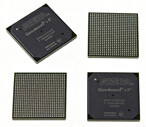
TMDS171RGZR Image
Image may be representation.
See specifications for product details.
EXPRESS OPTION
Payment method

TMDS171RGZR - Texas Instruments

Manufacturer Part Number
TMDS171RGZR
Manufacturer
Texas Instruments
Allelco Part Number
32D-TMDS171RGZR
Warranty
1 Year Allelco Warranty - Find out more
Stock Status:
13,769 pcs available, New & Original
Parts Description
IC INTERFACE SPECIALIZED 48VQFN
Package
48-VQFN (7x7)
Data sheet
TMDS171RGZR.pdf
RoHs Status
ROHS3 Compliant
Our certification
In stock: 13769
  • Unit Price: $267.961
  • Subtotal: $0.00

Want a better price?
Add to Cart and Submit RFQ now, we'll contact you immediately.

Quantity Unit Price Ext. Price
1+ $267.961 $267.96
30+ $256.815 $7,704.45
The above prices does not include taxes and freight rates, which will be calculated on the order pages.

Specifications

TMDS171RGZR Tech Specifications
Texas Instruments - TMDS171RGZR technical specifications, attributes, parameters and parts with similar specifications to Texas Instruments - TMDS171RGZR

Product Attribute Attribute Value
Manufacturer Texas Instruments
Voltage - Supply 3.135V ~ 3.465V
Supplier Device Package 48-VQFN (7x7)
Series -
Package / Case 48-VFQFN Exposed Pad
Product Attribute Attribute Value
Package Tape & Reel (TR)
Mounting Type Surface Mount
Interface I²C
Base Product Number TMDS171
Applications Retimer

Environmental & Export Classifications

ATTRIBUTE DESCRIPTION
RoHs Status ROHS3 Compliant
Moisture Sensitivity Level (MSL) 2 (1 Year)
REACH Status REACH Unaffected
ECCN EAR99
HTSUS 8542.39.0001

Parts Introduction

TMDS171RGZR Image
TMDS171RGZR (1)

Manufacturer Part Number

TMDS171RGZR

Manufacturer

Texas Instruments

Introduction

The TMDS171RGZR is an active interface specialized integrated circuit designed for signal retiming applications.

Product Features and Performance

Integrated retimer for high-speed signal conditioning

Enhanced signal integrity for extended PCB trace lengths

Low power consumption optimized for energy efficiency

Programmable via I2C interface for flexible configuration

Supports TMDS signaling for robust data transmission

Product Advantages

Improves signal quality for reliable data transfer

Extends the operational range of high-speed interfaces

Simplifies PCB layout with reduced need for additional components

Enables advanced features through programmable settings

Key Technical Parameters

Interface Specialized: Retimer

Voltage Supply: 3.135V to 3.465V

I2C interface compatibility for device configuration

Suited for 48-VFQFN Exposed Pad package implementation

Surface Mount mounting type for ease of assembly on PCBs

Quality and Safety Features

Complies with industry-standard quality and safety regulations

Manufactured by Texas Instruments, known for reliable and robust components

Compatibility

Compatible with devices requiring TMDS-based signal retiming

Interface with I2C allows for programmable settings and adaptability across various systems

Application Areas

High-definition multimedia interfaces (HDMI)

Digital Visual Interface (DVI) links

Other applications requiring clean and stable high-speed signal transmission

Product Lifecycle

Product status: Active

Consistently supported with ongoing production and no near-term discontinuation

Availability of replacements or upgrades as technology progresses

Several Key Reasons to Choose This Product

Texas Instruments' reputation for high-quality and cutting-edge technology

Reduces design complexity and improves end-product performance

Provides a solution for extending signal reach without degradation

Tightly controlled supply voltage range tailored for modern electronics

Surface mount design aligns with industry-standard assembly processes

Futuristic approach with potential for firmware updates via I2C interface

Frequently Asked Questions(FAQ)

How does the TMDS171RGZR support signal integrity in high-speed display interfaces, and what are the key voltage constraints for reliable operation?
The TMDS171RGZR functions as a retimer specifically designed to regenerate and reshape high-speed serial data streams in display interface applications such as HDMI or DisplayPort. It operates within a tight supply voltage range of 3.135V to 3.465V, which aligns with standard 3.3V logic environments while minimizing noise susceptibility and power dissipation. This precision voltage window ensures compatibility with sensitive analog front-end circuitry responsible for clock recovery and data alignment. Operating outside this range risks degraded eye diagram performance, increased bit error rates, and potential latch-up in the internal ESD protection structures.
What is the significance of the I²C interface on the TMDS171RGZR in system configuration, and how does it compare to direct register access methods in embedded designs?
The TMDS171RGZR incorporates an I²C interface that enables software-controlled configuration of internal registers, allowing dynamic adjustment of equalization settings, de-emphasis levels, and loop bandwidth without hardware modification. Compared to hardwired pin strapping or jumpers—common in simpler redrivers—this approach offers greater flexibility during bring-up and field updates. However, it introduces minor latency and dependency on host microcontroller availability. In contrast, devices relying solely on passive components lack any configurability, making the TMDS171RGZR preferable when adaptive tuning is required across varying cable lengths or environmental conditions.
Can the TMDS171RGZR be used interchangeably with other TI retimer devices like the TMDS158RGZT, and under what conditions might one be preferred over the other?
While both the TMDS171RGZR and TMDS158RGZT belong to Texas Instruments’ family of retimers, they differ in package size, pin count, and some electrical characteristics. The TMDS171RGZR uses a 48-pin VQFN (7x7) package, supporting more advanced features such as integrated termination and enhanced jitter tolerance, whereas the TMDS158RGZT typically appears in smaller packages with fewer control options. For designs requiring higher channel density or tighter form factors, the TMDS158 may suffice; however, if full reclocking with configurable EQ is needed at speeds up to 3.4 Gbps, the TMDS171RGZR provides superior signal regeneration capabilities due to its improved phase-locked loop architecture and lower deterministic jitter.
What are the thermal implications of mounting the TMDS171RGZR in a compact PCB layout, and how should heat dissipation be managed given its exposed pad design?
Although the TMDS171RGZR consumes modest power—typically less than 100 mW under normal operation—its 48-VQFN package includes an exposed thermal pad that must be properly connected to a solid ground plane for effective heat spreading. Poor thermal management can lead to elevated junction temperatures, potentially triggering internal thermal shutdown or accelerating electromigration in nearby traces. Designers should ensure adequate copper area beneath the package, avoid routing high-current paths adjacent to the device, and consider adding vias to inner layers to enhance conduction cooling. In crowded boards where airflow is limited, monitoring die temperature through diagnostic registers becomes critical.
How does the Moisture Sensitivity Level (MSL) rating of 3 for the TMDS171RGZR affect manufacturing handling procedures, especially in automated assembly lines?
With an MSL of 3 (168-hour floor life at 30°C/60% RH), the TMDS171RGZR requires strict adherence to JEDEC J-STD-020 guidelines during SMT assembly. After opening the moisture barrier bag, the component must be reflow soldered within 168 hours unless baked prior to use. Prolonged exposure to ambient humidity increases the risk of popcorning during reflow, which could compromise solder joint reliability or cause delamination. Automated pick-and-place machines equipped with humidity-monitored storage drawers help maintain compliance, but process engineers must log bake cycles and rework procedures to satisfy quality traceability requirements.
Is the TMDS171RGZR suitable for automotive infotainment systems, and what additional considerations apply beyond standard industrial temperature ratings?
Yes, the TMDS171RGZR supports extended industrial temperatures (-40°C to +85°C), making it viable for automotive-grade displays in cabin environments. However, achieving AEC-Q100 qualification involves rigorous testing not covered by the standard datasheet parameters. Designers must verify long-term drift in clock recovery accuracy under thermal cycling, assess susceptibility to voltage transients from load dump events, and validate electromagnetic compatibility per CISPR 25. Additionally, functional safety analyses—such as failure mode effects diagnostics—must be performed if the retimer participates in ASIL-rated subsystems, necessitating redundant signaling paths or watchdog monitoring.
What role does the base product number TMDS171 play in firmware development, and how does it influence driver portability across evaluation boards?
The TMDS171 base product designation indicates shared core functionality among derivatives like RGZT or QFN variants, enabling common register maps and initialization sequences in vendor-provided libraries. Developers referencing the TMDS171RGZR benefit from consistent I²C addressing and command structures regardless of packaging, simplifying porting between prototyping platforms such as TI’s DPL171EVM. This abstraction allows focus on application-layer tuning—like setting pre-emphasis levels—rather than low-level pin multiplexing. Nevertheless, peripheral-specific features tied to pinout differences (e.g., test access ports) require conditional compilation or runtime detection based on actual part number.
How does the ECCN classification (EAR99) of the TMDS171RGZR impact export controls for global manufacturing partners, particularly in regions with stringent encryption regulations?
Classified under ECCN EAR99, the TMDS171RGZR falls outside U.S. Department of Commerce encryption controls, meaning it generally does not require export licenses for commercial shipments worldwide. However, this classification assumes the device is used in non-sensitive consumer electronics contexts. If integrated into defense, aerospace, or government-approved systems involving secure video transmission, further review under BIS guidelines may be necessary. Suppliers often provide end-use statements to clarify intended deployment scenarios, aiding compliance teams in determining whether supplemental documentation—such as encryption declarations—is warranted.
What are the implications of the HTSUS code 8542.39.0001 for customs clearance and duty assessment when sourcing TMDS171RGZR from international distributors?
The Harmonized Tariff Schedule of the United States (HTSUS) code 8542.39.0001 applies to “Electronic Integrated Circuits,” categorizing the TMDS171RGZR under broad semiconductor duties. While this simplifies import procedures compared to specific encryption-device codes, it still subjects shipments to standard ad valorem tariffs (typically 2.5–3.5% for ICs). Accurate coding avoids delays at borders, especially when importing large volumes for contract manufacturing. Distributors usually pre-classify items using this code, but importers should periodically audit classifications against current CBP rulings to account for legislative changes affecting similar mixed-signal interface ICs.
When selecting between the TMDS171RGZR and discrete redriver solutions, what performance metrics justify choosing an integrated retimer despite higher unit cost?
Discrete redrivers often lack integrated clock-data recovery (CDR) loops, requiring external oscillators and complex PCB layouts to meet jitter specifications. The TMDS171RGZR embeds a robust CDR with automatic lock detection and adaptive equalization, reducing bill-of-materials complexity and improving timing margin by up to 3 dB in typical 5-meter HDMI runs. At data rates exceeding 1.5 Gbps, this translates to reliable operation where discrete approaches fail due to cumulative skew and EMI coupling. Though the TMDS171RGZR commands a premium over basic buffers, its integration reduces total system cost through fewer support components and faster time-to-market.
How does the surface-mount orientation of the TMDS171RGZR affect automated optical inspection (AOI) during high-volume production, and what solder paste printing tolerances are recommended?
The 48-pin VQFN footprint demands precise stencil aperture ratios (typically 70–80% fill) to ensure adequate solder wetting around fine-pitch leads. Misalignment during placement exceeding ±0.1 mm risks bridging between adjacent pads, which AOI systems flag as defects. Due to the exposed thermal pad, designers must avoid excessive solder paste volume that could cause solder wicking away from signal pins during reflow. IPC Class 2 standards recommend using laser-cut stencils with electroformed finishes and nitrogen-assisted ovens to minimize voiding beneath the central pad, ensuring consistent thermal mass and electrical continuity.
In multi-drop I²C configurations, how many TMDS171RGZRs can be reliably addressed without bus contention or timing violations?
Each TMDS171RGZR defaults to a fixed I²C slave address (typically 0x48 in write mode), limiting direct multi-device sharing on a single bus unless addresses are altered via external resistors—a feature not supported on this model. Therefore, only one TMDS171RGZR should reside per I²C segment. To scale beyond one unit, designers must implement separate I²C buses controlled by different masters or use multiplexers like PCA9548A, introducing added latency and complexity. Attempting daisy-chaining multiple TMDS171RGZRs without address isolation leads to arbitration failures and corrupted configuration writes.
What diagnostic features does the TMDS171RGZR offer for system bring-up, and how can jitter performance be validated in lab environments?
The TMDS171RGZR exposes internal status registers via I²C that report link lock status, receiver input amplitude, and equalizer tap values. These allow real-time verification of signal acquisition during initial power-up. For jitter characterization, a bit error rate tester (BERT) with a pseudo-random binary sequence (PRBS) pattern generator applied at the input can quantify recovered jitter at the output. By sweeping input conditions—including cable length and loss—designers can map the device’s eye diagram closure and validate compliance with HDMI 2.0 specifications. Oscilloscope probing of differential outputs requires high-bandwidth active probes to capture sub-picosecond transitions accurately.
Does the TMDS171RGZR support hot-plug detection, and what precautions are necessary when integrating it into live-display systems?
Yes, the TMDS171RGZR includes built-in hot-plug detect (HPD) circuitry that monitors rising-edge transitions on the HPD line, enabling downstream source devices to initiate EDID reads. However, HPD must be driven by a GPIO from the host processor capable of sustaining 5 mA sink current. Improper drive strength or slow rise times cause false disconnections or failed enumeration. During system integration, ensure HPD pull-up resistors match the source impedance (typically 4.7 kΩ to 5V) and that no parasitic capacitance slows the signal below spec. Hot-swapping cables without proper ESD grounding risks damaging the LVDS inputs, even with integrated protection diodes.
How does the RoHS3 compliance of the TMDS171RGZR align with emerging EU regulations restricting hazardous substances in electronic equipment?
RoHS3 certification confirms the TMDS171RGZR contains no restricted substances above mandated thresholds, including exemptions for lead-free solder compatibility and mercury in optoelectronics. As of 2023, RoHS3 expands coverage to medical devices and IT equipment, reinforcing the part’s suitability for European markets. Manufacturers leveraging the TMDS171RGZR can streamline CE marking processes by relying on supplier declarations of conformity (DoC), provided supply chain transparency is maintained. Future revisions targeting PFAS or boric acid may require reassessment, but current formulations remain unaffected under REACH Annex XVII.
What are the long-term reliability concerns associated with the TMDS171RGZR in consumer display applications experiencing frequent power cycles?
Frequent power cycling exposes the TMDS171RGZR to repeated inrush currents and voltage sag events, which stress decoupling capacitors and bond wires near the power rails. Over time, this accelerates electromigration in thin-film interconnects, particularly at the 7x7 VQFN corners where current density peaks. Designers should include bulk ceramic capacitors (≥10 µF) close to VDD pins and validate transient response using step-load simulations. Additionally, enabling soft-start circuitry at the system level limits di/dt during boot, preserving the retimer’s internal linear regulators and extending mean time between failures in end-user environments with unstable mains supplies.

Parts with Similar Specifications

The three parts on the right have similar specifications to Texas Instruments TMDS171RGZR

Product Attribute TMDS171IRGZR TMDS171IRGZT TMDS181IRGZR TMDS181RGZR
Part Number TMDS171IRGZR TMDS171IRGZT TMDS181IRGZR TMDS181RGZR
Manufacturer Texas Instruments Texas Instruments Texas Instruments Texas Instruments
Interface - - - -
Series - - - -
Supplier Device Package - 196-NFBGA (12x12) 16-PDIP 64-VQFN (9x9)
Package - Tape & Reel (TR) Tube Tape & Reel (TR)
Applications - - - -
Mounting Type - Surface Mount Through Hole Surface Mount
Voltage - Supply - - - -
Base Product Number - DAC34H84 MAX500 ADS62P42
Package / Case - 196-LFBGA 16-DIP (0.300', 7.62mm) 64-VFQFN Exposed Pad

TMDS171RGZR Datasheet PDF

Download TMDS171RGZR pdf datasheets and Texas Instruments documentation for TMDS171RGZR - Texas Instruments.

HTML Datasheet
TMDS171(I) Datasheet.pdf
PCN Design/Specification
TMDS171/TMDS171I 16/Dec/2016.pdf TMDS171/TMDS171I 27/Sep/2017.pdf

Customer Reviews

Evaluation: 10 Articles

  • Nath***rooks
    Jun 11, 2026

    Installed this power component in a converter board. Output remained stable under different load conditions and thermal performance was better than expected.

  • Dani***alkerTech
    Jun 1, 2026

    Product works, but setup took more effort than expected. Once configured the MCU ran reliably, although documentation support felt older compared with newer platforms. Fine for maintenance projects.

  • Yuki***aka88
    May 26, 2026

    信号通信プロジェクトでこのRS-485トランシーバーを使用しました。設置は簡単で、長距離ケーブルでも通信は安定していました。消費電力も、以前使用していたものより低くなっています。

  • Stev***aker
    May 20, 2026

    Solid diode for power rectification. Works well in switching circuits.

  • Bran***Lewis
    May 11, 2026

    Compact FPGA with good performance. Suitable for basic signal processing tasks.

  • Oliv***arris
    May 7, 2026

    Reliable I/O expander. Works well in embedded control applications.

  • Jess***Jones
    Apr 17, 2026

    It offers good value for the price, and the specifications match the description. I’ve been using it for two days with no issues, and I’ll definitely buy it again if I need it in the future.

  • Mich***Smith
    Apr 17, 2026

    Shipping was on time, the component pins are neatly aligned, and I tested 10 of them with a multimeter—all readings were within the specified range. Highly recommended.

  • Aman***arris
    Apr 3, 2026

    It was great—the entire process, from placing the order to receiving the package, went very smoothly. The components were consistent, the price was fair, and I had a very pleasant shopping experience.

  • Mike***nch
    Apr 3, 2026

    Better than expected! The resistance and capacitance readings were spot-on, and it passed the test on the first try. The service was reliable, and the packaging was thoughtful—I highly recommend it.

Write a Review

Your Email address will not be published.

Shipment

Delivery Time

In-stock items can be shipped within 24 hours. Some parts will be arranged for delivery within 1-2 days from the date all items arrive at our warehouse. And Allelco ships order once a day at about 17:00, except Sunday. Once the goods are shipped, the estimated delivery time depends on the shipping methods and Delivery destination. The table below shows are the logistic time for some common countries.

Delivery Cost

  1. Use your express account for shipment if you have one.
  2. Use our account for the shipment. Refer to the table below for the approximate charges.
(Different time frame / countries / package size has different price.)

Delivery Method

  1. Global Common Shipment by DHL / UPS / FedEx / TNT / EMS / SF we support.
  2. Others more shipping ways, please get in touch with your customer manager.

Common Countries Logistic Time Reference
Region Country Logistic Time(Day)
America United States 5
Brazil 7
Europe Germany 5
United Kingdom 4
Italy 5
Oceania Australia 6
New Zealand 5
Asia India 4
Japan 4
Middle East Israel 6
DHL & FedEx Shipment Charges Reference
Shipment charges(KG) Reference DHL(USD$)
0.00kg-1.00kg USD$30.00 - USD$60.00
1.00kg-2.00kg USD$40.00 - USD$80.00
2.00kg-3.00kg USD$50.00 - USD$100.00
Note:
The above table is for reference only. There may have some data bias for the uncontrollable factors.
Contact us if you have any questions.
  • QC (Quality Warranty)
  • Payment Support
  • Packaging
  • Certifications & Memberships

QC (Quality Warranty)

Allelco is committed to exceeding customer expectations through customer service excellence, order accuracy, and on-time delivery.
This is achieved through our commitment to the continual improvement of our processes, services, and products.


Strict quality inspection builds a solid foundation for electronic component quality.
  1. Visual inspection
  2. Performance testing and reliability verification
  3. Standardized full-process testing
  4. Precise control of every parameter
We eliminate defective components and ensure the stable operation of electronic devices through professional quality standards.

Payment Support

The payment method can be chosen from the methods shown below: Wire Transfer (T/T, Bank Transfer), Western Union, Credit card, PayPal.
  • HKBea
  • Paypal
  • MasterCard
  • Western-Union
  • VISA
Stable Delivery, Sincere Partnership — Your Faithful Supply Chain Partner
  • Efficient Supply Management
  • Cost-Saving Procurement
  • Fast Sourcing & Delivery
Contact us if you have any questions.

Packaging

Electrostatic Discharge Protection and Handling

All electrostatic-sensitive components are handled in accordance with electrostatic discharge control procedures. The products are hermetically sealed in anti-static safe packaging to prevent electrostatic damage. Appropriate labeling is also applied for identification and traceability. This ensures product integrity during storage, handling and transportation.


ESD

Certifications & Memberships

Third-party certified, strict quality control. Our certification
  • ISO 9001: 2015
  • ISO 13485: 2016
  • ISO 14001: 2015
  • ISO 28000: 2007
  • ISO 45001: 2018
  • GB/T 27922-2011
  • SMTA
  • IPC
  • ESD
  • PSMA
TMDS171RGZR Image

TMDS171RGZR

Texas Instruments
32D-TMDS171RGZR

Want a better price? Add to Cart and Submit RFQ now, we'll contact you immediately.

0 RFQ
Shopping cart (0 Items)
It is empty.
Compare List (0 Items)
It is empty.
Feedback

Your feedback matters! At Allelco, we value the user experience and strive to improve it constantly.
Please share your comments with us via our feedback form, and we'll respond promptly.
Thank you for choosing Allelco.

Subject
E-mail
Comments
Captcha
Drag or click to upload file
Upload File
types: .xls, .xlsx, .doc, .docx, .jpg, .png and .pdf.
Max file size: 10MB