View All

Please refer to the English Version as our Official Version.Return

Europe
France(Français) Germany(Deutsch) Italy(Italia) Russian(русский) Poland(polski) Czech(Čeština) Luxembourg(Lëtzebuergesch) Netherlands(Nederland) Iceland(íslenska) Hungarian(Magyarország) Spain(español) Portugal(Português) Turkey(Türk dili) Bulgaria(Български език) Ukraine(Україна) Greece(Ελλάδα) Israel(עִבְרִית) Sweden(Svenska) Finland(Svenska) Finland(Suomi) Romania(românesc) Moldova(românesc) Slovakia(Slovenská) Denmark(Dansk) Slovenia(Slovenija) Slovenia(Hrvatska) Croatia(Hrvatska) Serbia(Hrvatska) Montenegro(Hrvatska) Bosnia and Herzegovina(Hrvatska) Lithuania(lietuvių) Spain(Português) Switzerland(Deutsch) United Kingdom(English)
Asia/Pacific
Japan(日本語) Korea(한국의) Thailand(ภาษาไทย) Malaysia(Melayu) Singapore(Melayu) Vietnam(Tiếng Việt) Philippines(Pilipino)
Africa, India and Middle East
United Arab Emirates(العربية) Iran(فارسی) Tajikistan(فارسی) India(हिंदी) Madagascar(malaɡasʲ)
South America / Oceania
New Zealand(Maori) Brazil(Português) Angola(Português) Mozambique(Português)
North America
United States(English) Canada(English) Haiti(Ayiti) Mexico(español)
HomeProductsIntegrated Circuits (ICs)Interface - SpecializedTMDS181IRGZR
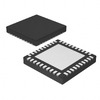
TMDS181IRGZR Image
Image may be representation.
See specifications for product details.
EXPRESS OPTION
Payment method

TMDS181IRGZR - Texas Instruments

Manufacturer Part Number
TMDS181IRGZR
Manufacturer
Texas Instruments
Allelco Part Number
32D-TMDS181IRGZR
Warranty
1 Year Allelco Warranty - Find out more
Stock Status:
8,752 pcs available, New & Original
Parts Description
IC INTERFACE SPECIALIZED 48VQFN
Package
48-VQFN (7x7)
Data sheet
TMDS181IRGZR.pdf
RoHs Status
ROHS3 Compliant
Our certification
In stock: 8752
  • Unit Price: $2.473
  • Subtotal: $0.00

Want a better price?
Add to Cart and Submit RFQ now, we'll contact you immediately.

Quantity Unit Price Ext. Price
1+ $2.473 $2.47
10+ $2.147 $21.47
30+ $1.954 $58.62
100+ $1.758 $175.80
500+ $1.668 $834.00
1000+ $1.627 $1,627.00
The above prices does not include taxes and freight rates, which will be calculated on the order pages.

Specifications

TMDS181IRGZR Tech Specifications
Texas Instruments - TMDS181IRGZR technical specifications, attributes, parameters and parts with similar specifications to Texas Instruments - TMDS181IRGZR

Product Attribute Attribute Value
Manufacturer Texas Instruments
Voltage - Supply 1.2V, 3.3V
Supplier Device Package 48-VQFN (7x7)
Series -
Package / Case 48-VFQFN Exposed Pad
Product Attribute Attribute Value
Package Tape & Reel (TR)
Mounting Type Surface Mount
Interface -
Base Product Number TMDS181
Applications Retimer

Environmental & Export Classifications

ATTRIBUTE DESCRIPTION
RoHs Status ROHS3 Compliant
Moisture Sensitivity Level (MSL) 3 (168 Hours)
REACH Status REACH Unaffected
ECCN EAR99
HTSUS 8542.39.0001

Parts Introduction

TMDS181IRGZR Image
TMDS181IRGZR (1)

Manufacturer Part Number

TMDS181IRGZR

Manufacturer

Texas Instruments

Introduction

The TMDS181IRGZR is an integrated circuit (IC) designed for specialized interface applications.

Product Features and Performance

High-performance TMDS retimer

Supports data rates up to 6 Gbps

Low power consumption

Adaptive equalization and re-clocking

Integrated cable drivers and receivers

Integrated cable equalizer

Supports HDMI, DVI, and DisplayPort interfaces

Product Advantages

Enables long-distance high-speed signal transmission

Enhances signal integrity and reliability

Simplifies design and reduces system complexity

Optimizes power efficiency

Key Technical Parameters

Supply voltage: 1.2V, 3.3V

Data rate: Up to 6 Gbps

Packaging: 48-VQFN (7x7)

Quality and Safety Features

RoHS3 compliant

Designed for reliable and durable performance

Compatibility

Compatible with HDMI, DVI, and DisplayPort interfaces

Application Areas

Retimer applications in high-speed digital video systems

Long-distance signal transmission in display, computing, and imaging systems

Product Lifecycle

The TMDS181IRGZR is an active and widely available product from Texas Instruments.

Key Reasons to Choose This Product

High-performance TMDS retimer with advanced signal processing capabilities

Supports high data rates up to 6 Gbps

Optimizes power efficiency and simplifies system design

Ensures reliable and durable performance with RoHS3 compliance

Compatibility with a wide range of high-speed digital video interfaces

Frequently Asked Questions(FAQ)

How does the TMDS181IRGZR support high-speed signal integrity in display interface designs, and what voltage levels are required for its operation?
The TMDS181IRGZR is engineered as a retimer specifically for Display Serial Interface (DSI) and Embedded Display Interface (eDP) applications, where maintaining signal integrity across long traces or noisy environments is critical. It regenerates high-speed differential signals—typically operating at data rates up to 3 Gbps per channel—by reshaping and reclocking incoming TMDS (Transition-Minimized Differential Signaling) streams. This regeneration helps mitigate issues such as jitter accumulation, attenuation, and electromagnetic interference that can degrade video quality in embedded systems. The device operates from dual supply rails of 1.2 V and 3.3 V, enabling compatibility with low-power system architectures while providing robust noise margin. The 1.2-V core supports energy-efficient logic processing, while the 3.3-V I/O allows interfacing with legacy display panels and FPD-Link III transceivers without level-shifting circuitry.
What are the key differences between the TMDS181IRGZR and other retimer ICs like the TMDS148 or DS90UB953 when used in automotive infotainment systems?
While several TI retimer solutions exist, the TMDS181IRGZR distinguishes itself by targeting mid-range display interfaces requiring deterministic latency and moderate power consumption rather than ultra-low power or full automotive-grade qualification. Unlike the DS90UB953, which integrates deserialization and advanced link training for complex camera-to-processor links, the TMDS181IRGZR focuses solely on signal regeneration for display data paths. Compared to the TMDS148, which lacks integrated termination and requires external biasing components, the TMDS181IRGZR includes on-chip equalization and built-in receiver termination, simplifying PCB layout and reducing bill-of-materials cost. In automotive applications, this makes the TMDS181IRGZR particularly suitable for instrument clusters and secondary displays where space and thermal constraints favor compact, self-contained solutions without full protocol stack handling.
Can the TMDS181IRGZR be used in non-automotive consumer electronics such as industrial HMIs, and if so, what design considerations apply?
Yes, the TMDS181IRGZR is well-suited for industrial human-machine interface (HMI) applications due to its wide operating temperature range and robust signal conditioning capabilities. Industrial HMIs often face challenges such as extended cabling distances, temperature fluctuations, and electromagnetic noise from motors or power supplies—all of which benefit from the TMDS181IRGZR’s internal de-emphasis and adaptive equalizer. However, designers must ensure that the 7x7 mm VQFN package fits within mechanical constraints and that the exposed pad is properly soldered to a thermal relief pattern on the PCB to manage junction temperatures under continuous operation. Additionally, while not AEC-Q100 qualified, the part meets commercial-grade reliability standards sufficient for many non-critical industrial touchscreen controllers and panel PCs, provided environmental stress screening aligns with application requirements.
What impact does the Moisture Sensitivity Level 3 (MSL 3) classification have on the storage and assembly process when using the TMDS181IRGZR?
The MSL 3 designation indicates that the TMDS181IRGZR must be stored in dry ambient conditions and reflowed within 168 hours after opening the moisture barrier bag to prevent condensation-induced damage during solder reflow. This means inventory management systems must track bake-out schedules and use humidity-controlled cabinets if components remain unsealed beyond this window. During PCB assembly, especially in high-volume manufacturing, it's essential to follow JEDEC J-STD-033 guidelines—either baking the devices before use or ensuring rapid processing to avoid popcorning defects. For prototype builds, engineers should minimize exposure time and consider using desiccant packs with humidity indicators to maintain shelf life compliance, particularly in regions with elevated ambient humidity.
How does the TMDS181IRGZR handle clock recovery and synchronization in multi-channel display configurations?
The TMDS181IRGZR incorporates a phase-locked loop (PLL) with wide loop bandwidth designed to lock onto incoming TMDS clocks even in the presence of moderate jitter. In single-link DSI setups, it recovers the embedded clock from the differential data pair using a CDR (Clock Data Recovery) circuit, enabling accurate sampling of pixel data. For multi-channel configurations—such as dual-link displays—each instance of the TMDS181IRGZR would require an independent reference clock or rely on a separate sync generator, since the device does not inherently distribute recovered clocks across multiple units. Designers must ensure clock distribution symmetry to avoid skew-induced artifacts, and often use a dedicated clock buffer near the source to feed both retimers simultaneously for coherent operation.
What are the typical power consumption characteristics of the TMDS181IRGZR at 1080p60 resolution versus idle mode?
Under normal operation driving a 1080p60 display stream, the TMDS181IRGZR consumes approximately 45 mW when active, based on typical current draw from both 1.2-V and 3.3-V supplies under full-channel loading. This figure accounts for internal PLL activity, output driver swing, and receiver termination. In standby or low-power modes—enabled via control registers or hardware pin assertion—consumption drops below 10 mW, making it viable for battery-powered portable devices. The efficiency stems from its ability to scale bias currents dynamically according to input signal strength, reducing unnecessary drive amplitude when downstream loads are lightly loaded or absent.
Is there any functional limitation preventing the TMDS181IRGZR from being cascaded with other retimers in daisy-chain topologies?
Cascading multiple TMDS181IRGZR devices is generally not recommended due to cumulative jitter and latency penalties introduced by each stage. Each retimer adds roughly 2–3 ns of deterministic delay, which can exceed the timing budget for high-resolution video frames. Moreover, the device does not include loop-through outputs; instead, it terminates incoming signals internally and drives only forward paths. Attempting daisy-chaining could result in signal degradation at the second stage due to insufficient overdrive margin or impedance mismatch. Instead, for extended reach, TI recommends using point-to-point connections with controlled-impedance traces and possibly adding repeaters only when absolutely necessary, always validating end-to-end eye diagrams and bit error rates.
How does the TMDS181IRGZR compare to FPGA-based soft retiming solutions in terms of BOM cost and development effort for prototyping?
Using the TMDS181IRGZR reduces FPGA resource utilization and simplifies firmware complexity compared to implementing soft retiming logic within an FPGA fabric. A soft solution might consume 15–20% of available LUTs and require custom SERDES IP configuration, increasing development time and verification burden. In contrast, the TMDS181IRGZR offers plug-and-play behavior with minimal external components—typically just passives for power filtering and optional termination—leading to lower overall bill-of-materials cost and faster time-to-market. However, FPGA-based approaches offer greater flexibility for protocol adaptation or diagnostic insertion, which may justify their use in research or rapidly evolving display standards where hardware reconfigurability outweighs integration simplicity.
What precautions should be taken when routing the TMDS differential pairs adjacent to the TMDS181IRGZRs power planes?
To preserve signal integrity, TMDS differential pairs routed near the TMDS181IRGZR should maintain consistent impedance (typically 100 Ω differential) and avoid crossing split planes or placing vias directly beneath high-speed traces. Power planes should be decoupled aggressively with 0.1 µF and 10 µF capacitors placed within 2 mm of the 48-VQFN’s power pins. Guard traces or grounded copper pours adjacent to TMDS lines can reduce crosstalk but must not create stubs or resonant cavities. Given the device’s sensitivity to supply noise—especially at the 1.2-V rail—it’s advisable to route analog and digital ground returns separately and tie them at a single star point near the IC to prevent ground loops that could modulate supply rails and induce jitter.
Does the TMDS181IRGZR support hot-plugging, and how is this feature utilized in practical display system design?
The TMDS181IRGZR does not natively detect hot-plug events like HDMI’s HPD mechanism, but it can interoperate with systems that implement hot-plug detection externally. Since the device expects valid TMDS data streams to initiate operation, a host controller typically monitors the display’s HPD line and only enables the TMDS181IRGZR after confirming readiness. Upon power-up, the retimer enters an acquisition mode where it scans for valid preamble patterns before locking the PLL and enabling output drivers. This sequence prevents false triggering from floating inputs during insertion and ensures clean startup. Therefore, while the TMDS181IRGZR itself doesn’t generate hot-plug pulses, it relies on upstream coordination to manage safe connection sequences in consumer or industrial equipment.
What role does the exposed thermal pad play in the TMDS181IRGZRs reliability, and how should it be implemented on the PCB?
The exposed thermal pad serves dual purposes: enhancing heat dissipation from the silicon die and providing electrical connection to the ground plane for noise reduction and ESD protection. Proper implementation requires soldering the pad to a solid copper area with multiple thermal vias connecting to an inner-layer ground pour. These vias help conduct heat away from the junction, limiting maximum case temperature and improving long-term reliability. Insufficient thermal coupling can cause premature aging or parametric drift in high-ambient environments. Designers should consult TI’s layout guide for recommended via count, pad geometry, and solder mask clearance to ensure consistent reflow performance and mechanical stability under vibration or shock.
Are there any known interoperability issues between the TMDS181IRGZR and specific FPD-Link III transmitters such as the DS90UB913A?
Interoperability with the DS90UB913A and similar FPD-Link III transmitters is generally excellent, as both adhere to the same TMDS specification and use compatible signaling thresholds. However, subtle mismatches in receiver equalization settings or transmit pre-emphasis profiles can lead to marginal link margins. In practice, the TMDS181IRGZR’s adaptive EQ allows it to compensate for most such variations, but optimal performance may require tuning via I²C configuration registers if supported by the transmitter. Most modern transmitters expose control interfaces for adjusting rise times or de-emphasis, enabling fine-tuning of the link budget. Always verify end-to-end compliance using oscilloscope eye diagrams and PRBS testing before finalizing production designs.

Parts with Similar Specifications

The three parts on the right have similar specifications to Texas Instruments TMDS181IRGZR

Product Attribute TMDS181IRGZT TMDS181RGZR TMDS171IRGZR TMDS171RGZR
Part Number TMDS181IRGZT TMDS181RGZR TMDS171IRGZR TMDS171RGZR
Manufacturer Texas Instruments Texas Instruments Texas Instruments Texas Instruments
Base Product Number - DAC34H84 MAX500 ADS62P42
Package / Case - 196-LFBGA 16-DIP (0.300', 7.62mm) 64-VFQFN Exposed Pad
Supplier Device Package - 196-NFBGA (12x12) 16-PDIP 64-VQFN (9x9)
Interface - - - -
Series - - - -
Applications - - - -
Voltage - Supply - - - -
Package - Tape & Reel (TR) Tube Tape & Reel (TR)
Mounting Type - Surface Mount Through Hole Surface Mount

TMDS181IRGZR Datasheet PDF

Download TMDS181IRGZR pdf datasheets and Texas Instruments documentation for TMDS181IRGZR - Texas Instruments.

HTML Datasheet
TMDS181(I) Datasheet.pdf
PCN Design/Specification
Mult Dev Material Chg 29/Mar/2018.pdf TMDS181/TMDS181I 27/Sep/2017.pdf

Customer Reviews

Evaluation: 10 Articles

  • Nath***rooks
    Jun 11, 2026

    Installed this power component in a converter board. Output remained stable under different load conditions and thermal performance was better than expected.

  • Dani***alkerTech
    Jun 1, 2026

    Product works, but setup took more effort than expected. Once configured the MCU ran reliably, although documentation support felt older compared with newer platforms. Fine for maintenance projects.

  • Yuki***aka88
    May 26, 2026

    信号通信プロジェクトでこのRS-485トランシーバーを使用しました。設置は簡単で、長距離ケーブルでも通信は安定していました。消費電力も、以前使用していたものより低くなっています。

  • Stev***aker
    May 20, 2026

    Solid diode for power rectification. Works well in switching circuits.

  • Bran***Lewis
    May 11, 2026

    Compact FPGA with good performance. Suitable for basic signal processing tasks.

  • Oliv***arris
    May 7, 2026

    Reliable I/O expander. Works well in embedded control applications.

  • Jess***Jones
    Apr 17, 2026

    It offers good value for the price, and the specifications match the description. I’ve been using it for two days with no issues, and I’ll definitely buy it again if I need it in the future.

  • Mich***Smith
    Apr 17, 2026

    Shipping was on time, the component pins are neatly aligned, and I tested 10 of them with a multimeter—all readings were within the specified range. Highly recommended.

  • Aman***arris
    Apr 3, 2026

    It was great—the entire process, from placing the order to receiving the package, went very smoothly. The components were consistent, the price was fair, and I had a very pleasant shopping experience.

  • Mike***nch
    Apr 3, 2026

    Better than expected! The resistance and capacitance readings were spot-on, and it passed the test on the first try. The service was reliable, and the packaging was thoughtful—I highly recommend it.

Write a Review

Your Email address will not be published.

Shipment

Delivery Time

In-stock items can be shipped within 24 hours. Some parts will be arranged for delivery within 1-2 days from the date all items arrive at our warehouse. And Allelco ships order once a day at about 17:00, except Sunday. Once the goods are shipped, the estimated delivery time depends on the shipping methods and Delivery destination. The table below shows are the logistic time for some common countries.

Delivery Cost

  1. Use your express account for shipment if you have one.
  2. Use our account for the shipment. Refer to the table below for the approximate charges.
(Different time frame / countries / package size has different price.)

Delivery Method

  1. Global Common Shipment by DHL / UPS / FedEx / TNT / EMS / SF we support.
  2. Others more shipping ways, please get in touch with your customer manager.

Common Countries Logistic Time Reference
Region Country Logistic Time(Day)
America United States 5
Brazil 7
Europe Germany 5
United Kingdom 4
Italy 5
Oceania Australia 6
New Zealand 5
Asia India 4
Japan 4
Middle East Israel 6
DHL & FedEx Shipment Charges Reference
Shipment charges(KG) Reference DHL(USD$)
0.00kg-1.00kg USD$30.00 - USD$60.00
1.00kg-2.00kg USD$40.00 - USD$80.00
2.00kg-3.00kg USD$50.00 - USD$100.00
Note:
The above table is for reference only. There may have some data bias for the uncontrollable factors.
Contact us if you have any questions.
  • QC (Quality Warranty)
  • Payment Support
  • Packaging
  • Certifications & Memberships

QC (Quality Warranty)

Allelco is committed to exceeding customer expectations through customer service excellence, order accuracy, and on-time delivery.
This is achieved through our commitment to the continual improvement of our processes, services, and products.


Strict quality inspection builds a solid foundation for electronic component quality.
  1. Visual inspection
  2. Performance testing and reliability verification
  3. Standardized full-process testing
  4. Precise control of every parameter
We eliminate defective components and ensure the stable operation of electronic devices through professional quality standards.

Payment Support

The payment method can be chosen from the methods shown below: Wire Transfer (T/T, Bank Transfer), Western Union, Credit card, PayPal.
  • HKBea
  • Paypal
  • MasterCard
  • Western-Union
  • VISA
Stable Delivery, Sincere Partnership — Your Faithful Supply Chain Partner
  • Efficient Supply Management
  • Cost-Saving Procurement
  • Fast Sourcing & Delivery
Contact us if you have any questions.

Packaging

Electrostatic Discharge Protection and Handling

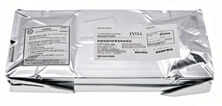
All electrostatic-sensitive components are handled in accordance with electrostatic discharge control procedures. The products are hermetically sealed in anti-static safe packaging to prevent electrostatic damage. Appropriate labeling is also applied for identification and traceability. This ensures product integrity during storage, handling and transportation.


ESD

Certifications & Memberships

Third-party certified, strict quality control. Our certification
  • ISO 9001: 2015
  • ISO 13485: 2016
  • ISO 14001: 2015
  • ISO 28000: 2007
  • ISO 45001: 2018
  • GB/T 27922-2011
  • SMTA
  • IPC
  • ESD
  • PSMA
TMDS181IRGZR Image

TMDS181IRGZR

Texas Instruments
32D-TMDS181IRGZR

Want a better price? Add to Cart and Submit RFQ now, we'll contact you immediately.

0 RFQ
Shopping cart (0 Items)
It is empty.
Compare List (0 Items)
It is empty.
Feedback

Your feedback matters! At Allelco, we value the user experience and strive to improve it constantly.
Please share your comments with us via our feedback form, and we'll respond promptly.
Thank you for choosing Allelco.

Subject
E-mail
Comments
Captcha
Drag or click to upload file
Upload File
types: .xls, .xlsx, .doc, .docx, .jpg, .png and .pdf.
Max file size: 10MB