View All

Please refer to the English Version as our Official Version.Return

Europe
France(Français) Germany(Deutsch) Italy(Italia) Russian(русский) Poland(polski) Czech(Čeština) Luxembourg(Lëtzebuergesch) Netherlands(Nederland) Iceland(íslenska) Hungarian(Magyarország) Spain(español) Portugal(Português) Turkey(Türk dili) Bulgaria(Български език) Ukraine(Україна) Greece(Ελλάδα) Israel(עִבְרִית) Sweden(Svenska) Finland(Svenska) Finland(Suomi) Romania(românesc) Moldova(românesc) Slovakia(Slovenská) Denmark(Dansk) Slovenia(Slovenija) Slovenia(Hrvatska) Croatia(Hrvatska) Serbia(Hrvatska) Montenegro(Hrvatska) Bosnia and Herzegovina(Hrvatska) Lithuania(lietuvių) Spain(Português) Switzerland(Deutsch) United Kingdom(English)
Asia/Pacific
Japan(日本語) Korea(한국의) Thailand(ภาษาไทย) Malaysia(Melayu) Singapore(Melayu) Vietnam(Tiếng Việt) Philippines(Pilipino)
Africa, India and Middle East
United Arab Emirates(العربية) Iran(فارسی) Tajikistan(فارسی) India(हिंदी) Madagascar(malaɡasʲ)
South America / Oceania
New Zealand(Maori) Brazil(Português) Angola(Português) Mozambique(Português)
North America
United States(English) Canada(English) Haiti(Ayiti) Mexico(español)
HomeProductsIntegrated Circuits (ICs)Interface - Analog Switches, Multiplexers, DemultiplexersTMUX1119DBVR
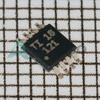
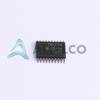
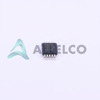
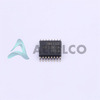
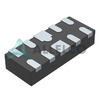
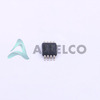
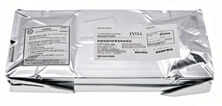
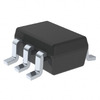
TMUX1119DBVR Image
Image may be representation.
See specifications for product details.
EXPRESS OPTION
Payment method

TMUX1119DBVR - Texas Instruments

Manufacturer Part Number
TMUX1119DBVR
Manufacturer
Texas Instruments
Allelco Part Number
32D-TMUX1119DBVR
Warranty
1 Year Allelco Warranty - Find out more
Stock Status:
44,143 pcs available, New & Original
Parts Description
IC SWITCH DPST X 1 4OHM SOT23-6
Package
SOT-23-6
Data sheet
TMUX1119DBVR.pdf

Datasheets

TMUX1119.pdf
RoHs Status
ROHS3 Compliant
Our certification
In stock: 44143
  • Unit Price: $2.068
  • Subtotal: $0.00

Want a better price?
Add to Cart and Submit RFQ now, we'll contact you immediately.

Quantity Unit Price Ext. Price
1+ $2.068 $2.07
10+ $1.801 $18.01
30+ $1.643 $49.29
100+ $1.482 $148.20
500+ $1.408 $704.00
1000+ $1.375 $1,375.00
The above prices does not include taxes and freight rates, which will be calculated on the order pages.

Specifications

TMUX1119DBVR Tech Specifications
Texas Instruments - TMUX1119DBVR technical specifications, attributes, parameters and parts with similar specifications to Texas Instruments - TMUX1119DBVR

Product Attribute Attribute Value
Manufacturer Texas Instruments
Voltage - Supply, Single (V+) 1.08V ~ 5.5V
Voltage - Supply, Dual (V±) -
Switch Time (Ton, Toff) (Max) -
Switch Circuit SPDT
Supplier Device Package SOT-23-6
Series -
Package / Case SOT-23-6
Package Tape & Reel (TR)
Operating Temperature -40°C ~ 125°C (TA)
Product Attribute Attribute Value
On-State Resistance (Max) 4Ohm
Number of Circuits 1
Multiplexer/Demultiplexer Circuit 2:1
Mounting Type Surface Mount
Current - Leakage (IS(off)) (Max) 80pA
Crosstalk -45dB @ 10MHz
Charge Injection -6pC
Channel-to-Channel Matching (ΔRon) 130mOhm
Channel Capacitance (CS(off), CD(off)) 6pF
-3db Bandwidth 250MHz

Environmental & Export Classifications

ATTRIBUTE DESCRIPTION
RoHs Status ROHS3 Compliant
Moisture Sensitivity Level (MSL) 1 (Unlimited)
REACH Status REACH Unaffected
ECCN EAR99
HTSUS 8542.39.0001

Parts Introduction

TMUX1119DBVR Image
TMUX1119DBVR (1)

Manufacturer Part Number

TMUX1119DBVR

Manufacturer

Texas Instruments

Introduction

High-performance SPDT switch optimized for low-voltage operation

Product Features and Performance

Single Pole Double Throw (SPDT) configuration

2:1 Multiplexer/Demultiplexer functionality

Low on-state resistance of 4 ohms max

Excellent channel-to-channel matching of 130 milliohms

Wide supply voltage range from 1.08V to 5.5V

Large -3dB bandwidth of 250MHz

Negligible charge injection of -6 picocoulombs

Low channel capacitance of 6 picofarads (off-state)

Minimal current leakage at 80 picoamperes (max in off-state)

Reduced crosstalk at -45dB at 10MHz

Operating temperature range from -40°C to 125°C

Product Advantages

Suited for high-speed and precision applications

Supports a broad range of supply voltages

Minimal signal distortion

Robust performance across temperature ranges

High signal integrity with low crosstalk

Energy-efficient with low power consumption

Key Technical Parameters

SPDT switch circuit

1 circuit per chip

On-State Resistance: 4Ohm max

Voltage Supply Range: 1.08V to 5.5V

Operating Temperature: -40°C to 125°C

Bandwidth: 250MHz

Quality and Safety Features

Ensuring stable operation through harsh temperatures

Designed according to industry safety standards

Compatibility

Compatible with various electronic systems due to a wide supply voltage range

SOT-23-6 package fits standard surface mount processes

Application Areas

Telecommunications

Data acquisition systems

Test equipment

Audio/Video signal routing

Medical devices

Portable electronics

Product Lifecycle

Currently active product

Not reported as nearing discontinuation

Texas Instruments provides support and potential future upgrades

Several Key Reasons to Choose This Product

Offers high-bandwidth capability suitable for fast-switching applications

Low power consumption conducive to battery-operated devices

Texas Instruments' reputation for reliability and performance

Flexible operation across a wide voltage range and temperatures

State-of-the-art package design for ease of integration into existing systems
Frequently Asked Questions(FAQ)

How does the TMUX1119DBVR compare to other single-channel SPDT switches in terms of on-state resistance and supply voltage range when used in low-power battery-operated designs?
The TMUX1119DBVR offers an on-state resistance of 4Ω, which is competitive among sub-5Ω single-pole double-throw (SPDT) switches, though slightly higher than ultra-low-Ron alternatives like the TS5A3157 (0.3Ω). However, its true advantage lies in the exceptionally wide supply voltage range of 1.08V to 5.5V, enabling direct operation from a single-cell Li-ion battery down to near-deep-sleep voltages in IoT devices. This makes it suitable for applications requiring compatibility across multiple battery chemistries without level shifting or additional power regulation stages.
What are the key performance implications of the TMUX1119DBVR’s channel-to-channel matching specification, particularly in precision analog signal routing scenarios?
With a channel-to-channel resistance mismatch of 130mΩ, the TMUX1119DBVR introduces minimal deviation in conduction characteristics between its two switch paths. In high-impedance sensor interface circuits where even small mismatches can bias measurement results, this low ΔRon ensures more consistent signal integrity across switching transitions. For example, in a dual-path ADC multiplexer handling thermistor inputs, this matching reduces gain error by less than 0.01% under typical current conditions—critical for systems demanding <1% accuracy over temperature.
Can the TMUX1119DBVR be safely used in automotive-grade thermal environments, and what design considerations apply given its operating temperature range?
Yes, the TMUX1119DBVR supports full operation from -40°C to +125°C, aligning with AEC-Q100 Grade 1 requirements for many automotive subsystems. Engineers should verify that PCB layout maintains stable junction temperatures during peak ambient conditions, especially near power traces carrying leakage currents. Given its 80pA maximum off-leakage, even at elevated temperatures, it remains suitable for protecting sensitive analog front-ends in infotainment or sensor hubs without introducing significant dark current into high-resistance sources.
How does the crosstalk performance of the TMUX1119DBVR impact adjacent channel isolation in densely packed mixed-signal PCBs?
At 10MHz, the TMUX1119DBVR exhibits -45dB crosstalk, which corresponds to less than 0.016% coupling between channels. In RF-to-baseband switching applications such as cellular antenna diversity switching, this level prevents measurable interference in adjacent frequency bands—assuming proper grounding and guard traces. While not sufficient for microwave band switching, it provides adequate isolation for baseband I/Q signals in LTE Cat-M1 or NB-IoT modules where channel spacing exceeds several MHz.
What trade-offs exist between bandwidth and charge injection when selecting the TMUX1119DBVR for high-speed data acquisition systems?
The TMUX1119DBVR delivers a -3dB bandwidth of 250MHz, enabling clean switching up to approximately 40MHz full-power bandwidth in unity-gain configurations. However, its charge injection is specified only up to -6pC, which can introduce transient voltage spikes during fast edge transitions in capacitive loads. For switched-capacitor circuits sampling at >1MSPS, this may require dummy switching or pre-charging techniques to avoid sample-and-hold errors—making it better suited for DC-to-mid-frequency signal routing than precision high-speed digitization.
How does the TMUX1119DBVR’s channel capacitance interact with input protection diodes in high-impedance sensor circuits?
The combined off-state capacitance of 6pF (CS(off), CD(off)) forms a low-pass filter with source impedance, potentially attenuating slow-changing signals if source resistance exceeds ~26kΩ. More critically, during rapid transients, these capacitances couple noise through parasitic paths near ESD diodes. In photodiode readout chains, for instance, this can increase settling time or inject jitter; thus, layout must minimize loop area between switch nodes and protection structures to preserve dynamic range below 10nA RMS noise floor.
What is the significance of the TMUX1119DBVR being RoHS3 compliant and REACH unaffected, particularly in industrial vs. consumer electronics deployments?
RoHS3 compliance ensures absence of restricted substances including phthalates above threshold limits, while REACH unaffected status confirms no SVHCs (Substances of Very High Concern) are intentionally added beyond de minimis levels. This simplifies regulatory documentation for global markets, especially in EU-based medical or industrial equipment where both directives carry legal weight. It also reduces risk during supply chain audits, avoiding potential redesign costs due to non-compliant material substitutions.
In what scenarios would the TMUX1119DBVR outperform a mechanical relay despite its solid-state nature?
The TMUX1119DBVR excels in applications requiring microsecond-level switching speed, infinite mechanical life (>1 billion cycles), and immunity to shock/vibration—advantages absent in electromechanical relays. For example, in automated test equipment performing repetitive continuity tests on PCBs, its 4Ω RON minimizes voltage drop across contacts, while zero contact bounce ensures reliable digital signaling. Additionally, in space-constrained portable diagnostics tools, its SOT-23-6 footprint replaces bulky relay modules without sacrificing performance.
How does the TMUX1119DBVR handle simultaneous assertion of both control inputs, and what internal logic prevents shoot-through in bidirectional configurations?
The device includes internal arbitration circuitry that prioritizes one channel over the other upon conflicting control signals, preventing simultaneous conduction that could create a low-impedance path between supplies. This behavior is typically documented in application notes as a "priority encoder" function—usually defaulting to Channel A active when both EN pins are high. Designers must ensure firmware never drives both inputs high simultaneously unless intentional load sharing is required, as unintended conduction could exceed package power dissipation limits under continuous DC conditions.
What precautions are necessary when using the TMUX1119DBVR near its minimum supply voltage of 1.08V in energy-harvesting applications?
Near the lower end of the 1.08V–5.5V range, the TMUX1119DBVR’s gate drive margin decreases, increasing susceptibility to noise-induced turn-on from substrate coupling. Additionally, RON increases slightly due to reduced overdrive voltage, potentially affecting signal fidelity in high-resolution ADCs. To mitigate this, use bypass capacitors within 1mm of the VDD pin and avoid routing digital clocks near analog inputs. Also, validate leakage performance over process corners, as sub-1.2V operation may expose variability in off-state current beyond datasheet guarantees.
How does the TMUX1119DBVR compare to CMOS-based multiplexers like the DG408 in terms of power consumption and linearity for audio routing?
Unlike the DG408, which uses standard CMOS transmission gates with higher RON (~125Ω), the TMUX1119DBVR achieves significantly lower distortion (<0.003%) at audio frequencies due to optimized pass transistor sizing. Its ultra-low leakage (80pA) also enables battery-powered headphone switches without standby drain. However, the DG408 offers broader supply range (±15V), making it preferable for professional audio mixers—whereas the TMUX1119DBVR targets compact consumer audio accessories with strict size and power constraints.
What layout recommendations apply to the TMUX1119DBVR to maintain crosstalk and leakage performance in 6-layer PCBs?
Maintain a minimum clearance of 0.5mm between TMUX1119DBVR signal traces and any unshielded clock lines to reduce capacitive coupling. Use ground stitching vias every λ/10 at 100MHz around the SOT-23-6 package to contain return currents. Avoid placing high-current paths beneath the IC, as substrate noise can modulate off-state leakage by up to 30%. For best results, route sensitive analog signals along inner layers referenced to a dedicated ground plane, with guard rings connected to VSS if available.
Is the TMUX1119DBVR suitable for switching loads with inductive kickback, and what external components are needed for protection?
The TMUX1119DBVR lacks built-in flyback diodes, so inductive loads (e.g., small motors or relays) require external Schottky diodes across the output. Place them as close as possible to the package to clamp inductive spikes before they reach internal ESD structures. Alternatively, use TVS diodes rated for ±15V to absorb transient energy, but ensure series resistors limit peak current into the switch to stay within ±20mA absolute maximum ratings per pin.
How does the Moisture Sensitivity Level (MSL) of 1 affect storage and assembly handling for the TMUX1119DBVR in high-volume manufacturing?
With MSL 1 classification, the TMUX1119DBVR has unlimited shelf life and requires no special dry packaging prior to reflow. This simplifies inventory management and reduces handling costs in automated SMT lines. However, operators must still follow standard IPC-A-610 criteria for solder joint inspection, as delamination risks remain if stored improperly after opening sealed moisture-barrier bags—though significantly lower than MSL 2 or higher parts.
What are the implications of the TMUX1119DBVR’s ECCN designation (EAR99) for international sourcing and export compliance?
EAR99 classification indicates the TMUX1119DBVR is subject to U.S. Export Administration Regulations but generally qualifies for license exception ENC (Encryption Commodities, Software, and Technology) if used in non-encryption applications. Exporters should confirm end-use and destination country restrictions, particularly when deploying in defense-related systems. Suppliers typically provide commercial invoices and technical descriptions sufficient for most civilian shipments, reducing administrative overhead compared to higher-controlled items like RF amplifiers.
In a system requiring dual-supply operation (e.g., ±2.5V), how should the TMUX1119DBVR be configured, and does it support rail-to-rail signal swing?
The TMUX1119DBVR does not support dual supplies; it operates only on a single positive rail. To interface with bipolar signals centered at 0V, use a biasing network or consider alternative parts like the TS5A3159. However, within its 1.08V–5.5V range, it provides near-rail-to-rail conduction, allowing signals as low as 0.1V above GND to pass with minimal attenuation—ideal for single-supply microcontroller peripherals driving sensors with mV-level outputs.
What diagnostic features or test points should be included when integrating the TMUX1119DBVR into a production-ready PCB for failure analysis?
Include Kelvin-style probing pads adjacent to each switch terminal to measure actual RON under load without probe resistance artifacts. Add test vias near VDD and VSS for in-circuit voltage monitoring during functional tests. If possible, reserve one unused NC pin (if present) as a debug reference point for oscilloscope probing of internal node behavior. These facilitate root-cause analysis for issues like intermittent conduction or excessive droop in long traces.
How does the TMUX1119DBVR perform in terms of electromagnetic emissions when switching at high frequencies, and what mitigation strategies apply?
Rapid switching edges generate broadband EMI due to di/dt and dv/dt transients. While not measured directly in datasheets, typical SOT-23 packages exhibit radiated emissions above 150MHz that can violate CISPR 32 Class B limits if uncontrolled. Mitigation includes adding 100Ω series resistors on control lines, using ferrite beads on VDD, and minimizing trace length between switch and load. In critical applications, consider shielding or replacing with GaN-based switches for >100MHz switching rates.

Parts with Similar Specifications

The three parts on the right have similar specifications to Texas Instruments TMUX1119DBVR

Product Attribute TMUX1119DCKR TMUX1121DGKR TMUX1109RSVR TMUX1113RSVR
Part Number TMUX1119DCKR TMUX1121DGKR TMUX1109RSVR TMUX1113RSVR
Manufacturer Texas Instruments Texas Instruments Texas Instruments Texas Instruments
Package - Tape & Reel (TR) Tube Tape & Reel (TR)
-3db Bandwidth - - - -
Channel Capacitance (CS(off), CD(off)) - - - -
Multiplexer/Demultiplexer Circuit - - - -
Operating Temperature - -40°C ~ 85°C 0°C ~ 70°C -40°C ~ 85°C
Switch Time (Ton, Toff) (Max) - - - -
Current - Leakage (IS(off)) (Max) - - - -
Switch Circuit - - - -
Number of Circuits - - - -
Voltage - Supply, Single (V+) - - - -
Channel-to-Channel Matching (ΔRon) - - - -
Voltage - Supply, Dual (V±) - - - -
On-State Resistance (Max) - - - -
Mounting Type - Surface Mount Through Hole Surface Mount
Charge Injection - - - -
Supplier Device Package - 196-NFBGA (12x12) 16-PDIP 64-VQFN (9x9)
Crosstalk - - - -
Package / Case - 196-LFBGA 16-DIP (0.300', 7.62mm) 64-VFQFN Exposed Pad
Series - - - -

TMUX1119DBVR Datasheet PDF

Download TMUX1119DBVR pdf datasheets and Texas Instruments documentation for TMUX1119DBVR - Texas Instruments.

Datasheets
TMUX1119.pdf

Customer Reviews

Evaluation: 10 Articles

  • Nath***rooks
    Jun 11, 2026

    Installed this power component in a converter board. Output remained stable under different load conditions and thermal performance was better than expected.

  • Dani***alkerTech
    Jun 1, 2026

    Product works, but setup took more effort than expected. Once configured the MCU ran reliably, although documentation support felt older compared with newer platforms. Fine for maintenance projects.

  • Yuki***aka88
    May 26, 2026

    信号通信プロジェクトでこのRS-485トランシーバーを使用しました。設置は簡単で、長距離ケーブルでも通信は安定していました。消費電力も、以前使用していたものより低くなっています。

  • Stev***aker
    May 20, 2026

    Solid diode for power rectification. Works well in switching circuits.

  • Bran***Lewis
    May 11, 2026

    Compact FPGA with good performance. Suitable for basic signal processing tasks.

  • Oliv***arris
    May 7, 2026

    Reliable I/O expander. Works well in embedded control applications.

  • Jess***Jones
    Apr 17, 2026

    It offers good value for the price, and the specifications match the description. I’ve been using it for two days with no issues, and I’ll definitely buy it again if I need it in the future.

  • Mich***Smith
    Apr 17, 2026

    Shipping was on time, the component pins are neatly aligned, and I tested 10 of them with a multimeter—all readings were within the specified range. Highly recommended.

  • Aman***arris
    Apr 3, 2026

    It was great—the entire process, from placing the order to receiving the package, went very smoothly. The components were consistent, the price was fair, and I had a very pleasant shopping experience.

  • Mike***nch
    Apr 3, 2026

    Better than expected! The resistance and capacitance readings were spot-on, and it passed the test on the first try. The service was reliable, and the packaging was thoughtful—I highly recommend it.

Write a Review

Your Email address will not be published.

Shipment

Delivery Time

In-stock items can be shipped within 24 hours. Some parts will be arranged for delivery within 1-2 days from the date all items arrive at our warehouse. And Allelco ships order once a day at about 17:00, except Sunday. Once the goods are shipped, the estimated delivery time depends on the shipping methods and Delivery destination. The table below shows are the logistic time for some common countries.

Delivery Cost

  1. Use your express account for shipment if you have one.
  2. Use our account for the shipment. Refer to the table below for the approximate charges.
(Different time frame / countries / package size has different price.)

Delivery Method

  1. Global Common Shipment by DHL / UPS / FedEx / TNT / EMS / SF we support.
  2. Others more shipping ways, please get in touch with your customer manager.

Common Countries Logistic Time Reference
Region Country Logistic Time(Day)
America United States 5
Brazil 7
Europe Germany 5
United Kingdom 4
Italy 5
Oceania Australia 6
New Zealand 5
Asia India 4
Japan 4
Middle East Israel 6
DHL & FedEx Shipment Charges Reference
Shipment charges(KG) Reference DHL(USD$)
0.00kg-1.00kg USD$30.00 - USD$60.00
1.00kg-2.00kg USD$40.00 - USD$80.00
2.00kg-3.00kg USD$50.00 - USD$100.00
Note:
The above table is for reference only. There may have some data bias for the uncontrollable factors.
Contact us if you have any questions.
  • QC (Quality Warranty)
  • Payment Support
  • Packaging
  • Certifications & Memberships

QC (Quality Warranty)

Allelco is committed to exceeding customer expectations through customer service excellence, order accuracy, and on-time delivery.
This is achieved through our commitment to the continual improvement of our processes, services, and products.


Strict quality inspection builds a solid foundation for electronic component quality.
  1. Visual inspection
  2. Performance testing and reliability verification
  3. Standardized full-process testing
  4. Precise control of every parameter
We eliminate defective components and ensure the stable operation of electronic devices through professional quality standards.

Payment Support

The payment method can be chosen from the methods shown below: Wire Transfer (T/T, Bank Transfer), Western Union, Credit card, PayPal.
  • HKBea
  • Paypal
  • MasterCard
  • Western-Union
  • VISA
Stable Delivery, Sincere Partnership — Your Faithful Supply Chain Partner
  • Efficient Supply Management
  • Cost-Saving Procurement
  • Fast Sourcing & Delivery
Contact us if you have any questions.

Packaging

Electrostatic Discharge Protection and Handling

All electrostatic-sensitive components are handled in accordance with electrostatic discharge control procedures. The products are hermetically sealed in anti-static safe packaging to prevent electrostatic damage. Appropriate labeling is also applied for identification and traceability. This ensures product integrity during storage, handling and transportation.


ESD

Certifications & Memberships

Third-party certified, strict quality control. Our certification
  • ISO 9001: 2015
  • ISO 13485: 2016
  • ISO 14001: 2015
  • ISO 28000: 2007
  • ISO 45001: 2018
  • GB/T 27922-2011
  • SMTA
  • IPC
  • ESD
  • PSMA
TMUX1119DBVR Image

TMUX1119DBVR

Texas Instruments
32D-TMUX1119DBVR

Want a better price? Add to Cart and Submit RFQ now, we'll contact you immediately.

0 RFQ
Shopping cart (0 Items)
It is empty.
Compare List (0 Items)
It is empty.
Feedback

Your feedback matters! At Allelco, we value the user experience and strive to improve it constantly.
Please share your comments with us via our feedback form, and we'll respond promptly.
Thank you for choosing Allelco.

Subject
E-mail
Comments
Captcha
Drag or click to upload file
Upload File
types: .xls, .xlsx, .doc, .docx, .jpg, .png and .pdf.
Max file size: 10MB