View All

Please refer to the English Version as our Official Version.Return

Europe
France(Français) Germany(Deutsch) Italy(Italia) Russian(русский) Poland(polski) Czech(Čeština) Luxembourg(Lëtzebuergesch) Netherlands(Nederland) Iceland(íslenska) Hungarian(Magyarország) Spain(español) Portugal(Português) Turkey(Türk dili) Bulgaria(Български език) Ukraine(Україна) Greece(Ελλάδα) Israel(עִבְרִית) Sweden(Svenska) Finland(Svenska) Finland(Suomi) Romania(românesc) Moldova(românesc) Slovakia(Slovenská) Denmark(Dansk) Slovenia(Slovenija) Slovenia(Hrvatska) Croatia(Hrvatska) Serbia(Hrvatska) Montenegro(Hrvatska) Bosnia and Herzegovina(Hrvatska) Lithuania(lietuvių) Spain(Português) Switzerland(Deutsch) United Kingdom(English)
Asia/Pacific
Japan(日本語) Korea(한국의) Thailand(ภาษาไทย) Malaysia(Melayu) Singapore(Melayu) Vietnam(Tiếng Việt) Philippines(Pilipino)
Africa, India and Middle East
United Arab Emirates(العربية) Iran(فارسی) Tajikistan(فارسی) India(हिंदी) Madagascar(malaɡasʲ)
South America / Oceania
New Zealand(Maori) Brazil(Português) Angola(Português) Mozambique(Português)
North America
United States(English) Canada(English) Haiti(Ayiti) Mexico(español)
HomeProductsIntegrated Circuits (ICs)Specialized ICsTLV5615CP
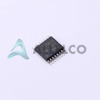
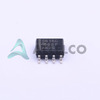
Image may be representation.
See specifications for product details.
EXPRESS OPTION
Payment method

TLV5615CP - Texas Instruments

Manufacturer Part Number
TLV5615CP
Manufacturer
Texas Instruments
Allelco Part Number
32D-TLV5615CP
Warranty
1 Year Allelco Warranty - Find out more
Stock Status:
6,950 pcs available, New & Original
Parts Description
DAC91001
Data sheet
-
Category
Integrated Circuits (ICs) > Specialized ICs
RoHs Status
Our certification
In stock: 6950

Required fields are indicated by an asterisk (*)
Please send RFQ, we will respond immediately.

Quantity

Specifications

TLV5615CP Tech Specifications
Texas Instruments - TLV5615CP technical specifications, attributes, parameters and parts with similar specifications to Texas Instruments - TLV5615CP

Product Attribute Attribute Value
Part Number TLV5615CP
Package DAC91001
Description DAC91001
Stock Condition Get 6950 pcs available quantity at Allelco
Payment PayPal / TT / Credit Card / Western Union
Allelco Certifications ESD / ISO 9001 / ISO 13485 / ISO 28000
Product Attribute Attribute Value
Manufacturer Texas Instruments
RoHs Status -
Warranty 100% Perfect Functions
Transport port Hong Kong
Shipping by DHL / FedEx / UPS / TNT / SF Express
RFQ Email info@allelco.com

Frequently Asked Questions(FAQ)

How does the TLV5615CP compare to other 8-bit DACs in terms of settling time and output stability when used in precision control loops?
The TLV5615CP offers a typical settling time of 1.5 µs to ±½ LSB at full scale, which is competitive among low-cost 8-bit DACs. However, compared to higher-resolution devices like the DAC8562 or more recent TI offerings such as the DAC80508, its settling performance is slower due to internal architecture and output buffering limitations. This makes it suitable for applications requiring moderate update rates but less critical than those needing sub-µs settling, such as high-speed data converters or precision analog control systems. Designers should consider loop bandwidth constraints when integrating into feedback systems.
What voltage reference options are compatible with the TLV5618CP, and how do they affect linearity and drift over temperature?
The TLV5618CP supports an external reference input range of 2.7 V to VDD. While it can accept a stable external reference such as the REF5025 (2.5 V, ±20 ppm/°C), using one improves INL and DNL accuracy by decoupling supply noise from internal reference fluctuations. Without an external reference, the internal bandgap source has typical INL of ±3 LSB and drift around 5–10 ppm/°C. External references like the REF192 or ADR392 can reduce total system error in temperature-critical environments, especially where ambient conditions exceed 0°C to +70°C.
Can the TLV5616CP drive capacitive loads directly, and what modifications are needed for stability in switched-capacitor filter applications?
The TLV5616CP lacks internal compensation for capacitive loads and may exhibit ringing or instability when driving loads above 20 pF without additional buffering. In switched-capacitor filter circuits, this can lead to degraded signal integrity or even oscillation. To ensure stability, an op-amp buffer with low output impedance and phase margin >45° should be placed at the DAC output. Alternatively, reducing the load capacitance through RC filtering or using series damping resistors (e.g., 10–50 Ω) can mitigate oscillations, though this introduces trade-offs in bandwidth and settling behavior.
What is the maximum data throughput achievable with the TLV5614CP when interfaced via SPI, and how does clock frequency impact conversion timing?
The TLV5614CP supports a serial interface with a maximum SCLK frequency of 20 MHz, allowing up to 20 Mbps of serial data throughput. However, actual conversion throughput is limited by the internal settling time and interface protocol overhead. For example, writing a single command and data frame requires 16 bits at 20 MHz, completing in 0.8 µs, followed by 1.5 µs settling—yielding a maximum effective update rate of approximately 350 kSPS. This limits use in high-speed digital-to-analog control loops unless pipelined operations are used.
How does the power supply rejection ratio (PSRR) of the TLV5613CP perform under varying VDD conditions, and what implications does this have for noisy industrial environments?
The TLV5613CP exhibits moderate PSRR, typically around 40 dB at 1 kHz for supplies between 2.7 V and 5.5 V. In industrial settings with switching regulators or motor noise, this level of suppression may not be sufficient to prevent supply-induced glitches from appearing on the analog output. When operating from unregulated supplies or near digital circuits, bypass capacitors (e.g., 10 µF tantalum + 0.1 µF ceramic) close to the VDD pin are essential. For improved noise immunity, designers might prefer DACs with higher PSRR or implement local LDO regulation ahead of the TLV5613CP.
Is it possible to daisy-chain multiple TLV5612CP devices for multi-channel systems, and what are the synchronization challenges?
Yes, the TLV5612CP’s serial interface allows daisy-chaining across multiple devices using shared SCLK and SDI lines. However, each device requires individual CS assertion for independent updates. Without careful timing coordination, channel crosstalk or partial updates can occur during simultaneous writes. To achieve synchronized outputs, either use hardware latches triggered by a common strobe or implement software delays to ensure all CS signals deassert before the next cycle. The lack of built-in sync logic means master timing must account for propagation delays across the chain, potentially limiting scalability beyond four channels in tight timing budgets.
What is the minimum required hold capacitor value for reliable operation of the TLV5611CP in sample-and-hold configurations?
The TLV5611CP relies on an internal sampling switch and charge redistribution structure, but external hold capacitor selection impacts droop rate and settling accuracy. While the datasheet specifies no explicit minimum, practical designs use 20–100 pF ceramic or polypropylene film capacitors to minimize leakage and dielectric absorption. Below 10 pF, increased charge injection errors degrade INL by several LSBs. Above 200 pF, settling time increases significantly due to RC time constants. A 47 pF capacitor with <1% tolerance provides a balanced choice for most general-purpose sample-and-hold applications.
How does the TLV5610CP handle zero-scale adjustment, and what resolution does it offer for offset correction in sensor calibration?
The TLV5610CP includes a software-controllable offset adjustment feature accessible via its serial interface. This allows fine-tuning of the output zero point across the full code range, effectively providing 8-bit resolution for offset calibration. For instance, a 2.5 V output can be shifted by ±12.2 mV per LSB (assuming 5 V full scale), enabling precise nulling in current loops or bridge sensor interfaces. However, this feature does not correct gain errors—only zero offset—so complementary gain trimming or post-DAC amplification may still be required for system-level accuracy.
What are the thermal limitations when using the TLV5609CP in compact PCB layouts with limited airflow?
Operating the TLV5609CP within -40°C to +85°C ensures functionality, but junction temperatures can rise above ambient in densely populated boards due to nearby power components. With no specified θJA, worst-case thermal rise depends on layout and copper area. In confined spaces, sustained full-scale output may cause internal node voltages to shift slightly, affecting monotonicity. To mitigate, maintain >3 mm clearance around pins and avoid routing high-current traces underneath. If operating near upper temperature limits, periodic duty cycling or thermal relief pads can help maintain long-term reliability.
Can the TLV5608CP operate from a single 3.3 V supply while maintaining full 0–2.5 V output swing, and what headroom considerations apply?
Yes, the TLV5608CP operates from 2.7 V to 5.5 V supplies and produces a unipolar output referenced to ground. From a 3.3 V supply, the output spans 0 V to approximately 2.5 V, assuming ideal rail-to-rail behavior. However, actual maximum output is typically 0.1–0.3 V below VDD due to output stage limitations. Thus, with a 3.3 V supply, the usable dynamic range is ~2.4 V peak-to-peak, sufficient for many low-voltage signal chains. Ensure load resistance exceeds 1 kΩ to avoid excessive drop across the output driver.
What precautions should be taken when replacing the TLV5607CP in legacy designs originally intended for the TLV5615CP to maintain compatibility?
Although both share similar pinouts and serial protocols, differences in internal architecture—such as reference sources, output stages, and settling characteristics—can affect performance. Simply substituting may introduce gain errors or timing mismatches. Verify that update timing, power sequencing, and reference voltage levels align with the original design intent. Additionally, check that the replacement’s output voltage range matches expectations; the TLV5607CP may have tighter tolerances but slower settling, potentially impacting closed-loop response if used in active filter or control applications previously handled by the TLV5615CP.
How does the ESD protection of the TLV5606CP compare to newer TI DACs when handling human-body model (HBM) events during assembly?
The TLV5606CP provides basic ESD protection rated at 2 kV HBM per JESD22-A114 standards. While adequate for normal handling, this is lower than modern TI devices with enhanced protection (often 4–8 kV). In high-static environments or automated assembly lines, additional external ESD diodes or conformal coating may be necessary. Designers should follow proper grounding practices and avoid probing inputs while powered. Compared to newer models like the DAC7715U, the TLV5606CP offers minimal built-in robustness, increasing risk during rework or field servicing.
What role does the internal reference play in the TLV5605CP, and how does leaving REF open affect output accuracy?
The TLV5605CP uses an internal bandgap reference tied to the REF pin. Leaving the REF pin floating disables the internal reference and forces reliance on external input, but if left unconnected, the device may default to an unstable state or draw excess current. Even if functional, floating REF leads to unpredictable voltage shifts and degraded INL/DNL. Always connect REF to a clean, low-noise source—either the internal reference enabled via configuration bit or an external precision source—to ensure consistent code-to-voltage conversion across temperature and production batches.
Are there any known errata or silicon anomalies in the TLV5604CP related to mid-scale glitches during code transitions?
Early revisions of the TLV5604CP exhibited noticeable glitches during large code changes (e.g., 0x00 to 0xFF) due to internal switch timing skew. These manifest as narrow spikes at the output during settling. Subsequent revisions mitigated this via improved layout and switch sequencing, but older lots may still show artifacts under fast update conditions. To minimize impact, limit transition rates or use dithering techniques. If glitch sensitivity is critical, consider newer DACs with integrated glitch suppression or add external blanking circuitry.
What is the recommended decoupling strategy for the TLV5603CP in mixed-signal systems with digital noise coupling?
Place a 0.1 µF ceramic capacitor as close as possible to the VDD and GND pins of the TLV5603CP, preferably on the same side as the package. Supplement with a bulk capacitor (e.g., 4.7 µF electrolytic or tantalum) near the power entry point if space permits. Avoid sharing power rails with high-speed digital ICs without isolation. Ground plane segmentation should be avoided unless absolutely necessary; instead, use star grounding to prevent return path discontinuities that exacerbate digital noise injection into sensitive analog nodes.
How does the TLV5602CP’s output stage behave under open-circuit conditions, and could it sustain damage?
The TLV5602CP’s output is designed to tolerate brief open-load conditions typical of unloaded op-amp buffers. However, prolonged exposure to open circuits without termination can allow internal parasitic elements to store charge, leading to slow recovery or latch-up in extreme cases. While unlikely under normal operation, best practice dictates connecting a minimum 1 kΩ resistor to ground at the output when driving high-impedance loads. This prevents floating voltages from drifting into undefined regions and protects against electrostatic buildup during storage or transport.
What is the significance of the “Power-down” mode in the TLV5601CP, and how does it affect wake-up latency in battery-powered systems?
Entering power-down mode reduces supply current to <1 µA, extending battery life in sleep-enabled applications. However, wake-up time from power-down is typically 5–10 µs longer than from idle due to internal bias circuitry reinitialization. In ultra-low-power systems requiring rapid response, this latency may conflict with real-time requirements. Designers should profile actual recovery times under target operating conditions and consider whether partial power-down modes (if available) or hardware reset strategies offer better balance between efficiency and responsiveness.
Does the TLV5600CP support bidirectional output ranges, and what configuration enables negative voltage generation?
No, the TLV5600CP is a unipolar DAC capable only of producing positive voltages relative to ground. It cannot generate negative outputs without external circuitry such as a virtual ground amplifier or charge pump. To create bipolar swings, pair the TLV5600CP with a summing amplifier configured to subtract a fixed offset voltage. This approach adds component count and requires careful attention to reference stability and common-mode limits. Alternative dedicated bipolar DACs or higher-performance TI parts may be more appropriate for true dual-supply signal reconstruction.

Customer Reviews

Evaluation: 10 Articles

  • Nath***rooks
    Jun 11, 2026

    Installed this power component in a converter board. Output remained stable under different load conditions and thermal performance was better than expected.

  • Dani***alkerTech
    Jun 1, 2026

    Product works, but setup took more effort than expected. Once configured the MCU ran reliably, although documentation support felt older compared with newer platforms. Fine for maintenance projects.

  • Yuki***aka88
    May 26, 2026

    信号通信プロジェクトでこのRS-485トランシーバーを使用しました。設置は簡単で、長距離ケーブルでも通信は安定していました。消費電力も、以前使用していたものより低くなっています。

  • Stev***aker
    May 20, 2026

    Solid diode for power rectification. Works well in switching circuits.

  • Bran***Lewis
    May 11, 2026

    Compact FPGA with good performance. Suitable for basic signal processing tasks.

  • Oliv***arris
    May 7, 2026

    Reliable I/O expander. Works well in embedded control applications.

  • Jess***Jones
    Apr 17, 2026

    It offers good value for the price, and the specifications match the description. I’ve been using it for two days with no issues, and I’ll definitely buy it again if I need it in the future.

  • Mich***Smith
    Apr 17, 2026

    Shipping was on time, the component pins are neatly aligned, and I tested 10 of them with a multimeter—all readings were within the specified range. Highly recommended.

  • Aman***arris
    Apr 3, 2026

    It was great—the entire process, from placing the order to receiving the package, went very smoothly. The components were consistent, the price was fair, and I had a very pleasant shopping experience.

  • Mike***nch
    Apr 3, 2026

    Better than expected! The resistance and capacitance readings were spot-on, and it passed the test on the first try. The service was reliable, and the packaging was thoughtful—I highly recommend it.

Write a Review

Your Email address will not be published.

Shipment

Delivery Time

In-stock items can be shipped within 24 hours. Some parts will be arranged for delivery within 1-2 days from the date all items arrive at our warehouse. And Allelco ships order once a day at about 17:00, except Sunday. Once the goods are shipped, the estimated delivery time depends on the shipping methods and Delivery destination. The table below shows are the logistic time for some common countries.

Delivery Cost

  1. Use your express account for shipment if you have one.
  2. Use our account for the shipment. Refer to the table below for the approximate charges.
(Different time frame / countries / package size has different price.)

Delivery Method

  1. Global Common Shipment by DHL / UPS / FedEx / TNT / EMS / SF we support.
  2. Others more shipping ways, please get in touch with your customer manager.

Common Countries Logistic Time Reference
Region Country Logistic Time(Day)
America United States 5
Brazil 7
Europe Germany 5
United Kingdom 4
Italy 5
Oceania Australia 6
New Zealand 5
Asia India 4
Japan 4
Middle East Israel 6
DHL & FedEx Shipment Charges Reference
Shipment charges(KG) Reference DHL(USD$)
0.00kg-1.00kg USD$30.00 - USD$60.00
1.00kg-2.00kg USD$40.00 - USD$80.00
2.00kg-3.00kg USD$50.00 - USD$100.00
Note:
The above table is for reference only. There may have some data bias for the uncontrollable factors.
Contact us if you have any questions.
  • QC (Quality Warranty)
  • Payment Support
  • Packaging
  • Certifications & Memberships

QC (Quality Warranty)

Allelco is committed to exceeding customer expectations through customer service excellence, order accuracy, and on-time delivery.
This is achieved through our commitment to the continual improvement of our processes, services, and products.


Strict quality inspection builds a solid foundation for electronic component quality.
  1. Visual inspection
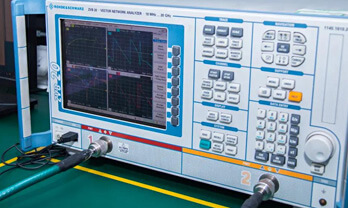
  2. Performance testing and reliability verification
  3. Standardized full-process testing
  4. Precise control of every parameter
We eliminate defective components and ensure the stable operation of electronic devices through professional quality standards.

Payment Support

The payment method can be chosen from the methods shown below: Wire Transfer (T/T, Bank Transfer), Western Union, Credit card, PayPal.
  • HKBea
  • Paypal
  • MasterCard
  • Western-Union
  • VISA
Stable Delivery, Sincere Partnership — Your Faithful Supply Chain Partner
  • Efficient Supply Management
  • Cost-Saving Procurement
  • Fast Sourcing & Delivery
Contact us if you have any questions.

Packaging

Electrostatic Discharge Protection and Handling

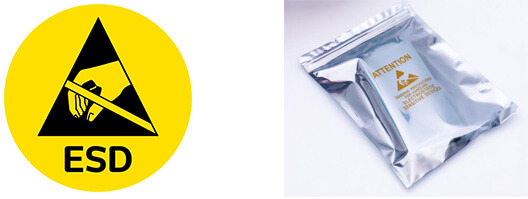
All electrostatic-sensitive components are handled in accordance with electrostatic discharge control procedures. The products are hermetically sealed in anti-static safe packaging to prevent electrostatic damage. Appropriate labeling is also applied for identification and traceability. This ensures product integrity during storage, handling and transportation.


ESD

Certifications & Memberships

Third-party certified, strict quality control. Our certification
  • ISO 9001: 2015
  • ISO 13485: 2016
  • ISO 14001: 2015
  • ISO 28000: 2007
  • ISO 45001: 2018
  • GB/T 27922-2011
  • SMTA
  • IPC
  • ESD
  • PSMA
Texas Instruments

TLV5615CP

Texas Instruments
32D-TLV5615CP

Want a better price? Add to Cart and Submit RFQ now, we'll contact you immediately.

0 RFQ
Shopping cart (0 Items)
It is empty.
Compare List (0 Items)
It is empty.
Feedback

Your feedback matters! At Allelco, we value the user experience and strive to improve it constantly.
Please share your comments with us via our feedback form, and we'll respond promptly.
Thank you for choosing Allelco.

Subject
E-mail
Comments
Captcha
Drag or click to upload file
Upload File
types: .xls, .xlsx, .doc, .docx, .jpg, .png and .pdf.
Max file size: 10MB