View All

Please refer to the English Version as our Official Version.Return

Europe
France(Français) Germany(Deutsch) Italy(Italia) Russian(русский) Poland(polski) Czech(Čeština) Luxembourg(Lëtzebuergesch) Netherlands(Nederland) Iceland(íslenska) Hungarian(Magyarország) Spain(español) Portugal(Português) Turkey(Türk dili) Bulgaria(Български език) Ukraine(Україна) Greece(Ελλάδα) Israel(עִבְרִית) Sweden(Svenska) Finland(Svenska) Finland(Suomi) Romania(românesc) Moldova(românesc) Slovakia(Slovenská) Denmark(Dansk) Slovenia(Slovenija) Slovenia(Hrvatska) Croatia(Hrvatska) Serbia(Hrvatska) Montenegro(Hrvatska) Bosnia and Herzegovina(Hrvatska) Lithuania(lietuvių) Spain(Português) Switzerland(Deutsch) United Kingdom(English)
Asia/Pacific
Japan(日本語) Korea(한국의) Thailand(ภาษาไทย) Malaysia(Melayu) Singapore(Melayu) Vietnam(Tiếng Việt) Philippines(Pilipino)
Africa, India and Middle East
United Arab Emirates(العربية) Iran(فارسی) Tajikistan(فارسی) India(हिंदी) Madagascar(malaɡasʲ)
South America / Oceania
New Zealand(Maori) Brazil(Português) Angola(Português) Mozambique(Português)
North America
United States(English) Canada(English) Haiti(Ayiti) Mexico(español)
HomeProductsIntegrated Circuits (ICs)Specialized ICsINA157UK
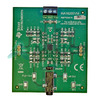
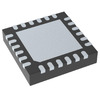
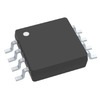
Image may be representation.
See specifications for product details.
EXPRESS OPTION
Payment method

INA157UK - BURR-BROWN

Manufacturer Part Number
INA157UK
Manufacturer
BURR-BROWN
Allelco Part Number
32D-INA157UK
Warranty
1 Year Allelco Warranty - Find out more
Stock Status:
12,260 pcs available, New & Original
Parts Description
DAC91001
Data sheet
-
Category
Integrated Circuits (ICs) > Specialized ICs
RoHs Status
Our certification
In stock: 12260

Required fields are indicated by an asterisk (*)
Please send RFQ, we will respond immediately.

Quantity

Specifications

INA157UK Tech Specifications
BURR-BROWN - INA157UK technical specifications, attributes, parameters and parts with similar specifications to BURR-BROWN - INA157UK

Product Attribute Attribute Value
Part Number INA157UK
Package DAC91001
Description DAC91001
Stock Condition Get 12260 pcs available quantity at Allelco
Payment PayPal / TT / Credit Card / Western Union
Allelco Certifications ESD / ISO 9001 / ISO 13485 / ISO 28000
Product Attribute Attribute Value
Manufacturer BURR-BROWN
RoHs Status -
Warranty 100% Perfect Functions
Transport port Hong Kong
Shipping by DHL / FedEx / UPS / TNT / SF Express
RFQ Email info@allelco.com

Frequently Asked Questions(FAQ)

How does the INA157UK's input common-mode voltage range compare to other instrumentation amplifiers in its class, and what implications does this have for single-supply operation in industrial sensor applications?
The INA157UK supports an input common-mode voltage range that extends below ground by up to 200 mV, which is notably wider than many competing devices limited to rail-to-rail or ground-referenced inputs. This characteristic enables reliable operation in single-supply systems where sensor output may dip slightly negative due to offset or noise transients. For example, when powered from a 3.3 V supply, the amplifier can accurately amplify signals as low as -0.2 V at the inputs—critical for interfacing with transducers that exhibit small negative excursions. This capability reduces the need for level-shifting circuitry and simplifies front-end design in battery-powered or low-voltage industrial monitoring systems.
What are the key differences between the INA157UK and similar instrumentation amplifiers like the INA826 or INA128 in terms of gain bandwidth product and settling time when used with high-impedance sensors?
Unlike precision general-purpose amplifiers such as the INA826, the INA157UK achieves a significantly higher gain-bandwidth product of 1.2 MHz, enabling stable closed-loop operation at gains above 100 with sufficient bandwidth for dynamic signal capture. In contrast, the INA128 typically offers around 900 kHz GBW. When driving high-impedance sources like piezoelectric sensors or thermocouples, parasitic capacitance can form an RC filter at the input, reducing effective bandwidth. The INA157UK’s superior slew rate (2 V/µs) and faster settling time—typically within 1 µs to 0.01% accuracy—make it more suitable for transient measurements requiring both high resolution and speed, such as vibration analysis or fast pressure sensing.
Can the INA157UK be safely used with unipolar 5 V supplies, and how does its internal reference interact with the REF pin during single-ended output configurations?
Yes, the INA157UK operates reliably from unipolar 5 V supplies, provided the input common-mode voltage remains within the specified range relative to the negative supply (GND). The device includes an internal 2.5 V reference, but unlike some competitors, it does not automatically bias the output unless driven via the external REF pin. To center a unipolar signal around 2.5 V, an external resistor divider or dedicated reference IC should be connected to the REF pin. Failure to do so results in output saturation when attempting to amplify DC signals near the positive rail. Proper biasing ensures full dynamic range utilization and avoids clipping in applications like ADC interfacing where signal conditioning requires mid-scale alignment.
Why might the INA157UK exhibit increased offset drift over temperature compared to newer zero-drift alternatives, and under what conditions would this still be acceptable?
The INA157UK uses a traditional bipolar input stage, resulting in an input offset voltage drift of approximately 5 µV/°C—higher than modern chopper-stabilized or auto-zero amplifiers. This makes it less ideal for long-term precision measurements in extreme thermal environments. However, in controlled environments with moderate temperature swings (e.g., ±10°C), combined with periodic calibration, this drift may remain within acceptable limits. Additionally, its low initial offset (typically ±100 µV) and excellent CMRR (>100 dB) ensure robust performance for most industrial data acquisition tasks where cost and legacy compatibility outweigh ultra-low drift requirements.
How does the INA157UK handle power-up sequencing when used in multi-channel DAQ systems, and what precautions are necessary to prevent latch-up or input overload?
Due to its lack of internal power-on reset circuitry, the INA157UK must be powered only after all input signals stabilize and stay within the specified voltage window. Rapid power-up transients can induce transient currents at the inputs, potentially causing temporary saturation or even damage in extreme cases. To mitigate risks, series resistors (10 Ω–100 Ω) at the inputs and TVS diodes for ESD protection are recommended in harsh environments. Additionally, ensure that the supply rails ramp up simultaneously and monotonically. These measures prevent false triggering in multiplexed systems where channel switching could expose inputs to undefined voltages during power transitions.
What is the impact of PCB layout parasitics on the INA157UK’s performance, particularly regarding stability and noise coupling in high-gain configurations?
At gains greater than 500, the INA157UK becomes sensitive to parasitic capacitances introduced by poor PCB layout, especially at the non-inverting input. Stray capacitance exceeding 5 pF can create phase lag that degrades phase margin and leads to oscillation. A solid grounding strategy—placing the input pins close to the sensor and using a star ground connection near the amplifier—is essential. Guard rings around high-impedance nodes and minimizing trace lengths reduce leakage and capacitive crosstalk. Simulation tools should validate stability margins using SPICE models, as empirical tuning often reveals unexpected oscillations not apparent in datasheet plots.
In what scenarios would the INA157UK be preferred over a fully differential amplifier like the LTC2050HV despite its lower output drive capability?
While the LTC2050HV offers higher output current and better rail-to-rail swing, the INA157UK excels in differential amplification with integrated gain setting via external resistors, eliminating the need for additional op-amps and passive networks. This integration reduces component count and board space, making it ideal for compact sensor interfaces such as load cells or RTD bridges. Its inherent CMRR and precision make it preferable when the primary requirement is rejecting ground loops and common-mode noise rather than driving heavy loads. Thus, in cost-sensitive, space-constrained designs where signal fidelity outweighs drive strength, the INA157UK remains competitive despite its limitations.
How does the INA157UK’s output stage behave when driving capacitive loads, and what compensation techniques are recommended to maintain stability?
The INA157UK has limited output current sourcing capability (~10 mA), and driving large capacitive loads (e.g., >10 nF) without isolation can cause instability due to reduced phase margin. A practical solution involves inserting a small series resistor (10 Ω–50 Ω) between the amplifier output and the load. This forms a damping network that isolates the amplifier from the capacitor’s reactive impedance. Alternatively, feedback capacitors across the gain-setting resistors can improve transient response, though this trades off noise performance. Always verify stability under worst-case load conditions using a step-load test, as simulation alone may underestimate real-world interactions.
What role does the REF pin play in achieving true bipolar output swing, and how does incorrect use lead to signal distortion in AC-coupled measurement chains?
The REF pin allows shifting the amplifier’s output baseline away from ground, enabling true bipolar operation even with a single supply. By connecting a stable reference—such as a buffered 2.5 V source—to REF, the output swings symmetrically around that voltage. Misuse, such as leaving REF floating or applying excessive ripple, pulls the output toward one rail asymmetrically, distorting small-signal AC content. For example, in a 0–5 V ADC interface requiring 0.5 V to 4.5 V input range, a poorly regulated REF causes clipping on one side. Proper bypassing (1 µF ceramic + 10 µF tantalum) and low-impedance drive to REF ensure clean, undistorted waveforms.

Customer Reviews

Evaluation: 10 Articles

  • Emil***rperTech
    Jun 23, 2026

    Works exactly as described. I used it as a USB-to-SPI bridge in a small MCU development project and communication was stable from the first setup.

  • Liam***terTech
    Jun 15, 2026

    Used this CPLD in a logic control project. Programming was straightforward and signal timing matched the design requirements.

  • Nath***rooks
    Jun 11, 2026

    Installed this power component in a converter board. Output remained stable under different load conditions and thermal performance was better than expected.

  • Dani***alkerTech
    Jun 1, 2026

    Product works, but setup took more effort than expected. Once configured the MCU ran reliably, although documentation support felt older compared with newer platforms. Fine for maintenance projects.

  • Yuki***aka88
    May 26, 2026

    信号通信プロジェクトでこのRS-485トランシーバーを使用しました。設置は簡単で、長距離ケーブルでも通信は安定していました。消費電力も、以前使用していたものより低くなっています。

  • Stev***aker
    May 20, 2026

    Solid diode for power rectification. Works well in switching circuits.

  • Bran***Lewis
    May 11, 2026

    Compact FPGA with good performance. Suitable for basic signal processing tasks.

  • Oliv***arris
    May 7, 2026

    Reliable I/O expander. Works well in embedded control applications.

  • Jess***Jones
    Apr 17, 2026

    It offers good value for the price, and the specifications match the description. I’ve been using it for two days with no issues, and I’ll definitely buy it again if I need it in the future.

  • Mich***Smith
    Apr 17, 2026

    Shipping was on time, the component pins are neatly aligned, and I tested 10 of them with a multimeter—all readings were within the specified range. Highly recommended.

Write a Review

Your Email address will not be published.

Shipment

Delivery Time

In-stock items can be shipped within 24 hours. Some parts will be arranged for delivery within 1-2 days from the date all items arrive at our warehouse. And Allelco ships order once a day at about 17:00, except Sunday. Once the goods are shipped, the estimated delivery time depends on the shipping methods and Delivery destination. The table below shows are the logistic time for some common countries.

Delivery Cost

  1. Use your express account for shipment if you have one.
  2. Use our account for the shipment. Refer to the table below for the approximate charges.
(Different time frame / countries / package size has different price.)

Delivery Method

  1. Global Common Shipment by DHL / UPS / FedEx / TNT / EMS / SF we support.
  2. Others more shipping ways, please get in touch with your customer manager.

Common Countries Logistic Time Reference
Region Country Logistic Time(Day)
America United States 5
Brazil 7
Europe Germany 5
United Kingdom 4
Italy 5
Oceania Australia 6
New Zealand 5
Asia India 4
Japan 4
Middle East Israel 6
DHL & FedEx Shipment Charges Reference
Shipment charges(KG) Reference DHL(USD$)
0.00kg-1.00kg USD$30.00 - USD$60.00
1.00kg-2.00kg USD$40.00 - USD$80.00
2.00kg-3.00kg USD$50.00 - USD$100.00
Note:
The above table is for reference only. There may have some data bias for the uncontrollable factors.
Contact us if you have any questions.
  • QC (Quality Warranty)
  • Payment Support
  • Packaging
  • Certifications & Memberships

QC (Quality Warranty)

Allelco is committed to exceeding customer expectations through customer service excellence, order accuracy, and on-time delivery.
This is achieved through our commitment to the continual improvement of our processes, services, and products.


Strict quality inspection builds a solid foundation for electronic component quality.
  1. Visual inspection
  2. Performance testing and reliability verification
  3. Standardized full-process testing
  4. Precise control of every parameter
We eliminate defective components and ensure the stable operation of electronic devices through professional quality standards.

Payment Support

The payment method can be chosen from the methods shown below: Wire Transfer (T/T, Bank Transfer), Western Union, Credit card, PayPal.
  • HKBea
  • Paypal
  • MasterCard
  • Western-Union
  • VISA
Stable Delivery, Sincere Partnership — Your Faithful Supply Chain Partner
  • Efficient Supply Management
  • Cost-Saving Procurement
  • Fast Sourcing & Delivery
Contact us if you have any questions.

Packaging

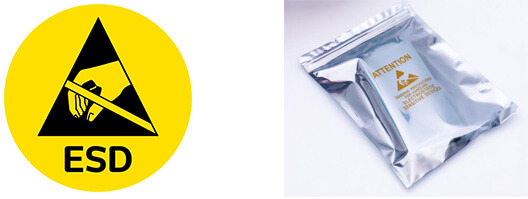
Electrostatic Discharge Protection and Handling

All electrostatic-sensitive components are handled in accordance with electrostatic discharge control procedures. The products are hermetically sealed in anti-static safe packaging to prevent electrostatic damage. Appropriate labeling is also applied for identification and traceability. This ensures product integrity during storage, handling and transportation.


ESD

Certifications & Memberships

Third-party certified, strict quality control. Our certification
  • ISO 9001: 2015
  • ISO 13485: 2016
  • ISO 14001: 2015
  • ISO 28000: 2007
  • ISO 45001: 2018
  • GB/T 27922-2011
  • SMTA
  • IPC
  • ESD
  • PSMA

INA157UK

BURR-BROWN
32D-INA157UK

Want a better price? Add to Cart and Submit RFQ now, we'll contact you immediately.

0 RFQ
Shopping cart (0 Items)
It is empty.
Compare List (0 Items)
It is empty.
Feedback

Your feedback matters! At Allelco, we value the user experience and strive to improve it constantly.
Please share your comments with us via our feedback form, and we'll respond promptly.
Thank you for choosing Allelco.

Subject
E-mail
Comments
Captcha
Drag or click to upload file
Upload File
types: .xls, .xlsx, .doc, .docx, .jpg, .png and .pdf.
Max file size: 10MB