View All

Please refer to the English Version as our Official Version.Return

Europe
France(Français) Germany(Deutsch) Italy(Italia) Russian(русский) Poland(polski) Czech(Čeština) Luxembourg(Lëtzebuergesch) Netherlands(Nederland) Iceland(íslenska) Hungarian(Magyarország) Spain(español) Portugal(Português) Turkey(Türk dili) Bulgaria(Български език) Ukraine(Україна) Greece(Ελλάδα) Israel(עִבְרִית) Sweden(Svenska) Finland(Svenska) Finland(Suomi) Romania(românesc) Moldova(românesc) Slovakia(Slovenská) Denmark(Dansk) Slovenia(Slovenija) Slovenia(Hrvatska) Croatia(Hrvatska) Serbia(Hrvatska) Montenegro(Hrvatska) Bosnia and Herzegovina(Hrvatska) Lithuania(lietuvių) Spain(Português) Switzerland(Deutsch) United Kingdom(English)
Asia/Pacific
Japan(日本語) Korea(한국의) Thailand(ภาษาไทย) Malaysia(Melayu) Singapore(Melayu) Vietnam(Tiếng Việt) Philippines(Pilipino)
Africa, India and Middle East
United Arab Emirates(العربية) Iran(فارسی) Tajikistan(فارسی) India(हिंदी) Madagascar(malaɡasʲ)
South America / Oceania
New Zealand(Maori) Brazil(Português) Angola(Português) Mozambique(Português)
North America
United States(English) Canada(English) Haiti(Ayiti) Mexico(español)
HomeProductsIntegrated Circuits (ICs)Embedded - DSP (Digital Signal Processors)TMS320C6727GDHA250
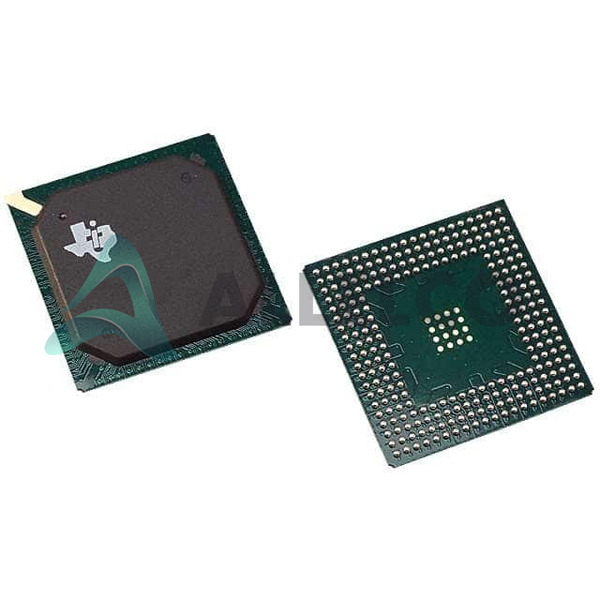
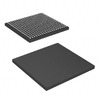
TMS320C6727GDHA250 Image
Image may be representation.
See specifications for product details.
EXPRESS OPTION
Payment method

TMS320C6727GDHA250 - Texas Instruments

Manufacturer Part Number
TMS320C6727GDHA250
Manufacturer
Texas Instruments
Allelco Part Number
98D-TMS320C6727GDHA250
Warranty
1 Year Allelco Warranty - Find out more
Stock Status:
17,915 pcs available, New & Original
Parts Description
IC FLOATING POINT DSP 256-BGA
Package
256-BGA (17x17)
Data sheet
-
RoHs Status
 
Our certification
In stock: 17915

Required fields are indicated by an asterisk (*)
Please send RFQ, we will respond immediately.

Quantity

Specifications

TMS320C6727GDHA250 Tech Specifications
Texas Instruments - TMS320C6727GDHA250 technical specifications, attributes, parameters and parts with similar specifications to Texas Instruments - TMS320C6727GDHA250

Product Attribute Attribute Value
Manufacturer Texas Instruments
Voltage - I/O 3.30V
Voltage - Core 1.20V
Type Floating Point
Supplier Device Package 256-BGA (17x17)
Series TMS320C672x
Package / Case 256-BGA
Package Tray
Product Attribute Attribute Value
Operating Temperature -40°C ~ 105°C (TC)
On-Chip RAM 288kB
Non-Volatile Memory ROM (384kB)
Mounting Type Surface Mount
Interface EBI/EMI, HPI, I²C, McASP, SPI
Clock Rate 250MHz
Base Product Number TMS320

Environmental & Export Classifications

ATTRIBUTE DESCRIPTION
RoHs Status RoHS non-compliant
Moisture Sensitivity Level (MSL) 3 (168 Hours)
REACH Status REACH Unaffected
ECCN 3A991A2
HTSUS 8542.31.0001

Frequently Asked Questions(FAQ)

How does the TMS320C6727GDHA250 handle real-time signal processing workloads given its 288kB of on-chip RAM and 250MHz clock rate, and what considerations apply when designing memory-intensive algorithms?
The TMS320C6727GDHA250’s 288kB of on-chip RAM provides a substantial local storage pool for intermediate data during floating-point operations, which is critical for minimizing external memory access latency. At a 250MHz core frequency, the device delivers sufficient computational throughput to support complex digital filter banks or FFT-based spectral analysis in real time. However, engineers must carefully partition data structures—such as coefficient tables or frame buffers—to fit within this constrained memory space while avoiding bank conflicts. For example, a 1024-point floating-point FFT with double-precision coefficients would consume approximately 8kB, leaving ample margin for stack and heap usage. Still, tasks requiring large lookup tables or streaming I/O without DMA assistance may necessitate external SDRAM or tighter loop unrolling to maintain cycle efficiency.
What are the implications of using the TMS320C6727GDHA250 in safety-critical or long-lifetime applications due to its RoHS non-compliant status and lack of formal certification?
While the TMS320C6727GDHA250 offers strong floating-point performance and integrated peripherals, its RoHS non-compliant designation means it contains restricted substances such as lead or certain brominated flame retardants, limiting its use in consumer electronics or regions enforcing strict environmental regulations. This also affects supply chain planning, as newer designs may require migration to RoHS-compliant derivatives like the C674x series if end-of-life projections exceed five years. Additionally, absence of ISO certifications or automotive-grade qualifications further narrows its applicability in domains such as medical devices or industrial control systems where reliability documentation is mandatory.
How does the TMS320C6727GDHA250 compare to other floating-point DSPs in terms of power efficiency and peripheral integration, particularly when interfacing with analog front-ends via McASP or SPI?
Compared to contemporaries like the TI C64x+ family, the TMS320C6727GDHA250 trades slightly higher static power consumption for superior single-cycle floating-point multiply-accumulate (FMA) capability, making it better suited for algorithm-heavy workloads rather than ultra-low-power edge nodes. Its inclusion of multiple serial ports—including McASP for TDM audio and SPI for sensor communication—reduces reliance on external logic compared to older architectures. However, unlike modern SoCs with integrated ADCs or Ethernet MACs, this device requires discrete components for mixed-signal conditioning, increasing BOM count but preserving deterministic timing in high-speed data acquisition loops.
Can the TMS320C6727GDHA250 be effectively used in multi-DSP configurations for parallel processing, and how does its HPI interface facilitate such setups?
Yes, the TMS320C6727GDHA250 supports co-processing through its Host Port Interface (HPI), which allows a master processor—typically an ARM or another DSP—to directly access its internal memory and registers. This enables efficient load-balancing strategies where one device manages task scheduling while others execute computationally intensive kernels. For instance, in radar beamforming applications, multiple C6727s could share raw ADC samples via shared memory mapped over HPI, reducing host overhead. Care must be taken to synchronize access and avoid race conditions, especially given the device’s lack of built-in cache coherence mechanisms.
What impact does the 1.2V core voltage have on thermal design and clock scaling capabilities when operating at full 250MHz across the -40°C to 105°C range?
The 1.2V core voltage contributes to relatively low dynamic power dissipation—approximately 1.8W under typical load at 250MHz—but still demands adequate heat spreading in compact layouts. Since the device operates across industrial temperature ranges, PCB materials and airflow must accommodate thermal cycling stresses. Although voltage cannot be scaled dynamically without violating timing closure, clock gating techniques can reduce active power during idle periods. Engineers should verify junction temperatures using IBIS models or worst-case corner simulations, as prolonged operation near 105°C ambient may trigger internal throttling or degrade electromigration margins.
Is the TMS320C6727GDHA250 suitable for booting from external ROM, and how does its 384kB internal ROM affect development workflows?
The TMS320C6727GDHA250 includes 384kB of masked ROM containing boot code and minimal runtime routines, allowing it to initialize basic peripherals without external firmware. However, this ROM is read-only and not user-programmable, so application logic must reside externally. During development, programmers often use JTAG to bypass boot sequences and flash external NOR/NAND memory, accelerating iteration cycles. In production, designers might leverage the ROM for secure key storage or minimal diagnostic firmware before transferring control to encrypted application code stored off-chip.
How does the EBI/EMI interface on the TMS320C6727GDHA250 support connection to common SDRAM or SRAM modules, and what timing constraints should be considered?
The Embedded Bus Interface (EBI) provides flexible address/data multiplexing and programmable wait-state insertion, enabling direct attachment to asynchronous SRAM or synchronous DRAM (SDRAM) without glue logic. Typical configurations include 16-bit wide buses supporting burst transfers up to 100MHz effective data rates. Engineers must account for propagation delays in traces longer than 1 inch, which can necessitate CAS latency adjustments or use of registered clocks in SDRAM interfaces. Also, careful partitioning of address lines and strobe signals is required to meet setup/hold requirements specified in the datasheet’s timing diagrams.
What role does I2C play in configuring the TMS320C6727GDHA250, and can it safely drive legacy sensor peripherals without additional level shifting?
The integrated I2C module simplifies configuration of slave devices such as EEPROMs, temperature sensors, or codec chips during system initialization. With standard-mode speeds up to 100kHz and fast-mode up to 400kHz, it efficiently handles register writes for calibration parameters. Since the I/O bank operates at 3.3V, interfacing with 5V-only sensors requires bidirectional level translators; attempting direct connection risks damaging either the sensor or the DSP. Using open-drain pull-ups compatible with 3.3V logic ensures compatibility across voltage domains while maintaining bus integrity.
How reliable is the TMS320C6727GDHA250 under extended temperature operation, and what failure modes should be anticipated in harsh environments?
Operating across -40°C to 105°C places the TMS320C6727GDHA250 within industrial-grade specifications, but long-term reliability depends on derating practices. Electromigration becomes more pronounced at elevated temperatures, especially in bond wires and vias, potentially leading to latent defects after several thousand hours. Thermal cycling between extremes may induce solder joint fatigue at the 256-BGA package interface. Mitigation strategies include limiting average junction temperature to below 90°C, ensuring uniform PCB thermal distribution, and avoiding rapid power-up sequences that cause localized hotspots.
What are the advantages of using the TMS320C6727GDHA250 over general-purpose microcontrollers for mathematical workloads, and where does it fall short?
Unlike MCUs optimized for control loops and event-driven tasks, the TMS320C6727GDHA250 features a VLIW architecture with eight functional units capable of executing up to six instructions per cycle, including dedicated floating-point pipelines. This makes it ideal for scientific computing, communications modulation/demodulation, or image filtering where raw MFLOPS matter. However, it lacks integrated CAN, USB OTG, or advanced PWM modules found in automotive MCUs, making it less convenient for embedded control applications. Moreover, real-time OS support is limited compared to Cortex-R variants, complicating task scheduling in deterministic systems.
How does the MSL 3 rating affect handling and shelf life for the TMS320C6727GDHA250, and what precautions apply during assembly?
With an MSL 3 classification, the TMS320C6727GDHA250 must be soldered within 168 hours of exposure to ambient humidity to prevent moisture-induced popcorning during reflow. After opening the moisture barrier bag, components should be baked at 125°C for 24 hours if stored beyond this window. Assembly houses must monitor floor life and use dry cabinets, especially in tropical climates. Failure to comply increases risk of delamination at the die attach interface, which can manifest as intermittent faults or immediate post-assembly failure.
Can the TMS320C6727GDHA250 run without external memory, and what functionality would remain available?
Yes, the TMS320C6727GDHA250 can operate entirely from its internal 288kB RAM and 384kB ROM, sufficient for small firmware images or diagnostic routines. This mode eliminates dependency on external memory ICs, reducing board complexity and cost. However, only code size fitting within combined program and data spaces will execute; larger applications require off-chip expansion. Even then, developers must manage stack depth carefully, as interrupt handlers and function call chains consume significant RAM unless optimized for tail recursion or static allocation.
What tools and compiler optimizations are recommended for maximizing performance on the TMS320C6727GDHA250, and how do they interact with its memory hierarchy?
TI’s Code Composer Studio (CCS) with the C6000 compiler provides profile-guided optimization, automatic vectorization for SIMD-like operations, and efficient inline assembly insertion. To exploit the memory architecture, developers should align data to 8-byte boundaries and prefer circular buffer addressing modes to minimize reload overhead. Loop unrolling and software pipelining are particularly effective due to the VLIW nature, but excessive register pressure can negate gains. Profiling with RTDX or hardware breakpoints helps identify bottlenecks hidden by compiler heuristics.
How does the absence of an MMU or cache affect software portability and debugging on the TMS320C6727GDHA250?
Without memory management unit (MMU) or cache, the TMS320C6727GDHA250 enforces flat physical addressing, simplifying driver development but eliminating virtual memory benefits. Debugging becomes more straightforward since memory maps are predictable, yet it increases risk of accidental corruption from pointer errors. Developers must implement their own memory protection schemes if running multiple tasks, relying instead on cooperative multitasking or RTOS abstractions that emulate isolation through careful resource partitioning.
What are the trade-offs between using the TMS320C6727GDHA250 versus FPGA-based solutions for prototyping high-speed digital signal processing algorithms?
The TMS320C6727GDHA250 offers deterministic execution, mature toolchains, and lower unit costs at volume, making it preferable for production-ready designs with fixed algorithms. In contrast, FPGAs allow algorithmic exploration and reconfiguration but introduce longer development cycles and higher per-unit expenses. For instance, implementing a custom CIC decimator may take weeks in HDL versus days in C on the C6727, though FPGAs avoid DSP block limitations. Choice hinges on whether flexibility outweighs deployment timeline and power budget constraints.

Parts with Similar Specifications

The three parts on the right have similar specifications to Texas Instruments TMS320C6727GDHA250

Product Attribute TMS320C6727GDH250 TMS320C6727ZDHA250 TMS320C6727ZDH250 TMS320C6727BZDH250
Part Number TMS320C6727GDH250 TMS320C6727ZDHA250 TMS320C6727ZDH250 TMS320C6727BZDH250
Manufacturer Texas Instruments Texas Instruments Texas Instruments Texas Instruments
Interface - - - -
Non-Volatile Memory - - - -
Package / Case - 196-LFBGA 16-DIP (0.300', 7.62mm) 64-VFQFN Exposed Pad
On-Chip RAM - - - -
Supplier Device Package - 196-NFBGA (12x12) 16-PDIP 64-VQFN (9x9)
Type - - - -
Package - Tape & Reel (TR) Tube Tape & Reel (TR)
Operating Temperature - -40°C ~ 85°C 0°C ~ 70°C -40°C ~ 85°C
Voltage - I/O - - - -
Series - - - -
Voltage - Core - - - -
Base Product Number - DAC34H84 MAX500 ADS62P42
Clock Rate - - - -
Mounting Type - Surface Mount Through Hole Surface Mount

Customer Reviews

Evaluation: 10 Articles

  • Nath***rooks
    Jun 11, 2026

    Installed this power component in a converter board. Output remained stable under different load conditions and thermal performance was better than expected.

  • Dani***alkerTech
    Jun 1, 2026

    Product works, but setup took more effort than expected. Once configured the MCU ran reliably, although documentation support felt older compared with newer platforms. Fine for maintenance projects.

  • Yuki***aka88
    May 26, 2026

    信号通信プロジェクトでこのRS-485トランシーバーを使用しました。設置は簡単で、長距離ケーブルでも通信は安定していました。消費電力も、以前使用していたものより低くなっています。

  • Stev***aker
    May 20, 2026

    Solid diode for power rectification. Works well in switching circuits.

  • Bran***Lewis
    May 11, 2026

    Compact FPGA with good performance. Suitable for basic signal processing tasks.

  • Oliv***arris
    May 7, 2026

    Reliable I/O expander. Works well in embedded control applications.

  • Jess***Jones
    Apr 17, 2026

    It offers good value for the price, and the specifications match the description. I’ve been using it for two days with no issues, and I’ll definitely buy it again if I need it in the future.

  • Mich***Smith
    Apr 17, 2026

    Shipping was on time, the component pins are neatly aligned, and I tested 10 of them with a multimeter—all readings were within the specified range. Highly recommended.

  • Aman***arris
    Apr 3, 2026

    It was great—the entire process, from placing the order to receiving the package, went very smoothly. The components were consistent, the price was fair, and I had a very pleasant shopping experience.

  • Mike***nch
    Apr 3, 2026

    Better than expected! The resistance and capacitance readings were spot-on, and it passed the test on the first try. The service was reliable, and the packaging was thoughtful—I highly recommend it.

Write a Review

Your Email address will not be published.

Shipment

Delivery Time

In-stock items can be shipped within 24 hours. Some parts will be arranged for delivery within 1-2 days from the date all items arrive at our warehouse. And Allelco ships order once a day at about 17:00, except Sunday. Once the goods are shipped, the estimated delivery time depends on the shipping methods and Delivery destination. The table below shows are the logistic time for some common countries.

Delivery Cost

  1. Use your express account for shipment if you have one.
  2. Use our account for the shipment. Refer to the table below for the approximate charges.
(Different time frame / countries / package size has different price.)

Delivery Method

  1. Global Common Shipment by DHL / UPS / FedEx / TNT / EMS / SF we support.
  2. Others more shipping ways, please get in touch with your customer manager.

Common Countries Logistic Time Reference
Region Country Logistic Time(Day)
America United States 5
Brazil 7
Europe Germany 5
United Kingdom 4
Italy 5
Oceania Australia 6
New Zealand 5
Asia India 4
Japan 4
Middle East Israel 6
DHL & FedEx Shipment Charges Reference
Shipment charges(KG) Reference DHL(USD$)
0.00kg-1.00kg USD$30.00 - USD$60.00
1.00kg-2.00kg USD$40.00 - USD$80.00
2.00kg-3.00kg USD$50.00 - USD$100.00
Note:
The above table is for reference only. There may have some data bias for the uncontrollable factors.
Contact us if you have any questions.
  • QC (Quality Warranty)
  • Payment Support
  • Packaging
  • Certifications & Memberships

QC (Quality Warranty)

Allelco is committed to exceeding customer expectations through customer service excellence, order accuracy, and on-time delivery.
This is achieved through our commitment to the continual improvement of our processes, services, and products.


Strict quality inspection builds a solid foundation for electronic component quality.
  1. Visual inspection
  2. Performance testing and reliability verification
  3. Standardized full-process testing
  4. Precise control of every parameter
We eliminate defective components and ensure the stable operation of electronic devices through professional quality standards.

Payment Support

The payment method can be chosen from the methods shown below: Wire Transfer (T/T, Bank Transfer), Western Union, Credit card, PayPal.
  • HKBea
  • Paypal
  • MasterCard
  • Western-Union
  • VISA
Stable Delivery, Sincere Partnership — Your Faithful Supply Chain Partner
  • Efficient Supply Management
  • Cost-Saving Procurement
  • Fast Sourcing & Delivery
Contact us if you have any questions.

Packaging

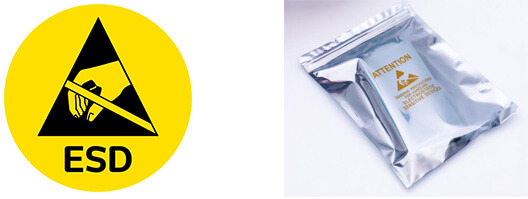
Electrostatic Discharge Protection and Handling

All electrostatic-sensitive components are handled in accordance with electrostatic discharge control procedures. The products are hermetically sealed in anti-static safe packaging to prevent electrostatic damage. Appropriate labeling is also applied for identification and traceability. This ensures product integrity during storage, handling and transportation.


ESD

Certifications & Memberships

Third-party certified, strict quality control. Our certification
  • ISO 9001: 2015
  • ISO 13485: 2016
  • ISO 14001: 2015
  • ISO 28000: 2007
  • ISO 45001: 2018
  • GB/T 27922-2011
  • SMTA
  • IPC
  • ESD
  • PSMA
TMS320C6727GDHA250 Image

TMS320C6727GDHA250

Texas Instruments
98D-TMS320C6727GDHA250

Want a better price? Add to Cart and Submit RFQ now, we'll contact you immediately.

0 RFQ
Shopping cart (0 Items)
It is empty.
Compare List (0 Items)
It is empty.
Feedback

Your feedback matters! At Allelco, we value the user experience and strive to improve it constantly.
Please share your comments with us via our feedback form, and we'll respond promptly.
Thank you for choosing Allelco.

Subject
E-mail
Comments
Captcha
Drag or click to upload file
Upload File
types: .xls, .xlsx, .doc, .docx, .jpg, .png and .pdf.
Max file size: 10MB