View All

Please refer to the English Version as our Official Version.Return

Europe
France(Français) Germany(Deutsch) Italy(Italia) Russian(русский) Poland(polski) Czech(Čeština) Luxembourg(Lëtzebuergesch) Netherlands(Nederland) Iceland(íslenska) Hungarian(Magyarország) Spain(español) Portugal(Português) Turkey(Türk dili) Bulgaria(Български език) Ukraine(Україна) Greece(Ελλάδα) Israel(עִבְרִית) Sweden(Svenska) Finland(Svenska) Finland(Suomi) Romania(românesc) Moldova(românesc) Slovakia(Slovenská) Denmark(Dansk) Slovenia(Slovenija) Slovenia(Hrvatska) Croatia(Hrvatska) Serbia(Hrvatska) Montenegro(Hrvatska) Bosnia and Herzegovina(Hrvatska) Lithuania(lietuvių) Spain(Português) Switzerland(Deutsch) United Kingdom(English)
Asia/Pacific
Japan(日本語) Korea(한국의) Thailand(ภาษาไทย) Malaysia(Melayu) Singapore(Melayu) Vietnam(Tiếng Việt) Philippines(Pilipino)
Africa, India and Middle East
United Arab Emirates(العربية) Iran(فارسی) Tajikistan(فارسی) India(हिंदी) Madagascar(malaɡasʲ)
South America / Oceania
New Zealand(Maori) Brazil(Português) Angola(Português) Mozambique(Português)
North America
United States(English) Canada(English) Haiti(Ayiti) Mexico(español)
HomeProductsIntegrated Circuits (ICs)Embedded - DSP (Digital Signal Processors)TMS320C6727GDH300
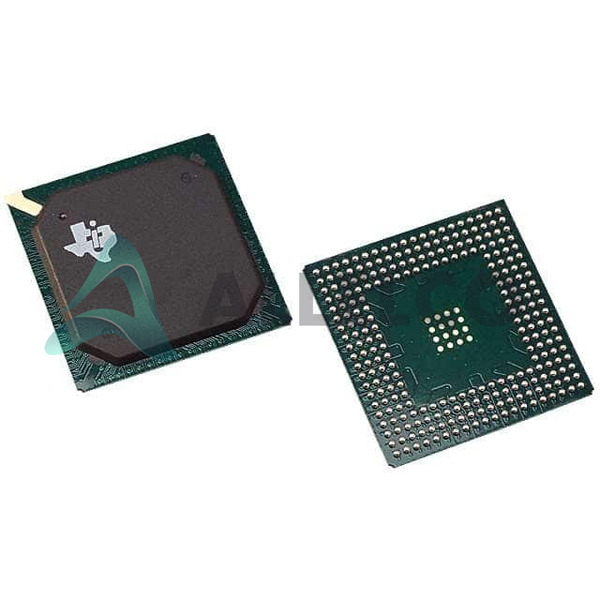
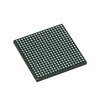
TMS320C6727GDH300 Image
Image may be representation.
See specifications for product details.
EXPRESS OPTION
Payment method

TMS320C6727GDH300 - Texas Instruments

Manufacturer Part Number
TMS320C6727GDH300
Manufacturer
Texas Instruments
Allelco Part Number
98D-TMS320C6727GDH300
Warranty
1 Year Allelco Warranty - Find out more
Stock Status:
14,812 pcs available, New & Original
Parts Description
IC FLOATING-POINT DSP 256-BGA
Package
256-BGA (17x17)
Data sheet
-
RoHs Status
ROHS3 Compliant
Our certification
In stock: 14812

Required fields are indicated by an asterisk (*)
Please send RFQ, we will respond immediately.

Quantity

Specifications

TMS320C6727GDH300 Tech Specifications
Texas Instruments - TMS320C6727GDH300 technical specifications, attributes, parameters and parts with similar specifications to Texas Instruments - TMS320C6727GDH300

Product Attribute Attribute Value
Manufacturer Texas Instruments
Voltage - I/O 3.30V
Voltage - Core 1.20V
Type Floating Point
Supplier Device Package 256-BGA (17x17)
Series TMS320C672x
Package / Case 256-BGA
Package Tube
Product Attribute Attribute Value
Operating Temperature 0°C ~ 90°C (TC)
On-Chip RAM 288kB
Non-Volatile Memory ROM (384kB)
Mounting Type Surface Mount
Interface EBI/EMI, HPI, I²C, McASP, SPI
Clock Rate 300MHz
Base Product Number TMS320

Environmental & Export Classifications

ATTRIBUTE DESCRIPTION
RoHs Status ROHS3 Compliant
Moisture Sensitivity Level (MSL) 3 (168 Hours)
REACH Status REACH Unaffected
ECCN 3A991A2
HTSUS 8542.31.0001

Frequently Asked Questions(FAQ)

How does the TMS320C6727GDH300 compare to other DSPs in the C672x series for floating-point intensive applications, and what are its key architectural advantages?
The TMS320C6727GDH300 features a VLIW (Very Long Instruction Word) architecture optimized for high-performance floating-point operations, delivering up to 1.8 GFLOPS at 300MHz. Compared to other members of the C672x family, it maintains consistent core performance while offering a balanced combination of on-chip memory and interface flexibility. Its 288kB of on-chip RAM and 384kB ROM provide sufficient local storage for real-time signal processing tasks, reducing dependency on external memory and improving timing predictability. This makes it particularly suitable for embedded systems requiring deterministic execution with moderate data throughput.
What design considerations should engineers evaluate when selecting the TMS320C6727GDH300 for a power-sensitive application, given its dual voltage domains?
The TMS320C6727GDH300 operates at 1.2V core voltage and 3.3V I/O levels, presenting a classic trade-off between performance and power consumption. While the 1.2V core helps reduce dynamic power compared to older 1.8V DSPs, the device still draws significant current under full computational load due to its high clock rate and parallel processing capabilities. Engineers must carefully manage clock scaling, disable unused peripherals like McASP or HPI, and implement proper power gating strategies in firmware. For battery-powered systems, alternative lower-power DSPs from TI’s C6000 family may offer better efficiency, but the C6727GDH300 remains viable for short-duration high-throughput bursts where energy per operation is acceptable.
Can the TMS320C6727GDH300 be effectively used in industrial temperature monitoring systems operating near its maximum junction temperature?
Yes, the TMS320C6727GDH300 is rated for an operating temperature range of 0°C to 90°C (TC), making it suitable for many industrial environments without active thermal management. However, sustained operation near 90°C requires careful PCB layout to ensure adequate heat dissipation from the 256-BGA package. Engineers should consider thermal vias under the package and avoid placing high-power components adjacent to the DSP. Additionally, firmware-level throttling or workload distribution can prevent thermal runaway during prolonged high-load scenarios, preserving long-term reliability.
In what scenarios would the EBI/EMI interface on the TMS320C6727GDH300 be preferred over on-chip memory for data access?
The TMS320C6727GDH300’s External Bus Interface (EBI) supports direct connection to SDRAM, SRAM, or flash memory, enabling scalable memory expansion beyond its 288kB on-chip RAM. This is advantageous when processing large datasets that exceed internal memory capacity, such as multi-channel audio buffers or real-time image frames. Using EBI allows system designers to use commodity memory components and simplify board routing, though it introduces latency and potential contention issues. For applications with predictable, bursty data patterns and strict timing requirements, on-chip memory may offer faster access, but EBI provides necessary flexibility for larger memory footprints.
How does the presence of multiple communication interfaces—such as SPI, I2C, McASP, and HPI—affect system integration complexity with the TMS320C6727GDH300?
The TMS320C6727GDH300 integrates four distinct peripheral interfaces: HPI (Host Port Interface), McASP (Multi-channel Audio Serial Port), SPI, and I2C. Each serves specialized roles—HPI enables co-processing with microcontrollers, McASP handles high-speed audio streaming, SPI supports sensor connectivity, and I2C manages configuration registers. While this reduces the need for external interface logic, it increases firmware complexity due to interrupt prioritization and resource arbitration. Engineers must carefully plan pin assignments to avoid conflicts and ensure sufficient DMA support for high-bandwidth transfers, especially when using McASP or HPI concurrently.
What impact does the 256-BGA package size have on thermal performance and PCB design when implementing the TMS320C6727GDH300?
The 256-ball grid array (BGA) package measures 17x17 mm, offering a compact footprint ideal for space-constrained designs. However, its fine-pitch ball grid limits soldering yield and requires precise stencil printing and reflow profiles. From a thermal perspective, the large die area concentrates heat, necessitating thermal relief via PCB layers or even a small heatsink if ambient temperatures approach 80°C. Designers should allocate sufficient copper pour under the component and connect it through multiple thermal vias to the ground plane, ensuring effective heat spreading without violating Moisture Sensitivity Level 3 handling requirements.
Is the TMS320C6727GDH300 suitable for real-time control applications requiring deterministic interrupt response times?
Yes, the TMS320C6727GDH300 supports low-latency interrupt handling typical of digital signal processors, with vector-based interrupt service routines and hardware-assisted context saving. Its VLIW architecture allows multiple instructions to be issued per cycle, which can improve throughput for interrupt-driven tasks. However, worst-case interrupt latency depends on pipeline state and instruction scheduling, so engineers must minimize non-critical operations within ISRs. For hard real-time control loops, pairing the DSP with a dedicated microcontroller via the HPI interface may distribute timing-critical functions more reliably than relying solely on the C6727GDH300.
How does the TMS320C6727GDH300 compare to the TMS320C6713 in terms of memory hierarchy and floating-point performance for legacy code migration?
The TMS320C6727GDH300 offers significantly improved memory resources over the C6713—288kB of on-chip RAM versus 32kB, plus 384kB ROM compared to none on the C6713. Clocked at 300MHz versus 300MHz but with a more advanced VLIW implementation, it delivers higher sustained FLOPS due to better instruction-level parallelism. Migrating legacy C6713 code is generally straightforward, as both share the C6000 ISA, but performance gains come from optimizing memory access patterns to leverage the expanded cacheless SRAM. The absence of L1/L2 caches in both devices means software-managed memory partitioning is essential for optimal throughput.
What role does the McASP interface play in audio processing workflows using the TMS320C6727GDH300, and how is it configured for multi-channel applications?
The Multi-channel Audio Serial Port (McASP) on the TMS320C6727GDH300 supports up to 32 channels of TDM (Time Division Multiplexing) audio, making it ideal for professional audio codecs, voice conferencing, or surround sound systems. It can operate in master or slave mode and supports various bit depths and sample rates. Configuration involves setting up transmit and receive frame syncs, clock dividers, and slot sizes in hardware registers, often assisted by TI’s SysConfig tool. When interfacing with ADCs/DACs, proper synchronization and FIFO management via DMA are critical to prevent buffer underruns or overruns during continuous streaming.
Given its RoHS3 compliance and REACH unaffected status, what regulatory benefits does the TMS320C6727GDH300 offer for global product certification?
The TMS320C6727GDH300 meets RoHS3 standards, eliminating hazardous substances such as lead, mercury, and cadmium above specified thresholds. Its REACH unaffected status indicates no SVHCs (Substances of Very High Concern) are intentionally used in manufacturing, simplifying supply chain documentation for EU markets. These attributes reduce compliance overhead during end-product certification and enhance market access across North America, Europe, and Asia-Pacific regions, particularly important for medical, automotive, and defense-related designs requiring rigorous environmental traceability.
How should system architects handle the absence of on-die cache in the TMS320C6727GDH300 when designing memory-intensive algorithms?
Without L1 or L2 caches, the TMS320C6727GDH300 relies entirely on software-controlled memory management. Engineers must partition the 288kB of internal RAM into scratchpad regions for frequently accessed data and code segments, minimizing cache simulation overhead. Loop unrolling, data alignment, and blocking techniques help optimize spatial and temporal locality. For external memory accesses via EBI, burst-mode transactions and DMA-driven transfers reduce CPU overhead. Profiling tools like Code Composer Studio’s Real-Time Analysis help identify memory bottlenecks before deployment, ensuring efficient utilization of available bandwidth.
What are the implications of the TMS320C6727GDH300’s 300MHz clock rate for real-time FFT implementations, and how much processing margin remains after accounting for overhead?
At 300MHz, the TMS320C6727GDH300 can execute approximately 1.8 billion floating-point operations per second (GFLOPS), enough to perform a 1024-point complex FFT in under 500 microseconds using optimized TI libraries. However, actual throughput depends on memory access time, branch penalties, and peripheral interactions. Conservative estimates suggest usable compute headroom of 60–70% for typical signal processing pipelines, leaving sufficient margin for filtering, windowing, and I/O handling. For higher-order transforms, algorithm optimization or offloading to dedicated accelerators becomes necessary.
Can the TMS320C6727GDH300 drive multiple high-resolution displays directly, or does it require external graphics controllers?
No, the TMS320C6727GDH300 lacks native video output capabilities such as LVDS, DVI, or HDMI. To drive displays, engineers typically interface it with an external display controller chip via parallel RGB or pixel-link interface, often managed through DMA. This adds complexity but allows flexibility in resolution and refresh rate. Alternatively, the HPI port can offload display updates to a companion microcontroller running display stack firmware. Thus, while not designed for direct panel driving, it can support graphical user interfaces in embedded systems with appropriate middleware and external components.
How does the TMS320C6727GDH300 compare to ARM Cortex-M7-based solutions in mixed-signal control applications?
The TMS320C6727GDH300 excels in raw floating-point performance and deterministic DSP operations, whereas ARM Cortex-M7 devices prioritize low-power operation and ease of software development. For applications involving adaptive filtering, spectral analysis, or matrix math, the C6727GDH300 outperforms the M7 by orders of magnitude in FLOP/s. However, for simpler control loops with integer arithmetic and modest sampling rates, an M7 consumes less power and integrates more peripherals natively. Hybrid architectures sometimes pair both: the M7 handles real-time control, while the DSP processes complex sensor fusion algorithms, leveraging their respective strengths.
What precautions are necessary when prototyping with the TMS320C6727GDH300 due to its Moisture Sensitivity Level 3 classification?
As an MSL 3 device with a 168-hour floor life, the TMS320C6727GDH300 absorbs moisture over time, posing popcorn risk during reflow soldering. Before assembly, boards must be baked if stored beyond 168 hours in uncontrolled environments. Once unpacked, they should be assembled within the recommended time window using dry packaging materials. Post-assembly, visual inspection for delamination or solder voids is advised. Following JEDEC J-STD-033 guidelines ensures reliability and prevents catastrophic failure during thermal cycling, especially in high-volume production settings.

Parts with Similar Specifications

The three parts on the right have similar specifications to Texas Instruments TMS320C6727GDH300

Product Attribute TMS320C6727BZDH300 TMS320C6727BGDH350 TMS320C6727ZDH300 TMS320C6727GDH250
Part Number TMS320C6727BZDH300 TMS320C6727BGDH350 TMS320C6727ZDH300 TMS320C6727GDH250
Manufacturer Texas Instruments Texas Instruments Texas Instruments Texas Instruments
Voltage - I/O - - - -
Voltage - Core - - - -
Type - - - -
Interface - - - -
Series - - - -
Base Product Number - DAC34H84 MAX500 ADS62P42
Mounting Type - Surface Mount Through Hole Surface Mount
Clock Rate - - - -
Package / Case - 196-LFBGA 16-DIP (0.300', 7.62mm) 64-VFQFN Exposed Pad
Non-Volatile Memory - - - -
Package - Tape & Reel (TR) Tube Tape & Reel (TR)
Supplier Device Package - 196-NFBGA (12x12) 16-PDIP 64-VQFN (9x9)
Operating Temperature - -40°C ~ 85°C 0°C ~ 70°C -40°C ~ 85°C
On-Chip RAM - - - -

Customer Reviews

Evaluation: 10 Articles

  • Nath***rooks
    Jun 11, 2026

    Installed this power component in a converter board. Output remained stable under different load conditions and thermal performance was better than expected.

  • Dani***alkerTech
    Jun 1, 2026

    Product works, but setup took more effort than expected. Once configured the MCU ran reliably, although documentation support felt older compared with newer platforms. Fine for maintenance projects.

  • Yuki***aka88
    May 26, 2026

    信号通信プロジェクトでこのRS-485トランシーバーを使用しました。設置は簡単で、長距離ケーブルでも通信は安定していました。消費電力も、以前使用していたものより低くなっています。

  • Stev***aker
    May 20, 2026

    Solid diode for power rectification. Works well in switching circuits.

  • Bran***Lewis
    May 11, 2026

    Compact FPGA with good performance. Suitable for basic signal processing tasks.

  • Oliv***arris
    May 7, 2026

    Reliable I/O expander. Works well in embedded control applications.

  • Jess***Jones
    Apr 17, 2026

    It offers good value for the price, and the specifications match the description. I’ve been using it for two days with no issues, and I’ll definitely buy it again if I need it in the future.

  • Mich***Smith
    Apr 17, 2026

    Shipping was on time, the component pins are neatly aligned, and I tested 10 of them with a multimeter—all readings were within the specified range. Highly recommended.

  • Aman***arris
    Apr 3, 2026

    It was great—the entire process, from placing the order to receiving the package, went very smoothly. The components were consistent, the price was fair, and I had a very pleasant shopping experience.

  • Mike***nch
    Apr 3, 2026

    Better than expected! The resistance and capacitance readings were spot-on, and it passed the test on the first try. The service was reliable, and the packaging was thoughtful—I highly recommend it.

Write a Review

Your Email address will not be published.

Shipment

Delivery Time

In-stock items can be shipped within 24 hours. Some parts will be arranged for delivery within 1-2 days from the date all items arrive at our warehouse. And Allelco ships order once a day at about 17:00, except Sunday. Once the goods are shipped, the estimated delivery time depends on the shipping methods and Delivery destination. The table below shows are the logistic time for some common countries.

Delivery Cost

  1. Use your express account for shipment if you have one.
  2. Use our account for the shipment. Refer to the table below for the approximate charges.
(Different time frame / countries / package size has different price.)

Delivery Method

  1. Global Common Shipment by DHL / UPS / FedEx / TNT / EMS / SF we support.
  2. Others more shipping ways, please get in touch with your customer manager.

Common Countries Logistic Time Reference
Region Country Logistic Time(Day)
America United States 5
Brazil 7
Europe Germany 5
United Kingdom 4
Italy 5
Oceania Australia 6
New Zealand 5
Asia India 4
Japan 4
Middle East Israel 6
DHL & FedEx Shipment Charges Reference
Shipment charges(KG) Reference DHL(USD$)
0.00kg-1.00kg USD$30.00 - USD$60.00
1.00kg-2.00kg USD$40.00 - USD$80.00
2.00kg-3.00kg USD$50.00 - USD$100.00
Note:
The above table is for reference only. There may have some data bias for the uncontrollable factors.
Contact us if you have any questions.
  • QC (Quality Warranty)
  • Payment Support
  • Packaging
  • Certifications & Memberships

QC (Quality Warranty)

Allelco is committed to exceeding customer expectations through customer service excellence, order accuracy, and on-time delivery.
This is achieved through our commitment to the continual improvement of our processes, services, and products.


Strict quality inspection builds a solid foundation for electronic component quality.
  1. Visual inspection
  2. Performance testing and reliability verification
  3. Standardized full-process testing
  4. Precise control of every parameter
We eliminate defective components and ensure the stable operation of electronic devices through professional quality standards.

Payment Support

The payment method can be chosen from the methods shown below: Wire Transfer (T/T, Bank Transfer), Western Union, Credit card, PayPal.
  • HKBea
  • Paypal
  • MasterCard
  • Western-Union
  • VISA
Stable Delivery, Sincere Partnership — Your Faithful Supply Chain Partner
  • Efficient Supply Management
  • Cost-Saving Procurement
  • Fast Sourcing & Delivery
Contact us if you have any questions.

Packaging

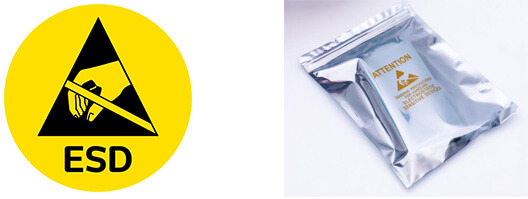
Electrostatic Discharge Protection and Handling

All electrostatic-sensitive components are handled in accordance with electrostatic discharge control procedures. The products are hermetically sealed in anti-static safe packaging to prevent electrostatic damage. Appropriate labeling is also applied for identification and traceability. This ensures product integrity during storage, handling and transportation.


ESD

Certifications & Memberships

Third-party certified, strict quality control. Our certification
  • ISO 9001: 2015
  • ISO 13485: 2016
  • ISO 14001: 2015
  • ISO 28000: 2007
  • ISO 45001: 2018
  • GB/T 27922-2011
  • SMTA
  • IPC
  • ESD
  • PSMA
TMS320C6727GDH300 Image

TMS320C6727GDH300

Texas Instruments
98D-TMS320C6727GDH300

Want a better price? Add to Cart and Submit RFQ now, we'll contact you immediately.

0 RFQ
Shopping cart (0 Items)
It is empty.
Compare List (0 Items)
It is empty.
Feedback

Your feedback matters! At Allelco, we value the user experience and strive to improve it constantly.
Please share your comments with us via our feedback form, and we'll respond promptly.
Thank you for choosing Allelco.

Subject
E-mail
Comments
Captcha
Drag or click to upload file
Upload File
types: .xls, .xlsx, .doc, .docx, .jpg, .png and .pdf.
Max file size: 10MB