View All

Please refer to the English Version as our Official Version.Return

Europe
France(Français) Germany(Deutsch) Italy(Italia) Russian(русский) Poland(polski) Czech(Čeština) Luxembourg(Lëtzebuergesch) Netherlands(Nederland) Iceland(íslenska) Hungarian(Magyarország) Spain(español) Portugal(Português) Turkey(Türk dili) Bulgaria(Български език) Ukraine(Україна) Greece(Ελλάδα) Israel(עִבְרִית) Sweden(Svenska) Finland(Svenska) Finland(Suomi) Romania(românesc) Moldova(românesc) Slovakia(Slovenská) Denmark(Dansk) Slovenia(Slovenija) Slovenia(Hrvatska) Croatia(Hrvatska) Serbia(Hrvatska) Montenegro(Hrvatska) Bosnia and Herzegovina(Hrvatska) Lithuania(lietuvių) Spain(Português) Switzerland(Deutsch) United Kingdom(English)
Asia/Pacific
Japan(日本語) Korea(한국의) Thailand(ภาษาไทย) Malaysia(Melayu) Singapore(Melayu) Vietnam(Tiếng Việt) Philippines(Pilipino)
Africa, India and Middle East
United Arab Emirates(العربية) Iran(فارسی) Tajikistan(فارسی) India(हिंदी) Madagascar(malaɡasʲ)
South America / Oceania
New Zealand(Maori) Brazil(Português) Angola(Português) Mozambique(Português)
North America
United States(English) Canada(English) Haiti(Ayiti) Mexico(español)
HomeProductsIntegrated Circuits (ICs)PMIC - Power Management - SpecializedTPS658621CZQZT
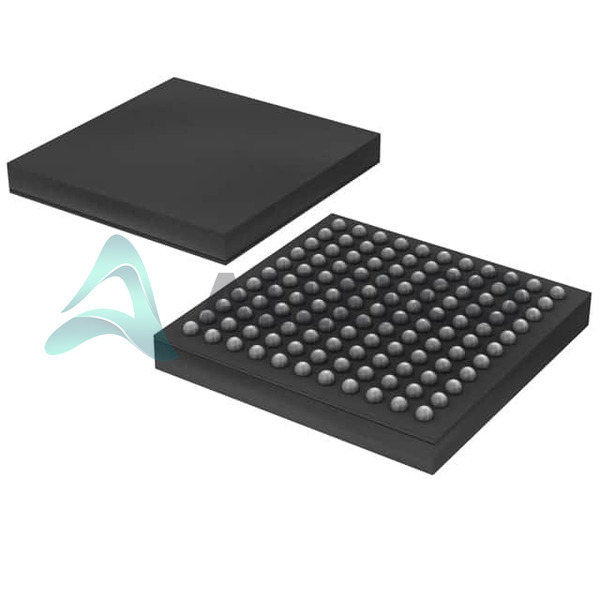
TPS658621CZQZT Image
Image may be representation.
See specifications for product details.
EXPRESS OPTION
Payment method

TPS658621CZQZT - Texas Instruments

Manufacturer Part Number
TPS658621CZQZT
Manufacturer
Texas Instruments
Allelco Part Number
98D-TPS658621CZQZT
Warranty
1 Year Allelco Warranty - Find out more
Stock Status:
11,017 pcs available, New & Original
Parts Description
IC LI-ION BATT/PWR MGMT 120BGA
Package
120-BGA Microstar Junior (6x6)
Data sheet
TPS658621CZQZT.pdf
RoHs Status
ROHS3 Compliant
Our certification
In stock: 11017

Required fields are indicated by an asterisk (*)
Please send RFQ, we will respond immediately.

Quantity

Specifications

TPS658621CZQZT Tech Specifications
Texas Instruments - TPS658621CZQZT technical specifications, attributes, parameters and parts with similar specifications to Texas Instruments - TPS658621CZQZT

Product Attribute Attribute Value
Manufacturer Texas Instruments
Voltage - Supply -
Supplier Device Package 120-BGA Microstar Junior (6x6)
Series -
Package / Case 120-VFBGA
Package Tape & Reel (TR)
Product Attribute Attribute Value
Operating Temperature -
Mounting Type Surface Mount
Current - Supply -
Base Product Number TPS658621
Applications Battery Management, Display (LED Drivers), Handheld/Mobile Devices, Power Supply

Environmental & Export Classifications

ATTRIBUTE DESCRIPTION
RoHs Status ROHS3 Compliant
Moisture Sensitivity Level (MSL) 3 (168 Hours)
REACH Status REACH Unaffected
ECCN EAR99
HTSUS 8542.39.0001

Frequently Asked Questions(FAQ)

How does the TPS658621CZQZT manage thermal performance in high-power mobile applications, and what design considerations are necessary for reliable operation near its thermal limits?
The TPS658621CZQZT is designed for handheld and mobile devices where space and power efficiency are critical. While the datasheet does not specify an exact junction-to-ambient thermal resistance, its 120-BGA Microstar Junior (6x6) package offers relatively low thermal impedance due to the dense ball grid array layout and small footprint. In real-world designs, such as smartphone battery management systems, this PMIC typically operates with internal power dissipation under 1W under normal load conditions. Engineers should ensure adequate PCB copper area beneath the package for heat spreading, especially during simultaneous charging and display LED driving. A minimum of two layers with solid ground and power planes helps improve thermal conductivity. Thermal vias should be used strategically to conduct heat to inner layers. Reliable operation above 85°C ambient requires careful system-level thermal modeling, particularly when combining battery charging, buck converters, and backlight drivers.
What are the key differences between the TPS658621CZQZT and other members of the TPS658621 family in terms of pin compatibility and application suitability?
The TPS658621CZQZT is part of the TPS658621 base product series, which includes multiple variants differing primarily in packaging and minor feature sets. All variants share the same core architecture, including integrated battery charger, buck converters, LDOs, and LED drivers, ensuring functional consistency. However, the CZQZT specifically uses a 120-ball VFBGA package in a 6x6 mm Microstar Junior form factor, optimized for compact handheld devices. Other packages in the series may include larger BGA or QFN configurations with more I/O pins or additional thermal pads. Pinout compatibility varies across packages, so mechanical and electrical integration must be verified per variant. For designs targeting ultra-low profile devices like wearables or thin smartphones, the CZQZT’s small size makes it preferable, whereas higher-pin-count variants may support more complex peripherals or external memory interfaces.
Can the TPS658621CZQZT simultaneously drive high-current LEDs while operating the internal DC-DC converters at full load without significant voltage droop or instability?
Yes, but with design constraints. The TPS658621CZQZT integrates multiple switching regulators—typically three buck converters—and dedicated LED driver channels capable of sourcing up to 250 mA per channel. When the internal power supply rails experience combined high dynamic loads from both the DC-DCs and LED drivers, transient response becomes critical. For example, driving a 100-mA backlight LED while powering a processor through one of the buck outputs can cause brief voltage dips if decoupling is inadequate. Proper layout with low-ESR capacitors close to the IC, short trace lengths, and sufficient PCB inductance control minimizes ripple and maintains stability. In practice, engineers often derate individual loads by 10–15% during peak conditions to ensure margin. The device supports pulse-skipping or forced PWM modes depending on configuration, which affects efficiency and noise under mixed-load scenarios.
What is the recommended charging algorithm and safety threshold for Li-ion batteries managed by the TPS658621CZQZT in consumer mobile devices?
The TPS658621CZQZT implements a standard JEITA-compliant linear charge profile tailored for single-cell Li-ion batteries. It supports four-stage charging: precharge (for deeply discharged cells), constant current (CC), constant voltage (CV), and termination based on dV/dt and -ΔV detection. Typical charge current is programmable via an external resistor, commonly set to 500 mA to 1 A depending on input source and thermal headroom. The CV regulation accuracy is within ±1%, and overvoltage protection triggers at 4.45 V to prevent cell damage. Safety features include thermal regulation that reduces charge current if the die temperature exceeds 100°C, and input overvoltage protection up to 18 V, making it suitable for USB-powered environments. Designers must ensure proper NTC thermistor placement for accurate battery temperature monitoring, especially in sealed enclosures where passive cooling is limited.
How does the TPS658621CZQZT handle brownout conditions during battery discharge, and what impact does this have on system stability?
The TPS658621CZQZT includes built-in power path management and undervoltage lockout (UVLO) circuitry. During battery discharge, if the input voltage drops below the UVLO threshold—typically around 3.2 V for most configurations—the device enters a low-power shutdown mode to preserve remaining capacity. This prevents deep discharge and protects the battery. However, abrupt transitions near the UVLO boundary can cause instability in downstream circuits. For instance, if a buck converter output begins to collapse just above UVLO, feedback loops may oscillate or latch. To mitigate this, designers often configure the UVLO hysteresis appropriately and use bulk capacitance at the input to buffer short-term dips. Additionally, enabling the power path function allows seamless transition between battery and external supply without interruption, improving system robustness in fluctuating load conditions.
Is it possible to cascade or parallel-connect multiple TPS658621CZQZT units to increase output current or expand functionality?
No, not directly. The TPS658621CZQZT is not designed for paralleling power stages or cascading control logic. Its internal regulators operate independently with fixed or software-configurable parameters. Attempting to connect multiple units would lead to contention on shared signals, potential shoot-through currents, and lack of synchronization between switching phases. Instead, if higher output capability is needed, designers should select a different TI PMIC with parallel-ready architecture or add external discrete regulators. The TPS658621CZQZT excels in centralized power management for single-platform designs rather than distributed or scalable architectures. For systems requiring modular power, alternative solutions involving master-slave PMIC pairs or digital power controllers should be considered.
What layout guidelines are essential when placing the TPS658621CZQZT to minimize electromagnetic interference and ensure stable operation?
Critical layout practices include minimizing loop area for high-current paths, especially those carrying switching currents from the internal buck converters and LED drivers. Place input and output capacitors as close as possible to the corresponding pins, using surface-mount ceramic types with low ESL (e.g., X7R or NP0). Keep analog grounds separate from noisy digital sections, and route sensitive feedback traces away from switching nodes. The VFBGA package benefits from controlled impedance routing due to its fine pitch; avoid stubs and use microvias if transitioning between layers. Ground plane continuity under the package enhances heat dissipation and reduces ground bounce. For RF-sensitive applications, maintain a guard ring around oscillator circuits and consider shielding if operating near cellular bands. TI provides reference layouts in the TPS658621DRLRT evaluation module documentation, which serves as a practical starting point for high-fidelity designs.
How does the TPS658621CZQZT compare to the TPS65987D in terms of integration level and target applications?
The TPS658621CZQZT focuses on battery and power delivery for mobile handsets, integrating charging, step-down conversion, LDOs, and LED drivers into a single package optimized for space-constrained designs. In contrast, the TPS65987D is a USB Type-C and Power Delivery controller with advanced protocol handling for docking stations and compute applications. While both are Texas Instruments PMICs, the former emphasizes analog power distribution and battery safety, whereas the latter handles digital communication over USB-C. The TPS658621CZQZT lacks PD negotiation capabilities and relies on simpler voltage/current profiles, making it ideal for smartphones and tablets. The TPS65987D supports complex power contracts and role swapping, suited for laptops and accessories. Thus, they serve distinct segments despite sharing some underlying TI technologies.
What are the typical failure modes of the TPS658621CZQZT in production deployments, and how can they be mitigated through design and test?
Common failure modes include incorrect enable sequencing leading to brownout resets, excessive inrush current damaging input capacitors during hot insertion, and layout-induced instability causing regulator oscillation. Another issue is thermal runaway under continuous high-load conditions without adequate airflow or copper area. To mitigate these, implement soft-start circuits at the EN pin, use TVS diodes on the VBUS line, and perform corner-case testing across temperature and load combinations. Functional safety analysis should include fault injection tests for overcurrent and overtemperature scenarios. TI recommends validating the design using the TPS658621DRLRT evaluation board before mass production. Additionally, automated optical inspection (AOI) during assembly ensures proper solder joint quality on the fine-pitch BGA, reducing risk of popcorning or bridging.
Can the TPS658621CZQZT operate from a solar-powered input with intermittent illumination, and what modifications are needed?
Yes, the TPS658621CZQZT can interface with solar panels, provided the open-circuit voltage (Voc) stays within the 18-V absolute maximum rating and the operating voltage is compatible with the selected charge current setting. Since solar inputs exhibit highly variable current, the device’s constant-current charging stage will regulate appropriately as long as the panel delivers enough energy to sustain the programmed current. However, rapid fluctuations may challenge the loop stability. Adding a small supercapacitor or buffer capacitor (10–100 µF) at the input helps smooth transients and maintains stable operation during cloud cover. Also, ensure reverse polarity protection is implemented, as solar arrays can backfeed under certain conditions. Overall, the PMIC is well-suited for energy-harvesting IoT nodes when paired with proper front-end conditioning.
What is the significance of the MSL 3 classification for the TPS658621CZQZT, and how does it affect manufacturing and storage?
The Moisture Sensitivity Level (MSL) 3 designation indicates that the TPS658621CZQZT can withstand exposure to ambient humidity for up to 168 hours (seven days) before baking is required. After this window, moisture absorption may lead to popcorning during reflow soldering, especially problematic for the fine-pitch BGA package. Manufacturers must track lot dates and store components in dry cabinets with <10% RH. If the shelf life expires, a dry bake at 125°C for 24 hours is typically required before processing. This requirement applies equally to all TPS658621 variants regardless of packaging, underscoring the importance of disciplined inventory management in high-volume production environments.
Does the TPS658621CZQZT support dynamic voltage scaling, and if so, how is it configured?
The TPS658621CZQZT supports dynamic voltage scaling through software-controlled registers that adjust the output voltages of its internal LDOs and fixed-output buck converters. For example, a system-on-chip connected to one of the adjustable rails can request lower voltage during idle states to save power. Changes are applied instantly without restarting the regulator, provided the new voltage remains within the valid range. Scaling is typically managed by firmware reading sensor data (e.g., CPU utilization) and updating the PMIC via I²C. Note that switching speed and transient response depend on load characteristics; aggressive down-scaling during sudden workload changes may require additional output capacitance to maintain stability. This feature enables energy-efficient operation in battery-powered devices.
How does the TPS658621CZQZT handle reverse current flow when an external source is present alongside a discharging battery?
The TPS658621CZQZT incorporates a power-path diode and MOSFET-based isolation to prevent reverse current flow from the battery into the input when an external source is active. When VBUS is present, the device automatically routes power from the external source to the load and simultaneously charges the battery, bypassing the battery when possible to reduce losses. This behavior is inherent to the integrated power-path architecture and requires no external components. As a result, even if the battery voltage exceeds the regulated input rail momentarily, current does not flow backward into the battery. This protects the battery from parasitic discharge and simplifies system design for always-connected devices.
What are the limitations of using the TPS658621CZQZT in automotive-grade applications compared to industrial counterparts?
The TPS658621CZQZT is specified for commercial temperature ranges (typically 0°C to 70°C) and is not qualified for automotive environments requiring AEC-Q100 compliance. Automotive systems often demand operation from -40°C to +125°C, extended reliability testing, and immunity to voltage transients from load dumps or cold cranking. While the PMIC’s robust protection features (OVP, UVP, OTP) help, they may not meet automotive severity levels. Furthermore, automotive designs require longer lifecycle support and traceability beyond standard industrial expectations. Therefore, while the TPS658621CZQZT is excellent for consumer electronics, automotive platforms should consider alternatives like the TPS65218 or custom solutions with appropriate qualification.
How does the TPS658621CZQZT interact with system firmware during boot-up sequence, and what initialization steps are critical?
Upon power-up, the TPS658621CZQZT begins internal sequencing based on the state of its enable pins and default register settings. Most critical is ensuring that the EN_BATT and EN_PWR pins are pulled high after VIN rises above UVLO. Firmware typically takes over during early boot by configuring charge current, setting rail voltages, and monitoring status flags via I²C. Delays in enabling regulators or misconfigured timing can cause boot failures. TI recommends initializing the PMIC before loading the main OS, using a known-good bootloader script. Also, disabling unused peripherals (e.g., LED drivers) reduces standby current and improves battery life during sleep modes. Proper coordination between PMIC and SoC boot code is essential for reliable startup.
Can the TPS658621CZQZT replace multiple discrete components in a legacy design, and what cost and space benefits does this offer?
Absolutely. In many portable device architectures, the TPS658621CZQZT consolidates functions previously handled by separate battery charger ICs, buck converters, and LDOs. By replacing three or four discrete parts with one integrated solution, bill-of-materials (BOM) count decreases significantly. This reduces PCB area—often saving several cm² in high-density layouts—and lowers overall component cost by minimizing passives and connectors. Additionally, reduced interconnect parasitics improve efficiency and transient response. For example, a typical smartphone design might integrate charging, 3.3-V rail generation, 1.8-V logic supply, and backlight driver into one package. The trade-off is reduced flexibility; however, for standardized platforms, the integration benefit far outweighs this limitation.
What diagnostic features does the TPS658621CZQZT provide for field troubleshooting and remote health monitoring?
The TPS658621CZQZT exposes numerous status registers accessible via I²C, including battery presence, charge status, fault flags (overtemp, overcurrent, UVLO), and rail enable states. These allow firmware to poll the PMIC periodically and log anomalies. For instance, a sustained overtemp condition could indicate poor thermal design or excessive load, triggering a system-wide throttling mechanism. Some variants also support interrupt-driven alerts via dedicated GPIOs, enabling asynchronous notifications without polling overhead. Remote diagnostics leverage these registers to estimate battery health, predict end-of-life, and report power subsystem faults over wireless links. This capability is valuable in connected devices where user-facing error messages require accurate root-cause identification.
How does the TPS658621CZQZT perform under extreme load transients, and what capacitor selection criteria ensure stability?
Under sudden load steps—such as a processor waking from sleep—the TPS658621CZQZT maintains regulation thanks to fast feedback loops and internal compensation. However, output voltage droop depends heavily on ESR and ESL of the output capacitors. Low-ESR ceramics (e.g., 10 µF X7R MLCC) placed close to the load minimize ringing and overshoot. For higher-capacitance needs, adding a small tantalum or polymer capacitor in parallel helps dampen low-frequency excursions. Input-side capacitance should also be sufficient (≥4.7 µF) to absorb switching ripple without inducing instability. TI’s SPICE models and reference designs validate capacitor choices across temperature and frequency, ensuring robust transient performance even in worst-case scenarios like simultaneous buck switching and LED pulsing.

Parts with Similar Specifications

The three parts on the right have similar specifications to Texas Instruments TPS658621CZQZT

Product Attribute TPS658621DZQZT TPS658621CZQZR TPS658621CZGUT TPS658622AZQZT
Part Number TPS658621DZQZT TPS658621CZQZR TPS658621CZGUT TPS658622AZQZT
Manufacturer Texas Instruments Texas Instruments Texas Instruments Texas Instruments
Operating Temperature - -40°C ~ 85°C 0°C ~ 70°C -40°C ~ 85°C
Applications - - - -
Base Product Number - DAC34H84 MAX500 ADS62P42
Voltage - Supply - - - -
Package - Tape & Reel (TR) Tube Tape & Reel (TR)
Series - - - -
Mounting Type - Surface Mount Through Hole Surface Mount
Package / Case - 196-LFBGA 16-DIP (0.300', 7.62mm) 64-VFQFN Exposed Pad
Current - Supply - - - -
Supplier Device Package - 196-NFBGA (12x12) 16-PDIP 64-VQFN (9x9)

TPS658621CZQZT Datasheet PDF

Download TPS658621CZQZT pdf datasheets and Texas Instruments documentation for TPS658621CZQZT - Texas Instruments.

Datasheets
Cylindrical Battery Holders.pdf
PCN Obsolescence/ EOL
Cylindrical Battery Holders.pdf

Customer Reviews

Evaluation: 10 Articles

  • Nath***rooks
    Jun 11, 2026

    Installed this power component in a converter board. Output remained stable under different load conditions and thermal performance was better than expected.

  • Dani***alkerTech
    Jun 1, 2026

    Product works, but setup took more effort than expected. Once configured the MCU ran reliably, although documentation support felt older compared with newer platforms. Fine for maintenance projects.

  • Yuki***aka88
    May 26, 2026

    信号通信プロジェクトでこのRS-485トランシーバーを使用しました。設置は簡単で、長距離ケーブルでも通信は安定していました。消費電力も、以前使用していたものより低くなっています。

  • Stev***aker
    May 20, 2026

    Solid diode for power rectification. Works well in switching circuits.

  • Bran***Lewis
    May 11, 2026

    Compact FPGA with good performance. Suitable for basic signal processing tasks.

  • Oliv***arris
    May 7, 2026

    Reliable I/O expander. Works well in embedded control applications.

  • Jess***Jones
    Apr 17, 2026

    It offers good value for the price, and the specifications match the description. I’ve been using it for two days with no issues, and I’ll definitely buy it again if I need it in the future.

  • Mich***Smith
    Apr 17, 2026

    Shipping was on time, the component pins are neatly aligned, and I tested 10 of them with a multimeter—all readings were within the specified range. Highly recommended.

  • Aman***arris
    Apr 3, 2026

    It was great—the entire process, from placing the order to receiving the package, went very smoothly. The components were consistent, the price was fair, and I had a very pleasant shopping experience.

  • Mike***nch
    Apr 3, 2026

    Better than expected! The resistance and capacitance readings were spot-on, and it passed the test on the first try. The service was reliable, and the packaging was thoughtful—I highly recommend it.

Write a Review

Your Email address will not be published.

Shipment

Delivery Time

In-stock items can be shipped within 24 hours. Some parts will be arranged for delivery within 1-2 days from the date all items arrive at our warehouse. And Allelco ships order once a day at about 17:00, except Sunday. Once the goods are shipped, the estimated delivery time depends on the shipping methods and Delivery destination. The table below shows are the logistic time for some common countries.

Delivery Cost

  1. Use your express account for shipment if you have one.
  2. Use our account for the shipment. Refer to the table below for the approximate charges.
(Different time frame / countries / package size has different price.)

Delivery Method

  1. Global Common Shipment by DHL / UPS / FedEx / TNT / EMS / SF we support.
  2. Others more shipping ways, please get in touch with your customer manager.

Common Countries Logistic Time Reference
Region Country Logistic Time(Day)
America United States 5
Brazil 7
Europe Germany 5
United Kingdom 4
Italy 5
Oceania Australia 6
New Zealand 5
Asia India 4
Japan 4
Middle East Israel 6
DHL & FedEx Shipment Charges Reference
Shipment charges(KG) Reference DHL(USD$)
0.00kg-1.00kg USD$30.00 - USD$60.00
1.00kg-2.00kg USD$40.00 - USD$80.00
2.00kg-3.00kg USD$50.00 - USD$100.00
Note:
The above table is for reference only. There may have some data bias for the uncontrollable factors.
Contact us if you have any questions.
  • QC (Quality Warranty)
  • Payment Support
  • Packaging
  • Certifications & Memberships

QC (Quality Warranty)

Allelco is committed to exceeding customer expectations through customer service excellence, order accuracy, and on-time delivery.
This is achieved through our commitment to the continual improvement of our processes, services, and products.


Strict quality inspection builds a solid foundation for electronic component quality.
  1. Visual inspection
  2. Performance testing and reliability verification
  3. Standardized full-process testing
  4. Precise control of every parameter
We eliminate defective components and ensure the stable operation of electronic devices through professional quality standards.

Payment Support

The payment method can be chosen from the methods shown below: Wire Transfer (T/T, Bank Transfer), Western Union, Credit card, PayPal.
  • HKBea
  • Paypal
  • MasterCard
  • Western-Union
  • VISA
Stable Delivery, Sincere Partnership — Your Faithful Supply Chain Partner
  • Efficient Supply Management
  • Cost-Saving Procurement
  • Fast Sourcing & Delivery
Contact us if you have any questions.

Packaging

Electrostatic Discharge Protection and Handling

All electrostatic-sensitive components are handled in accordance with electrostatic discharge control procedures. The products are hermetically sealed in anti-static safe packaging to prevent electrostatic damage. Appropriate labeling is also applied for identification and traceability. This ensures product integrity during storage, handling and transportation.


ESD

Certifications & Memberships

Third-party certified, strict quality control. Our certification
  • ISO 9001: 2015
  • ISO 13485: 2016
  • ISO 14001: 2015
  • ISO 28000: 2007
  • ISO 45001: 2018
  • GB/T 27922-2011
  • SMTA
  • IPC
  • ESD
  • PSMA
TPS658621CZQZT Image

TPS658621CZQZT

Texas Instruments
98D-TPS658621CZQZT

Want a better price? Add to Cart and Submit RFQ now, we'll contact you immediately.

0 RFQ
Shopping cart (0 Items)
It is empty.
Compare List (0 Items)
It is empty.
Feedback

Your feedback matters! At Allelco, we value the user experience and strive to improve it constantly.
Please share your comments with us via our feedback form, and we'll respond promptly.
Thank you for choosing Allelco.

Subject
E-mail
Comments
Captcha
Drag or click to upload file
Upload File
types: .xls, .xlsx, .doc, .docx, .jpg, .png and .pdf.
Max file size: 10MB