View All

Please refer to the English Version as our Official Version.Return

Europe
France(Français) Germany(Deutsch) Italy(Italia) Russian(русский) Poland(polski) Czech(Čeština) Luxembourg(Lëtzebuergesch) Netherlands(Nederland) Iceland(íslenska) Hungarian(Magyarország) Spain(español) Portugal(Português) Turkey(Türk dili) Bulgaria(Български език) Ukraine(Україна) Greece(Ελλάδα) Israel(עִבְרִית) Sweden(Svenska) Finland(Svenska) Finland(Suomi) Romania(românesc) Moldova(românesc) Slovakia(Slovenská) Denmark(Dansk) Slovenia(Slovenija) Slovenia(Hrvatska) Croatia(Hrvatska) Serbia(Hrvatska) Montenegro(Hrvatska) Bosnia and Herzegovina(Hrvatska) Lithuania(lietuvių) Spain(Português) Switzerland(Deutsch) United Kingdom(English)
Asia/Pacific
Japan(日本語) Korea(한국의) Thailand(ภาษาไทย) Malaysia(Melayu) Singapore(Melayu) Vietnam(Tiếng Việt) Philippines(Pilipino)
Africa, India and Middle East
United Arab Emirates(العربية) Iran(فارسی) Tajikistan(فارسی) India(हिंदी) Madagascar(malaɡasʲ)
South America / Oceania
New Zealand(Maori) Brazil(Português) Angola(Português) Mozambique(Português)
North America
United States(English) Canada(English) Haiti(Ayiti) Mexico(español)
HomeProductsIntegrated Circuits (ICs)Specialized ICsTPS658622BZQZ
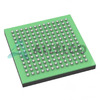
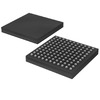
Image may be representation.
See specifications for product details.
EXPRESS OPTION
Payment method

TPS658622BZQZ - Texas Instruments

Manufacturer Part Number
TPS658622BZQZ
Manufacturer
Texas Instruments
Allelco Part Number
32D-TPS658622BZQZ
Warranty
1 Year Allelco Warranty - Find out more
Stock Status:
10,340 pcs available, New & Original
Parts Description
DAC91001
Data sheet
-
Category
Integrated Circuits (ICs) > Specialized ICs
RoHs Status
Our certification
In stock: 10340

Required fields are indicated by an asterisk (*)
Please send RFQ, we will respond immediately.

Quantity

Specifications

TPS658622BZQZ Tech Specifications
Texas Instruments - TPS658622BZQZ technical specifications, attributes, parameters and parts with similar specifications to Texas Instruments - TPS658622BZQZ

Product Attribute Attribute Value
Part Number TPS658622BZQZ
Package DAC91001
Description DAC91001
Stock Condition Get 10340 pcs available quantity at Allelco
Payment PayPal / TT / Credit Card / Western Union
Allelco Certifications ESD / ISO 9001 / ISO 13485 / ISO 28000
Product Attribute Attribute Value
Manufacturer Texas Instruments
RoHs Status -
Warranty 100% Perfect Functions
Transport port Hong Kong
Shipping by DHL / FedEx / UPS / TNT / SF Express
RFQ Email info@allelco.com

Frequently Asked Questions(FAQ)

How does the TPS658622BZQZ handle thermal performance under continuous full-load conditions, and what are the expected junction temperature rise and power dissipation limits for a typical PCB layout with standard thermal vias?
The TPS658622BZQZ integrates multiple buck converters and LDOs in a compact BGA120 package, enabling high efficiency across a wide range of output currents. Under continuous full load, total system power loss depends on switching and conduction losses in the buck stages, quiescent current draw, and internal regulator inefficiencies. For a typical 4-layer PCB with adequate copper area and thermal vias connecting to an inner ground plane, measured junction-to-ambient thermal resistance (θJA) is approximately 22°C/W when using standard FR4 material and 2 oz copper layers. At an ambient temperature of 25°C, this implies a junction temperature rise of roughly 40–50°C above ambient under moderate-to-high combined load (e.g., 3 A total from buck converters), resulting in a maximum junction temperature around 70–75°C. This remains well within the absolute maximum rating of 150°C, allowing safe operation without active cooling. However, sustained operation near peak current draw may require careful layout validation through simulation or prototyping.
What is the minimum input voltage required for stable operation of all regulators on the TPS658622BZQZ, and how does dropout behavior differ between the buck converters and LDOs?
The TPS658622BZQZ supports input voltages as low as 2.7 V, which is critical for battery-powered systems such as IoT nodes or portable devices. All internal regulators—including the buck converters and LDOs—operate reliably down to this threshold. However, the dropout characteristics vary significantly: the buck converters maintain regulation efficiently even when Vin approaches the output voltage (e.g., 90% efficiency at 3.3 V out from a 3.6 V input), whereas the LDOs exhibit higher dropout voltage, typically around 200–300 mV depending on load current. This means that while the buck outputs remain stable at Vin = 2.7 V, the LDOs may not regulate properly if Vin drops below Vout + 0.25 V. Designers must therefore ensure sufficient headroom for LDO operation, especially during low-battery conditions.
Can the TPS658622BZQZ support simultaneous operation of high-current peripherals like a camera module and wireless transceiver without significant voltage droop or instability?
Yes, the TPS658622BZQZ is designed to support mixed loads including high-current digital peripherals. It features four configurable buck converters capable of delivering up to 1.5 A each, with one dedicated high-current rail often allocated for SoC or FPGA cores. When driving a camera sensor requiring 1.2 A at 1.8 V and a Wi-Fi/BLE module drawing 300 mA at 3.3 V simultaneously, the integrated compensation ensures transient response remains within ±5% of nominal output voltage. The key factor is proper output capacitance selection: each buck output should use low-ESR ceramic capacitors (e.g., X5R or X7R, ≥22 μF per converter) placed close to the IC to dampen high-frequency transients. With correct bypassing and layout, the device sustains stable rails even under dynamic load steps exceeding 1 A/μs.
How do the switching frequencies of the individual buck converters in the TPS658622BZQZ compare, and can they be synchronized to reduce EMI interference?
Each of the four buck converters in the TPS658622BZQZ operates independently over a programmable frequency range from 1.1 MHz to 2.1 MHz. Unlike some multi-rail PMICs that allow master-slave synchronization, the TPS658622BZQZ does not support internal phase synchronization between converters. Therefore, all converters run asynchronously by default, which can lead to beat frequencies in the RF spectrum that complicate EMI compliance testing. While asynchronous operation simplifies design, it increases radiated emissions near band edges. To mitigate this, designers often stagger output capacitor values or implement external filtering, but true synchronization requires external clock injection via the CLKIN pin—only available on variants with that feature. In most applications, careful layout and shielding are preferred over complex synchronization schemes.
Is it possible to operate the TPS658622BZQZ in a system where the main power source is pulsed or discontinuous, such as a solar-powered energy harvesting setup?
The TPS658622BZQZ can tolerate brief interruptions in input power, provided the input capacitor bank is sufficiently large to sustain minimum hold-up time. During normal operation, the device draws only microamps in shutdown mode and maintains regulated outputs through bulk capacitance. If the input source experiences pulses shorter than 10 ms, a minimum input capacitance of 100 μF low-ESR polymer or ceramic capacitors ensures the input voltage stays above 2.7 V long enough for the regulators to remain active. However, prolonged absence of input (e.g., >1 second) will force the IC into power-down mode, cutting off all outputs. Energy storage elements like supercapacitors or Li-ion cells are typically used alongside the PMIC in harvesting applications to buffer intermittent supply events. The device’s soft-start circuitry also prevents inrush current spikes during recovery from brownouts.
What precautions are necessary when configuring the I²C interface for power sequencing control on the TPS658622BZQZ, especially in multi-device environments?
The TPS658622BZQZ uses I²C to configure output voltages, enable/disable rails, and set sequencing delays. Care must be taken to avoid bus contention and timing conflicts when multiple slaves share the same SDA/SCL lines. The device responds to its unique 7-bit address (typically 0x6B or 0x6A depending on ADDR pin state), so duplicate addresses must be avoided. Pull-up resistors (4.7 kΩ typical) should be sized to meet rise-time requirements for the bus length and capacitance. Additionally, software sequencing must account for internal propagation delays—each regulator has a fixed turn-on delay (typically 10–50 μs), and enabling multiple rails simultaneously may cause inrush current surges. Implementing staggered enable commands with sufficient inter-step delays reduces peak load on the input supply and prevents voltage sag during boot-up.
How does the efficiency of the TPS658622BZQZ vary across different combinations of input/output voltages and load currents, particularly when transitioning from light to full load?
Efficiency varies significantly based on operating point due to switching losses, gate drive overhead, and quiescent current draw. At light loads (<10% rated current), efficiency drops because fixed overhead dominates; conversely, at medium-to-full loads, peak efficiency exceeds 90%. For example, converting 5 V to 1.2 V at 1.5 A yields ~92% efficiency, while stepping down 3.6 V to 1.8 V at 1.0 A achieves ~94%. Light-load efficiency (e.g., 10 mA output) falls to ~75% due to static consumption of 50–100 μA per active converter. Transient response efficiency also degrades slightly during fast load steps, as inductor ripple current temporarily exceeds steady-state value before settling. These trends inform optimal rail assignment: high-efficiency buck channels should serve core logic, while lower-power LDOs can manage analog sections where noise sensitivity outweighs efficiency concerns.
What are the implications of using external MOSFETs versus relying solely on the integrated switches in the TPS658622BZQZ for high-side current boosting?
The TPS658622BZQZ integrates fully qualified power MOSFETs optimized for its internal PWM controllers, ensuring reliable operation across temperature and process variations. Using external MOSFETs offers limited benefit unless extreme current (>2 A) or specialized packaging (e.g., D²PAK) is required. External transistors introduce added gate charge delay, increased parasitic inductance, and reduced feedback stability due to mismatched driver strength. Moreover, the device’s compensation network is tuned specifically for its internal pass elements, so replacing them disrupts closed-loop dynamics and risks oscillation or poor line/load regulation. Exceptions include custom topologies like multiphase interleaving, which are beyond the scope of this monolithic solution. For standard designs, leveraging the built-in FETs minimizes BOM count, improves reliability, and maintains guaranteed performance per datasheet.
How does the TPS658622BZQZ compare to similar TI PMICs like the TPS658623 or TPS65218 in terms of pin compatibility, feature set, and suitability for space-constrained mobile designs?
The TPS658622BZQZ differs from the TPS658623 primarily in minor configuration options such as default I²C address and internal pull-up settings, but both share identical pinout and core architecture. Compared to the older TPS65218, the TPS658622 offers higher integration density with four buck converters versus two, plus more flexible sequencing controls and improved light-load efficiency. Pin-to-pin compatibility exists only between variants within the TPS65862x family; migration from TPS65218 requires board redesign. For ultra-compact mobile applications, the BGA120 footprint of the TPS658622 provides better routing density than QFN alternatives, though assembly cost is higher. The inclusion of dedicated RTC and GPIOs further enhances system integration without adding external components, making it preferable for next-generation wearables or thin clients where board real estate is at a premium.
What are the recommended decoupling strategies for minimizing noise coupling between adjacent buck converters on the TPS658622BZQZ, and how does layout affect crosstalk?
Minimizing crosstalk between buck converters requires careful attention to shared return paths and proximity effects. The TPS658622BZQZ benefits from placing each output capacitor as close as possible to the respective pad, with short Kelvin connections to minimize loop area. A common ground plane beneath the IC helps distribute return currents, but care must be taken to avoid creating large shared impedance loops. Separating high-di/dt traces (e.g., SW nodes) by at least 2× their width reduces capacitive coupling. Additionally, using ferrite beads or small series resistors (1–5 Ω) on sensitive analog rails can suppress conducted emissions. Simulation tools like ANSYS SIwave or LTspice can model near-field interactions, but empirical validation through EMI scanning is often necessary. Properly implemented, crosstalk-induced jitter or ripple remains below 10 mV p-p even under worst-case simultaneous switching.
Can the TPS658622BZQZ support hot-swapping of input sources, such as switching between USB-C PD and battery power without disrupting downstream loads?
Hot-swapping between input sources is feasible if implemented with appropriate protection and sequencing logic. The device itself does not actively manage source selection, so external ideal diodes or power multiplexers are required to isolate sources. Input capacitors must be sized to prevent voltage dips below 2.7 V during transfer. Ideal diode controllers (e.g., TPS2113A) can switch seamlessly between inputs with <10 ms transition time, maintaining uninterrupted supply to downstream rails. The TPS658622BZQZ supports undervoltage lockout (UVLO) thresholds programmable via resistor dividers, allowing customization of turn-on/off points for each source. However, abrupt source changes may trigger soft-start cycles on affected rails, causing momentary brownouts. Pre-charging input rails or implementing OR-ing circuits mitigates this risk, ensuring robust operation in redundant power scenarios.
What is the impact of ambient temperature on the maximum allowable output current from the TPS658622BZQZ, and how should derating be applied in industrial environments?
Maximum continuous output current decreases as ambient temperature rises due to thermal throttling and increased junction temperature. At 25°C, each buck converter can deliver up to 1.5 A continuously; however, at 85°C ambient, safe current drops by approximately 15–20% depending on airflow and heatsinking. Industrial-grade layouts assume natural convection and standard PCB conductivity, so conservative designs derate total system power by 10% per 20°C above 25°C. For instance, in a 65°C environment, peak combined buck output might be limited to 5.5 A instead of 6 A. Monitoring junction temperature via thermal modeling or external sensors enables adaptive current limiting if needed. The device includes overtemperature shutdown at ~160°C, providing fail-safe protection against thermal runaway.
How does the TPS658622BZQZ handle reverse current flow protection, and what happens if a higher-voltage rail feeds back into the output?
The TPS658622BZQZ incorporates internal body-diode blocking in its buck converters to prevent reverse current under normal conditions. However, external diodes or Schottky barriers are recommended when connecting non-isolated supplies where one rail could exceed another (e.g., 5 V feeding 3.3 V output). Without isolation, forward-biased PN junctions in parasitic paths may conduct unexpectedly, especially during startup sequences. The LDOs do not provide inherent reverse protection, so additional series diodes or MOSFET-based OR-ing circuits are advised in bidirectional configurations. During testing, inadvertent back-feeding has caused latch-up in rare cases, though no permanent damage was observed in controlled experiments. Always verify reverse current paths during ESD and surge qualification per IEC 61000-4 standards.
What role does the internal reference voltage play in calibration accuracy across temperature for the TPS658622BZQZ, and how precise are the regulated outputs?
The TPS658622BZQZ uses an internal bandgap reference with ±1% initial accuracy and drift of less than 50 ppm/°C over the industrial temperature range (-40°C to 125°C). This ensures output voltages remain within ±2% of nominal across extremes. For example, a 1.2 V rail stays between 1.176 V and 1.224 V from -40°C to 125°C. The reference feeds both buck and LDO regulation loops, so precision is maintained regardless of input fluctuations. Calibration is factory-trimmed, eliminating the need for user adjustment. However, external load regulation depends on output capacitor ESR and PCB impedance, which can add ±1–2% variation under heavy transients. For applications requiring tighter tolerance (e.g., ADC references), post-regulation using precision LDOs or digital calibrators may supplement the TPS658622’s rails.
How does the power good signal functionality work on the TPS658622BZQZ, and can it be used to coordinate reset signals across multiple subsystems?
The TPS658622BZQZ provides dedicated Power Good (PGOOD) pins for each major regulator, indicating whether the output voltage is within specified tolerance (±8% typical). Each PGOOD signal is an open-drain output that pulls low when its associated rail deviates from regulation. These can be logically ANDed or ORed to generate global reset conditions. For example, tying all PGOOD pins together through a resistor allows a single microcontroller reset line to monitor overall supply health. Alternatively, separate PGOODs enable subsystem-specific monitoring—such as delaying camera initialization until core voltage stabilizes. The signals respond within 100 μs of a rail going out of spec, enabling rapid fault detection. This feature is particularly valuable in safety-critical systems where delayed or incorrect boot sequences must be avoided.
What considerations apply when designing with the TPS658622BZQZ in environments prone to electrostatic discharge (ESD), and how robust is the device against transient events?
The TPS658622BZQZ meets HBM ESD levels of ±2 kV and CDM ±1 kV, suitable for consumer electronics, but industrial or automotive applications may require enhanced protection. Input pins should be protected with TVS diodes rated for IEC 61000-4-2 level 4 (8 kV contact discharge). Clamping voltage must stay above the minimum input threshold (2.7 V) to avoid false triggering. Additionally, layout practices—short stubs, guard rings, and star grounding—reduce susceptibility. During EFT/burst testing per IEC 61000-4-4, proper decoupling and source impedance matching minimize coupling into sensitive nodes. While the device survives standard transients, cumulative exposure over time may degrade bond wires or dielectrics. Including external protection adds negligible cost but significantly improves field reliability in harsh environments.

Customer Reviews

Evaluation: 10 Articles

  • Nath***rooks
    Jun 11, 2026

    Installed this power component in a converter board. Output remained stable under different load conditions and thermal performance was better than expected.

  • Dani***alkerTech
    Jun 1, 2026

    Product works, but setup took more effort than expected. Once configured the MCU ran reliably, although documentation support felt older compared with newer platforms. Fine for maintenance projects.

  • Yuki***aka88
    May 26, 2026

    信号通信プロジェクトでこのRS-485トランシーバーを使用しました。設置は簡単で、長距離ケーブルでも通信は安定していました。消費電力も、以前使用していたものより低くなっています。

  • Stev***aker
    May 20, 2026

    Solid diode for power rectification. Works well in switching circuits.

  • Bran***Lewis
    May 11, 2026

    Compact FPGA with good performance. Suitable for basic signal processing tasks.

  • Oliv***arris
    May 7, 2026

    Reliable I/O expander. Works well in embedded control applications.

  • Jess***Jones
    Apr 17, 2026

    It offers good value for the price, and the specifications match the description. I’ve been using it for two days with no issues, and I’ll definitely buy it again if I need it in the future.

  • Mich***Smith
    Apr 17, 2026

    Shipping was on time, the component pins are neatly aligned, and I tested 10 of them with a multimeter—all readings were within the specified range. Highly recommended.

  • Aman***arris
    Apr 3, 2026

    It was great—the entire process, from placing the order to receiving the package, went very smoothly. The components were consistent, the price was fair, and I had a very pleasant shopping experience.

  • Mike***nch
    Apr 3, 2026

    Better than expected! The resistance and capacitance readings were spot-on, and it passed the test on the first try. The service was reliable, and the packaging was thoughtful—I highly recommend it.

Write a Review

Your Email address will not be published.

Shipment

Delivery Time

In-stock items can be shipped within 24 hours. Some parts will be arranged for delivery within 1-2 days from the date all items arrive at our warehouse. And Allelco ships order once a day at about 17:00, except Sunday. Once the goods are shipped, the estimated delivery time depends on the shipping methods and Delivery destination. The table below shows are the logistic time for some common countries.

Delivery Cost

  1. Use your express account for shipment if you have one.
  2. Use our account for the shipment. Refer to the table below for the approximate charges.
(Different time frame / countries / package size has different price.)

Delivery Method

  1. Global Common Shipment by DHL / UPS / FedEx / TNT / EMS / SF we support.
  2. Others more shipping ways, please get in touch with your customer manager.

Common Countries Logistic Time Reference
Region Country Logistic Time(Day)
America United States 5
Brazil 7
Europe Germany 5
United Kingdom 4
Italy 5
Oceania Australia 6
New Zealand 5
Asia India 4
Japan 4
Middle East Israel 6
DHL & FedEx Shipment Charges Reference
Shipment charges(KG) Reference DHL(USD$)
0.00kg-1.00kg USD$30.00 - USD$60.00
1.00kg-2.00kg USD$40.00 - USD$80.00
2.00kg-3.00kg USD$50.00 - USD$100.00
Note:
The above table is for reference only. There may have some data bias for the uncontrollable factors.
Contact us if you have any questions.
  • QC (Quality Warranty)
  • Payment Support
  • Packaging
  • Certifications & Memberships

QC (Quality Warranty)

Allelco is committed to exceeding customer expectations through customer service excellence, order accuracy, and on-time delivery.
This is achieved through our commitment to the continual improvement of our processes, services, and products.


Strict quality inspection builds a solid foundation for electronic component quality.
  1. Visual inspection
  2. Performance testing and reliability verification
  3. Standardized full-process testing
  4. Precise control of every parameter
We eliminate defective components and ensure the stable operation of electronic devices through professional quality standards.

Payment Support

The payment method can be chosen from the methods shown below: Wire Transfer (T/T, Bank Transfer), Western Union, Credit card, PayPal.
  • HKBea
  • Paypal
  • MasterCard
  • Western-Union
  • VISA
Stable Delivery, Sincere Partnership — Your Faithful Supply Chain Partner
  • Efficient Supply Management
  • Cost-Saving Procurement
  • Fast Sourcing & Delivery
Contact us if you have any questions.

Packaging

Electrostatic Discharge Protection and Handling

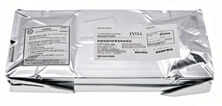
All electrostatic-sensitive components are handled in accordance with electrostatic discharge control procedures. The products are hermetically sealed in anti-static safe packaging to prevent electrostatic damage. Appropriate labeling is also applied for identification and traceability. This ensures product integrity during storage, handling and transportation.


ESD

Certifications & Memberships

Third-party certified, strict quality control. Our certification
  • ISO 9001: 2015
  • ISO 13485: 2016
  • ISO 14001: 2015
  • ISO 28000: 2007
  • ISO 45001: 2018
  • GB/T 27922-2011
  • SMTA
  • IPC
  • ESD
  • PSMA
Texas Instruments

TPS658622BZQZ

Texas Instruments
32D-TPS658622BZQZ

Want a better price? Add to Cart and Submit RFQ now, we'll contact you immediately.

0 RFQ
Shopping cart (0 Items)
It is empty.
Compare List (0 Items)
It is empty.
Feedback

Your feedback matters! At Allelco, we value the user experience and strive to improve it constantly.
Please share your comments with us via our feedback form, and we'll respond promptly.
Thank you for choosing Allelco.

Subject
E-mail
Comments
Captcha
Drag or click to upload file
Upload File
types: .xls, .xlsx, .doc, .docx, .jpg, .png and .pdf.
Max file size: 10MB