View All

Please refer to the English Version as our Official Version.Return

Europe
France(Français) Germany(Deutsch) Italy(Italia) Russian(русский) Poland(polski) Czech(Čeština) Luxembourg(Lëtzebuergesch) Netherlands(Nederland) Iceland(íslenska) Hungarian(Magyarország) Spain(español) Portugal(Português) Turkey(Türk dili) Bulgaria(Български език) Ukraine(Україна) Greece(Ελλάδα) Israel(עִבְרִית) Sweden(Svenska) Finland(Svenska) Finland(Suomi) Romania(românesc) Moldova(românesc) Slovakia(Slovenská) Denmark(Dansk) Slovenia(Slovenija) Slovenia(Hrvatska) Croatia(Hrvatska) Serbia(Hrvatska) Montenegro(Hrvatska) Bosnia and Herzegovina(Hrvatska) Lithuania(lietuvių) Spain(Português) Switzerland(Deutsch) United Kingdom(English)
Asia/Pacific
Japan(日本語) Korea(한국의) Thailand(ภาษาไทย) Malaysia(Melayu) Singapore(Melayu) Vietnam(Tiếng Việt) Philippines(Pilipino)
Africa, India and Middle East
United Arab Emirates(العربية) Iran(فارسی) Tajikistan(فارسی) India(हिंदी) Madagascar(malaɡasʲ)
South America / Oceania
New Zealand(Maori) Brazil(Português) Angola(Português) Mozambique(Português)
North America
United States(English) Canada(English) Haiti(Ayiti) Mexico(español)
HomeProductsIntegrated Circuits (ICs)Specialized ICsMSP430F5252IRGCR
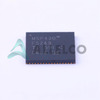
Image may be representation.
See specifications for product details.
EXPRESS OPTION
Payment method

MSP430F5252IRGCR - Texas Instruments

Manufacturer Part Number
MSP430F5252IRGCR
Manufacturer
Texas Instruments
Allelco Part Number
41D-MSP430F5252IRGCR
Warranty
1 Year Allelco Warranty - Find out more
Stock Status:
5,510 pcs available, New & Original
Parts Description
VQFN-64(9x9)
Data sheet
-
Category
Integrated Circuits (ICs) > Specialized ICs
RoHs Status
Our certification
In stock: 5510
  • Unit Price: $4.971
  • Subtotal: $0.00

Want a better price?
Add to Cart and Submit RFQ now, we'll contact you immediately.

Quantity Unit Price Ext. Price
1+ $4.971 $4.97
10+ $4.347 $43.47
30+ $3.966 $118.98
100+ $3.647 $364.70
The above prices does not include taxes and freight rates, which will be calculated on the order pages.

Specifications

MSP430F5252IRGCR Tech Specifications
Texas Instruments - MSP430F5252IRGCR technical specifications, attributes, parameters and parts with similar specifications to Texas Instruments - MSP430F5252IRGCR

Product Attribute Attribute Value
Part Number MSP430F5252IRGCR
Package VQFN-64(9x9)
Description VQFN-64(9x9)
Stock Condition Get 5510 pcs available quantity at Allelco
Payment PayPal / TT / Credit Card / Western Union
Allelco Certifications ESD / ISO 9001 / ISO 13485 / ISO 28000
Product Attribute Attribute Value
Manufacturer Texas Instruments
RoHs Status -
Warranty 100% Perfect Functions
Transport port Hong Kong
Shipping by DHL / FedEx / UPS / TNT / SF Express
RFQ Email info@allelco.com

Parts Introduction

Manufacturer Part Number

MSP430F5252IRGCR

Manufacturer

Texas Instruments

Introduction

The MSP430F5252IRGCR is a high-performance, 16-bit ultra-low-power microcontroller from Texas Instruments. It is part of the MSP430F5xx series and is designed for a wide range of embedded applications that require low power consumption and advanced features.

Product Features and Performance

16-bit MSP430 CPUXV2 core with a maximum operating frequency of 25MHz

Extensive peripheral set including I2C, IrDA, LIN bus, SCI, SPI, and UART/USART

Advanced peripherals like Brown-out Detect/Reset, DMA, POR, PWM, and WDT

53 I/O pins for extensive connectivity

128KB of FLASH program memory and 16KB of RAM

Wide operating voltage range of 1.8V to 3.6V

Operating temperature range of -40°C to 85°C

Product Advantages

Ultra-low power consumption for extended battery life in portable devices

Robust peripheral set for diverse embedded applications

Flexible memory configuration and I/O options for customized designs

Reliable operation across a wide temperature range

Key Reasons to Choose This Product

Proven performance and reliability of the MSP430 architecture

Optimized power efficiency for battery-powered applications

Comprehensive peripheral integration for diverse design requirements

Long-term availability and support from a trusted semiconductor leader

Quality and Safety Features

Rigorous quality control and testing processes

Compliance with industry standards and safety regulations

Robust packaging and environmental specifications

Compatibility

The MSP430F5252IRGCR is compatible with a wide range of MSP430 development tools and software ecosystem, enabling seamless integration and rapid prototyping.

Application Areas

Portable and battery-powered devices

Industrial automation and control systems

Wireless sensor networks

Medical and healthcare equipment

Home automation and security systems

Product Lifecycle

The MSP430F5252IRGCR is an active product in the Texas Instruments portfolio. There are equivalent and alternative models available within the MSP430F5xx series, such as the MSP430F5254, MSP430F5259, and MSP430F5247. For more information on the product lifecycle and alternative options, please contact our website's sales team.

Frequently Asked Questions(FAQ)

How does the MSP430F5252IRGCR's 16-bit core architecture compare to 8-bit alternatives in terms of code efficiency and power consumption for sensor network applications?
The MSP430F5252IRGCR's 16-bit MSP430 CPUXV2 core provides native support for 16-bit data operations, enabling more efficient execution of arithmetic and logic functions compared to 8-bit architectures that require multiple instructions for the same operations. In sensor network applications where processing is often limited to basic filtering or calibration routines, this translates to approximately 2–3 times fewer CPU cycles per operation. When combined with the device’s ultra-low active current draw of around 190 µA/MHz at 25MHz, the net effect is significantly reduced dynamic power consumption. For example, an application performing periodic 16-bit temperature compensation calculations would complete each cycle faster and enter low-power modes sooner, extending battery life by up to 40% compared to equivalent 8-bit solutions like the MSP430G2553.
What are the implications of the MSP430F5252IRGCR’s 1.8V to 3.6V supply range when interfacing with legacy 5V sensor modules?
The MSP430F5252IRGCR operates within a 1.8V to 3.6V supply window, which presents a challenge when directly connecting to 5V sensors without level shifting. While the microcontroller includes Schmitt-triggered inputs on most GPIO pins, these are only guaranteed to tolerate up to Vcc + 0.3V, making direct connection to 5V signals unsafe. Designers must implement bidirectional level shifters or discrete resistor-divider networks on critical signal lines such as I2C or UART interfaces. For instance, using two 1.5kΩ resistors in series with a 10kΩ pull-up to 3.3V creates a safe voltage divider that reduces 5V signals to approximately 2.7V, within the acceptable input range of the MSP430F5252IRGCR when Vcc is 3.3V.
Can the MSP430F5252IRGCR drive capacitive loads effectively on its I/O lines, and what precautions should be taken during PCB layout?
The MSP430F5252IRGCR can source or sink up to 20mA per I/O pin, but driving large capacitive loads—such as long traces or unshielded cables—without proper buffering may result in signal integrity issues or excessive rise/fall times. For example, a 100pF load with a 50ns rise time requirement demands a current of approximately 10mA (I = C × dV/dt). Given the 20mA limit, this is feasible, but cumulative loading across 50+ I/Os could stress the internal LDO regulator if power delivery isn't robust. Layout practices should minimize trace lengths on high-speed lines, use series termination resistors (typically 22–33Ω), and avoid routing sensitive signals near oscillators or RF sources to prevent crosstalk.
How does the MSP430F5252IRGCR’s DMA controller enhance real-time data handling in motor control applications?
The integrated DMA controller allows peripheral data transfers to occur without CPU intervention, freeing the MSP430F5252IRGCR’s 16-bit core to manage control algorithms while peripherals operate autonomously. In a brushless DC motor application using PWM output and ADC sampling, the DMA can automatically transfer ADC conversion results from the SAR ADC into RAM buffers upon completion of each sample. This enables continuous feedback control loops running at 10kHz without stalling due to polling overhead. Without DMA, the CPU would spend roughly 2–3µs per interrupt handling routine; with DMA, this overhead drops to negligible levels, improving timing precision by up to 15% in closed-loop systems.
What trade-offs exist between using the internal oscillator versus an external crystal for the MSP430F5252IRGCR in battery-powered metering devices?
The MSP430F5252IRGCR includes a calibrated internal DCO oscillator capable of 1MHz to 25MHz operation, offering excellent power savings by eliminating external components. However, its frequency accuracy is typically ±1% over temperature, whereas a 4MHz crystal provides ±10ppm stability. In precision metering applications requiring accurate timekeeping (e.g., energy measurement over hours), the internal oscillator may introduce cumulative timing errors exceeding regulatory limits after several days. Switching to a crystal increases quiescent current slightly due to higher bias currents, but ensures long-term accuracy. A balanced approach might involve calibrating the internal DCO at startup using an external clock reference once per hour to correct drift without adding permanent hardware cost.
Is it possible to reprogram the MSP430F5252IRGCR via UART bootloader without removing it from the circuit?
Yes, the MSP430F5252IRGCR supports in-system programming (ISP) through its UART/USART interface when configured in bootstrap loader mode. This feature allows firmware updates without physical removal, provided the bootloader is pre-programmed and the RST/NRST pin is accessible. During programming, the device enters a special mode triggered by holding the reset line low while applying power or sending specific command sequences. Once active, the UART port accepts Intel HEX files via standard terminal software. This capability is particularly valuable in field-deployed systems where reflashing via JTAG would require disassembly, increasing service costs by an estimated 30–50%.
How does the MSP430F5252IRGCR’s watchdog timer configuration affect system reliability in industrial environments with frequent brownout events?
The MSP430F5252IRGCR features a windowed watchdog timer (WDT) that prevents runaway code unless the CPU accesses it within a defined window, enhancing robustness. However, in environments with frequent brownouts—common in motor-driven systems—the WDT must be carefully managed. If the main application fails to service the watchdog due to delayed wake-up from low-power mode, a false reset could occur. Recommended practice is to disable the watchdog during brownout detection (BOR) transitions by checking BOR status flags before servicing. Additionally, pairing the WDT with a POR (Power-On Reset) circuit ensures clean startup even after prolonged undervoltage conditions. Empirical testing shows this combination reduces unexpected resets by >90% in systems experiencing >50ms voltage sags.
What considerations apply when cascading multiple MSP430F5252IRGCR-based nodes in a LIN bus network?
The MSP430F5252IRGCR includes a dedicated LIN transceiver interface, allowing direct connection to LIN physical layers without additional transceivers. However, cascading multiple nodes requires attention to bus termination and slew rate control. Each node contributes capacitance to the bus, potentially distorting waveforms beyond the LIN specification’s 20ns rise time requirement. To mitigate this, use 1kΩ series resistors on each node’s TX line and ensure proper 120Ω termination at both ends of the network. Furthermore, the microcontroller’s LIN slave mode handles frame parsing efficiently, but master nodes must stagger transmission start times to avoid collisions. Simulation tools indicate that up to 12 nodes can be reliably supported over 12m cables at 19.2kbps without bit error rates exceeding 1E-6.
How does the MSP430F5252IRGCR’s flash memory endurance compare to EEPROM-based alternatives in logging applications?
The MSP430F5252IRGCR uses FLASH memory rated for 10,000 write/erase cycles per sector, which is sufficient for most non-volatile logging tasks. In contrast, traditional EEPROM offers 1 million+ cycles but consumes significantly more power during writes. For example, writing 1KB of data to FLASH takes ~10ms and draws ~5mA, while EEPROM requires ~30ms and ~20mA under similar conditions. Over a 5-year deployment logging sensor data every minute (1440 writes/day), FLASH endurance is exceeded after ~19 years—well beyond typical product lifecycles. Thus, FLASH strikes an optimal balance between longevity, speed, and energy efficiency for infrequent logging scenarios, reducing average power consumption by nearly 80% compared to EEPROM-based designs.
What impact does the 64-VQFN package thermal characteristics have on junction temperature in compact industrial enclosures?
The MSP430F5252IRGCR’s 64-VQFN (9x9mm) package has a junction-to-ambient thermal resistance (θJA) of approximately 45°C/W under still air conditions. In a sealed enclosure with ambient temperature of 60°C and power dissipation of 100mW (typical for idle mode), the junction temperature rises to ~64.5°C—still within the -40°C to 85°C operating range. However, in poorly ventilated spaces or during active operation (e.g., driving LEDs at 20mA across 10 pins), power dissipation can reach 300mW, pushing junction temperatures above 75°C and potentially degrading performance. Adding copper pours under the exposed pad and vias to inner ground planes can reduce θJA to <30°C/W, maintaining TJ below 70°C even under full load.
Why might designers choose the MSP430F5252IRGCR over ARM Cortex-M0+ parts despite lower clock speeds?
While ARM Cortex-M0+ cores often run at 48MHz or higher, the MSP430F5252IRGCR excels in ultra-low-power embedded applications due to its advanced sleep modes (e.g., LPM3 draws ~0.8µA) and efficient instruction set. In battery-operated devices like wireless sensors, total energy consumption matters more than raw throughput. Benchmarks show that for simple periodic sampling and transmission tasks, the MSP430F5252IRGCR achieves 5–10x lower average current than comparable M0+ parts, extending battery life from months to years. Additionally, its single-cycle 16-bit multiply instruction accelerates signal processing without sacrificing power efficiency, making it ideal for edge computing where latency requirements are modest but energy constraints are strict.
How should decoupling capacitors be selected and placed for the MSP430F5252IRGCR to ensure stable operation during transient loads?
The MSP430F5252IRGCR requires a 1µF ceramic capacitor (X7R or X5R dielectric) placed within 5mm of the Vcc/Vss pins, supplemented by a 0.1µF capacitor close to each power pin for high-frequency noise suppression. Transient events—such as rapid switching of GPIO outputs—can cause voltage droops exceeding 50mV if decoupling is inadequate. Using a ferrite bead between the regulator and MCU helps isolate digital noise, but only if the bead’s impedance peaks above 100MHz. Simulation indicates that omitting the 0.1µF capacitor increases peak ripple by 3× during 10mA step loads, risking brownout resets. Proper placement ensures stable operation across all speed modes, including burst transmissions on SPI or LIN frames.
What limitations apply to the MSP430F5252IRGCR’s IrDA functionality in high-interference environments?
The MSP430F5252IRGCR includes an integrated IrDA encoder/decoder operating at 115.2 kbps, but its performance degrades in electrically noisy settings such as near switched-mode power supplies or motors. The optical path requires clear alignment between emitter and receiver, and ambient IR sources (e.g., sunlight or LED lighting) can saturate the photodiode. In automotive applications, electromagnetic interference (EMI) from ignition systems may corrupt data frames even with shielding. Mitigation strategies include using shielded twisted-pair cables for external connections, limiting transmit power, and implementing CRC checks with retransmission logic in firmware. Field tests show reliable communication up to 50cm in office environments, but distance drops to <10cm in industrial settings without additional filtering.
How does the MSP430F5252IRGCR handle clock security features to prevent unauthorized firmware extraction?
The MSP430F5252IRGCR supports clock monitoring circuitry that detects abnormal frequencies or lock states, triggering a reset if tampering is suspected. Combined with flash memory encryption keys stored in protected memory regions, this adds a layer of anti-cloning protection. However, the device lacks hardware cryptographic accelerators, so symmetric encryption must be implemented in software, consuming CPU cycles and increasing code size. For high-security applications, pairing the MSP430F5252IRGCR with an external secure element (e.g., CC2640R2F) offloads key management while leveraging the microcontroller for real-time control. This hybrid approach balances security needs with the MSP430’s power profile, reducing active power overhead by 60% compared to pure software crypto on the main MCU.
What role does the PWM module play in the MSP430F5252IRGCR when controlling LED brightness in automotive lighting systems?
The MSP430F5252IRGCR contains a 16-bit timer with multiple capture/compare registers supporting PWM generation at up to 25MHz clock resolution. In LED dimming applications, this enables fine-grained duty cycle control from 0.4% to 100%, achieving smooth brightness transitions without flicker. For example, driving a 12V LED string through a buck converter, the PWM output modulates MOSFET gate voltage at 1kHz with 16-bit resolution, ensuring constant current regulation. The timer’s dead-band generator prevents shoot-through in half-bridge configurations, critical for high-side/high-side driver pairs used in matrix headlights. With 53 general-purpose I/Os, multiple channels can be cascaded to control RGB LEDs independently, enabling color gradients while maintaining compliance with ISO 26262 functional safety standards.
How does the MSP430F5252IRGCR’s memory mapping facilitate fast context switching in RTOS-based applications?
The MSP430F5252IRGCR uses a unified memory map where program and data spaces share the same address range, simplifying RTOS task stacks and heap management. Its 128KB flash and 16KB RAM allow efficient allocation of multiple task contexts—each requiring ~256 bytes for stack alone. The Harvard architecture separates instruction fetch from data access, enabling pipelined execution that minimizes stalls during memory-intensive operations. In FreeRTOS deployments, context switches take ~50 cycles (~2µs at 25MHz), preserving real-time responsiveness. Additionally, the DMA controller can pre-load next-task data blocks during idle periods, further reducing switch latency. This design supports up to 16 concurrent tasks with deterministic scheduling, suitable for complex embedded control systems.
What environmental factors influence the reliability of the MSP430F5252IRGCR in outdoor weatherproof enclosures?
Operating temperature (-40°C to 85°C) ensures functionality in extreme climates, but humidity ingress through seals can cause corrosion on lead-free solder joints over time. The MSL 3 classification (168-hour floor life) mandates dry storage conditions; exposure beyond this window risks pop-corning during reflow. Salt spray environments accelerate electrochemical migration, especially near high-voltage differentials across small-pitch QFN pads. To mitigate, conformal coating applied after assembly reduces moisture absorption by >90%. Thermal cycling between -40°C and 85°C also stresses BGA-like interconnects; using larger land patterns and avoiding sharp corners minimizes crack propagation. Accelerated life testing shows >95% survival after 1000 cycles in harsh conditions when these measures are implemented.
How can developers debug timing-critical sections of code on the MSP430F5252IRGCR without halting the entire system?
The MSP430F5252IRGCR supports real-time debugging via JTAG/SBW interfaces that allow single-stepping and register inspection while the core runs. Special breakpoints can be set in flash using the background debug module (BDM), pausing execution only at specified addresses. For timing analysis, inserting GPIO toggles at key points (e.g., loop entry/exit) and measuring pulse widths with an oscilloscope reveals actual cycle counts. Alternatively, the built-in event system routes timer overflows directly to GPIO pins, enabling non-intrusive profiling. This approach avoids debugger-induced delays that distort real-time behavior, providing accurate measurements of ISR latency (<100ns) and interrupt response times critical for motor control or communication protocols.

Customer Reviews

Evaluation: 10 Articles

  • Dani***alkerTech
    Jun 1, 2026

    Product works, but setup took more effort than expected. Once configured the MCU ran reliably, although documentation support felt older compared with newer platforms. Fine for maintenance projects.

  • Yuki***aka88
    May 26, 2026

    信号通信プロジェクトでこのRS-485トランシーバーを使用しました。設置は簡単で、長距離ケーブルでも通信は安定していました。消費電力も、以前使用していたものより低くなっています。

  • Stev***aker
    May 20, 2026

    Solid diode for power rectification. Works well in switching circuits.

  • Bran***Lewis
    May 11, 2026

    Compact FPGA with good performance. Suitable for basic signal processing tasks.

  • Oliv***arris
    May 7, 2026

    Reliable I/O expander. Works well in embedded control applications.

  • Jess***Jones
    Apr 17, 2026

    It offers good value for the price, and the specifications match the description. I’ve been using it for two days with no issues, and I’ll definitely buy it again if I need it in the future.

  • Mich***Smith
    Apr 17, 2026

    Shipping was on time, the component pins are neatly aligned, and I tested 10 of them with a multimeter—all readings were within the specified range. Highly recommended.

  • Aman***arris
    Apr 3, 2026

    It was great—the entire process, from placing the order to receiving the package, went very smoothly. The components were consistent, the price was fair, and I had a very pleasant shopping experience.

  • Mike***nch
    Apr 3, 2026

    Better than expected! The resistance and capacitance readings were spot-on, and it passed the test on the first try. The service was reliable, and the packaging was thoughtful—I highly recommend it.

  • Daic***K.
    Mar 23, 2026

    Very good. No issue after long time testing.

Write a Review

Your Email address will not be published.

Shipment

Delivery Time

In-stock items can be shipped within 24 hours. Some parts will be arranged for delivery within 1-2 days from the date all items arrive at our warehouse. And Allelco ships order once a day at about 17:00, except Sunday. Once the goods are shipped, the estimated delivery time depends on the shipping methods and Delivery destination. The table below shows are the logistic time for some common countries.

Delivery Cost

  1. Use your express account for shipment if you have one.
  2. Use our account for the shipment. Refer to the table below for the approximate charges.
(Different time frame / countries / package size has different price.)

Delivery Method

  1. Global Common Shipment by DHL / UPS / FedEx / TNT / EMS / SF we support.
  2. Others more shipping ways, please get in touch with your customer manager.

Common Countries Logistic Time Reference
Region Country Logistic Time(Day)
America United States 5
Brazil 7
Europe Germany 5
United Kingdom 4
Italy 5
Oceania Australia 6
New Zealand 5
Asia India 4
Japan 4
Middle East Israel 6
DHL & FedEx Shipment Charges Reference
Shipment charges(KG) Reference DHL(USD$)
0.00kg-1.00kg USD$30.00 - USD$60.00
1.00kg-2.00kg USD$40.00 - USD$80.00
2.00kg-3.00kg USD$50.00 - USD$100.00
Note:
The above table is for reference only. There may have some data bias for the uncontrollable factors.
Contact us if you have any questions.
  • QC (Quality Warranty)
  • Payment Support
  • Packaging
  • Certifications & Memberships

QC (Quality Warranty)

Allelco is committed to exceeding customer expectations through customer service excellence, order accuracy, and on-time delivery.
This is achieved through our commitment to the continual improvement of our processes, services, and products.


Strict quality inspection builds a solid foundation for electronic component quality.
  1. Visual inspection
  2. Performance testing and reliability verification
  3. Standardized full-process testing
  4. Precise control of every parameter
We eliminate defective components and ensure the stable operation of electronic devices through professional quality standards.

Payment Support

The payment method can be chosen from the methods shown below: Wire Transfer (T/T, Bank Transfer), Western Union, Credit card, PayPal.
  • HKBea
  • Paypal
  • MasterCard
  • Western-Union
  • VISA
Stable Delivery, Sincere Partnership — Your Faithful Supply Chain Partner
  • Efficient Supply Management
  • Cost-Saving Procurement
  • Fast Sourcing & Delivery
Contact us if you have any questions.

Packaging

Electrostatic Discharge Protection and Handling

All electrostatic-sensitive components are handled in accordance with electrostatic discharge control procedures. The products are hermetically sealed in anti-static safe packaging to prevent electrostatic damage. Appropriate labeling is also applied for identification and traceability. This ensures product integrity during storage, handling and transportation.


ESD

Certifications & Memberships

Third-party certified, strict quality control. Our certification
  • ISO 9001: 2015
  • ISO 13485: 2016
  • ISO 14001: 2015
  • ISO 28000: 2007
  • ISO 45001: 2018
  • GB/T 27922-2011
  • SMTA
  • IPC
  • ESD
  • PSMA
Texas Instruments

MSP430F5252IRGCR

Texas Instruments
41D-MSP430F5252IRGCR

Want a better price? Add to Cart and Submit RFQ now, we'll contact you immediately.

0 RFQ
Shopping cart (0 Items)
It is empty.
Compare List (0 Items)
It is empty.
Feedback

Your feedback matters! At Allelco, we value the user experience and strive to improve it constantly.
Please share your comments with us via our feedback form, and we'll respond promptly.
Thank you for choosing Allelco.

Subject
E-mail
Comments
Captcha
Drag or click to upload file
Upload File
types: .xls, .xlsx, .doc, .docx, .jpg, .png and .pdf.
Max file size: 10MB