View All

Please refer to the English Version as our Official Version.Return

Europe
France(Français) Germany(Deutsch) Italy(Italia) Russian(русский) Poland(polski) Czech(Čeština) Luxembourg(Lëtzebuergesch) Netherlands(Nederland) Iceland(íslenska) Hungarian(Magyarország) Spain(español) Portugal(Português) Turkey(Türk dili) Bulgaria(Български език) Ukraine(Україна) Greece(Ελλάδα) Israel(עִבְרִית) Sweden(Svenska) Finland(Svenska) Finland(Suomi) Romania(românesc) Moldova(românesc) Slovakia(Slovenská) Denmark(Dansk) Slovenia(Slovenija) Slovenia(Hrvatska) Croatia(Hrvatska) Serbia(Hrvatska) Montenegro(Hrvatska) Bosnia and Herzegovina(Hrvatska) Lithuania(lietuvių) Spain(Português) Switzerland(Deutsch) United Kingdom(English)
Asia/Pacific
Japan(日本語) Korea(한국의) Thailand(ภาษาไทย) Malaysia(Melayu) Singapore(Melayu) Vietnam(Tiếng Việt) Philippines(Pilipino)
Africa, India and Middle East
United Arab Emirates(العربية) Iran(فارسی) Tajikistan(فارسی) India(हिंदी) Madagascar(malaɡasʲ)
South America / Oceania
New Zealand(Maori) Brazil(Português) Angola(Português) Mozambique(Português)
North America
United States(English) Canada(English) Haiti(Ayiti) Mexico(español)
HomeProductsIntegrated Circuits (ICs)Specialized ICsSN65LVDT2DBV
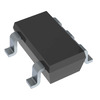
Image may be representation.
See specifications for product details.
EXPRESS OPTION
Payment method

SN65LVDT2DBV - Texas Instruments

Manufacturer Part Number
SN65LVDT2DBV
Manufacturer
Texas Instruments
Allelco Part Number
41D-SN65LVDT2DBV
Warranty
1 Year Allelco Warranty - Find out more
Stock Status:
8,410 pcs available, New & Original
Parts Description
-
Data sheet
-
Category
Integrated Circuits (ICs) > Specialized ICs
RoHs Status
Our certification
In stock: 8410

Required fields are indicated by an asterisk (*)
Please send RFQ, we will respond immediately.

Quantity

Specifications

SN65LVDT2DBV Tech Specifications
Texas Instruments - SN65LVDT2DBV technical specifications, attributes, parameters and parts with similar specifications to Texas Instruments - SN65LVDT2DBV

Product Attribute Attribute Value
Part Number SN65LVDT2DBV
Package -
Description -
Stock Condition Get 8410 pcs available quantity at Allelco
Payment PayPal / TT / Credit Card / Western Union
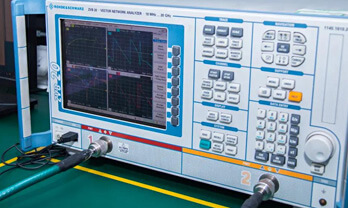
Allelco Certifications ESD / ISO 9001 / ISO 13485 / ISO 28000
Product Attribute Attribute Value
Manufacturer Texas Instruments
RoHs Status -
Warranty 100% Perfect Functions
Transport port Hong Kong
Shipping by DHL / FedEx / UPS / TNT / SF Express
RFQ Email info@allelco.com

Frequently Asked Questions(FAQ)

What are the key electrical characteristics of the SN65LVDT2DBV transceiver that make it suitable for industrial RS-485 applications?
The SN65LVDT2DBV features a ±15 kV ESD protection on both A and B lines, which significantly exceeds typical industrial requirements and enhances reliability in harsh environments. Its low quiescent current of 300 µA in shutdown mode enables energy-efficient operation in battery-powered or power-sensitive systems. The device supports differential signaling with a receiver threshold of 0.2 V to 1.5 V, providing robust noise immunity in electrically noisy industrial settings. With a propagation delay skew of less than 10 ns and a maximum data rate of 2.5 Mbps, it ensures precise timing synchronization in multi-drop networks. These combined characteristics make it well-suited for long-distance communication in factory automation, building control, and process monitoring systems where signal integrity and system uptime are critical.
How does the SN65LVDT2DBV compare to other RS-485 transceivers when considering power consumption versus performance trade-offs in battery-operated devices?
When evaluating the SN65LVDT2DBV against alternatives like the MAX485 or DS75176, its most distinguishing feature is the ultra-low 300 µA shutdown current, which is approximately half that of many competing devices in similar voltage ranges. While standard RS-485 transceivers typically draw 1 mA to 2 mA during active operation, the SN65LVDT2DBV maintains active current around 1.5 mA, offering a balanced compromise between speed and efficiency. In battery-powered sensor nodes operating over several years, this lower shutdown current can extend operational life by 30–50% compared to non-sleep-capable alternatives. However, it trades off higher propagation delay (up to 35 ns vs. <25 ns in some high-speed models) and slightly narrower common-mode range (-7 V to +12 V instead of -12 V to +12 V), making it optimal for mid-range applications where power savings outweigh absolute speed and range.
Can the SN65LVDT2DBV be used in hot-plug scenarios without additional protection circuitry?
Yes, the SN65LVDT2DBV includes built-in ±15 kV HBM ESD protection on the A and B lines per IEC 61000-4-2, which helps mitigate damage from static discharge during insertion. However, this protection is not designed to handle continuous overvoltage conditions or inductive kickback from long cable runs. For true hot-plug robustness—such as in modular fieldbus systems—TI recommends adding series resistors (e.g., 120 Ω) and TVS diodes rated for bus fault conditions. The device’s input thresholds (typically 0.2 V to 1.5 V) also mean it remains immune to small ground shifts, but sustained voltage swings beyond ±12 V may stress internal circuitry despite ESD robustness. Therefore, while usable in moderate hot-plug environments, full compliance with IEC 61158 or similar standards usually requires supplementary clamping components.
What are the implications of the SN65LVDT2DBV’s SOT23-5 package for thermal management in compact PCB designs?
The SN65LVDT2DBV comes in a standard SOT23-5 package, which offers excellent space efficiency for surface-mount applications. With a maximum junction-to-ambient thermal resistance (θJA) of approximately 200°C/W under typical PCB layouts, the device can dissipate around 500 mW continuously in free air at 25°C ambient temperature. In most RS-485 applications, however, power dissipation is minimal—usually under 10 mW due to low supply current—so thermal derating is rarely an issue. That said, in densely populated boards without adequate copper pour or airflow, prolonged operation near full data rates could cause localized heating. Engineers should ensure sufficient trace width for VCC/GND and avoid routing high-current paths adjacent to the device. For extreme environments, consider using a heatsink pad or relocating the component to a cooler zone, though such measures are generally unnecessary for this device’s actual power profile.
How does the driver output swing of the SN65LVDT2DBV affect network length and termination requirements in multi-drop configurations?
The SN65LVDT2DBV provides a typical differential output voltage of 1.5 V with a 12 V supply, which limits its effective network reach compared to higher-output drivers like the SN65HVD75 (up to 5 V). According to RS-485 standards, the minimum valid signal level is 1.5 V, so the usable voltage margin is constrained. This results in a practical maximum cable length of about 300 meters at 9600 bps over twisted pair, assuming proper shielding and impedance matching. To maintain signal integrity, termination resistors must be placed at both ends of the bus to prevent reflections. Additionally, because the receiver hysteresis is only ~200 mV, noise margins are reduced relative to higher-swing transceivers, increasing susceptibility to electromagnetic interference. Therefore, while suitable for short-to-medium distance networks (under 200 m), longer deployments may require signal boosters or repeaters unless environmental noise is tightly controlled.
Is the SN65LVDT2DBV compatible with 3.3 V logic levels from microcontrollers, and what level-shifting considerations apply?
Yes, the SN65LVDT2DBV operates from a single 3.3 V supply and accepts 3.3 V CMOS-compatible logic inputs on its DE and RE/DI pins. The device integrates a Schmitt-trigger input for the DI pin, which provides clean digital switching even with slow microcontroller outputs. No external level shifters are required when interfacing directly with 3.3 V MCUs like the MSP430 or STM32. However, note that the driver outputs remain referenced to the same 3.3 V rail, so the differential signal amplitude will be lower than with a 5 V supply—approximately 1.2 V instead of 1.5 V—reducing noise immunity. If connecting to legacy 5 V RS-485 systems, ensure that the 5 V receivers have a wide enough common-mode range (-7 V to +12 V supports this). Overall, the device simplifies mixed-voltage system design while maintaining compatibility across standard logic families.
What happens if both transmitter and receiver are enabled simultaneously in the SN65LVDT2DBV, and is this a concern in real-world usage?
The SN65LVDT2DBV allows simultaneous enable of the transmitter and receiver through the DE and RE pins. In normal half-duplex operation, this configuration creates a collision condition where the driver drives onto the bus while the receiver samples the same line. While not inherently damaging, this leads to corrupted data frames and potential bus contention. Most robust RS-485 implementations enforce strict turn-around protocols via firmware or dedicated control lines to prevent this. However, in low-speed, short-bus applications with minimal traffic, occasional collisions may go undetected but still degrade communication reliability. Designers should implement software handshaking or use GPIO-controlled delays to ensure the transmitter is fully disabled before enabling the receiver. Some systems employ automatic direction control ICs (like the SN75176B) for simpler solutions, but the SN65LVDT2DBV offers greater flexibility at the cost of increased responsibility in protocol design.
How does the propagation delay skew between driver and receiver affect synchronization in multi-node RS-485 networks using the SN65LVDT2DBV?
The SN65LVDT2DBV exhibits a maximum propagation delay of 35 ns for both transmit and receive paths, with a worst-case skew of less than 10 ns. In high-speed applications (above 1 Mbps), this tight skew ensures deterministic timing across multiple nodes, reducing intersymbol interference and improving bit error rates. For example, in a 10-node daisy-chain setup transmitting at 2.5 Mbps, cumulative timing variations remain well within the unit interval (UI = 400 ns), allowing reliable sampling windows. However, at lower speeds (e.g., 9600 bps), the absolute delay becomes negligible relative to bit duration, so skew has minimal impact. Engineers targeting industrial Ethernet-over-RS-485 gateways or real-time sensor arrays benefit from this consistency, as it simplifies clock recovery and frame alignment. Still, in asynchronous UART-based protocols, the fixed delay may require minor timing compensation in host firmware to account for end-to-end latency.
What environmental ratings or reliability features are inherent to the SN65LVDT2DBV for use in automotive or extended-temperature applications?
The SN65LVDT2DBV itself is specified for operation from -40°C to +85°C, meeting industrial temperature grade requirements. While it lacks formal AEC-Q100 qualification, its robust ESD protection (±15 kV HBM) and latch-up immunity align with automotive-grade expectations. In practice, many designers deploy it successfully in non-powertrain automotive subsystems such as body control modules or infotainment peripherals where environmental stress is moderate. For harsher conditions (e.g., engine bays), additional conformal coating or mechanical shielding is advised. The device’s low sensitivity to voltage transients and stable threshold behavior across temperature make it suitable for extended-range use without recalibration. However, for certified automotive safety-critical functions, TI recommends using dedicated AEC-Q100-compliant parts like the SN65HVD1781. Still, the SN65LVDT2DBV offers a cost-effective alternative for non-safety-rated serial links in ruggedized consumer or light-industrial gear.

Customer Reviews

Evaluation: 10 Articles

  • Dani***alkerTech
    Jun 1, 2026

    Product works, but setup took more effort than expected. Once configured the MCU ran reliably, although documentation support felt older compared with newer platforms. Fine for maintenance projects.

  • Yuki***aka88
    May 26, 2026

    信号通信プロジェクトでこのRS-485トランシーバーを使用しました。設置は簡単で、長距離ケーブルでも通信は安定していました。消費電力も、以前使用していたものより低くなっています。

  • Stev***aker
    May 20, 2026

    Solid diode for power rectification. Works well in switching circuits.

  • Bran***Lewis
    May 11, 2026

    Compact FPGA with good performance. Suitable for basic signal processing tasks.

  • Oliv***arris
    May 7, 2026

    Reliable I/O expander. Works well in embedded control applications.

  • Jess***Jones
    Apr 17, 2026

    It offers good value for the price, and the specifications match the description. I’ve been using it for two days with no issues, and I’ll definitely buy it again if I need it in the future.

  • Mich***Smith
    Apr 17, 2026

    Shipping was on time, the component pins are neatly aligned, and I tested 10 of them with a multimeter—all readings were within the specified range. Highly recommended.

  • Aman***arris
    Apr 3, 2026

    It was great—the entire process, from placing the order to receiving the package, went very smoothly. The components were consistent, the price was fair, and I had a very pleasant shopping experience.

  • Mike***nch
    Apr 3, 2026

    Better than expected! The resistance and capacitance readings were spot-on, and it passed the test on the first try. The service was reliable, and the packaging was thoughtful—I highly recommend it.

  • Daic***K.
    Mar 23, 2026

    Very good. No issue after long time testing.

Write a Review

Your Email address will not be published.

Shipment

Delivery Time

In-stock items can be shipped within 24 hours. Some parts will be arranged for delivery within 1-2 days from the date all items arrive at our warehouse. And Allelco ships order once a day at about 17:00, except Sunday. Once the goods are shipped, the estimated delivery time depends on the shipping methods and Delivery destination. The table below shows are the logistic time for some common countries.

Delivery Cost

  1. Use your express account for shipment if you have one.
  2. Use our account for the shipment. Refer to the table below for the approximate charges.
(Different time frame / countries / package size has different price.)

Delivery Method

  1. Global Common Shipment by DHL / UPS / FedEx / TNT / EMS / SF we support.
  2. Others more shipping ways, please get in touch with your customer manager.

Common Countries Logistic Time Reference
Region Country Logistic Time(Day)
America United States 5
Brazil 7
Europe Germany 5
United Kingdom 4
Italy 5
Oceania Australia 6
New Zealand 5
Asia India 4
Japan 4
Middle East Israel 6
DHL & FedEx Shipment Charges Reference
Shipment charges(KG) Reference DHL(USD$)
0.00kg-1.00kg USD$30.00 - USD$60.00
1.00kg-2.00kg USD$40.00 - USD$80.00
2.00kg-3.00kg USD$50.00 - USD$100.00
Note:
The above table is for reference only. There may have some data bias for the uncontrollable factors.
Contact us if you have any questions.
  • QC (Quality Warranty)
  • Payment Support
  • Packaging
  • Certifications & Memberships

QC (Quality Warranty)

Allelco is committed to exceeding customer expectations through customer service excellence, order accuracy, and on-time delivery.
This is achieved through our commitment to the continual improvement of our processes, services, and products.


Strict quality inspection builds a solid foundation for electronic component quality.
  1. Visual inspection
  2. Performance testing and reliability verification
  3. Standardized full-process testing
  4. Precise control of every parameter
We eliminate defective components and ensure the stable operation of electronic devices through professional quality standards.

Payment Support

The payment method can be chosen from the methods shown below: Wire Transfer (T/T, Bank Transfer), Western Union, Credit card, PayPal.
  • HKBea
  • Paypal
  • MasterCard
  • Western-Union
  • VISA
Stable Delivery, Sincere Partnership — Your Faithful Supply Chain Partner
  • Efficient Supply Management
  • Cost-Saving Procurement
  • Fast Sourcing & Delivery
Contact us if you have any questions.

Packaging

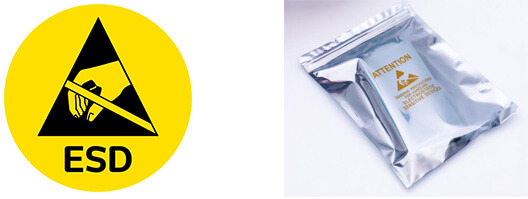
Electrostatic Discharge Protection and Handling

All electrostatic-sensitive components are handled in accordance with electrostatic discharge control procedures. The products are hermetically sealed in anti-static safe packaging to prevent electrostatic damage. Appropriate labeling is also applied for identification and traceability. This ensures product integrity during storage, handling and transportation.


ESD

Certifications & Memberships

Third-party certified, strict quality control. Our certification
  • ISO 9001: 2015
  • ISO 13485: 2016
  • ISO 14001: 2015
  • ISO 28000: 2007
  • ISO 45001: 2018
  • GB/T 27922-2011
  • SMTA
  • IPC
  • ESD
  • PSMA
Texas Instruments

SN65LVDT2DBV

Texas Instruments
41D-SN65LVDT2DBV

Want a better price? Add to Cart and Submit RFQ now, we'll contact you immediately.

0 RFQ
Shopping cart (0 Items)
It is empty.
Compare List (0 Items)
It is empty.
Feedback

Your feedback matters! At Allelco, we value the user experience and strive to improve it constantly.
Please share your comments with us via our feedback form, and we'll respond promptly.
Thank you for choosing Allelco.

Subject
E-mail
Comments
Captcha
Drag or click to upload file
Upload File
types: .xls, .xlsx, .doc, .docx, .jpg, .png and .pdf.
Max file size: 10MB