View All

Please refer to the English Version as our Official Version.Return

Europe
France(Français) Germany(Deutsch) Italy(Italia) Russian(русский) Poland(polski) Czech(Čeština) Luxembourg(Lëtzebuergesch) Netherlands(Nederland) Iceland(íslenska) Hungarian(Magyarország) Spain(español) Portugal(Português) Turkey(Türk dili) Bulgaria(Български език) Ukraine(Україна) Greece(Ελλάδα) Israel(עִבְרִית) Sweden(Svenska) Finland(Svenska) Finland(Suomi) Romania(românesc) Moldova(românesc) Slovakia(Slovenská) Denmark(Dansk) Slovenia(Slovenija) Slovenia(Hrvatska) Croatia(Hrvatska) Serbia(Hrvatska) Montenegro(Hrvatska) Bosnia and Herzegovina(Hrvatska) Lithuania(lietuvių) Spain(Português) Switzerland(Deutsch) United Kingdom(English)
Asia/Pacific
Japan(日本語) Korea(한국의) Thailand(ภาษาไทย) Malaysia(Melayu) Singapore(Melayu) Vietnam(Tiếng Việt) Philippines(Pilipino)
Africa, India and Middle East
United Arab Emirates(العربية) Iran(فارسی) Tajikistan(فارسی) India(हिंदी) Madagascar(malaɡasʲ)
South America / Oceania
New Zealand(Maori) Brazil(Português) Angola(Português) Mozambique(Português)
North America
United States(English) Canada(English) Haiti(Ayiti) Mexico(español)
HomeProductsIntegrated Circuits (ICs)Interface - Drivers, Receivers, TransceiversSN65LVDT14PWRG4
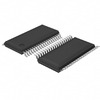
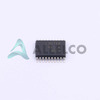
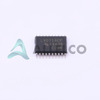
Image may be representation.
See specifications for product details.
EXPRESS OPTION
Payment method

SN65LVDT14PWRG4 - Texas Instruments

Manufacturer Part Number
SN65LVDT14PWRG4
Manufacturer
Texas Instruments
Allelco Part Number
98D-SN65LVDT14PWRG4
Warranty
1 Year Allelco Warranty - Find out more
Stock Status:
14,947 pcs available, New & Original
Parts Description
IC TRANSCEIVER HALF 1/4 20TSSOP
Package
20-TSSOP
Data sheet
SN65LVDT14PWRG4.pdf

HTML Datasheet

SN65LVDT14/41.pdf
RoHs Status
ROHS3 Compliant
Our certification
In stock: 14947
  • Unit Price: $3.254
  • Subtotal: $0.00

Want a better price?
Add to Cart and Submit RFQ now, we'll contact you immediately.

Quantity Unit Price Ext. Price
1+ $3.254 $3.25
200+ $1.259 $251.80
500+ $1.216 $608.00
1000+ $1.194 $1,194.00
The above prices does not include taxes and freight rates, which will be calculated on the order pages.


Specifications

SN65LVDT14PWRG4 Tech Specifications
Texas Instruments - SN65LVDT14PWRG4 technical specifications, attributes, parameters and parts with similar specifications to Texas Instruments - SN65LVDT14PWRG4

Product Attribute Attribute Value
Manufacturer Texas Instruments
Voltage - Supply 3V ~ 3.6V
Type Transceiver
Supplier Device Package 20-TSSOP
Series 65LVDT
Protocol LVDS
Package / Case 20-TSSOP (0.173", 4.40mm Width)
Product Attribute Attribute Value
Package Tape & Reel (TR)
Operating Temperature -40°C ~ 85°C
Number of Drivers/Receivers 1/4
Mounting Type Surface Mount
Duplex Half
Data Rate 125Mbps
Base Product Number 65LVDT14

Environmental & Export Classifications

ATTRIBUTE DESCRIPTION
RoHs Status ROHS3 Compliant
Moisture Sensitivity Level (MSL) 1 (Unlimited)
REACH Status REACH Unaffected
ECCN 5A991B1
HTSUS 8542.39.0001

Frequently Asked Questions(FAQ)

How does the SN65LVDT14PWRG4 compare to other LVDS transceivers in terms of data rate and power consumption when operating at 3.3V?
The SN65LVDT14PWRG4 supports a maximum data rate of 125 Mbps, which positions it well for mid-speed serial communication links such as those found in industrial control systems or video transmission applications. When operating within its 3V to 3.6V supply range—typically 3.3V in most designs—the device consumes relatively low quiescent current due to its optimized CMOS architecture. This efficiency makes it suitable for power-sensitive environments where thermal management is critical. Compared to higher-speed alternatives like the DS90LV048 (which supports up to 1.5 Gbps), the SN65LVDT14PWRG4 trades speed for lower power and smaller footprint, making it ideal for embedded applications rather than high-bandwidth data centers.
What are the key considerations when integrating the SN65LVDT14PWRG4 into a system requiring galvanic isolation or ESD protection beyond standard levels?
While the SN65LVDT14PWRG4 provides basic ESD protection per IEC standards, systems demanding enhanced immunity—such as automotive or outdoor industrial installations—require supplemental protection components. External TVS diodes rated for ±15 kV contact discharge and transient voltage suppression networks should be placed close to connectors. Additionally, optocouplers or digital isolators may be necessary if signal isolation is required. The 20-TSSOP package allows compact layout, but care must be taken to maintain impedance-controlled traces for reliable differential signaling. Isolation cannot be achieved internally with this part alone, so system-level design must incorporate additional layers of protection.
In what scenarios would the half-duplex operation of the SN65LVDT14PWRG4 limit its usefulness compared to full-duplex alternatives?
The SN65LVDT14PWRG4 supports only half-duplex communication, meaning transmit and receive functions share the same channel and cannot operate simultaneously. This limits its applicability in bidirectional data exchange scenarios where real-time responsiveness is essential, such as in daisy-chained sensor networks or legacy fieldbus protocols like PROFIBUS. Applications requiring simultaneous upstream and downstream traffic—such as high-speed backplane interconnects or multi-drop telemetry systems—would benefit more from full-duplex transceivers. For point-to-point control systems using time-division multiplexing or polling architectures, however, half-duplex remains efficient and cost-effective.
Can the SN65LVDT14PWRG4 be used reliably over extended temperature ranges without derating performance parameters?
The SN65LVDT14PWRG4 is specified for operation from -40°C to +85°C, covering most industrial and commercial environments. Within this range, all electrical characteristics—including propagation delay, skew, and output swing—remain within datasheet tolerances. However, at the upper end of the temperature spectrum, slight increases in propagation delay and degradation in eye diagram margins may occur due to semiconductor mobility effects. Designers should account for these variations by allowing margin in timing budgets, especially in synchronous systems relying on precise clock recovery. No active cooling or derating is required unless ambient conditions exceed 85°C.
How does the driver/receiver ratio of 1/4 affect system scalability when using multiple SN65LVDT14PWRG4 devices on a shared bus?
Each SN65LVDT14PWRG4 contains one transmitter and four receivers, enabling flexible point-to-multipoint topologies. On a shared LVDS bus, up to four nodes can monitor the line while one node actively transmits. This configuration supports scalable monitoring architectures common in sensor aggregation or status reporting systems. However, bus loading must consider both capacitive load from terminated stubs and current draw from parallel receivers. Exceeding recommended trace lengths or adding too many receivers without proper termination can degrade signal integrity. Careful PCB layout with controlled impedance (typically 100Ω differential) and stub minimization is essential for maintaining signal quality across multiple receiver inputs.
What impact does the 20-TSSOP package have on thermal performance and routing density in high-channel-count designs?
The 20-lead TSSOP (4.4mm x 6.5mm) offers a compact form factor beneficial for space-constrained applications, but its small size results in limited exposed thermal dissipation paths. While not intended as a primary heat sink, the package includes an optional thermal pad underside (varies by variant) that can aid conduction to the PCB ground plane. In dense systems with multiple SN65LVDT14PWRG4 devices, thermal crowding may require careful layer stack planning and via stitching to adjacent copper pours. Routing density benefits from narrow pitch (0.65mm lead spacing), enabling tight placement alongside microcontrollers or FPGAs, but designers must balance routing complexity against signal integrity needs, particularly for high-speed differential pairs.
Are there any known compatibility issues between the SN65LVDT14PWRG4 and non-LVDS receiver ICs when interfacing over long cables?
The SN65LVDT14PWRG4 outputs standard LVDS-compliant signals with typical differential voltage levels of 350 mV and common-mode voltage near VCC/2. Most modern LVDS receivers will interoperate correctly, including TI’s own SN65LVDTxx family and third-party parts from Analog Devices or Maxim. However, older or non-standard receivers may interpret edge rates or noise margins differently, leading to data errors over longer distances (>1 meter). Cable attenuation and EMI susceptibility increase with length, necessitating proper termination and shielding. For interfaces exceeding 10 meters, consider protocol-aware repeaters or fiber conversion instead of raw electrical extension.
What precautions should be taken during PCB layout to ensure reliable operation of the SN65LVDT14PWRG4 in noisy industrial environments?
To minimize electromagnetic interference and crosstalk, differential pairs routed to the SN65LVDT14PWRG4 should maintain consistent 100Ω impedance using matched trace widths and spacing. Keep traces short and avoid vias when possible; if required, use differential via pairs. Place bypass capacitors (0.1 µF ceramic) as close as possible to each VCC pin, preferably on the same side as the device. Separate analog and digital grounds at the power entry point, and connect them through a single star point near the IC. Avoid routing high-speed digital lines parallel to LVDS channels. Ground plane continuity beneath the package enhances noise immunity and aids heat dissipation.
How does the Moisture Sensitivity Level (MSL) rating of 1 influence handling procedures before reflow soldering?
With an MSL rating of 1, the SN65LVDT14PWRG4 is considered moisture-insensitive and can be stored indefinitely under normal ambient conditions without baking prior to assembly. Unlike components rated MSL 3 or higher, it does not require pre-dry treatment even after extended exposure to humid environments. This simplifies inventory management and reduces manufacturing overhead. However, standard IPC guidelines for handling ESD-sensitive devices still apply, and packaging should remain intact until just before placement to prevent contamination. Reflow profiles must comply with J-STD-020 for lead-free processes, ensuring peak temperatures do not exceed the junction limit of 150°C above TAMB.
Can the SN65LVDT14PWRG4 drive multiple loads without degrading signal quality or exceeding output current limits?
The SN65LVDT14PWRG4 has a typical output current capability sufficient for driving one properly terminated 100Ω differential load. Attempting to drive multiple receivers simultaneously introduces significant reflections and loading effects due to impedance mismatch. If multi-drop reception is required, use separate receiver stages or implement buffered architectures with dedicated drivers per branch. Alternatively, consider using receiver-only parts like the SN75LVDT790 alongside the SN65LVDT14PWRG4 to offload input buffering and reduce stress on the transmitter. Never assume the transmitter can source current into multiple parallel terminations without verifying eye diagram compliance via simulation or prototype testing.
What role does common-mode voltage stability play in the SN65LVDT14PWRG4’s performance over varying supply voltages?
The SN65LVDT14PWRG4 maintains stable common-mode output voltage near the midpoint of its 3V to 3.6V supply rail, typically around 1.65V at 3.3V. This ensures compatibility with receivers expecting consistent DC bias even under supply fluctuations. However, if the supply sags below 3V due to transient drops or aging batteries, the common-mode level shifts downward, potentially violating input thresholds of some receivers. Designers should ensure stable bulk capacitance and low-impedance power delivery to maintain voltage regulation within ±5% during transient events. Monitoring PSRR (power supply rejection ratio) curves in the datasheet helps assess sensitivity to ripple and dropout.
Is there a recommended termination strategy when cascading multiple SN65LVDT14PWRG4 devices in a daisy-chain topology?
Daisy-chaining multiple SN65LVDT14PWRG4 devices is generally discouraged due to cumulative jitter, reflection buildup, and timing uncertainty. Instead, use a star-topology with a central transceiver driving multiple point-to-point links. If chaining is unavoidable, terminate only at the final receiver using a 100Ω resistor across the differential pair. Intermediate nodes should present high-Z inputs to avoid loading. Clock recovery circuits downstream may struggle with degraded signal fidelity after several hops. For robust long-distance communication, consider using LVDS repeaters or switching to differential signaling standards with built-in regeneration, such as LVPECL or CML.
How does the absence of internal termination affect system design when using the SN65LVDT14PWRG4 over variable cable lengths?
The SN65LVDT14PWRG4 lacks internal termination resistors, requiring external 100Ω resistors placed at the far end of the transmission line to match characteristic impedance and prevent reflections. This increases BOM cost slightly but offers flexibility across different cable types and lengths. System designers must calculate maximum allowable length based on cable capacitance and data rate: approximately 10–15 meters at 125 Mbps for typical twisted-pair cables. Beyond this, signal attenuation and intersymbol interference become problematic. Use time-domain reflectometry (TDR) tools during prototyping to validate termination effectiveness and locate discontinuities.
What are the implications of using the SN65LVDT14PWRG4 in battery-powered portable equipment regarding sleep mode and power-down sequencing?
The SN65LVDT14PWRG4 does not feature a dedicated shutdown pin or ultra-low-power standby mode. Once powered, it draws continuous quiescent current (~2 mA typical). In battery-operated systems requiring energy savings, disable the device by removing power before entering deep-sleep states. Power-up sequencing should ensure stable VCC reaches nominal levels before enabling drivers to avoid latch-up or undefined outputs. Consider using enable pins (if available in specific variants) or GPIO-controlled MOSFETs to isolate the IC from the bus during inactive periods. Always verify that disabled outputs do not float and cause unintended wake-ups in downstream circuitry.
Can the SN65LVDT14PWRG4 interface directly with 5V logic levels without level-shifting components?
No, the SN65LVDT14PWRG4 operates from 3V to 3.6V and is not 5V-tolerant on its input pins. Applying 5V signals directly risks damaging the CMOS inputs. If interfacing with 5V microcontroller UARTs or FPGAs, use open-drain buffers with pull-up resistors to 3.3V, or deploy dedicated level translators like TI’s TXS0108E. Ensure that any reference voltage on the local side matches the transceiver’s supply to preserve noise margins. Never assume backward compatibility—always verify absolute maximum ratings and input threshold specifications before connecting dissimilar logic families.
What verification steps are recommended after selecting the SN65LVDT14PWRG4 for a new design to ensure compliance with timing requirements?
After PCB layout and component placement, perform signal integrity simulations using IBIS models for the SN65LVDT14PWRG4 to predict rise/fall times, overshoot, and jitter. Then, build a prototype and measure eye diagrams using a high-bandwidth oscilloscope with differential probes. Validate worst-case timing margins under temperature extremes (-40°C and +85°C) and worst-case process corners. Confirm that setup and hold times meet the receiving device’s requirements, especially if asynchronous communication is involved. Document all measurements and iterate on trace geometry or termination if eye closure exceeds acceptable thresholds.
How does the substitution availability of SN65LVDT14PWRG4 affect procurement risk and long-term supply planning?
Texas Instruments lists SN65LVDT14PWR as a substitute for the SN65LVDT14PWRG4, indicating minor differences likely related to packaging or marking rather than electrical function. Both parts share the same core die and performance profile. This substitution option provides flexibility during sourcing negotiations or obsolescence mitigation. However, always cross-check latest TI documentation, as substitutions may evolve. Maintain dual-sourcing strategies where possible and update bills of materials accordingly. Avoid assuming interchangeability without verifying part number suffixes and revision codes in distributor catalogs.
What documentation beyond the datasheet is essential when qualifying the SN65LVDT14PWRG4 for safety-critical applications?
For functional safety or regulated industries (e.g., medical, aerospace), obtain TI’s application reports, SPICE models, and reliability test summaries. Review failure modes and effects analysis (FMEA) templates aligned with ISO 26262 or IEC 61508. Ensure the device meets relevant environmental qualifications (temperature cycling, humidity resistance). Verify RoHS and REACH compliance documentation for material transparency. Finally, confirm that the ECCN (5A991B1) and HTSUS (8542.39.0001) classifications align with export control policies. These artifacts support audit trails and demonstrate due diligence in component selection workflows.

Parts with Similar Specifications

The three parts on the right have similar specifications to Texas Instruments SN65LVDT14PWRG4

Product Attribute SN65LVDT14PWG4 SN65LVDT14PWR SN65LVDT14PW SN65LVDT2DBVRG4
Part Number SN65LVDT14PWG4 SN65LVDT14PWR SN65LVDT14PW SN65LVDT2DBVRG4
Manufacturer Texas Instruments Texas Instruments Texas Instruments Texas Instruments
Voltage - Supply - - - -
Series - - - -
Operating Temperature - -40°C ~ 85°C 0°C ~ 70°C -40°C ~ 85°C
Package - Tape & Reel (TR) Tube Tape & Reel (TR)
Type - - - -
Number of Drivers/Receivers - - - -
Package / Case - 196-LFBGA 16-DIP (0.300', 7.62mm) 64-VFQFN Exposed Pad
Base Product Number - DAC34H84 MAX500 ADS62P42
Mounting Type - Surface Mount Through Hole Surface Mount
Supplier Device Package - 196-NFBGA (12x12) 16-PDIP 64-VQFN (9x9)
Protocol - - - -
Duplex - - - -
Data Rate - - - -

SN65LVDT14PWRG4 Datasheet PDF

Download SN65LVDT14PWRG4 pdf datasheets and Texas Instruments documentation for SN65LVDT14PWRG4 - Texas Instruments.

HTML Datasheet
SN65LVDT14/41.pdf

Customer Reviews

Evaluation: 10 Articles

  • Dani***alkerTech
    Jun 1, 2026

    Product works, but setup took more effort than expected. Once configured the MCU ran reliably, although documentation support felt older compared with newer platforms. Fine for maintenance projects.

  • Yuki***aka88
    May 26, 2026

    信号通信プロジェクトでこのRS-485トランシーバーを使用しました。設置は簡単で、長距離ケーブルでも通信は安定していました。消費電力も、以前使用していたものより低くなっています。

  • Stev***aker
    May 20, 2026

    Solid diode for power rectification. Works well in switching circuits.

  • Bran***Lewis
    May 11, 2026

    Compact FPGA with good performance. Suitable for basic signal processing tasks.

  • Oliv***arris
    May 7, 2026

    Reliable I/O expander. Works well in embedded control applications.

  • Jess***Jones
    Apr 17, 2026

    It offers good value for the price, and the specifications match the description. I’ve been using it for two days with no issues, and I’ll definitely buy it again if I need it in the future.

  • Mich***Smith
    Apr 17, 2026

    Shipping was on time, the component pins are neatly aligned, and I tested 10 of them with a multimeter—all readings were within the specified range. Highly recommended.

  • Aman***arris
    Apr 3, 2026

    It was great—the entire process, from placing the order to receiving the package, went very smoothly. The components were consistent, the price was fair, and I had a very pleasant shopping experience.

  • Mike***nch
    Apr 3, 2026

    Better than expected! The resistance and capacitance readings were spot-on, and it passed the test on the first try. The service was reliable, and the packaging was thoughtful—I highly recommend it.

  • Daic***K.
    Mar 23, 2026

    Very good. No issue after long time testing.

Write a Review

Your Email address will not be published.

Shipment

Delivery Time

In-stock items can be shipped within 24 hours. Some parts will be arranged for delivery within 1-2 days from the date all items arrive at our warehouse. And Allelco ships order once a day at about 17:00, except Sunday. Once the goods are shipped, the estimated delivery time depends on the shipping methods and Delivery destination. The table below shows are the logistic time for some common countries.

Delivery Cost

  1. Use your express account for shipment if you have one.
  2. Use our account for the shipment. Refer to the table below for the approximate charges.
(Different time frame / countries / package size has different price.)

Delivery Method

  1. Global Common Shipment by DHL / UPS / FedEx / TNT / EMS / SF we support.
  2. Others more shipping ways, please get in touch with your customer manager.

Common Countries Logistic Time Reference
Region Country Logistic Time(Day)
America United States 5
Brazil 7
Europe Germany 5
United Kingdom 4
Italy 5
Oceania Australia 6
New Zealand 5
Asia India 4
Japan 4
Middle East Israel 6
DHL & FedEx Shipment Charges Reference
Shipment charges(KG) Reference DHL(USD$)
0.00kg-1.00kg USD$30.00 - USD$60.00
1.00kg-2.00kg USD$40.00 - USD$80.00
2.00kg-3.00kg USD$50.00 - USD$100.00
Note:
The above table is for reference only. There may have some data bias for the uncontrollable factors.
Contact us if you have any questions.
  • QC (Quality Warranty)
  • Payment Support
  • Packaging
  • Certifications & Memberships

QC (Quality Warranty)

Allelco is committed to exceeding customer expectations through customer service excellence, order accuracy, and on-time delivery.
This is achieved through our commitment to the continual improvement of our processes, services, and products.


Strict quality inspection builds a solid foundation for electronic component quality.
  1. Visual inspection
  2. Performance testing and reliability verification
  3. Standardized full-process testing
  4. Precise control of every parameter
We eliminate defective components and ensure the stable operation of electronic devices through professional quality standards.

Payment Support

The payment method can be chosen from the methods shown below: Wire Transfer (T/T, Bank Transfer), Western Union, Credit card, PayPal.
  • HKBea
  • Paypal
  • MasterCard
  • Western-Union
  • VISA
Stable Delivery, Sincere Partnership — Your Faithful Supply Chain Partner
  • Efficient Supply Management
  • Cost-Saving Procurement
  • Fast Sourcing & Delivery
Contact us if you have any questions.

Packaging

Electrostatic Discharge Protection and Handling

All electrostatic-sensitive components are handled in accordance with electrostatic discharge control procedures. The products are hermetically sealed in anti-static safe packaging to prevent electrostatic damage. Appropriate labeling is also applied for identification and traceability. This ensures product integrity during storage, handling and transportation.


ESD

Certifications & Memberships

Third-party certified, strict quality control. Our certification
  • ISO 9001: 2015
  • ISO 13485: 2016
  • ISO 14001: 2015
  • ISO 28000: 2007
  • ISO 45001: 2018
  • GB/T 27922-2011
  • SMTA
  • IPC
  • ESD
  • PSMA
Texas Instruments

SN65LVDT14PWRG4

Texas Instruments
98D-SN65LVDT14PWRG4

Want a better price? Add to Cart and Submit RFQ now, we'll contact you immediately.

0 RFQ
Shopping cart (0 Items)
It is empty.
Compare List (0 Items)
It is empty.
Feedback

Your feedback matters! At Allelco, we value the user experience and strive to improve it constantly.
Please share your comments with us via our feedback form, and we'll respond promptly.
Thank you for choosing Allelco.

Subject
E-mail
Comments
Captcha
Drag or click to upload file
Upload File
types: .xls, .xlsx, .doc, .docx, .jpg, .png and .pdf.
Max file size: 10MB