View All

Please refer to the English Version as our Official Version.Return

Europe
France(Français) Germany(Deutsch) Italy(Italia) Russian(русский) Poland(polski) Czech(Čeština) Luxembourg(Lëtzebuergesch) Netherlands(Nederland) Iceland(íslenska) Hungarian(Magyarország) Spain(español) Portugal(Português) Turkey(Türk dili) Bulgaria(Български език) Ukraine(Україна) Greece(Ελλάδα) Israel(עִבְרִית) Sweden(Svenska) Finland(Svenska) Finland(Suomi) Romania(românesc) Moldova(românesc) Slovakia(Slovenská) Denmark(Dansk) Slovenia(Slovenija) Slovenia(Hrvatska) Croatia(Hrvatska) Serbia(Hrvatska) Montenegro(Hrvatska) Bosnia and Herzegovina(Hrvatska) Lithuania(lietuvių) Spain(Português) Switzerland(Deutsch) United Kingdom(English)
Asia/Pacific
Japan(日本語) Korea(한국의) Thailand(ภาษาไทย) Malaysia(Melayu) Singapore(Melayu) Vietnam(Tiếng Việt) Philippines(Pilipino)
Africa, India and Middle East
United Arab Emirates(العربية) Iran(فارسی) Tajikistan(فارسی) India(हिंदी) Madagascar(malaɡasʲ)
South America / Oceania
New Zealand(Maori) Brazil(Português) Angola(Português) Mozambique(Português)
North America
United States(English) Canada(English) Haiti(Ayiti) Mexico(español)
HomeProductsIntegrated Circuits (ICs)Specialized ICsSN65LVDT2D
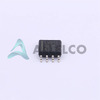
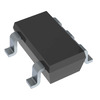
Image may be representation.
See specifications for product details.
EXPRESS OPTION
Payment method

SN65LVDT2D - Texas Instruments

Manufacturer Part Number
SN65LVDT2D
Manufacturer
Texas Instruments
Allelco Part Number
41D-SN65LVDT2D
Warranty
1 Year Allelco Warranty - Find out more
Stock Status:
8,840 pcs available, New & Original
Parts Description
SOIC-8
Data sheet
-
Category
Integrated Circuits (ICs) > Specialized ICs
RoHs Status
Our certification
In stock: 8840

Required fields are indicated by an asterisk (*)
Please send RFQ, we will respond immediately.

Quantity

Specifications

SN65LVDT2D Tech Specifications
Texas Instruments - SN65LVDT2D technical specifications, attributes, parameters and parts with similar specifications to Texas Instruments - SN65LVDT2D

Product Attribute Attribute Value
Part Number SN65LVDT2D
Package SOIC-8
Description SOIC-8
Stock Condition Get 8840 pcs available quantity at Allelco
Payment PayPal / TT / Credit Card / Western Union
Allelco Certifications ESD / ISO 9001 / ISO 13485 / ISO 28000
Product Attribute Attribute Value
Manufacturer Texas Instruments
RoHs Status -
Warranty 100% Perfect Functions
Transport port Hong Kong
Shipping by DHL / FedEx / UPS / TNT / SF Express
RFQ Email info@allelco.com

Parts Introduction

Manufacturer Part Number

SN65LVDT2D

Manufacturer

Texas Instruments

Introduction

The SN65LVDT2D is a high-speed, low-power, LVDS line receiver designed to support data rates up to 400Mbps. It is a member of the 65LVDT series and is well-suited for a wide range of applications that require reliable data transmission over long distances, such as in industrial automation, medical equipment, and telecommunications systems.

Product Features and Performance

Supports data rates up to 400Mbps

Low power consumption of 2.4V to 3.6V

Wide operating temperature range of -40°C to 85°C

Surface mount package for easy integration

Robust LVDS interface for reliable data transmission

Product Advantages

High-speed data transmission with low power requirements

Wide operating temperature range for use in diverse environments

Compact surface mount package for space-constrained designs

Reliable LVDS interface for robust data communication

Key Reasons to Choose This Product

Exceptional performance and reliability for mission-critical applications

Reduced system complexity and power consumption

Easy integration into a variety of industrial and telecommunications systems

Long-term availability and support from a trusted manufacturer

Quality and Safety Features

Rigorous quality control and testing processes

Compliance with relevant industry standards and regulations

Robust design for reliable operation in demanding environments

Compatibility

The SN65LVDT2D is compatible with other LVDS devices and can be used in a wide range of industrial, medical, and telecommunications applications.

Application Areas

Industrial automation and control systems

Medical imaging and diagnostic equipment

Telecommunications and networking equipment

Aerospace and defense systems

Product Lifecycle

The SN65LVDT2D is an active product, and Texas Instruments continues to manufacture and support it. There are no known equivalent or alternative models available at this time. If you have any questions or need further assistance, please contact our sales team through our website.
Frequently Asked Questions(FAQ)

What is the maximum data rate and supply voltage range for the SN65LVDT2D LVDS receiver when used in a 3.3V industrial control system operating at 25°C?
The SN65LVDT2D supports a maximum data rate of 400 Mbps, which aligns with high-speed serial communication requirements in industrial environments. When powered within its specified 2.4V to 3.6V supply range—commonly implemented as 3.3V—the device maintains signal integrity and timing margins critical for reliable operation. At 25°C, thermal derating is minimal due to low power dissipation, allowing consistent performance up to the full data rate without significant degradation.
How does the SN65LVDT2D compare to the SN65LVDT1D in terms of driver/receiver configuration, and what are the implications for point-to-point LVDS link design?
Unlike the SN65LVDT1D, which includes one driver and one receiver, the SN65LVDT2D is configured as a 0/1 receiver-only device. This means it cannot transmit LVDS signals but can only receive them. For point-to-point links where bidirectional communication is required, pairing two SN65LVDT2D devices with one dedicated transmitter (e.g., from a different part family) may be necessary. However, for unidirectional data paths such as sensor-to-processor interfaces, the SN65LVDT2D offers a compact, cost-effective solution without the overhead of an integrated transmitter.
Can the SN65LVDT2D operate reliably over the full -40°C to 85°C temperature range when used in an outdoor telemetry application with frequent thermal cycling?
Yes, the SN65LVDT2D is qualified for operation from -40°C to 85°C, making it suitable for harsh environmental conditions typical in outdoor telemetry systems. The 8-SOIC package provides adequate thermal dissipation under normal load, and the device’s internal protection circuits help maintain signal integrity during thermal transients. Given its MSL 1 classification, long-term reliability under thermal cycling is supported by standard JEDEC standards, assuming proper PCB layout and decoupling practices.
What level of ESD protection does the SN65LVDT2D offer, and how should input handling be managed during board bring-up to prevent latch-up or damage?
While the datasheet does not specify an exact IEC ESD rating, the SN65LVDT2D incorporates standard CMOS protection diodes on its inputs. These provide limited transient protection, typically sufficient for handling minor electrostatic discharges encountered in controlled assembly environments. To prevent damage during bring-up, especially in unpowered states, it's recommended to use ESD-safe tools, grounded workstations, and avoid hot-plugging signals. Additionally, series termination resistors (typically 100Ω) near the receiver inputs can dampen reflections and reduce stress on the IC.
Is the SN65LVDT2D compatible with 1.8V logic levels from a microcontroller, and what interface modifications would be needed?
No, the SN65LVDT2D operates on a 2.4V to 3.6V supply rail and is not directly compatible with 1.8V logic. Attempting to drive its inputs from a 1.8V source may result in undefined logic thresholds and unreliable reception. A level-shifting solution is required—such as using a separate LVDS transmitter with 1.8V-compatible input stages or implementing a discrete translation circuit—before the SN65LVDT2D can process the signal correctly.
What is the typical propagation delay skew between differential pairs when using the SN65LVDT2D in a multi-drop configuration with multiple receivers?
The SN65LVDT2D has a maximum propagation delay of approximately 1.8 ns, with typical skew between channels specified at less than 200 ps. In multi-drop LVDS configurations, this low skew ensures synchronized arrival of signals across multiple nodes, minimizing timing uncertainty. However, due to its single-receiver architecture, true multi-drop isn't supported; instead, it’s designed for point-to-point or star topologies where signal fidelity and timing consistency are preserved through controlled trace lengths and impedance matching.
How does power consumption scale with data rate for the SN65LVDT2D, and what impact does this have on battery-powered edge devices?
At 400 Mbps, the SN65LVDT2D draws approximately 12 mA from a 3.3V supply, resulting in roughly 40 mW of dynamic power. This relatively low consumption makes it suitable for battery-powered applications where energy efficiency matters. Power scales sublinearly with data rate due to dominant static biasing in LVDS drivers, so even at reduced speeds (e.g., 100 Mbps), current draw remains close to 5–7 mA. Proper shutdown modes or clock gating can further reduce average power in intermittent-use scenarios.
Can the SN65LVDT2D be used in automotive-grade systems requiring AEC-Q100 compliance?
No, the SN65LVDT2D is not automotive-qualified and lacks AEC-Q100 certification. It is rated for industrial temperatures (-40°C to 85°C), whereas automotive systems often require extended temperature ranges (up to 125°C) and rigorous reliability testing. For automotive LVDS interfaces, Texas Instruments offers alternative parts like the SN65LVDS series with appropriate qualification markings. Using non-automotive components in such contexts may void warranty and violate functional safety standards.
What is the recommended termination strategy when interfacing the SN65LVDT2D to a 100Ω differential transmission line, and why is it critical?
The SN65LVDT2D expects a 100Ω differential impedance on its input pair, matching standard LVDS transmission lines. Termination must be provided at the source end using a 100Ω resistor between the two signal lines, not at the receiver. This prevents signal reflections that cause overshoot, undershoot, and intersymbol interference, especially at 400 Mbps data rates. Omitting proper termination degrades eye diagram quality and increases bit error rates, particularly over longer cable runs or PCB traces exceeding 10 cm.
How does the SN65LVDT2D handle common-mode voltage variations, and what are the safe operating limits for input signals outside the nominal LVDS range?
The SN65LVDT2D accepts common-mode voltages from 1.0 V to 2.4 V, centered around approximately 1.2 V for standard LVDS levels. Signals with common-mode shifts beyond this range—such as those originating from mismatched supplies or long cables—may lead to incorrect decoding. Designers should ensure signal sources maintain common-mode compliance, possibly using external biasing networks or AC-coupling capacitors with clamping diodes if wider swing tolerance is needed. Exceeding absolute maximum ratings, even briefly, risks permanent damage.
What role does the base product number 65LVDT play in selecting related components, and how does the SN65LVDT2D fit into the broader TI LVDS ecosystem?
The base product number 65LVDT identifies a family of LVDS interface devices sharing core architecture and electrical characteristics. The SN65LVDT2D is one variant within this family, differentiated primarily by its receiver-only function. Other members include transmitters (e.g., SN65LVDT1T), transceivers, and buffered versions. Selecting based on the base number ensures compatibility in signal levels, package options, and performance envelopes, simplifying system-level integration while maintaining interchangeability where functionality permits.
Are there any known layout considerations specific to the 8-SOIC package of the SN65LVDT2D that affect signal integrity at 400 Mbps?
Yes, due to the small form factor and closely spaced pins (3.9 mm width), careful routing is essential to preserve differential pair balance. The SN65LVDT2D’s input pins must be routed as tightly coupled, 100Ω differential traces with matched length (<5 mm tolerance). Avoid vias near the receiver inputs to minimize impedance discontinuities. Decoupling capacitors (0.1 µF) should be placed within 2 mm of the VCC and GND pins to suppress high-frequency noise. Ground plane cuts under the package are discouraged to maintain return path continuity.
Can the SN65LVDT2D be used with non-standard LVDS signaling such as low-voltage differential signaling at 2.5V or 1.8V?
The SN65LVDT2D is optimized for standard LVDS (1.2V differential swing, ~1.2V common mode). It may tolerate marginal deviations but is not guaranteed to operate correctly with 2.5V or 1.8V LVDS variants. Such signals could fall outside its valid input thresholds or common-mode acceptance window, leading to unreliable detection. For lower-voltage differential signaling, consider dedicated transceivers rated for those voltage levels rather than adapting general-purpose parts like the SN65LVDT2D.
What is the significance of the RoHS3 and REACH compliance status for the SN65LVDT2D in global manufacturing, and does it meet conflict mineral reporting requirements?
RoHS3 compliance confirms the SN65LVDT2D meets European Union restrictions on hazardous substances including lead, mercury, cadmium, and certain phthalates. REACH Unaffected status indicates no SVHC (Substance of Very High Concern) content above regulatory thresholds. While these certifications facilitate international distribution, they do not automatically fulfill conflict mineral reporting obligations under SEC Rule 13p-1 or similar frameworks. Manufacturers must still conduct independent supply chain diligence for tantalum, tin, tungsten, and gold used in packaging and interconnects.
How does moisture sensitivity level (MSL) 1 classification impact storage and handling of tube-packaged SN65LVDT2D units before reflow soldering?
With an MSL 1 rating, the SN65LVDT2D poses negligible risk of moisture absorption and does not require bake-out prior to soldering. Tube packaging provides adequate protection during standard warehouse storage under ambient conditions. Units can remain indefinitely without degradation, making them ideal for just-in-time production models. No special humidity-controlled environments are needed before reflow, unlike Class 2 or 3 devices that require dry packing or preconditioning.
What are the key differences between the SN65LVDT2D and similar LVDS receivers from other manufacturers like Maxim Integrated or Analog Devices, particularly in terms of jitter tolerance and EMI performance?
Compared to alternatives such as Maxim’s MAX9209 or ADI’s LTC6954, the SN65LVDT2D offers competitive jitter tolerance (±0.2 UI) and moderate EMI susceptibility typical of standard SOIC-packaged LVDS devices. However, it lacks advanced features found in some rivals—such as built-in equalization, programmable thresholds, or enhanced common-mode rejection—that improve robustness in noisy environments. Its advantage lies in integration with TI’s broader interface ecosystem and availability in low-cost, small-footprint packages. Trade-offs exist between feature richness and simplicity, depending on application complexity.
Is it feasible to daisy-chain multiple SN65LVDT2D devices on a shared LVDS bus, and what limitations would arise?
No, the SN65LVDT2D is not designed for daisy-chaining due to its passive receiver nature and lack of tri-state capability or enable controls. Each instance requires a dedicated input pair, effectively limiting usage to point-to-point links. Attempting to share a differential line among multiple SN65LVDT2D devices would result in contention, signal loading issues, and unpredictable logic states. True multi-drop LVDS networks require specialized transceivers with bus management features, which this component does not support.
What documentation and simulation models are available for the SN65LVDT2D to support pre-layout signal integrity analysis?
Texas Instruments provides IBIS and SPICE models for the SN65LVDT2D, along with reference designs and IBIS-AMI files for channel modeling. These resources enable engineers to simulate eye diagrams, insertion loss, and jitter budgets before committing to PCB layout. The IBIS model captures DC and AC characteristics critical for accurate timing predictions, while the AMI model supports advanced channel analysis in high-speed SerDes environments. Availability of these files facilitates early validation and reduces risk of late-stage signal integrity failures.

Customer Reviews

Evaluation: 10 Articles

  • Dani***alkerTech
    Jun 1, 2026

    Product works, but setup took more effort than expected. Once configured the MCU ran reliably, although documentation support felt older compared with newer platforms. Fine for maintenance projects.

  • Yuki***aka88
    May 26, 2026

    信号通信プロジェクトでこのRS-485トランシーバーを使用しました。設置は簡単で、長距離ケーブルでも通信は安定していました。消費電力も、以前使用していたものより低くなっています。

  • Stev***aker
    May 20, 2026

    Solid diode for power rectification. Works well in switching circuits.

  • Bran***Lewis
    May 11, 2026

    Compact FPGA with good performance. Suitable for basic signal processing tasks.

  • Oliv***arris
    May 7, 2026

    Reliable I/O expander. Works well in embedded control applications.

  • Jess***Jones
    Apr 17, 2026

    It offers good value for the price, and the specifications match the description. I’ve been using it for two days with no issues, and I’ll definitely buy it again if I need it in the future.

  • Mich***Smith
    Apr 17, 2026

    Shipping was on time, the component pins are neatly aligned, and I tested 10 of them with a multimeter—all readings were within the specified range. Highly recommended.

  • Aman***arris
    Apr 3, 2026

    It was great—the entire process, from placing the order to receiving the package, went very smoothly. The components were consistent, the price was fair, and I had a very pleasant shopping experience.

  • Mike***nch
    Apr 3, 2026

    Better than expected! The resistance and capacitance readings were spot-on, and it passed the test on the first try. The service was reliable, and the packaging was thoughtful—I highly recommend it.

  • Daic***K.
    Mar 23, 2026

    Very good. No issue after long time testing.

Write a Review

Your Email address will not be published.

Shipment

Delivery Time

In-stock items can be shipped within 24 hours. Some parts will be arranged for delivery within 1-2 days from the date all items arrive at our warehouse. And Allelco ships order once a day at about 17:00, except Sunday. Once the goods are shipped, the estimated delivery time depends on the shipping methods and Delivery destination. The table below shows are the logistic time for some common countries.

Delivery Cost

  1. Use your express account for shipment if you have one.
  2. Use our account for the shipment. Refer to the table below for the approximate charges.
(Different time frame / countries / package size has different price.)

Delivery Method

  1. Global Common Shipment by DHL / UPS / FedEx / TNT / EMS / SF we support.
  2. Others more shipping ways, please get in touch with your customer manager.

Common Countries Logistic Time Reference
Region Country Logistic Time(Day)
America United States 5
Brazil 7
Europe Germany 5
United Kingdom 4
Italy 5
Oceania Australia 6
New Zealand 5
Asia India 4
Japan 4
Middle East Israel 6
DHL & FedEx Shipment Charges Reference
Shipment charges(KG) Reference DHL(USD$)
0.00kg-1.00kg USD$30.00 - USD$60.00
1.00kg-2.00kg USD$40.00 - USD$80.00
2.00kg-3.00kg USD$50.00 - USD$100.00
Note:
The above table is for reference only. There may have some data bias for the uncontrollable factors.
Contact us if you have any questions.
  • QC (Quality Warranty)
  • Payment Support
  • Packaging
  • Certifications & Memberships

QC (Quality Warranty)

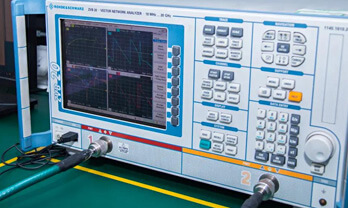
Allelco is committed to exceeding customer expectations through customer service excellence, order accuracy, and on-time delivery.
This is achieved through our commitment to the continual improvement of our processes, services, and products.


Strict quality inspection builds a solid foundation for electronic component quality.
  1. Visual inspection
  2. Performance testing and reliability verification
  3. Standardized full-process testing
  4. Precise control of every parameter
We eliminate defective components and ensure the stable operation of electronic devices through professional quality standards.

Payment Support

The payment method can be chosen from the methods shown below: Wire Transfer (T/T, Bank Transfer), Western Union, Credit card, PayPal.
  • HKBea
  • Paypal
  • MasterCard
  • Western-Union
  • VISA
Stable Delivery, Sincere Partnership — Your Faithful Supply Chain Partner
  • Efficient Supply Management
  • Cost-Saving Procurement
  • Fast Sourcing & Delivery
Contact us if you have any questions.

Packaging

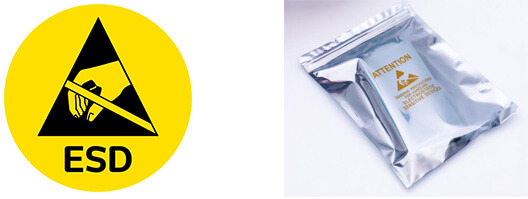
Electrostatic Discharge Protection and Handling

All electrostatic-sensitive components are handled in accordance with electrostatic discharge control procedures. The products are hermetically sealed in anti-static safe packaging to prevent electrostatic damage. Appropriate labeling is also applied for identification and traceability. This ensures product integrity during storage, handling and transportation.


ESD

Certifications & Memberships

Third-party certified, strict quality control. Our certification
  • ISO 9001: 2015
  • ISO 13485: 2016
  • ISO 14001: 2015
  • ISO 28000: 2007
  • ISO 45001: 2018
  • GB/T 27922-2011
  • SMTA
  • IPC
  • ESD
  • PSMA
Texas Instruments

SN65LVDT2D

Texas Instruments
41D-SN65LVDT2D

Want a better price? Add to Cart and Submit RFQ now, we'll contact you immediately.

0 RFQ
Shopping cart (0 Items)
It is empty.
Compare List (0 Items)
It is empty.
Feedback

Your feedback matters! At Allelco, we value the user experience and strive to improve it constantly.
Please share your comments with us via our feedback form, and we'll respond promptly.
Thank you for choosing Allelco.

Subject
E-mail
Comments
Captcha
Drag or click to upload file
Upload File
types: .xls, .xlsx, .doc, .docx, .jpg, .png and .pdf.
Max file size: 10MB