View All

Please refer to the English Version as our Official Version.Return

Europe
France(Français) Germany(Deutsch) Italy(Italia) Russian(русский) Poland(polski) Czech(Čeština) Luxembourg(Lëtzebuergesch) Netherlands(Nederland) Iceland(íslenska) Hungarian(Magyarország) Spain(español) Portugal(Português) Turkey(Türk dili) Bulgaria(Български език) Ukraine(Україна) Greece(Ελλάδα) Israel(עִבְרִית) Sweden(Svenska) Finland(Svenska) Finland(Suomi) Romania(românesc) Moldova(românesc) Slovakia(Slovenská) Denmark(Dansk) Slovenia(Slovenija) Slovenia(Hrvatska) Croatia(Hrvatska) Serbia(Hrvatska) Montenegro(Hrvatska) Bosnia and Herzegovina(Hrvatska) Lithuania(lietuvių) Spain(Português) Switzerland(Deutsch) United Kingdom(English)
Asia/Pacific
Japan(日本語) Korea(한국의) Thailand(ภาษาไทย) Malaysia(Melayu) Singapore(Melayu) Vietnam(Tiếng Việt) Philippines(Pilipino)
Africa, India and Middle East
United Arab Emirates(العربية) Iran(فارسی) Tajikistan(فارسی) India(हिंदी) Madagascar(malaɡasʲ)
South America / Oceania
New Zealand(Maori) Brazil(Português) Angola(Português) Mozambique(Português)
North America
United States(English) Canada(English) Haiti(Ayiti) Mexico(español)
HomeProductsIntegrated Circuits (ICs)Specialized ICsR5F100LEDFA#V0
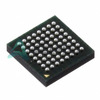
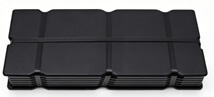
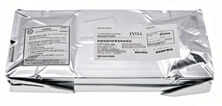
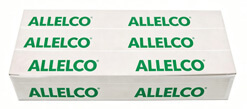
Image may be representation.
See specifications for product details.
EXPRESS OPTION
Payment method

R5F100LEDFA#V0 - Renesas Electronics Corporation

Manufacturer Part Number
R5F100LEDFA#V0
Manufacturer
Renesas Electronics Corporation
Allelco Part Number
32D-R5F100LEDFA#V0
Warranty
1 Year Allelco Warranty - Find out more
Stock Status:
8,520 pcs available, New & Original
Parts Description
DAC91001
Data sheet
-
Category
Integrated Circuits (ICs) > Specialized ICs
RoHs Status
Our certification
In stock: 8520

Required fields are indicated by an asterisk (*)
Please send RFQ, we will respond immediately.

Quantity

Specifications

R5F100LEDFA#V0 Tech Specifications
Renesas Electronics Corporation - R5F100LEDFA#V0 technical specifications, attributes, parameters and parts with similar specifications to Renesas Electronics Corporation - R5F100LEDFA#V0

Product Attribute Attribute Value
Part Number R5F100LEDFA#V0
Package DAC91001
Description DAC91001
Stock Condition Get 8520 pcs available quantity at Allelco
Payment PayPal / TT / Credit Card / Western Union
Allelco Certifications ESD / ISO 9001 / ISO 13485 / ISO 28000
Product Attribute Attribute Value
Manufacturer Renesas Electronics Corporation
RoHs Status -
Warranty 100% Perfect Functions
Transport port Hong Kong
Shipping by DHL / FedEx / UPS / TNT / SF Express
RFQ Email info@allelco.com

Frequently Asked Questions(FAQ)

How does the R5F100LEDFA#V0 compare to other Renesas microcontrollers in terms of power consumption during sleep mode for battery-powered applications?
The R5F100LEDFA#V0 operates at approximately 1.5 µA in deep sleep mode when running from its internal oscillator, which is competitive within the Renesas RX100 series. This low standby current enables extended battery life in portable devices such as remote sensors or wearables. When compared to higher-performance variants like the R5F104LEDFA#V0, the R5F100LEDFA#V0 trades some computational throughput for significantly lower active and idle power, making it better suited for ultra-low-power edge nodes where energy efficiency outweighs processing speed.
What are the key considerations when selecting an external crystal oscillator frequency for the R5F100LEDFA#V0 to ensure reliable clocking without exceeding timing margins?
The R5F100LEDFA#V0 supports a wide range of external crystal frequencies, typically between 8 MHz and 20 MHz, depending on configuration registers and application requirements. To maintain system stability, designers must account for crystal load capacitance matching (commonly 12–18 pF), PCB layout parasitics, and startup time delays. A 16 MHz crystal with a 15 pF load is often used in balance between accuracy, response time, and compatibility with the microcontroller’s PLL settings. Deviations can lead to incorrect baud rates or missed interrupts in communication peripherals.
Can the R5F100LEDFA#V0 be safely driven directly from a 3.7V Li-ion battery without voltage regulation?
No, direct connection to a fresh Li-ion battery (up to ~4.2V) exceeds the absolute maximum rating of 3.9V for VCC pins on the R5F100LEDFA#V0. Even if the average voltage is within spec, transient spikes during charging or load steps could damage the device. A linear regulator or buck converter stepping down from 4.2V to 3.3V is strongly recommended to ensure stable and safe operation across the full discharge cycle.
In what scenarios would using the internal high-speed oscillator (HSO) of the R5F100LEDFA#V0 be preferable over an external crystal?
The internal HSO offers reduced component count, lower cost, and improved reliability by eliminating external crystals and oscillators. It is suitable for non-time-critical applications such as basic sensor data acquisition, simple control loops, or firmware development prototypes. However, its ±1% accuracy may be insufficient for UART communications requiring precise baud rate generation or applications involving I2C with strict timing constraints. Use HSO when minimizing BOM cost and board space outweigh the need for timing precision.
How should decoupling capacitors be configured around the R5F100LEDFA#V0 to minimize noise and ensure stable operation under dynamic loads?
Each VDD pin on the R5F100LEDFA#V0 should be bypassed with a 0.1 µF ceramic capacitor placed as close as possible—ideally within 3 mm—of the pin. Additionally, a bulk capacitor of 10 µF tantalum or ceramic near the power entry point helps absorb transient currents during high-frequency switching. This layout reduces ground bounce and power rail fluctuations caused by ADC conversions, PWM outputs, or flash memory accesses, ensuring reliable reset behavior and accurate analog-to-digital measurements.
What impact does operating temperature have on the functional performance of the R5F100LEDFA#V0 in industrial environments?
The R5F100LEDFA#V0 is rated for operation from -40°C to +85°C, covering most industrial temperature ranges. Below 0°C, the startup time increases due to slower RC oscillation settling, while above 70°C, leakage currents rise slightly, potentially affecting low-power modes. Flash programming reliability may degrade near the upper limit unless proper thermal management is implemented. Designers should verify boot sequence integrity and peripheral timing across the full temperature span through empirical testing.
Is it possible to use the R5F100LEDFA#V0 in automotive-grade systems, and what modifications are necessary?
While the R5F100LEDFA#V0 itself is not qualified to AEC-Q100 standards, it can be deployed in automotive accessory or infotainment subsystems that do not require functional safety certification. If used in such contexts, additional design measures are needed: conformal coating for humidity resistance, reinforced isolation between circuits, and rigorous EMC testing to meet ISO 11452-2 and CISPR 25 standards. Full automotive qualification would require a variant like the R-Car series instead.
How does interrupt latency differ between the R5F100LEDFA#V0 and similar ARM Cortex-M-based microcontrollers in nested interrupt scenarios?
The R5F100LEDFA#V0 features a variable-latency interrupt controller supporting nested prioritization with worst-case latency of 12 cycles at 20 MHz. Compared to Cortex-M0+ devices with fixed 12-cycle minimum latency, this architecture provides more flexible priority assignment but less deterministic timing predictability under heavy nesting. For safety-critical tasks requiring bounded response times, real-time analysis tools should be employed to validate worst-case execution paths.
What are the risks of enabling both watchdog timers simultaneously in hardware and software configurations on the R5F100LEDFA#V0?
Enabling dual watchdogs—hardware (WDT) and software (SWDT)—on the R5F100LEDFA#V0 creates redundant protection but introduces complexity and potential failure modes. If the SWDT fails to service itself due to logic error, the HWDT will eventually trigger a reset, but debugging becomes harder. Moreover, misconfiguration (e.g., mismatched timeout periods) may cause unintended resets during normal transient conditions. Best practice is to use only one mechanism aligned with the system’s fault tolerance strategy.
How does the ADC resolution and sampling rate trade-off affect measurement accuracy in battery monitoring applications using the R5F100LEDFA#V0?
The R5F100LEDFA#V0 integrates a 10-bit successive approximation ADC capable of up to 50 ksps. At lower sampling rates (<1 ksps), effective resolution improves through oversampling and averaging, yielding ~12 bits of usable precision for slowly varying signals like battery voltage. However, higher rates reduce integration time per sample, increasing susceptibility to noise. For Li-ion monitoring, a 1 kHz sampling rate with 32x averaging balances responsiveness and accuracy while preserving ADC linearity within ±2 LSB.
Can the R5F100LEDFA#V0 drive inductive loads directly from GPIO pins, and what precautions are necessary?
The R5F100LEDFA#V0’s GPIO pins can sink/source up to 20 mA continuously, sufficient for small relays or LEDs but marginal for larger inductive loads without external buffering. Driving coils directly risks exceeding current ratings and damaging bond wires. A common solution includes using a transistor or MOSFET driver stage with flyback diodes to suppress voltage spikes from back-EMF. Always verify peak transient currents and include series resistors to limit inrush.
What role does the built-in PLL play in optimizing performance versus power when using the R5F100LEDFA#V0 for wireless sensor nodes?
The R5F100LEDFA#V0 includes a phase-locked loop (PLL) that multiplies the base clock (e.g., 16 MHz) to achieve up to 48 MHz CPU frequency. While this boosts processing headroom for RF protocol stacks like BLE, it increases dynamic power quadratically with frequency. In duty-cycled sensor networks, the PLL should remain disabled during sleep intervals and only engage briefly during transmission bursts. This approach maintains sub-milliamp average current despite short high-speed operation windows.
How should firmware handle brownout detection when powering the R5F100LEDFA#V0 from solar-charged supercapacitors with fluctuating input levels?
The R5F100LEDFA#V0 supports programmable brownout detection (BOD) thresholds down to 1.8 V. For supercapacitor-based systems with wide voltage swings (e.g., 2.5 V to 5.5 V), setting BOD at 2.7 V prevents erratic behavior during low-energy phases while avoiding nuisance resets during brief dips. Firmware should also implement hysteresis in software monitoring to complement hardware BOD, ensuring stable startup after prolonged darkness or high-load events.
Are there any known errata or silicon limitations when using DMA transfers with the USART peripheral on the R5F100LEDFA#V0?
Yes, revision “V0” of the R5F100LEDFA#V0 exhibits a rare condition where DMA transfer length counters may overflow if more than 65,536 bytes are transferred without reinitialization. This occurs only when using circular mode with certain FIFO thresholds enabled. To mitigate, either limit transfers to <64 KB or implement periodic reload checks in the DMA complete ISR. Always consult the latest Errata Sheet before production deployment.
How does the R5F100LEDFA#V0 compare to TI’s MSP430FRxx series in terms of non-volatile memory endurance for logging applications?
The R5F100LEDFA#V0 uses standard NOR flash with typical write/erase cycles of 10,000, whereas TI’s FRAM-based MSP430FRxx offers unlimited endurance. For frequent data logging (>10 Hz writes), the R5F100LEDFA#V0 requires wear-leveling algorithms to distribute writes evenly across blocks, adding firmware complexity. In contrast, FRAM avoids this overhead entirely. Choose the R5F100LEDFA#V0 only if cost and code density justify flash-based storage despite lower endurance.
What layout guidelines minimize electromagnetic interference (EMI) when routing signals near the R5F100LEDFA#V0 in compact handheld devices?
Keep analog traces (especially ADC inputs) separated from digital lines by at least three ground-guarded tracks. Route high-speed clocks (e.g., crystal lines) perpendicular to sensitive signals and avoid parallel runs longer than λ/10 (~3 cm at 100 MHz). Use ground planes beneath the MCU and place decoupling caps symmetrically to reduce loop inductance. Shielding cans or copper pour stitching around the R5F100LEDFA#V0 can further contain radiated emissions during burst-mode operations.
Can the R5F100LEDFA#V0 support USB 2.0 Full-Speed communication natively, and what external components are required?
No, the R5F100LEDFA#V0 lacks native USB transceiver hardware. To enable USB communication, an external USB PHY chip (e.g., Microchip USB2514B) must be added, interfaced via ULPI or proprietary serial protocols. This increases BOM count and board area. Alternatively, consider Renesas’ RL78/G1D family which integrates USB FS capability directly, offering a more integrated solution for USB-enabled designs.
What is the expected lifespan degradation factor for the R5F100LEDFA#V0 under continuous high-temperature operation at 85°C ambient?
Based on Arrhenius models and Renesas reliability reports, the R5F100LEDFA#V0 sees an acceleration factor of ~8× at 85°C relative to 25°C. Assuming a typical lifetime of 10 years at 25°C, continuous operation at 85°C reduces this to roughly 1.25 years. To extend operational life beyond 5 years in harsh environments, implement thermal derating by limiting junction temperature below 70°C via airflow, heatsinking, or reduced clock speeds.

Customer Reviews

Evaluation: 10 Articles

  • Dani***alkerTech
    Jun 1, 2026

    Product works, but setup took more effort than expected. Once configured the MCU ran reliably, although documentation support felt older compared with newer platforms. Fine for maintenance projects.

  • Yuki***aka88
    May 26, 2026

    信号通信プロジェクトでこのRS-485トランシーバーを使用しました。設置は簡単で、長距離ケーブルでも通信は安定していました。消費電力も、以前使用していたものより低くなっています。

  • Stev***aker
    May 20, 2026

    Solid diode for power rectification. Works well in switching circuits.

  • Bran***Lewis
    May 11, 2026

    Compact FPGA with good performance. Suitable for basic signal processing tasks.

  • Oliv***arris
    May 7, 2026

    Reliable I/O expander. Works well in embedded control applications.

  • Jess***Jones
    Apr 17, 2026

    It offers good value for the price, and the specifications match the description. I’ve been using it for two days with no issues, and I’ll definitely buy it again if I need it in the future.

  • Mich***Smith
    Apr 17, 2026

    Shipping was on time, the component pins are neatly aligned, and I tested 10 of them with a multimeter—all readings were within the specified range. Highly recommended.

  • Aman***arris
    Apr 3, 2026

    It was great—the entire process, from placing the order to receiving the package, went very smoothly. The components were consistent, the price was fair, and I had a very pleasant shopping experience.

  • Mike***nch
    Apr 3, 2026

    Better than expected! The resistance and capacitance readings were spot-on, and it passed the test on the first try. The service was reliable, and the packaging was thoughtful—I highly recommend it.

  • Daic***K.
    Mar 23, 2026

    Very good. No issue after long time testing.

Write a Review

Your Email address will not be published.

Shipment

Delivery Time

In-stock items can be shipped within 24 hours. Some parts will be arranged for delivery within 1-2 days from the date all items arrive at our warehouse. And Allelco ships order once a day at about 17:00, except Sunday. Once the goods are shipped, the estimated delivery time depends on the shipping methods and Delivery destination. The table below shows are the logistic time for some common countries.

Delivery Cost

  1. Use your express account for shipment if you have one.
  2. Use our account for the shipment. Refer to the table below for the approximate charges.
(Different time frame / countries / package size has different price.)

Delivery Method

  1. Global Common Shipment by DHL / UPS / FedEx / TNT / EMS / SF we support.
  2. Others more shipping ways, please get in touch with your customer manager.

Common Countries Logistic Time Reference
Region Country Logistic Time(Day)
America United States 5
Brazil 7
Europe Germany 5
United Kingdom 4
Italy 5
Oceania Australia 6
New Zealand 5
Asia India 4
Japan 4
Middle East Israel 6
DHL & FedEx Shipment Charges Reference
Shipment charges(KG) Reference DHL(USD$)
0.00kg-1.00kg USD$30.00 - USD$60.00
1.00kg-2.00kg USD$40.00 - USD$80.00
2.00kg-3.00kg USD$50.00 - USD$100.00
Note:
The above table is for reference only. There may have some data bias for the uncontrollable factors.
Contact us if you have any questions.
  • QC (Quality Warranty)
  • Payment Support
  • Packaging
  • Certifications & Memberships

QC (Quality Warranty)

Allelco is committed to exceeding customer expectations through customer service excellence, order accuracy, and on-time delivery.
This is achieved through our commitment to the continual improvement of our processes, services, and products.


Strict quality inspection builds a solid foundation for electronic component quality.
  1. Visual inspection
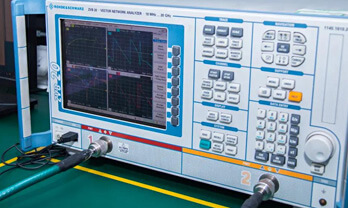
  2. Performance testing and reliability verification
  3. Standardized full-process testing
  4. Precise control of every parameter
We eliminate defective components and ensure the stable operation of electronic devices through professional quality standards.

Payment Support

The payment method can be chosen from the methods shown below: Wire Transfer (T/T, Bank Transfer), Western Union, Credit card, PayPal.
  • HKBea
  • Paypal
  • MasterCard
  • Western-Union
  • VISA
Stable Delivery, Sincere Partnership — Your Faithful Supply Chain Partner
  • Efficient Supply Management
  • Cost-Saving Procurement
  • Fast Sourcing & Delivery
Contact us if you have any questions.

Packaging

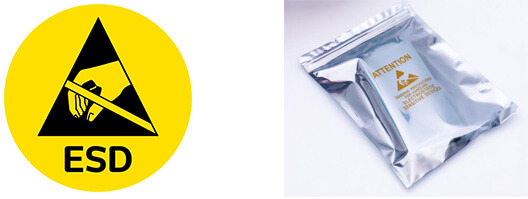
Electrostatic Discharge Protection and Handling

All electrostatic-sensitive components are handled in accordance with electrostatic discharge control procedures. The products are hermetically sealed in anti-static safe packaging to prevent electrostatic damage. Appropriate labeling is also applied for identification and traceability. This ensures product integrity during storage, handling and transportation.


ESD

Certifications & Memberships

Third-party certified, strict quality control. Our certification
  • ISO 9001: 2015
  • ISO 13485: 2016
  • ISO 14001: 2015
  • ISO 28000: 2007
  • ISO 45001: 2018
  • GB/T 27922-2011
  • SMTA
  • IPC
  • ESD
  • PSMA
Renesas Electronics Corporation

R5F100LEDFA#V0

Renesas Electronics Corporation
32D-R5F100LEDFA#V0

Want a better price? Add to Cart and Submit RFQ now, we'll contact you immediately.

0 RFQ
Shopping cart (0 Items)
It is empty.
Compare List (0 Items)
It is empty.
Feedback

Your feedback matters! At Allelco, we value the user experience and strive to improve it constantly.
Please share your comments with us via our feedback form, and we'll respond promptly.
Thank you for choosing Allelco.

Subject
E-mail
Comments
Captcha
Drag or click to upload file
Upload File
types: .xls, .xlsx, .doc, .docx, .jpg, .png and .pdf.
Max file size: 10MB