View All

Please refer to the English Version as our Official Version.Return

Europe
France(Français) Germany(Deutsch) Italy(Italia) Russian(русский) Poland(polski) Czech(Čeština) Luxembourg(Lëtzebuergesch) Netherlands(Nederland) Iceland(íslenska) Hungarian(Magyarország) Spain(español) Portugal(Português) Turkey(Türk dili) Bulgaria(Български език) Ukraine(Україна) Greece(Ελλάδα) Israel(עִבְרִית) Sweden(Svenska) Finland(Svenska) Finland(Suomi) Romania(românesc) Moldova(românesc) Slovakia(Slovenská) Denmark(Dansk) Slovenia(Slovenija) Slovenia(Hrvatska) Croatia(Hrvatska) Serbia(Hrvatska) Montenegro(Hrvatska) Bosnia and Herzegovina(Hrvatska) Lithuania(lietuvių) Spain(Português) Switzerland(Deutsch) United Kingdom(English)
Asia/Pacific
Japan(日本語) Korea(한국의) Thailand(ภาษาไทย) Malaysia(Melayu) Singapore(Melayu) Vietnam(Tiếng Việt) Philippines(Pilipino)
Africa, India and Middle East
United Arab Emirates(العربية) Iran(فارسی) Tajikistan(فارسی) India(हिंदी) Madagascar(malaɡasʲ)
South America / Oceania
New Zealand(Maori) Brazil(Português) Angola(Português) Mozambique(Português)
North America
United States(English) Canada(English) Haiti(Ayiti) Mexico(español)
HomeProductsIntegrated Circuits (ICs)Embedded - MicrocontrollersSTM32F733VET6
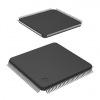
Image may be representation.
See specifications for product details.
EXPRESS OPTION
Payment method

STM32F733VET6 - STMicroelectronics

Manufacturer Part Number
STM32F733VET6
Manufacturer
STMicroelectronics
Allelco Part Number
98D-STM32F733VET6
Warranty
1 Year Allelco Warranty - Find out more
Stock Status:
40,428 pcs available, New & Original
Parts Description
CONTROLLER / PROCESSOR
Package
100-LQFP (14x14)
Data sheet
-
RoHs Status
ROHS3 Compliant
Our certification
In stock: 40428
  • Unit Price: $10.583
  • Subtotal: $0.00

Want a better price?
Add to Cart and Submit RFQ now, we'll contact you immediately.

Quantity Unit Price Ext. Price
1+ $10.583 $10.58
The above prices does not include taxes and freight rates, which will be calculated on the order pages.


Specifications

STM32F733VET6 Tech Specifications
STMicroelectronics - STM32F733VET6 technical specifications, attributes, parameters and parts with similar specifications to STMicroelectronics - STM32F733VET6

Product Attribute Attribute Value
Manufacturer STMicroelectronics
Voltage - Supply (Vcc/Vdd) 1.7V ~ 3.6V
Supplier Device Package 100-LQFP (14x14)
Speed 216MHz
Series STM32F7
RAM Size 256K x 8
Program Memory Type FLASH
Program Memory Size 512KB (512K x 8)
Peripherals Brown-out Detect/Reset, DMA, I²S, POR, PWM, WDT
Package / Case 100-LQFP
Product Attribute Attribute Value
Package Bulk
Oscillator Type External, Internal
Operating Temperature -40°C ~ 85°C (TA)
Number of I/O 79
Mounting Type Surface Mount
EEPROM Size -
Data Converters A/D 16x12b SAR; D/A 2x12b
Core Size 32-Bit
Core Processor ARM® Cortex®-M7
Connectivity CANbus, EBI/EMI, I²C, IrDA, LINbus, MMC/SD, QSPI, SAI, SPI, UART/USART, USB

Environmental & Export Classifications

ATTRIBUTE DESCRIPTION
RoHs Status ROHS3 Compliant
Moisture Sensitivity Level (MSL) 3 (168 Hours)
REACH Status REACH Unaffected

Frequently Asked Questions(FAQ)

How does the STM32F733VET6 compare to other STM32F7 series microcontrollers in terms of program memory and clock speed, and what are the implications for real-time signal processing applications?
The STM32F733VET6 offers 512KB of embedded FLASH memory and operates at a maximum frequency of 216MHz, which positions it as a mid-to-high performance member within the STM32F7 family. Compared to lower-end F7 variants such as the STM32F723 or STM32F745, which may feature 192KB–384KB of flash and slightly reduced core speeds, this device provides greater code storage capacity and faster execution cycles. For real-time signal processing—such as audio filtering or sensor fusion algorithms—the combination of high bandwidth and sufficient program space enables more complex mathematical operations without requiring external memory. However, applications demanding even higher throughput may still prefer models with dual-bank flash or extended RAM, where available.
What is the significance of the STM32F733VET6’s voltage range (1.7V to 3.6V) when designing battery-powered industrial systems, and how does it affect power management decisions?
Operating across 1.7V to 3.6V gives the STM32F733VET6 flexibility in interfacing with diverse power rails commonly found in industrial environments, including legacy 3.3V logic and newer low-voltage subsystems. In battery-operated devices, running at the lower end of this range reduces dynamic power consumption quadratically due to P = CV²f scaling. Designers can leverage STMicroelectronics’ low-power modes alongside the device’s integrated brown-out detection and power-on reset circuitry to extend operational life while maintaining system reliability. This wide input tolerance also simplifies supply design when using step-down converters or energy-harvesting front ends.
Can the STM32F733VET6 support USB OTG functionality reliably in a custom peripheral hub implementation, and what external components are typically required?
Yes, the STM32F733VET6 includes a full-speed USB OTG controller capable of acting as both host and device. In a peripheral hub configuration, it functions effectively as a host port controller managing downstream devices such as keyboards, sensors, or storage units. External components typically include an external 1.5kΩ pull-up resistor on DP for full-speed signaling and a precise 12 MHz crystal or ceramic resonator for clocking the PHY layer. Additionally, proper PCB layout with impedance-controlled traces and adequate decoupling near the VDD_USB pins is critical to meet USB timing specifications and avoid enumeration failures.
How should designers approach thermal considerations when integrating the STM32F733VET6 into compact embedded enclosures with limited airflow?
Although the STM32F733VET6 is not rated for automotive-grade thermal cycling, its commercial temperature range (-40°C to +85°C) allows operation in many industrial settings. Under sustained 216MHz load with all peripherals active, internal power dissipation can reach several hundred milliwatts, leading to measurable die temperature rise depending on package thermal resistance. In sealed or convection-limited enclosures, designers should minimize continuous peak loads by offloading periodic tasks to DMA-driven peripherals, use sleep modes between operations, and verify that junction temperatures remain below 100°C under worst-case conditions through simulation or empirical testing.
What distinguishes the STM32F733VET6’s QSPI interface from standard SPI in terms of application suitability for NOR flash expansion?
The STM32F733VET6 features a Quad-SPI (QSPI) controller that supports up to four data lines operating in parallel, enabling burst transfers at significantly higher effective bandwidth than conventional SPI. This is particularly beneficial when interfacing with modern parallel NOR flashes used for code execution from external memory (e.g., XIP mode). While standard SPI would require multiple clock cycles per byte, QSPI delivers near-native speed for instruction fetches, reducing boot latency and improving responsiveness in memory-intensive applications like GUI rendering or firmware updates.
In what scenarios might the STM32F733VET6’s 256KB SRAM be insufficient, and how could system architects mitigate such limitations?
With only 256KB of on-chip SRAM, large frame buffers, extensive logging tables, or deeply nested interrupt contexts can exceed available memory during peak usage. Applications involving real-time image processing, multi-channel FFT analysis, or complex state machines with large lookup tables may hit limits. Mitigation strategies include offloading data to external SDRAM via the EBI interface, compressing payloads before storage, or reusing buffers through circular queues. Alternatively, selecting a derivative with larger RAM (e.g., STM32F767) may be warranted if algorithmic complexity demands persist.
How does the STM32F733VET6 handle clock synchronization across multiple peripherals like I2S, SAI, and USB, and what PLL configuration is recommended for jitter-sensitive audio applications?
The STM32F733VET6 uses a single Phase-Locked Loop (PLL) derived from either the HSI or HSE oscillator to generate multiple clock domains. For jitter-critical audio paths using I2S or SAI peripherals, sourcing the PLL from a stable 25 MHz or 24.576 MHz crystal ensures low phase noise. Designers must configure the PLL output frequency precisely to satisfy peripheral requirements while minimizing fractional spurs. Careful attention to clock tree synthesis and avoiding shared bus contention further preserves timing integrity across concurrent high-speed peripherals.
What role do the STM32F733VET6’s built-in comparators and DACs play in sensor conditioning circuits, and how do they reduce BOM cost compared to discrete alternatives?
The two 12-bit DACs and analog comparator subsystem enable direct conversion of sensor signals without external ADCs in simple conditioning loops. For example, a thermistor voltage divider can be monitored via the comparator to trigger threshold events, while one DAC can drive a precision bias voltage for excitation. By eliminating dedicated ADC/DAC ICs and their associated reference circuitry, this integration reduces component count, board area, and calibration overhead—key advantages in space-constrained or mass-deployed IoT nodes.
When selecting between bulk packaging versus Tray or Tape-and-Reel for production runs of boards using the STM32F733VET6, what factors should influence the decision?
Bulk packaging is economical for prototyping or small-scale builds but requires manual handling, increasing risk of ESD damage or misalignment during assembly. In contrast, Tray and Tape-and-Reel formats facilitate automated pick-and-place operations, improve placement accuracy, and enhance inventory traceability. For high-volume manufacturing, T&R packaging reduces labor costs and minimizes downtime due to feeder jams. However, bulk remains viable when working with hand-soldered prototypes or educational kits where automation is impractical.
How does the STM32F733VET6 support secure firmware updates over-the-air, and what hardware-based protections are essential to prevent rollback attacks?
While the core lacks dedicated security blocks like TrustZone, the STM32F733VET6 supports firmware protection via Flash write-protection levels, read-out protection, and option bytes that lock configuration registers. To implement secure OTA updates, developers should partition flash into bootloader and application regions, validate cryptographic signatures using software libraries (e.g., ARM Mbed TLS), and maintain version counters in non-volatile memory protected against tampering. Secure key storage remains a challenge without hardware crypto-accelerators; thus, pairing with external secure elements may be necessary for compliance with stringent protocols.
What are the trade-offs between using the internal RC oscillator versus an external crystal with the STM32F733VET6 in timekeeping applications?
The internal HSI RC oscillator offers fast startup and minimal BOM cost but exhibits ±1% frequency drift over temperature, making it unsuitable for accurate timekeeping without periodic calibration. An external 32.768 kHz crystal provides superior stability (±20 ppm typical), crucial for RTC applications or communication protocols sensitive to baud rate errors. However, it adds cost, board space, and requires careful layout to avoid loading issues. For most non-critical timing needs, the internal oscillator suffices, but mission-critical systems benefit from crystal-based timing.
How does the STM32F733VET6’s CAN FD capability differ from classic CAN, and why might this matter for industrial motor control systems?
Unlike classic CAN, which caps data rates at 1 Mbps and payloads at 8 bytes, CAN FD (Flexible Data-rate) allows speeds up to 5 Mbps for short frames and supports payloads up to 64 bytes. The STM32F733VET6 implements CAN FD via its FlexCAN peripheral, enabling efficient transmission of large motor parameter sets or diagnostic logs without fragmentation. In distributed motor control architectures, this reduces bus load and latency, improving response times in multi-axis servo systems where timely feedback is critical.
What precautions are necessary when driving capacitive loads directly from the STM32F733VET6’s GPIO pins, especially during rapid switching transitions?
Driving heavy capacitive loads without buffering risks excessive current draw from the MCU’s internal drivers, potentially causing voltage droop, increased power consumption, or even latch-up. For loads exceeding 10–20 pF or requiring slew-rate control, external buffer transistors or dedicated driver ICs should be employed. Additionally, adding series termination resistors (typically 22–100Ω) helps dampen ringing and reflections, preserving signal integrity and protecting the GPIO stage from transient stress.
In safety-certified designs, how can the STM32F733VET6 contribute to functional safety despite not being qualified to ISO 26262 or IEC 61508?
Although not inherently safety-certified, the STM32F733VET6’s deterministic architecture, rich set of fault-detection mechanisms (watchdog, brown-out, POR), and extensive peripheral monitoring features allow engineers to build safety-compliant systems through software redundancy, error-correcting codes, and watchdog-driven recovery routines. When combined with external self-test circuits and formal verification methods, it can support SIL-2 or ASIL-B level applications, though full certification requires additional hardware isolation and documentation per applicable standards.
Why might designers choose the 100-LQFP package for the STM32F733VET6 instead of smaller form factors, and what layout considerations apply?
The 14x14 mm 100-pin LQFP offers a favorable balance between pin density and soldering accessibility, supporting 79 I/Os without extreme miniaturization penalties. It also facilitates thermal dissipation via exposed pads and simplifies reflow profiling compared to BGA packages. Layout best practices include placing bypass capacitors close to VDD/VSS pins, routing high-speed signals with controlled impedance, and ensuring adequate creepage/clearance around power and clock lines to meet EMI and manufacturability requirements.
How does the STM32F733VET6’s DMA architecture interact with peripheral requests, and what optimization strategies exist for minimizing CPU overhead in data acquisition pipelines?
The STM32F733VET6 integrates a seven-channel DMA controller capable of transferring data between peripherals and memory without CPU intervention. In data acquisition scenarios—such as ADC sampling coupled with UART transmission—configuring chained DMA descriptors allows continuous streaming while the Cortex-M7 handles higher-level processing. Optimization involves aligning buffers to cache boundaries, prioritizing critical channels, and using double-buffering to overlap transfer completion with computation, thereby maximizing throughput and reducing interrupt frequency.

Parts with Similar Specifications

The three parts on the right have similar specifications to STMicroelectronics STM32F733VET6

Product Attribute STM32F733IET6 STM32F732VET6TR STM32F733VEY6TR STM32F732VET6
Part Number STM32F733IET6 STM32F732VET6TR STM32F733VEY6TR STM32F732VET6
Manufacturer STMicroelectronics STMicroelectronics STMicroelectronics STMicroelectronics
Speed - - - -
Series - - - -
Peripherals - - - -
Package - Tape & Reel (TR) Tube Tape & Reel (TR)
Program Memory Type - - - -
Package / Case - 196-LFBGA 16-DIP (0.300', 7.62mm) 64-VFQFN Exposed Pad
Program Memory Size - - - -
Core Size - - - -
RAM Size - - - -
Operating Temperature - -40°C ~ 85°C 0°C ~ 70°C -40°C ~ 85°C
Data Converters - - - -
Supplier Device Package - 196-NFBGA (12x12) 16-PDIP 64-VQFN (9x9)
EEPROM Size - - - -
Mounting Type - Surface Mount Through Hole Surface Mount
Oscillator Type - - - -
Core Processor - - - -
Connectivity - - - -
Voltage - Supply (Vcc/Vdd) - - - -
Number of I/O - - - -

Customer Reviews

Evaluation: 10 Articles

  • Dani***alkerTech
    Jun 1, 2026

    Product works, but setup took more effort than expected. Once configured the MCU ran reliably, although documentation support felt older compared with newer platforms. Fine for maintenance projects.

  • Yuki***aka88
    May 26, 2026

    信号通信プロジェクトでこのRS-485トランシーバーを使用しました。設置は簡単で、長距離ケーブルでも通信は安定していました。消費電力も、以前使用していたものより低くなっています。

  • Stev***aker
    May 20, 2026

    Solid diode for power rectification. Works well in switching circuits.

  • Bran***Lewis
    May 11, 2026

    Compact FPGA with good performance. Suitable for basic signal processing tasks.

  • Oliv***arris
    May 7, 2026

    Reliable I/O expander. Works well in embedded control applications.

  • Jess***Jones
    Apr 17, 2026

    It offers good value for the price, and the specifications match the description. I’ve been using it for two days with no issues, and I’ll definitely buy it again if I need it in the future.

  • Mich***Smith
    Apr 17, 2026

    Shipping was on time, the component pins are neatly aligned, and I tested 10 of them with a multimeter—all readings were within the specified range. Highly recommended.

  • Aman***arris
    Apr 3, 2026

    It was great—the entire process, from placing the order to receiving the package, went very smoothly. The components were consistent, the price was fair, and I had a very pleasant shopping experience.

  • Mike***nch
    Apr 3, 2026

    Better than expected! The resistance and capacitance readings were spot-on, and it passed the test on the first try. The service was reliable, and the packaging was thoughtful—I highly recommend it.

  • Daic***K.
    Mar 23, 2026

    Very good. No issue after long time testing.

Write a Review

Your Email address will not be published.

Shipment

Delivery Time

In-stock items can be shipped within 24 hours. Some parts will be arranged for delivery within 1-2 days from the date all items arrive at our warehouse. And Allelco ships order once a day at about 17:00, except Sunday. Once the goods are shipped, the estimated delivery time depends on the shipping methods and Delivery destination. The table below shows are the logistic time for some common countries.

Delivery Cost

  1. Use your express account for shipment if you have one.
  2. Use our account for the shipment. Refer to the table below for the approximate charges.
(Different time frame / countries / package size has different price.)

Delivery Method

  1. Global Common Shipment by DHL / UPS / FedEx / TNT / EMS / SF we support.
  2. Others more shipping ways, please get in touch with your customer manager.

Common Countries Logistic Time Reference
Region Country Logistic Time(Day)
America United States 5
Brazil 7
Europe Germany 5
United Kingdom 4
Italy 5
Oceania Australia 6
New Zealand 5
Asia India 4
Japan 4
Middle East Israel 6
DHL & FedEx Shipment Charges Reference
Shipment charges(KG) Reference DHL(USD$)
0.00kg-1.00kg USD$30.00 - USD$60.00
1.00kg-2.00kg USD$40.00 - USD$80.00
2.00kg-3.00kg USD$50.00 - USD$100.00
Note:
The above table is for reference only. There may have some data bias for the uncontrollable factors.
Contact us if you have any questions.
  • QC (Quality Warranty)
  • Payment Support
  • Packaging
  • Certifications & Memberships

QC (Quality Warranty)

Allelco is committed to exceeding customer expectations through customer service excellence, order accuracy, and on-time delivery.
This is achieved through our commitment to the continual improvement of our processes, services, and products.


Strict quality inspection builds a solid foundation for electronic component quality.
  1. Visual inspection
  2. Performance testing and reliability verification
  3. Standardized full-process testing
  4. Precise control of every parameter
We eliminate defective components and ensure the stable operation of electronic devices through professional quality standards.

Payment Support

The payment method can be chosen from the methods shown below: Wire Transfer (T/T, Bank Transfer), Western Union, Credit card, PayPal.
  • HKBea
  • Paypal
  • MasterCard
  • Western-Union
  • VISA
Stable Delivery, Sincere Partnership — Your Faithful Supply Chain Partner
  • Efficient Supply Management
  • Cost-Saving Procurement
  • Fast Sourcing & Delivery
Contact us if you have any questions.

Packaging

Electrostatic Discharge Protection and Handling

All electrostatic-sensitive components are handled in accordance with electrostatic discharge control procedures. The products are hermetically sealed in anti-static safe packaging to prevent electrostatic damage. Appropriate labeling is also applied for identification and traceability. This ensures product integrity during storage, handling and transportation.


ESD

Certifications & Memberships

Third-party certified, strict quality control. Our certification
  • ISO 9001: 2015
  • ISO 13485: 2016
  • ISO 14001: 2015
  • ISO 28000: 2007
  • ISO 45001: 2018
  • GB/T 27922-2011
  • SMTA
  • IPC
  • ESD
  • PSMA
STMicroelectronics

STM32F733VET6

STMicroelectronics
98D-STM32F733VET6

Want a better price? Add to Cart and Submit RFQ now, we'll contact you immediately.

0 RFQ
Shopping cart (0 Items)
It is empty.
Compare List (0 Items)
It is empty.
Feedback

Your feedback matters! At Allelco, we value the user experience and strive to improve it constantly.
Please share your comments with us via our feedback form, and we'll respond promptly.
Thank you for choosing Allelco.

Subject
E-mail
Comments
Captcha
Drag or click to upload file
Upload File
types: .xls, .xlsx, .doc, .docx, .jpg, .png and .pdf.
Max file size: 10MB