View All

Please refer to the English Version as our Official Version.Return

Europe
France(Français) Germany(Deutsch) Italy(Italia) Russian(русский) Poland(polski) Czech(Čeština) Luxembourg(Lëtzebuergesch) Netherlands(Nederland) Iceland(íslenska) Hungarian(Magyarország) Spain(español) Portugal(Português) Turkey(Türk dili) Bulgaria(Български език) Ukraine(Україна) Greece(Ελλάδα) Israel(עִבְרִית) Sweden(Svenska) Finland(Svenska) Finland(Suomi) Romania(românesc) Moldova(românesc) Slovakia(Slovenská) Denmark(Dansk) Slovenia(Slovenija) Slovenia(Hrvatska) Croatia(Hrvatska) Serbia(Hrvatska) Montenegro(Hrvatska) Bosnia and Herzegovina(Hrvatska) Lithuania(lietuvių) Spain(Português) Switzerland(Deutsch) United Kingdom(English)
Asia/Pacific
Japan(日本語) Korea(한국의) Thailand(ภาษาไทย) Malaysia(Melayu) Singapore(Melayu) Vietnam(Tiếng Việt) Philippines(Pilipino)
Africa, India and Middle East
United Arab Emirates(العربية) Iran(فارسی) Tajikistan(فارسی) India(हिंदी) Madagascar(malaɡasʲ)
South America / Oceania
New Zealand(Maori) Brazil(Português) Angola(Português) Mozambique(Português)
North America
United States(English) Canada(English) Haiti(Ayiti) Mexico(español)
HomeProductsIntegrated Circuits (ICs)Embedded - MicrocontrollersSTM32F732ZET6
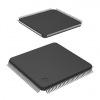
STM32F732ZET6 Image
Image may be representation.
See specifications for product details.
EXPRESS OPTION
Payment method

STM32F732ZET6 - STMicroelectronics

Manufacturer Part Number
STM32F732ZET6
Manufacturer
STMicroelectronics
Allelco Part Number
32D-STM32F732ZET6
Warranty
1 Year Allelco Warranty - Find out more
Stock Status:
3,002 pcs available, New & Original
Parts Description
IC MCU 32BIT 512KB FLASH 144LQFP
Package
144-LQFP (20x20)
Data sheet
STM32F732ZET6.pdf

PCN Packaging

2.73KHz.pdf

PCN Assembly/Origin

2.73KHz.pdf
RoHs Status
ROHS3 Compliant
Our certification
In stock: 3002
  • Unit Price: $12.46
  • Subtotal: $0.00

Want a better price?
Add to Cart and Submit RFQ now, we'll contact you immediately.

Quantity Unit Price Ext. Price
1+ $12.46 $12.46
10+ $11.99 $119.90
30+ $11.17 $335.10
100+ $10.45 $1,045.00
The above prices does not include taxes and freight rates, which will be calculated on the order pages.

Specifications

STM32F732ZET6 Tech Specifications
STMicroelectronics - STM32F732ZET6 technical specifications, attributes, parameters and parts with similar specifications to STMicroelectronics - STM32F732ZET6

Product Attribute Attribute Value
Manufacturer STMicroelectronics
Voltage - Supply (Vcc/Vdd) 1.7V ~ 3.6V
Supplier Device Package 144-LQFP (20x20)
Speed 216MHz
Series STM32F7
RAM Size 256K x 8
Program Memory Type FLASH
Program Memory Size 512KB (512K x 8)
Peripherals Brown-out Detect/Reset, DMA, I²S, POR, PWM, WDT
Package / Case 144-LQFP
Package Tray
Product Attribute Attribute Value
Oscillator Type Internal
Operating Temperature -40°C ~ 85°C (TA)
Number of I/O 114
Mounting Type Surface Mount
EEPROM Size -
Data Converters A/D 16x12b; D/A 2x12b
Core Size 32-Bit Single-Core
Core Processor ARM® Cortex®-M7
Connectivity CANbus, EBI/EMI, I²C, IrDA, LINbus, MMC/SD, QSPI, SAI, SPI, UART/USART, USB
Base Product Number STM32F732

Environmental & Export Classifications

ATTRIBUTE DESCRIPTION
RoHs Status ROHS3 Compliant
Moisture Sensitivity Level (MSL) 3 (168 Hours)
REACH Status REACH Unaffected
ECCN 5A992C
HTSUS 8542.31.0001

Parts Introduction

STM32F732ZET6 Image
STM32F732ZET6 (1)

Manufacturer Part Number

STM32F732ZET6

Manufacturer

stmicroelectronics

Introduction

The STM32F732ZET6 is a high-performance ARM Cortex-M7 based microcontroller, designed for advanced and demanding applications.

Product Features and Performance

High performance ARM Cortex-M7 core running at up to 216MHz

32-bit Single-Core offers efficient data manipulation

Rich connectivity options including CANbus, USB, UART/USART, and SPI

Enhanced multimedia features with I2S and SAI interfaces

Advanced security with Oscillator Type: Internal

Product Advantages

Superior computing power for real-time applications

Abundant peripheral set supporting various communication protocols

Efficient in power consumption operating between 1.7V to 3.6V

Key Technical Parameters

Core Speed: 216MHz

Program Memory Size: 512KB (512K x 8)

RAM Size: 256K x 8

Voltage Supply: 1.7V ~ 3.6V

Connectivity: CANbus, USB, UART/USART, SPI

Operating Temperature: -40°C ~ 85°C

Program Memory Type: FLASH

Data Converters: A/D 16x12b; D/A 2x12b

Number of I/O: 114

Package Type: 144-LQFP (20x20)

Quality and Safety Features

Brown-out Detect/Reset ensures stable operation under fluctuating power

DMA for efficient data management

Watchdog Timer (WDT) prevents system failures

Compatibility

The product supports a wide range of communication protocols and is compatible with various industrial interfaces for extended applicability.

Application Areas

Advanced industrial applications

High-demanding communication systems

Multimedia processing

Professional high-speed embedded systems

Product Lifecycle

Product Status: Active

The STM32F732ZET6 is not nearing discontinuation and replacements or upgrades are available if required.

Several Key Reasons to Choose This Product

Cutting-edge ARM Cortex-M7 core offering high computational power

Wide voltage operation range ensuring adaptability in different power environments

Multifaceted connectivity support enhancing system integration and flexibility

Large I/O number (114) suitable for complex applications

Robust temperature range making the microcontroller suitable for harsh environments

Outstanding memory options facilitating intricate programming and data storage

Frequently Asked Questions(FAQ)

How does the STM32F732ZET6 compare to other STM32F7 series microcontrollers in terms of flash memory capacity and clock speed, and what are the implications for real-time processing applications?
The STM32F732ZET6 features 512KB of embedded FLASH memory and operates at a maximum core frequency of 216MHz, which positions it above several lower-capacity variants in the STM32F7 line such as the STM32F745 (1MB flash) but below higher-end models like the STM32F769 (2MB flash). This balance allows it to support complex firmware routines and moderate data logging tasks without exceeding pin count or power constraints typical in compact industrial designs. The 216MHz Cortex-M7 core enables deterministic interrupt response times under 1µs, making it suitable for motor control loops requiring sub-millisecond latency.
What design trade-offs should be considered when selecting the STM32F732ZET6 over alternatives with integrated Ethernet or higher RAM, particularly for battery-powered embedded systems?
While the STM32F732ZET6 offers substantial 256KB of SRAM and rich peripheral integration—including USB OTG FS/HS and dual CAN FD—it lacks built-in Ethernet and has less RAM than devices like the STM32F767ZI (2MB flash, 512KB RAM). For low-power applications, its operating voltage range of 1.7V–3.6V and deep sleep modes down to 20µA allow efficient operation, but developers must optimize code size due to limited RAM; this often necessitates static allocation and careful management of DMA buffers to avoid stack overflow during context switches.
Can the STM32F732ZET6 reliably drive high-resolution displays directly using its SAI and LTDC peripherals without external frame buffers, and what memory considerations apply?
The STM32F732ZET6 includes an LCD-TFT Display Controller (LTDC) capable of driving up to 1920x1080 resolution at 60Hz, paired with two Serial Audio Interfaces (SAI) for digital audio output. However, rendering full-screen graphics at 1080p consumes significant bandwidth and RAM; the available 256KB SRAM is insufficient to hold an entire frame buffer at full color depth. Developers must either use partial updates, reduce resolution, or implement double buffering with external SDRAM, which adds cost and complexity but remains feasible within the 144-pin LQFP package footprint.
In what scenarios would the internal oscillator suffice versus requiring an external crystal on the STM32F732ZET6, especially when using USB or high-speed communication protocols?
The STM32F732ZET6 integrates a factory-trimmed 16MHz internal RC oscillator accurate to ±1% over temperature, sufficient for basic timing and UART communication. However, USB Full-Speed operation mandates precise clocking, and while USB can tolerate some drift, sustained use requires the HSE (High-Speed External) oscillator. For applications involving USB, QSPI flash programming, or SAI audio streaming, an external 8–26MHz crystal is strongly recommended to meet jitter specifications. Using only the internal oscillator risks intermittent enumeration failures or corrupted data transfers over USB or SPI interfaces.
How does the power consumption profile of the STM32F732ZET6 behave during active versus standby modes, and what factors influence transition efficiency between these states?
At 216MHz with full CPU load and all peripherals enabled, the STM32F732ZET6 draws approximately 120mA from a 3.3V supply. In Stop mode with RTC running, current drops to about 1.5µA, and Standby mode reduces further to ~2.5µA by disabling the main regulator. Wake-up time from Stop mode is typically 30µs, while Standby takes up to 1ms. Efficient transitions depend on minimizing wake events and disabling unnecessary clocks before entering low-power states—poor configuration can increase leakage and reduce effective battery life in portable devices.
What are the thermal limitations and layout considerations for mounting the STM32F732ZET6 in a compact industrial enclosure with limited airflow?
With a maximum junction temperature of 125°C and a θJA of approximately 35°C/W in standard PCB layouts, the STM32F732ZET6 can dissipate around 3.6W passively if properly laid out. Under continuous 216MHz operation with all I/O toggling and peripherals active, internal power dissipation may reach 2–3W, leading to surface temperatures near 70–80°C depending on copper area. Adequate ground plane under the package and thermal vias improve heat spreading. Avoid routing high-current traces adjacent to the IC, and consider derating clock speeds during extended thermal stress in sealed enclosures.
Can the STM32F732ZET6 interface natively with parallel NOR flashes using the FSMC/EBI interface, and how does this affect boot time compared to QSPI-based solutions?
Yes, the STM32F732ZET6 supports up to 32-bit parallel access via its Flexible Static Memory Controller (FSMC), allowing direct connection to asynchronous NOR flashes without additional logic. Boot times from parallel NOR can be faster than QSPI due to higher bus width and lack of protocol overhead—often under 50ms from reset to application start. However, parallel interfaces consume more pins and increase board real estate. QSPI offers better density and lower pin count, with boot times typically under 100ms even from 40MHz operation, making it preferable in space-constrained designs despite slightly longer startup latency.
What precautions are necessary when using the DAC outputs of the STM32F732ZET6 in analog measurement circuits to prevent loading effects or noise coupling?
The STM32F732ZET6 provides two 12-bit DAC channels with output drivers rated for up to 1mA sink/source capability. Directly driving high-impedance loads is acceptable, but capacitive loads >100pF can cause settling delays exceeding 1µs and induce oscillations if bypassed improperly. Always include a small series resistor (e.g., 10–100Ω) between DAC output and load to dampen ringing. Additionally, analog sections should share a quiet ground return path, and decoupling capacitors (≥100nF ceramic) must be placed close to VDDA pins. Avoid routing digital signals near DAC traces to minimize crosstalk in precision applications.
How does the DMA controller in the STM32F732ZET6 handle concurrent peripheral transfers, and what configuration pitfalls should be avoided when managing ADC and UART traffic simultaneously?
The STM32F732ZET6’s 12-stream DMA architecture allows simultaneous transfers across multiple peripherals—for example, one stream handling ADC burst sampling while another manages UART TX bursts. Critical pitfalls include misaligned memory addresses causing silent data corruption, circular buffer overflow due to incorrect reload values, and priority inversion where a low-priority DMA stream blocks a critical one. Proper initialization requires enabling FIFO mode for mixed-width transfers and setting stream priorities based on deadline requirements rather than peripheral type. Also, ensure that buffer sizes exceed expected burst lengths to prevent wrap-around artifacts.
Is it feasible to run cryptographic algorithms like AES-256 or SHA-256 efficiently on the STM32F732ZET6 without hardware acceleration, and what performance penalties should be anticipated?
Software-only implementation of AES-256 on the STM32F732ZET6 at 216MHz yields roughly 100–150 Mbps throughput, sufficient for most secure boot or firmware update scenarios but inadequate for real-time video encryption. Without the optional CryptoCell-312 co-processor found in higher-end F7 variants, cryptographic operations consume significant CPU cycles—AES encryption alone can occupy 30–40% of CPU time at full speed. For better performance, leverage the hardware RNG and consider offloading hashing to dedicated libraries optimized for Cortex-M7 NEON instructions, though full acceleration requires upgrading to a device with integrated crypto engine.
What impact does enabling the floating-point unit (FPU) on the STM32F732ZET6 have on interrupt latency and context switching overhead in multitasking environments?
The ARM Cortex-M7 in the STM32F732ZET6 includes a fully compliant double-precision FPU that accelerates floating-point operations without kernel intervention. Enabling the FPU (via SCB->CPACR |= 0xF00000) reduces software emulation overhead by orders of magnitude but increases context switch time by approximately 12 extra cycles per thread due to saving/restoring 32 single-precision registers. In RTOS-based designs with frequent task preemptions, this adds negligible latency (<50ns per switch), but developers must ensure all ISRs using floating-point operations explicitly save/restore FPU state or disable interrupts during math-heavy routines to prevent corruption.
How does the brown-out detection (BOD) threshold accuracy of the STM32F732ZET6 compare to external voltage supervisors, and when should each be preferred?
The STM32F732ZET6 implements three programmable brown-out levels (1.7V, 2.5V, 2.9V) with typical accuracy of ±50mV, adequate for preventing undervoltage resets during brownouts. However, precision analog systems or automotive-grade designs may require tighter thresholds (±25mV), where external supervisors like the TPS3839 offer better stability over temperature. Internal BOD saves components and reduces BOM cost, but lacks monitoring beyond reset events. External supervisors provide windowed detection and status pins, making them superior for predictive power failure alerts or sequencing control in multi-voltage systems.
Can the STM32F732ZET6 drive multiple I²C buses simultaneously at high speeds without signal integrity issues, and what PCB layout rules are essential?
The STM32F732ZET6 supports up to two independent I²C peripherals operating at 1MHz in Fast Mode Plus. Driving long traces or unterminated buses can cause ringing and arbitration failures. Essential layout practices include keeping SCL/SDA traces <10cm, avoiding stubs, and maintaining impedance-controlled paths with pull-ups (typically 2.2kΩ) placed close to bus masters. Terminate branches with series resistors (22–100Ω) if splitting into multiple slaves. Avoid crossing digital lines beneath I²C traces and ensure shared ground continuity to prevent offset voltages that corrupt ACK/NACK responses.
What are the consequences of exceeding the absolute maximum ratings on the STM32F732ZET6, particularly regarding VDD spikes or ESD exposure during assembly?
Exceeding VDD above 3.6V even momentarily can trigger latch-up conditions, potentially damaging internal protection diodes and causing permanent shift in I/O thresholds. The device includes ESD protection per HBM Class 2 (>2kV), but repeated exposure during handling degrades immunity over time. During reflow soldering, peak temperatures must not exceed 260°C for 10 seconds; higher values risk delamination of bond wires. Violating absolute maxima may appear functional initially but lead to erratic behavior under field conditions due to degraded analog subsystems like ADC linearity or oscillator stability.
How does the MCO (MCU Clock Output) feature on the STM32F732ZET6 assist in debugging or synchronizing external devices, and what clock sources can be routed through it?
The STM32F732ZET6’s MCO pin can output system clocks derived from HSI, HSE, PLL, or LSE divided by powers of two, enabling precise clock monitoring or synchronization of daughter boards. For example, outputting 48MHz from the PLL allows external sensors to lock phase-locked loops for synchronized sampling. This is invaluable in multi-node industrial networks where timing alignment affects data coherence. Developers can configure the MCO output via RCC_CFGR register bits, selecting source and prescaler to match target frequencies while ensuring load capacitance stays within spec (<10pF recommended).
In safety-critical applications, how reliable is the internal watchdog timer (IWDG) of the STM32F732ZET6 compared to standalone WDT ICs, and what maintenance strategies ensure robustness?
The STM32F732ZET6’s independent watchdog (IWDG) runs from an internal 32kHz RC oscillator with ±20% tolerance, providing coarse timeout granularity (12.5ms to 32.7s). While sufficient for detecting hangs in bare-metal or RTOS kernels, its inaccuracy makes it unsuitable for precise timing budgets. For functional safety compliance (e.g., ISO 26262), external WDTs with tighter tolerance (±5%) and diagnostic features (windowed mode, fault logging) are preferred. Nevertheless, using both internal and external watchdogs in tandem adds redundancy: the internal catches catastrophic failures, while the external verifies recovery actions.
What considerations apply when cascading the STM32F732ZET6 with external QSPI flash memories larger than 128Mb, and how does address mapping affect bootloader design?
The STM32F732ZET6 supports QSPI up to 4GB addressing via 32-bit memory-mapped mode, allowing direct execution from large NOR flashes. However, bootloaders must correctly initialize the Quad SPI controller and configure the correct address window—especially when dealing with chips spanning multiple die boundaries. Misalignment causes read faults during vector table fetch. Additionally, erase operations on large blocks (e.g., 64KB sectors) take tens of milliseconds, so background erasing with wear leveling requires careful state management. Dual-image firmware updates benefit from this architecture but demand robust CRC checks and rollback mechanisms.

Parts with Similar Specifications

The three parts on the right have similar specifications to STMicroelectronics STM32F732ZET6

Product Attribute STM32F732VET6 STM32F732IET6 STM32F732VET6TR STM32F732RET6
Part Number STM32F732VET6 STM32F732IET6 STM32F732VET6TR STM32F732RET6
Manufacturer STMicroelectronics STMicroelectronics STMicroelectronics STMicroelectronics
Data Converters - - - -
EEPROM Size - - - -
RAM Size - - - -
Program Memory Size - - - -
Oscillator Type - - - -
Peripherals - - - -
Number of I/O - - - -
Supplier Device Package - 196-NFBGA (12x12) 16-PDIP 64-VQFN (9x9)
Core Size - - - -
Connectivity - - - -
Series - - - -
Mounting Type - Surface Mount Through Hole Surface Mount
Package - Tape & Reel (TR) Tube Tape & Reel (TR)
Operating Temperature - -40°C ~ 85°C 0°C ~ 70°C -40°C ~ 85°C
Base Product Number - DAC34H84 MAX500 ADS62P42
Program Memory Type - - - -
Core Processor - - - -
Speed - - - -
Voltage - Supply (Vcc/Vdd) - - - -
Package / Case - 196-LFBGA 16-DIP (0.300', 7.62mm) 64-VFQFN Exposed Pad

STM32F732ZET6 Datasheet PDF

Download STM32F732ZET6 pdf datasheets and STMicroelectronics documentation for STM32F732ZET6 - STMicroelectronics.

HTML Datasheet
STM32F7 Series Brochure.pdf
PCN Packaging
2.73KHz.pdf
PCN Assembly/Origin
2.73KHz.pdf

Customer Reviews

Evaluation: 10 Articles

  • Dani***alkerTech
    Jun 1, 2026

    Product works, but setup took more effort than expected. Once configured the MCU ran reliably, although documentation support felt older compared with newer platforms. Fine for maintenance projects.

  • Yuki***aka88
    May 26, 2026

    信号通信プロジェクトでこのRS-485トランシーバーを使用しました。設置は簡単で、長距離ケーブルでも通信は安定していました。消費電力も、以前使用していたものより低くなっています。

  • Stev***aker
    May 20, 2026

    Solid diode for power rectification. Works well in switching circuits.

  • Bran***Lewis
    May 11, 2026

    Compact FPGA with good performance. Suitable for basic signal processing tasks.

  • Oliv***arris
    May 7, 2026

    Reliable I/O expander. Works well in embedded control applications.

  • Jess***Jones
    Apr 17, 2026

    It offers good value for the price, and the specifications match the description. I’ve been using it for two days with no issues, and I’ll definitely buy it again if I need it in the future.

  • Mich***Smith
    Apr 17, 2026

    Shipping was on time, the component pins are neatly aligned, and I tested 10 of them with a multimeter—all readings were within the specified range. Highly recommended.

  • Aman***arris
    Apr 3, 2026

    It was great—the entire process, from placing the order to receiving the package, went very smoothly. The components were consistent, the price was fair, and I had a very pleasant shopping experience.

  • Mike***nch
    Apr 3, 2026

    Better than expected! The resistance and capacitance readings were spot-on, and it passed the test on the first try. The service was reliable, and the packaging was thoughtful—I highly recommend it.

  • Daic***K.
    Mar 23, 2026

    Very good. No issue after long time testing.

Write a Review

Your Email address will not be published.

Shipment

Delivery Time

In-stock items can be shipped within 24 hours. Some parts will be arranged for delivery within 1-2 days from the date all items arrive at our warehouse. And Allelco ships order once a day at about 17:00, except Sunday. Once the goods are shipped, the estimated delivery time depends on the shipping methods and Delivery destination. The table below shows are the logistic time for some common countries.

Delivery Cost

  1. Use your express account for shipment if you have one.
  2. Use our account for the shipment. Refer to the table below for the approximate charges.
(Different time frame / countries / package size has different price.)

Delivery Method

  1. Global Common Shipment by DHL / UPS / FedEx / TNT / EMS / SF we support.
  2. Others more shipping ways, please get in touch with your customer manager.

Common Countries Logistic Time Reference
Region Country Logistic Time(Day)
America United States 5
Brazil 7
Europe Germany 5
United Kingdom 4
Italy 5
Oceania Australia 6
New Zealand 5
Asia India 4
Japan 4
Middle East Israel 6
DHL & FedEx Shipment Charges Reference
Shipment charges(KG) Reference DHL(USD$)
0.00kg-1.00kg USD$30.00 - USD$60.00
1.00kg-2.00kg USD$40.00 - USD$80.00
2.00kg-3.00kg USD$50.00 - USD$100.00
Note:
The above table is for reference only. There may have some data bias for the uncontrollable factors.
Contact us if you have any questions.
  • QC (Quality Warranty)
  • Payment Support
  • Packaging
  • Certifications & Memberships

QC (Quality Warranty)

Allelco is committed to exceeding customer expectations through customer service excellence, order accuracy, and on-time delivery.
This is achieved through our commitment to the continual improvement of our processes, services, and products.


Strict quality inspection builds a solid foundation for electronic component quality.
  1. Visual inspection
  2. Performance testing and reliability verification
  3. Standardized full-process testing
  4. Precise control of every parameter
We eliminate defective components and ensure the stable operation of electronic devices through professional quality standards.

Payment Support

The payment method can be chosen from the methods shown below: Wire Transfer (T/T, Bank Transfer), Western Union, Credit card, PayPal.
  • HKBea
  • Paypal
  • MasterCard
  • Western-Union
  • VISA
Stable Delivery, Sincere Partnership — Your Faithful Supply Chain Partner
  • Efficient Supply Management
  • Cost-Saving Procurement
  • Fast Sourcing & Delivery
Contact us if you have any questions.

Packaging

Electrostatic Discharge Protection and Handling

All electrostatic-sensitive components are handled in accordance with electrostatic discharge control procedures. The products are hermetically sealed in anti-static safe packaging to prevent electrostatic damage. Appropriate labeling is also applied for identification and traceability. This ensures product integrity during storage, handling and transportation.


ESD

Certifications & Memberships

Third-party certified, strict quality control. Our certification
  • ISO 9001: 2015
  • ISO 13485: 2016
  • ISO 14001: 2015
  • ISO 28000: 2007
  • ISO 45001: 2018
  • GB/T 27922-2011
  • SMTA
  • IPC
  • ESD
  • PSMA
STM32F732ZET6 Image

STM32F732ZET6

STMicroelectronics
32D-STM32F732ZET6

Want a better price? Add to Cart and Submit RFQ now, we'll contact you immediately.

0 RFQ
Shopping cart (0 Items)
It is empty.
Compare List (0 Items)
It is empty.
Feedback

Your feedback matters! At Allelco, we value the user experience and strive to improve it constantly.
Please share your comments with us via our feedback form, and we'll respond promptly.
Thank you for choosing Allelco.

Subject
E-mail
Comments
Captcha
Drag or click to upload file
Upload File
types: .xls, .xlsx, .doc, .docx, .jpg, .png and .pdf.
Max file size: 10MB