View All

Please refer to the English Version as our Official Version.Return

Europe
France(Français) Germany(Deutsch) Italy(Italia) Russian(русский) Poland(polski) Czech(Čeština) Luxembourg(Lëtzebuergesch) Netherlands(Nederland) Iceland(íslenska) Hungarian(Magyarország) Spain(español) Portugal(Português) Turkey(Türk dili) Bulgaria(Български език) Ukraine(Україна) Greece(Ελλάδα) Israel(עִבְרִית) Sweden(Svenska) Finland(Svenska) Finland(Suomi) Romania(românesc) Moldova(românesc) Slovakia(Slovenská) Denmark(Dansk) Slovenia(Slovenija) Slovenia(Hrvatska) Croatia(Hrvatska) Serbia(Hrvatska) Montenegro(Hrvatska) Bosnia and Herzegovina(Hrvatska) Lithuania(lietuvių) Spain(Português) Switzerland(Deutsch) United Kingdom(English)
Asia/Pacific
Japan(日本語) Korea(한국의) Thailand(ภาษาไทย) Malaysia(Melayu) Singapore(Melayu) Vietnam(Tiếng Việt) Philippines(Pilipino)
Africa, India and Middle East
United Arab Emirates(العربية) Iran(فارسی) Tajikistan(فارسی) India(हिंदी) Madagascar(malaɡasʲ)
South America / Oceania
New Zealand(Maori) Brazil(Português) Angola(Português) Mozambique(Português)
North America
United States(English) Canada(English) Haiti(Ayiti) Mexico(español)
HomeProductsIntegrated Circuits (ICs)Embedded - MicrocontrollersSTM32F733IET6
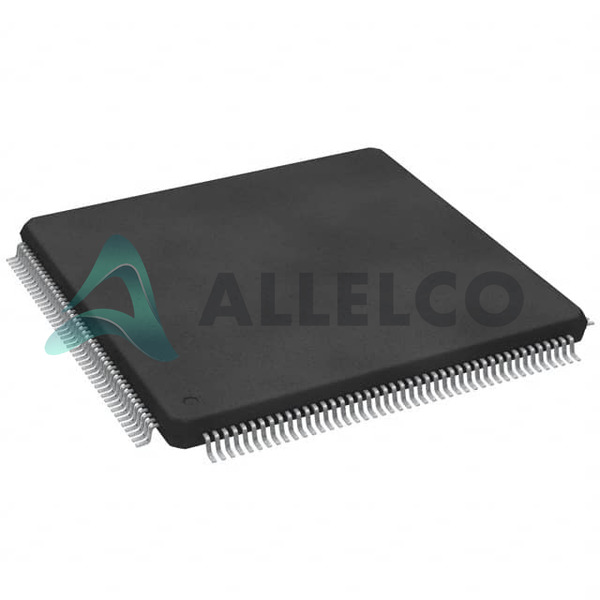
STM32F733IET6 Image
Image may be representation.
See specifications for product details.
EXPRESS OPTION
Payment method

STM32F733IET6 - STMicroelectronics

Manufacturer Part Number
STM32F733IET6
Manufacturer
STMicroelectronics
Allelco Part Number
98D-STM32F733IET6
Warranty
1 Year Allelco Warranty - Find out more
Stock Status:
31,326 pcs available, New & Original
Parts Description
IC MCU 32BIT 512KB FLASH 176LQFP
Package
176-LQFP (24x24)
Data sheet
STM32F733IET6.pdf

PCN Packaging

2.73KHz.pdf

PCN Assembly/Origin

2.73KHz.pdf
RoHs Status
ROHS3 Compliant
Our certification
In stock: 31326
  • Unit Price: $11.748
  • Subtotal: $0.00

Want a better price?
Add to Cart and Submit RFQ now, we'll contact you immediately.

Quantity Unit Price Ext. Price
1+ $11.748 $11.75
The above prices does not include taxes and freight rates, which will be calculated on the order pages.


Specifications

STM32F733IET6 Tech Specifications
STMicroelectronics - STM32F733IET6 technical specifications, attributes, parameters and parts with similar specifications to STMicroelectronics - STM32F733IET6

Product Attribute Attribute Value
Manufacturer STMicroelectronics
Voltage - Supply (Vcc/Vdd) 1.7V ~ 3.6V
Supplier Device Package 176-LQFP (24x24)
Speed 216MHz
Series STM32F7
RAM Size 256K x 8
Program Memory Type FLASH
Program Memory Size 512KB (512K x 8)
Peripherals Brown-out Detect/Reset, DMA, I²S, POR, PWM, WDT
Package / Case 176-LQFP
Package Tray
Product Attribute Attribute Value
Oscillator Type Internal
Operating Temperature -40°C ~ 85°C (TA)
Number of I/O 138
Mounting Type Surface Mount
EEPROM Size -
Data Converters A/D 24x12b; D/A 2x12b
Core Size 32-Bit Single-Core
Core Processor ARM® Cortex®-M7
Connectivity CANbus, EBI/EMI, I²C, IrDA, LINbus, MMC/SD, QSPI, SAI, SPI, UART/USART, USB
Base Product Number STM32F733

Environmental & Export Classifications

ATTRIBUTE DESCRIPTION
RoHs Status ROHS3 Compliant
Moisture Sensitivity Level (MSL) 3 (168 Hours)
REACH Status REACH Unaffected
ECCN 5A992C
HTSUS 8542.31.0001

Frequently Asked Questions(FAQ)

How does the STM32F733IET6 compare to other STM32F7 series microcontrollers in terms of core performance and memory architecture when targeting high-speed signal processing applications?
The STM32F733IET6 features an ARM® Cortex®-M7 core running at up to 216MHz, delivering approximately 650 DMIPS and 2.17 CoreMark, which is among the highest in the STM32F7 family. It includes 512KB of embedded Flash memory and 256KB of RAM, providing a balanced memory footprint that supports complex real-time algorithms without external memory expansion. Compared to lower-end F7 variants like the STM32F723 with 256KB Flash, this model offers nearly double the program storage, making it suitable for advanced digital filtering, motor control, or audio processing tasks that require sustained throughput and larger code segments.
What are the key trade-offs when selecting the STM32F733IET6 for a power-constrained embedded system operating across a wide voltage range?
The STM32F733IET6 operates from 1.7V to 3.6V, enabling compatibility with both battery-powered and industrial supply rails. However, at lower voltages, the maximum clock frequency may be limited by internal regulation constraints. While dynamic power scales with Vdd², achieving full 216MHz performance typically requires Vdd above 2.4V. This means designers must balance speed requirements against power budget when using coin-cell or Li-ion supplies below 2.5V. Additionally, enabling peripherals like USB OTG FS or high-resolution ADCs increases quiescent current, so careful peripheral management is necessary for long-life applications.
Can the STM32F733IET6 reliably interface with external parallel memory devices such as SRAM or PSRAM through its EBI/EMI interface, and what timing considerations apply?
Yes, the STM32F733IET6 supports asynchronous external memory interfaces via its EBI/EMI block, allowing connection to SRAM, PSRAM, and even NOR Flash up to 32-bit data width. Typical setup involves configuring wait states based on memory access time—for example, 0 wait states for fast SRAM with tAA < 15ns, increasing linearly with slower devices. The controller also supports burst transfers and page mode when interfacing with synchronous memories like PSRAM. Designers should validate signal integrity on shared address/data lines due to the 176-pin LQFP package’s limited pin count and potential crosstalk near high-speed traces.
How does the integrated ADC configuration in the STM32F733IET6 impact sampling rates and noise performance in multi-channel sensor monitoring systems?
The STM32F733IET6 integrates 24 × 12-bit successive approximation ADCs with a maximum sampling rate of 5.33 MSPS per channel (interleaved). In independent mode, each ADC can sample at up to 1.25 MSPS, while simultaneous dual-channel operation allows higher aggregate throughput. The internal PGA and calibration registers help reduce offset error, but external analog front-end design remains critical—poor layout introduces noise exceeding ±1 LSB. For precision measurements, oversampling and averaging software techniques are recommended to achieve effective resolution beyond 12 bits.
What limitations exist when using the QSPI peripheral on the STM32F733IET6 with external serial flash for firmware storage, especially regarding command sets and addressing modes?
The STM32F733IET6 supports Quad I/O and Dual I/O commands compliant with common NOR flash families such as Winbond W25Q series. However, not all manufacturer-specific opcodes are supported; for instance, some deep power-down sequences may require fallback to SPI mode. Memory-mapped mode enables direct execution from QSPI flash, but code must reside within the first 512MB addressable space. Timing parameters such as CS inactive time and dummy cycles must match the external device’s specifications—typically 8 dummy cycles for DDR reads at 60 MHz clock. Failure to configure these correctly results in corrupted reads or bus errors during boot.
Is it feasible to drive a USB host function using the STM32F733IET6 in a cost-sensitive industrial HMI application requiring enumeration of multiple low-power peripherals?
Yes, the STM32F733IET6 includes a full-speed USB OTG HS controller capable of functioning as a host. With proper external PHY support and VBUS detection circuitry, it can enumerate standard USB 2.0 devices like flash drives or HID keyboards. However, enabling USB HOST increases power consumption by ~5–10 mA at 3.3V, which may be prohibitive in ultra-low-power designs. Additionally, firmware complexity rises significantly compared to device-only implementations due to stack handling, class drivers, and fault recovery logic. Most industrial HMIs opt instead for UART-to-USB bridges to avoid MCU-level protocol overhead.
How does the DMA controller in the STM32F733IET6 improve real-time performance when handling continuous data streams from the SAI or QSPI peripherals?
The STM32F733IET6 implements an advanced DMA controller with 16-stream architecture supporting circular buffering, memory-to-memory transfers, and peripheral chaining. When streaming audio via the SAI interface at 48 kHz stereo 24-bit samples (~2.3 Mbps), the DMA eliminates CPU intervention, freeing cycles for control logic or display updates. Transfer sizes can be configured in single, half-word, or word increments, and interrupt coalescing reduces ISR latency. Without DMA, CPU utilization would exceed 90% under sustained load, violating real-time constraints—this demonstrates the necessity of hardware offload for high-bandwidth I/O.
What precautions should be taken during PCB layout when routing signals associated with the STM32F733IET6’s CANbus interface to ensure reliable communication in harsh environments?
The STM32F733IET6’s dual CAN FD controllers require differential pair routing with controlled impedance (typically 120Ω) and length matching within ±10 mm to prevent reflection-induced bit errors. Termination resistors must be placed close to the transceiver IC, not the MCU. Shielding twisted-pair cables and maintaining >3W spacing from noisy digital nets minimizes EMI susceptibility. Ground plane splits should be avoided beneath CAN traces. In automotive-grade systems, additional isolation via transceivers with reinforced insulation (>1500Vrms) is mandatory per ISO 11898-2. Failure to meet these guidelines leads to intermittent faults during electromagnetic interference events.
Why might the STM32F733IET6 exhibit unexpected brown-out reset triggers even when powered from a stable 3.3V regulator, and how can this be mitigated?
The internal brown-out detector (BOD) monitors VDD and resets the MCU if voltage drops below programmable thresholds (e.g., 2.5V, 2.7V, 3.0V). Even with a clean 3.3V supply, sudden load transients—such as enabling multiple GPIOs simultaneously or driving capacitive loads—can cause temporary dips below threshold. To mitigate, increase output capacitance of the regulator or add local bulk decoupling (e.g., 10 µF tantalum + 100 nF ceramic). Alternatively, disable BOD during startup phases or use external supervisory ICs for finer control. Note that BOD cannot protect against internal regulator failure modes.
Does the STM32F733IET6 support over-the-air (OTA) firmware updates securely, and what cryptographic features are available for integrity verification?
The STM32F733IET6 includes the ARM® TrustZone technology and integrates an AES-256, SHA-2, and RNG engine, enabling secure boot and encrypted firmware updates. Bootloader support for CRC-based or signature-verified images (using RSA-2048/ECDSA-P256) is provided in ROM code. However, full OTA implementation requires external connectivity (e.g., Wi-Fi or cellular module) and secure storage partitioning. Without hardware tamper detection (not present in this variant), physical access could compromise keys. Thus, while cryptographic primitives exist, end-to-end security depends on system-level design including secure element co-processors for key storage.
How does thermal behavior differ between the 176-LQFP and smaller packages in the STM32F733 series, and what implications does this have for enclosure design?
The 176-LQFP (24x24 mm) package offers excellent thermal conductivity through its exposed pad and large copper pour area, resulting in junction-to-ambient resistance (θJA) around 35°C/W in still air. Smaller packages like UFBGA-169 dissipate heat more efficiently due to shorter path lengths but require solder reflow for assembly. For the STM32F733IET6, continuous operation at ambient temperatures approaching 85°C is permissible without throttling, but sustained loads above 70% CPU utilization may raise die temperature above 100°C. Enclosure airflow or heatsinking becomes necessary only in confined spaces with poor convection.
What is the significance of the Moisture Sensitivity Level 3 rating for the STM32F733IET6, and how should inventory handling comply with JEDEC standards?
MSL 3 indicates the STM32F733IET6 can withstand exposure to ambient humidity for up to 168 hours (7 days) before soldering. After this window, absorbed moisture risks explosive outgassing during reflow, causing tombstoning or pad lifting. Per IPC/JEDEC J-STD-020, units must be stored in dry cabinets (≤10% RH) and baked if exceeded. Inventory rotation should follow FIFO principles, and reels must be sealed immediately after unpacking. Distributors often provide MSL labels, but final compliance lies with assemblers who monitor bake schedules and desiccant usage.
Can the STM32F733IET6 be safely used in medical equipment requiring IEC 62304 compliance, and what documentation gaps exist compared to automotive-grade MCUs?
While the STM32F733IET6 meets general industrial reliability criteria, it lacks formal qualification per AEC-Q100 Grade 1 (-40°C to +125°C), which is typically required for life-critical medical devices. STMicroelectronics provides errata sheets and reference manuals, but no safety manual or FMEDA analysis for this part. Developers must conduct independent hazard analysis, implement watchdog timers, and validate memory integrity (via ECC—note: not included here—so parity checks must be software-emulated). Therefore, while usable in Class II non-invasive devices, full certification demands supplemental safety engineering beyond datasheet claims.
How does the choice of oscillator affect boot time and stability when initializing the STM32F733IET6 from internal vs. external crystal configurations?
Using the internal MSI clock (~216 MHz trimmed RC oscillator) reduces boot time to under 1 ms but introduces ±1% frequency drift over temperature, affecting timing-sensitive peripherals. Switching to an external HSE crystal (e.g., 8–26 MHz) locks PLL faster (~100 μs) and provides better accuracy (±20 ppm), essential for USB or Ethernet applications. However, HSE startup requires ~2–5 ms due to crystal stabilization delay. Designers must weigh startup latency against phase noise requirements—internal clock suffices for most control loops but fails in synchronized systems like IEEE 1588 networks.
What role does the Watchdog Timer (WDT) play in preventing runaway code on the STM32F733IET6, and how should it be configured for robust field deployment?
The STM32F733IET6 features independent and windowed watchdogs with programmable timeout periods (128 ms to 36 hours). The Independent WDT (IWDG) runs from a low-frequency RC oscillator (~32 kHz), making it immune to clock failures and ideal for detecting software hangs. Proper configuration involves enabling early wakeup interrupts, servicing the timer periodically in critical sections, and avoiding disabling it during flash programming. Unlike task-level monitoring, WDT resets the entire MCU if not refreshed within window bounds—making it a last-resort recovery mechanism rather than a comprehensive health check system.
Are there any known silicon errata related to flash memory corruption in the STM32F733IET6 when performing rapid erase/write cycles near temperature extremes?
Errata Sheet ES0337 Revision 7 documents a rare issue where repeated mass erases (>100k cycles) combined with high junction temperatures (>85°C) may corrupt adjacent sectors due to charge leakage. Mitigation involves spreading erase operations across multiple sectors, avoiding localized hotspots via thermal profiling, and implementing software wear leveling. Additionally, backup copies of critical firmware should reside in read-protected areas. Although unlikely in typical applications, this underscores the importance of reviewing errata before deploying long-lifecycle products in thermally stressed environments.
How does the presence of multiple communication interfaces (CAN, SPI, I2C, USB) on the STM32F733IET6 influence PCB trace routing and EMI susceptibility?
The STM32F733IET6 integrates nine major communication buses sharing 138 I/O pins, leading to dense routing challenges. High-speed signals like USB D+/D− and QSPI require impedance-controlled traces with minimal vias and stubs. Mixed-signal separation between analog ADCs and digital aggressors is crucial—cross-talk can elevate ADC noise floor by >3 dB. Clock lines (e.g., SAI, QSPI) should be routed away from crystal oscillators to prevent coupling. Ground planes and guard rings around sensitive nets reduce EMI emissions, helping pass FCC Class B limits without additional shielding.
What alternatives exist if the 512KB Flash limit of the STM32F733IET6 becomes insufficient for a growing codebase requiring RTOS, graphics library, and network stack integration?
For larger applications, consider migrating to the STM32H7 series (e.g., STM32H743VIT6) which offers up to 2MB Flash and 1MB RAM with identical Cortex-M7 core and higher bandwidth (400 MHz). Alternatively, remain on the F7 platform by pairing the STM32F733IET6 with external parallel SRAM/PSRAM using the EBI interface, though this adds board complexity and power overhead. Another option is to optimize code size via linker scripts, dead-code elimination, and compression—but ultimately, exceeding 512KB often necessitates architectural changes or stepping up to higher-density variants within the same product line.

Parts with Similar Specifications

The three parts on the right have similar specifications to STMicroelectronics STM32F733IET6

Product Attribute STM32F733VET6 STM32F732IET6 STM32F732VET6TR STM32F733VEY6TR
Part Number STM32F733VET6 STM32F732IET6 STM32F732VET6TR STM32F733VEY6TR
Manufacturer STMicroelectronics STMicroelectronics STMicroelectronics STMicroelectronics
Supplier Device Package - 196-NFBGA (12x12) 16-PDIP 64-VQFN (9x9)
Base Product Number - DAC34H84 MAX500 ADS62P42
Oscillator Type - - - -
Series - - - -
Program Memory Type - - - -
Peripherals - - - -
Core Size - - - -
Connectivity - - - -
Data Converters - - - -
Voltage - Supply (Vcc/Vdd) - - - -
Core Processor - - - -
Program Memory Size - - - -
EEPROM Size - - - -
Package - Tape & Reel (TR) Tube Tape & Reel (TR)
Number of I/O - - - -
Package / Case - 196-LFBGA 16-DIP (0.300', 7.62mm) 64-VFQFN Exposed Pad
Mounting Type - Surface Mount Through Hole Surface Mount
RAM Size - - - -
Speed - - - -
Operating Temperature - -40°C ~ 85°C 0°C ~ 70°C -40°C ~ 85°C

STM32F733IET6 Datasheet PDF

Download STM32F733IET6 pdf datasheets and STMicroelectronics documentation for STM32F733IET6 - STMicroelectronics.

PCN Packaging
2.73KHz.pdf
PCN Assembly/Origin
2.73KHz.pdf
HTML Datasheet
STM32F7 Series Brochure.pdf

Customer Reviews

Evaluation: 10 Articles

  • Dani***alkerTech
    Jun 1, 2026

    Product works, but setup took more effort than expected. Once configured the MCU ran reliably, although documentation support felt older compared with newer platforms. Fine for maintenance projects.

  • Yuki***aka88
    May 26, 2026

    信号通信プロジェクトでこのRS-485トランシーバーを使用しました。設置は簡単で、長距離ケーブルでも通信は安定していました。消費電力も、以前使用していたものより低くなっています。

  • Stev***aker
    May 20, 2026

    Solid diode for power rectification. Works well in switching circuits.

  • Bran***Lewis
    May 11, 2026

    Compact FPGA with good performance. Suitable for basic signal processing tasks.

  • Oliv***arris
    May 7, 2026

    Reliable I/O expander. Works well in embedded control applications.

  • Jess***Jones
    Apr 17, 2026

    It offers good value for the price, and the specifications match the description. I’ve been using it for two days with no issues, and I’ll definitely buy it again if I need it in the future.

  • Mich***Smith
    Apr 17, 2026

    Shipping was on time, the component pins are neatly aligned, and I tested 10 of them with a multimeter—all readings were within the specified range. Highly recommended.

  • Aman***arris
    Apr 3, 2026

    It was great—the entire process, from placing the order to receiving the package, went very smoothly. The components were consistent, the price was fair, and I had a very pleasant shopping experience.

  • Mike***nch
    Apr 3, 2026

    Better than expected! The resistance and capacitance readings were spot-on, and it passed the test on the first try. The service was reliable, and the packaging was thoughtful—I highly recommend it.

  • Daic***K.
    Mar 23, 2026

    Very good. No issue after long time testing.

Write a Review

Your Email address will not be published.

Shipment

Delivery Time

In-stock items can be shipped within 24 hours. Some parts will be arranged for delivery within 1-2 days from the date all items arrive at our warehouse. And Allelco ships order once a day at about 17:00, except Sunday. Once the goods are shipped, the estimated delivery time depends on the shipping methods and Delivery destination. The table below shows are the logistic time for some common countries.

Delivery Cost

  1. Use your express account for shipment if you have one.
  2. Use our account for the shipment. Refer to the table below for the approximate charges.
(Different time frame / countries / package size has different price.)

Delivery Method

  1. Global Common Shipment by DHL / UPS / FedEx / TNT / EMS / SF we support.
  2. Others more shipping ways, please get in touch with your customer manager.

Common Countries Logistic Time Reference
Region Country Logistic Time(Day)
America United States 5
Brazil 7
Europe Germany 5
United Kingdom 4
Italy 5
Oceania Australia 6
New Zealand 5
Asia India 4
Japan 4
Middle East Israel 6
DHL & FedEx Shipment Charges Reference
Shipment charges(KG) Reference DHL(USD$)
0.00kg-1.00kg USD$30.00 - USD$60.00
1.00kg-2.00kg USD$40.00 - USD$80.00
2.00kg-3.00kg USD$50.00 - USD$100.00
Note:
The above table is for reference only. There may have some data bias for the uncontrollable factors.
Contact us if you have any questions.
  • QC (Quality Warranty)
  • Payment Support
  • Packaging
  • Certifications & Memberships

QC (Quality Warranty)

Allelco is committed to exceeding customer expectations through customer service excellence, order accuracy, and on-time delivery.
This is achieved through our commitment to the continual improvement of our processes, services, and products.


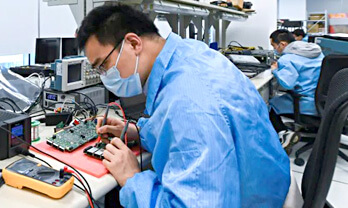
Strict quality inspection builds a solid foundation for electronic component quality.
  1. Visual inspection
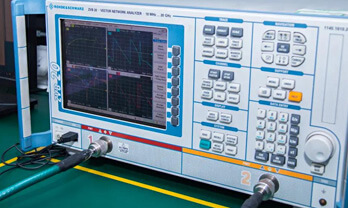
  2. Performance testing and reliability verification
  3. Standardized full-process testing
  4. Precise control of every parameter
We eliminate defective components and ensure the stable operation of electronic devices through professional quality standards.

Payment Support

The payment method can be chosen from the methods shown below: Wire Transfer (T/T, Bank Transfer), Western Union, Credit card, PayPal.
  • HKBea
  • Paypal
  • MasterCard
  • Western-Union
  • VISA
Stable Delivery, Sincere Partnership — Your Faithful Supply Chain Partner
  • Efficient Supply Management
  • Cost-Saving Procurement
  • Fast Sourcing & Delivery
Contact us if you have any questions.

Packaging

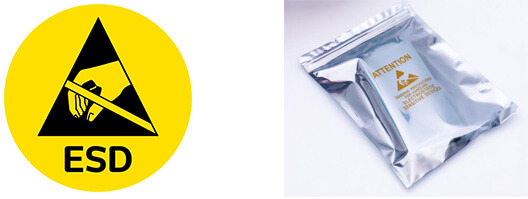
Electrostatic Discharge Protection and Handling

All electrostatic-sensitive components are handled in accordance with electrostatic discharge control procedures. The products are hermetically sealed in anti-static safe packaging to prevent electrostatic damage. Appropriate labeling is also applied for identification and traceability. This ensures product integrity during storage, handling and transportation.


ESD

Certifications & Memberships

Third-party certified, strict quality control. Our certification
  • ISO 9001: 2015
  • ISO 13485: 2016
  • ISO 14001: 2015
  • ISO 28000: 2007
  • ISO 45001: 2018
  • GB/T 27922-2011
  • SMTA
  • IPC
  • ESD
  • PSMA
STM32F733IET6 Image

STM32F733IET6

STMicroelectronics
98D-STM32F733IET6

Want a better price? Add to Cart and Submit RFQ now, we'll contact you immediately.

0 RFQ
Shopping cart (0 Items)
It is empty.
Compare List (0 Items)
It is empty.
Feedback

Your feedback matters! At Allelco, we value the user experience and strive to improve it constantly.
Please share your comments with us via our feedback form, and we'll respond promptly.
Thank you for choosing Allelco.

Subject
E-mail
Comments
Captcha
Drag or click to upload file
Upload File
types: .xls, .xlsx, .doc, .docx, .jpg, .png and .pdf.
Max file size: 10MB