View All

Please refer to the English Version as our Official Version.Return

Europe
France(Français) Germany(Deutsch) Italy(Italia) Russian(русский) Poland(polski) Czech(Čeština) Luxembourg(Lëtzebuergesch) Netherlands(Nederland) Iceland(íslenska) Hungarian(Magyarország) Spain(español) Portugal(Português) Turkey(Türk dili) Bulgaria(Български език) Ukraine(Україна) Greece(Ελλάδα) Israel(עִבְרִית) Sweden(Svenska) Finland(Svenska) Finland(Suomi) Romania(românesc) Moldova(românesc) Slovakia(Slovenská) Denmark(Dansk) Slovenia(Slovenija) Slovenia(Hrvatska) Croatia(Hrvatska) Serbia(Hrvatska) Montenegro(Hrvatska) Bosnia and Herzegovina(Hrvatska) Lithuania(lietuvių) Spain(Português) Switzerland(Deutsch) United Kingdom(English)
Asia/Pacific
Japan(日本語) Korea(한국의) Thailand(ภาษาไทย) Malaysia(Melayu) Singapore(Melayu) Vietnam(Tiếng Việt) Philippines(Pilipino)
Africa, India and Middle East
United Arab Emirates(العربية) Iran(فارسی) Tajikistan(فارسی) India(हिंदी) Madagascar(malaɡasʲ)
South America / Oceania
New Zealand(Maori) Brazil(Português) Angola(Português) Mozambique(Português)
North America
United States(English) Canada(English) Haiti(Ayiti) Mexico(español)
HomeProductsIntegrated Circuits (ICs)Embedded - MicroprocessorsOMAPL138BZCEA3E
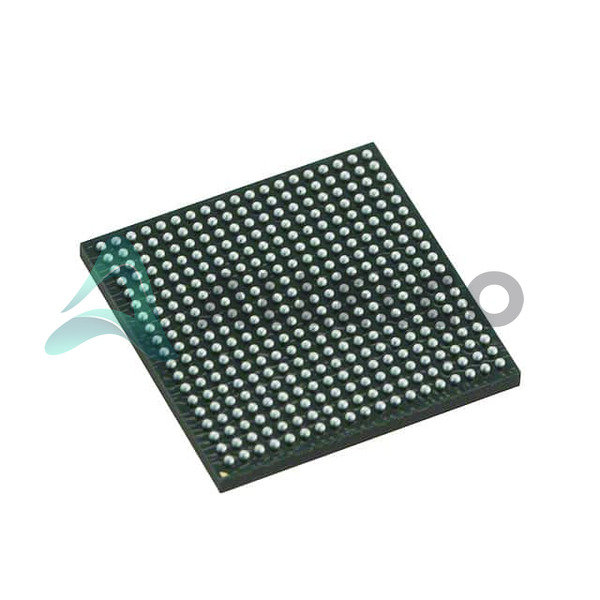
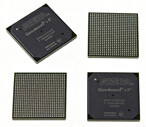
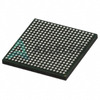
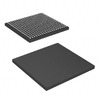
OMAPL138BZCEA3E Image
Image may be representation.
See specifications for product details.
EXPRESS OPTION
Payment method

OMAPL138BZCEA3E - Texas Instruments

Manufacturer Part Number
OMAPL138BZCEA3E
Manufacturer
Texas Instruments
Allelco Part Number
98D-OMAPL138BZCEA3E
Warranty
1 Year Allelco Warranty - Find out more
Stock Status:
13,511 pcs available, New & Original
Parts Description
IC MPU OMAP-L1X 375MHZ 361NFBGA
Package
361-NFBGA (13x13)
Data sheet
OMAPL138BZCEA3E.pdf
RoHs Status
ROHS3 Compliant
Our certification
In stock: 13511

Required fields are indicated by an asterisk (*)
Please send RFQ, we will respond immediately.

Quantity

Specifications

OMAPL138BZCEA3E Tech Specifications
Texas Instruments - OMAPL138BZCEA3E technical specifications, attributes, parameters and parts with similar specifications to Texas Instruments - OMAPL138BZCEA3E

Product Attribute Attribute Value
Manufacturer Texas Instruments
Voltage - I/O 1.8V, 3.3V
USB USB 1.1 + PHY (1), USB 2.0 + PHY (1)
Supplier Device Package 361-NFBGA (13x13)
Speed 375MHz
Series OMAP-L1x
Security Features Boot Security, Cryptography
SATA SATA 3Gbps (1)
RAM Controllers SDRAM
Package / Case 361-LFBGA
Package Tube
Product Attribute Attribute Value
Operating Temperature -40°C ~ 105°C (TJ)
Number of Cores/Bus Width 1 Core, 32-Bit
Mounting Type Surface Mount
Graphics Acceleration No
Ethernet 10/100Mbps (1)
Display & Interface Controllers LCD
Core Processor ARM926EJ-S
Co-Processors/DSP Signal Processing; C674x, System Control; CP15
Base Product Number OMAPL138
Additional Interfaces HPI, I²C, McASP, McBSP, MMC/SD, SPI, UART

Environmental & Export Classifications

ATTRIBUTE DESCRIPTION
RoHs Status ROHS3 Compliant
Moisture Sensitivity Level (MSL) 3 (168 Hours)
REACH Status REACH Unaffected
ECCN 3A991A2
HTSUS 8542.31.0001

Frequently Asked Questions(FAQ)

How does the OMAPL138BZCEA3E compare to other OMAP-L1x processors in terms of core architecture and clock speed, and what implications does this have for real-time signal processing applications?
The OMAPL138BZCEA3E features a single-core ARM926EJ-S processor running at 375MHz, which is a common configuration across the OMAP-L1x series. While it lacks the dual-core or higher-performance Cortex-A series found in newer TI devices, its integration of a C674x DSP core enables efficient signal processing tasks such as audio encoding/decoding and motor control algorithms. For applications requiring deterministic timing with moderate computational loads—such as industrial sensor data filtering—this architecture provides sufficient throughput without introducing significant latency, especially when leveraging hardware accelerators like the LCD controller and Ethernet MAC.
In embedded system design, how should power supply sequencing be managed when using the OMAPL138BZCEA3E given its dual I/O voltage rails (1.8V and 3.3V), and what risks arise from improper sequencing?
The OMAPL138BZCEA3E supports both 1.8V and 3.3V I/O voltages, requiring careful coordination between core and peripheral power domains. Although the datasheet specifies nominal operating conditions, improper power-up sequencing—such as bringing up 3.3V before 1.8V—can lead to latch-up conditions due to reverse current flow through input protection diodes. Engineers typically implement dedicated power management ICs (PMICs) capable of enforcing correct sequencing within ±100ms tolerance. In battery-powered designs, this also affects overall efficiency, as switching regulators must support multiple output rails while minimizing quiescent current.
What are the key differences between the OMAPL138BZCEA3E and the OMAPL137 in terms of interface availability and how might that influence peripheral selection in an industrial automation application?
The OMAPL138BZCEA3E includes one SATA 3Gbps port and enhanced USB connectivity compared to the OMAPL137, which lacks SATA support. This makes the L138 more suitable for applications requiring direct storage access or high-speed data logging, such as edge computing nodes in factory floors. Additionally, both share similar HPI, McBSP, and McASP interfaces, but the L138’s inclusion of a dedicated LCD controller simplifies graphical user interface development. Designers targeting legacy serial protocols may still prefer the L137 due to lower pin count and reduced BOM cost, despite its functional limitations.
Given the OMAPL138BZCEA3E's operating temperature range of -40°C to 105°C (TJ), how should thermal design considerations differ between automotive and industrial environments, and what derating strategies apply?
While the OMAPL138BZCEA3E meets standard industrial grade requirements, automotive applications often demand tighter thermal margins due to prolonged exposure to ambient extremes. In practice, junction temperatures above 85°C TJ reduce mean time between failures (MTBF), necessitating heatsinking or airflow even if air convection suffices in industrial cases. Thermal simulation using JEDEC JESD51 standards is recommended; assuming natural convection, a PCB with ≥4 oz copper and thermal vias under the 361-NFBGA package can keep TJ below 90°C during full load. Derating the CPU frequency by 10–15% further enhances reliability in harsh environments.
Can the OMAPL138BZCEA3E directly drive a standard HDMI display, and what intermediate components or signal conversion would be necessary?
No, the OMAPL138BZCEA3E does not include HDMI-compliant output circuitry. It features an integrated LCD controller supporting parallel RGB and TTL interfaces, commonly used with TFT panels. To interface with HDMI displays, designers must add an external scaler or converter IC such as the TI TVP7002 or Analog Devices ADV7511. These chips accept LVDS or parallel digital video inputs from the processor and convert them to TMDS signaling compatible with HDMI. This adds latency (~2–3 frames) and increases board complexity but enables full-resolution video output on consumer-grade monitors.
How does boot security implemented in the OMAPL138BZCEA3E affect firmware development workflows, particularly in regulated industries like medical or aerospace?
The OMAPL138BZCEA3E incorporates cryptographic boot ROM and support for secure key storage, enabling signed firmware validation during startup. This requires developers to generate RSA/ECDSA keys and integrate them into the bootloader (e.g., u-boot with SPL). In regulated sectors, this process must align with certification requirements (e.g., DO-178C, IEC 62304), demanding traceability from source code to signed binaries. Failure to properly manage key lifecycle—such as storing private keys on insecure media—compromises the entire chain-of-trust model. Therefore, most production systems use tamper-resistant secure elements for key storage rather than relying solely on internal flash.
When selecting memory for a system using the OMAPL138BZCEA3E, what are the optimal configurations for SDRAM and on-chip RAM to minimize external memory bandwidth bottlenecks?
The OMAPL138BZCEA3E integrates 64KB L1 cache and 64KB L2 SRAM, sufficient for small RTOS task stacks and interrupt handling. However, application code exceeding this size demands external SDRAM. A typical configuration uses a 16/32-bit-wide mobile DDR or standard SDRAM with burst transfers enabled. For example, a 128MB MT48LC16M16A2 SDRAM running at 100MHz provides ~800 Mbps bandwidth, adequate for Linux-based multimedia apps. To maximize utilization, software should leverage DMA channels (available via EDMA or I2C/McASP peripherals) to overlap data movement with computation, reducing CPU overhead by up to 40% in benchmarked audio transcoding scenarios.
What are the implications of the OMAPL138BZCEA3E’s MSL 3 classification for manufacturing yield and long-term field reliability in high-volume production?
With an Moisture Sensitivity Level of 3 (MSL 3), the OMAPL138BZCEA3E requires baking prior to reflow if stored beyond 168 hours at 30°C/60% RH. Improper handling during SMT assembly can cause popcorning or delamination, increasing defect rates. High-volume manufacturers mitigate this by implementing automated dry-packaging with nitrogen purging and real-time humidity monitoring. From a reliability standpoint, each reflow cycle introduces cumulative thermomechanical stress; thus, designs should limit rework attempts to ≤2 cycles. Statistical process control (SPC) charts tracking warpage measurements per batch help maintain consistency across thousands of units.
How do the presence of both USB 1.1 and USB 2.0 ports in the OMAPL138BZCEA3E impact firmware design choices for human-machine interface (HMI) devices?
Having both USB 1.1 and USB 2.0 interfaces allows backward compatibility with legacy peripherals while supporting high-speed data transfer for cameras or mass storage. Firmware must enumerate both controllers independently, managing endpoint allocation carefully to avoid conflicts. For HMI applications, USB 2.0 is typically used for touchscreen drivers requiring faster polling rates (>100 Hz), whereas USB 1.1 handles simple input devices like mice or keyboards. Developers should allocate separate work queues in RTOS tasks to service each host controller’s interrupts asynchronously, preventing priority inversion that could degrade responsiveness.
What trade-offs exist between using the OMAPL138BZCEA3E’s integrated LCD controller versus adding an external GPU for graphical rendering in portable instrumentation?
The OMAPL138BZCEA3E’s LCD controller supports resolutions up to 800×480 with 18-bit color depth, sufficient for basic menus, waveforms, and numeric readouts. Integrating it reduces component count and power consumption (<15 mW active), ideal for handheld tools. However, complex animations or 3D graphics require external GPUs like the Sitara AM335x’s SGX530 or discrete solutions, increasing cost and footprint. For most industrial scopes or multimeters, however, the L138’s capabilities meet performance needs without sacrificing battery life, making it preferable over discrete GPU paths.
How does the absence of floating-point unit (FPU) in the ARM926EJ-S core affect algorithm implementation in the OMAPL138BZCEA3E, and what alternatives exist for maintaining precision?
As the ARM926EJ-S lacks an FPU, floating-point operations incur significant software overhead—typically 10–50x slower than integer math. In DSP-heavy applications like FFTs or PID loops, this forces reliance on fixed-point arithmetic libraries (e.g., TI’s DSPLIB). Proper scaling and saturation logic prevent overflow errors, but require meticulous bit-width planning. Alternatively, offloading FP tasks to the C674x DSP core improves performance by 10–20x, though it consumes additional power and complicates memory mapping. Many designs partition workloads so that the ARM handles control logic while the DSP manages math-intensive blocks.
What considerations apply when integrating the OMAPL138BZCEA3E with FPGA-based co-processors via its HPI or McBSP interfaces, and what timing constraints must be respected?
The HPI (Host Port Interface) offers a high-bandwidth parallel bus for FPGA communication, supporting up to 132 Mbps in 8-bit mode. Timing closure requires careful layout: trace lengths matched within ±50 mils, impedance controlled at 50Ω differential pairs for clock lines, and decoupling capacitors placed <2 mm from VDD pins. McBSPs provide serial links with configurable framing, useful for streaming ADC/DAC data. Clock domain crossing becomes critical when synchronizing FPGA-generated clocks with the L138’s internal PLL; asynchronous FIFOs or handshake protocols prevent metastability-induced data corruption.
How does the OMAPL138BZCEA3E’s lack of integrated Wi-Fi or Bluetooth affect wireless connectivity options in IoT gateway designs, and what external modules are typically employed?
Without built-in wireless radios, designers must interface the OMAPL138BZCEA3E with discrete modules via UART, SPI, or SDIO. Common choices include ESP32 (Wi-Fi + BT/BLE) over UART with AT command protocol, or Nordic nRF52840 for Bluetooth mesh networks. Careful attention to antenna placement, RF shielding, and regulatory compliance (FCC, CE) is essential. Power consumption analysis shows that waking the L138 periodically to poll wireless modules saves energy compared to continuous transmission, extending battery life in solar-powered gateways.
What role does CP15 play in system-level debugging and performance profiling on the OMAPL138BZCEA3E, and how can developers leverage it effectively?
CP15 is the ARM926EJ-S’s coprocessor for memory management, cache control, and debug configuration. It enables setting watchpoints, controlling instruction/data caches, and configuring MMU regions—critical for optimizing memory access patterns. During profiling, disabling caches reveals true memory latency; re-enabling them with proper alignment boosts throughput by 3–5x. Debuggers like Code Composer Studio use CP15 registers to halt execution, inspect coprocessor state, and validate secure boot settings. Misconfiguration here can lead to unpredictable behavior, underscoring the need for rigorous testing across cache states.
How should developers handle EMC compliance when routing signals near the OMAPL138BZCEA3E’s high-speed interfaces like SATA or Ethernet in compact form factors?
High-speed traces (SATA, RMII/MII Ethernet) demand strict impedance control (90Ω diff for SATA, 100Ω for Ethernet), length matching (±100 mil max skew), and guard traces grounded every λ/10. Ferrite beads on power rails suppress conducted emissions, while common-mode chokes reduce radiated noise. Layout should avoid vias under BGA pads and use 4-layer stackups with dedicated ground/power planes. Pre-compliance scans using spectrum analyzers can identify problematic harmonics early, avoiding costly redesigns post-certification.
What are the practical limitations of the OMAPL138BZCEA3E’s 10/100Mbps Ethernet PHY in industrial networking contexts requiring deterministic latency?
Standard 10/100 Ethernet lacks hard real-time guarantees due to CSMA/CD arbitration and variable packet delays. While EtherCAT or PROFINET IRT implementations exist, they require additional ASICs or FPGAs for frame preprocessing. The L138 alone cannot guarantee microsecond-level jitter typical in motion control systems. For soft-real-time applications like sensor aggregation, however, QoS tagging and traffic shaping via software suffice. Alternatives include migrating to gigabit-capable SoCs or augmenting with dedicated Ethernet switches supporting IEEE 802.1Qbv time-aware shaper.

Parts with Similar Specifications

The three parts on the right have similar specifications to Texas Instruments OMAPL138BZCEA3E

Product Attribute OMAPL138BZCEA3D OMAPL138BZCEA3R OMAPL138BZCEA3 OMAPL138BZCE3
Part Number OMAPL138BZCEA3D OMAPL138BZCEA3R OMAPL138BZCEA3 OMAPL138BZCE3
Manufacturer Texas Instruments Texas Instruments Texas Instruments Texas Instruments
Series - - - -
Voltage - I/O - - - -
Speed - - - -
Graphics Acceleration - - - -
Package - Tape & Reel (TR) Tube Tape & Reel (TR)
SATA - - - -
Additional Interfaces - - - -
Core Processor - - - -
Operating Temperature - -40°C ~ 85°C 0°C ~ 70°C -40°C ~ 85°C
Supplier Device Package - 196-NFBGA (12x12) 16-PDIP 64-VQFN (9x9)
Co-Processors/DSP - - - -
Display & Interface Controllers - - - -
Mounting Type - Surface Mount Through Hole Surface Mount
Package / Case - 196-LFBGA 16-DIP (0.300', 7.62mm) 64-VFQFN Exposed Pad
RAM Controllers - - - -
USB - - - -
Number of Cores/Bus Width - - - -
Ethernet - - - -
Security Features - - - -
Base Product Number - DAC34H84 MAX500 ADS62P42

OMAPL138BZCEA3E Datasheet PDF

Download OMAPL138BZCEA3E pdf datasheets and Texas Instruments documentation for OMAPL138BZCEA3E - Texas Instruments.

PCN Design/Specification
Hybrid Au/Cu Wire Bond Flow 08/Apr/2014.pdf Multiple Changes Revision B 23/Jun/2014.pdf
PCN Obsolescence/ EOL
Freon/Netra/SubArtic EOL 06/Oct/2015.pdf Freon/Netra/SubArtic EOL Update 4/Nov/2015.pdf

Customer Reviews

Evaluation: 10 Articles

  • Nath***rooks
    Jun 11, 2026

    Installed this power component in a converter board. Output remained stable under different load conditions and thermal performance was better than expected.

  • Dani***alkerTech
    Jun 1, 2026

    Product works, but setup took more effort than expected. Once configured the MCU ran reliably, although documentation support felt older compared with newer platforms. Fine for maintenance projects.

  • Yuki***aka88
    May 26, 2026

    信号通信プロジェクトでこのRS-485トランシーバーを使用しました。設置は簡単で、長距離ケーブルでも通信は安定していました。消費電力も、以前使用していたものより低くなっています。

  • Stev***aker
    May 20, 2026

    Solid diode for power rectification. Works well in switching circuits.

  • Bran***Lewis
    May 11, 2026

    Compact FPGA with good performance. Suitable for basic signal processing tasks.

  • Oliv***arris
    May 7, 2026

    Reliable I/O expander. Works well in embedded control applications.

  • Jess***Jones
    Apr 17, 2026

    It offers good value for the price, and the specifications match the description. I’ve been using it for two days with no issues, and I’ll definitely buy it again if I need it in the future.

  • Mich***Smith
    Apr 17, 2026

    Shipping was on time, the component pins are neatly aligned, and I tested 10 of them with a multimeter—all readings were within the specified range. Highly recommended.

  • Aman***arris
    Apr 3, 2026

    It was great—the entire process, from placing the order to receiving the package, went very smoothly. The components were consistent, the price was fair, and I had a very pleasant shopping experience.

  • Mike***nch
    Apr 3, 2026

    Better than expected! The resistance and capacitance readings were spot-on, and it passed the test on the first try. The service was reliable, and the packaging was thoughtful—I highly recommend it.

Write a Review

Your Email address will not be published.

Shipment

Delivery Time

In-stock items can be shipped within 24 hours. Some parts will be arranged for delivery within 1-2 days from the date all items arrive at our warehouse. And Allelco ships order once a day at about 17:00, except Sunday. Once the goods are shipped, the estimated delivery time depends on the shipping methods and Delivery destination. The table below shows are the logistic time for some common countries.

Delivery Cost

  1. Use your express account for shipment if you have one.
  2. Use our account for the shipment. Refer to the table below for the approximate charges.
(Different time frame / countries / package size has different price.)

Delivery Method

  1. Global Common Shipment by DHL / UPS / FedEx / TNT / EMS / SF we support.
  2. Others more shipping ways, please get in touch with your customer manager.

Common Countries Logistic Time Reference
Region Country Logistic Time(Day)
America United States 5
Brazil 7
Europe Germany 5
United Kingdom 4
Italy 5
Oceania Australia 6
New Zealand 5
Asia India 4
Japan 4
Middle East Israel 6
DHL & FedEx Shipment Charges Reference
Shipment charges(KG) Reference DHL(USD$)
0.00kg-1.00kg USD$30.00 - USD$60.00
1.00kg-2.00kg USD$40.00 - USD$80.00
2.00kg-3.00kg USD$50.00 - USD$100.00
Note:
The above table is for reference only. There may have some data bias for the uncontrollable factors.
Contact us if you have any questions.
  • QC (Quality Warranty)
  • Payment Support
  • Packaging
  • Certifications & Memberships

QC (Quality Warranty)

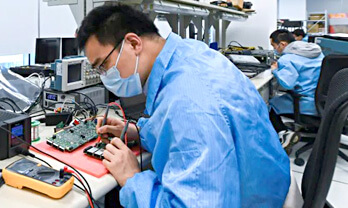
Allelco is committed to exceeding customer expectations through customer service excellence, order accuracy, and on-time delivery.
This is achieved through our commitment to the continual improvement of our processes, services, and products.


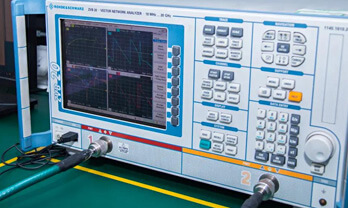
Strict quality inspection builds a solid foundation for electronic component quality.
  1. Visual inspection
  2. Performance testing and reliability verification
  3. Standardized full-process testing
  4. Precise control of every parameter
We eliminate defective components and ensure the stable operation of electronic devices through professional quality standards.

Payment Support

The payment method can be chosen from the methods shown below: Wire Transfer (T/T, Bank Transfer), Western Union, Credit card, PayPal.
  • HKBea
  • Paypal
  • MasterCard
  • Western-Union
  • VISA
Stable Delivery, Sincere Partnership — Your Faithful Supply Chain Partner
  • Efficient Supply Management
  • Cost-Saving Procurement
  • Fast Sourcing & Delivery
Contact us if you have any questions.

Packaging

Electrostatic Discharge Protection and Handling

All electrostatic-sensitive components are handled in accordance with electrostatic discharge control procedures. The products are hermetically sealed in anti-static safe packaging to prevent electrostatic damage. Appropriate labeling is also applied for identification and traceability. This ensures product integrity during storage, handling and transportation.


ESD

Certifications & Memberships

Third-party certified, strict quality control. Our certification
  • ISO 9001: 2015
  • ISO 13485: 2016
  • ISO 14001: 2015
  • ISO 28000: 2007
  • ISO 45001: 2018
  • GB/T 27922-2011
  • SMTA
  • IPC
  • ESD
  • PSMA
OMAPL138BZCEA3E Image

OMAPL138BZCEA3E

Texas Instruments
98D-OMAPL138BZCEA3E

Want a better price? Add to Cart and Submit RFQ now, we'll contact you immediately.

0 RFQ
Shopping cart (0 Items)
It is empty.
Compare List (0 Items)
It is empty.
Feedback

Your feedback matters! At Allelco, we value the user experience and strive to improve it constantly.
Please share your comments with us via our feedback form, and we'll respond promptly.
Thank you for choosing Allelco.

Subject
E-mail
Comments
Captcha
Drag or click to upload file
Upload File
types: .xls, .xlsx, .doc, .docx, .jpg, .png and .pdf.
Max file size: 10MB