View All

Please refer to the English Version as our Official Version.Return

Europe
France(Français) Germany(Deutsch) Italy(Italia) Russian(русский) Poland(polski) Czech(Čeština) Luxembourg(Lëtzebuergesch) Netherlands(Nederland) Iceland(íslenska) Hungarian(Magyarország) Spain(español) Portugal(Português) Turkey(Türk dili) Bulgaria(Български език) Ukraine(Україна) Greece(Ελλάδα) Israel(עִבְרִית) Sweden(Svenska) Finland(Svenska) Finland(Suomi) Romania(românesc) Moldova(românesc) Slovakia(Slovenská) Denmark(Dansk) Slovenia(Slovenija) Slovenia(Hrvatska) Croatia(Hrvatska) Serbia(Hrvatska) Montenegro(Hrvatska) Bosnia and Herzegovina(Hrvatska) Lithuania(lietuvių) Spain(Português) Switzerland(Deutsch) United Kingdom(English)
Asia/Pacific
Japan(日本語) Korea(한국의) Thailand(ภาษาไทย) Malaysia(Melayu) Singapore(Melayu) Vietnam(Tiếng Việt) Philippines(Pilipino)
Africa, India and Middle East
United Arab Emirates(العربية) Iran(فارسی) Tajikistan(فارسی) India(हिंदी) Madagascar(malaɡasʲ)
South America / Oceania
New Zealand(Maori) Brazil(Português) Angola(Português) Mozambique(Português)
North America
United States(English) Canada(English) Haiti(Ayiti) Mexico(español)
HomeProductsIntegrated Circuits (ICs)Specialized ICsOMAPL138BZCE
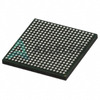
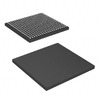
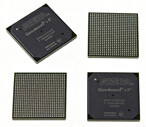
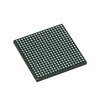
Image may be representation.
See specifications for product details.
EXPRESS OPTION
Payment method

OMAPL138BZCE - Texas Instruments

Manufacturer Part Number
OMAPL138BZCE
Manufacturer
Texas Instruments
Allelco Part Number
32D-OMAPL138BZCE
Warranty
1 Year Allelco Warranty - Find out more
Stock Status:
17,330 pcs available, New & Original
Parts Description
DAC91001
Data sheet
-
Category
Integrated Circuits (ICs) > Specialized ICs
RoHs Status
Our certification
In stock: 17330

Required fields are indicated by an asterisk (*)
Please send RFQ, we will respond immediately.

Quantity

Specifications

OMAPL138BZCE Tech Specifications
Texas Instruments - OMAPL138BZCE technical specifications, attributes, parameters and parts with similar specifications to Texas Instruments - OMAPL138BZCE

Product Attribute Attribute Value
Part Number OMAPL138BZCE
Package DAC91001
Description DAC91001
Stock Condition Get 17330 pcs available quantity at Allelco
Payment PayPal / TT / Credit Card / Western Union
Allelco Certifications ESD / ISO 9001 / ISO 13485 / ISO 28000
Product Attribute Attribute Value
Manufacturer Texas Instruments
RoHs Status -
Warranty 100% Perfect Functions
Transport port Hong Kong
Shipping by DHL / FedEx / UPS / TNT / SF Express
RFQ Email info@allelco.com

Frequently Asked Questions(FAQ)

What are the key architectural considerations when integrating the OMAPL138BZCE into a low-power embedded system requiring both DSP and ARM processing capabilities?
The OMAPL138BZCE combines a 300 MHz C674x DSP core with a 300 MHz ARM926EJ-S core, enabling heterogeneous processing ideal for real-time signal processing and control tasks. Designers must carefully partition workloads to leverage the DSP’s floating-point acceleration while using the ARM for OS management and I/O handling. Shared L2 cache (up to 256 KB) and unified memory architecture reduce latency but require careful memory mapping to avoid contention. Power domains allow independent shutdown of unused cores, but cross-core synchronization and shared peripheral access (e.g., EMIF, EDMA) necessitate robust software coordination to prevent race conditions.
How does the OMAPL138BZCE compare to the AM1808 in terms of performance-per-watt for industrial motor control applications?
While both the OMAPL138BZCE and AM1808 share the same dual-core architecture and process node, the OMAPL138BZCE includes enhanced power management features such as deeper sleep states and finer-grained clock gating. In a typical three-phase motor control setup with PWM generation and ADC feedback loops, the OMAPL138BZCE can reduce active power by ~15–20% at equivalent computational load due to optimized peripheral clocking and reduced wake-up latency from standby. However, the AM1808 may offer slightly lower BOM cost in high-volume deployments where maximum integration isn’t required.
What PCB layout challenges arise from the BGA package of the OMAPL138BZCE, and how should they be addressed in a 4-layer board design?
The OMAPL138BZCE’s 23 mm × 23 mm BGA with 0.8 mm pitch demands strict adherence to high-speed layout rules. On a 4-layer stack-up (signal-ground-power-signal), critical signals like DDR2/SDRAM interfaces (up to 150 MHz) require impedance-controlled routing (50 Ω single-ended, 100 Ω differential) and length matching within ±50 mils. Power integrity is paramount—use multiple vias for VDD_CORE (1.2 V) and VDD_PLL supplies, and place decoupling capacitors (0.1 µF and 10 µF) within 2 mm of each power ball. Thermal vias under the package center improve heat dissipation but must avoid creating stubs in high-speed return paths.
Can the OMAPL138BZCE support real-time Linux while maintaining deterministic response for DSP-side algorithms?
Yes, but it requires careful software partitioning. The ARM926EJ-S can run a preemptive real-time Linux kernel (e.g., PREEMPT_RT patch) for HMI and network stacks, while the C674x DSP executes time-critical tasks via TI’s DSP/BIOS or bare-metal firmware. Inter-core communication through shared memory (using SysLink or IPC frameworks) introduces microsecond-level jitter; therefore, time-sensitive control loops (e.g., <100 µs cycle times) should reside entirely on the DSP. Cache coherency between cores must be managed explicitly—non-cacheable memory regions or software cache flushes are often necessary.
How does the OMAPL138BZCE handle mixed-voltage I/O interfacing in legacy industrial systems requiring 3.3 V and 1.8 V logic levels?
The OMAPL138BZCE supports flexible I/O voltage domains: most GPIO banks operate at 1.8 V or 3.3 V (configurable per bank), enabling direct connection to both modern and legacy peripherals. For example, SPI and UART interfaces can be assigned to 3.3 V banks for compatibility with older sensors, while DDR2 memory uses 1.8 V signaling. Level translation is only needed when interfacing with 5 V TTL devices. Internal pull-up/pull-down resistors (typically 25–50 kΩ) reduce external component count but may require external resistors for precise timing in high-speed buses.
What are the implications of the OMAPL138BZCE’s lack of hardware floating-point unit on the ARM core for control algorithm development?
The ARM926EJ-S in the OMAPL138BZCE lacks a hardware FPU, so floating-point operations must be handled in software, increasing cycle count by 5–10× compared to hardware execution. For control algorithms involving trigonometric functions or PID loops with floating-point math, developers should offload these to the C674x DSP, which includes a full IEEE 754-compliant FPU. Alternatively, fixed-point arithmetic with Q-format scaling can be used on the ARM, but this increases code complexity and risk of overflow—especially in adaptive filtering or sensor fusion applications.
How does thermal performance of the OMAPL138BZCE scale under sustained DSP workloads in an enclosed industrial enclosure?
Under continuous DSP load (e.g., FFT processing at 300 MHz), the OMAPL138BZCE can dissipate up to 1.8 W, raising junction temperature significantly in passive-cooled environments. In a sealed enclosure with ambient temperature of 50°C, thermal resistance (θJA ≈ 18°C/W) can push Tj above 80°C without a heat spreader. Designers should incorporate a grounded copper pour connected to the board’s thermal plane and consider airflow or metal chassis coupling. Dynamic voltage and frequency scaling (DVFS) can reduce power by ~30% with minimal impact on throughput for non-real-time tasks.
What debug and trace capabilities are available on the OMAPL138BZCE for diagnosing inter-core communication issues?
The OMAPL138BZCE includes an Embedded Trace Macrocell (ETM) on the ARM core and a Real-Time Trace (RTT) interface on the DSP, both accessible via a shared JTAG port. For diagnosing IPC faults, developers can use CCS (Code Composer Studio) to set cross-trigger breakpoints—halting one core when the other accesses a shared memory region. The EDMA controller’s transfer completion interrupts can be logged via hardware event counters to identify bottlenecks. However, simultaneous full-speed trace from both cores requires external trace probes due to bandwidth limitations of the on-chip trace buffer.
How does the OMAPL138BZCE compare to the DM3730 in terms of multimedia processing efficiency for H.264 decoding in portable video devices?
The OMAPL138BZCE lacks the dedicated video accelerators (e.g., IVA-HD) found in the DM3730, making it less efficient for H.264 baseline profile decoding above 480p. While the C674x DSP can handle software-based decoding, it consumes ~60% of core bandwidth at 720×480 resolution, leaving minimal headroom for application logic. In contrast, the DM3730 offloads decoding to hardware, freeing the ARM for UI rendering. For cost-sensitive designs where video is secondary (e.g., diagnostic displays), the OMAPL138BZCE remains viable, but thermal and performance trade-offs must be evaluated.
What precautions are necessary when designing the power-up sequence for the OMAPL138BZCE to ensure reliable boot from NAND flash?
The OMAPL138BZCE requires strict power sequencing: VDD_CORE (1.2 V) must stabilize before or within 100 µs of I/O voltages (1.8 V or 3.3 V). Incorrect sequencing can latch internal logic in an undefined state, causing boot failure. When booting from NAND, the ARM core initializes via ROM code that expects valid data on the GPMC interface within 10 ms of power-on. Use a power management IC (PMIC) with sequenced enable outputs or supervisor circuits to enforce timing. Additionally, NAND timing parameters (tREA, tR) must be configured in the GPMC registers before first access—default values may not meet flash requirements.
Can the OMAPL138BZCE support secure boot in applications requiring firmware authentication?
Yes, the OMAPL138BZCE includes a Secure ROM that supports authenticated boot using RSA-2048 signatures. During boot, the ROM verifies the first-stage bootloader (stored in SPI or NAND) against a public key hash fused into one-time programmable (OTP) memory. If verification fails, the device halts. This prevents unauthorized code execution but requires secure key provisioning during manufacturing. Note that the ARM and DSP share the same secure boot chain—compromising one core risks the entire system. For higher assurance, combine with secure debug disable and memory protection unit (MPU) configuration at runtime.
How should clock distribution be managed when using the OMAPL138BZCE’s internal PLLs for both DSP and ARM subsystems?
The OMAPL138BZCE uses separate PLLs for the ARM (PLL0) and DSP (PLL1), each accepting a reference clock from a single external crystal (typically 24 MHz). To minimize jitter, route the crystal traces symmetrically with ground shielding and avoid crossing split planes. Each PLL output should be filtered with a dedicated RC network (e.g., 10 Ω + 100 nF) before driving internal clocks. Cross-talk between PLLs can cause intermittent timing faults—keep analog supply traces (VDD_PLL) isolated and decoupled locally. For applications requiring ultra-low jitter (e.g., audio codecs), consider bypassing internal PLLs and using external clock sources.
What are the real-world implications of the OMAPL138BZCE’s 133 MHz DDR2 interface for memory-intensive DSP algorithms?
The 16-bit DDR2 interface on the OMAPL138BZCE delivers ~2128 Mbps peak bandwidth, but real-world throughput for DSP algorithms (e.g., FIR filtering or matrix operations) typically reaches only 60–70% due to bus contention and row misses. For streaming data, use EDMA with linked transfers to overlap computation and memory access. Memory allocation should prioritize contiguous blocks in SDRAM to minimize page breaks. In multi-buffer schemes (e.g., ping-pong buffering), align buffers to 32-byte boundaries to optimize cache line fills and reduce effective latency by up to 20%.

Customer Reviews

Evaluation: 10 Articles

  • Nath***rooks
    Jun 11, 2026

    Installed this power component in a converter board. Output remained stable under different load conditions and thermal performance was better than expected.

  • Dani***alkerTech
    Jun 1, 2026

    Product works, but setup took more effort than expected. Once configured the MCU ran reliably, although documentation support felt older compared with newer platforms. Fine for maintenance projects.

  • Yuki***aka88
    May 26, 2026

    信号通信プロジェクトでこのRS-485トランシーバーを使用しました。設置は簡単で、長距離ケーブルでも通信は安定していました。消費電力も、以前使用していたものより低くなっています。

  • Stev***aker
    May 20, 2026

    Solid diode for power rectification. Works well in switching circuits.

  • Bran***Lewis
    May 11, 2026

    Compact FPGA with good performance. Suitable for basic signal processing tasks.

  • Oliv***arris
    May 7, 2026

    Reliable I/O expander. Works well in embedded control applications.

  • Jess***Jones
    Apr 17, 2026

    It offers good value for the price, and the specifications match the description. I’ve been using it for two days with no issues, and I’ll definitely buy it again if I need it in the future.

  • Mich***Smith
    Apr 17, 2026

    Shipping was on time, the component pins are neatly aligned, and I tested 10 of them with a multimeter—all readings were within the specified range. Highly recommended.

  • Aman***arris
    Apr 3, 2026

    It was great—the entire process, from placing the order to receiving the package, went very smoothly. The components were consistent, the price was fair, and I had a very pleasant shopping experience.

  • Mike***nch
    Apr 3, 2026

    Better than expected! The resistance and capacitance readings were spot-on, and it passed the test on the first try. The service was reliable, and the packaging was thoughtful—I highly recommend it.

Write a Review

Your Email address will not be published.

Shipment

Delivery Time

In-stock items can be shipped within 24 hours. Some parts will be arranged for delivery within 1-2 days from the date all items arrive at our warehouse. And Allelco ships order once a day at about 17:00, except Sunday. Once the goods are shipped, the estimated delivery time depends on the shipping methods and Delivery destination. The table below shows are the logistic time for some common countries.

Delivery Cost

  1. Use your express account for shipment if you have one.
  2. Use our account for the shipment. Refer to the table below for the approximate charges.
(Different time frame / countries / package size has different price.)

Delivery Method

  1. Global Common Shipment by DHL / UPS / FedEx / TNT / EMS / SF we support.
  2. Others more shipping ways, please get in touch with your customer manager.

Common Countries Logistic Time Reference
Region Country Logistic Time(Day)
America United States 5
Brazil 7
Europe Germany 5
United Kingdom 4
Italy 5
Oceania Australia 6
New Zealand 5
Asia India 4
Japan 4
Middle East Israel 6
DHL & FedEx Shipment Charges Reference
Shipment charges(KG) Reference DHL(USD$)
0.00kg-1.00kg USD$30.00 - USD$60.00
1.00kg-2.00kg USD$40.00 - USD$80.00
2.00kg-3.00kg USD$50.00 - USD$100.00
Note:
The above table is for reference only. There may have some data bias for the uncontrollable factors.
Contact us if you have any questions.
  • QC (Quality Warranty)
  • Payment Support
  • Packaging
  • Certifications & Memberships

QC (Quality Warranty)

Allelco is committed to exceeding customer expectations through customer service excellence, order accuracy, and on-time delivery.
This is achieved through our commitment to the continual improvement of our processes, services, and products.


Strict quality inspection builds a solid foundation for electronic component quality.
  1. Visual inspection
  2. Performance testing and reliability verification
  3. Standardized full-process testing
  4. Precise control of every parameter
We eliminate defective components and ensure the stable operation of electronic devices through professional quality standards.

Payment Support

The payment method can be chosen from the methods shown below: Wire Transfer (T/T, Bank Transfer), Western Union, Credit card, PayPal.
  • HKBea
  • Paypal
  • MasterCard
  • Western-Union
  • VISA
Stable Delivery, Sincere Partnership — Your Faithful Supply Chain Partner
  • Efficient Supply Management
  • Cost-Saving Procurement
  • Fast Sourcing & Delivery
Contact us if you have any questions.

Packaging

Electrostatic Discharge Protection and Handling

All electrostatic-sensitive components are handled in accordance with electrostatic discharge control procedures. The products are hermetically sealed in anti-static safe packaging to prevent electrostatic damage. Appropriate labeling is also applied for identification and traceability. This ensures product integrity during storage, handling and transportation.


ESD

Certifications & Memberships

Third-party certified, strict quality control. Our certification
  • ISO 9001: 2015
  • ISO 13485: 2016
  • ISO 14001: 2015
  • ISO 28000: 2007
  • ISO 45001: 2018
  • GB/T 27922-2011
  • SMTA
  • IPC
  • ESD
  • PSMA
Texas Instruments

OMAPL138BZCE

Texas Instruments
32D-OMAPL138BZCE

Want a better price? Add to Cart and Submit RFQ now, we'll contact you immediately.

0 RFQ
Shopping cart (0 Items)
It is empty.
Compare List (0 Items)
It is empty.
Feedback

Your feedback matters! At Allelco, we value the user experience and strive to improve it constantly.
Please share your comments with us via our feedback form, and we'll respond promptly.
Thank you for choosing Allelco.

Subject
E-mail
Comments
Captcha
Drag or click to upload file
Upload File
types: .xls, .xlsx, .doc, .docx, .jpg, .png and .pdf.
Max file size: 10MB