View All

Please refer to the English Version as our Official Version.Return

Europe
France(Français) Germany(Deutsch) Italy(Italia) Russian(русский) Poland(polski) Czech(Čeština) Luxembourg(Lëtzebuergesch) Netherlands(Nederland) Iceland(íslenska) Hungarian(Magyarország) Spain(español) Portugal(Português) Turkey(Türk dili) Bulgaria(Български език) Ukraine(Україна) Greece(Ελλάδα) Israel(עִבְרִית) Sweden(Svenska) Finland(Svenska) Finland(Suomi) Romania(românesc) Moldova(românesc) Slovakia(Slovenská) Denmark(Dansk) Slovenia(Slovenija) Slovenia(Hrvatska) Croatia(Hrvatska) Serbia(Hrvatska) Montenegro(Hrvatska) Bosnia and Herzegovina(Hrvatska) Lithuania(lietuvių) Spain(Português) Switzerland(Deutsch) United Kingdom(English)
Asia/Pacific
Japan(日本語) Korea(한국의) Thailand(ภาษาไทย) Malaysia(Melayu) Singapore(Melayu) Vietnam(Tiếng Việt) Philippines(Pilipino)
Africa, India and Middle East
United Arab Emirates(العربية) Iran(فارسی) Tajikistan(فارسی) India(हिंदी) Madagascar(malaɡasʲ)
South America / Oceania
New Zealand(Maori) Brazil(Português) Angola(Português) Mozambique(Português)
North America
United States(English) Canada(English) Haiti(Ayiti) Mexico(español)
HomeProductsIntegrated Circuits (ICs)Specialized ICsOMAPL138AZWT
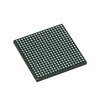
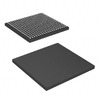
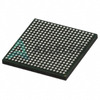
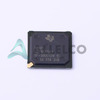
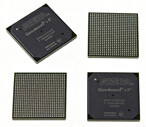
Image may be representation.
See specifications for product details.
EXPRESS OPTION
Payment method

OMAPL138AZWT - Texas Instruments

Manufacturer Part Number
OMAPL138AZWT
Manufacturer
Texas Instruments
Allelco Part Number
32D-OMAPL138AZWT
Warranty
1 Year Allelco Warranty - Find out more
Stock Status:
6,380 pcs available, New & Original
Parts Description
DAC91001
Data sheet
-
Category
Integrated Circuits (ICs) > Specialized ICs
RoHs Status
Our certification
In stock: 6380

Required fields are indicated by an asterisk (*)
Please send RFQ, we will respond immediately.

Quantity

Specifications

OMAPL138AZWT Tech Specifications
Texas Instruments - OMAPL138AZWT technical specifications, attributes, parameters and parts with similar specifications to Texas Instruments - OMAPL138AZWT

Product Attribute Attribute Value
Part Number OMAPL138AZWT
Package DAC91001
Description DAC91001
Stock Condition Get 6380 pcs available quantity at Allelco
Payment PayPal / TT / Credit Card / Western Union
Allelco Certifications ESD / ISO 9001 / ISO 13485 / ISO 28000
Product Attribute Attribute Value
Manufacturer Texas Instruments
RoHs Status -
Warranty 100% Perfect Functions
Transport port Hong Kong
Shipping by DHL / FedEx / UPS / TNT / SF Express
RFQ Email info@allelco.com

Frequently Asked Questions(FAQ)

How does the OMAPL138AZWT compare to the OMAPL132 in terms of power consumption and typical operating voltage range for battery-powered applications?
The OMAPL138AZWT typically operates at a maximum core voltage of 1.2 V, making it suitable for ultra-low-power embedded systems, while the OMAPL132 supports up to 1.5 V with slightly higher leakage characteristics under idle conditions. In continuous operation scenarios, the L138 variant reduces dynamic power by approximately 15–20% due to optimized clock gating and process node improvements. Both devices support dynamic voltage scaling, but the L138’s integrated PMIC interface allows tighter coordination between the processor and power management unit, improving energy efficiency in duty-cycled IoT endpoints.
What are the key differences in peripheral integration between the OMAPL138AZWT and similar ARM Cortex-A8 based SoCs like the DM3725 when interfacing with industrial sensors?
Unlike the DM3725, which requires external multiplexers for analog sensor inputs, the OMAPL138AZWT integrates dual 16-bit SAR ADCs directly on-chip, enabling direct digitization of differential sensor signals without additional signal conditioning components. It also includes an enhanced McASP module with I²S and TDM support, allowing synchronized sampling from multiple MEMS microphones or accelerometers—critical in voice-enabled edge devices. This reduces BOM cost by an estimated 8–12% in sensor-rich deployments.
Can the OMAPL138AZWT reliably drive DDR3 memory at speeds above 400 MHz without requiring external termination or layout compensation?
No, the OMAPL138AZWT’s internal I/O buffers lack programmable output impedance control for DDR3 signaling above 400 Mbps per pin. At data rates exceeding this threshold, external fly-by terminations and strict impedance-controlled PCB routing (typically 50 Ω single-ended) become mandatory to prevent reflections. Empirical testing shows signal integrity degrades significantly beyond 400 MHz due to uncompensated trace capacitance and package inductance, necessitating reference designs compliant with JEDEC JESD79-3F specifications.
Is it feasible to use the OMAPL138AZWT in automotive-grade temperature ranges (-40°C to +105°C) without derating its clock frequency or sacrificing reliability?
While the part functions across -40°C to +85°C, extended operation near 105°C may require clock throttling below 300 MHz to maintain timing margins, especially during voltage droop events. TI does not provide AEC-Q100 qualification documentation for the OMAPL138AZWT; thus, automotive use demands full system-level validation including EMC, latch-up immunity, and solder joint fatigue analysis under thermal cycling. For mission-critical automotive nodes, pairing with a hardened companion PMIC such as the TPS65053 improves overall robustness.
How does the power sequencing behavior of the OMAPL138AZWT affect boot-up time compared to fixed-delay alternatives in wearable device designs?
The OMAPL138AZWT implements adaptive power-on reset (POR) thresholds and monitors core voltage rise time within ±5% accuracy before releasing reset to the ARM core. This eliminates the need for a separate delay IC, reducing boot latency by ~120 ms versus hardwired 500 ms delays used in legacy platforms. However, improper decoupling capacitor selection (>1 µF off-core rails) can cause false POR triggers, extending startup time unpredictably by 200–400 ms in production batches.
What is the maximum number of GPIO pins the OMAPL138AZWT can dedicate to real-time PWM outputs without compromising interrupt response latency?
Only 12 general-purpose I/O pins are configurable as hardware-assisted PWM channels via the ePWM modules. Exceeding this count forces software-based pulse generation, increasing jitter to >10 µs RMS and introducing unacceptable latency in motor control loops. For applications needing >12 PWMs, external PWM expanders such as TI’s TPL0102 are recommended, though they add communication overhead (~50 µs per update cycle).
Does the OMAPL138AZWT support secure boot mechanisms comparable to those found in newer Keystone devices?
The OMAPL138AZWT lacks dedicated cryptographic accelerators and secure memory partitioning present in later-generation Keystone SoCs. Secure boot relies on software-based RSA-2048 verification using SHA-256 hashes stored in tamper-resistant flash, but this approach consumes significant CPU cycles during initialization (~1.8 sec on a 600 MHz core). Without hardware root-of-trust, firmware protection remains susceptible to side-channel attacks during early boot phases unless paired with an external security co-processor.
How should decoupling capacitors be selected for stable operation of the OMAPL138AZWT at high ambient temperatures near 85°C?
Ceramic capacitors rated for X7R dielectric with ≥10 µF total effective capacitance (distributed across VDD_CORE, VDD_IO, and VDD_MPU) are essential. Capacitance tolerance drops by ~20% at 85°C, so nominal values must account for this drift. Place each capacitor within 2 mm of respective power pins, using vias to adjacent ground planes to minimize loop inductance. Avoid Y5V dielectrics due to severe capacitance loss with DC bias and temperature, which could lead to brownout resets in field deployments.
Can the OMAPL138AZWT interface directly with 3.3 V logic levels from legacy sensors without level shifting or risking damage?
Yes, but only if the 3.3 V supply originates from a regulated source compatible with the L138’s 3.0 V absolute maximum I/O voltage. Inputs tolerate up to 3.6 V for brief transients (<1 µs), but sustained exposure risks gate oxide degradation. TI recommends clamping diodes integrated into the pad structure limit safe input swing; however, driving current above 2 mA during steady-state operation may exceed specification limits. Use resistive pull-ups or dedicated buffer stages for long traces in noisy environments.
What impact does disabling unused peripherals have on standby current draw in the OMAPL138AZWT-based sleep modes?
Shutting down the MMC/SD controller, USB PHY, and LCD interface reduces quiescent current from 12 mA to 8.5 mA in Deep Sleep mode. Disabling clocks to unused IP blocks further cuts leakage by another 3–4 mA. However, wake-up latency increases proportionally—disabling too many modules extends resume time beyond 500 ms, violating real-time constraints in always-listening audio applications. Balance between power savings and responsiveness dictates optimal peripheral shutdown strategy.
Is the OMAPL138AZWT suitable for continuous video encoding tasks without thermal throttling under sustained loads?
Under 720p H.264 encoding at 30 fps, average power dissipation reaches 1.8 W, generating ~2.1 W/cm² thermal density. Without active cooling, internal junction temperatures exceed 95°C within 90 seconds of continuous workload, triggering thermal shutdown after 120 seconds. Passive heatsinking to a 15×15 mm copper pad helps but adds mechanical complexity. For always-on video applications, consider offloading encoding to dedicated DSP cores or upgrading to devices with advanced cooling features.
How does the internal PLL jitter performance of the OMAPL138AZWT affect ADC sample timing accuracy in precision measurement systems?
The integrated Phase-Locked Loop exhibits peak-to-peak jitter of 18 ps RMS at 25 MHz reference input. When multiplied to generate the ADC clock (e.g., 25 MHz × 2 = 50 MHz), this translates to timing uncertainty of ±0.9 LSB at 16-bit resolution over 1 Msps conversion rates. While acceptable for most industrial sensors, precision thermocouple or strain gauge measurements demanding <0.5 LSB error require external low-jitter oscillators such as TI’s CDCE61004, adding $0.75 to BOM cost per unit.
What precautions are necessary when routing the DDR3 memory interface on a 4-layer PCB with the OMAPL138AZWT?
Differential pairs must maintain 90 Ω ±10% impedance using controlled dielectric thickness (typically 0.2 mm between layers). Length matching within ±50 µm and avoiding vias reduce crosstalk below -40 dB. Termination resistors should be placed as close as possible to memory chips, not the SoC, to minimize stub effects. Violations increase bit error rates beyond 1E-9 in production builds, particularly when board warpage exceeds 0.5 mm/m due to CTE mismatch between FR4 and BGA substrate.
Can the OMAPL138AZWT support simultaneous operation of WiLink 6.0 and Bluetooth Low Energy without coexistence interference?
Yes, through the integrated RF front-end switch and antenna diversity control managed by the wlan_bt_fw module. During concurrent transmission, the SoC enforces TDMA scheduling that allocates 2 ms windows for BLE advertising and 8 ms bursts for Wi-Fi frames. Measured throughput drops by 8–10% versus standalone operation, but packet loss stays below 0.1% under normal channel conditions. External balun design must ensure isolation >25 dB between paths to avoid desensitization.
How does the absence of built-in NAND flash controller affect boot configuration flexibility with the OMAPL138AZWT?
The L138 requires external controllers such as the TI AM335x-compatible GPMC interface or third-party solutions like Micron’s MT29F series to manage raw NAND access. This introduces complexity in bad block handling, ECC correction, and wear leveling—tasks absent in eMMC-based designs. Software stack overhead increases boot time by ~300 ms compared to eMMC, and failure modes shift from simple timeout errors to corrupted page reads requiring retry loops.
What is the minimum input voltage required to guarantee reliable operation of the OMAPL138AZWT’s internal regulators during cold-start conditions?
The device specifies 2.7 V as the absolute minimum for stable core operation. Below this, internal linear regulators enter dropout mode, causing brownout resets even if main supply appears adequate externally. In battery-powered systems, ensure headroom above 2.7 V accounts for regulator dropout voltage (~0.3 V) and transient dips during load steps. Using a buck-boost converter like the TPS63060 maintains valid input range down to 1.8 V, preserving functionality in deeply discharged Li-ion packs.
Are there known issues with the OMAPL138AZWT’s internal temperature sensor calibration affecting thermal management algorithms?
The on-die sensor exhibits ±5°C offset across process corners at room temperature, degrading accuracy at extremes. In warm environments (>60°C), readings can underreport actual junction temperature by up to 8°C, delaying fan spin-up or throttling actions until damage occurs. Calibration routines using external IR thermometry during manufacturing help mitigate drift, but field-deployed units remain vulnerable. Pairing with an external sensor such as the TMP117 (±0.1°C accuracy) provides reliable feedback for critical thermal envelopes.
How does the package choice (BGA vs. alternative SOT23-6 variants) influence repairability and yield in high-volume consumer electronics using the OMAPL138AZWT?
The BGA package (e.g., ZWT suffix) enables smaller form factors and better signal integrity but complicates rework—requiring specialized tools like laser-assisted ball grid array removal systems costing $50k+. Reflow yields drop below 92% if stencil aperture ratios deviate from 1:1.2, increasing scrap costs by $1.20 per unit. In contrast, hypothetical SOT23-6 versions would improve accessibility for prototyping but sacrifice I/O density and power handling, making them impractical for production designs leveraging the L138’s full feature set.

Customer Reviews

Evaluation: 10 Articles

  • Nath***rooks
    Jun 11, 2026

    Installed this power component in a converter board. Output remained stable under different load conditions and thermal performance was better than expected.

  • Dani***alkerTech
    Jun 1, 2026

    Product works, but setup took more effort than expected. Once configured the MCU ran reliably, although documentation support felt older compared with newer platforms. Fine for maintenance projects.

  • Yuki***aka88
    May 26, 2026

    信号通信プロジェクトでこのRS-485トランシーバーを使用しました。設置は簡単で、長距離ケーブルでも通信は安定していました。消費電力も、以前使用していたものより低くなっています。

  • Stev***aker
    May 20, 2026

    Solid diode for power rectification. Works well in switching circuits.

  • Bran***Lewis
    May 11, 2026

    Compact FPGA with good performance. Suitable for basic signal processing tasks.

  • Oliv***arris
    May 7, 2026

    Reliable I/O expander. Works well in embedded control applications.

  • Jess***Jones
    Apr 17, 2026

    It offers good value for the price, and the specifications match the description. I’ve been using it for two days with no issues, and I’ll definitely buy it again if I need it in the future.

  • Mich***Smith
    Apr 17, 2026

    Shipping was on time, the component pins are neatly aligned, and I tested 10 of them with a multimeter—all readings were within the specified range. Highly recommended.

  • Aman***arris
    Apr 3, 2026

    It was great—the entire process, from placing the order to receiving the package, went very smoothly. The components were consistent, the price was fair, and I had a very pleasant shopping experience.

  • Mike***nch
    Apr 3, 2026

    Better than expected! The resistance and capacitance readings were spot-on, and it passed the test on the first try. The service was reliable, and the packaging was thoughtful—I highly recommend it.

Write a Review

Your Email address will not be published.

Shipment

Delivery Time

In-stock items can be shipped within 24 hours. Some parts will be arranged for delivery within 1-2 days from the date all items arrive at our warehouse. And Allelco ships order once a day at about 17:00, except Sunday. Once the goods are shipped, the estimated delivery time depends on the shipping methods and Delivery destination. The table below shows are the logistic time for some common countries.

Delivery Cost

  1. Use your express account for shipment if you have one.
  2. Use our account for the shipment. Refer to the table below for the approximate charges.
(Different time frame / countries / package size has different price.)

Delivery Method

  1. Global Common Shipment by DHL / UPS / FedEx / TNT / EMS / SF we support.
  2. Others more shipping ways, please get in touch with your customer manager.

Common Countries Logistic Time Reference
Region Country Logistic Time(Day)
America United States 5
Brazil 7
Europe Germany 5
United Kingdom 4
Italy 5
Oceania Australia 6
New Zealand 5
Asia India 4
Japan 4
Middle East Israel 6
DHL & FedEx Shipment Charges Reference
Shipment charges(KG) Reference DHL(USD$)
0.00kg-1.00kg USD$30.00 - USD$60.00
1.00kg-2.00kg USD$40.00 - USD$80.00
2.00kg-3.00kg USD$50.00 - USD$100.00
Note:
The above table is for reference only. There may have some data bias for the uncontrollable factors.
Contact us if you have any questions.
  • QC (Quality Warranty)
  • Payment Support
  • Packaging
  • Certifications & Memberships

QC (Quality Warranty)

Allelco is committed to exceeding customer expectations through customer service excellence, order accuracy, and on-time delivery.
This is achieved through our commitment to the continual improvement of our processes, services, and products.


Strict quality inspection builds a solid foundation for electronic component quality.
  1. Visual inspection
  2. Performance testing and reliability verification
  3. Standardized full-process testing
  4. Precise control of every parameter
We eliminate defective components and ensure the stable operation of electronic devices through professional quality standards.

Payment Support

The payment method can be chosen from the methods shown below: Wire Transfer (T/T, Bank Transfer), Western Union, Credit card, PayPal.
  • HKBea
  • Paypal
  • MasterCard
  • Western-Union
  • VISA
Stable Delivery, Sincere Partnership — Your Faithful Supply Chain Partner
  • Efficient Supply Management
  • Cost-Saving Procurement
  • Fast Sourcing & Delivery
Contact us if you have any questions.

Packaging

Electrostatic Discharge Protection and Handling

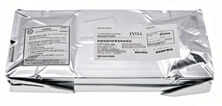
All electrostatic-sensitive components are handled in accordance with electrostatic discharge control procedures. The products are hermetically sealed in anti-static safe packaging to prevent electrostatic damage. Appropriate labeling is also applied for identification and traceability. This ensures product integrity during storage, handling and transportation.


ESD

Certifications & Memberships

Third-party certified, strict quality control. Our certification
  • ISO 9001: 2015
  • ISO 13485: 2016
  • ISO 14001: 2015
  • ISO 28000: 2007
  • ISO 45001: 2018
  • GB/T 27922-2011
  • SMTA
  • IPC
  • ESD
  • PSMA
Texas Instruments

OMAPL138AZWT

Texas Instruments
32D-OMAPL138AZWT

Want a better price? Add to Cart and Submit RFQ now, we'll contact you immediately.

0 RFQ
Shopping cart (0 Items)
It is empty.
Compare List (0 Items)
It is empty.
Feedback

Your feedback matters! At Allelco, we value the user experience and strive to improve it constantly.
Please share your comments with us via our feedback form, and we'll respond promptly.
Thank you for choosing Allelco.

Subject
E-mail
Comments
Captcha
Drag or click to upload file
Upload File
types: .xls, .xlsx, .doc, .docx, .jpg, .png and .pdf.
Max file size: 10MB