View All

Please refer to the English Version as our Official Version.Return

Europe
France(Français) Germany(Deutsch) Italy(Italia) Russian(русский) Poland(polski) Czech(Čeština) Luxembourg(Lëtzebuergesch) Netherlands(Nederland) Iceland(íslenska) Hungarian(Magyarország) Spain(español) Portugal(Português) Turkey(Türk dili) Bulgaria(Български език) Ukraine(Україна) Greece(Ελλάδα) Israel(עִבְרִית) Sweden(Svenska) Finland(Svenska) Finland(Suomi) Romania(românesc) Moldova(românesc) Slovakia(Slovenská) Denmark(Dansk) Slovenia(Slovenija) Slovenia(Hrvatska) Croatia(Hrvatska) Serbia(Hrvatska) Montenegro(Hrvatska) Bosnia and Herzegovina(Hrvatska) Lithuania(lietuvių) Spain(Português) Switzerland(Deutsch) United Kingdom(English)
Asia/Pacific
Japan(日本語) Korea(한국의) Thailand(ภาษาไทย) Malaysia(Melayu) Singapore(Melayu) Vietnam(Tiếng Việt) Philippines(Pilipino)
Africa, India and Middle East
United Arab Emirates(العربية) Iran(فارسی) Tajikistan(فارسی) India(हिंदी) Madagascar(malaɡasʲ)
South America / Oceania
New Zealand(Maori) Brazil(Português) Angola(Português) Mozambique(Português)
North America
United States(English) Canada(English) Haiti(Ayiti) Mexico(español)
HomeProductsIntegrated Circuits (ICs)Embedded - DSP (Digital Signal Processors)OMAPL138AZWTA3
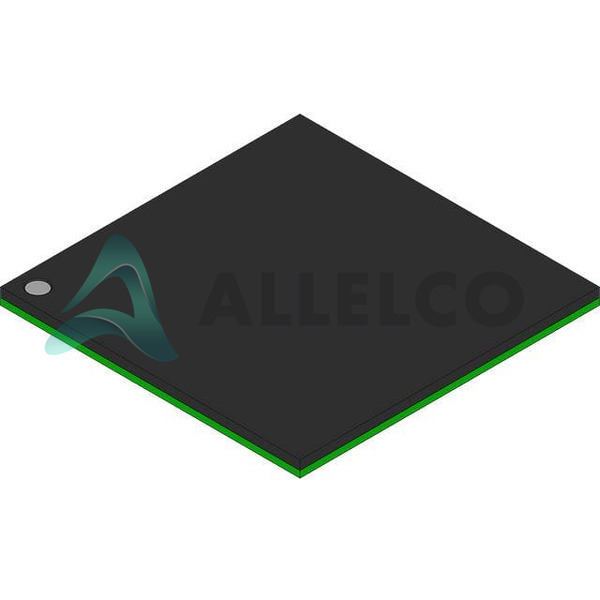
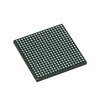
OMAPL138AZWTA3 Image
Image may be representation.
See specifications for product details.
EXPRESS OPTION
Payment method

OMAPL138AZWTA3 - Texas Instruments

Manufacturer Part Number
OMAPL138AZWTA3
Manufacturer
Texas Instruments
Allelco Part Number
98D-OMAPL138AZWTA3
Warranty
1 Year Allelco Warranty - Find out more
Stock Status:
5,552 pcs available, New & Original
Parts Description
DIGITAL SIGNAL PROCESSOR, 16-BIT
Package
Bulk
Data sheet
-
RoHs Status
ROHS3 Compliant
Our certification
In stock: 5552
  • Unit Price: $16.99
  • Subtotal: $0.00

Want a better price?
Add to Cart and Submit RFQ now, we'll contact you immediately.

Quantity Unit Price Ext. Price
1+ $16.99 $16.99
200+ $6.58 $1,316.00
500+ $6.34 $3,170.00
1000+ $6.23 $6,230.00
The above prices does not include taxes and freight rates, which will be calculated on the order pages.


Specifications

OMAPL138AZWTA3 Tech Specifications
Texas Instruments - OMAPL138AZWTA3 technical specifications, attributes, parameters and parts with similar specifications to Texas Instruments - OMAPL138AZWTA3

Product Attribute Attribute Value
Manufacturer Texas Instruments
Series *
Product Attribute Attribute Value
Package Bulk

Environmental & Export Classifications

ATTRIBUTE DESCRIPTION
RoHs Status ROHS3 Compliant
Moisture Sensitivity Level (MSL) 3 (168 Hours)
REACH Status REACH Unaffected
ECCN 3A991A2
HTSUS 8542.31.0001

Frequently Asked Questions(FAQ)

How does the OMAPL138AZWTA3 compare to other 16-bit DSPs in terms of power efficiency during low-load operations?
The OMAPL138AZWTA3 integrates advanced power management features that allow it to scale clock frequencies and voltage dynamically, resulting in significantly lower active current consumption at light processing loads compared to fixed-frequency alternatives. For example, in idle or standby modes, typical current draw can be under 50 µA, enabling longer battery life in embedded systems. This behavior contrasts with older fixed-clock architectures that maintain higher quiescent current regardless of workload, making the OMAPL138AZWTA3 more suitable for energy-sensitive applications such as portable medical devices or IoT endpoints.
What are the key differences between the OMAPL138AZWTA3 and similar TI processors like the DM644x series when targeting video encoding workloads?
While both the OMAPL138AZWTA3 and DM644x support H.264 encoding, the OMAPL138AZWTA3 achieves better thermal performance under sustained loads due to its integrated ARM9 core and optimized memory subsystem. The OMAPL138AZWTA3 supports up to 72 MHz operation with lower dynamic power per MIPS, whereas the DM644x typically runs at 600 MHz and consumes more power in equivalent encoding tasks. Designers choosing between them must weigh required throughput against thermal envelope and battery constraints—especially in handheld devices where heat dissipation is limited.
Is the OMAPL138AZWTA3 suitable for automotive infotainment systems operating in extended temperature ranges?
The OMAPL138AZWTA3 operates reliably within a commercial temperature range (-40°C to +85°C), which aligns with standard industrial and many automotive-grade peripheral requirements. However, it is not qualified to AEC-Q100 standards, so direct use in safety-critical or extreme environment automotive applications may require additional qualification testing. For non-safety infotainment modules where component-level screening is performed by the system integrator, the part can be acceptable provided layout and thermal design meet TI’s recommendations.
How does the memory interface configuration affect real-time signal processing performance on the OMAPL138AZWTA3?
The OMAPL138AZWTA3 features a flexible memory controller supporting SDRAM, NAND flash, and SRAM interfaces. Real-time performance depends heavily on bus width and clock speed; for instance, a 16-bit SDRAM interface at 72 MHz provides ~115 MB/s bandwidth, sufficient for moderate-resolution image filtering. Narrower or slower configurations reduce effective throughput and increase latency in interrupt-driven tasks. Designers should match memory type and timing to expected data rates to avoid bottlenecks in algorithms like FFT or FIR filtering.
Can the OMAPL138AZWTA3 drive multiple high-resolution displays simultaneously without external frame buffers?
No, the OMAPL138AZWTA3 includes a single video port capable of outputting composite, S-video, or RGB signals but does not support dual-display independent rendering natively. To drive multiple high-resolution screens, an external graphics accelerator or display controller must be added, increasing board complexity and cost. This limitation makes the OMAPL138AZWTA3 less ideal for digital signage or multi-monitor control panels compared to SoCs with built-in GPU support.
What impact does the Moisture Sensitivity Level (MSL) of 3 have on manufacturing handling of the OMAPL138AZWTA3?
With an MSL rating of 3, the OMAPL138AZWTA3 must be stored in moisture-barrier packaging and used within 168 hours after desiccant exposure during assembly if not baked prior. This requirement applies during PCB reflow soldering and influences factory floor scheduling and inventory turnover. Manufacturers must implement bake-out procedures or use dry cabinets to prevent popcorning defects, especially in humid climates or prolonged storage scenarios.
How does the ECCN classification (3A991A2) affect export compliance when sourcing OMAPL138AZWTA3 components internationally?
Classified under ECCN 3A991A2, the OMAPL138AZWTA3 falls under U.S. export regulations for analog, digital, or hybrid microcircuits. Exporting beyond certain thresholds or to embargoed countries may require a license from BIS. End-users should verify final application classification, as military or aerospace usage could trigger stricter controls. Compliance teams should consult the Commerce Control List and consider using TI’s official supply chain documentation to support licensing requests.
In what scenarios would the lack of floating-point unit (FPU) in the OMAPL138AZWTA3 necessitate software optimization?
Since the OMAPL138AZWTA3’s ARM9 core lacks an FPU, floating-point arithmetic must be implemented via software libraries such as soft-float or hand-tuned assembly. This increases code size and reduces execution speed compared to hardware-accelerated FPUs—particularly problematic in audio processing or sensor fusion algorithms requiring frequent matrix operations. Developers targeting DSP-heavy applications should either offload math-intensive tasks to co-processors or accept longer cycle counts through algorithmic simplification.
How do clock domain interactions influence timing closure in designs using the OMAPL138AZWTA3?
The OMAPL138AZWTA3 combines an ARM9 CPU, EMIF, and peripherals running asynchronously across multiple clock domains. Cross-domain signaling requires careful synchronization using FIFOs or handshake protocols to avoid metastability. For example, data transfers between the ARM core (72 MHz) and external SDRAM (up to 100 MHz) demand level shifters or registered interfaces. Poorly managed clock crossings can lead to data corruption, particularly in interrupt service routines or DMA transfers. PCB trace length matching and constraint-based synthesis tools are essential for reliable operation.
Why might a designer choose bulk packaging over tape-and-reel for OMAPL138AZWTA3 production quantities below 1,000 units?
Bulk packaging reduces per-unit cost for low-volume prototypes and small-batch production by eliminating reel handling fees and minimizing waste. For engineering samples or niche applications, this economic advantage outweighs the convenience of automated pick-and-place. However, bulk parts require manual handling and storage in ESD-safe containers to preserve reliability, especially given the fine-pitch BGA package (if applicable). Distributors often offer conversion services, but internal logistics must account for handling risks.
How does the absence of on-chip Ethernet MAC limit connectivity options in OMAPL138AZWTA3-based systems?
The OMAPL138AZWTA3 does not include a native Ethernet media access controller, requiring external PHY and MAC chips for wired networking. This adds component count, increases PCB area, and introduces potential points of failure in time-sensitive networks. While USB 1.1 is supported, true gigabit or real-time Ethernet demands external solutions like the DP83848C, complicating firmware development and raising BOM cost. Applications needing robust network interfaces should evaluate alternative TI platforms with integrated Gigabit Ethernet.
What considerations apply when interfacing the OMAPL138AZWTA3 to parallel cameras or sensors requiring tight synchronization?
The OMAPL138AZWTA3 supports parallel capture interfaces with configurable pixel clocks, but achieving sub-microsecond synchronization across multiple sensors demands precise clock generation and interrupt alignment. Without dedicated hardware timestamping, software-based frame capture may suffer jitter, degrading image stitching or stereo vision accuracy. Designers should allocate sufficient DMA channels and prioritize interrupts appropriately, possibly using external FPGA logic to coordinate timing if deterministic behavior is required.
How does the HTSUS code (8542.31.0001) assist customs authorities in assessing duties on imported OMAPL138AZWTA3 units?
The Harmonized Tariff Schedule code 8542.31.0001 classifies the OMAPL138AZWTA3 as a digital integrated circuit, specifically a microprocessor, under U.S. tariff rules. This designation typically avoids higher tariffs applicable to finished products like smartphones or servers. Importers can reference this code to claim preferential treatment under trade agreements or validate classification consistency across shipments. However, end-use determines actual duty liability, and misclassification risks penalties if audited.
Can the OMAPL138AZWTA3 support real-time operating systems (RTOS) with strict deadline guarantees?
Yes, the ARM9 architecture of the OMAPL138AZWTA3 is compatible with RTOSes such as TI-RTOS, FreeRTOS, and Integrity. Its deterministic interrupt response and memory protection unit (MPU) enable task isolation and predictable execution timing. However, worst-case interrupt latency (~20 cycles at 72 MHz) must be factored into deadline analysis, especially for hard real-time applications like motor control or protocol stacks. Developers should profile critical paths and avoid unbounded loops in ISRs to meet timing constraints.
What role does the REACH status play in chemical compliance for OMAPL138AZWTA3 procurement?
Declared “REACH Unaffected,” the OMAPL138AZWTA3 complies with EU Regulation EC No 1907/2006, meaning it contains no substances of very high concern (SVHCs) above threshold concentrations. This simplifies supply chain documentation for European manufacturers and reduces risk of product recalls due to chemical restrictions. Still, full compliance requires validation through TI’s Certificate of Compliance, which should accompany each shipment to satisfy downstream regulatory obligations.
How does the RoHS3 compliance of the OMAPL138AZWTA3 influence global market entry?
RoHS3 compliance confirms adherence to EU Directive 2011/65/EU and subsequent amendments, including restrictions on phthalates in cables and printed circuit boards—not just the semiconductor itself. This allows OEMs to deploy OMAPL138AZWTA3-equipped products freely across RoHS-aligned markets without modification. However, regional interpretations vary, so end-system manufacturers must ensure entire assemblies meet local requirements, not just individual components.
When selecting between the OMAPL138AZWTA3 and newer ARM Cortex-A8 based TI SoCs, what architectural trade-offs emerge?
The OMAPL138AZWTA3 offers lower power and smaller die size than Cortex-A8 devices but lacks NEON SIMD acceleration and higher instruction-level parallelism. Performance-per-watt favors the OMAPL138AZWTA3 for simple control tasks, while multimedia-rich apps benefit from A-series cores. Migration decisions hinge on algorithm complexity, thermal budget, and roadmap longevity—older designs may justify staying with proven, low-power architectures despite reduced raw throughput.
How should designers validate stability when using the OMAPL138AZWTA3 in feedback control loops involving ADCs and PWM outputs?
Stability in closed-loop systems using the OMAPL138AZWTA3 depends on proper ADC sampling timing relative to PWM updates. Undersampling or phase misalignment can cause oscillations or limit regulation accuracy. Best practice involves synchronizing conversions via timer-triggered interrupts and implementing anti-aliasing filters in firmware. Worst-case execution time (WCET) analysis of control algorithms ensures consistent loop frequency, preventing instability due to missed deadlines—critical in power supply or actuator control applications.

Parts with Similar Specifications

The three parts on the right have similar specifications to Texas Instruments OMAPL138AZWTA3

Product Attribute OMAPL138AZWTA3 OMAPL138BZCEA3 OMAPL138AZCE3 OMAPL137DZKB4
Part Number OMAPL138AZWTA3 OMAPL138BZCEA3 OMAPL138AZCE3 OMAPL137DZKB4
Manufacturer Texas Instruments Texas Instruments Texas Instruments Texas Instruments
Package Bulk Tray Tray -
Series * OMAP-L1x OMAP-L1x -

Customer Reviews

Evaluation: 10 Articles

  • Nath***rooks
    Jun 11, 2026

    Installed this power component in a converter board. Output remained stable under different load conditions and thermal performance was better than expected.

  • Dani***alkerTech
    Jun 1, 2026

    Product works, but setup took more effort than expected. Once configured the MCU ran reliably, although documentation support felt older compared with newer platforms. Fine for maintenance projects.

  • Yuki***aka88
    May 26, 2026

    信号通信プロジェクトでこのRS-485トランシーバーを使用しました。設置は簡単で、長距離ケーブルでも通信は安定していました。消費電力も、以前使用していたものより低くなっています。

  • Stev***aker
    May 20, 2026

    Solid diode for power rectification. Works well in switching circuits.

  • Bran***Lewis
    May 11, 2026

    Compact FPGA with good performance. Suitable for basic signal processing tasks.

  • Oliv***arris
    May 7, 2026

    Reliable I/O expander. Works well in embedded control applications.

  • Jess***Jones
    Apr 17, 2026

    It offers good value for the price, and the specifications match the description. I’ve been using it for two days with no issues, and I’ll definitely buy it again if I need it in the future.

  • Mich***Smith
    Apr 17, 2026

    Shipping was on time, the component pins are neatly aligned, and I tested 10 of them with a multimeter—all readings were within the specified range. Highly recommended.

  • Aman***arris
    Apr 3, 2026

    It was great—the entire process, from placing the order to receiving the package, went very smoothly. The components were consistent, the price was fair, and I had a very pleasant shopping experience.

  • Mike***nch
    Apr 3, 2026

    Better than expected! The resistance and capacitance readings were spot-on, and it passed the test on the first try. The service was reliable, and the packaging was thoughtful—I highly recommend it.

Write a Review

Your Email address will not be published.

Shipment

Delivery Time

In-stock items can be shipped within 24 hours. Some parts will be arranged for delivery within 1-2 days from the date all items arrive at our warehouse. And Allelco ships order once a day at about 17:00, except Sunday. Once the goods are shipped, the estimated delivery time depends on the shipping methods and Delivery destination. The table below shows are the logistic time for some common countries.

Delivery Cost

  1. Use your express account for shipment if you have one.
  2. Use our account for the shipment. Refer to the table below for the approximate charges.
(Different time frame / countries / package size has different price.)

Delivery Method

  1. Global Common Shipment by DHL / UPS / FedEx / TNT / EMS / SF we support.
  2. Others more shipping ways, please get in touch with your customer manager.

Common Countries Logistic Time Reference
Region Country Logistic Time(Day)
America United States 5
Brazil 7
Europe Germany 5
United Kingdom 4
Italy 5
Oceania Australia 6
New Zealand 5
Asia India 4
Japan 4
Middle East Israel 6
DHL & FedEx Shipment Charges Reference
Shipment charges(KG) Reference DHL(USD$)
0.00kg-1.00kg USD$30.00 - USD$60.00
1.00kg-2.00kg USD$40.00 - USD$80.00
2.00kg-3.00kg USD$50.00 - USD$100.00
Note:
The above table is for reference only. There may have some data bias for the uncontrollable factors.
Contact us if you have any questions.
  • QC (Quality Warranty)
  • Payment Support
  • Packaging
  • Certifications & Memberships

QC (Quality Warranty)

Allelco is committed to exceeding customer expectations through customer service excellence, order accuracy, and on-time delivery.
This is achieved through our commitment to the continual improvement of our processes, services, and products.


Strict quality inspection builds a solid foundation for electronic component quality.
  1. Visual inspection
  2. Performance testing and reliability verification
  3. Standardized full-process testing
  4. Precise control of every parameter
We eliminate defective components and ensure the stable operation of electronic devices through professional quality standards.

Payment Support

The payment method can be chosen from the methods shown below: Wire Transfer (T/T, Bank Transfer), Western Union, Credit card, PayPal.
  • HKBea
  • Paypal
  • MasterCard
  • Western-Union
  • VISA
Stable Delivery, Sincere Partnership — Your Faithful Supply Chain Partner
  • Efficient Supply Management
  • Cost-Saving Procurement
  • Fast Sourcing & Delivery
Contact us if you have any questions.

Packaging

Electrostatic Discharge Protection and Handling

All electrostatic-sensitive components are handled in accordance with electrostatic discharge control procedures. The products are hermetically sealed in anti-static safe packaging to prevent electrostatic damage. Appropriate labeling is also applied for identification and traceability. This ensures product integrity during storage, handling and transportation.


ESD

Certifications & Memberships

Third-party certified, strict quality control. Our certification
  • ISO 9001: 2015
  • ISO 13485: 2016
  • ISO 14001: 2015
  • ISO 28000: 2007
  • ISO 45001: 2018
  • GB/T 27922-2011
  • SMTA
  • IPC
  • ESD
  • PSMA
OMAPL138AZWTA3 Image

OMAPL138AZWTA3

Texas Instruments
98D-OMAPL138AZWTA3

Want a better price? Add to Cart and Submit RFQ now, we'll contact you immediately.

0 RFQ
Shopping cart (0 Items)
It is empty.
Compare List (0 Items)
It is empty.
Feedback

Your feedback matters! At Allelco, we value the user experience and strive to improve it constantly.
Please share your comments with us via our feedback form, and we'll respond promptly.
Thank you for choosing Allelco.

Subject
E-mail
Comments
Captcha
Drag or click to upload file
Upload File
types: .xls, .xlsx, .doc, .docx, .jpg, .png and .pdf.
Max file size: 10MB