View All

Please refer to the English Version as our Official Version.Return

Europe
France(Français) Germany(Deutsch) Italy(Italia) Russian(русский) Poland(polski) Czech(Čeština) Luxembourg(Lëtzebuergesch) Netherlands(Nederland) Iceland(íslenska) Hungarian(Magyarország) Spain(español) Portugal(Português) Turkey(Türk dili) Bulgaria(Български език) Ukraine(Україна) Greece(Ελλάδα) Israel(עִבְרִית) Sweden(Svenska) Finland(Svenska) Finland(Suomi) Romania(românesc) Moldova(românesc) Slovakia(Slovenská) Denmark(Dansk) Slovenia(Slovenija) Slovenia(Hrvatska) Croatia(Hrvatska) Serbia(Hrvatska) Montenegro(Hrvatska) Bosnia and Herzegovina(Hrvatska) Lithuania(lietuvių) Spain(Português) Switzerland(Deutsch) United Kingdom(English)
Asia/Pacific
Japan(日本語) Korea(한국의) Thailand(ภาษาไทย) Malaysia(Melayu) Singapore(Melayu) Vietnam(Tiếng Việt) Philippines(Pilipino)
Africa, India and Middle East
United Arab Emirates(العربية) Iran(فارسی) Tajikistan(فارسی) India(हिंदी) Madagascar(malaɡasʲ)
South America / Oceania
New Zealand(Maori) Brazil(Português) Angola(Português) Mozambique(Português)
North America
United States(English) Canada(English) Haiti(Ayiti) Mexico(español)
HomeProductsIntegrated Circuits (ICs)Embedded - MicroprocessorsOMAPL137DZKBA3
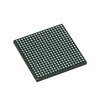
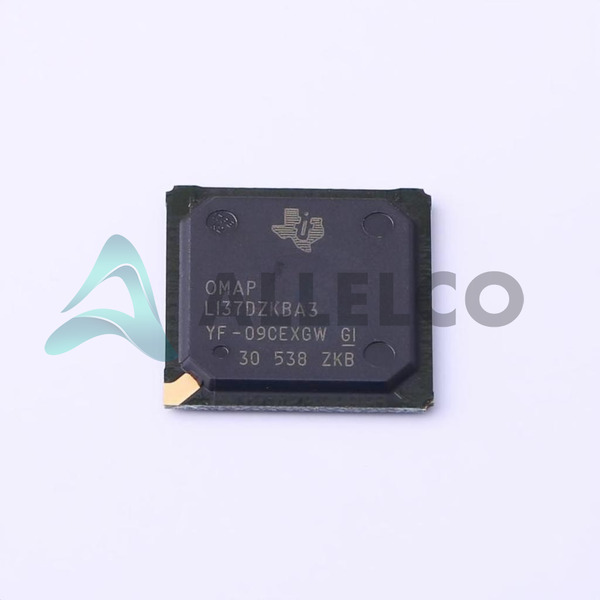
OMAPL137DZKBA3 Image
Image may be representation.
See specifications for product details.
EXPRESS OPTION
Payment method

OMAPL137DZKBA3 - Texas Instruments

Manufacturer Part Number
OMAPL137DZKBA3
Manufacturer
Texas Instruments
Allelco Part Number
32D-OMAPL137DZKBA3
Warranty
1 Year Allelco Warranty - Find out more
Stock Status:
15,160 pcs available, New & Original
Parts Description
IC MPU OMAP-L1X 375MHZ 256BGA
Package
256-BGA (17x17)
Data sheet
OMAPL137DZKBA3.pdf

PCN Design/Specification

Cylindrical Battery Holders.pdf

PCN Assembly/Origin

2.73KHz.pdf

PCN Packaging

2.73KHz.pdf
RoHs Status
ROHS3 Compliant
Our certification
In stock: 15160
  • Unit Price: $11.65
  • Subtotal: $0.00

Want a better price?
Add to Cart and Submit RFQ now, we'll contact you immediately.

Quantity Unit Price Ext. Price
1+ $11.65 $11.65
10+ $11.19 $111.90
30+ $10.38 $311.40
100+ $9.68 $968.00
The above prices does not include taxes and freight rates, which will be calculated on the order pages.

Specifications

OMAPL137DZKBA3 Tech Specifications
Texas Instruments - OMAPL137DZKBA3 technical specifications, attributes, parameters and parts with similar specifications to Texas Instruments - OMAPL137DZKBA3

Product Attribute Attribute Value
Manufacturer Texas Instruments
Voltage - I/O 1.8V, 3.3V
USB USB 1.1 + PHY (1), USB 2.0 + PHY (1)
Supplier Device Package 256-BGA (17x17)
Speed 375MHz
Series OMAP-L1x
Security Features -
SATA -
RAM Controllers SDRAM
Package / Case 256-BGA
Package Tray
Product Attribute Attribute Value
Operating Temperature -40°C ~ 105°C (TJ)
Number of Cores/Bus Width 1 Core, 32-Bit
Mounting Type Surface Mount
Graphics Acceleration No
Ethernet 10/100Mbps (1)
Display & Interface Controllers LCD
Core Processor ARM926EJ-S
Co-Processors/DSP Signal Processing; C674x, System Control; CP15
Base Product Number OMAPL137
Additional Interfaces HPI, I²C, McASP, MMC/SD, SPI, UART

Environmental & Export Classifications

ATTRIBUTE DESCRIPTION
RoHs Status ROHS3 Compliant
Moisture Sensitivity Level (MSL) 3 (168 Hours)
REACH Status REACH Unaffected
ECCN 3A991A2
HTSUS 8542.31.0001

Parts Introduction

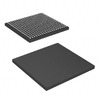
OMAPL137DZKBA3 Image
OMAPL137DZKBA3 (1)

Manufacturer Part Number

OMAPL137DZKBA3

Manufacturer

Texas Instruments

Introduction

The OMAPL137DZKBA3 is an embedded microprocessor from the OMAP-L1x series designed for signal processing and general embedded applications.

Product Features and Performance

Embedded ARM926EJ-S core processor

1 Core, 32-Bit architecture

Operating speed of 375MHz

Co-Processors/DSP include C674x and CP15 for system control

Supports SDRAM memory integration

No graphics acceleration

LCD display interface controller

Built-in 10/100Mbps Ethernet connectivity

USB 1.1 and USB 2.0 support including PHY

Multiple I/O voltages supported: 1.8V, 3.3V

Operates across a wide temperature range from -40°C to 105°C

Surface mount 256-BGA package

Additional interfaces for HPI, I2C, McASP, MMC/SD, SPI, UART

Product Advantages

High-performance signal processing capabilities

Broad connectivity with various peripheral interfaces

Suitable for harsh temperature environments

Dual USB support enhances connectivity options

Ideally suited for industrial and intensive embedded applications

Key Technical Parameters

Core Processor: ARM926EJ-S

Number of Cores/Bus Width: 1 Core, 32-Bit

Speed: 375MHz

Memory Controllers: SDRAM

Ethernet: 10/100Mbps

USB Support: USB 1.1 and 2.0

Voltage I/O: 1.8V, 3.3V

Operating Temperature Range: -40°C ~ 105°C

Quality and Safety Features

Robust operation within industrial temperature range

Compatibility

Compatible with a variety of embedded platforms due to standard interfaces and software support

Application Areas

Industrial control

Medical devices

Automotive infotainment

Communication infrastructure

Engine management systems

Product Lifecycle

Product Status: Active

Not nearing discontinuation as of last update

Replacements or upgrades should be available through Texas Instruments' ongoing product development

Several Key Reasons to Choose This Product

High integration for embedded platforms reducing system complexity

Diverse peripheral support facilitating broad application

Texas Instruments' reputation and support for embedded processors

Tailored for demanding operational environments with extended temperature range

Active product status ensures long-term availability and support

Frequently Asked Questions(FAQ)

What are the key differences between the OMAPL137DZKBA3 and similar ARM9-based processors in terms of power efficiency and real-time processing capabilities for industrial control applications?
The OMAPL137DZKBA3 integrates a single-core ARM926EJ-S CPU running at 375MHz alongside a C674x floating-point DSP core, enabling efficient signal processing and real-time task handling. Unlike standalone ARM9 devices without co-processors, this SoC reduces system-level complexity by offloading math-intensive operations from the main CPU. For industrial motor control or sensor fusion tasks, the combination allows deterministic timing on the DSP while maintaining Linux compatibility on the ARM core. Power consumption is optimized through clock gating and voltage scaling, making it suitable for battery-powered or energy-sensitive embedded systems where thermal design is constrained.
How does the memory subsystem configuration impact system performance when using the OMAPL137DZKBA3 in a boot-from-NAND flash application with SDRAM expansion?
The OMAPL137DZKBA3 supports external SDRAM via its memory controller, which must be properly configured with timing parameters aligned to the selected DRAM type—typically MT48LC4M32B2BG-7IT:E or similar LPDDR equivalents. In NAND boot scenarios, the ROM bootloader initializes the EMIF (External Memory Interface) before loading the OS into SDRAM. Mismatched CAS latency or row/column address widths can cause initialization failures or reduced throughput. A 64-bit data bus configuration yields higher bandwidth than 32-bit setups, improving OS responsiveness and multitasking performance under moderate loads. Engineers should validate timing registers during bring-up to avoid silent data corruption during sustained transfers.
Can the OMAPL137DZKBA3 reliably drive a 480x272 RGB TFT panel directly, and what interface considerations apply for LCD controller implementation?
Yes, the device includes a dedicated LCD controller supporting RGB, TTL, and other common interfaces up to 24-bit color depth. Driving a 480x272 panel is feasible provided sufficient frame buffer RAM is allocated in SDRAM—typically requiring ~600KB for full-color double buffering. The pixel clock must be generated accurately via PLL settings; incorrect output divider ratios may result in distorted images or sync instability. Additionally, backlight control and GPIO-driven enable signals should be managed through general-purpose I/O pins. Timing compliance with VESA standards ensures compatibility across display modules from different vendors.
What precautions should be taken when routing high-speed signals near the USB 2.0 PHY on the OMAPL137DZKBA3 to maintain signal integrity?
The OMAPL137DZKBA3 features two USB ports—one USB 1.1 and one USB 2.0 High-Speed—with integrated transceivers. For USB 2.0 operation, differential pairs must adhere to impedance-controlled routing (90Ω typical for D+/D− lines), with matched length skew within ±5 mils and minimal vias. Keep traces away from noisy sources like switching regulators or clock oscillators by at least 3× trace width. Termination resistors should be placed as close to the connector as possible to reduce reflections. Poor layout can degrade eye diagrams, causing enumeration failures or intermittent data errors during bulk transfers exceeding 10 MB/s.
How does the operating temperature range of -40°C to +105°C affect reliability and long-term performance of the OMAPL137DZKBA3 in automotive edge applications?
With an extended junction temperature rating up to 105°C, the OMAPL137DZKBA3 meets automotive-grade thermal demands without additional derating. However, PCB materials and solder joints become critical stress points at extremes. At -40°C, capacitor ESR increases and crystal oscillator stability may degrade slightly, potentially affecting boot times. Conversely, at elevated temperatures, leakage current rises and clock margins shrink. Proper thermal vias under the 256-BGA package and adherence to JEDEC JESD22-A104 thermal cycling tests ensure robustness. Component aging effects are mitigated through built-in error correction in DDR initialization routines.
Is it advisable to use the HPI interface for real-time communication between the OMAPL137DZKBA3 and an external FPGA, and what bandwidth limitations should be considered?
The High-Performance Parallel Interface (HPI) on the OMAPL137DZKBA3 offers up to 8-bit bidirectional data transfer at synchronous or asynchronous modes. While suitable for low-latency command passing between the ARM core and FPGA, effective throughput depends heavily on firmware overhead. In burst mode, peak theoretical bandwidth reaches ~12.5 MB/s (at 100MHz), but practical rates hover around 8–9 MB/s due to protocol framing and interrupt handling. For time-critical applications requiring microsecond response, consider DMA-assisted transfers instead of pure polling. Latency typically ranges from 50ns to 1μs depending on configuration, making it viable for control loops but not streaming video.
How does the choice between USB 1.1 and USB 2.0 ports influence peripheral selection when designing a diagnostic tool based on the OMAPL137DZKBA3?
The OMAPL137DZKBA3 provides one USB 1.1 port limited to 12 Mbps and one USB 2.0 High-Speed port capable of 480 Mbps. Selecting peripherals accordingly avoids bottlenecks: USB 2.0 supports high-bandwidth sensors like cameras or mass storage, while USB 1.1 suffices for keyboards, mice, or simple debug adapters. Power delivery also differs—USB 2.0 can supply up to 500mA, whereas USB 1.1 is restricted to 100mA. When integrating both types, route them on separate layers to prevent crosstalk. Firmware must enumerate devices correctly based on endpoint descriptors to leverage available bandwidth efficiently.
What role does CP15 play in system security and performance tuning for the OMAPL137DZKBA3, particularly in preventing unauthorized memory access?
CP15 (Coprocessor 15) manages cache hierarchy, MMU operations, and system control registers on the ARM926EJ-S core used in the OMAPL137DZKBA3. It enables virtual memory mapping, which isolates user processes from kernel space—a foundational security measure against buffer overflow exploits. Cache lockdown features allow critical code sections to remain resident and fast-executing. However, misconfigured domain attributes or TLB entries can introduce vulnerabilities or cause crashes. During development, careful use of CP15 instructions ensures predictable execution timing, though disabling caches entirely sacrifices performance. Most production systems balance protection with speed by enabling L1 caches and fine-grained access controls.
How does the absence of SATA support in the OMAPL137DZKBA3 affect data logging strategies in industrial IoT gateways compared to more recent ARM Cortex-A series chips?
Without native SATA, the OMAPL137DZKBA3 relies on SD/MMC or USB-attached storage for data logging. This limits throughput to ~25–30 MB/s over SDIO versus SATA’s theoretical 1.5 Gbps. In high-frequency sensor networks generating continuous streams, this bottleneck forces either data compression or reduced sampling rates. Alternatives include attaching SATA drives via USB-to-SATA bridges, though added latency and cost reduce reliability. Compared to Cortex-A53/A72 platforms with integrated SATA, the OMAPL137 requires more creative storage architectures but remains adequate for moderate-volume logging in legacy or low-power deployments.
What are the implications of using the McASP module for audio codec interfacing in a voice-enabled kiosk based on the OMAPL137DZKBA3?
The Multi-channel Audio Serial Port (McASP) on the OMAPL137DZKBA3 supports TDM and I2S protocols, ideal for connecting PCM5102A or WM8731 codecs. It handles up to 32 channels at sample rates up to 192 kHz, though actual performance depends on DMA efficiency and CPU load. In a kiosk application, McASP eliminates bit-banging overhead and ensures synchronized ADC/DAC operations. Clock generation via PLL ensures jitter-free audio output. However, insufficient FIFO depth or poor ISR timing can cause audio dropouts. Pairing McASP with hardware-assisted DMA transfers minimizes CPU intervention, preserving resources for touchscreen UI rendering and network tasks.
How does the Moisture Sensitivity Level (MSL) rating of 3 for the OMAPL137DZKBA3 influence manufacturing process flow in surface-mount assembly?
As an MSL 3 component, the OMAPL137DZKBA3 must undergo moisture preconditioning if exposed to ambient humidity beyond 30°C/60% RH for >168 hours. Standard reflow profiles assume dry packaging; otherwise, trapped moisture vaporizes during thermal cycling, causing popcorning and internal delamination. Manufacturers follow IPC/JEDEC J-STD-033 guidelines, storing parts in dry cabinets and baking before assembly if needed. Lead-free solders exacerbate this risk due to higher reflow temperatures. Failure to comply risks catastrophic board-level failures during field deployment, especially in humid climates or poorly controlled assembly environments.
What trade-offs exist between using the SPI or UART interfaces for debugging the OMAPL137DZKBA3 in a production environment with limited GPIO availability?
Both SPI and UART offer serial debugging capabilities, but differ significantly. UART uses fewer pins (TX/RX only) and supports simple printf-style logging, ideal for basic bring-up. However, it lacks hardware flow control and shares baud rate tolerance with crystal accuracy. SPI requires four signals (CS, CLK, MOSI, MISO) and enables faster data dumps but consumes more GPIOs. For production diagnostics, UART suffices unless large memory regions need inspection. If GPIO scarcity is critical, UART wins; otherwise, SPI allows concurrent sensor reads during debugging sessions without interrupting primary tasks.
How does the lack of hardware graphics acceleration affect GUI development on the OMAPL137DZKBA3 compared to modern SoCs?
Without GPU support, the OMAPL137DZKBA3 relies solely on software rendering or lightweight libraries like DirectFB or Qt Embedded. This increases CPU load and limits animation smoothness or complex widget hierarchies. Frame rates drop significantly with 2D drawing operations, making rich UIs impractical. Developers must optimize redraw regions, use double buffering judiciously, and offload static elements to frame buffers. While acceptable for basic menus or text-heavy dashboards, interactive graphics suffer. Modern alternatives with GPUs outperform here, but the OMAPL137 remains viable for static displays with careful coding.
Can the Ethernet MAC on the OMAPL137DZKBA3 achieve full-duplex 100 Mbps throughput in practice, and what factors limit performance?
Yes, the integrated 10/100 Ethernet MAC can sustain full-duplex 100 Mbps with proper PHY pairing (e.g., DP83848). Real-world throughput approaches 94–96 Mbps after accounting for TCP/IP stack overhead and packet headers. Key limiting factors include interrupt frequency, DMA descriptor management, and PHY jitter. Unoptimized drivers cause buffer overflows or dropped packets under sustained load. Enabling jumbo frames or hardware checksum offload improves efficiency. Cable quality and switch port capabilities also cap achievable speeds. For most industrial protocols like Modbus TCP, this bandwidth is more than sufficient despite not reaching theoretical maxima.
How does the absence of ECC memory support in the OMAPL137DZKBA3 impact data integrity in safety-critical applications?
The OMAPL137DZKBA3 lacks ECC on its external SDRAM interface, meaning single-bit errors go undetected. In safety-critical systems (e.g., medical devices or avionics), this poses reliability risks. Mitigation strategies include software parity checks, watchdog timers, or redundant computation. Alternatively, selecting DRAM with built-in scrubbing or using multiple chips in voting logic adds complexity. For non-certified industrial use, uncorrected errors may be tolerable given low soft-error rates. However, regulatory compliance (e.g., ISO 26262) often mandates ECC, making this chip unsuitable for ASIL-D designs without extensive architectural safeguards.
What steps are necessary to ensure reliable booting when transitioning from NAND flash to SDRAM using the OMAPL137DZKBA3 in a custom carrier board?
Reliable booting requires precise EMIF register programming matching the DRAM specifications, including tRCD, tRP, and refresh intervals. The ROM bootloader reads the first-stage loader from NAND, configures clocks, then initializes EMIF before copying code to SDRAM. Voltage rails must stabilize within spec (±5%) before EMIF reset deassertion. Oscillator startup time affects timing windows—crystal warm-up delays must be accommodated. Debugging often involves measuring EMIF_CLK and DQS signals with an oscilloscope to verify correct strobe alignment. Failure modes include silent hangs or corrupted data, necessitating iterative register tuning and signal integrity validation.
How does the 1.8V/3.3V mixed-voltage architecture of the OMAPL137DZKBA3 simplify or complicate level shifting when interfacing with 5V legacy peripherals?
The OMAPL137DZKBA3 operates I/O at 1.8V or 3.3V, requiring level shifters for 5V TTL-compatible devices. While 3.3V inputs tolerate brief 5V pulses per datasheet, sustained exposure risks latch-up. Bidirectional translators (e.g., TXB0108) handle mixed-direction signals cleanly. Dedicated 3.3V I/O banks ease interfacing with most peripherals, but GPIOs tied to 1.8V nets demand caution. Isolating 5V domains with optocouplers or digital isolators enhances noise immunity. Overall, the dual-voltage scheme offers flexibility but increases BOM count versus single-supply solutions, adding cost and layout complexity.
What considerations apply when selecting a heatsink or thermal solution for the OMAPL137DZKBA3 in a compact enclosure with natural convection cooling?
Despite modest TDP (~2W), the 256-BGA package’s 17x17 mm footprint concentrates heat in a small area. Natural convection alone may not suffice above 60°C ambient. Thermal vias under the array dissipate heat to inner layers, improving spread. A small aluminum plate or copper pour connected to multiple vias acts as a passive heatsink. Avoid insulating adhesives that block conduction. Monitor junction temperature via software counters or external sensors. In sealed enclosures, airflow restrictions demand lower power budgets or active cooling. Derating clock speeds or disabling unused peripherals reduces thermal load proactively.

Parts with Similar Specifications

The three parts on the right have similar specifications to Texas Instruments OMAPL137DZKBA3

Product Attribute OMAPL137CZKBA3 OMAPL137DZKBT3 OMAPL137DZKB3 OMAPL137CZKB3
Part Number OMAPL137CZKBA3 OMAPL137DZKBT3 OMAPL137DZKB3 OMAPL137CZKB3
Manufacturer Texas Instruments Texas Instruments Texas Instruments Texas Instruments
RAM Controllers - - - -
Core Processor - - - -
Number of Cores/Bus Width - - - -
USB - - - -
Security Features - - - -
Mounting Type - Surface Mount Through Hole Surface Mount
SATA - - - -
Ethernet - - - -
Series - - - -
Speed - - - -
Supplier Device Package - 196-NFBGA (12x12) 16-PDIP 64-VQFN (9x9)
Display & Interface Controllers - - - -
Package / Case - 196-LFBGA 16-DIP (0.300', 7.62mm) 64-VFQFN Exposed Pad
Graphics Acceleration - - - -
Additional Interfaces - - - -
Base Product Number - DAC34H84 MAX500 ADS62P42
Voltage - I/O - - - -
Co-Processors/DSP - - - -
Operating Temperature - -40°C ~ 85°C 0°C ~ 70°C -40°C ~ 85°C
Package - Tape & Reel (TR) Tube Tape & Reel (TR)

OMAPL137DZKBA3 Datasheet PDF

Download OMAPL137DZKBA3 pdf datasheets and Texas Instruments documentation for OMAPL137DZKBA3 - Texas Instruments.

PCN Design/Specification
Cylindrical Battery Holders.pdf
PCN Assembly/Origin
2.73KHz.pdf
PCN Packaging
2.73KHz.pdf

Customer Reviews

Evaluation: 10 Articles

  • Nath***rooks
    Jun 11, 2026

    Installed this power component in a converter board. Output remained stable under different load conditions and thermal performance was better than expected.

  • Dani***alkerTech
    Jun 1, 2026

    Product works, but setup took more effort than expected. Once configured the MCU ran reliably, although documentation support felt older compared with newer platforms. Fine for maintenance projects.

  • Yuki***aka88
    May 26, 2026

    信号通信プロジェクトでこのRS-485トランシーバーを使用しました。設置は簡単で、長距離ケーブルでも通信は安定していました。消費電力も、以前使用していたものより低くなっています。

  • Stev***aker
    May 20, 2026

    Solid diode for power rectification. Works well in switching circuits.

  • Bran***Lewis
    May 11, 2026

    Compact FPGA with good performance. Suitable for basic signal processing tasks.

  • Oliv***arris
    May 7, 2026

    Reliable I/O expander. Works well in embedded control applications.

  • Jess***Jones
    Apr 17, 2026

    It offers good value for the price, and the specifications match the description. I’ve been using it for two days with no issues, and I’ll definitely buy it again if I need it in the future.

  • Mich***Smith
    Apr 17, 2026

    Shipping was on time, the component pins are neatly aligned, and I tested 10 of them with a multimeter—all readings were within the specified range. Highly recommended.

  • Aman***arris
    Apr 3, 2026

    It was great—the entire process, from placing the order to receiving the package, went very smoothly. The components were consistent, the price was fair, and I had a very pleasant shopping experience.

  • Mike***nch
    Apr 3, 2026

    Better than expected! The resistance and capacitance readings were spot-on, and it passed the test on the first try. The service was reliable, and the packaging was thoughtful—I highly recommend it.

Write a Review

Your Email address will not be published.

Shipment

Delivery Time

In-stock items can be shipped within 24 hours. Some parts will be arranged for delivery within 1-2 days from the date all items arrive at our warehouse. And Allelco ships order once a day at about 17:00, except Sunday. Once the goods are shipped, the estimated delivery time depends on the shipping methods and Delivery destination. The table below shows are the logistic time for some common countries.

Delivery Cost

  1. Use your express account for shipment if you have one.
  2. Use our account for the shipment. Refer to the table below for the approximate charges.
(Different time frame / countries / package size has different price.)

Delivery Method

  1. Global Common Shipment by DHL / UPS / FedEx / TNT / EMS / SF we support.
  2. Others more shipping ways, please get in touch with your customer manager.

Common Countries Logistic Time Reference
Region Country Logistic Time(Day)
America United States 5
Brazil 7
Europe Germany 5
United Kingdom 4
Italy 5
Oceania Australia 6
New Zealand 5
Asia India 4
Japan 4
Middle East Israel 6
DHL & FedEx Shipment Charges Reference
Shipment charges(KG) Reference DHL(USD$)
0.00kg-1.00kg USD$30.00 - USD$60.00
1.00kg-2.00kg USD$40.00 - USD$80.00
2.00kg-3.00kg USD$50.00 - USD$100.00
Note:
The above table is for reference only. There may have some data bias for the uncontrollable factors.
Contact us if you have any questions.
  • QC (Quality Warranty)
  • Payment Support
  • Packaging
  • Certifications & Memberships

QC (Quality Warranty)

Allelco is committed to exceeding customer expectations through customer service excellence, order accuracy, and on-time delivery.
This is achieved through our commitment to the continual improvement of our processes, services, and products.


Strict quality inspection builds a solid foundation for electronic component quality.
  1. Visual inspection
  2. Performance testing and reliability verification
  3. Standardized full-process testing
  4. Precise control of every parameter
We eliminate defective components and ensure the stable operation of electronic devices through professional quality standards.

Payment Support

The payment method can be chosen from the methods shown below: Wire Transfer (T/T, Bank Transfer), Western Union, Credit card, PayPal.
  • HKBea
  • Paypal
  • MasterCard
  • Western-Union
  • VISA
Stable Delivery, Sincere Partnership — Your Faithful Supply Chain Partner
  • Efficient Supply Management
  • Cost-Saving Procurement
  • Fast Sourcing & Delivery
Contact us if you have any questions.

Packaging

Electrostatic Discharge Protection and Handling

All electrostatic-sensitive components are handled in accordance with electrostatic discharge control procedures. The products are hermetically sealed in anti-static safe packaging to prevent electrostatic damage. Appropriate labeling is also applied for identification and traceability. This ensures product integrity during storage, handling and transportation.


ESD

Certifications & Memberships

Third-party certified, strict quality control. Our certification
  • ISO 9001: 2015
  • ISO 13485: 2016
  • ISO 14001: 2015
  • ISO 28000: 2007
  • ISO 45001: 2018
  • GB/T 27922-2011
  • SMTA
  • IPC
  • ESD
  • PSMA
OMAPL137DZKBA3 Image

OMAPL137DZKBA3

Texas Instruments
32D-OMAPL137DZKBA3

Want a better price? Add to Cart and Submit RFQ now, we'll contact you immediately.

0 RFQ
Shopping cart (0 Items)
It is empty.
Compare List (0 Items)
It is empty.
Feedback

Your feedback matters! At Allelco, we value the user experience and strive to improve it constantly.
Please share your comments with us via our feedback form, and we'll respond promptly.
Thank you for choosing Allelco.

Subject
E-mail
Comments
Captcha
Drag or click to upload file
Upload File
types: .xls, .xlsx, .doc, .docx, .jpg, .png and .pdf.
Max file size: 10MB