View All

Please refer to the English Version as our Official Version.Return

Europe
France(Français) Germany(Deutsch) Italy(Italia) Russian(русский) Poland(polski) Czech(Čeština) Luxembourg(Lëtzebuergesch) Netherlands(Nederland) Iceland(íslenska) Hungarian(Magyarország) Spain(español) Portugal(Português) Turkey(Türk dili) Bulgaria(Български език) Ukraine(Україна) Greece(Ελλάδα) Israel(עִבְרִית) Sweden(Svenska) Finland(Svenska) Finland(Suomi) Romania(românesc) Moldova(românesc) Slovakia(Slovenská) Denmark(Dansk) Slovenia(Slovenija) Slovenia(Hrvatska) Croatia(Hrvatska) Serbia(Hrvatska) Montenegro(Hrvatska) Bosnia and Herzegovina(Hrvatska) Lithuania(lietuvių) Spain(Português) Switzerland(Deutsch) United Kingdom(English)
Asia/Pacific
Japan(日本語) Korea(한국의) Thailand(ภาษาไทย) Malaysia(Melayu) Singapore(Melayu) Vietnam(Tiếng Việt) Philippines(Pilipino)
Africa, India and Middle East
United Arab Emirates(العربية) Iran(فارسی) Tajikistan(فارسی) India(हिंदी) Madagascar(malaɡasʲ)
South America / Oceania
New Zealand(Maori) Brazil(Português) Angola(Português) Mozambique(Português)
North America
United States(English) Canada(English) Haiti(Ayiti) Mexico(español)
HomeProductsIntegrated Circuits (ICs)Specialized ICsXCF128XFTG64CATU
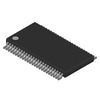
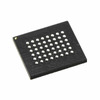
Image may be representation.
See specifications for product details.
EXPRESS OPTION
Payment method

XCF128XFTG64CATU - AMD Xilinx

Manufacturer Part Number
XCF128XFTG64CATU
Manufacturer
AMD Xilinx
Allelco Part Number
32D-XCF128XFTG64CATU
Warranty
1 Year Allelco Warranty - Find out more
Stock Status:
4,520 pcs available, New & Original
Parts Description
DAC91001
Data sheet
-
Category
Integrated Circuits (ICs) > Specialized ICs
RoHs Status
Our certification
In stock: 4520

Required fields are indicated by an asterisk (*)
Please send RFQ, we will respond immediately.

Quantity

Specifications

XCF128XFTG64CATU Tech Specifications
AMD Xilinx - XCF128XFTG64CATU technical specifications, attributes, parameters and parts with similar specifications to AMD Xilinx - XCF128XFTG64CATU

Product Attribute Attribute Value
Part Number XCF128XFTG64CATU
Package DAC91001
Description DAC91001
Stock Condition Get 4520 pcs available quantity at Allelco
Payment PayPal / TT / Credit Card / Western Union
Allelco Certifications ESD / ISO 9001 / ISO 13485 / ISO 28000
Product Attribute Attribute Value
Manufacturer AMD Xilinx
RoHs Status -
Warranty 100% Perfect Functions
Transport port Hong Kong
Shipping by DHL / FedEx / UPS / TNT / SF Express
RFQ Email info@allelco.com

Frequently Asked Questions(FAQ)

How does the XCF128XFTG64CATU support configuration memory expansion in complex FPGA designs, and what are the practical implications for system reliability?
The XCF128XFTG64CATU, a 128Mb serial configuration PROM from Xilinx, enables reliable code storage for FPGA configuration by providing non-volatile memory that retains programming across power cycles. This is critical in systems where FPGA reconfiguration must survive power loss, such as in industrial control or aerospace applications. The device uses a SPI-compatible interface, allowing direct connection to the FPGA’s CONFIG pins without requiring additional logic for initialization. With a page size of 256 bytes and erase block sizes ranging from 128KB to 2MB, designers can optimize write endurance and minimize configuration time during boot-up. However, frequent writes to small blocks may reduce longevity, so it's advisable to batch updates and avoid runtime rewrites unless absolutely necessary.
What distinguishes the XCF128XFTG64CATU from parallel flash alternatives in terms of signal integrity and board layout complexity?
Unlike parallel flash devices that require multiple data lines, address buses, and control signals, the XCF128XFTG64CATU interfaces via a simplified SPI protocol using only four pins—MOSI, MISO, SCK, and CS—significantly reducing pin count and routing congestion on the PCB. This makes it ideal for space-constrained designs. Additionally, the reduced number of traces lowers crosstalk and electromagnetic interference risks, improving signal integrity in high-speed environments. While parallel flash offers faster access times, the serial nature of the XCF128XFTG64CATU trades off absolute speed for simplicity and robustness in embedded systems where boot reliability outweighs initial configuration latency.
Can the XCF128XFTG64CATU be used in safety-critical automotive applications, and what design considerations apply given its operating temperature range?
The XCF128XFTG64CATU operates over a commercial temperature range of 0°C to +70°C, which aligns with standard industrial and embedded computing environments but falls short of full automotive AEC-Q100 Grade 2 requirements (–40°C to +105°C). Therefore, while it may be acceptable in non-automotive-grade consumer or industrial systems, it is not suitable for core safety functions in production vehicles. Designers considering automotive use must verify with Xilinx and the end application whether this device meets functional safety standards such as ISO 26262. If used near the upper thermal limit, increased ambient temperatures could affect data retention and erase/write performance due to elevated leakage currents.
How should engineers evaluate the write/erase endurance trade-offs when selecting between different block sizes for the XCF128XFTG64CATU?
The XCF128XFTG64CATU supports variable block erase sizes—64KB, 128KB, and 2MB—which directly influence endurance and flexibility. Smaller blocks allow finer granularity for partial updates but increase the number of erase cycles per update, potentially accelerating wear. Larger blocks reduce cycle counts but may overwrite more than intended if only part of the block changes. For most FPGAs, including those supported by this PROM, the entire configuration image is written at once, making block size less impactful during normal operation. However, in rare cases where runtime reprogramming occurs, choosing larger erase blocks minimizes wear. Endurance is rated at 10k erase/write cycles per block; thus, even aggressive use typically exceeds this limit well within product lifetime.
In what scenarios would the dual-voltage compatibility of the XCF128XFTG64CATU provide significant advantages over single-voltage alternatives?
The XCF128XFTG64CATU supports both 2.7V and 3.3V operation, enabling seamless integration into mixed-voltage systems where the host FPGA may operate at either rail. This flexibility simplifies power supply design and reduces inventory complexity in multi-platform products. For example, a developer maintaining both low-power and high-performance variants of a system could use identical hardware layouts with the same PROM, differing only in voltage regulators. It also allows backward compatibility with older FPGAs while supporting newer devices that accept lower I/O voltages, extending the lifecycle of board designs and easing migration paths.
What role does the status register polling mechanism play in ensuring successful FPGA configuration using the XCF128XFTG64CATU?
After issuing a write command, the XCF128XFTG64CATU sets the WIP (Write in Progress) bit in its status register, which prevents further commands until the operation completes. During FPGA configuration, the device monitors this bit to confirm that internal programming has finished before proceeding. This handshake ensures data integrity and prevents corruption caused by premature access. Designers must implement polling in firmware or hardware to check WIP before reading or executing subsequent commands. Failure to do so may result in read errors or incomplete writes, especially under noisy conditions or during rapid power-up sequences.
How does the XCF128XFTG64CATU compare to modern SPI NAND flash solutions in terms of configuration speed and reliability for FPGA boot applications?
While SPI NAND flash devices offer higher densities and lower cost per megabit, they introduce greater complexity in error correction, bad block management, and wear leveling—features unnecessary for static FPGA configuration. The XCF128XFTG64CATU provides deterministic behavior with built-in reliability mechanisms like sector protection and consistent access timing, eliminating the need for software overhead. Configuration time for the XCF128XFTG64CATU is typically under 2 seconds at 20 MHz clock, sufficient for most applications. Although newer SPI NOR alternatives exist, this device remains a proven choice for Xilinx FPGA boot code due to its simplicity, long-term availability, and compatibility with legacy toolchains.
What precautions should be taken during power-up sequencing when interfacing the XCF128XFTG64CATU with an FPGA?
Stable power delivery is essential for reliable operation of the XCF128XFTG64CATU. Voltage ramps slower than 100 ms may cause undefined states in the status register or inhibit programming. Additionally, the chip select (CS) line must remain inactive during power stabilization to prevent spurious commands. Many FPGAs automatically drive CS high after reset, but external pull-ups ensure proper initialization. Power supply noise above 50 mVpp on VCC can corrupt data transfers, particularly during erase operations. Using decoupling capacitors (e.g., 100 nF) close to the package helps maintain clean rails. Also, ensure that the FPGA’s DONE pin is properly monitored to confirm successful configuration before releasing reset signals.
Is it possible to securely protect the configuration data stored on the XCF128XFTG64CATU against unauthorized reading or modification?
Yes, the XCF128XFTG64CATU includes multiple protection features: individual sector locking via the status register, full-chip write protection, and optional password-based security through advanced command sets. Sector protection allows selective locking of specific memory regions, useful for safeguarding boot code while permitting minor updates. Full-chip lock prevents any modification after programming. When combined with Xilinx’s secure boot capabilities in supported FPGAs, these features form a layered defense against intellectual property theft. However, physical probing attacks remain a risk, so anti-tamper measures may still be required in high-value applications. Always consult the latest Xilinx security guidelines for best practices.
What are the implications of using the XCF128XFTG64CATU in battery-powered edge devices regarding power consumption during idle versus active states?
In active mode during read or write operations, the XCF128XFTG64CATU consumes typical current levels around 10–20 mA, depending on clock frequency and activity. However, in standby mode, current drops to microamps, making it suitable for energy-sensitive applications. Since it only draws significant power during configuration events—typically once at boot—its average contribution to system power budget is minimal. Nevertheless, prolonged bus contention or constant CS assertion can increase quiescent current unnecessarily. Designers should disable clocks and float CS when not in use to maximize efficiency. This behavior aligns well with sleep-mode architectures common in IoT nodes and portable instrumentation.
How does the XCF128XFTG64CATU handle clock stretching or timing variations in noisy industrial environments?
The XCF128XFTG64CATU follows standard SPI protocols and does not actively stretch the clock. Instead, it assumes a stable SCK signal provided by the master (typically the FPGA). In electrically noisy settings, timing margins become critical. To mitigate issues, maintain SCK slew rates below 1 V/ns and keep trace lengths matched to within 5 mm. Excessive ringing or ground bounce can cause false edges, leading to command misinterpretation. Adding series resistors (22–100 Ω) on MOSI/MISO lines dampens reflections, improving robustness. Additionally, reducing SCK frequency below 20 MHz in harsh environments enhances noise immunity at the expense of slightly longer configuration times.
What factors determine whether the XCF128XFTG64CATU is appropriate for field-upgradable FPGA systems?
Field upgrades are feasible only if the system supports runtime reconfiguration or partial rewrites. Since the XCF128XFTG64CATU is erased and rewritten as a whole during configuration, true incremental updates are not practical. However, if the application allows complete FPGA reprogramming via a host processor, this device can serve as the upgrade medium. The main constraint is the 10k erase cycle limit; frequent full reprograms could eventually degrade reliability. For systems requiring regular feature updates, consider using external flash with custom bootloaders that split images and validate integrity before applying patches—but note that such workflows are outside the scope of standard Xilinx configuration tools.
How does the BGA packaging of the XCF128XFTG64CATU affect manufacturability and repairability compared to QFN or SOIC variants?
The 64-ball FBGA (FTG64) package offers superior electrical performance and density but presents challenges for manual soldering and inspection. Automated pick-and-place assembly is required, increasing manufacturing cost and yield sensitivity to stencil alignment and reflow profiles. Repairability is extremely limited; desoldering requires precision tools and risk damaging adjacent components. In contrast, QFN packages allow hand rework and optical inspection, beneficial in prototyping. However, the BGA’s smaller pitch (0.8 mm) and lack of exposed pad visibility make it less forgiving during debugging phases. Designers should account for these constraints early in the PCB layout phase, including adequate test points and boundary-scan access if JTAG diagnostics are needed.
Can the XCF128XFTG64CATU be used in redundant or fail-operational systems where configuration integrity must be guaranteed?
Yes, with proper redundancy strategies. While the device itself lacks built-in ECC, its deterministic access and protected sectors help preserve configuration data. In high-reliability systems, combining the XCF128XFTG64CATU with CRC checks on the bitstream and dual-copy storage (stored twice with verification) improves fault tolerance. Additionally, monitoring the DONE signal and watchdog timers ensures timely recovery from configuration failures. For mission-critical applications, consider using Xilinx’s Platform Management Controller or external supervisory ICs to detect and recover from corrupted configurations. The device’s ability to retain programmed data indefinitely supports such architectures by providing a stable, non-volatile source of truth.
What impact does temperature variation have on the data retention characteristics of the XCF128XFTG64CATU?
Data retention for the XCF128XFTG64CATU is specified at 25°C and degrades with rising temperature. At 85°C, retention drops to approximately 1 year, and at 105°C, it may fall below 10 years. These values assume optimal storage conditions and no active cycling. In warm environments or near power components, elevated junction temperatures accelerate charge leakage in floating gates. Designers storing long-term firmware should ensure ambient temperatures stay below 70°C or use thermal management techniques. If extended retention beyond specifications is required, periodic refresh cycles (erasing and rewriting) can restore integrity, though this increases wear. Always factor in worst-case operating conditions when estimating system lifetime.
How does the XCF128XFTG64CATU integrate with Xilinx’s iMPACT or Vivado tools during development, and what are common pitfalls?
The XCF128XFTG64CATU is recognized by Xilinx development tools as a valid configuration device. In iMPACT, it appears in the "Program Flash" tab after selecting the correct JEDEC ID. Common pitfalls include incorrect SPI mode selection (must use Mode 0), mismatched clock speeds, and failing to unlock protected sectors before writing. Vivado’s implementation flow auto-generates .mcs files compatible with this device, but users must manually specify the correct memory type in the .xdc constraints file. Another issue is assuming all bits are programmable; erased state is FFh, so partial writes require careful masking. Always verify the generated hex file matches the intended bitstream before programming.
What considerations arise when cascading multiple configuration devices using the XCF128XFTG64CATU in systems requiring large FPGA bitstreams?
The XCF128XFTG64CATU provides 128Mb (16MB) of capacity, sufficient for many mid-range FPGAs. However, larger designs may exceed this limit. Cascading multiple devices requires addressing each uniquely via separate CS lines and managing shared MOSI/MISO/SCLK busses. This adds complexity to both hardware and firmware. Alternatively, upgrading to higher-density PROMs (e.g., 256Mb or 512Mb) simplifies design and reduces component count. If cascading is unavoidable, ensure timing budgets accommodate additional propagation delays and avoid contention by disabling unused devices’ outputs during reads. Also, verify that Xilinx supports multi-device chains in their configuration architecture for your target FPGA family.
How does the XCF128XFTG64CATU perform under ESD stress compared to newer CMOS processes, and what PCB-level protections are recommended?
The XCF128XFTG64CATU meets JEDEC ESD standards (typically ±2kV HBM), comparable to other serial flash devices. However, its BGA package offers less inherent protection than leaded variants due to shorter lead inductance. To enhance robustness, place TVS diodes near connectors and use guard rings on high-impedance nodes. Series resistors on all SPI lines suppress inductive kickback during hot-plug events. Ground the substrate pad effectively to minimize latch-up risk. Even with these measures, avoid handling the device without grounding straps in humid or dusty environments. For production systems, conformal coating can further isolate traces from environmental contaminants that exacerbate ESD susceptibility.

Customer Reviews

Evaluation: 10 Articles

  • Dani***alkerTech
    Jun 1, 2026

    Product works, but setup took more effort than expected. Once configured the MCU ran reliably, although documentation support felt older compared with newer platforms. Fine for maintenance projects.

  • Yuki***aka88
    May 26, 2026

    信号通信プロジェクトでこのRS-485トランシーバーを使用しました。設置は簡単で、長距離ケーブルでも通信は安定していました。消費電力も、以前使用していたものより低くなっています。

  • Stev***aker
    May 20, 2026

    Solid diode for power rectification. Works well in switching circuits.

  • Bran***Lewis
    May 11, 2026

    Compact FPGA with good performance. Suitable for basic signal processing tasks.

  • Oliv***arris
    May 7, 2026

    Reliable I/O expander. Works well in embedded control applications.

  • Jess***Jones
    Apr 17, 2026

    It offers good value for the price, and the specifications match the description. I’ve been using it for two days with no issues, and I’ll definitely buy it again if I need it in the future.

  • Mich***Smith
    Apr 17, 2026

    Shipping was on time, the component pins are neatly aligned, and I tested 10 of them with a multimeter—all readings were within the specified range. Highly recommended.

  • Aman***arris
    Apr 3, 2026

    It was great—the entire process, from placing the order to receiving the package, went very smoothly. The components were consistent, the price was fair, and I had a very pleasant shopping experience.

  • Mike***nch
    Apr 3, 2026

    Better than expected! The resistance and capacitance readings were spot-on, and it passed the test on the first try. The service was reliable, and the packaging was thoughtful—I highly recommend it.

  • Daic***K.
    Mar 23, 2026

    Very good. No issue after long time testing.

Write a Review

Your Email address will not be published.

Shipment

Delivery Time

In-stock items can be shipped within 24 hours. Some parts will be arranged for delivery within 1-2 days from the date all items arrive at our warehouse. And Allelco ships order once a day at about 17:00, except Sunday. Once the goods are shipped, the estimated delivery time depends on the shipping methods and Delivery destination. The table below shows are the logistic time for some common countries.

Delivery Cost

  1. Use your express account for shipment if you have one.
  2. Use our account for the shipment. Refer to the table below for the approximate charges.
(Different time frame / countries / package size has different price.)

Delivery Method

  1. Global Common Shipment by DHL / UPS / FedEx / TNT / EMS / SF we support.
  2. Others more shipping ways, please get in touch with your customer manager.

Common Countries Logistic Time Reference
Region Country Logistic Time(Day)
America United States 5
Brazil 7
Europe Germany 5
United Kingdom 4
Italy 5
Oceania Australia 6
New Zealand 5
Asia India 4
Japan 4
Middle East Israel 6
DHL & FedEx Shipment Charges Reference
Shipment charges(KG) Reference DHL(USD$)
0.00kg-1.00kg USD$30.00 - USD$60.00
1.00kg-2.00kg USD$40.00 - USD$80.00
2.00kg-3.00kg USD$50.00 - USD$100.00
Note:
The above table is for reference only. There may have some data bias for the uncontrollable factors.
Contact us if you have any questions.
  • QC (Quality Warranty)
  • Payment Support
  • Packaging
  • Certifications & Memberships

QC (Quality Warranty)

Allelco is committed to exceeding customer expectations through customer service excellence, order accuracy, and on-time delivery.
This is achieved through our commitment to the continual improvement of our processes, services, and products.


Strict quality inspection builds a solid foundation for electronic component quality.
  1. Visual inspection
  2. Performance testing and reliability verification
  3. Standardized full-process testing
  4. Precise control of every parameter
We eliminate defective components and ensure the stable operation of electronic devices through professional quality standards.

Payment Support

The payment method can be chosen from the methods shown below: Wire Transfer (T/T, Bank Transfer), Western Union, Credit card, PayPal.
  • HKBea
  • Paypal
  • MasterCard
  • Western-Union
  • VISA
Stable Delivery, Sincere Partnership — Your Faithful Supply Chain Partner
  • Efficient Supply Management
  • Cost-Saving Procurement
  • Fast Sourcing & Delivery
Contact us if you have any questions.

Packaging

Electrostatic Discharge Protection and Handling

All electrostatic-sensitive components are handled in accordance with electrostatic discharge control procedures. The products are hermetically sealed in anti-static safe packaging to prevent electrostatic damage. Appropriate labeling is also applied for identification and traceability. This ensures product integrity during storage, handling and transportation.


ESD

Certifications & Memberships

Third-party certified, strict quality control. Our certification
  • ISO 9001: 2015
  • ISO 13485: 2016
  • ISO 14001: 2015
  • ISO 28000: 2007
  • ISO 45001: 2018
  • GB/T 27922-2011
  • SMTA
  • IPC
  • ESD
  • PSMA
AMD Xilinx

XCF128XFTG64CATU

AMD Xilinx
32D-XCF128XFTG64CATU

Want a better price? Add to Cart and Submit RFQ now, we'll contact you immediately.

0 RFQ
Shopping cart (0 Items)
It is empty.
Compare List (0 Items)
It is empty.
Feedback

Your feedback matters! At Allelco, we value the user experience and strive to improve it constantly.
Please share your comments with us via our feedback form, and we'll respond promptly.
Thank you for choosing Allelco.

Subject
E-mail
Comments
Captcha
Drag or click to upload file
Upload File
types: .xls, .xlsx, .doc, .docx, .jpg, .png and .pdf.
Max file size: 10MB